Gerupuk Bay has five reef breaks accessed by boat from a Lombok fishing village. Here's what each wave demands, what it costs, and who should paddle out.
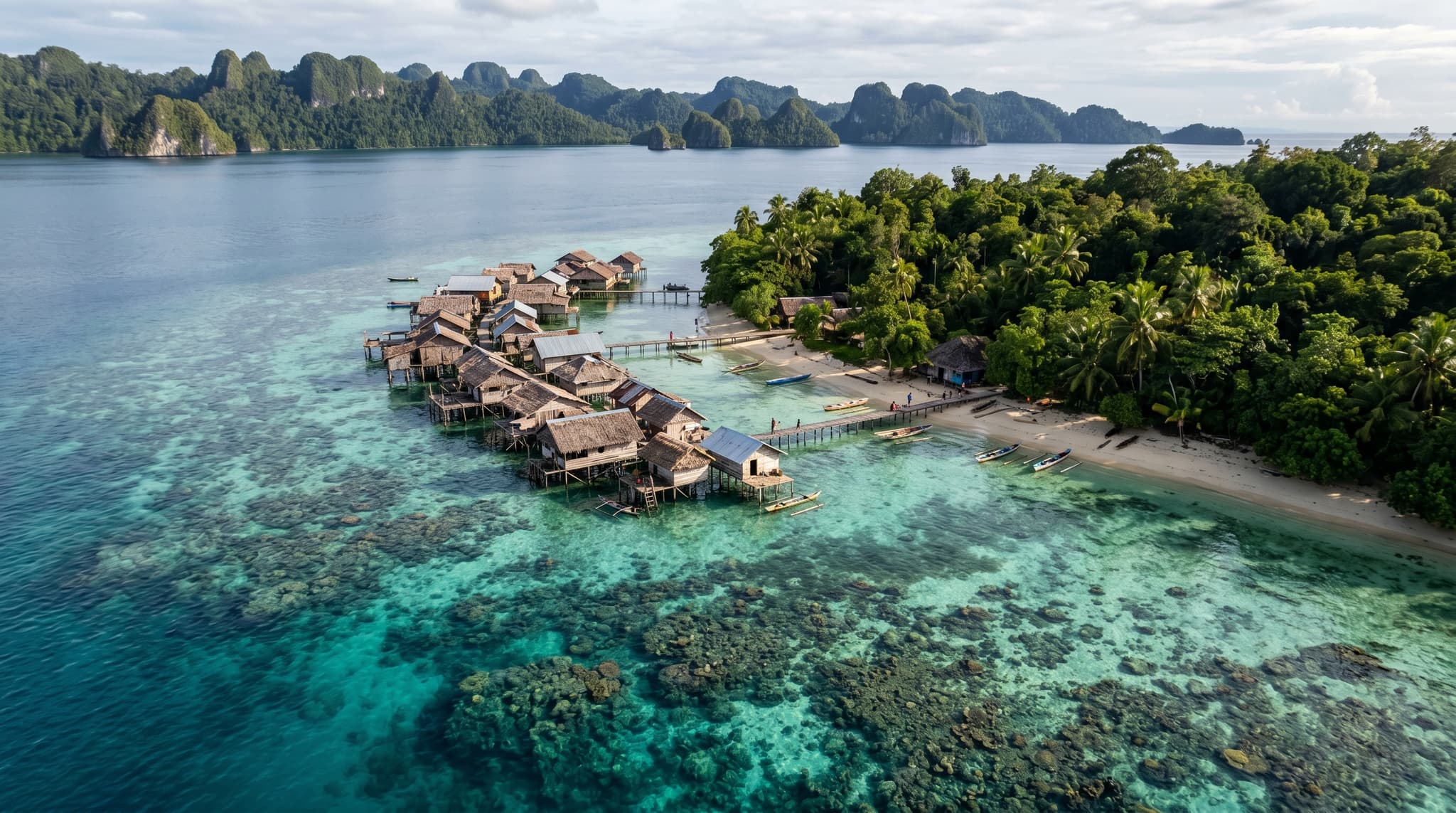
Gerupuk Bay sits at the end of a quiet road on Lombok's south coast — a wide, horseshoe-shaped bay backed by a fishing village that hasn't been dressed up for tourists. There's no beach club, no smoothie bowl menu, no Instagram-ready swing. What there is: a cluster of reef breaks that range from forgiving to genuinely punishing, a fleet of local boats that will take you out to them, and a community of surfers who came for a week and stayed for a month.
If you're surfing in Lombok and you've already done the beach breaks at Selong Belanak, Gerupuk is the logical next step — and a meaningful step up in difficulty.
The Breaks: What You're Actually Dealing With

Gerupuk Bay has five main surf breaks, all reef, all accessed by boat. This isn't a paddle-out-from-the-beach situation. You hire a local boatman from the village, he drops you at the break, waits, and brings you back. That boat ride is part of the experience — and part of the logistics you need to plan for.
Here's what each break offers:
Gerupuk's Five Breaks
Don Don
Left-hander, most forgiving. Works for confident intermediates on smaller days.
Kid's Point
Despite the name, not a beginner wave. Mellow right-hander that's manageable for solid intermediates.
Inside Gerupuk
Right-hander closer to shore. Medium difficulty. Good for intermediates building reef confidence.
Outside Gerupuk
Powerful right that breaks further out. Advanced. Bigger hold-downs, shallower reef sections.
Batu Putih
Fast, hollow left. Advanced to expert. The heaviest wave in the bay.
The common mistake: someone surfs Don Don on a mellow day, feels confident, and paddles out at Outside Gerupuk or Batu Putih the next morning when the swell picks up. Reef breaks punish overconfidence in ways that beach breaks don't. The reef here is sharp, shallow in places, and there's no sand bottom to cushion a bad wipeout. Booties are worth packing. So is honest self-assessment.
What "intermediate" actually means here: You should be comfortable duck-diving overhead waves, reading a lineup, and making a clean bottom turn. If you're still working on popping up consistently, Gerupuk's reef breaks are not where you want to practice. Selong Belanak — 20 minutes west — has a sandy beach break that's far more appropriate.
Conditions and Timing

The dry season (May through October) delivers the most consistent swells, typically south to southwest, in the 3–6 foot range. Winds tend to be offshore in the morning and swing onshore by early afternoon, so most surfers aim to be on the water by 7:00 AM and back by noon.
During the wet season (November through April), swells are less reliable and winds are less predictable. You can still score good sessions — it's just not guaranteed. If you're planning a trip specifically around Gerupuk, book it between June and September for the best odds.
Getting a Boat Out
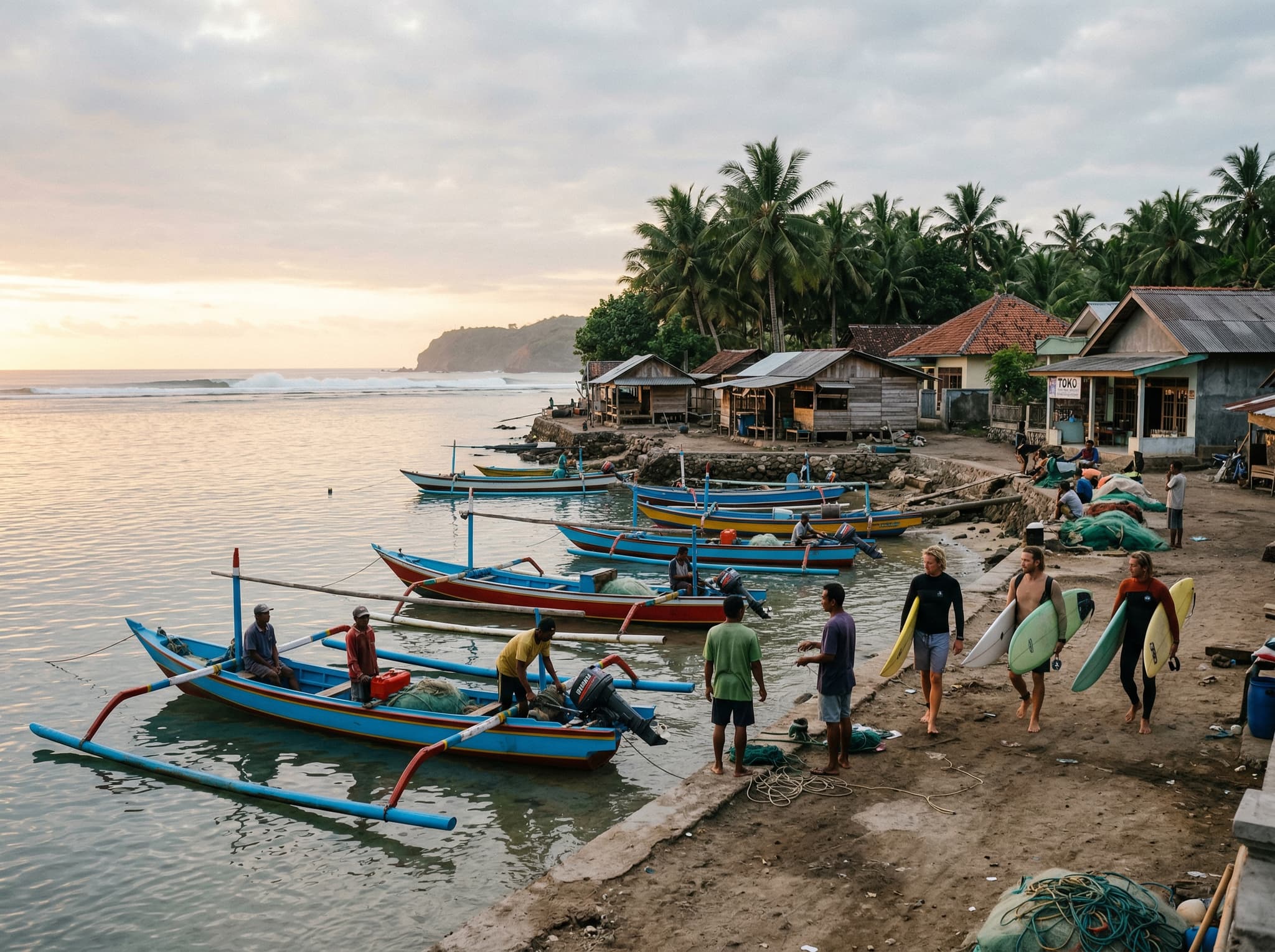
The boat situation is straightforward. Walk down to the waterfront in Gerupuk village, and you'll find boatmen waiting near the shore. The standard arrangement: they take you out, wait while you surf (usually 2–3 hours), and bring you back.
Expect to pay IDR 150,000–250,000 per person for a round trip, depending on which break you're heading to (further out costs more) and how many people are splitting the boat. A boat typically fits 3–4 surfers comfortably. If you're solo, you'll pay more — around IDR 200,000–300,000 — since you're not splitting the cost.
No need to book in advance. Just show up early. By 6:30 AM, boatmen are already at the water. If you're staying in Gerupuk village itself, your accommodation can usually arrange a regular boatman for you.
The Village: What's There (and What Isn't)

Gerupuk is a fishing village first and a surf destination second. That's part of its appeal, but it also means limited infrastructure.
Accommodation: A handful of homestays and small guesthouses line the bay. Rooms run IDR 150,000–400,000 per night ($9–25 USD) for basic but clean setups — fan-cooled, cold-water shower, usually with breakfast included. Don't expect air conditioning at the lower end. A few mid-range options have appeared in recent years with AC and slightly better furnishings, pushing up to IDR 500,000–700,000 ($31–44 USD).
Food: A few warungs in the village serve nasi goreng, mie goreng, and fresh fish for IDR 25,000–50,000 ($1.50–3 USD). The fish is genuinely good — it was probably swimming that morning. There's no fine dining, no cocktail bar, and no reason to expect either.
Supplies: Bring what you need. There's a small shop or two for water and basic snacks, but if you need sunscreen, reef-safe or otherwise, board wax, or medication, buy it in Kuta Lombok before you come.
Staying in Gerupuk vs. Kuta Lombok
This is the real decision most surfers face. Kuta Lombok — the nearest proper town — has more restaurants, better WiFi, ATMs, motorbike rental shops, and a wider range of accommodation from budget to boutique. It's 7 km west, about 15–20 minutes by motorbike on a decent road.
Gerupuk vs. Kuta Lombok
Stay in Gerupuk if...
You want to be on the water at dawn without a commute. You're here primarily to surf. You're comfortable with basic accommodation.
Stay in Kuta if...
You want restaurants, nightlife (modest), and easier logistics. You don't mind a 15–20 min ride each morning.
Most surfers staying a week or more base themselves in Kuta and ride out to Gerupuk on the days the swell is right. If you're in Lombok specifically for Gerupuk's breaks, staying in the village saves you time and puts you closer to the boatmen at first light.
Getting There

From Lombok International Airport (LOP): Gerupuk is about 25–30 km southeast. A taxi or private car runs IDR 200,000–300,000 ($12–19 USD) and takes roughly 45 minutes to an hour depending on road conditions.
From Kuta Lombok: Rent a motorbike (IDR 70,000–80,000/day from shops on Kuta's main road) and ride east. The road is paved and manageable, though it narrows toward the village. Follow signs to Gerupuk — it's a single road in, single road out.
The Honest Take
Gerupuk Bay is one of the best intermediate-to-advanced surf setups in Lombok — multiple breaks within a single bay, boat access that lets you pick your wave, and a village that hasn't been sanitized for tourism. It's not glamorous. The accommodation is basic, the nightlife is nonexistent, and you'll eat the same three dishes most days.
But if you're here to surf reef breaks in uncrowded lineups with boatmen who know every section of every wave, Gerupuk delivers exactly that. It's the kind of place where the experience is proportional to the skill you bring. Show up prepared, respect the reef, and you'll understand why people keep coming back.