Devil's Tear is a natural blowhole on Nusa Lembongan's southwest coast where ocean swells explode through limestone cliffs. Here's what to expect.
The first thing you hear is the compression — a low, resonant thud as the Indian Ocean forces itself into a narrow crevice in the limestone cliff. Then the water shoots upward, sometimes five or six meters, catching the light before it crashes back down into the churn below. This is Devil's Tear, and it does this all day, every few seconds, whether anyone is watching or not.
It's one of the most visited spots on Nusa Lembongan, which means it's also one of the most photographed. But photographs tend to flatten the experience. They catch the spray mid-air, maybe a silhouette against the sunset. What they miss is the sound — the way the rock vibrates under your feet, the irregular rhythm of the surges, the long moments of deceptive calm before the next eruption.
What You're Actually Looking At
's limestone rock shelf — the narrow, eye-shaped opening in the volcanic rock through which seawater surges upward, showing the geological character of the blowhole formation and the scale of the cliff edge relative to the ocean below](/_next/image?url=https%3A%2F%2Fimages.unsplash.com%2Fphoto-1503202773361-025d63320f16%3Fcrop%3Dentropy%26cs%3Dtinysrgb%26fit%3Dmax%26fm%3Djpg%26ixid%3DM3w4Njc2MzJ8MHwxfHNlYXJjaHw2fHxOdXNhJTIwTGVtYm9uZ2FuJTIwYmxvd2hvbGUlMjByb2NrJTIwY3JldmljZSUyMGNsb3NlfGVufDB8MHx8fDE3NzUwMDE3ODl8MA%26ixlib%3Drb-4.1.0%26q%3D80%26w%3D1080&w=2048&q=75)
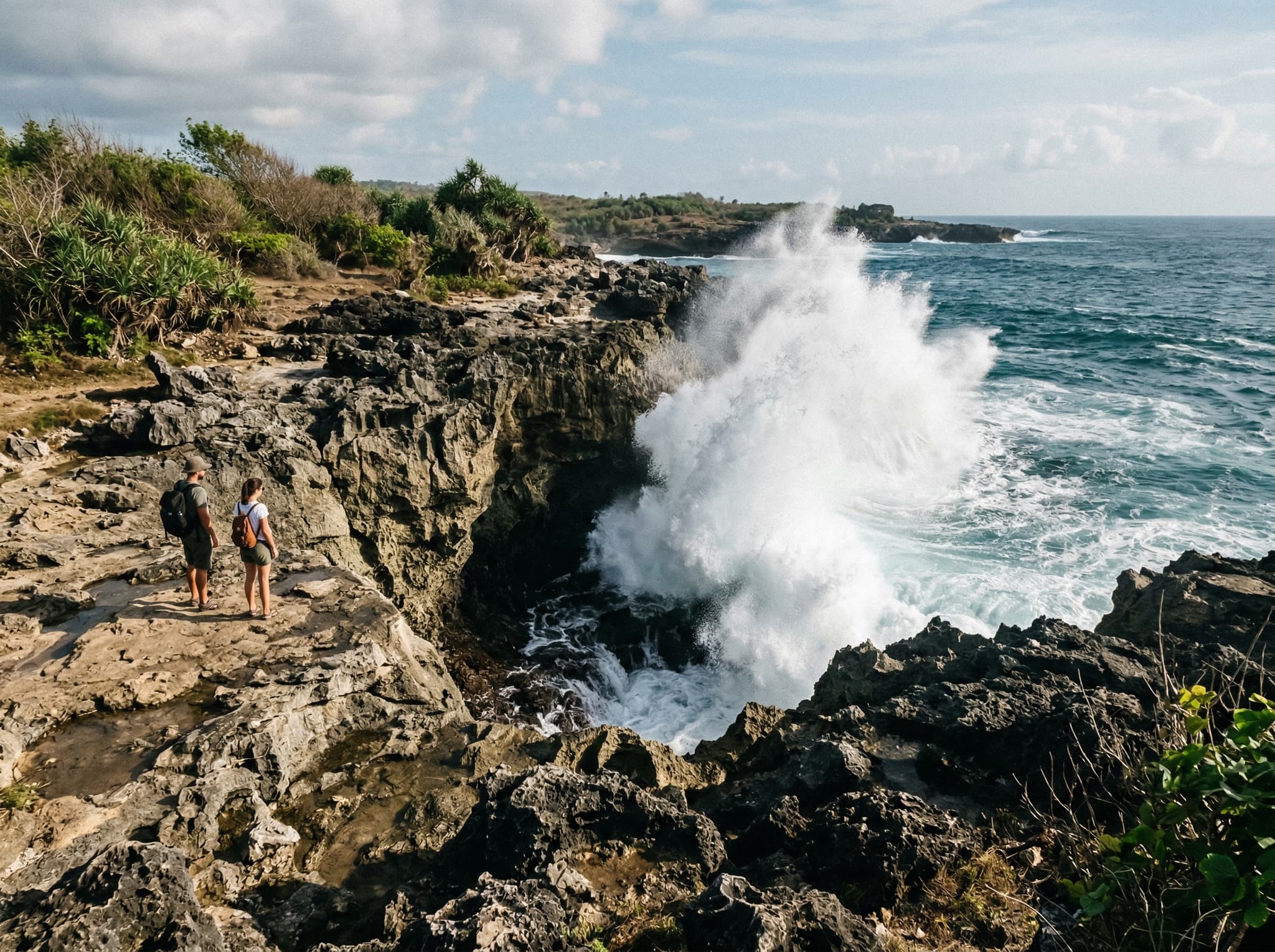
Devil's Tear is a natural blowhole carved into the volcanic limestone along Nusa Lembongan's exposed southwest coast. The cliff face here drops roughly 10 to 15 meters to the waterline, where centuries of wave action have hollowed out caves and channels beneath the rock shelf. When swells push water into these channels, it has nowhere to go but up and out.
The "tear" in the name likely refers to the shape of the crevice itself — a narrow, eye-shaped opening in the rock where the most dramatic eruptions occur. During high swell, the spray can reach well above the cliff edge. During calmer periods, the water rises and falls in the channel with a slower, less violent pulse, and the blowhole produces more mist than explosion.
Getting There
Devil's Tear sits at the southwestern tip of Nusa Lembongan, roughly a five-minute walk from Dream Beach. Most visitors reach it by scooter — the standard way to get around the island, with rentals running about Rp 70,000–100,000 per day. From Jungutbatu, the main harbor village on the north side, it's a 10- to 15-minute ride along a paved but narrow road.
There's an informal parking area near the cliff where you'll leave your scooter. From there it's a short walk across scrubby grass and exposed rock to the blowhole itself. You'll know you're close when you hear it.
Getting Around
From Jungutbatu
~15 min by scooter
From Dream Beach
~5 min walk
Scooter Rental
Rp 70,000–100,000/day
Parking
Free, informal lot
If you'd rather not drive, a handful of locals offer island tours by car or golf cart for around Rp 300,000–400,000 for a half day. Devil's Tear is a standard stop on every one of these circuits, usually paired with Dream Beach and Sandy Bay.
When to Go
Two things matter here: time of day and swell conditions.
For the blowhole itself, the most dramatic eruptions happen during high swell, which generally means June through September — the dry season, when southern swells from the Indian Ocean are strongest. But even outside peak swell months, the blowhole produces visible surges. It's rarely still.
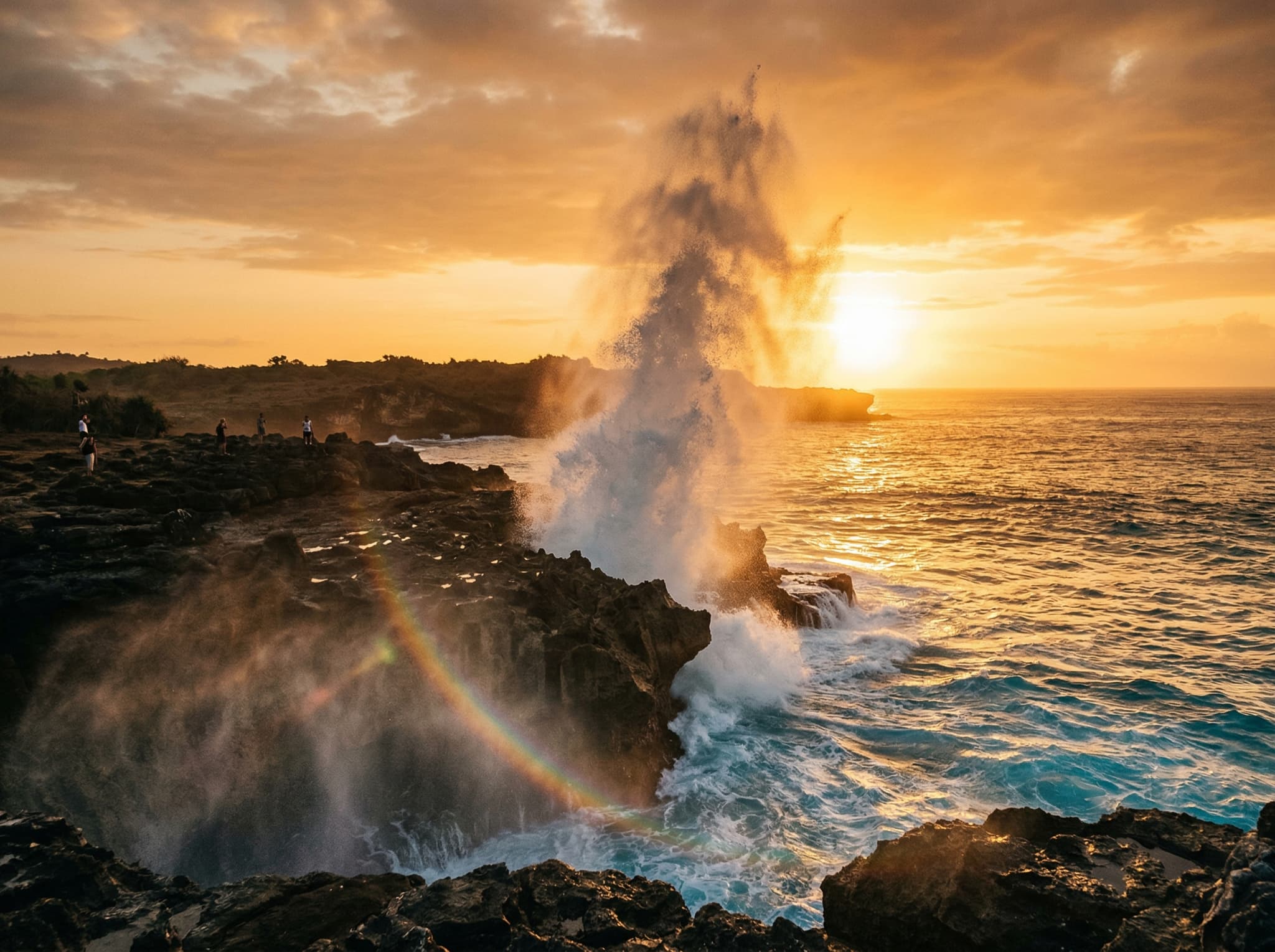
For light and crowds, late afternoon is the consensus window. Devil's Tear faces west-southwest, which means sunset light hits the spray directly. When conditions align — strong swell, low sun, clean air — the mist refracts into brief, vivid rainbows. This is the shot that fills Instagram feeds, and it's genuinely striking in person.
The trade-off is that everyone else knows this too. By 4:30 or 5:00 PM, the cliff edge gets crowded. If you want the place closer to yourself, come mid-morning. The light is harsher but the blowhole doesn't care about golden hour.
What Most Guides Don't Mention
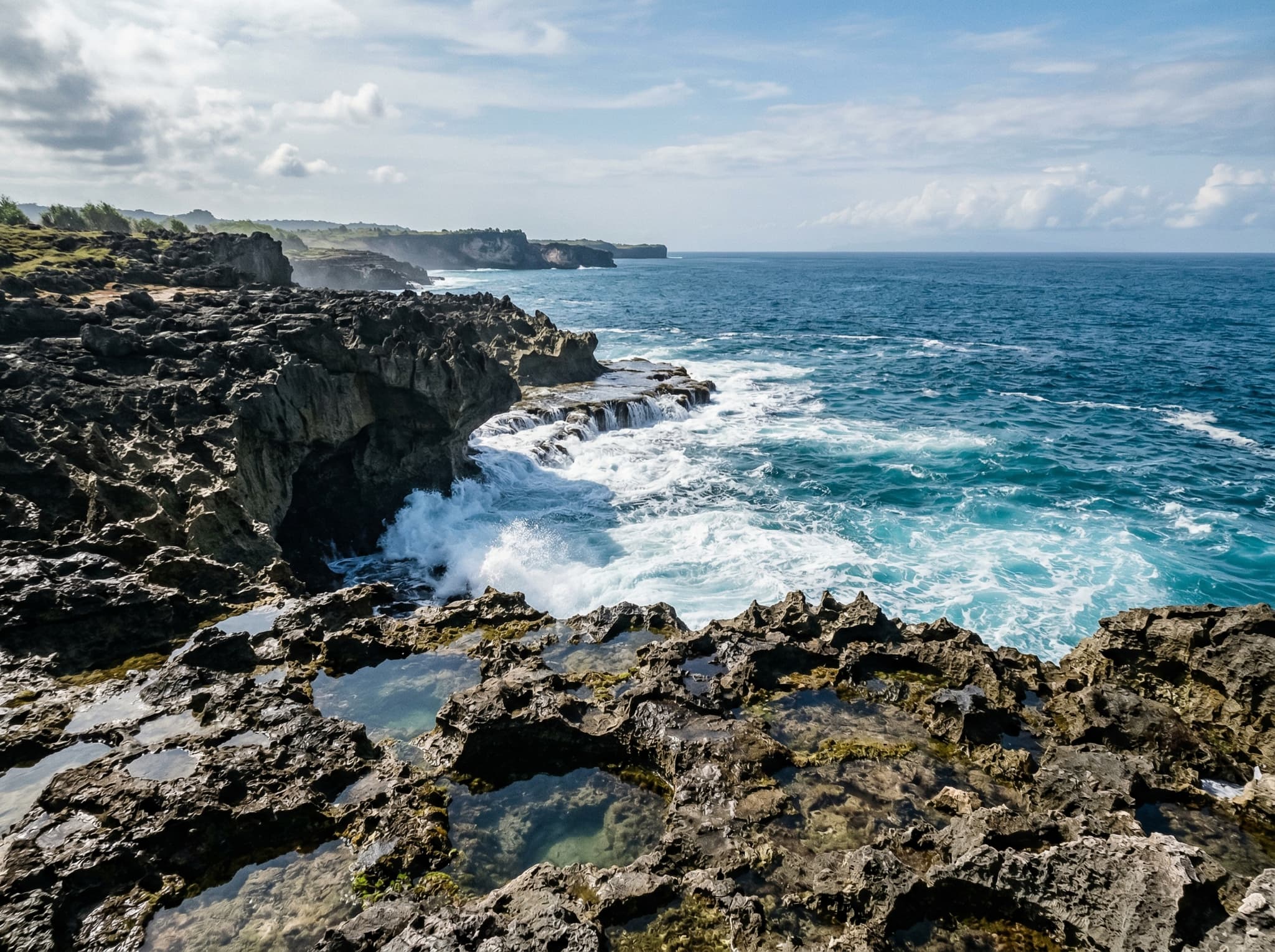
The cliff shelf around Devil's Tear extends in both directions, and most visitors cluster right at the main blowhole. Walk five minutes south along the coast and you'll find smaller blowholes, tide pools, and rock formations that are nearly empty. The coastline here is just as dramatic — jagged limestone shelves dropping into turquoise water, with waves crashing against undercut cliffs.
This stretch also connects, roughly, toward Sandy Bay, though the "path" is more of a scramble over rock. Wear shoes with grip, not flip-flops.
Dream Beach and the Surrounding Area
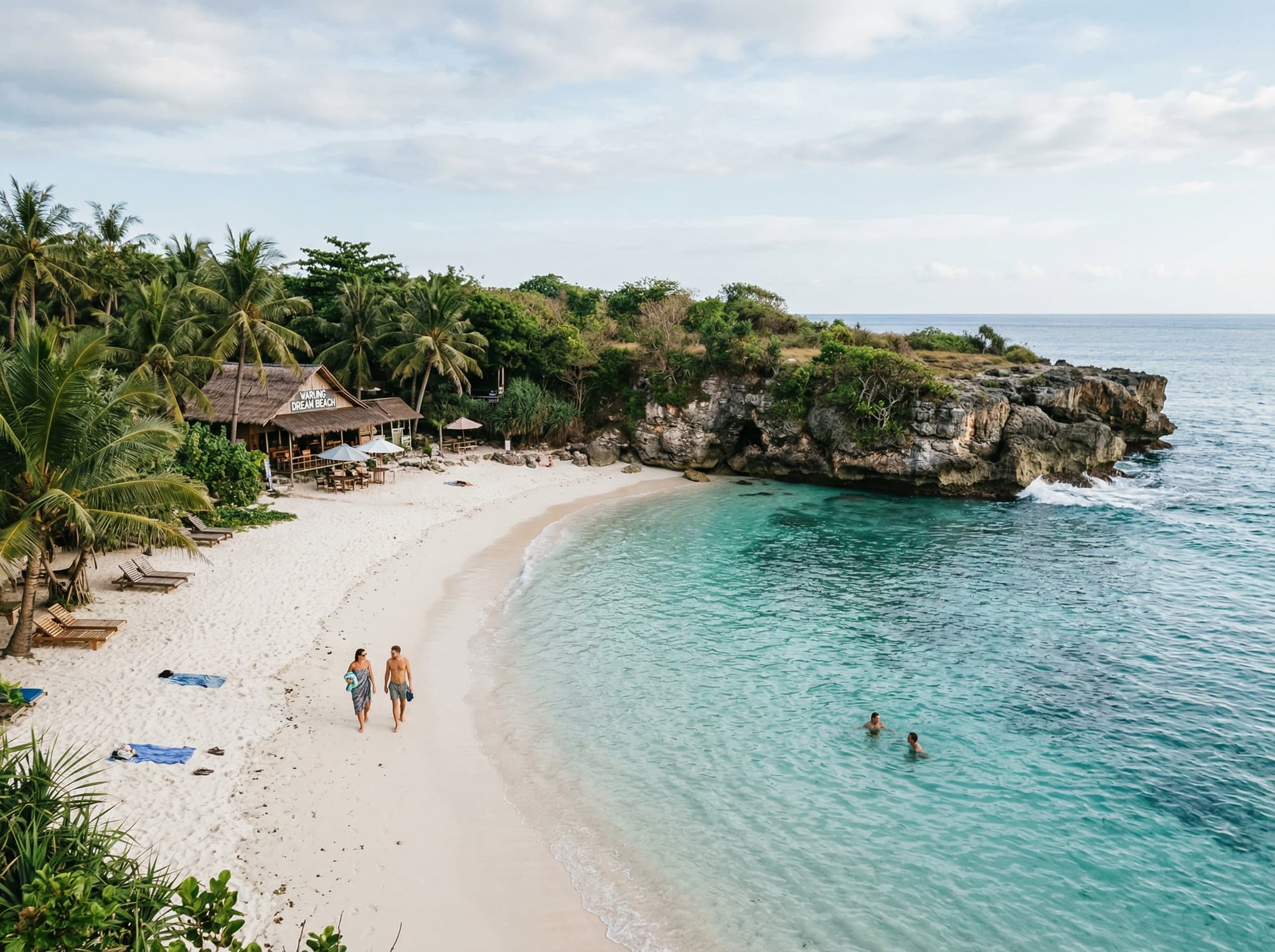
Most visitors pair Devil's Tear with Dream Beach, which sits in a small cove just to the east. It's a proper swimming beach — white sand, clear water, a couple of warungs selling cold Bintang and nasi goreng. The contrast is useful: the raw violence of Devil's Tear against the sheltered calm of Dream Beach, separated by a few minutes on foot.
The southwest corner of Nusa Lembongan is the island's most photogenic stretch, but it's also its most exposed. There's no shade at Devil's Tear and limited shade along the cliff walk. Sunscreen, water, and a hat are not optional.
Nearby
Dream Beach
5 min walk east — swimming, warungs
Sandy Bay
10 min walk south along cliffs
Sunset Point
Further west along the coast
The Honest Assessment
Devil's Tear is a genuine natural spectacle — not a manufactured tourist attraction, not a disappointment dressed up by social media. The ocean really does explode through the rock with startling force. It's free, it's easy to reach, and it takes less than an hour unless you linger along the coast.
What it isn't is remote or undiscovered. On a busy day, the cliff edge looks like a photo set, with dozens of visitors jockeying for position. The risk-taking is real — people routinely stand far too close to the edge for selfies, and the rock is genuinely dangerous when wet.
Come early or come late. Stand back. Let the sound do the work.