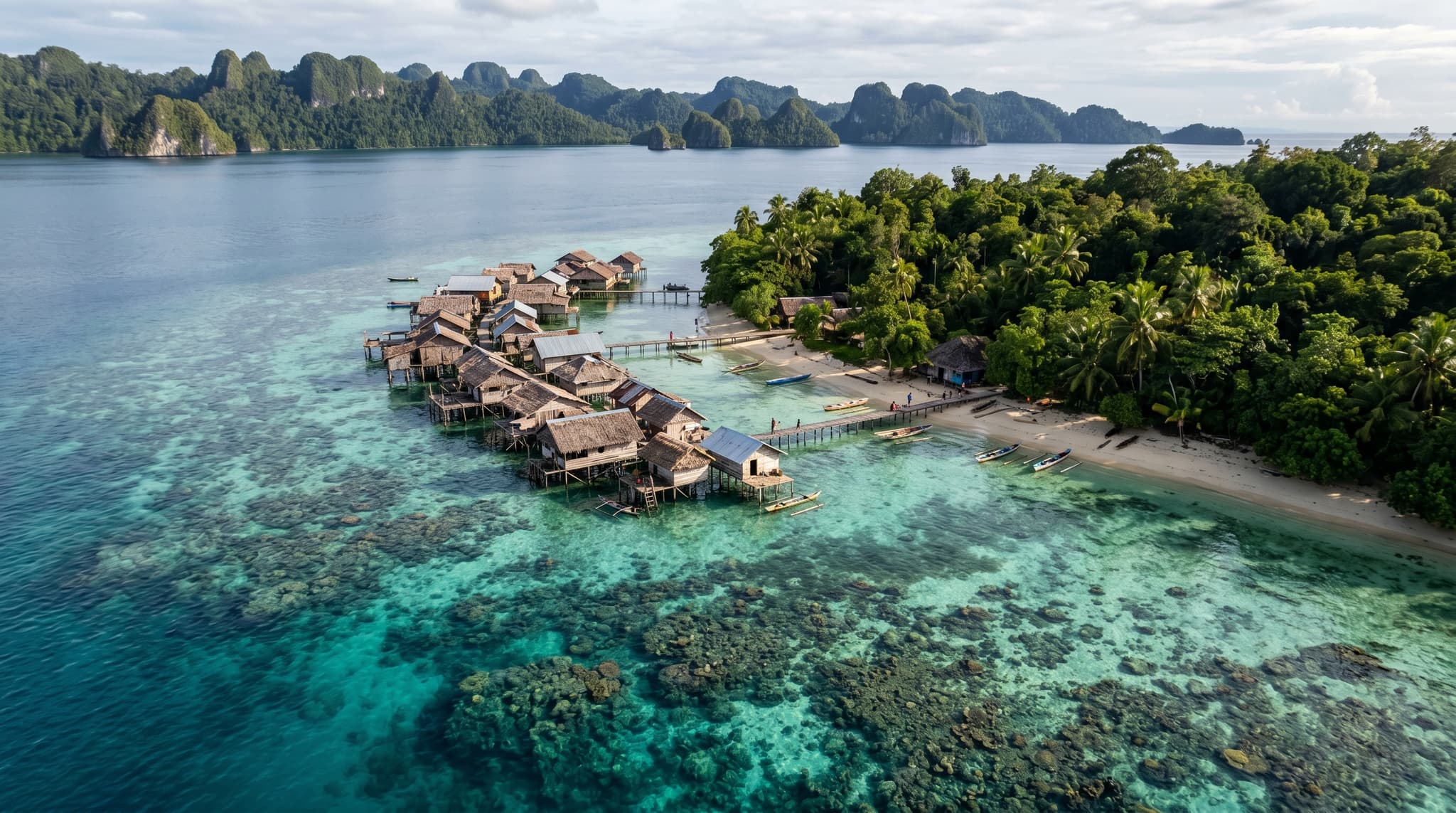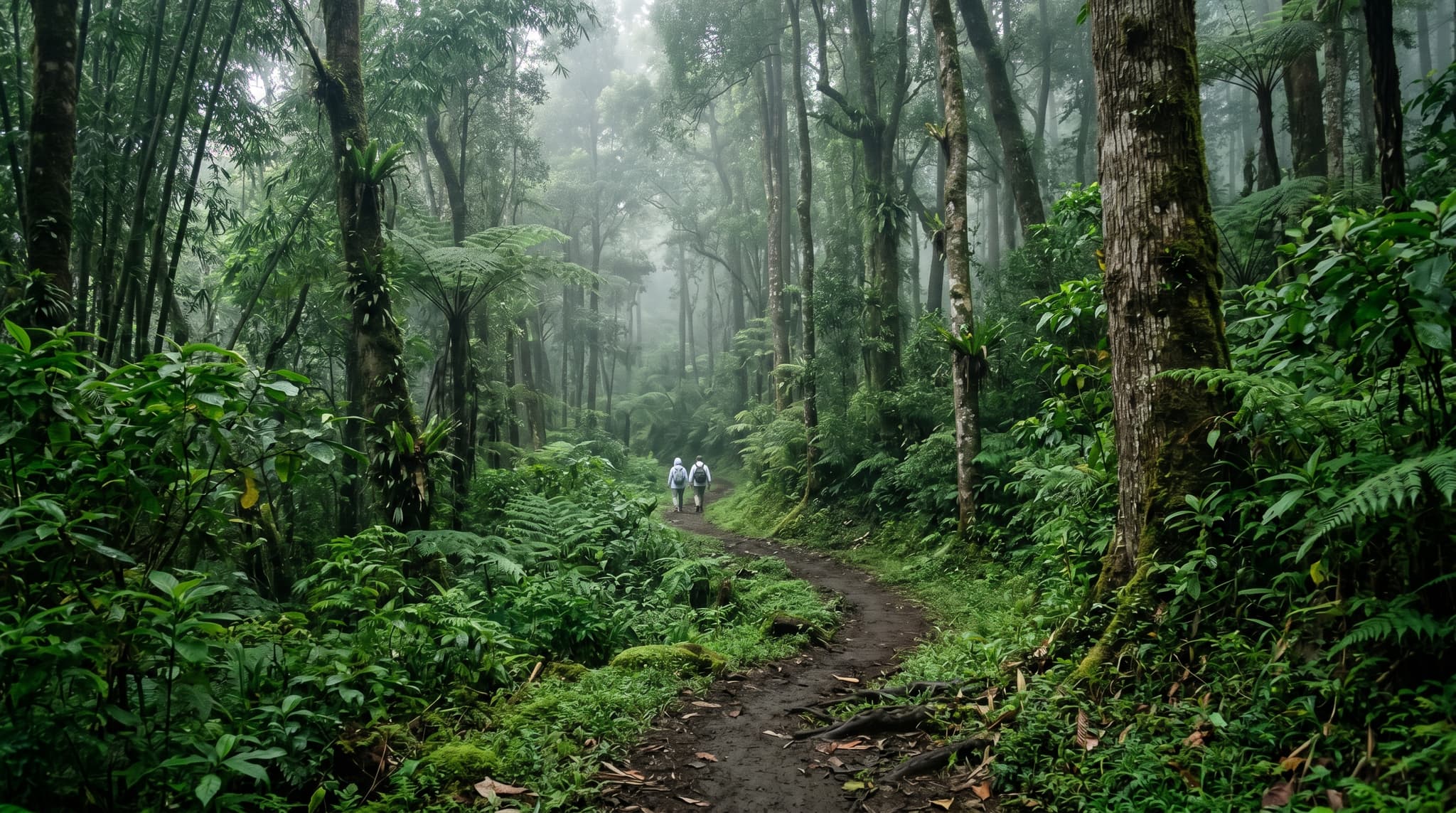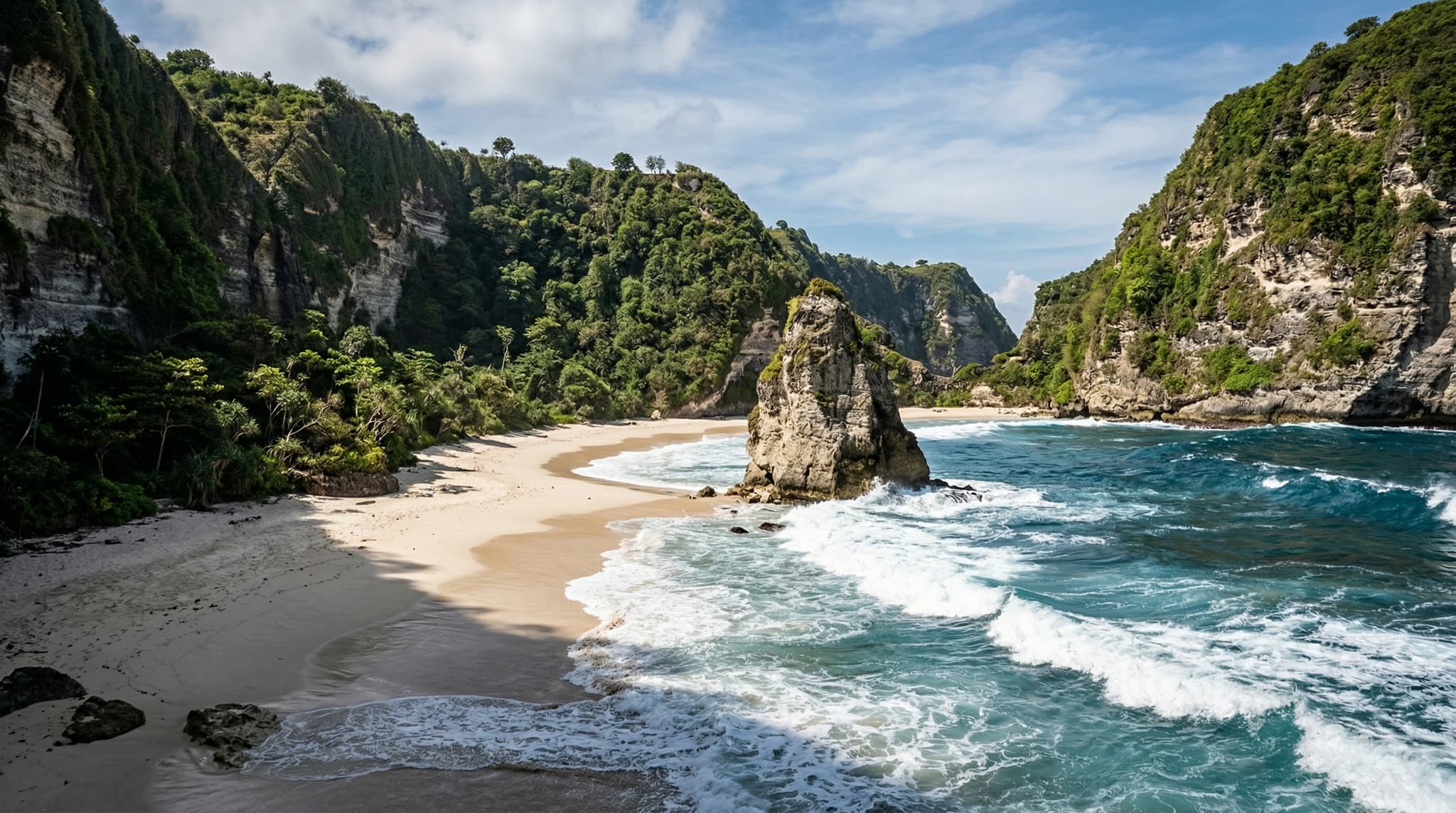
Suwehan Beach sits at the base of Nusa Penida's cliffs, reached by a steep descent that filters out casual visitors. Here's what the experience is actually like.
The first thing you should know about Suwehan Beach is that the photos lie — not about its beauty, but about its accessibility. Every drone shot makes the white sand crescent look like something you could wander onto. You cannot. Getting there requires a descent down Nusa Penida's cliff face that is steep, exposed in places, and genuinely difficult. Understand that before you go.
The second thing is that none of that matters once you're standing on the sand.
Getting There
Suwehan Beach is on Nusa Penida's southeast coast, roughly 30 to 40 minutes by scooter from the main harbor area at Toya Pakeh, depending on road conditions. The roads in this part of the island are a mix of paved and broken concrete — rideable, but demanding if you're not comfortable on a scooter. Most visitors rent scooters on Nusa Penida for the day; some hire a driver, though you'll still need to make the descent on foot.
The trailhead is marked, though signage on Nusa Penida changes frequently. Look for the small warungs and parked scooters near the cliff edge. A local caretaker typically collects a small donation at the top — this is informal but standard across many of the island's cliff-access beaches.
The Descent

The trail drops roughly 100 meters from cliff top to sand. That number doesn't capture what it feels like. The path is narrow, carved and worn into the limestone, and it switches between crude concrete steps, bare rock, and packed earth. Some sections have bamboo railings. Some don't. There's at least one point where a fixed rope or ladder bridges a gap in the rock — the specific infrastructure changes, because the cliff erodes and locals rebuild what they can.
Allow 15 to 25 minutes going down, depending on your comfort level. The return climb takes longer — 20 to 35 minutes for most people, and you'll feel it in your legs. Bring water. There's no shade on the trail and very little once you're on the beach itself, apart from what the cliffs provide at certain hours.
The descent is part of the experience, though. Halfway down, the sound changes. The road noise and scooter engines disappear. What replaces them is wind, the crash of waves below, and the particular quiet of being inside a cliff — rock on both sides, the ocean opening up ahead. By the time you reach the sand, you've earned it in a way that reshapes how the beach feels.
The Beach
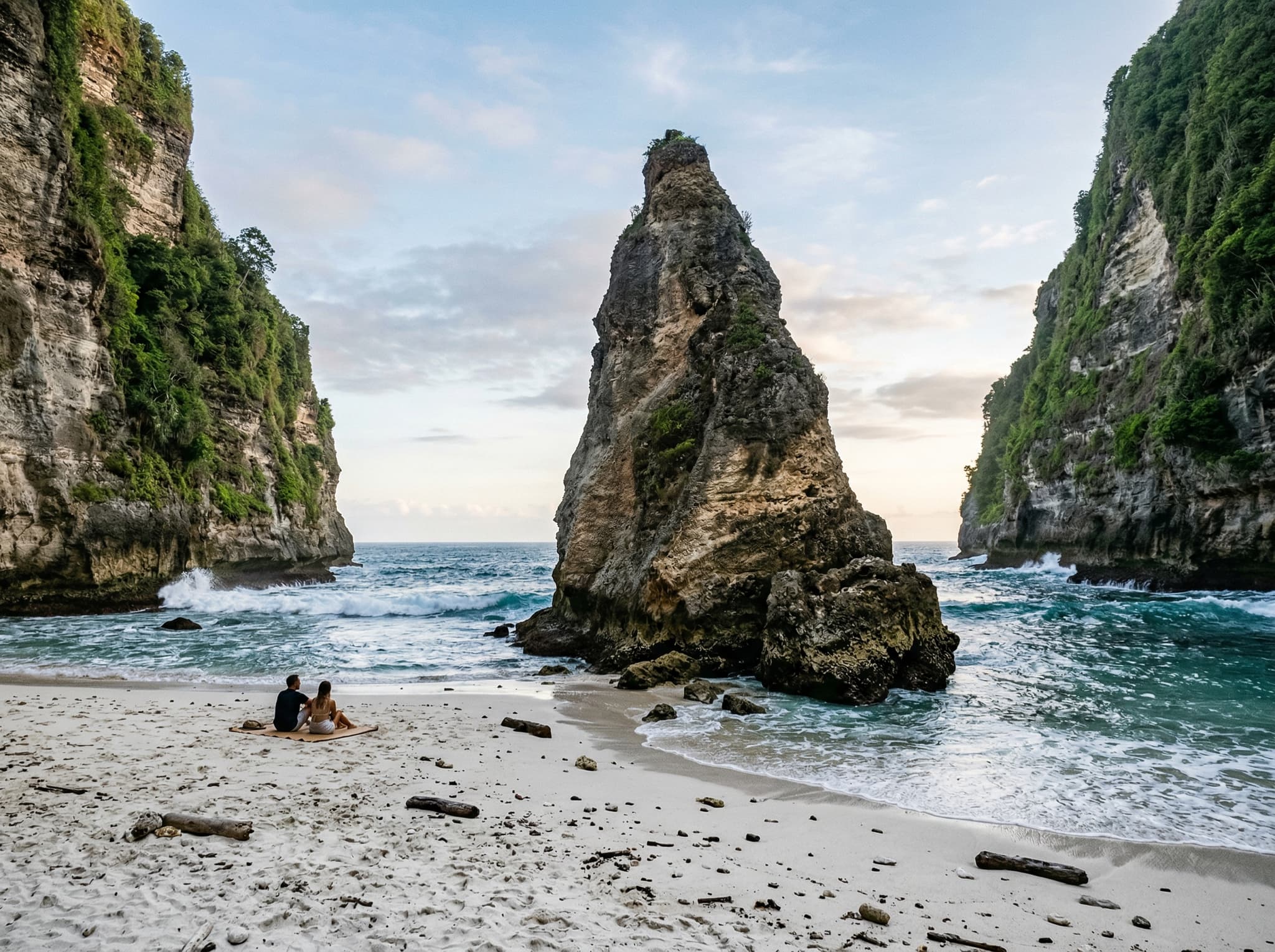
Suwehan is a white sand beach framed by towering limestone cliffs on both sides. A distinctive rock formation — a tall, freestanding pinnacle — rises from the sand near the waterline. This is the image you've probably seen. In person, the scale is what strikes you. The cliffs are enormous. The pinnacle, which looks sculptural in photographs, is rougher and more imposing up close, weathered and barnacled at its base.
The beach itself is not large. At high tide, the usable sand narrows significantly — timing your visit matters. Low tide opens up more space and exposes some of the rock formations and tidal pools along the cliff edges.
Conditions to Know
Sand
White, coarse in places
Waves
Often strong — not a calm swimming beach
Shade
Minimal, cliff shadow varies by time of day
Facilities
None on the beach itself
The water at Suwehan is striking — that deep, saturated blue-green that Nusa Penida is known for. But the currents here can be strong, and the waves break directly onto the shore with real force. This is not a swimming beach in the way that most visitors expect. Wading is possible when conditions are calm, but you need to read the water honestly. During the wet season or on rough days, the surf can be dangerous. There are no lifeguards, no flags, no one watching.
What the beach is, genuinely, is a place to sit. That sounds like a small thing until you're there — the cliff walls rising on either side, the sound of the ocean filling the space, the light shifting as the sun moves overhead. It's one of the few beaches on Nusa Penida where you might be entirely alone, or close to it. The difficulty of access filters out casual visitors.
Suwehan and Lumangan

Suwehan Beach is sometimes paired with a visit to nearby Lumangan Cliff, which offers dramatic cliff-edge views of the coastline. The two are close enough to combine in a single trip, and some visitors treat the cliff viewpoint as the easier alternative if the beach descent feels too demanding. That's a reasonable approach. Lumangan gives you the scale and the drama of this coastline without the physical commitment.
But they're different experiences. Lumangan is about looking. Suwehan is about being inside the landscape — enclosed by it, dwarfed by it. One is a viewpoint. The other is a place you inhabit, briefly, before climbing back out.
What to Bring
There's nothing on the beach. No warung, no drinks, no rental chairs. Everything you need, you carry down — and back up.
Pack List
Water
At least 1 liter per person
Footwear
Sturdy shoes or sport sandals with grip
Sun protection
Sunscreen, hat — shade is limited
Snacks
There are no vendors on the beach
Trash bag
Carry out everything you bring in
Who This Beach Is For
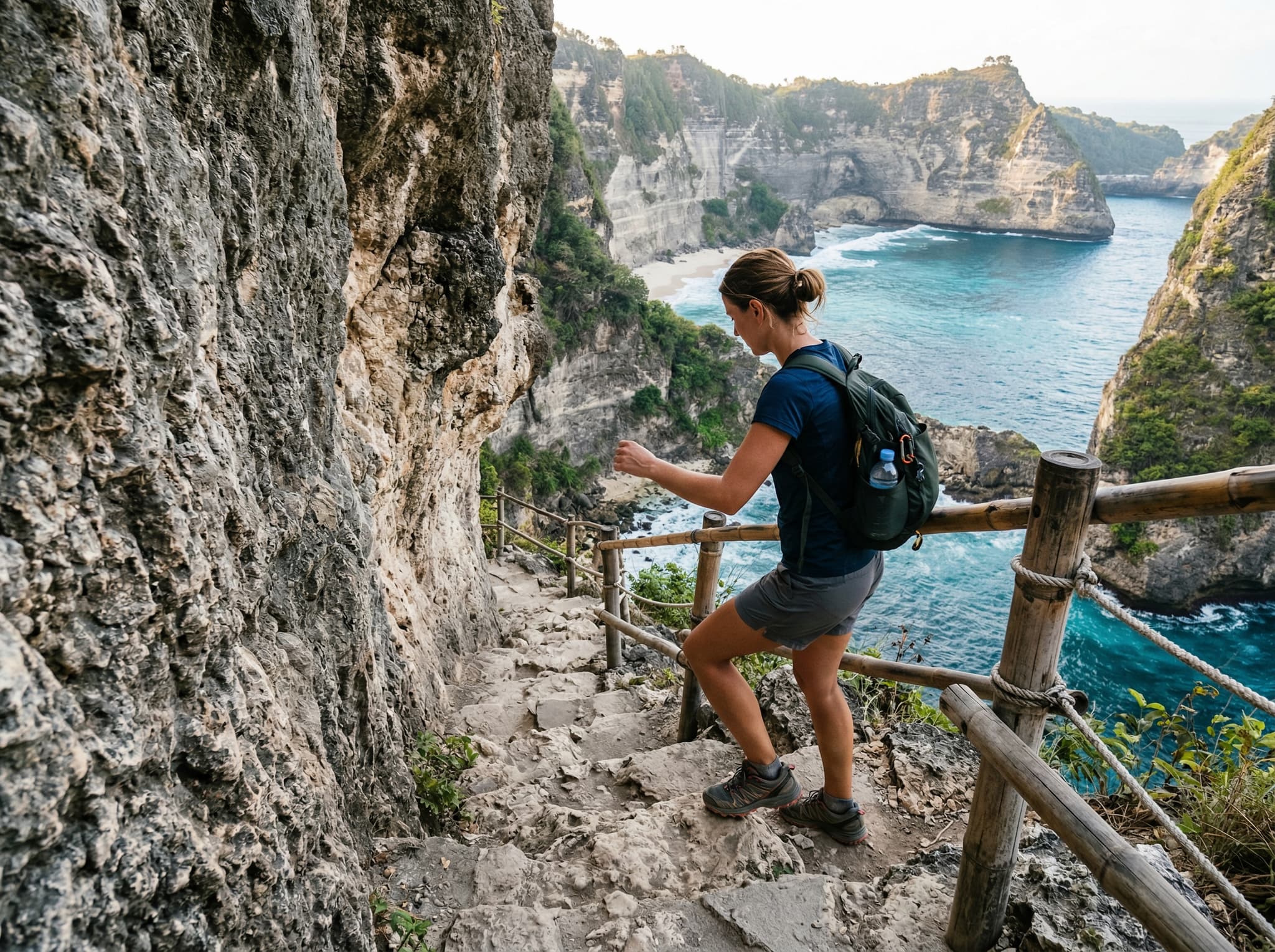
Suwehan is not for everyone, and that's not a marketing line — it's a practical reality. If you're comfortable with a strenuous hike, unbothered by exposed heights, and looking for a beach that feels genuinely remote despite being on an island that receives thousands of visitors daily, this is one of the most striking stretches of sand in the region.
If you want to swim, snorkel, or spend a relaxed afternoon with easy access, Nusa Penida has other options — Crystal Bay on the west coast, or Atuh Beach on the east, which has its own demanding access but slightly more infrastructure at the bottom.
Suwehan asks something of you. The reward is proportional. A beach at the bottom of a cliff, framed by limestone walls that have been shaped by centuries of water and wind, where the only sounds are the ocean and whatever you brought with you. No music, no menu, no Wi-Fi signal. Just the place itself.
That's either exactly what you're looking for, or it isn't. Both answers are fine.