Pasar Beringharjo: Yogyakarta's Oldest Market at the Heart of Malioboro
Pasar Beringharjo is Yogyakarta's oldest traditional market — over 1,300 traders selling batik, Javanese food, and spices at the southern end of Malioboro.
The southern end of Jalan Malioboro doesn't taper off so much as it thickens. The souvenir stalls and silver shops give way to something denser — a low-slung complex of connected buildings where the air changes. It gets warmer. It smells like turmeric and clove cigarettes and fresh-pressed cotton. This is Pasar Beringharjo, Yogyakarta's oldest traditional market, and for many visitors it's the first encounter with a Javanese market that isn't performing for tourists.
Over 1,300 traders work here across several connected buildings linked by corridors and narrow passages. The market has been described — fairly — as clean and well-maintained for a traditional Indonesian market, though "clean" still means close quarters, uneven floors, and the kind of sensory compression that rewards patience. Sections are loosely organized by goods: batik cloth to the northwest, ready-made clothing to the west, gold and silver jewelry near the entrance, food stalls scattered along the south and north sides. Recent infrastructure updates have improved signage and block identification, which helps, though the layout still rewards wandering over planning.
What to Buy at Pasar Beringharjo
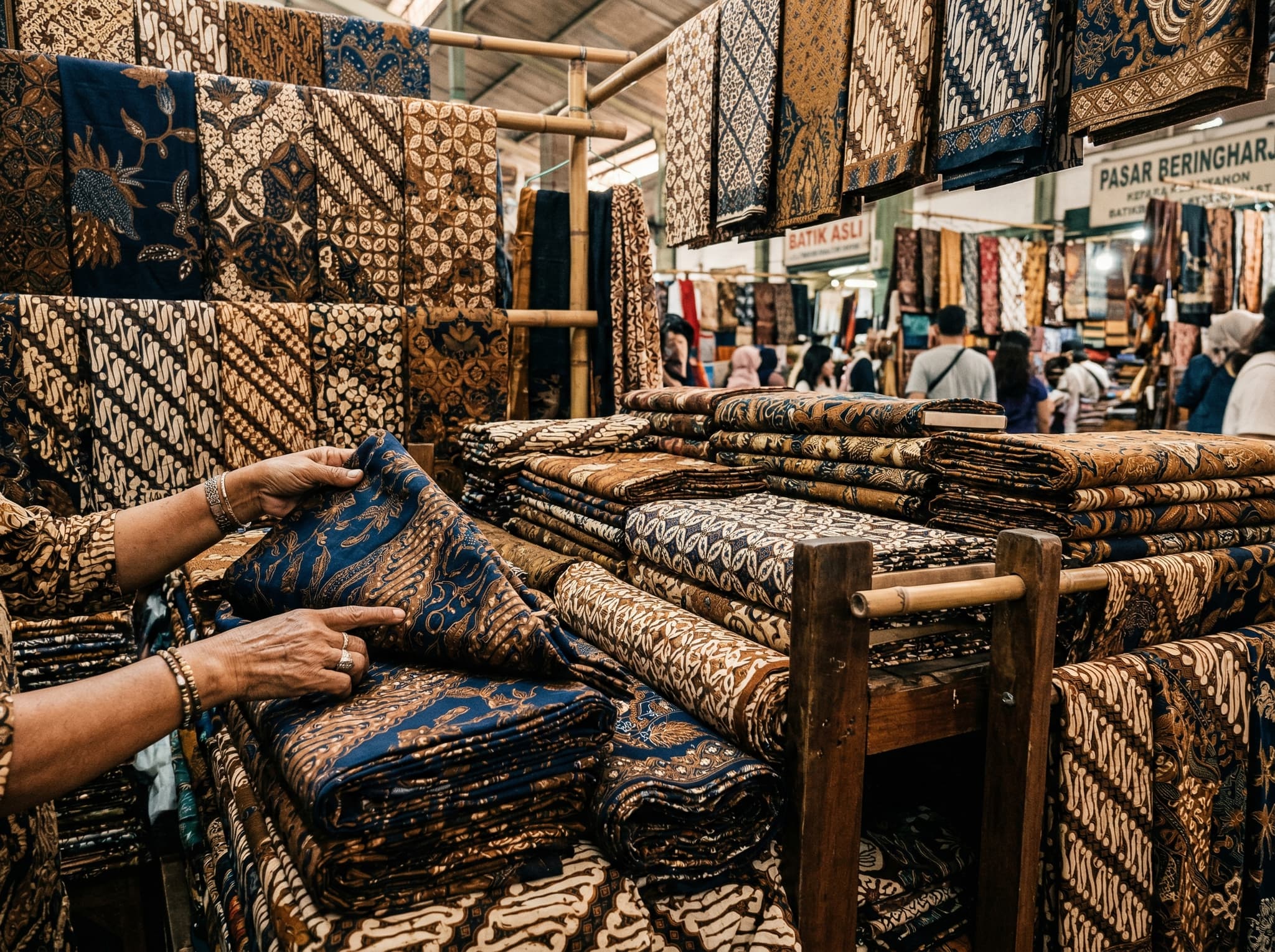
The market's reputation rests on batik, and the northwest stalls are where serious buyers head first. Printed batik starts around IDR 50,000 per piece. Hand-drawn batik sarongs — batik tulis, the kind where the wax is applied by hand with a canting tool — start closer to IDR 100,000. Premium pieces in silk or fine hand-drawn work can reach IDR 1,000,000 or more.
Beyond batik, the market sells traditional Javanese attire — surjan jackets, beskap formal wear, blangkon headpieces — alongside bags, sandals, and purses. The western side near the escalators carries inexpensive shoes. Prices here tend to run lower than what you'd pay on Malioboro Street itself for comparable items.
Batik Price Guide
Printed batik
From ~IDR 50,000
Hand-drawn sarong (batik tulis)
From ~IDR 100,000
Premium silk / fine hand-drawn
Up to ~IDR 1,000,000
Bargaining and Payment
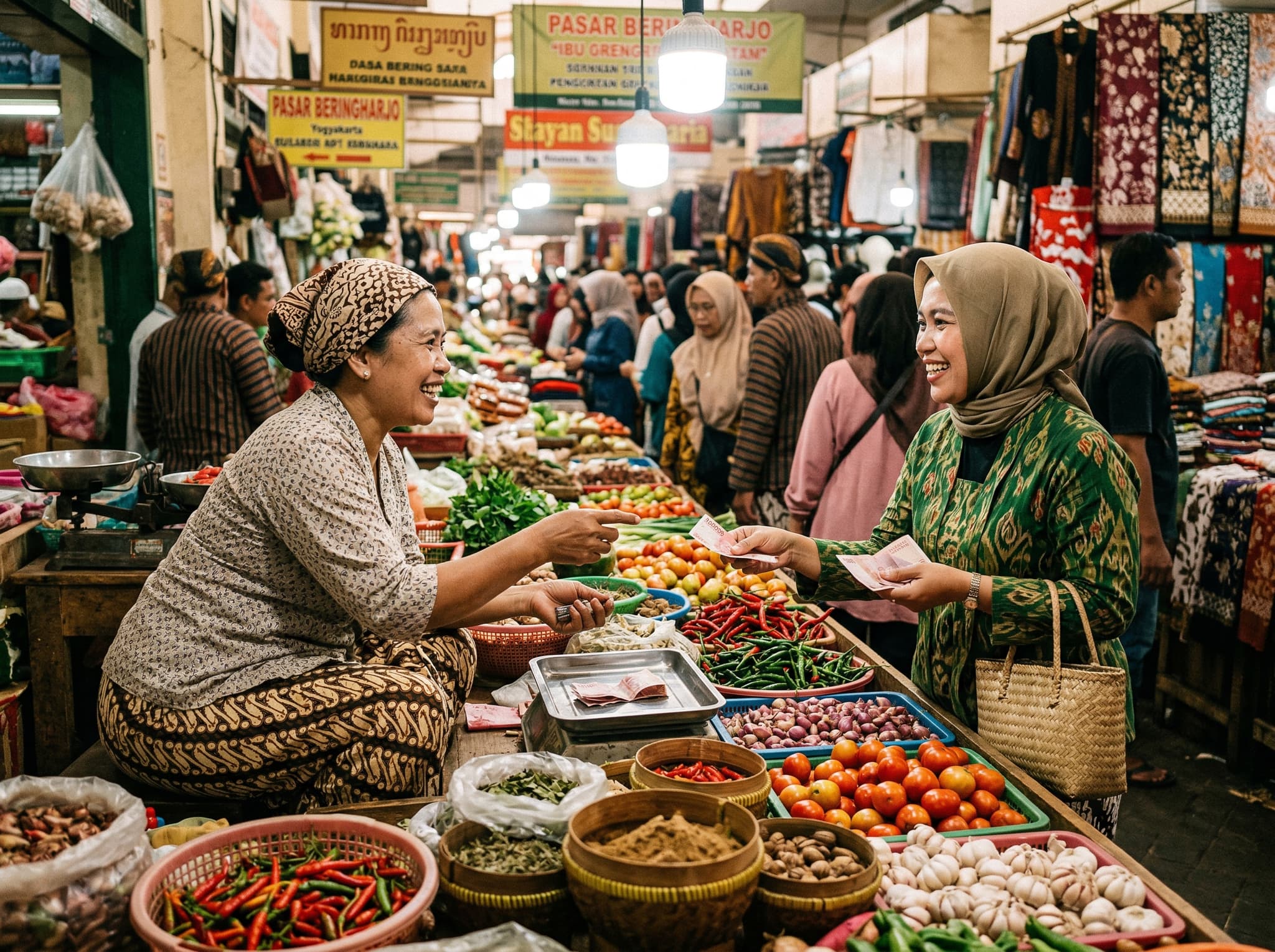
Bargaining is expected at most stalls unless a sign reads "harga pas" (fixed price). A reasonable opening offer is roughly a third of the initial asking price. Vendors typically quote higher for foreign visitors — this isn't hostility, it's the system. Work upward from your opening number. Address sellers as Bapak (sir) or Ibu (madam); it's basic courtesy and it shifts the tone of the exchange.
Bring cash in small denominations. While a 2024 digitalization initiative introduced QRIS BRI mobile payments across the market, not every stall uses it consistently. Small bills — IDR 10,000 and 20,000 notes — make transactions smoother and bargaining easier.
What to Eat
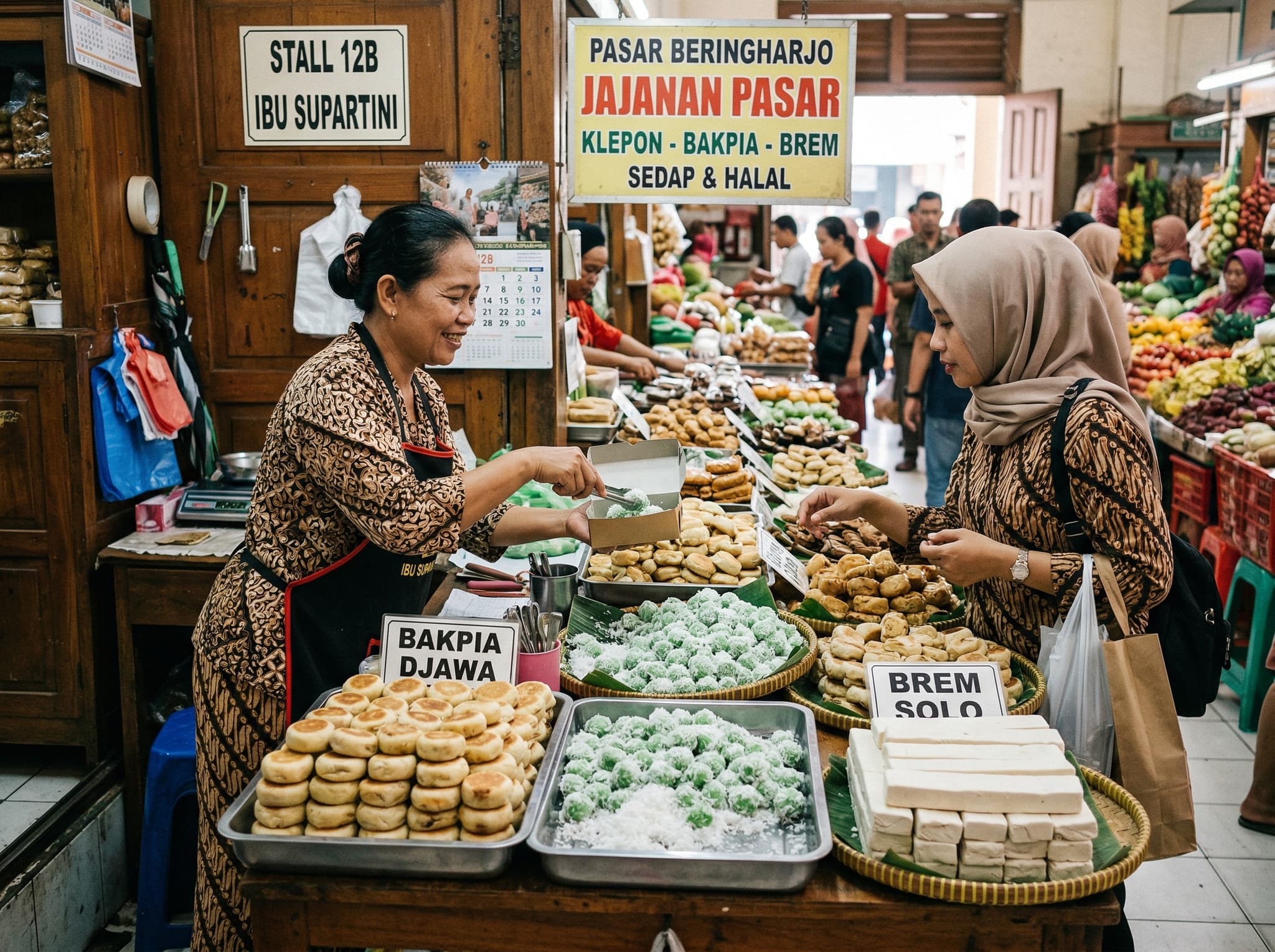
The food stalls are reason enough to visit, though they keep different hours from the rest of the market. Many open in the morning and close by early-to-mid afternoon, well before the general market shuts down. Arrive before lunch if eating is a priority.
The south side of the market is known for bakpia — small pastries filled with mung bean paste, baked until the crust goes flaky and faintly sweet. Along the north and west sides, look for brem (dense, chewy rice flour sweets) and klepon (pandan-scented rice balls filled with palm sugar, rolled in fresh coconut). These are snack foods, not meals, and they cost almost nothing — a few thousand rupiah per piece.
The ground floor also has sections selling fresh fruit and spices. The spice stalls are worth a pause even if you're not buying
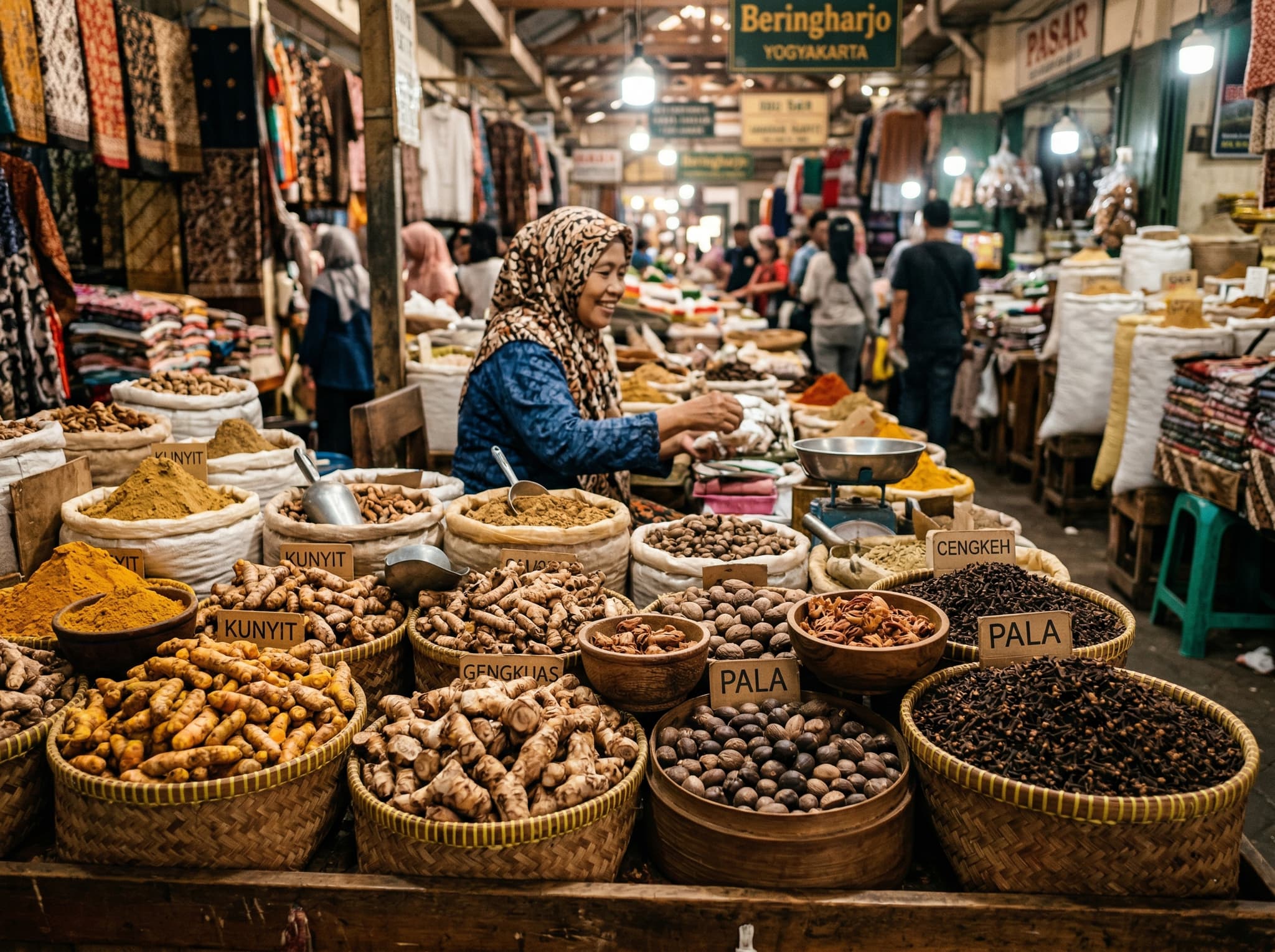
: turmeric root, dried galangal, whole nutmeg, clove in quantities that make the air thick.
Getting There
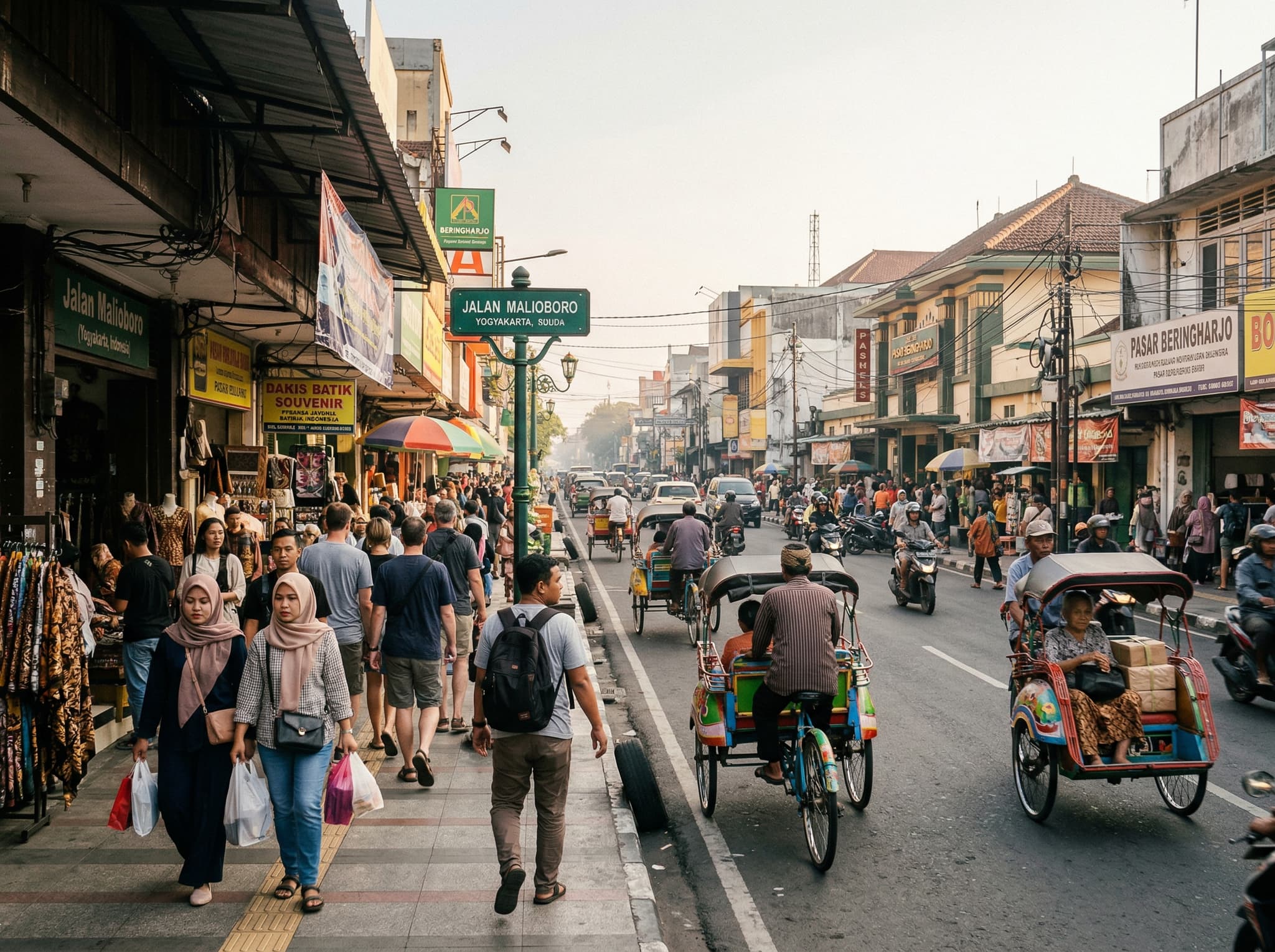
Pasar Beringharjo sits at the southern end of Jalan Malioboro, less than a kilometer from the street's central stretch. Walking is the simplest option — follow Malioboro south and the market appears on your left. Becak (cycle rickshaws) and tuk-tuks are available along Malioboro for those who prefer a ride. A small parking fee may apply if arriving by private vehicle or motorbike.
The market's position makes it easy to combine with other visits in the area. The Kraton (Sultan's Palace) is a short walk further south, and Fort Vredeburg sits just across the intersection.
When to Go
Morning — before 11:00 — is the best window. The food stalls are active, the temperature inside the market buildings is more tolerable, and the crowds haven't fully built yet. Batik vendors open a bit later, around 09:00 or 10:00, so a mid-morning arrival catches both food and textiles at their best.
The market stays open daily, including Sundays and public holidays, with reported hours of approximately 08:30 to 21:00. These hours may vary by source and season; checking a live mapping app or asking at your accommodation on the day of your visit is worth the small effort.