Batu Bolong is Canggu's most famous beach — crowded, social, and undeniably magnetic. Here's what it's actually like and who should go.
Every neighborhood has a center of gravity. In Canggu, it's Batu Bolong Beach — the stretch of dark volcanic sand where surfers, digital nomads, day-trippers, and sunset cocktail seekers all converge into one chaotic, photogenic scene. It's the beach most people picture when they think of Canggu, and it's the one that draws the strongest opinions in both directions.
Some travelers call it the best beach in Canggu. Others say it's a crowded, overcommercialized mess. Both camps are partially right, and the difference usually comes down to timing, expectations, and what you actually want from a beach day in Bali.
What You're Actually Walking Into
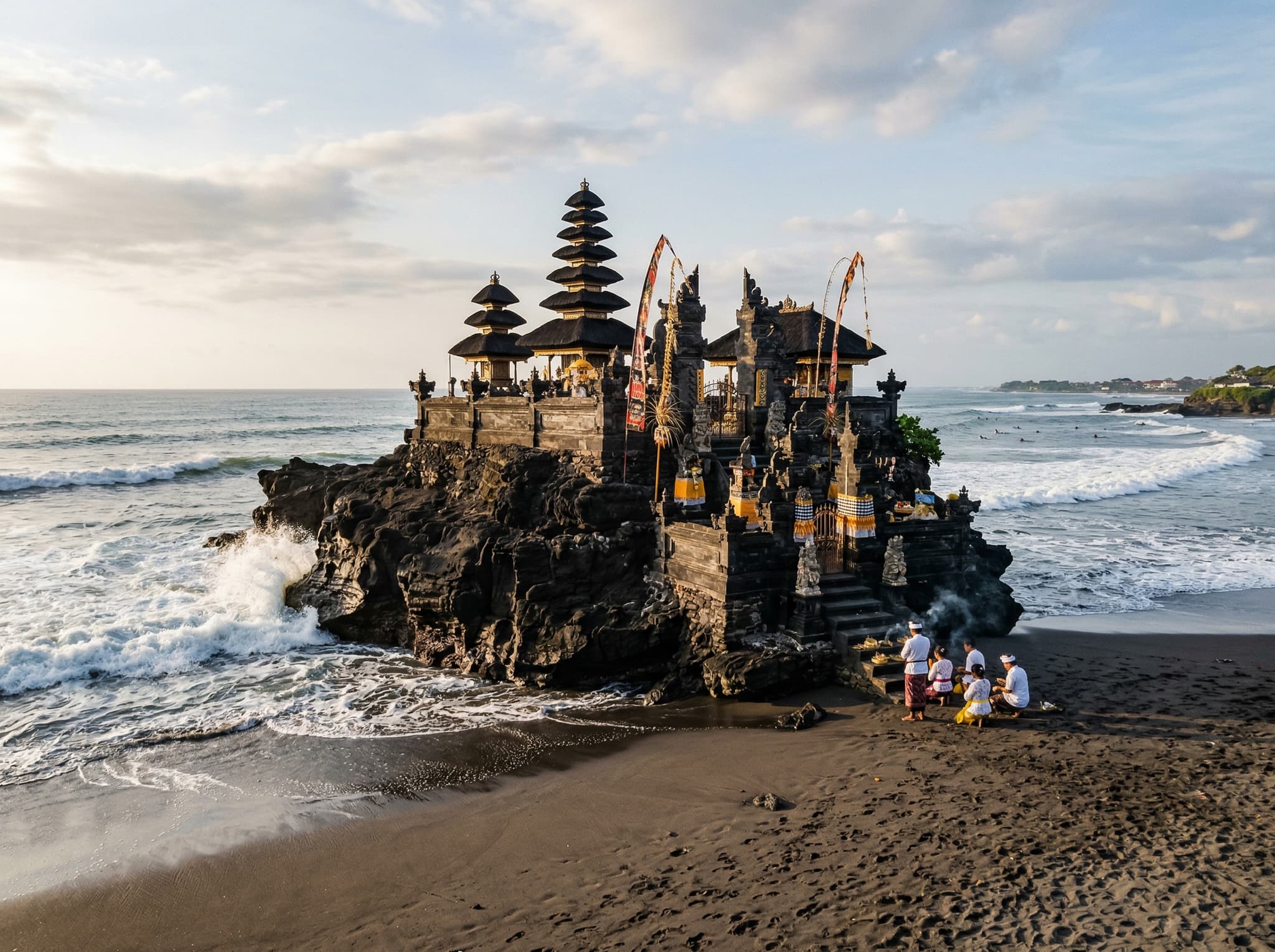
Batu Bolong is not a white-sand postcard beach. The sand is dark grey-brown — volcanic, coarse, and hot underfoot by midday. The water is rarely that crystalline turquoise you see in Nusa Penida photos. On most days, the sea is a murky grey-green with visible whitewater from the consistent swell that rolls in from the Indian Ocean.
None of that matters to the people who love this place, because Batu Bolong isn't really about the water. It's about the scene.
The beach sits directly below Pura Batu Bolong, a small sea temple perched on a rocky outcrop at the northern end. That temple gives the beach its name and its most recognizable landmark. From there, the sand stretches south toward Echo Beach, lined with warungs (local food stalls), beanbag-rental setups, and surf schools competing for your attention.
The Beach at a Glance
Sand Type
Dark volcanic
Surf Level
Beginner to intermediate
Board Rental
IDR 50,000–100,000/hour (~$3–6)
Surf Lesson (2 hrs)
IDR 350,000–500,000 (~$22–32)
Beanbag + Drink
IDR 50,000–80,000 (~$3–5)
Bintang at a Warung
IDR 35,000–50,000 (~$2–3)
The Surf Situation
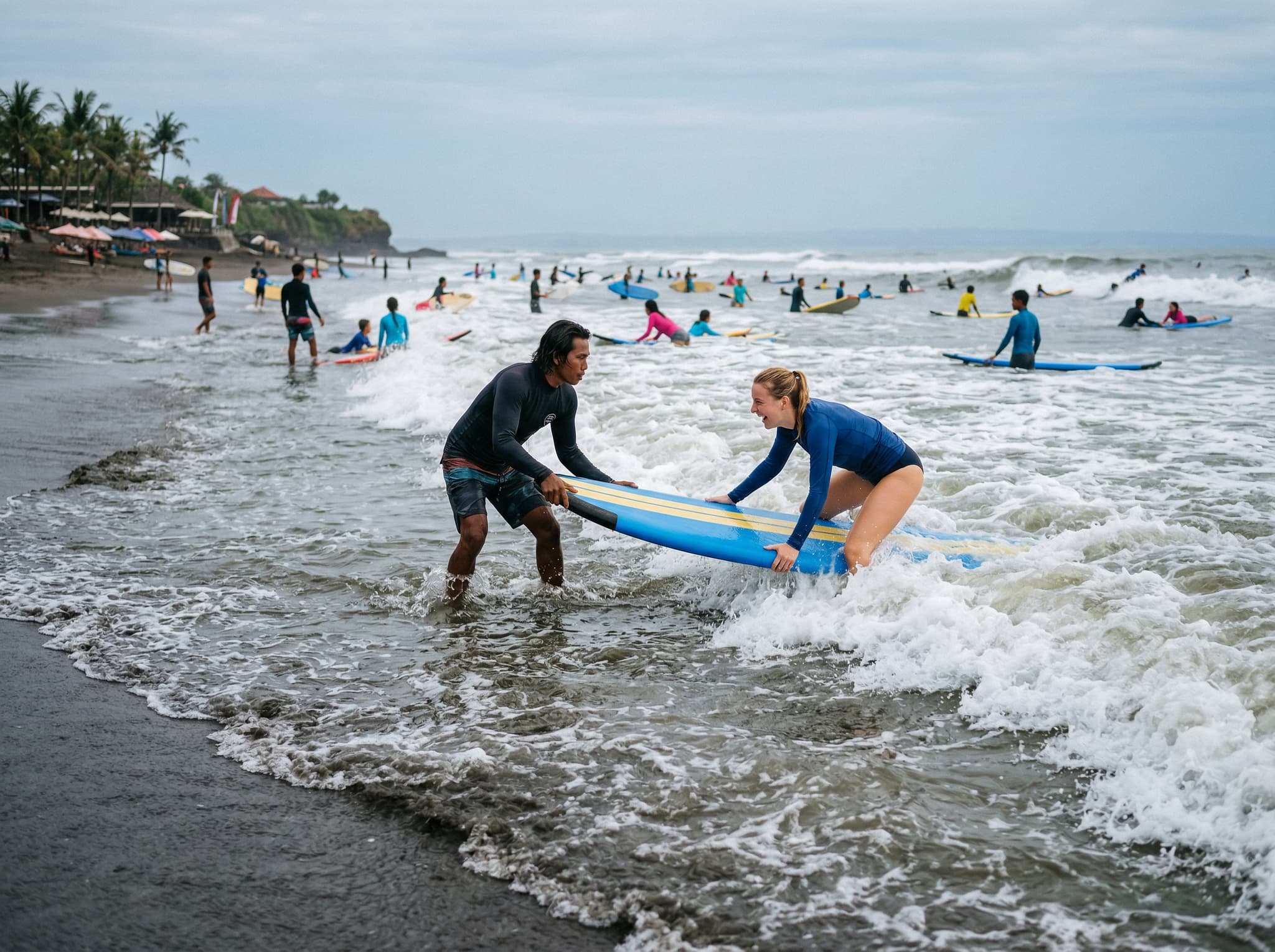
Batu Bolong is Canggu's most accessible surf break. The wave is a mellow, crumbly right-hander that works on mid to high tide — forgiving enough for beginners, fun enough for intermediates on bigger days. If you've never surfed, this is where most people in Canggu start, and there's no shortage of instructors ready to push you into your first wave for around IDR 400,000 ($25) for a two-hour session.
The problem: everyone else had the same idea. During peak season, the lineup gets genuinely crowded — thirty, forty people jockeying for the same waves. Loose boards, beginners paddling into the impact zone, instructors pushing students into waves without checking who's already riding. It's not dangerous in a life-threatening way, but it's chaotic enough that experienced surfers avoid it entirely during high season.
If you're an intermediate or better surfer, Batu Bolong probably isn't your wave. Echo Beach, a 10-minute walk south, has a faster, hollower break that filters out the beginners. Old Man's, just north of Batu Bolong, is another mellow option but slightly less crowded because it lacks the beachfront bar infrastructure.
The Sunset Economy
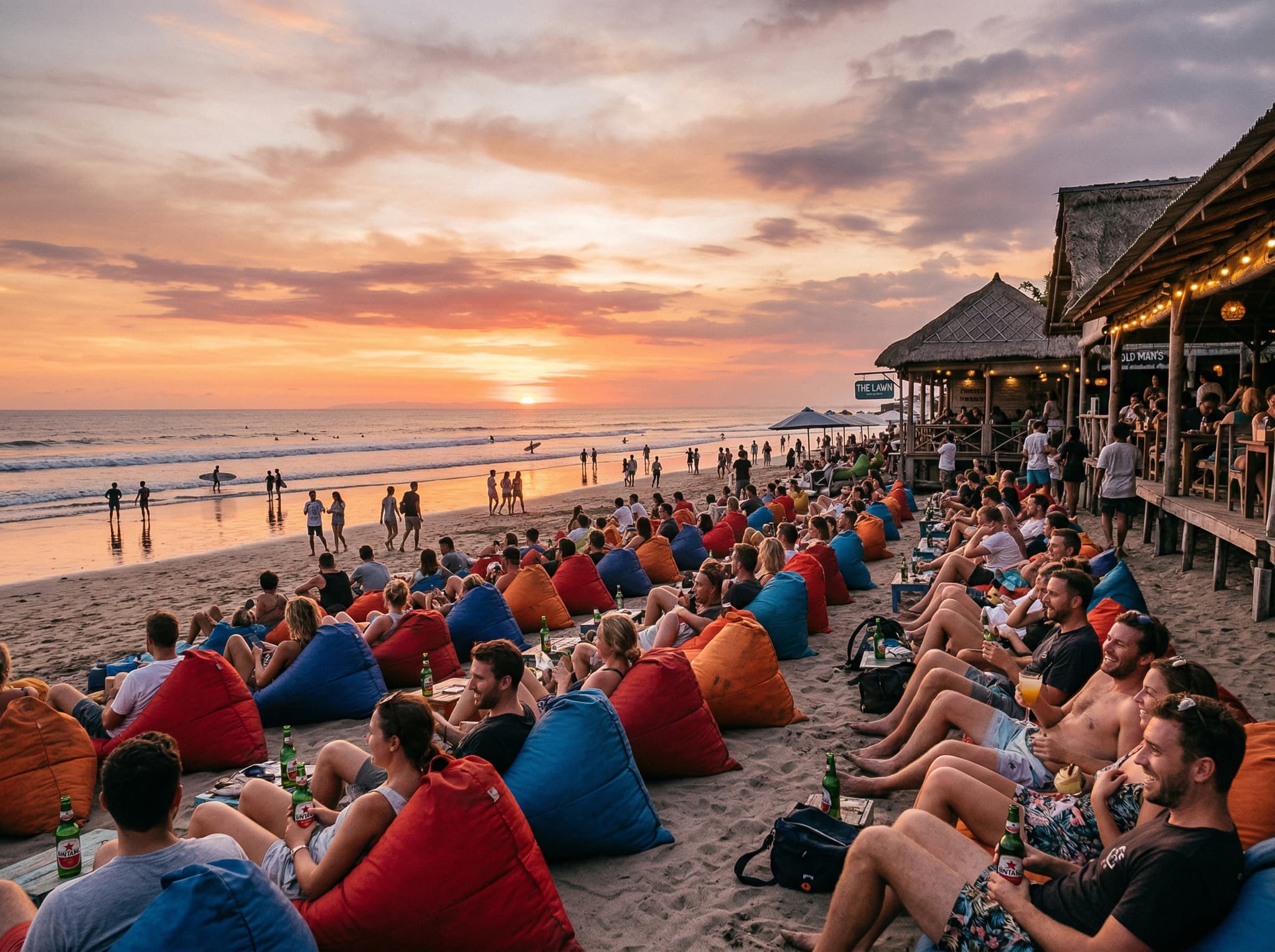
Here's the honest truth about Batu Bolong: for most visitors, the surf is secondary. The main draw is the late-afternoon-into-sunset ritual. Starting around 4 PM, the beach transforms into an open-air social club. Beanbags fill up. Warungs crank up music. Cocktails appear. People who haven't touched the ocean all day claim their spots facing west and wait for the sky to do its thing.
And the sunsets are legitimately good. Bali's west-facing coastline delivers, and Batu Bolong's flat horizon and temple silhouette make for a better composition than most beaches in the area.
The beachfront warungs — The Lawn, Canggu Beach Club-adjacent spots, and the smaller local stalls closer to the temple — range from budget-friendly to surprisingly expensive. A nasi goreng at a local warung runs IDR 30,000–45,000 ($2–3). A cocktail at one of the more polished setups will cost IDR 120,000–180,000 ($8–12). The price gradient is steep and it correlates almost perfectly with proximity to the beanbags.
Who Should Actually Go
Batu Bolong is worth your time if you want Canggu's signature experience — the one that made this neighborhood famous. It's the most social beach, the easiest place to rent a board and try surfing, and the most reliable sunset spot within walking distance of Canggu's main strip. First-time Bali visitors, solo travelers looking to meet people, and anyone who wants the full Canggu atmosphere should spend at least one afternoon here.
It's not the beach for you if you want space, quiet, or clean water for swimming. The currents can be strong, the water isn't particularly inviting for a casual swim, and by mid-afternoon in high season, finding an unclaimed patch of sand requires real commitment.
The Alternatives Worth Knowing
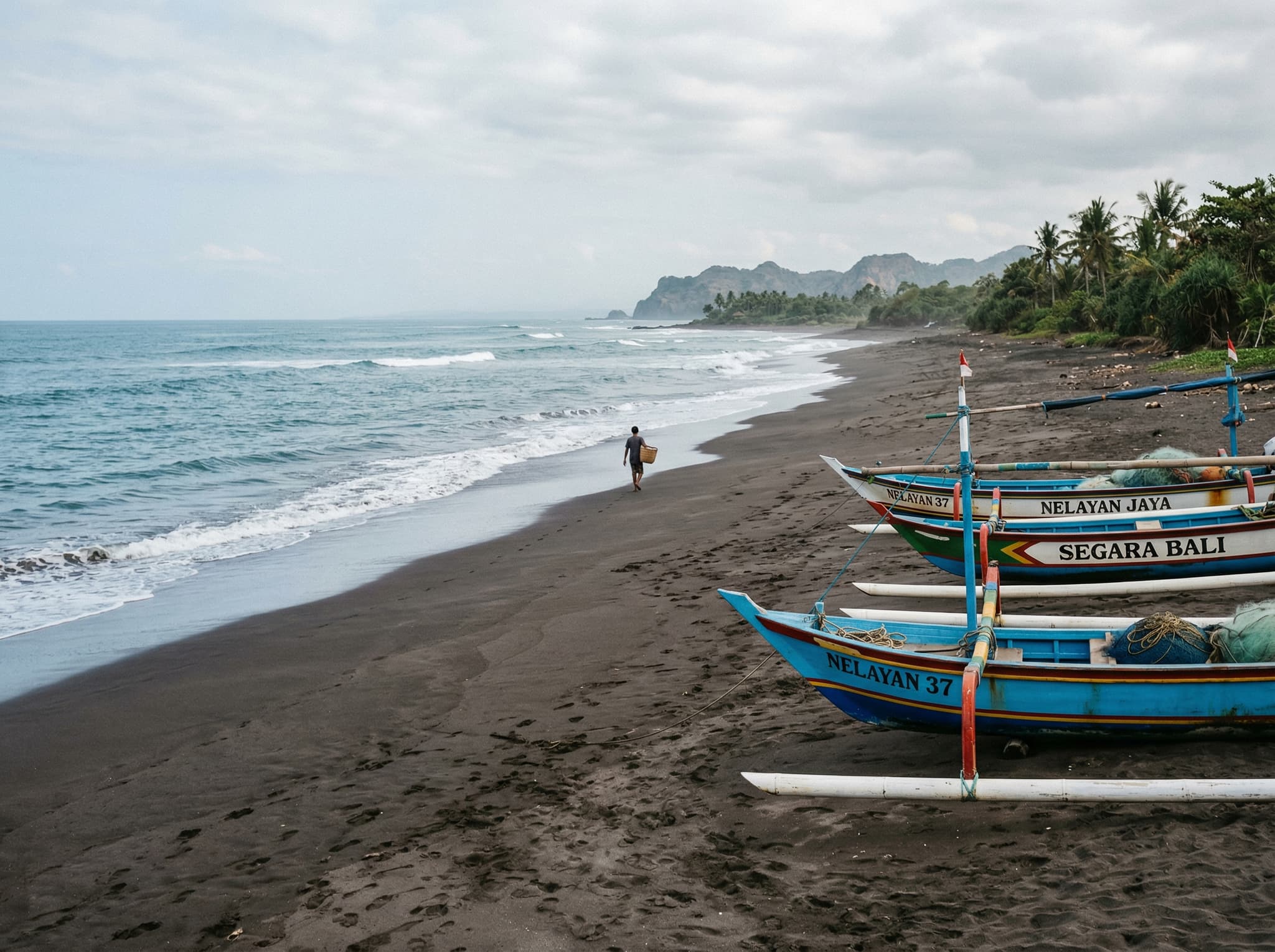
Berawa Beach, about 2 km south, offers a similar vibe with slightly fewer people and a more spread-out shoreline. Echo Beach has better surf and a grittier, less curated feel. Nelayan Beach, tucked between Batu Bolong and Berawa, is a quieter pocket that most visitors walk right past.
None of them replicate exactly what Batu Bolong does. That's the thing — you can find better surf, cleaner sand, and fewer crowds elsewhere in Canggu. But you won't find another beach where the whole neighborhood seems to show up at golden hour, where a first-time surfer and a six-month digital nomad and a Balinese family making temple offerings all share the same 500 meters of coastline.
Batu Bolong is crowded because it earned it. Whether that crowd is the feature or the bug depends entirely on what you came for.