Canggu has overtaken Ubud and Kuta as Bali's most popular destination. Here's the honest guide — neighborhoods, costs, surf, and what to expect in 2025.
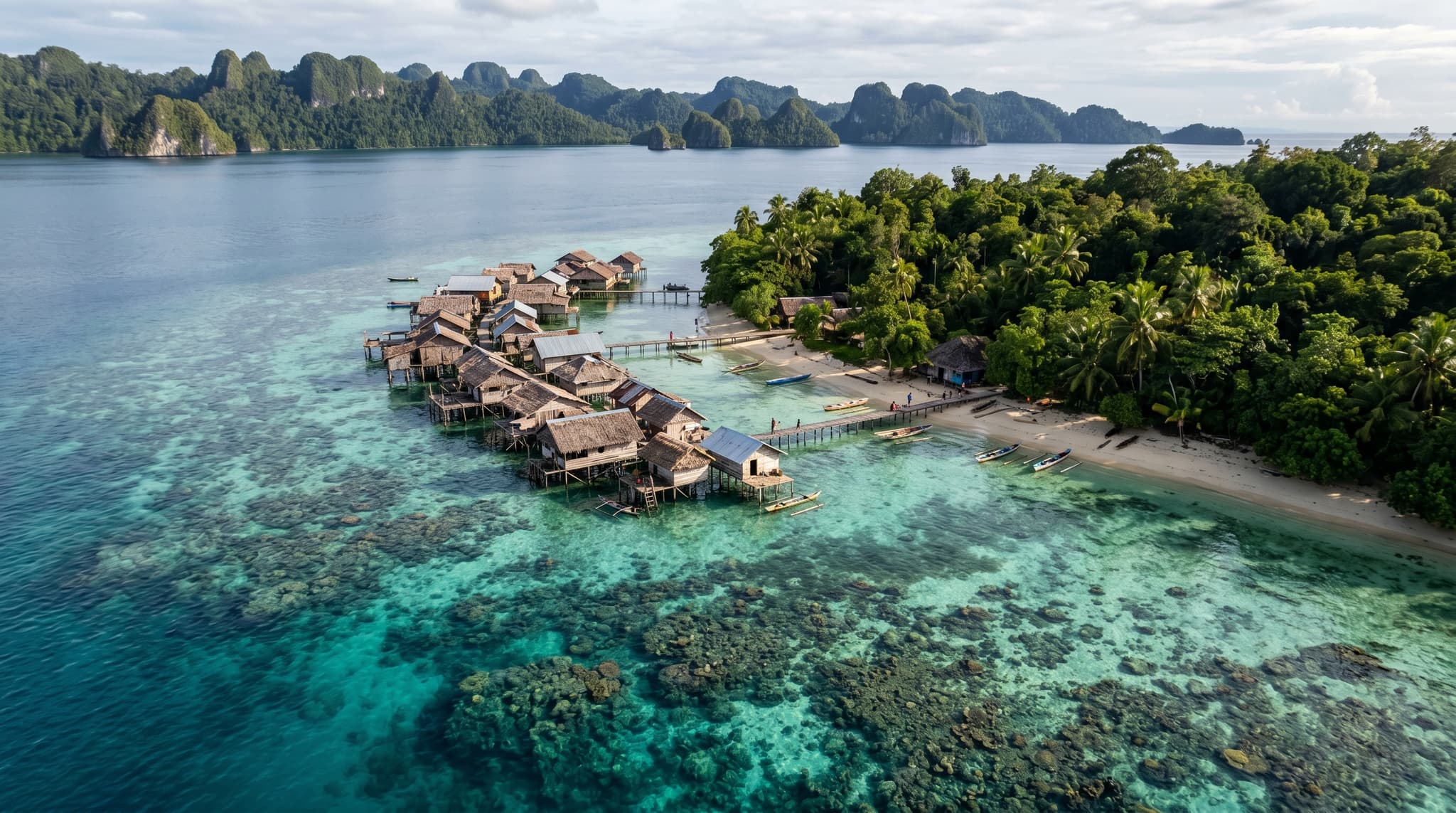
Canggu was a quiet fishing village with black-sand beaches and rice paddies. That sentence appears in every guide written about this place, and it stopped being accurate around 2018. What Canggu is now — as of 2025 — is Bali's most popular destination for international visitors, overtaking both Ubud and Kuta. It's a dense, buzzing strip of coworking spaces, Western-style coffee shops, surf schools, tattoo studios, beach clubs, and high-end gyms with ice baths. Some of the rice paddies remain. The fishing boats are mostly gone.
That's not automatically a bad thing. But you should know what you're walking into.
The Honest Picture
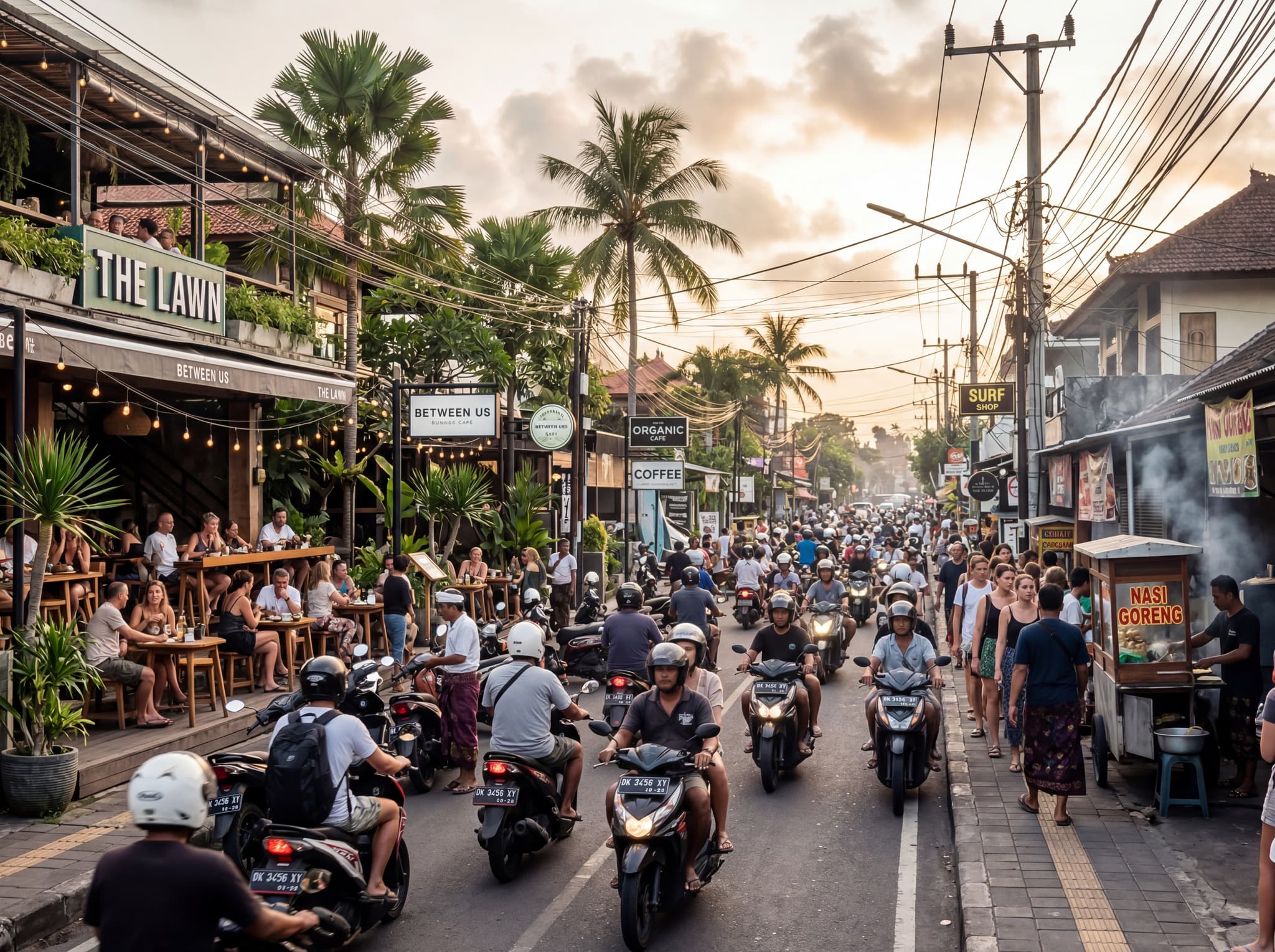
Canggu draws digital nomads, surfers, yoga practitioners, and young travelers who want Bali without the package-tour energy of Kuta or the gallery-hopping pace of Ubud. The appeal is real: consistent surf, sunsets that justify every cliché, affordable food if you eat local, and a social infrastructure built for people who work remotely and want community.
The trade-offs are also real. Traffic is genuinely terrible — a key shortcut road was converted to one-way for cars in 2025, which helped marginally, but afternoons after 3 PM remain gridlocked. Prices have risen sharply since the post-pandemic nomad influx; some rents have doubled since 2023. Long-term residents have started leaving, citing traffic and the loss of local character. And in September 2025, flooding hit Echo Beach, Batu Bolong, and Berawa — a reminder that wet season here means something.
A 2025 Bali-wide construction ban may slow future overdevelopment, but the trajectory is clear: Canggu is on the Seminyak path, just a few years behind.
My take: Canggu is still worth visiting. It's not worth romanticizing. Come with accurate expectations and you'll have a great time.
The Neighborhoods, Quickly
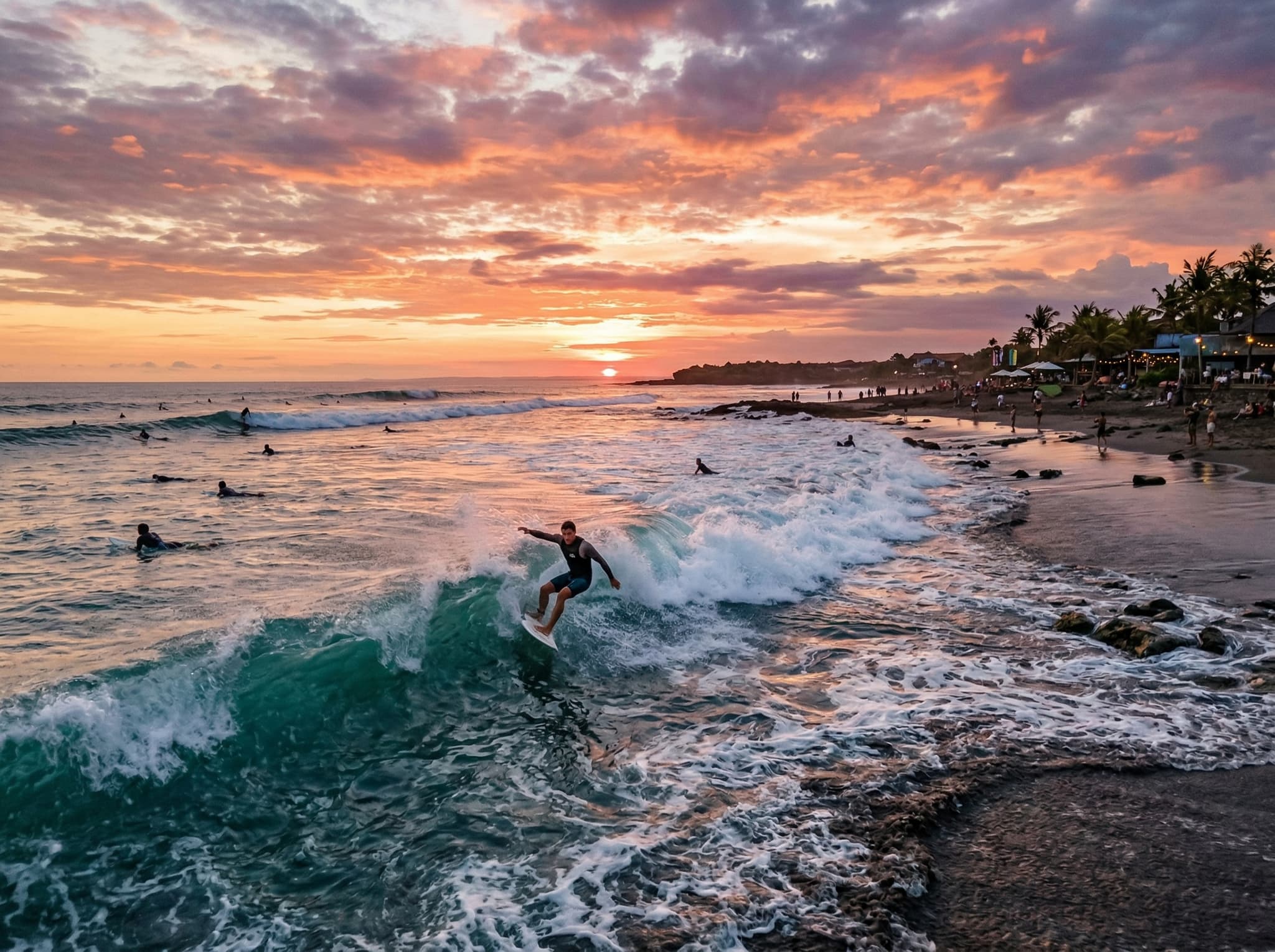
Canggu isn't one place — it's four distinct strips, and where you stay changes your experience significantly.
Batu Bolong is the center. The Lawn beach club, Sand Bar for nightlife, surf lessons on the beach. This is where first-timers should base themselves. It's walkable, loud, and convenient. If you want to be in the middle of things, this is it.
Berawa sits to the south, closer to Seminyak. Finn's Beach Club is the anchor. La Brisa runs a popular Sunday market. It's slightly more polished, slightly more expensive, and the best option if you want Canggu's energy with a bit more breathing room.
Echo Beach is the surf hub. The breaks here suit intermediate-to-advanced surfers (beginners are better off at Batu Bolong). Sunset views are the best in the area. The vibe is more laid-back, more local, and the restaurants are cheaper.
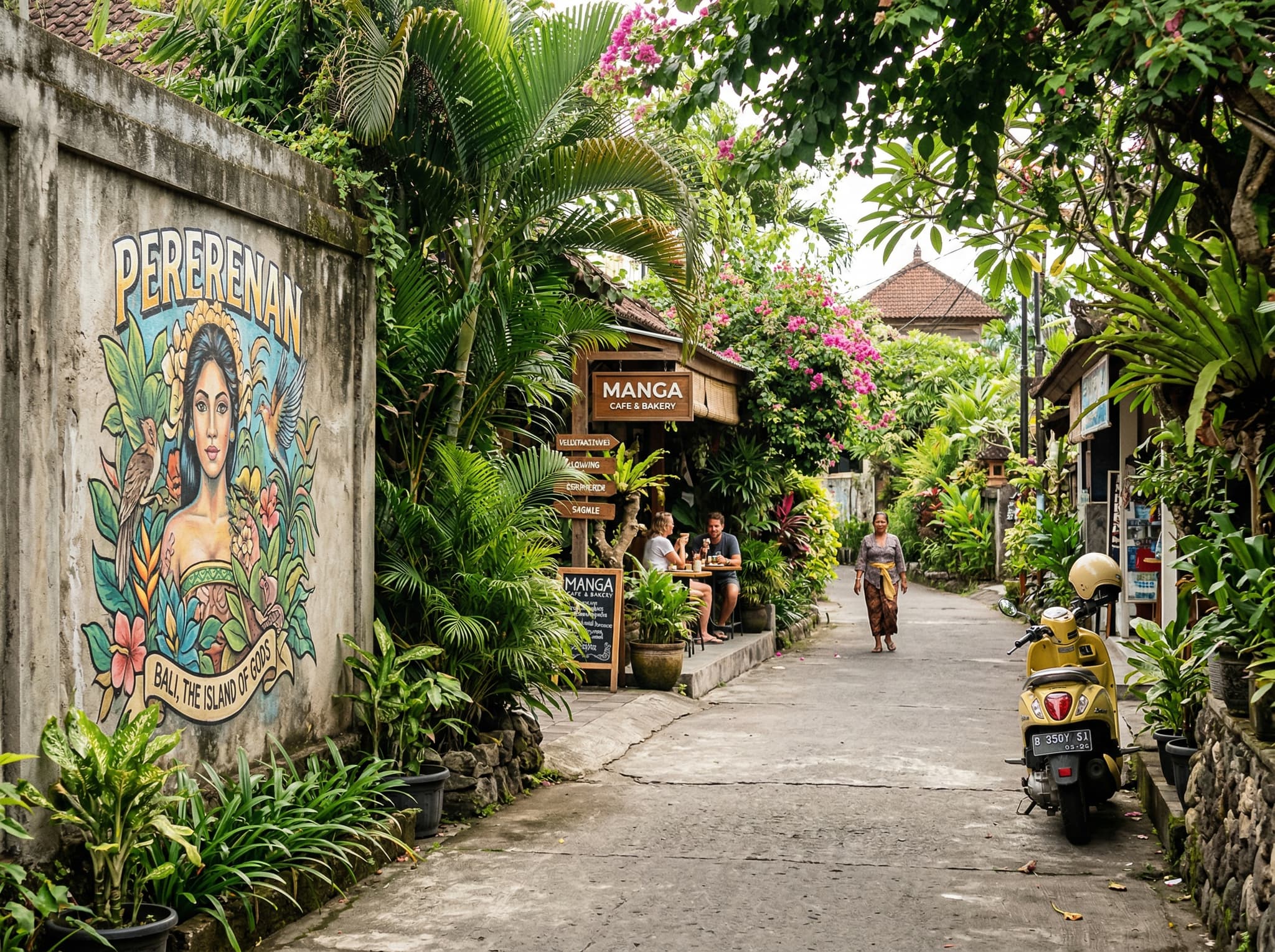
Pererenan is where Canggu starts to feel like what Canggu used to be. Quieter streets, street art, wellness studios, and excellent cafes — Crate, Baked, and Gigi Susu are all worth your morning. If traffic and noise bother you, stay here.
Neighborhood Comparison
Best for first-timers
Batu Bolong
Best for couples
Berawa
Best for surfers
Echo Beach
Best for quiet/wellness
Pererenan
What It Costs
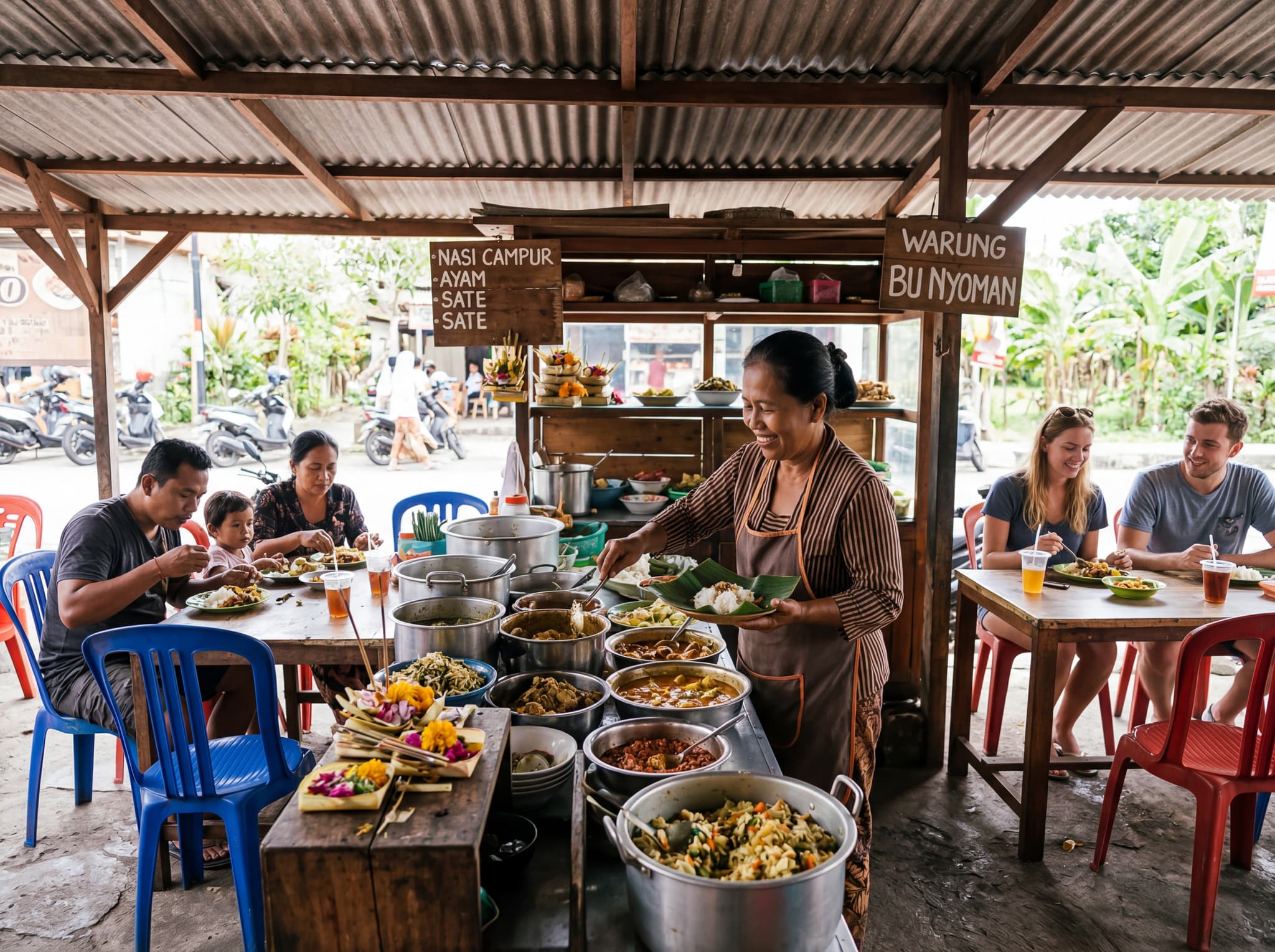
Canggu is no longer the budget paradise people describe in 2019 blog posts. It's broadly comparable to Seminyak now, and consistently more expensive than Ubud or Sanur. But by Western standards, it's still roughly 60% cheaper than most European or North American cities.
Monthly Cost of Living (2025)
Budget (shared room, warungs)
$800–900/month
Mid-range (private room, mixed dining, coworking)
$1,200–1,500/month
Comfortable (1BR villa, restaurants, gym)
$1,600–2,400/month
Upscale (premium villa, beach clubs)
$2,800+/month
The biggest variable is accommodation. A shared guesthouse runs $250–500/month. A furnished one-bedroom apartment or villa is $500–1,150/month. Negotiate monthly rates — long-term deals cut 20–30% off short-term pricing.
Food is where you save or hemorrhage money. Eat at warungs (local street eateries) and you'll spend $1.50–3 per meal, totaling $150–250/month. Eat at the Western-style cafes and you're looking at $8–15 per meal, which adds up fast.
Getting There and Getting Around
From Ngurah Rai Airport, expect 45 minutes in light traffic and up to 90 minutes after 3 PM. An official airport taxi costs Rp 130,000–150,000 ($8–9). Grab is usually cheaper but can't pick up inside the airport terminal — you'll need to walk to the departure level.
From Seminyak, it's 8–10 km and takes 11–20 minutes without traffic, 40–60 minutes with it. A taxi runs Rp 95,000–140,000 ($6–9).
Surf, Beach Clubs, and Nightlife
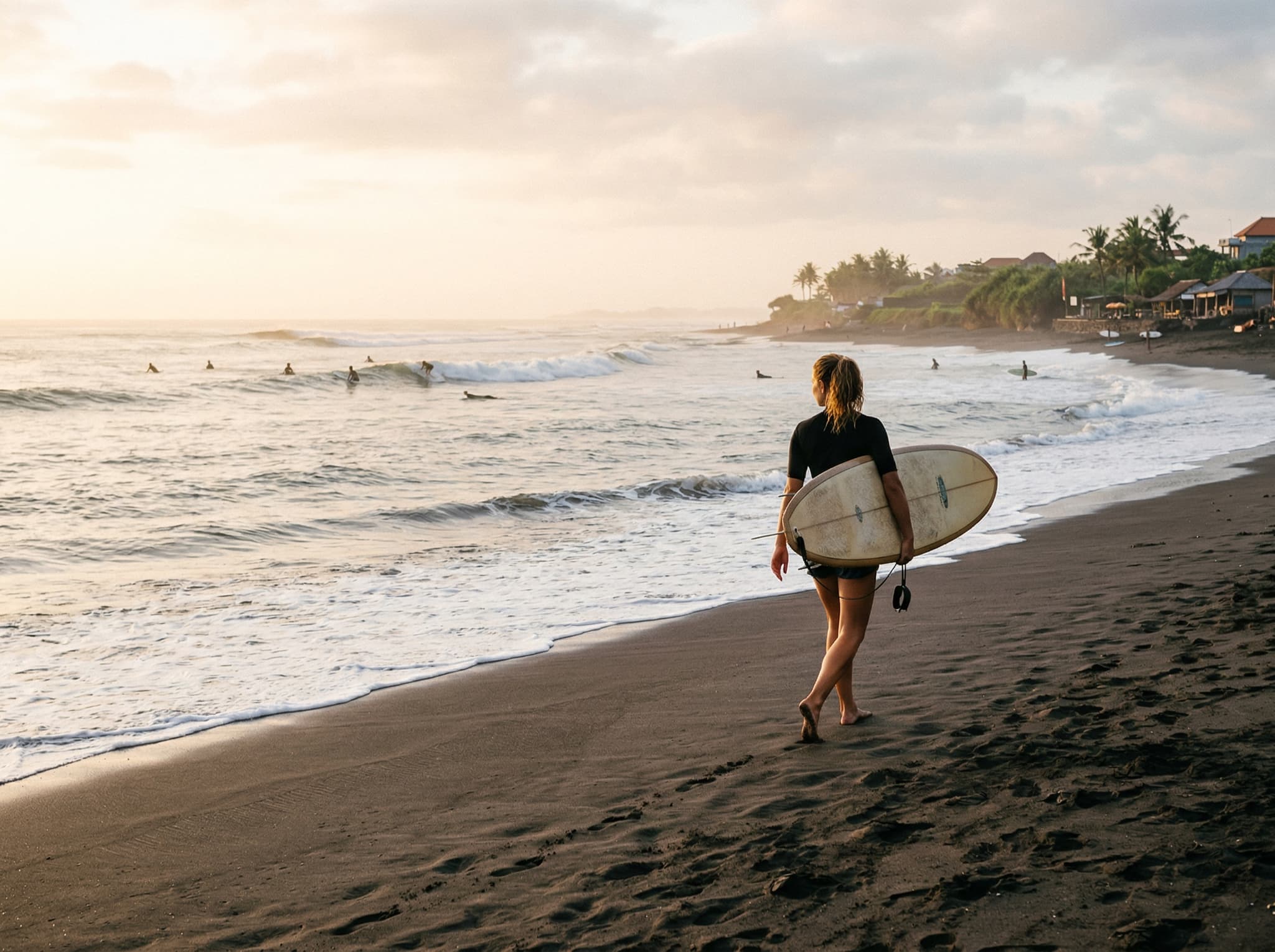
The surf is Canggu's original draw and still its best feature. Black-sand breaks at Batu Bolong and Echo Beach are consistent year-round, with the cleanest conditions from April to October — offshore winds, 2–6 foot swells. Wet season brings bigger but choppier surf. Lessons are available at Batu Bolong for beginners (expect to pay $25–35 for a two-hour session).
Beach clubs have proliferated: Finn's Beach Club, La Brisa, The Lawn, Morabito Art Villa, and newer additions like Desa Kitsuné. For nightlife, Pretty Poison and Sand Bar are the current anchors. Things get going late — don't show up before 10 PM.
Cultural Respect
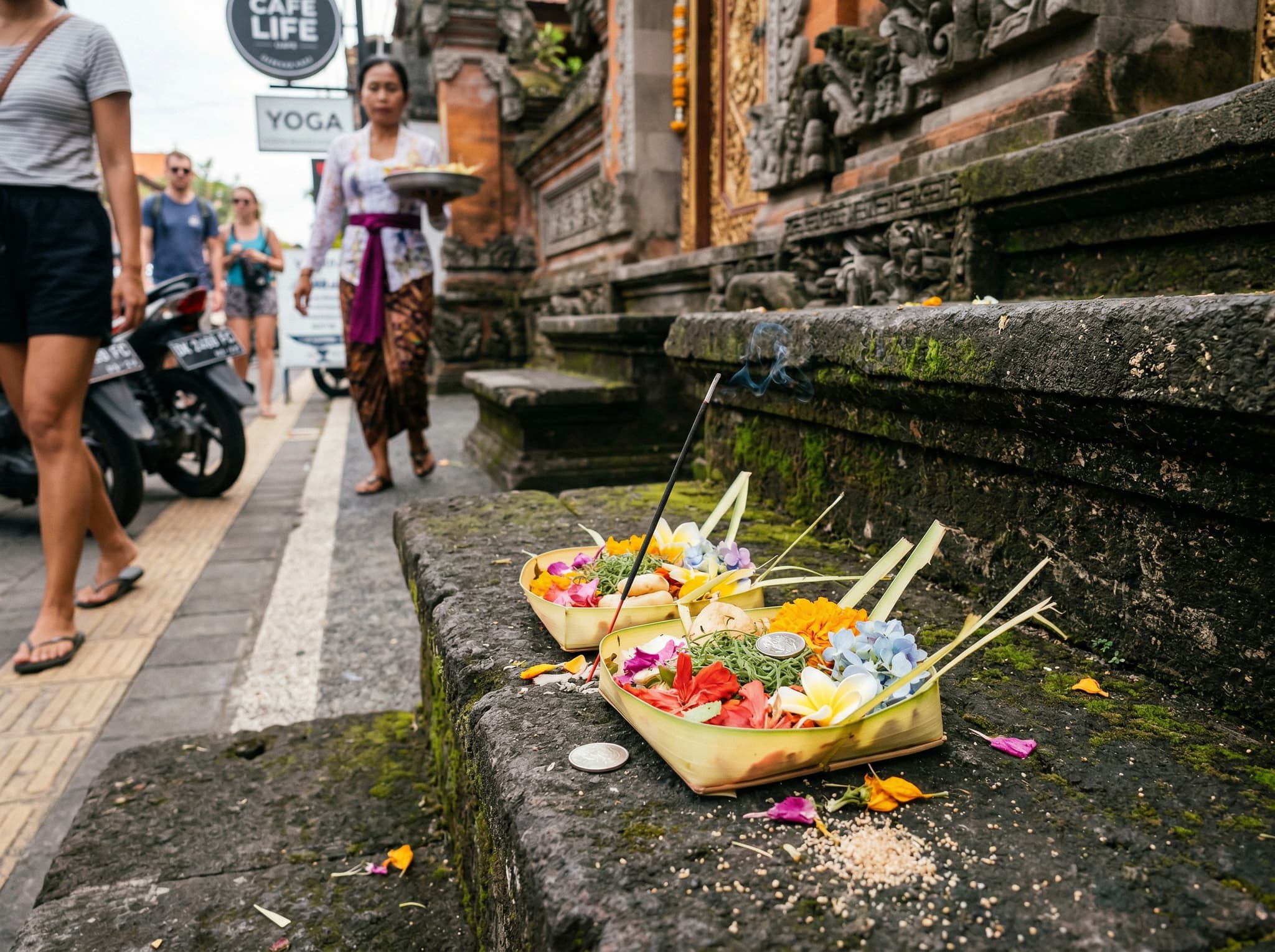
Canggu's international bubble makes it easy to forget you're in a deeply Hindu-Balinese community. A few things that matter:
- Canang sari — the small woven offering baskets placed on sidewalks, doorsteps, and temples. Step around them, never on them.
- Temple visits require a sarong and sash covering your legs and shoulders. Bring your own rather than relying on loaners.
- Use your right hand when passing money, food, or gifts. The left hand is considered impure.
- Greet locals with "Om Swastiastu" — it goes a long way.
Day Trips
Canggu is a solid base for three of Bali's best day trips: Nusa Penida by fast boat (dramatic cliffs, manta ray snorkeling), Mount Batur sunrise hike with hot springs, and the Ubud rice terraces and waterfalls. All are bookable through local operators or Grab.
The Bottom Line
Canggu is Bali's most convenient base for surfers, remote workers, and travelers who want nightlife, good food, and a social scene without the resort-corridor feel of Nusa Dua or the chaos of Kuta. It's not the quiet village of the old photos. It's louder, pricier, and more congested than it was even two years ago. But the surf is still excellent, the sunsets still deliver, and if you pick the right neighborhood — Pererenan for peace, Batu Bolong for energy — it earns its reputation.
Just don't come expecting a hidden gem. Canggu is found. The question is whether what's been found still works for you.