Kuta is loud, cheap, and ten minutes from the airport. Here's what it's actually good for — and when to skip it entirely.
Kuta is the first part of Bali most travelers see and the last part they want to talk about. It sits just north of the airport, a dense corridor of hotels, surf shops, money changers, and restaurants that haven't updated their menus since 2012. For decades it has served as Bali's default landing zone — the place where backpackers washed up, where Australian package tourists spent a week, where the island's tourism economy first took root.
That economy left marks. Kuta today is loud, commercial, and congested in ways that other Bali neighborhoods have learned to avoid or at least disguise. But writing it off entirely means missing context. This is where Balinese surf culture began. The beach is still one of the longest unbroken stretches of sand on the island's southwest coast. And for travelers on a tight budget or a short layover, its proximity to the airport and its rock-bottom prices remain genuinely useful.
The honest framing: Kuta is not a destination. It's a tool. Knowing what it offers — and what it doesn't — lets you use it well.
The Beach
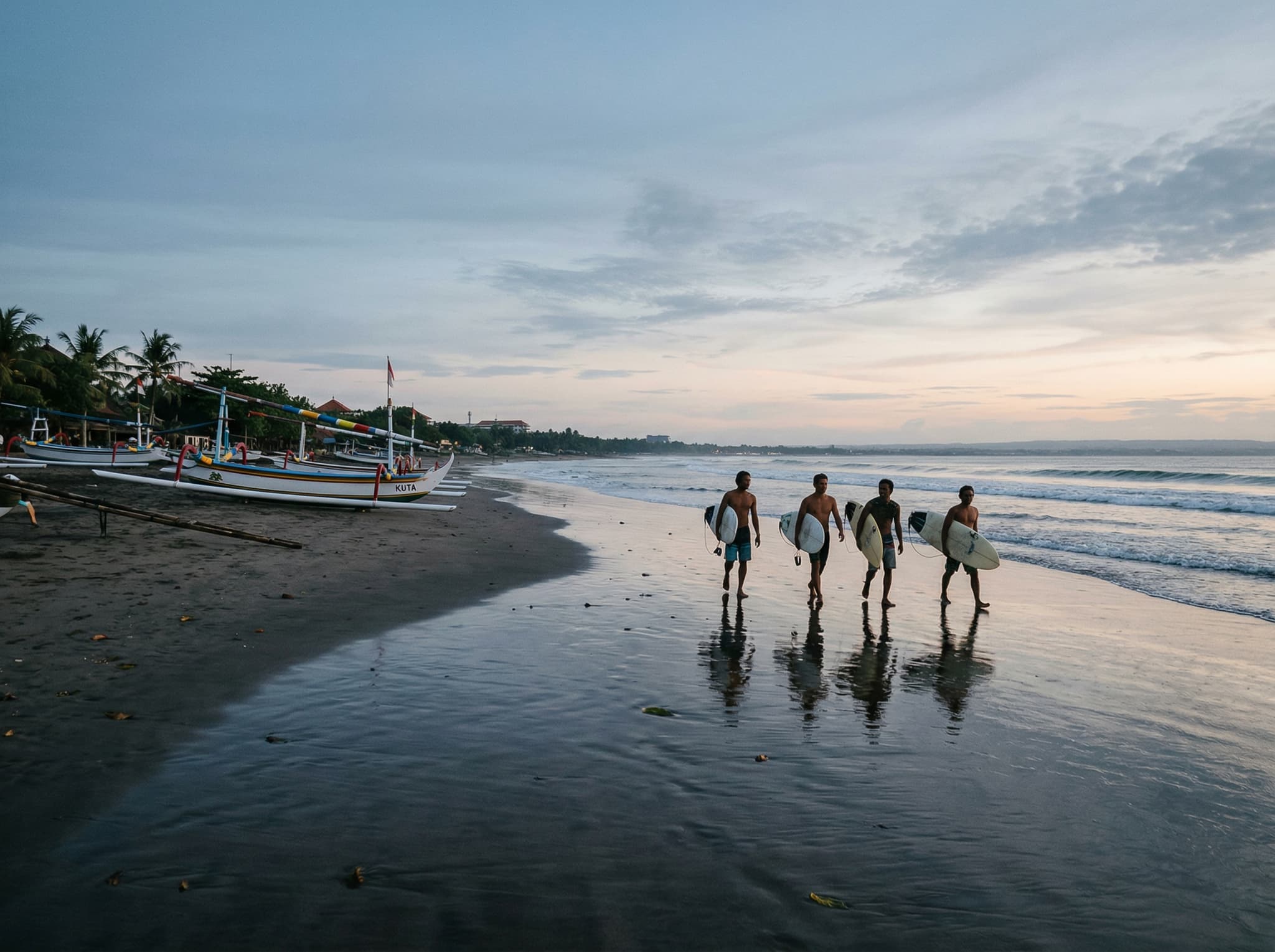
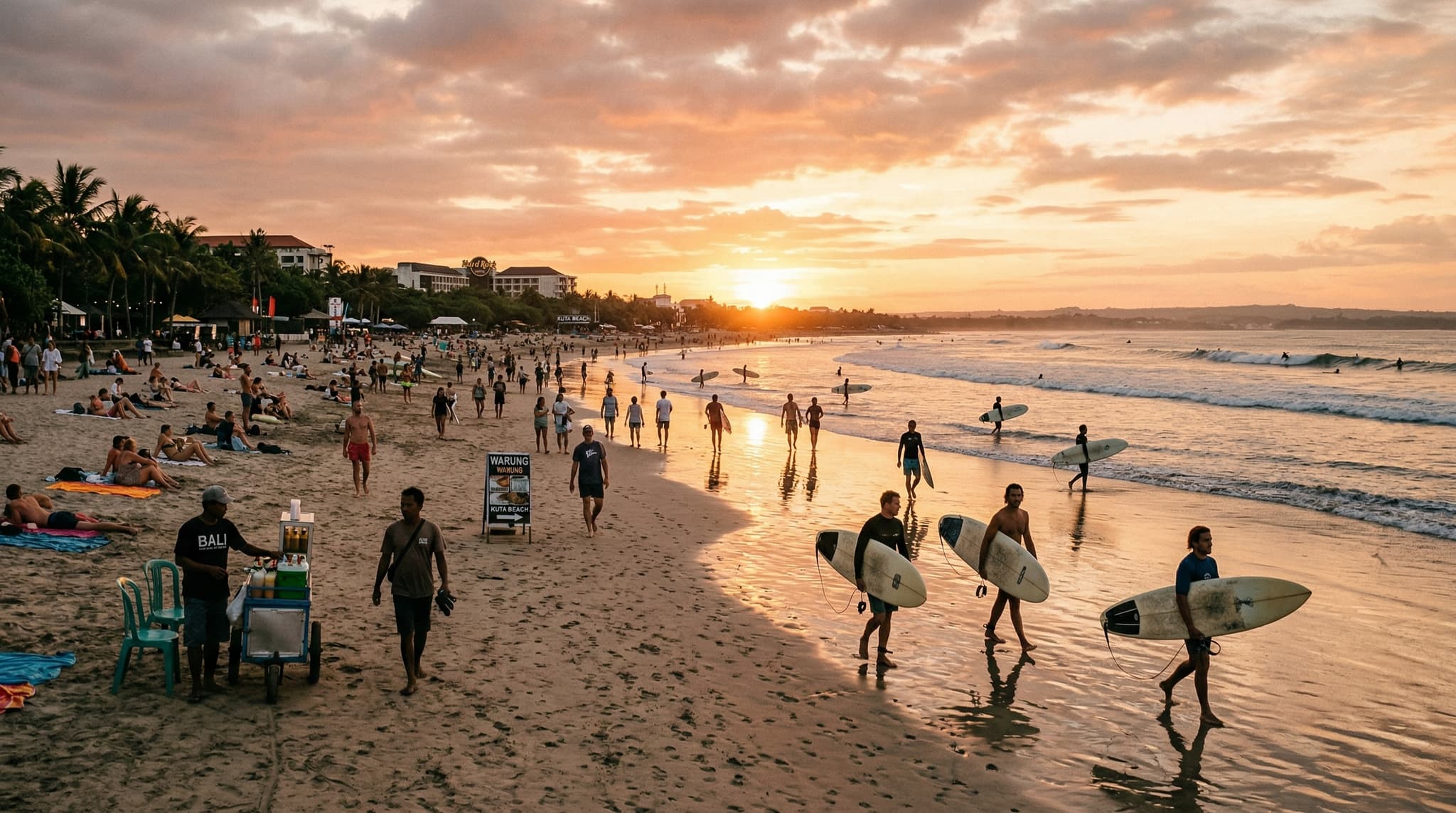
Kuta Beach runs roughly three kilometers from the airport's northern edge up toward Legian. The sand is wide, the sunsets are reliable, and the surf break is one of the most forgiving in Bali — a long, rolling left that works well for beginners and is rideable most of the year.
Kuta Beach Basics
Beach Length
~3 km
Wave Type
Gentle left-hander, ideal for beginners
Board Rental
IDR 50,000–100,000/hour ($3.25–$6.50)
Surf Lesson
IDR 350,000–500,000 ($23–$33) for 1.5–2 hours
Sunbed Rental
IDR 50,000–100,000/day
The beach gets crowded, particularly around the main access points near Jalan Pantai Kuta. Vendors are persistent. But walk ten minutes north toward the Legian border and the density thins. Early mornings — before 7:00 — are a different experience entirely: local surfers, a few joggers, fishermen pulling boats up the sand.
What Kuta Is Actually Good For

Airport proximity. If you land late or fly out early, staying in Kuta eliminates the 1–2 hour drive to Ubud or Canggu during traffic hours. A taxi from the airport to central Kuta takes 10–15 minutes and costs IDR 80,000–150,000 ($5–$10) by meter or Grab.
Budget accommodation. Kuta has the highest concentration of sub-$20/night rooms in southern Bali. Quality varies enormously, but clean guesthouses with air conditioning and breakfast exist in the IDR 150,000–300,000 range ($10–$20). The area around Poppies Lane 1 and Poppies Lane 2 has the densest cluster.
Surf lessons. The wave at Kuta is genuinely one of the best learner waves in Southeast Asia. It breaks over sand, not reef, which matters when you're falling repeatedly. Multiple schools operate directly on the beach.
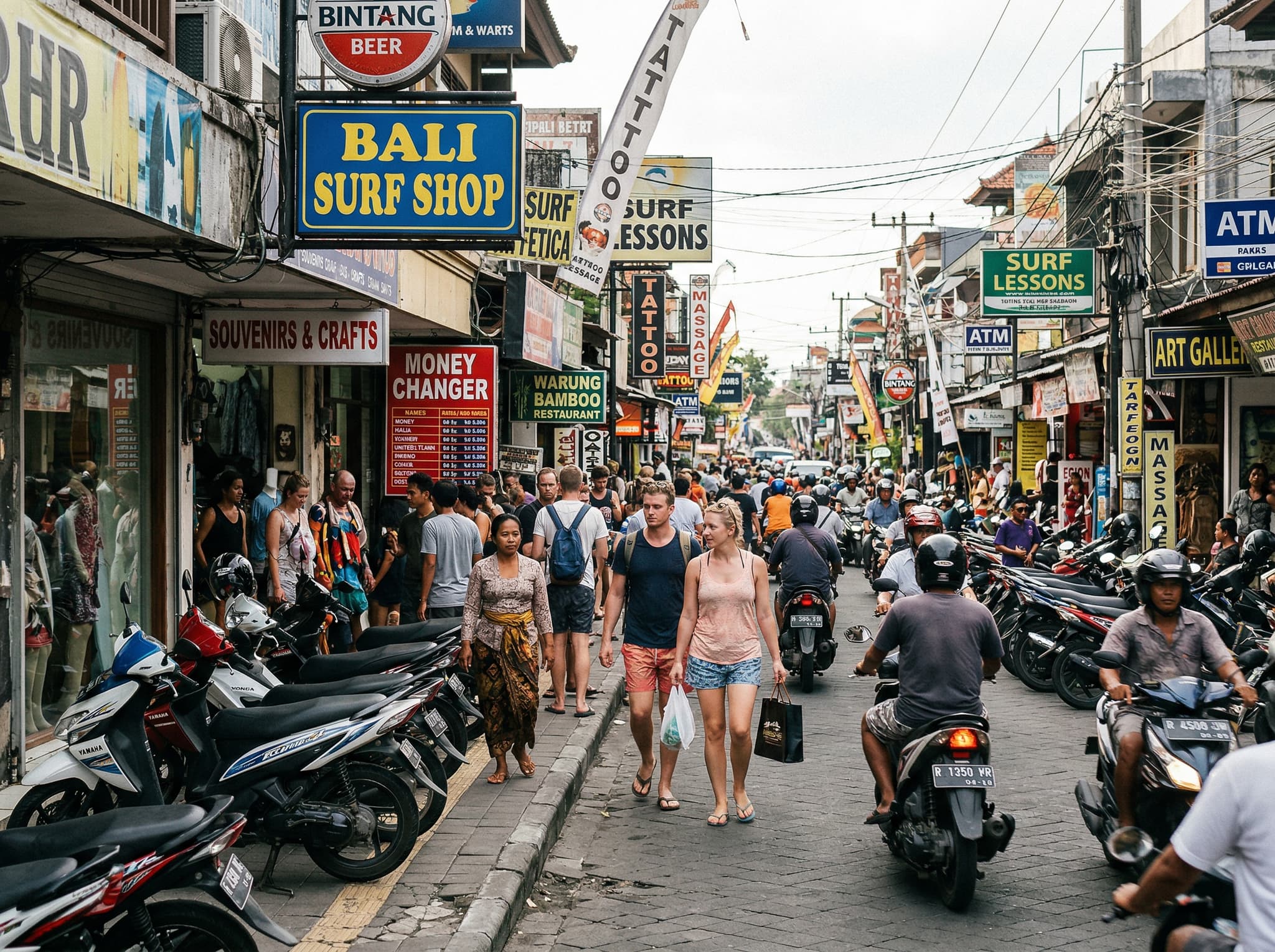
Last-minute shopping. Kuta's commercial strip along Jalan Legian and the surrounding lanes is cluttered but functional for picking up sarongs, souvenirs, and sunscreen at lower prices than you'll find in Seminyak or Ubud's tourist center.
What Kuta Is Not Good For
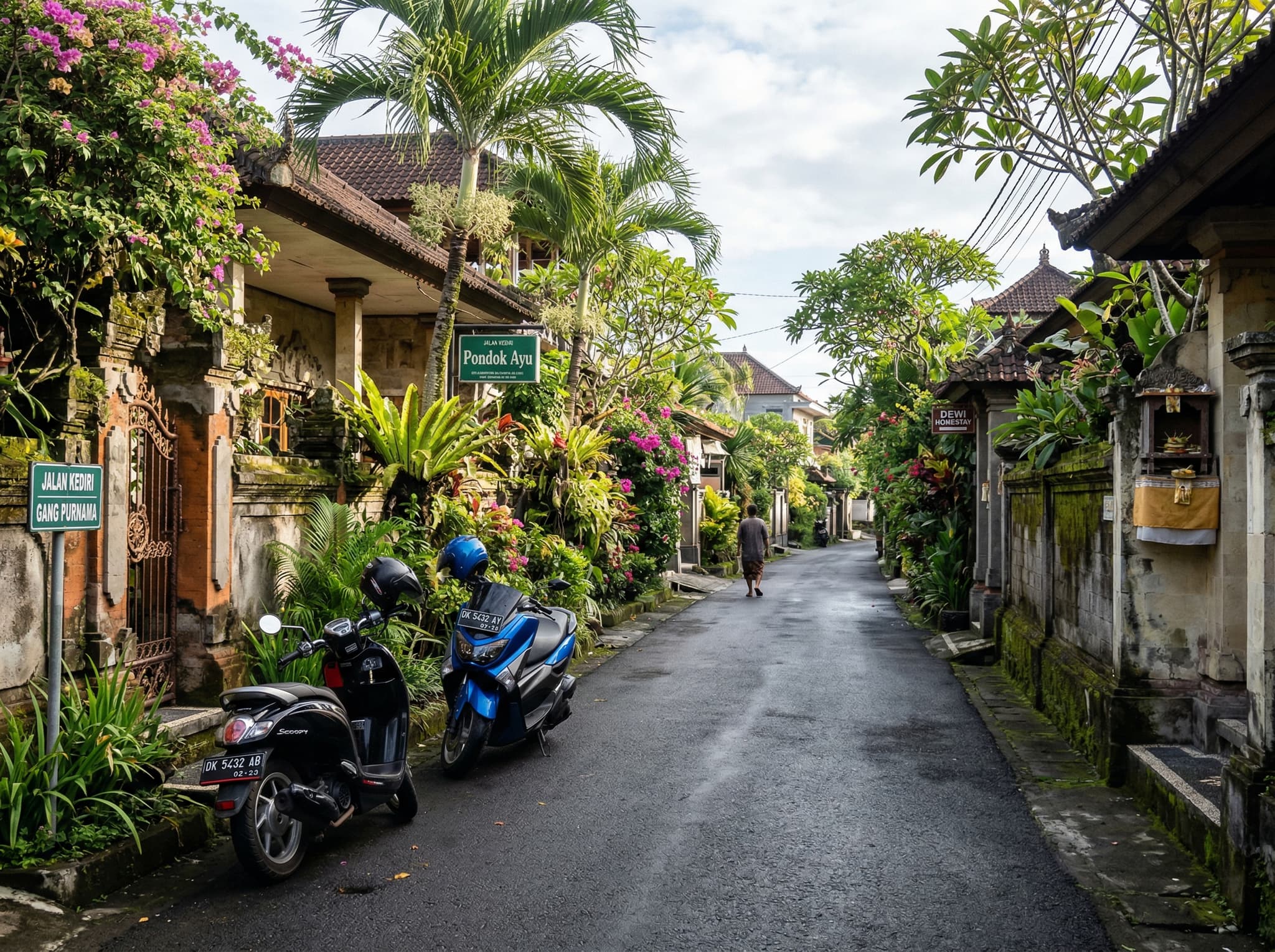
Dining. The restaurant scene skews toward generic Western food — thin-crust pizza, club sandwiches, smoothie bowls priced for tourists. Authentic Balinese food exists but requires knowing where to look. The warungs along Jalan Kediri, slightly east of the main tourist strip, are more reliable than anything on Jalan Legian.
Nightlife with nuance. Kuta's clubs along Jalan Legian cater to a young, drink-heavy crowd. If that's what you want, it delivers. If it's not, Seminyak and Canggu offer more varied options.
Peace. Traffic noise, construction, hawkers, and motorbike exhaust are constants. Kuta doesn't have the rice-paddy buffer that insulates neighborhoods like Ubud or even parts of Canggu from the feeling of relentless commercial pressure.
The Memorial and the History
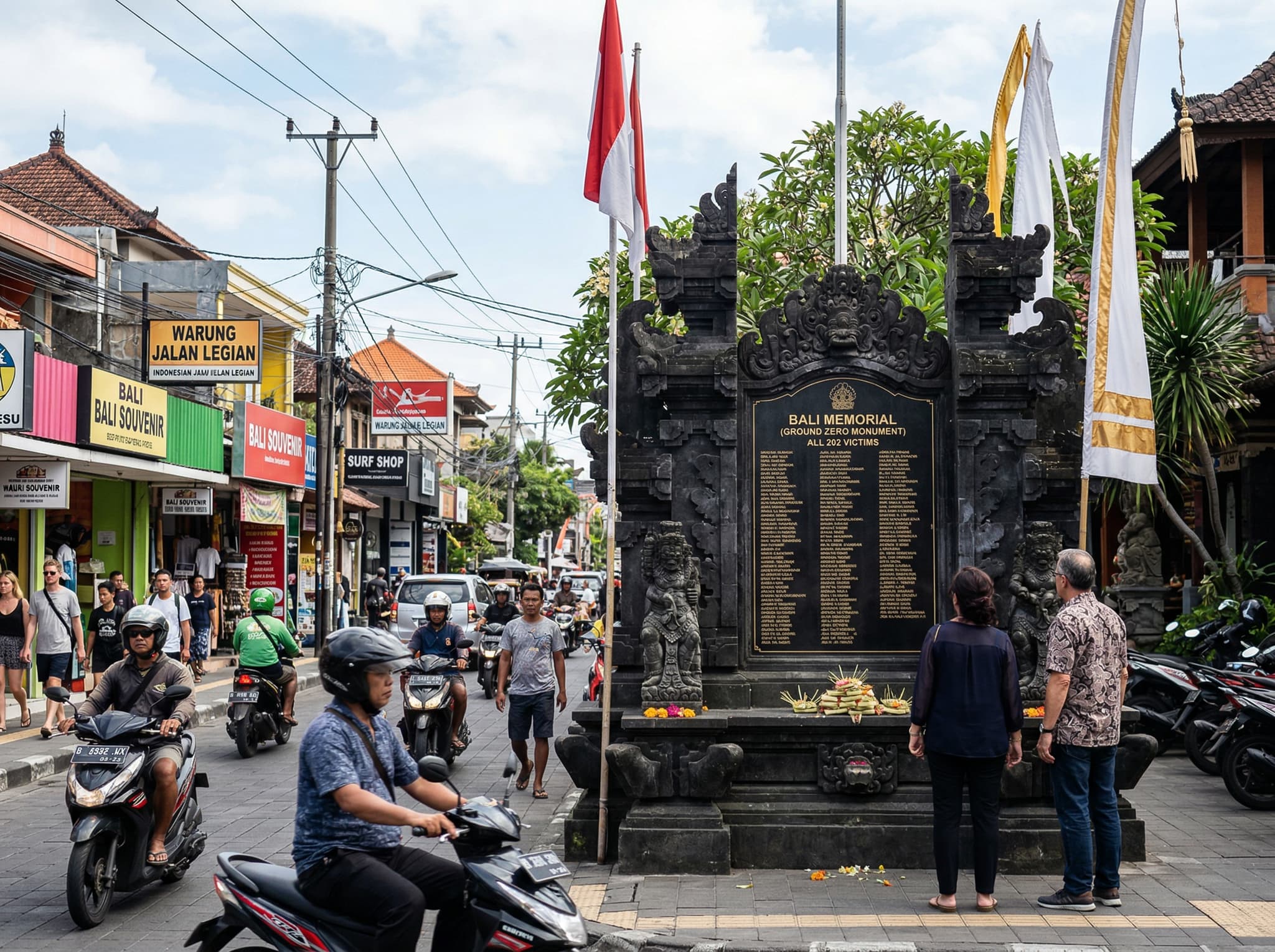
The Bali Memorial, also known as the Ground Zero Monument, stands on the site of the 2002 bombings on Jalan Legian. The attack killed 202 people, including 88 Australians and 38 Indonesians. The memorial is modest — a carved stone monument listing the names of the dead. It's easy to walk past without noticing, which is itself a kind of statement about how Kuta metabolizes its own history.
Visiting takes five minutes. It's worth those five minutes.
Kuta vs. Surrounding Neighborhoods
Kuta bleeds into Legian to the north and Tuban to the south with no clear boundary. The practical differences:
Neighborhood Comparison
Tuban (South)
Quieter, closer to airport, more resort-oriented
Kuta (Central)
Cheapest, most congested, best surf-lesson access
Legian (North)
Slightly calmer, mid-range hotels, same beach
Seminyak (Further North)
Higher-end dining and bars, 15–20 min walk from Legian
Most travelers who think they dislike Kuta would be fine in Legian, which shares the beach but loses the worst of the congestion. The distinction matters when booking — a hotel marketed as "Kuta" might sit comfortably in Legian's quieter streets.
Getting Around and Getting Out
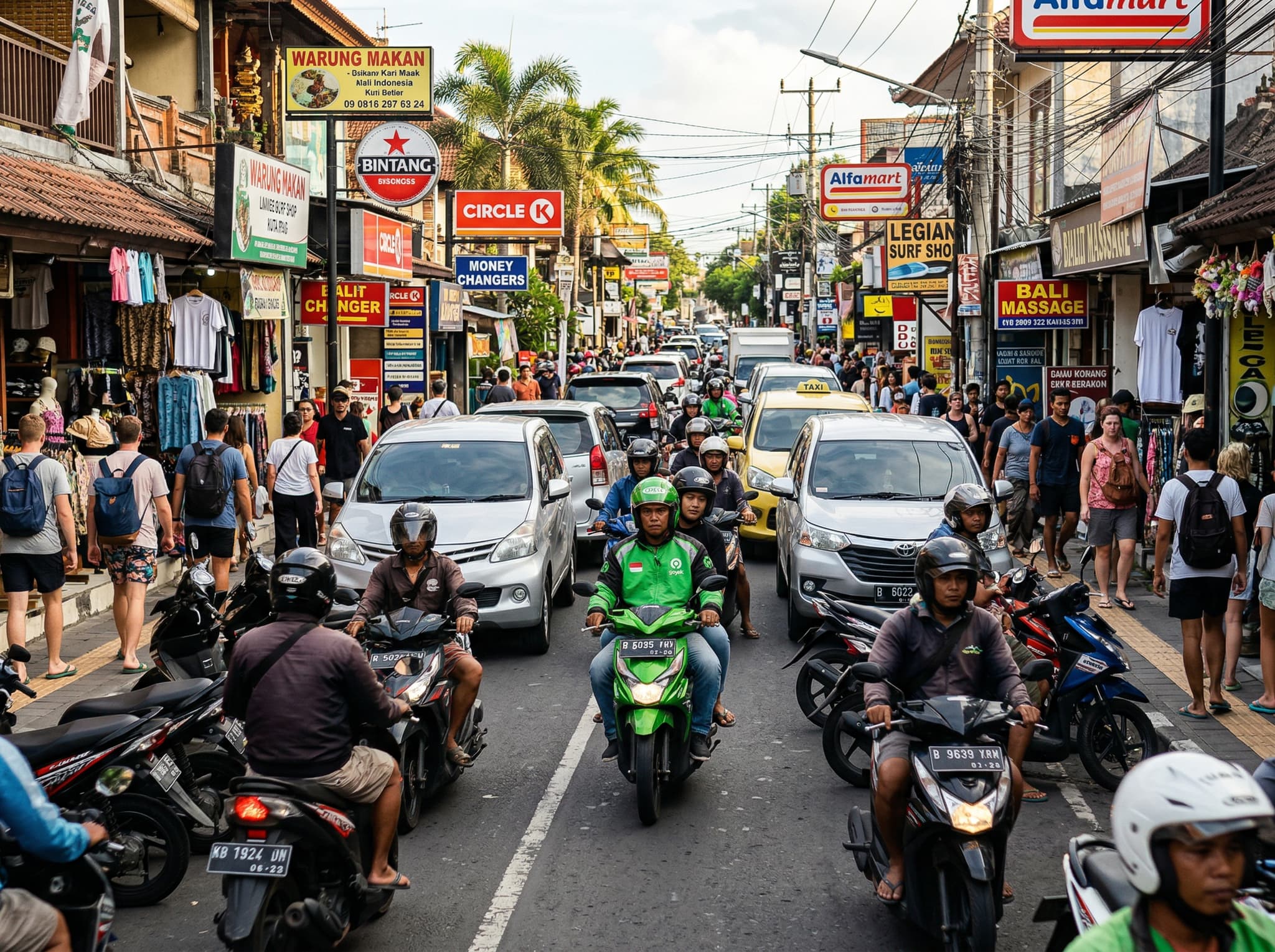
Kuta's streets are narrow and traffic moves slowly, especially on Jalan Legian and Jalan Pantai Kuta between 10:00 and 21:00. Walking is often faster than driving for distances under a kilometer.
For day trips: Uluwatu is 45 minutes south, Ubud is 90 minutes northeast, and Canggu is 30–45 minutes northwest depending on traffic. Hiring a driver for a full day (IDR 600,000–800,000 / $40–$53) is the most practical option for reaching destinations outside southern Bali.
The Bottom Line
Kuta is not the Bali you came for. But it might be the Bali you pass through, and there's no shame in that. Use the beach, take a surf lesson, sleep cheaply near the airport, and move on when you're ready. The neighborhood asks nothing of you except realistic expectations.