Legian sits between Kuta's chaos and Seminyak's polish — a practical, affordable south Bali base with beach access and no pretense.
Most travelers heading to south Bali face a binary choice: Kuta or Seminyak. The loud one or the polished one. Legian rarely enters the conversation, which is precisely what makes it worth considering. It occupies the strip of beach and road between those two neighborhoods — not a compromise, exactly, but a place where the volume drops just enough to think straight.
Legian doesn't have an identity crisis. It has the quieter version of what its neighbors sell louder. The beach is the same continuous stretch of sand that runs from Kuta to Seminyak, but the crowd thins here. The restaurants aren't trying to get on your Instagram feed. The hotels are mid-range and functional without being depressing. For travelers who want proximity to south Bali's energy without being swallowed by it, Legian is the practical answer.
The Beach

Legian Beach is wide, west-facing, and uncomplicated. The sand is the same dark volcanic grain you'll find up and down this coast — not the white powder of Nusa Dua, and nobody pretends otherwise. Sunsets are the main event. The horizon is unobstructed, and on clear evenings the light turns the water copper before dropping fast.
Surf conditions are gentler than Kuta's main break, making this a reasonable spot for intermediate surfers or beginners who've graduated from their first lesson. Board rentals are available from vendors along the beach for around 50,000–100,000 IDR per hour. The rip currents here deserve respect — swim between the red and yellow flags where lifeguards are posted.
Legian Beach Essentials
Sunbed Rental
50,000–100,000 IDR/day
Surf Board Hire
50,000–100,000 IDR/hour
Best Sunset Spot
Beach south of Jl. Arjuna
Lifeguards
Active 8am–6pm daily
Jalan Legian and the Street Life
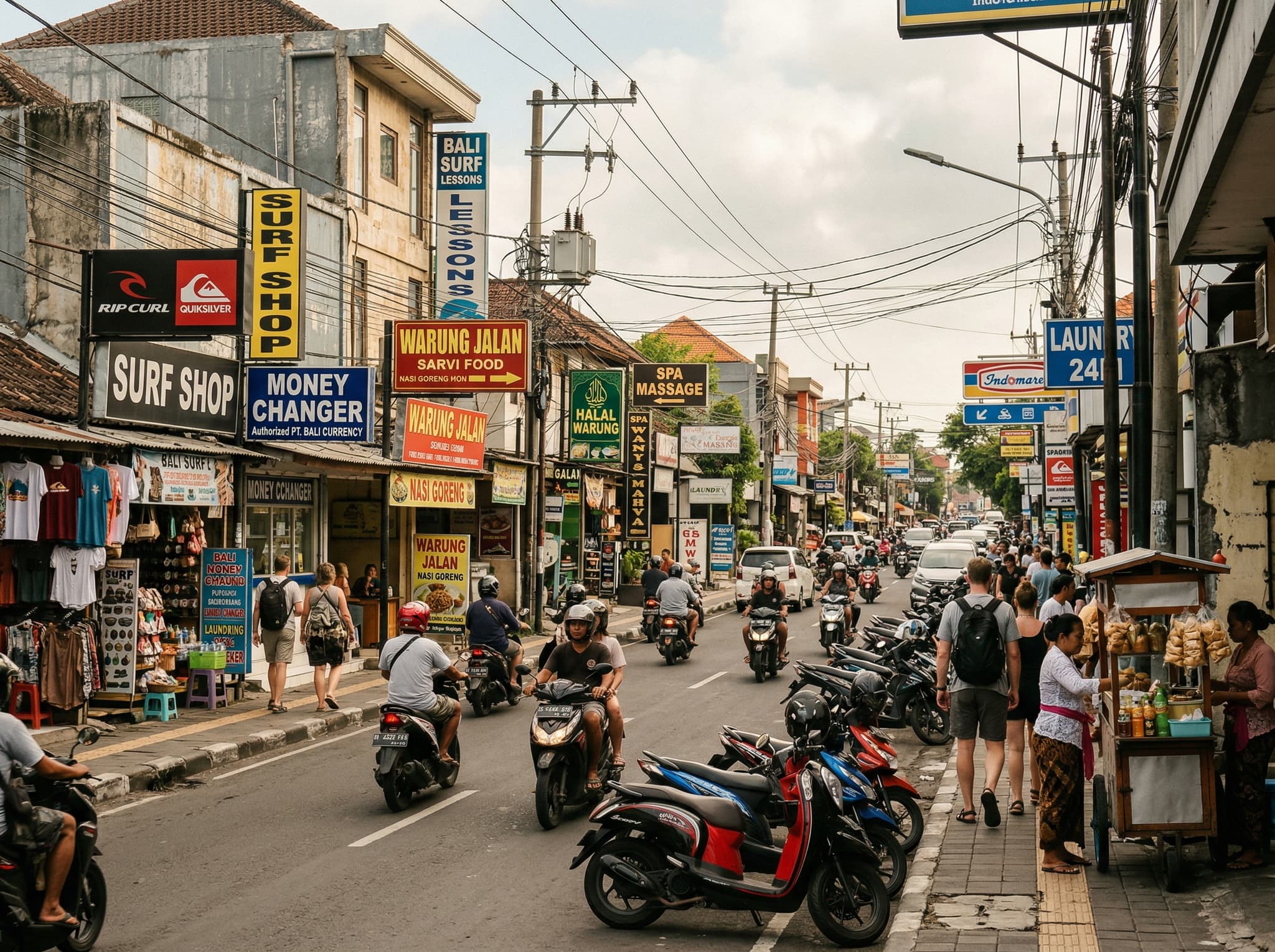
Jalan Legian is the main artery, running north-south and connecting Kuta to Seminyak. In Legian's stretch, the road is lined with surf shops, money changers, massage parlors, and warungs serving nasi goreng for 25,000 IDR. It's not curated. It's not charming in the way travel magazines use that word. But it's honest — this is what a Balinese tourist strip looks like when it's not performing for a particular demographic.
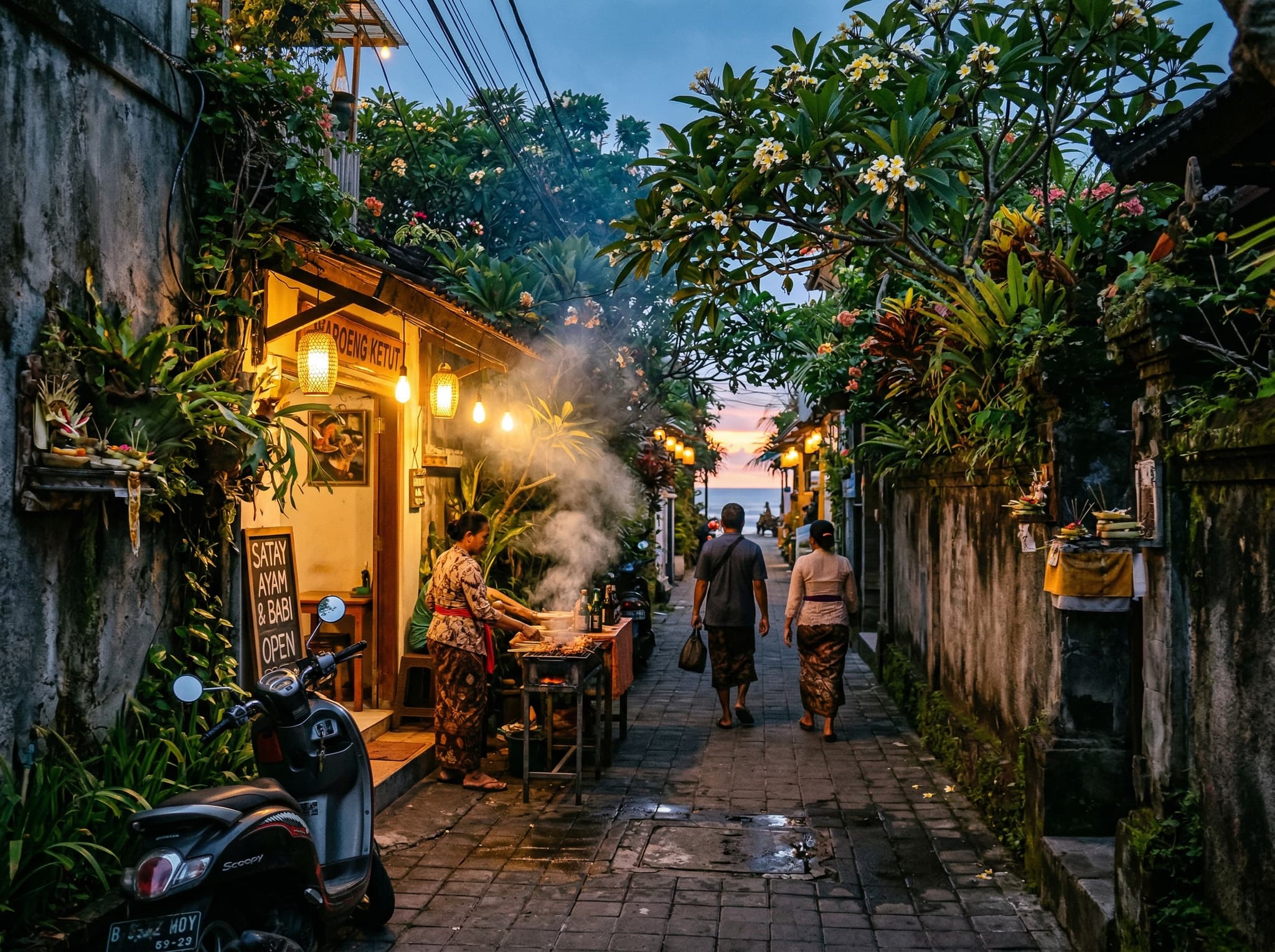
The side streets (gangs) running west toward the beach are where the better finds tend to hide: small guesthouses with pools, family-run restaurants with handwritten menus, the occasional bar that doesn't charge a cover. Walking these lanes at dusk, when the frangipani scent mixes with grilling satay smoke, is one of the more pleasant sensory experiences in south Bali.
Where to Eat
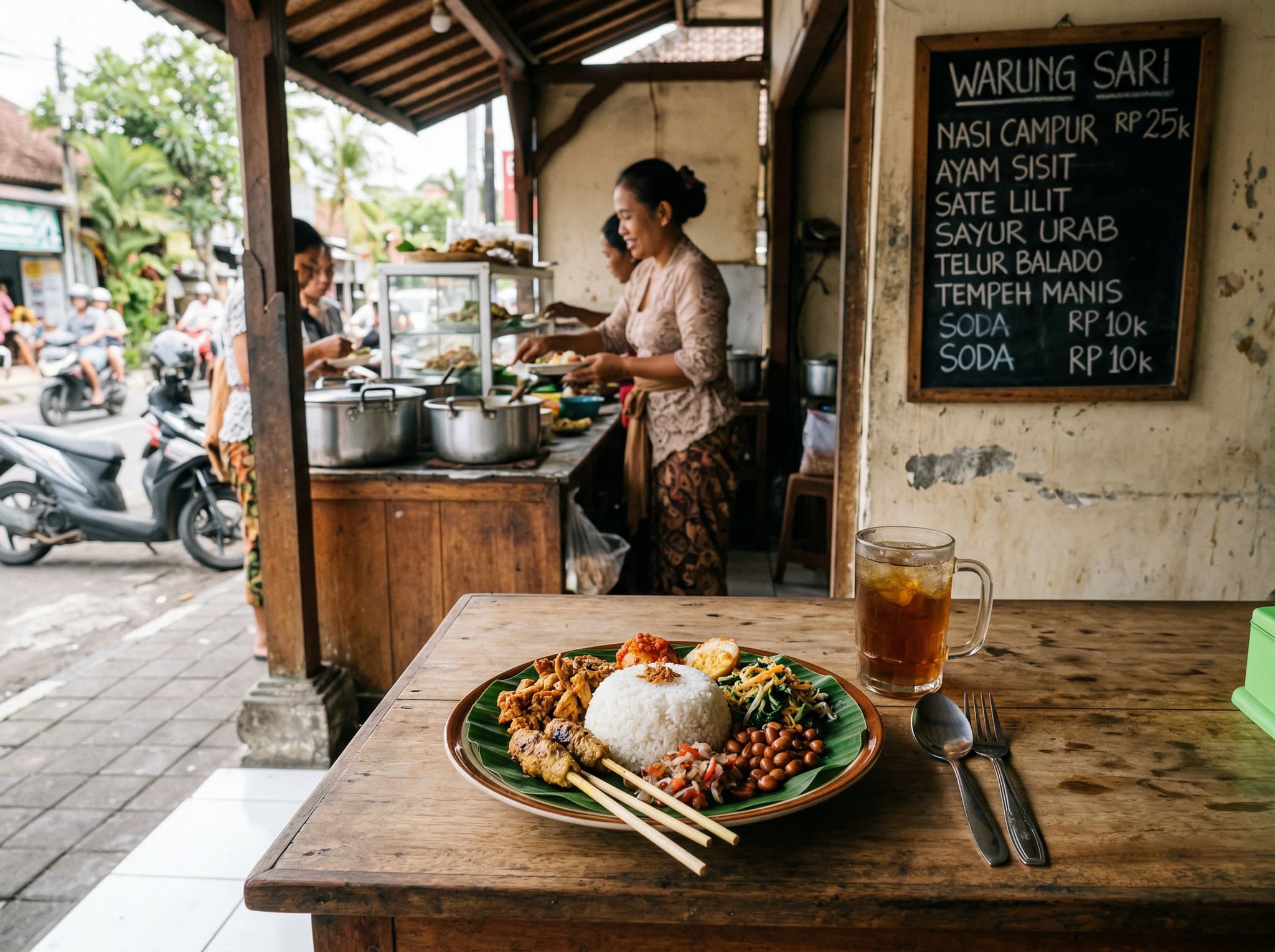
Legian's food scene doesn't compete with Seminyak's, and it doesn't try to. What it offers is solid, affordable, and varied enough to keep you fed for several days without repetition.
Warung-level dining dominates. Expect Indonesian staples — nasi campur, mie goreng, ayam betutu — at prices that haven't fully adjusted to the tourist economy. A full meal with a drink at a local warung runs 40,000–70,000 IDR.
For something more polished, a handful of restaurants along Jalan Padma and the beachfront serve decent seafood and Western food in the 100,000–250,000 IDR range. The quality is uneven — look for places where locals and long-stay visitors eat, not the ones with laminated photo menus on the sidewalk.
Eating in Legian
Warung Meal
40,000–70,000 IDR
Mid-Range Dinner
100,000–250,000 IDR
Beer (Large Bintang)
35,000–50,000 IDR
Best Street
Jl. Padma and beach road
Where Legian Fits in a Bali Trip
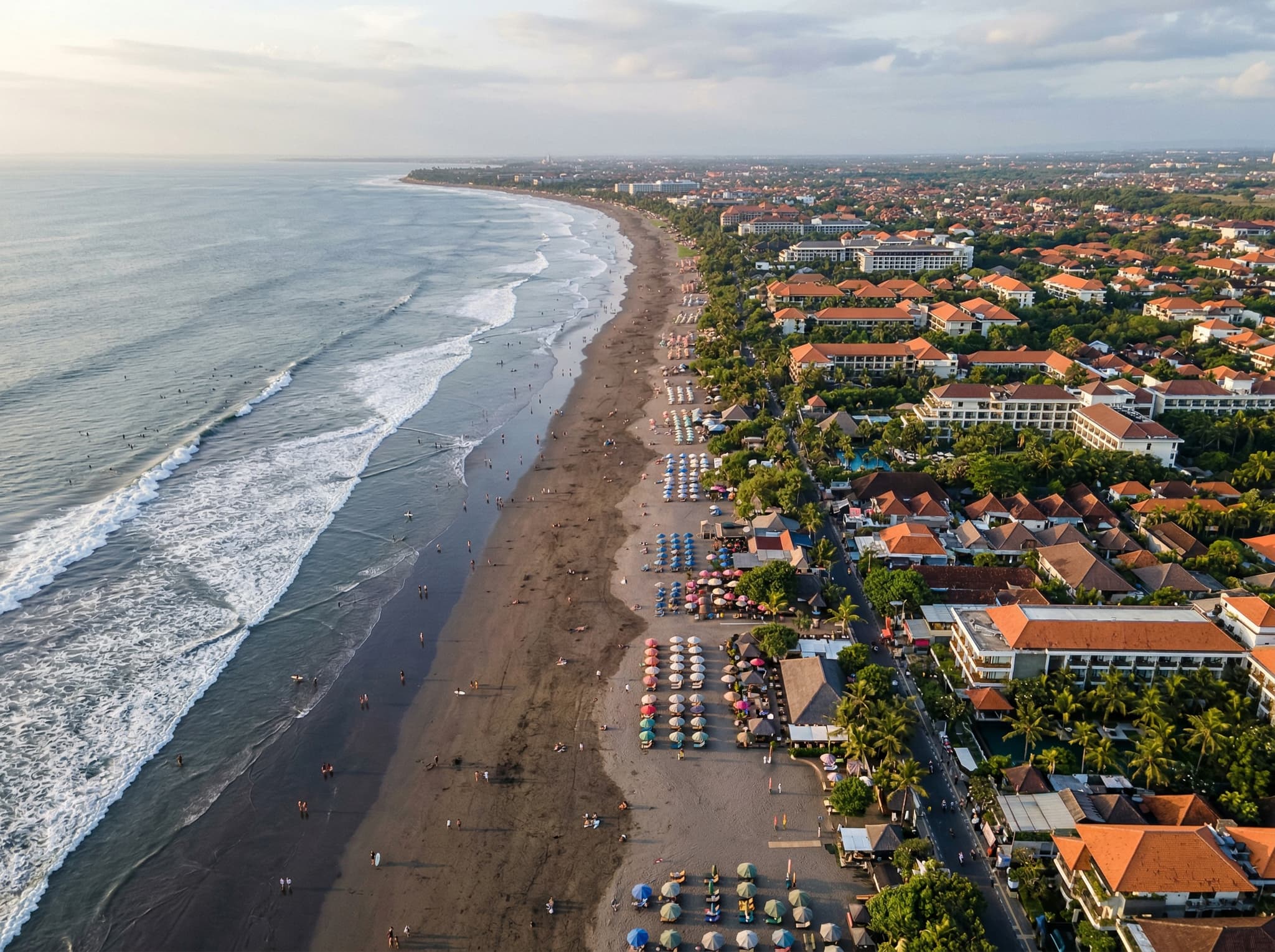
Legian works best as a south Bali base for travelers who want beach access and nightlife proximity without paying Seminyak prices or enduring Kuta's density. It's a 10-minute walk south to Kuta's bars and a 10-minute walk north to Seminyak's restaurants. The airport is 20–30 minutes by taxi depending on traffic, which in south Bali is never a small variable.
For travelers building a longer Bali itinerary — a few days on the south coast before heading to Ubud or the east — Legian offers a functional, affordable landing pad. It's not the place you'll write home about. It's the place that lets you settle in, get oriented, and figure out what kind of Bali trip you actually want.
Who Should Stay Here — and Who Shouldn't
Legian suits mid-range travelers, couples who want beach time without a scene, and anyone who values location efficiency over neighborhood character. It's also reasonable for solo travelers who want a social atmosphere without the hostel-party circuit.
It's a harder sell for luxury travelers — Seminyak and Jimbaran do that better. It's also not ideal for families with young children; the traffic on Jalan Legian is relentless, and the beach has stronger currents than Nusa Dua or Sanur. And if you're looking for Bali's cultural depth — the temples, the rice terraces, the ceremonies — you won't find it here. That's Ubud's territory, and no amount of repositioning changes that.
Legian is the middle ground. Not every place needs to be the destination. Sometimes the smartest choice is the one that simply works.