Nusa Dua offers Bali's calmest beaches and best resort infrastructure. Here's exactly who it's for, what it costs, and where to eat beyond the hotel gates.
Nusa Dua is the part of Bali that doesn't look like Bali. That's the point, and that's the criticism, and both are fair.
The ITDC complex — a gated, landscaped stretch of southern coastline — was purpose-built in the 1970s to concentrate luxury tourism in one manageable area. It worked. The roads are smooth, the hedges are trimmed, the beaches are white and calm, and you can walk from the St. Regis to a convention center without stepping over a single motorbike. For some travelers, this is exactly what they want. For others, it's a dealbreaker. The useful question isn't whether Nusa Dua is "authentic" — it's whether what it offers matches what you're actually looking for.
Who Nusa Dua Is Actually For
Nusa Dua makes the most sense for three groups: families with young children who need calm, shallow water and don't want to negotiate Canggu traffic; couples who want a resort experience with minimal logistics; and business travelers attending events at the Bali International Convention Center.
If you want nightlife, street food stalls at 1 a.m., or the feeling of being embedded in Balinese daily life, this isn't your area. Seminyak and Canggu do that. If you want dramatic cliff-top scenery and world-class surf breaks, Uluwatu does that. Nusa Dua does calm, clean, and convenient — and it does it better than anywhere else on the island.
The Beaches
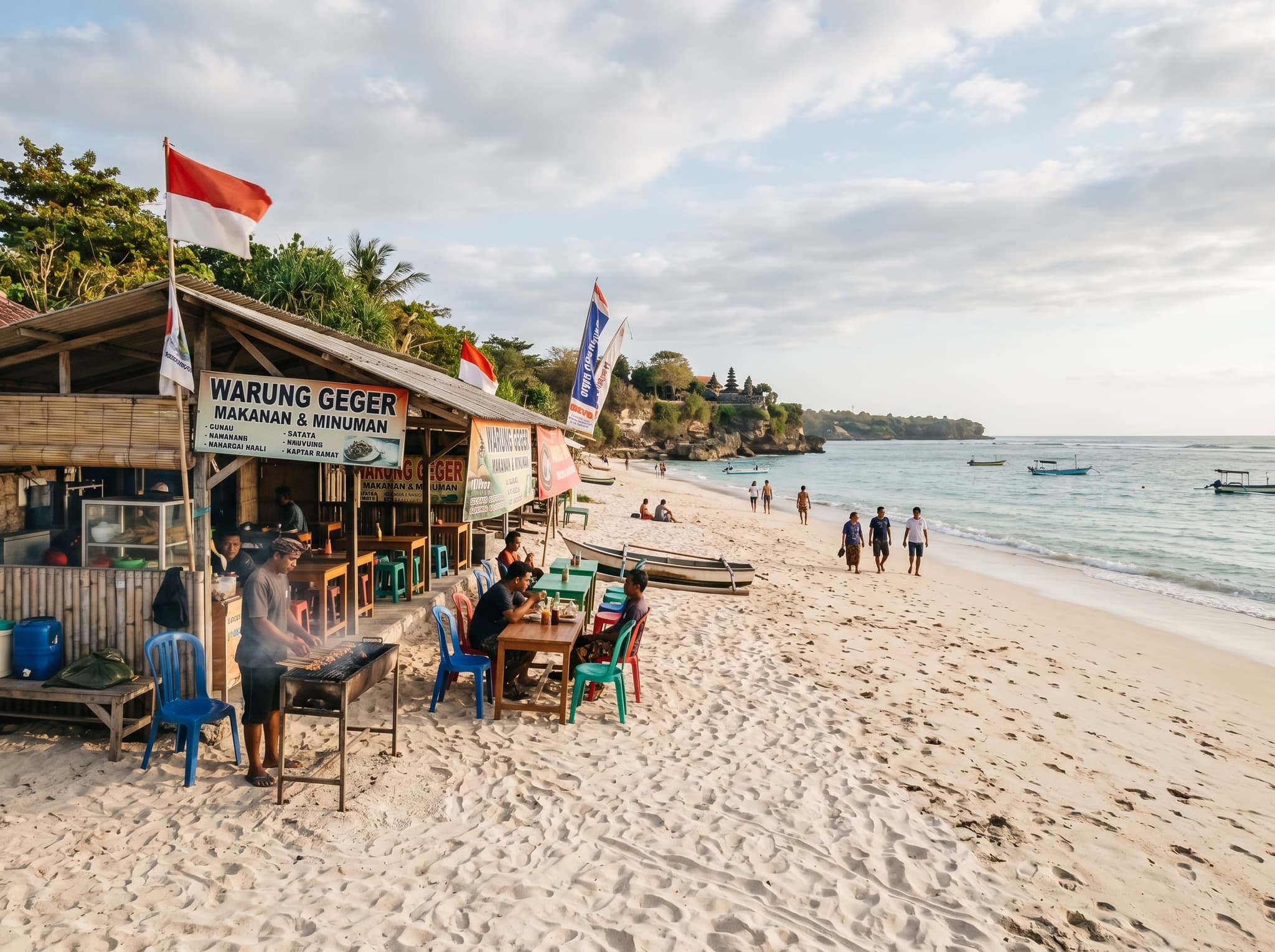
The beaches are genuinely Nusa Dua's strongest card. Mengiat Beach and Geger Beach both offer white sand, calm turquoise water protected by offshore reefs, and flat access — no cliff staircases, no strong currents. Both are free to access, regardless of what the resort next door might imply. You can lay a towel on the sand without paying anyone.
Geger Beach, at the southern end, tends to be quieter and has a handful of independent warungs where you can eat grilled seafood for a fraction of resort restaurant prices. Mengiat is more central to the ITDC complex and closer to the big-name hotels — it's where most visitors end up by default.
For swimming with kids, these are arguably the best beaches in Bali. The reef break keeps waves small, and the water stays shallow for a long way out. That's a genuine advantage over Seminyak (strong currents, dark sand) and Uluwatu (beautiful but accessed via steep staircases with serious surf).
Where to Eat and Drink
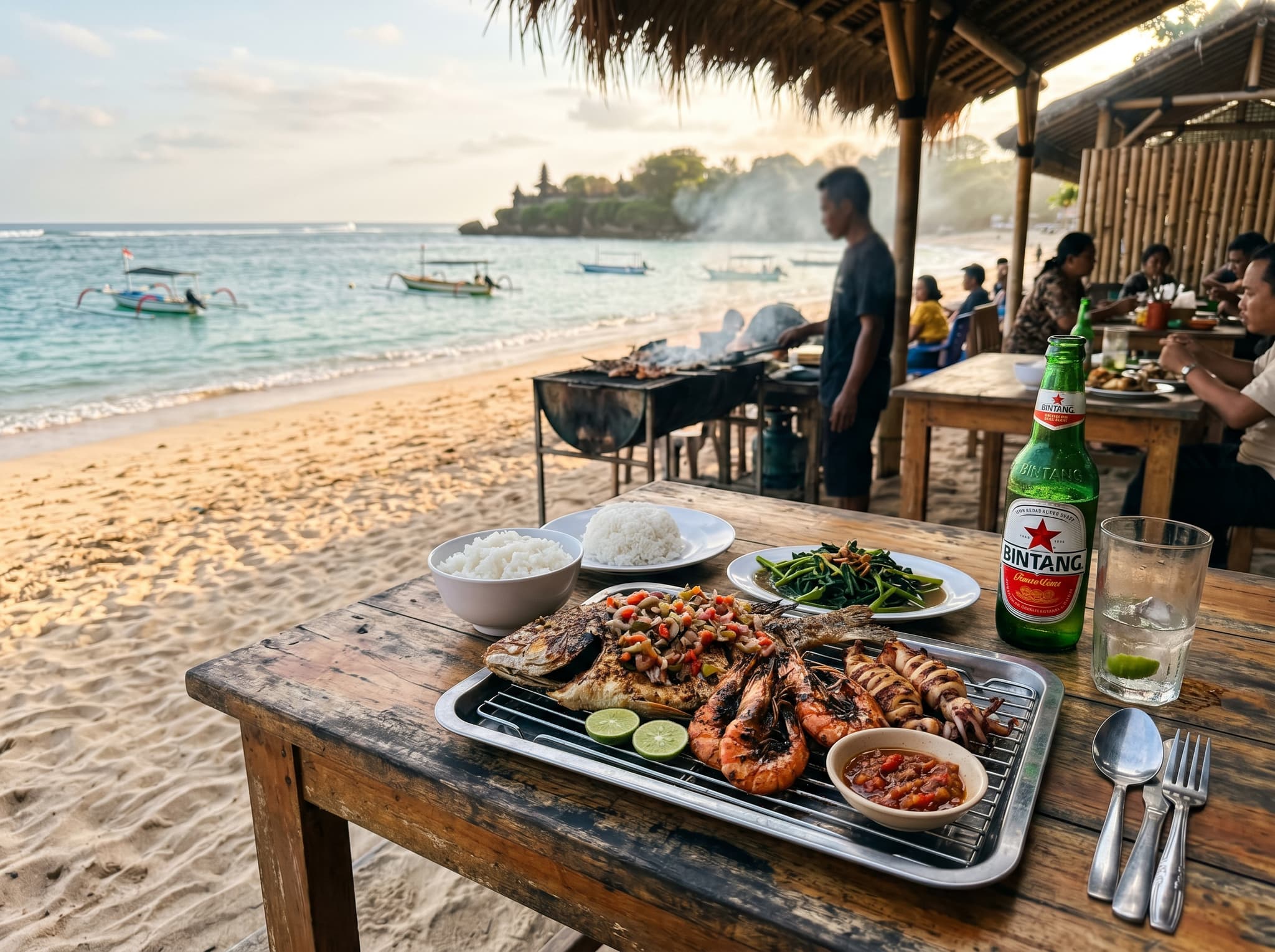
Dining inside the ITDC complex skews expensive and resort-oriented. That's not always a bad thing — it's just the trade-off.
Notable Dining Options
Nusa Dua Beach Grill
Geger Lagoon, 8am–10pm daily — grilled seafood, casual beachfront
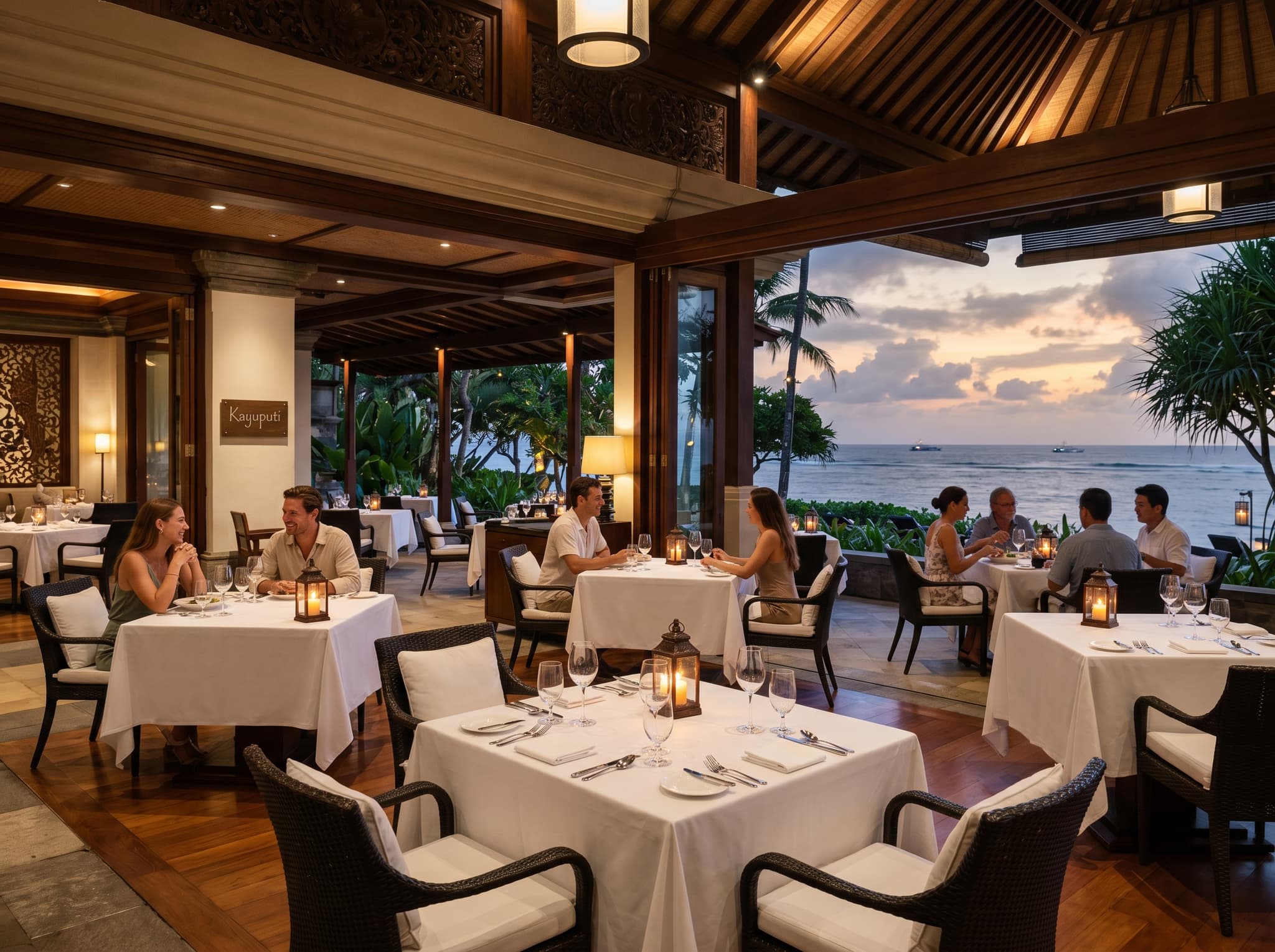
Kayuputi (St. Regis)
Fine dining, noon–3:30pm & 6–10pm — Nusa Dua's best splurge
Art Cafe Bumbu Bali
10am–10pm daily — Balinese cuisine, more accessible pricing
Le Bleu by K-Club
ITDC area, noon–11pm — beachfront dining, cocktail-forward
Manarai Beach House
Opens 10am daily — beach club, restaurant, wine shop
For the best value-to-quality ratio, head to Nusa Dua Beach Grill at Geger Lagoon or Art Cafe Bumbu Bali, which serves proper Balinese food without the five-star markup. Kayuputi at the St. Regis is the area's standout fine-dining option — worth it for a single special-occasion meal, not for Tuesday lunch.
Outside the ITDC gates, Tanjung Benoa has more affordable local restaurants. The quality gap between a IDR 45,000 nasi campur outside the gates and a IDR 180,000 version inside is not fourfold.
Getting There and Around
Transport Costs to Nusa Dua
From Airport
~15–25 min, IDR 100,000–150,000 by taxi
From Kuta
IDR 50,000 by private transfer
From Seminyak
IDR 150,000–210,000, ~17 min
From Ubud
IDR 220,000, 1–1.5 hours
Full-Day Driver
IDR 350,000–550,000 for 10–12 hours
Ride-hailing apps (Grab, Gojek) work in Nusa Dua but pickups inside the ITDC complex can be complicated — resort security sometimes restricts app-based drivers. Hotel taxis or pre-arranged transfers are more reliable here, even if slightly more expensive.
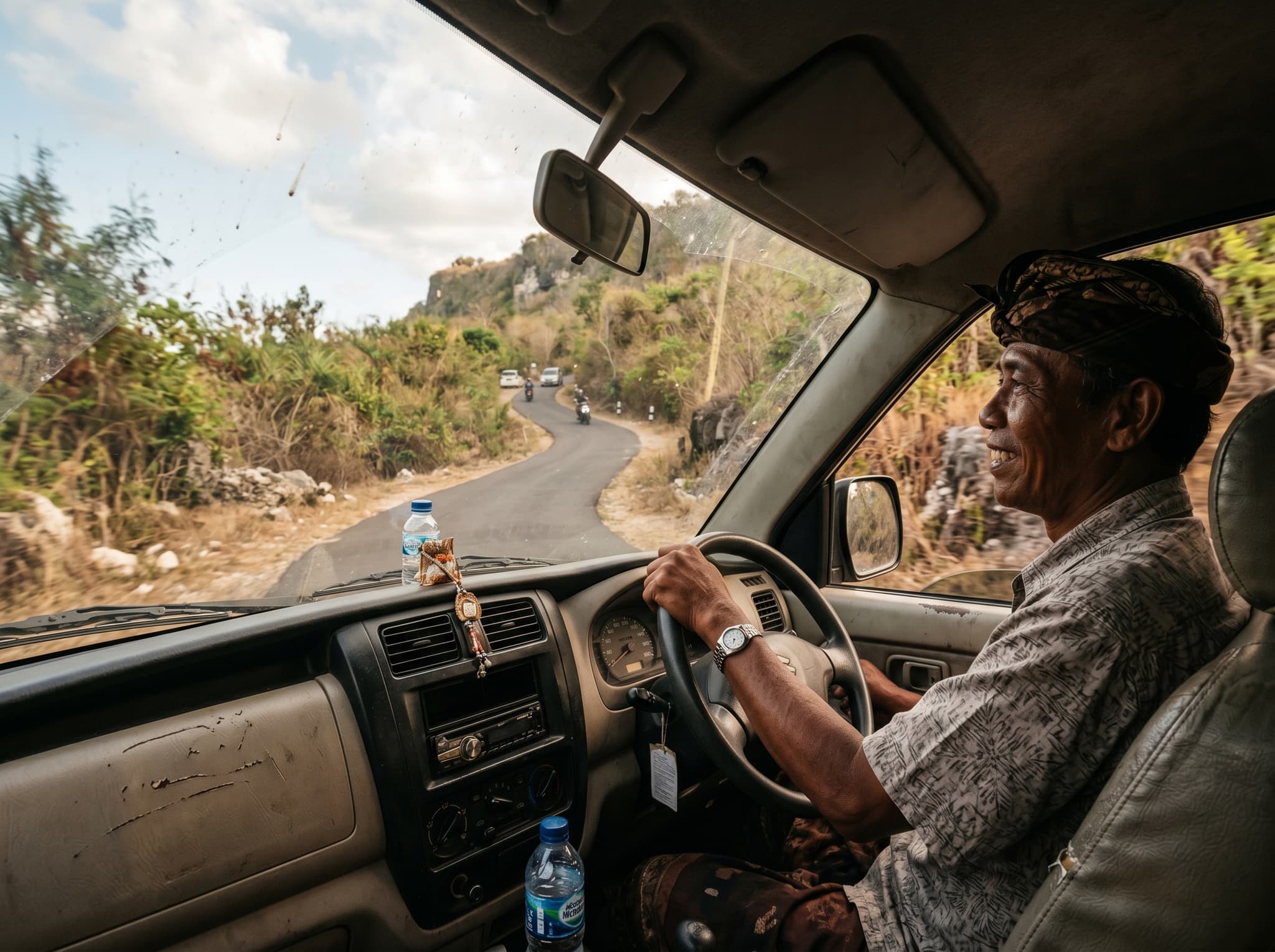
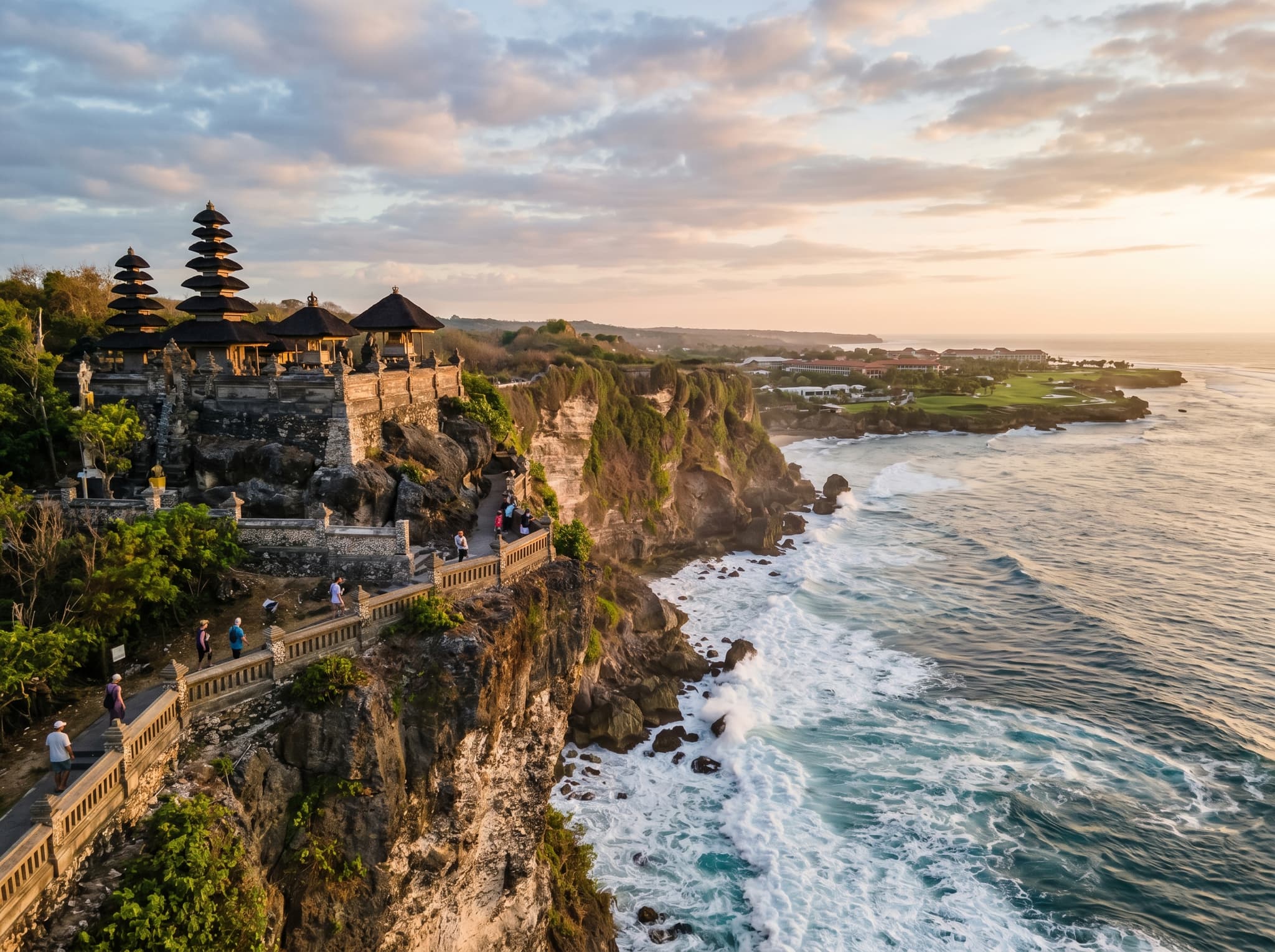
If you want to explore beyond the enclave — and you should, at least once — hiring a driver for a full day (IDR 350,000–550,000 for 10–12 hours, roughly $23–35) is the most efficient option. That gets you to Uluwatu Temple, Jimbaran's seafood strip, or even Ubud and back.
What's Changing
Nusa Dua drew 3.8 million visitors in 2025, up 18.5% from the prior year, and hotel occupancy hit 76% — above Bali's average. The area is expanding accordingly.
A Waldorf Astoria is signed for Sawangan Beach with a late 2027 target opening, and a Ramada by Wyndham (68 villas, 100 hotel rooms, art-hotel concept) has launched sales. The trajectory is clear: more rooms, more luxury, more competition for the same stretch of coast.
The Honest Assessment
Nusa Dua is not trying to be all of Bali. It's a curated, controlled resort zone that prioritizes comfort and calm over character and spontaneity. The beaches are excellent. The infrastructure is the best on the island. The food is fine but overpriced inside the gates. The nightlife is nonexistent.
Think of it as a base, not a destination. Spend your mornings on Geger Beach, hire a driver for an afternoon at Uluwatu, eat dinner in Jimbaran. You get the best of Nusa Dua's genuine strengths without pretending it offers things it doesn't.