Most visitors arrive in Ubud expecting a single charming town — the cultural heart of Bali, a place of rice terraces and temple ceremonies and artists working in open-air studios. What they find instead is a sprawling patchwork of villages, each with a distinct identity, stitched together by rice paddies and river gorges and a shared postal code. The things to do in Ubud depend almost entirely on which Ubud you're in. This guide is organized by neighborhood, not by category, because that's how the place actually works — and because the best version of Ubud is almost always somewhere other than where the tour buses stop.
How Ubud Actually Works
Ubud is not a single town. It's a cluster of traditional villages — banjar in Balinese — that merged into one tourist designation over the past forty years. Understanding this is the key to not hating your trip.
The center, anchored by Jalan Raya Ubud and Jalan Monkey Forest, is significantly busier than it was before 2020. Ongoing hotel construction has transformed the streetscape. Bali landed on Fodor's 2025 "No List" for overtourism, and central Ubud is one of the places where you can see why.
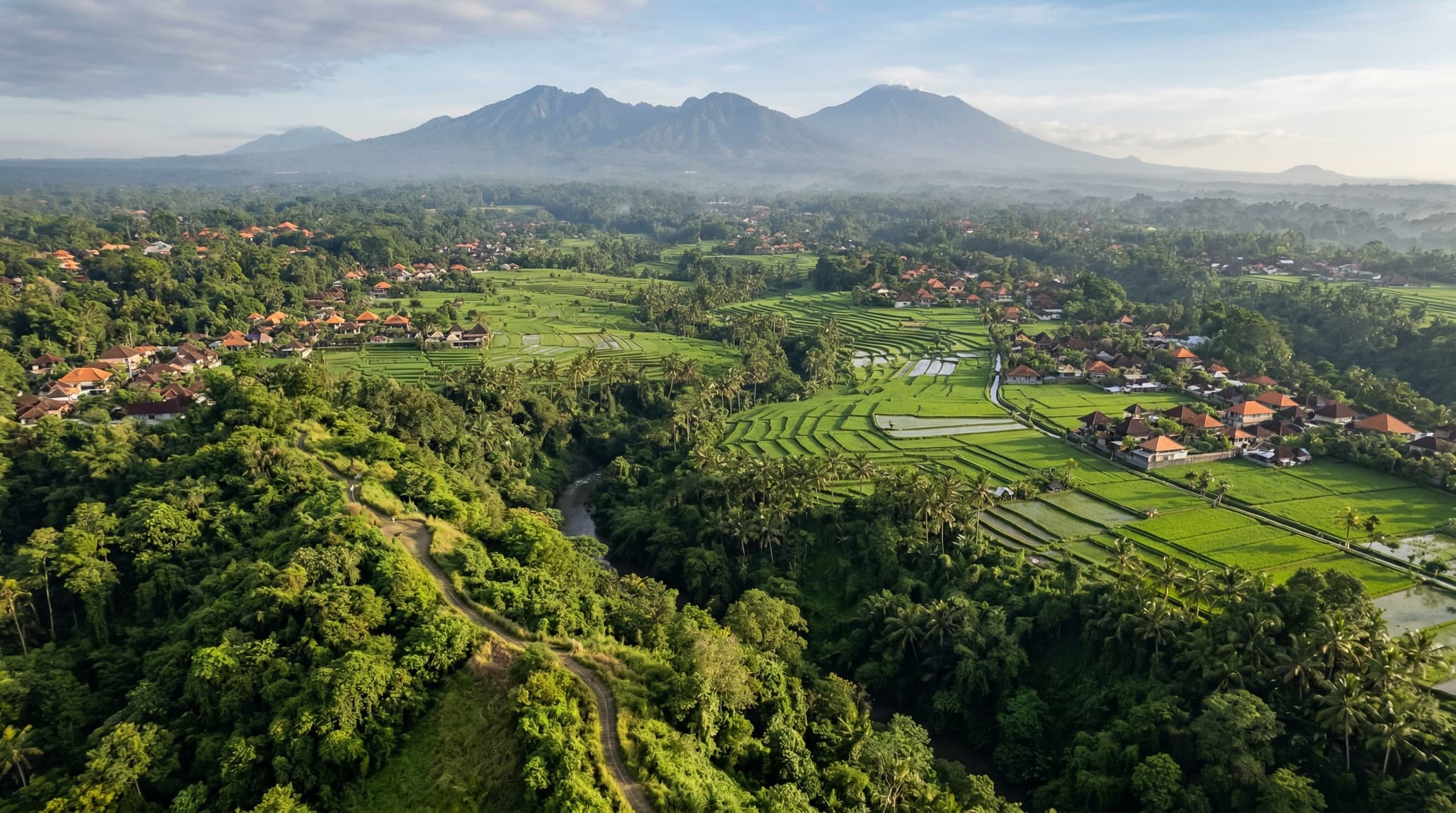
The neighborhoods radiate outward from this core: south toward Nyuh Kuning, northwest toward Campuhan, Penestanan, and Sayan along the river ridges, east toward Peliatan, southeast toward the craft villages of Mas and Batuan, and north toward the Tegallalang rice terrace corridor. Each has its own character, its own price point, and its own relationship to tourism.
Central Ubud: The Cultural Core (and the Crowds)
Central Ubud is the museum lobby — you pass through it, you don't live in it. The concentration of restaurants and shops makes it a natural meeting point, but the sidewalks are narrow, the traffic is relentless, and the construction cranes are hard to ignore. That said, this is where Ubud's cultural institutions live, and a few of them are worth the crowds.
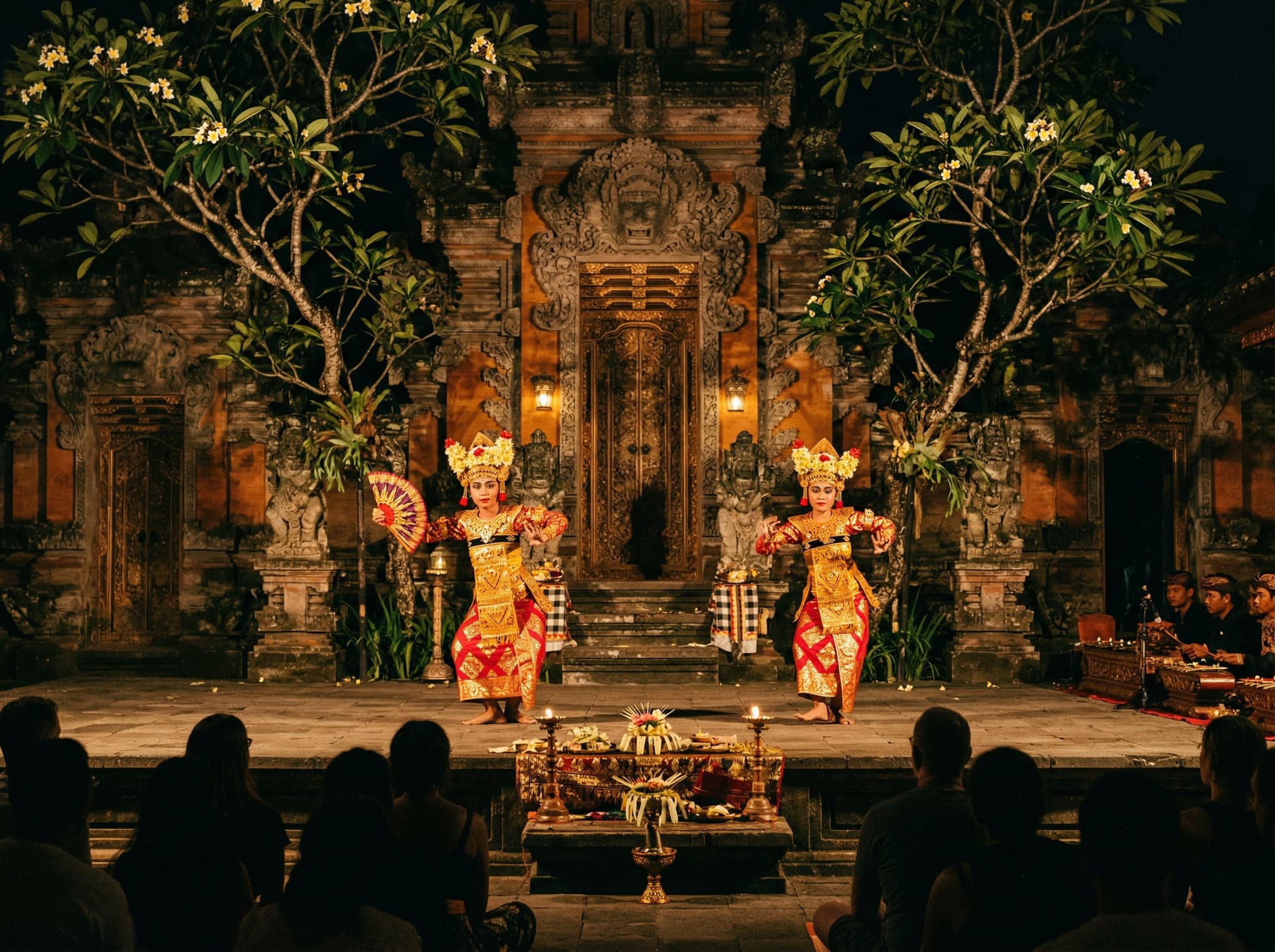
Ubud Palace (Puri Saren) has free entry during the day, but the real draw is the nightly Legong dance performances in the courtyard. Legong is one of Bali's oldest court dances — intricate, precise, performed by young women in elaborate gold costumes. It originated as entertainment for Balinese royalty, and the palace courtyard, with its carved stone gates and frangipani trees, is the right setting for it.
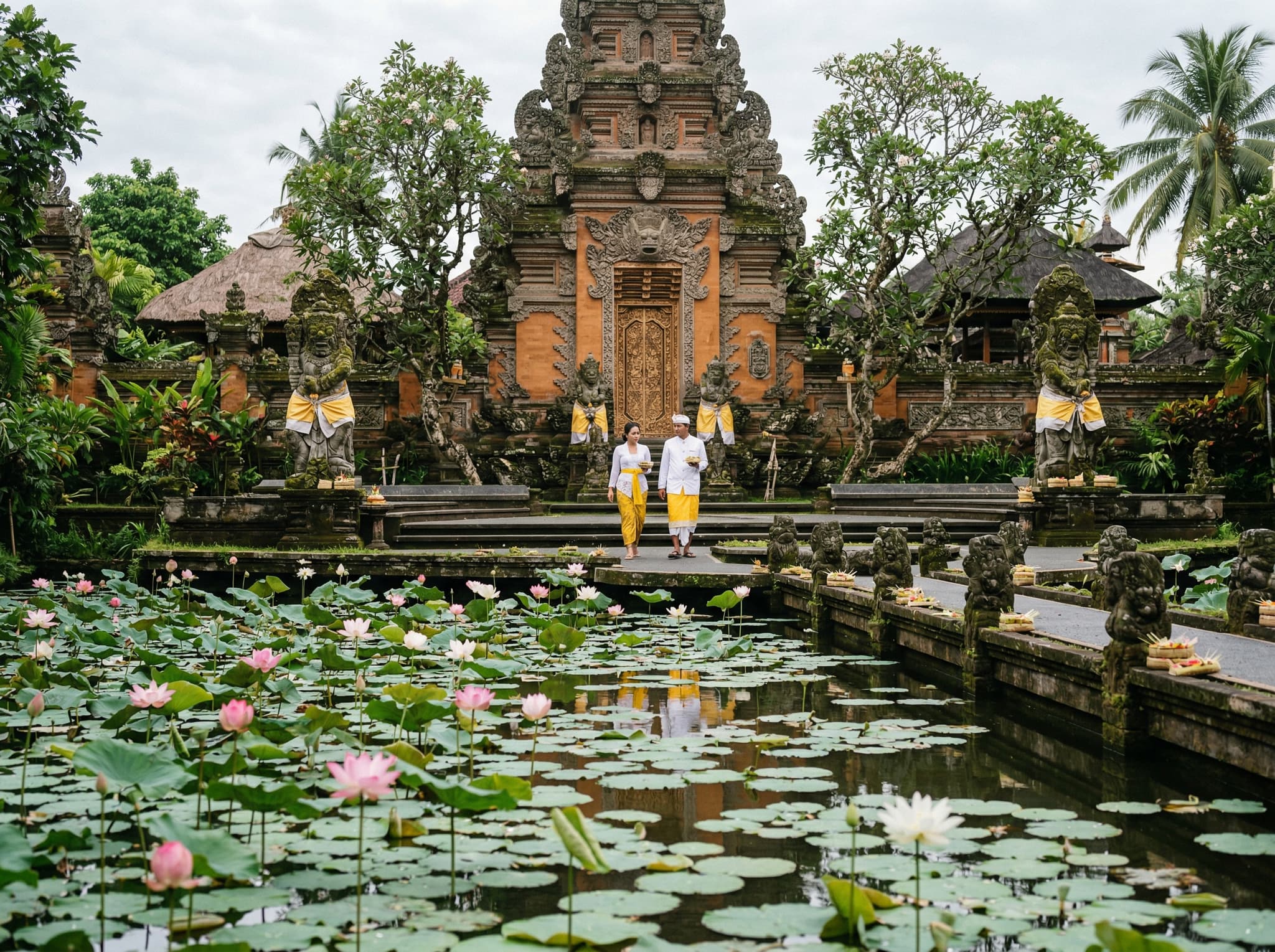
Saraswati Temple (Ubud Water Palace) is worth an early morning visit for the lotus pond alone — a carpet of pink blooms framed by carved stone. By mid-morning, tour buses have arrived and the atmosphere shifts. The temple also hosts evening dance performances.
Central Ubud Prices
Ubud Palace
Free entry; Legong Dance IDR 100,000
Saraswati Temple
IDR 50,000 adults, IDR 25,000 children
Dance shows (general)
IDR 155,000–540,000 (US$10–35); 1–2 hours, typically 7–8 PM
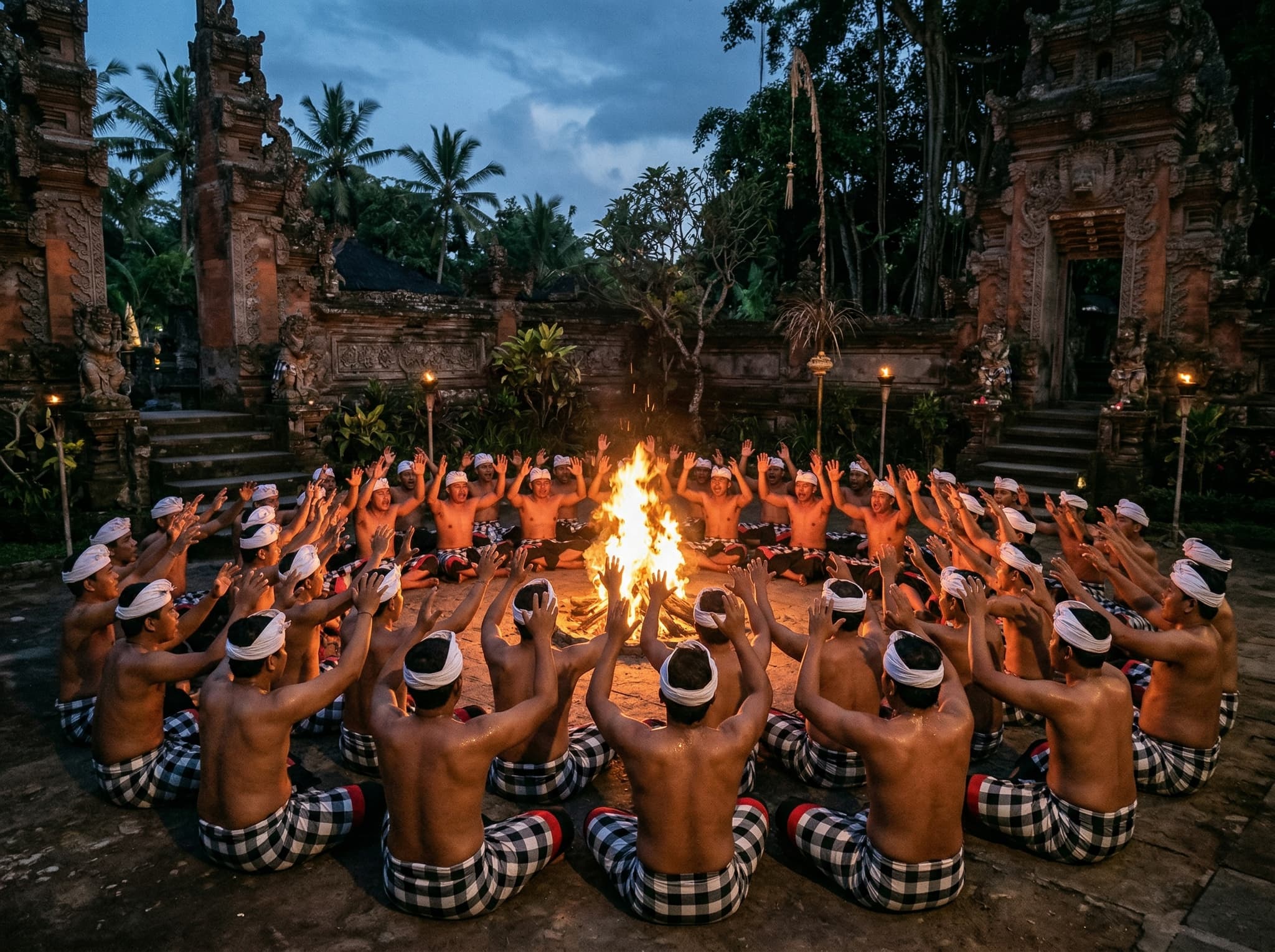
Nightly dance performances are one of Ubud's genuine highlights. Beyond the Palace and Saraswati Temple, ARMA Museum hosts Legong and Barong performances, and Pura Dalem Ubud is the main venue for the Kecak Fire Dance — a percussive, choral performance with no instruments, just dozens of men chanting in concentric circles around a fire. Kecak tickets run an estimated IDR 310,000–620,000 (US$20–40), and performances are weather-dependent since the stage is open-air. The Ubud Art Market, across from the palace, is largely mass-produced goods now, but local vendors still sell handmade items in the early morning hours before the tour groups arrive.
Monkey Forest and Nyuh Kuning: Ubud's Quieter Southern Edge
Walk south through the Monkey Forest and the tourist infrastructure falls away. Nyuh Kuning is the Ubud that travel writers described ten years ago — quiet lanes, woodcarving workshops, rice field views without a swing platform in sight.
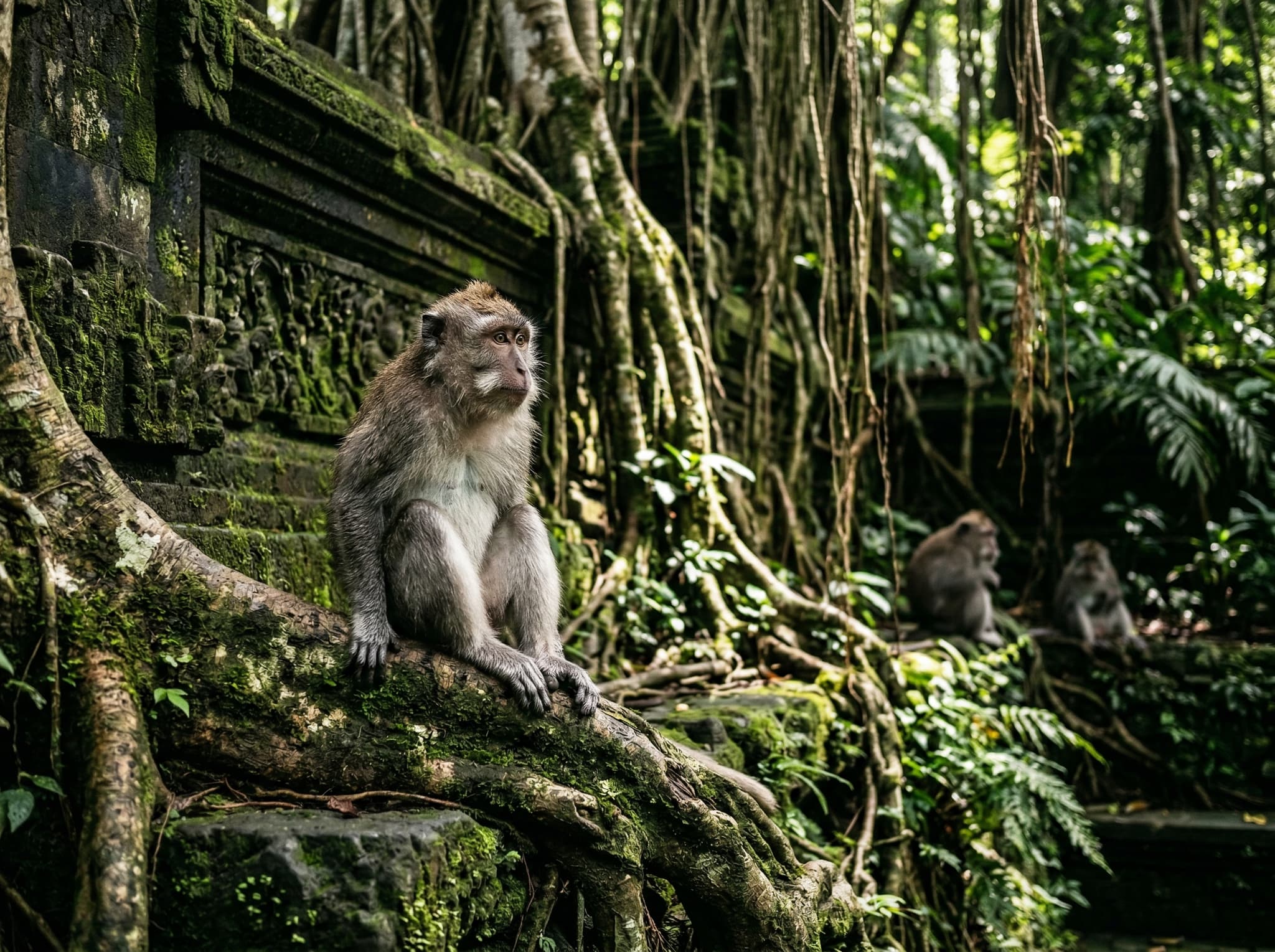
Sacred Monkey Forest Sanctuary is worth doing, but with managed expectations. It's a manicured park with aggressive long-tailed macaques, not a wilderness experience. The moss-covered temples and banyan tree canopy are genuinely atmospheric. Weekday mornings are significantly less crowded than weekends.
Monkey Forest Entry
Weekday (adults)
IDR 100,000
Weekend (adults)
IDR 120,000
Children
Approximately IDR 50,000
Beyond the forest's southern exit, Nyuh Kuning unfolds as a proper village. Small galleries display local woodcarving. Rice field walks start from the village edge without requiring a tour operator or an entrance fee. The pace is noticeably different from central Ubud, which is a ten-to-fifteen-minute walk north.
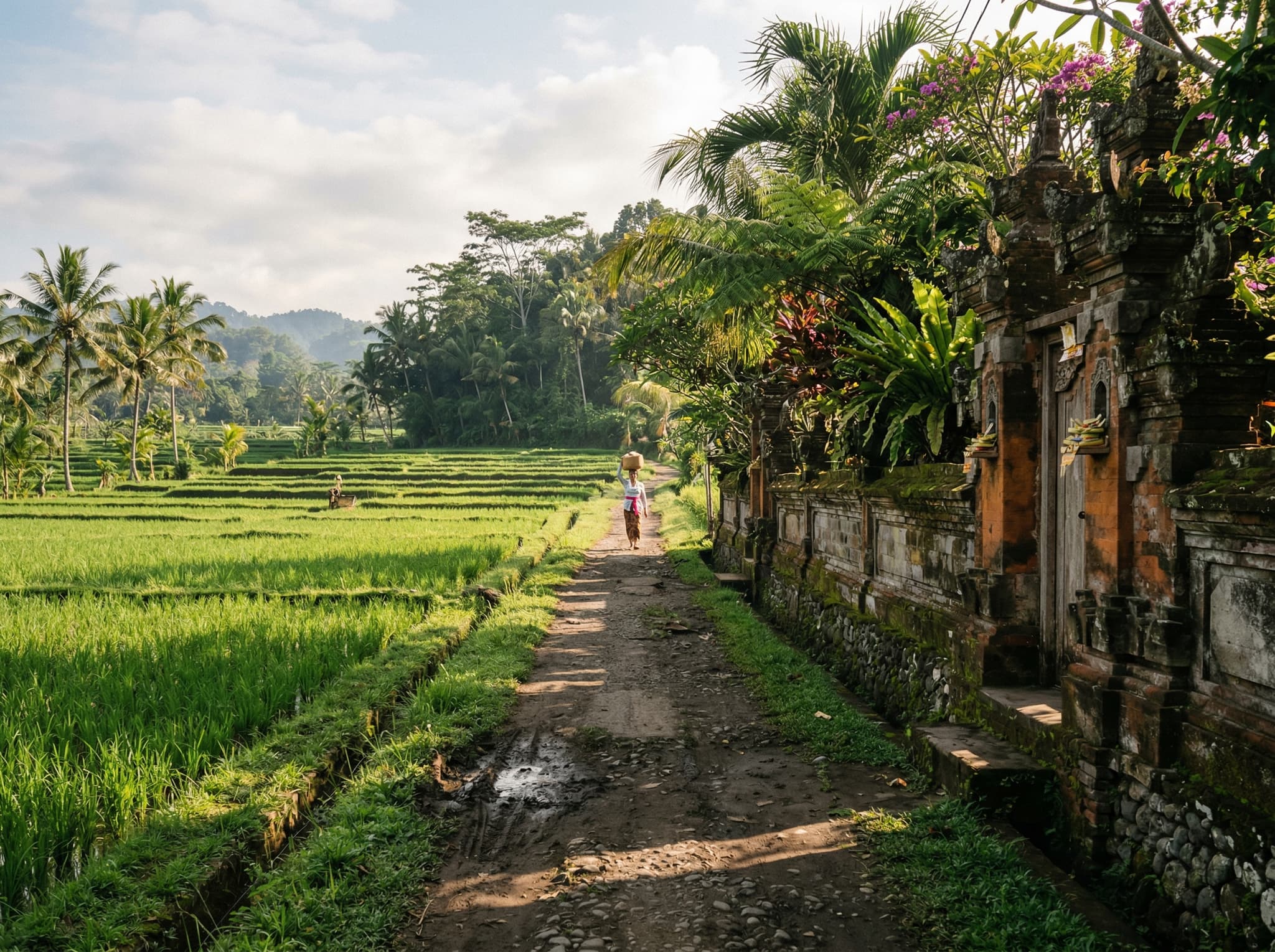
Accommodation here runs $40–80 per night — roughly 20–30% below central Ubud for comparable quality. The tradeoff is access: reaching the center's restaurant scene requires a scooter or a short ride-hailing trip. For travelers staying more than a couple of nights, that tradeoff tends to be worth it.
Campuhan, Penestanan, and Sayan: The Ridge and the River
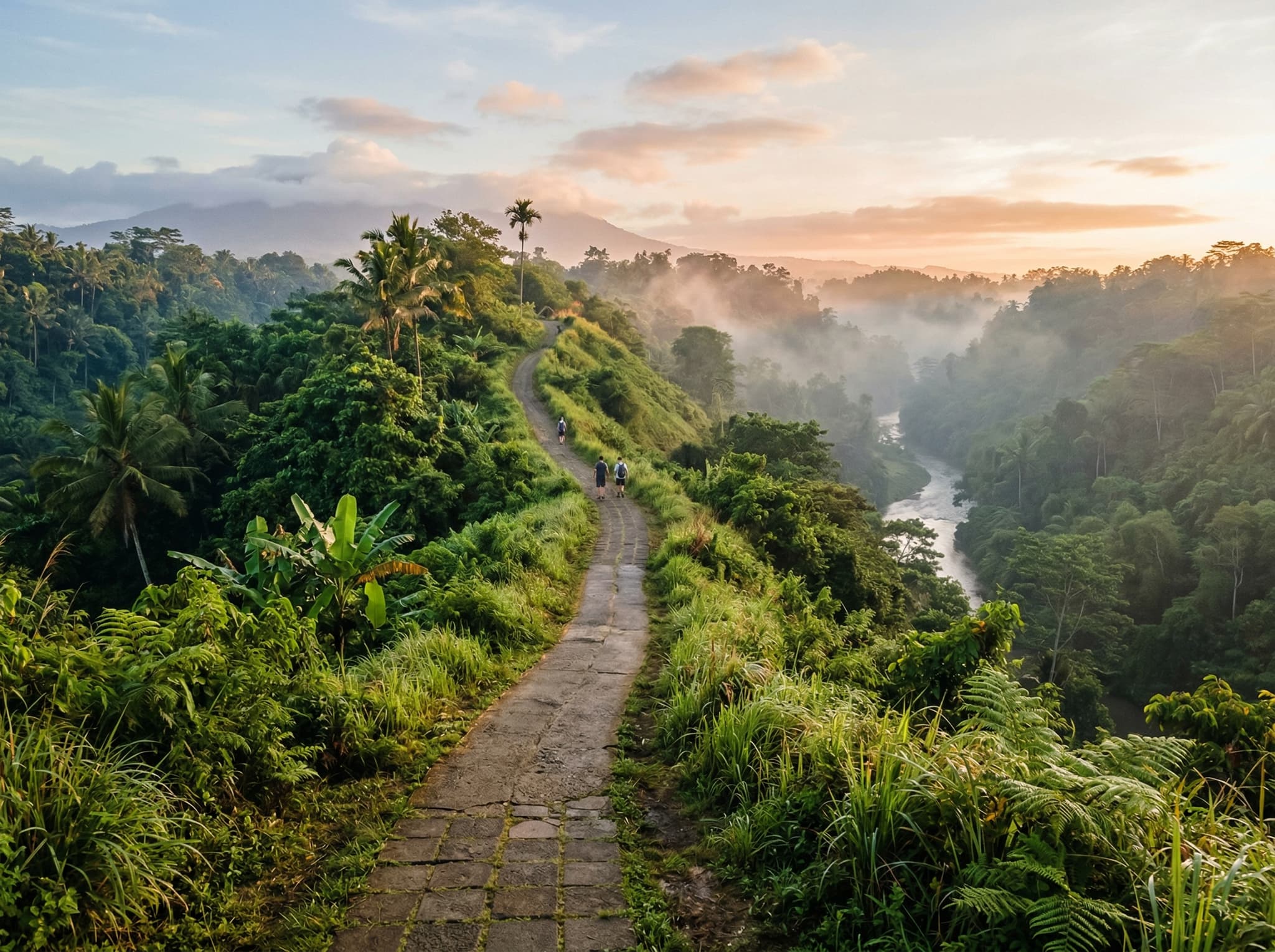
Cross the Campuhan Ridge and Ubud shifts from Balinese town to something that feels like a hill station — river gorges, artist studios, and the kind of quiet that costs $200 a night.
Campuhan Ridge Walk remains open with no restrictions as of late 2025. It's best at sunrise, when the light catches the palm canopy on either side of the ridge. A note on expectations: this is a thirty-minute walk on a paved path between two river valleys. It's beautiful but brief — more of a morning ritual than a hike.
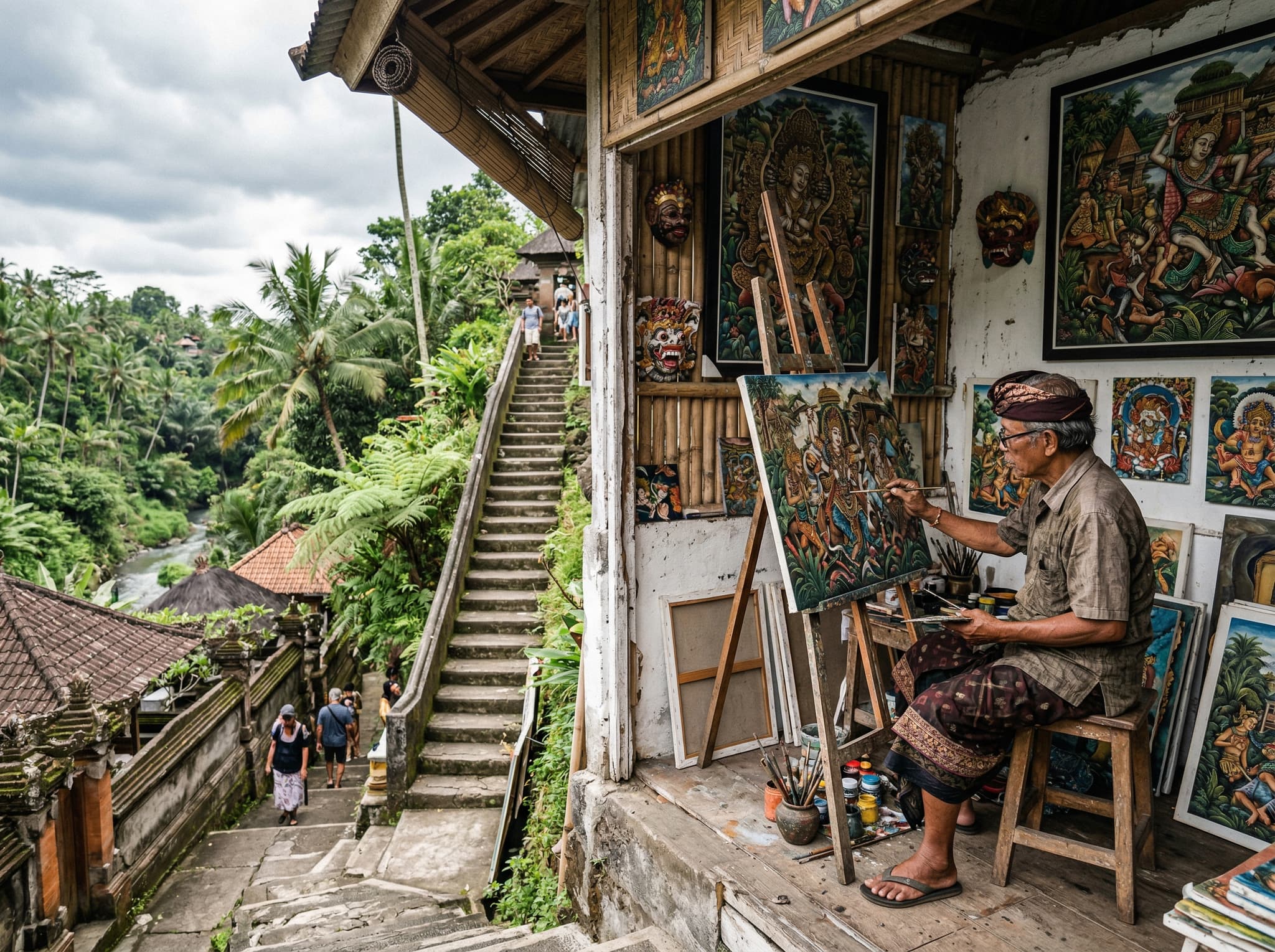
Penestanan sits above Campuhan, reached by a steep set of stone steps that are part of the experience. This was the original "painters' village" where Western artists — most notably the Dutch painter Arie Smit — settled in the 1960s and helped catalyze the Young Artists movement. Small galleries remain, and the village has a creative, slightly bohemian character that central Ubud lost years ago.
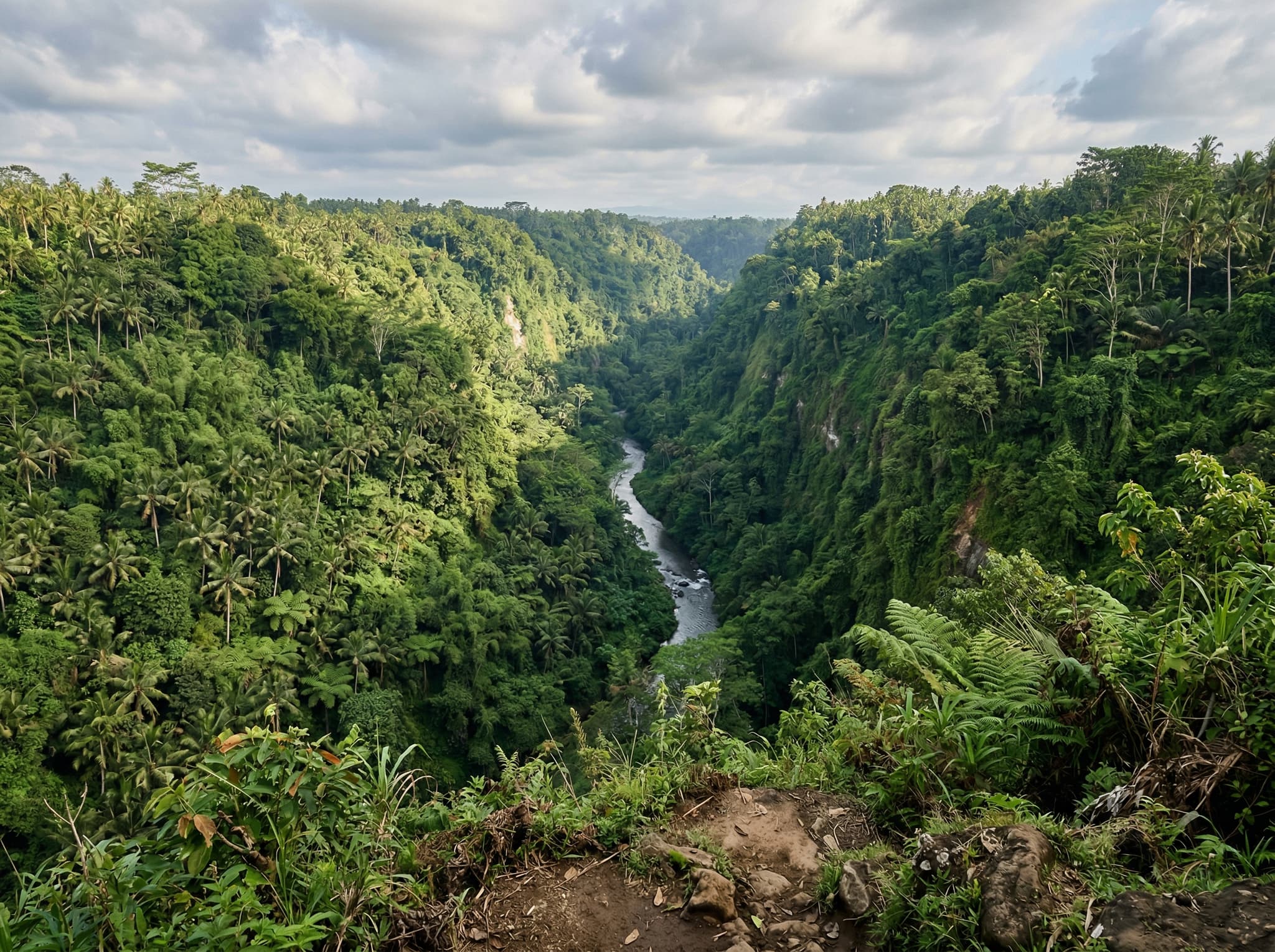
Sayan occupies the edge of the Ayung River gorge, and the views are the main attraction. This is where Ubud's luxury villas and wellness retreats concentrate — the kind of places with infinity pools cantilevered over the valley. Cooking classes in the premium range (US$100+) tend to operate in this corridor, taking advantage of the setting.
Campuhan–Sayan Practical Info
Accommodation
$100–300/night (luxury villas)
Distance to center
Approximately 4 km / 15–30 minutes
Transport
5–10 minutes by scooter to central Ubud
Weather note
More frequent afternoon rainfall at higher elevation
Peliatan, Mas, and Batuan: Craft Villages Without the Performance
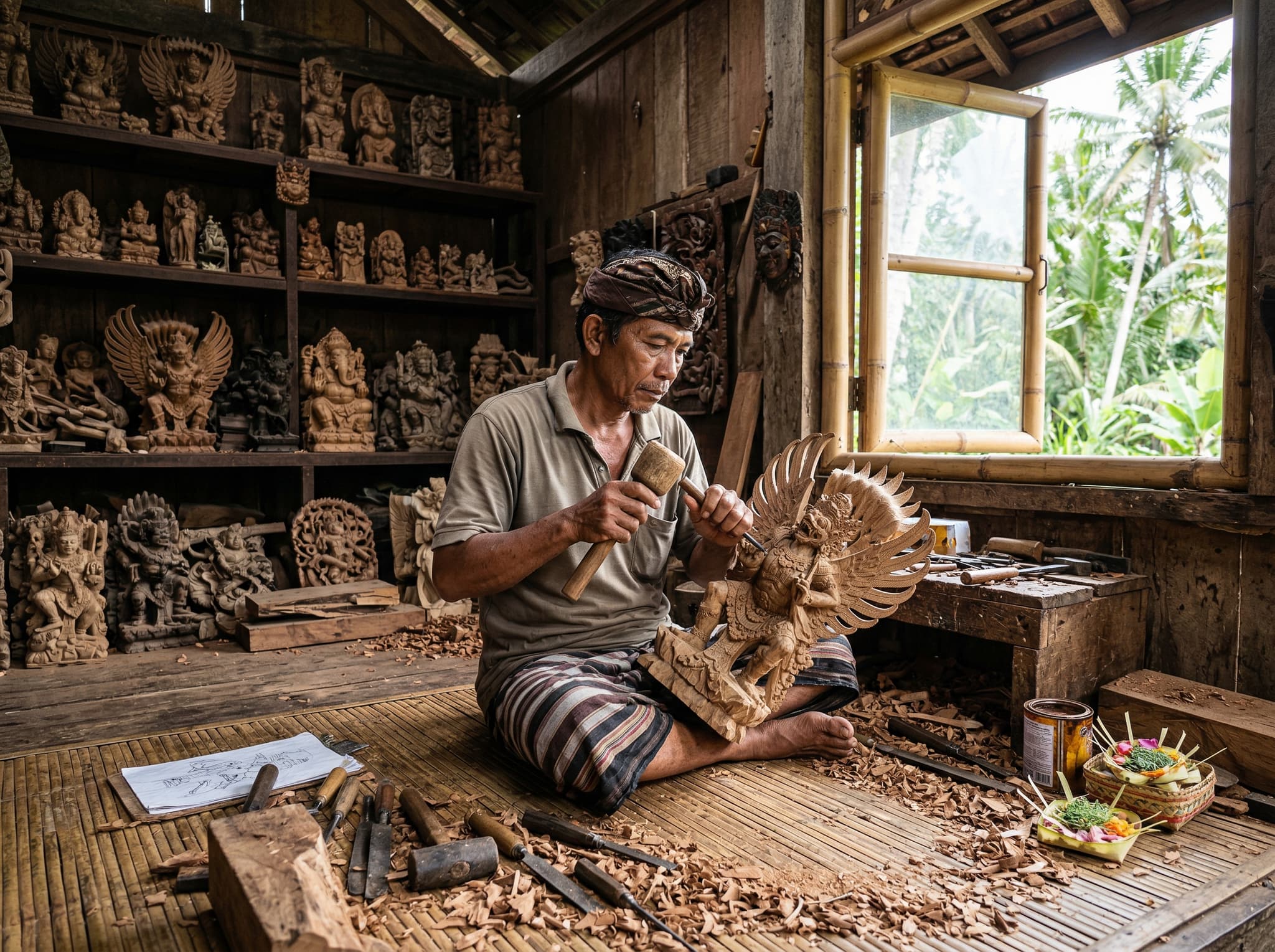
Peliatan, Mas, and Batuan are where Ubud's artistic traditions actually live — not in galleries with price tags, but in family workshops where the carver's kids are doing homework in the next room.
Peliatan, approximately one kilometer east of central Ubud, is historically the dance capital of the region. Its gamelan orchestras have performed internationally since the 1950s, and the village's relationship to performing arts is deeper than Ubud's — though less marketed. It's walkable from the center.
Mas is Bali's woodcarving center. Workshops line the main road south of Peliatan, and this is where to buy if you want something made by the person selling it. The craft here is multigenerational — families have been carving for centuries, and the skill level in the better workshops is extraordinary. A fifteen-minute scooter ride from central Ubud.
Batuan, a few minutes further south, has its own artistic identity that's distinct from Mas. Where Mas is known for three-dimensional woodcarving, Batuan is known for painting — specifically the Batuan style, characterized by dense, dark, narrative scenes that cover every inch of the canvas. The style emerged in the 1930s and depicts daily life, mythology, and ceremony in a kind of visual horror vacui that's immediately recognizable. Batuan Temple is worth a stop for its intricately carved exterior and painted ceilings, and functions as a separate destination rather than a detour from Mas.
Craft Village Practical Info
Peliatan
Approximately 1 km east; walkable
Mas
10–15 minutes southeast by scooter
Batuan
A few minutes south of Mas
Accommodation
$15–40/night in local homestays
Cooking classes are widely available in this corridor, typically running US$30–100 per person for a half- to full-day session. The best ones follow a market-to-table format — starting with ingredient shopping at a local morning market, then cooking through a multi-course Balinese menu. Premium cultural packages that bundle cooking with other activities can reach US$250.
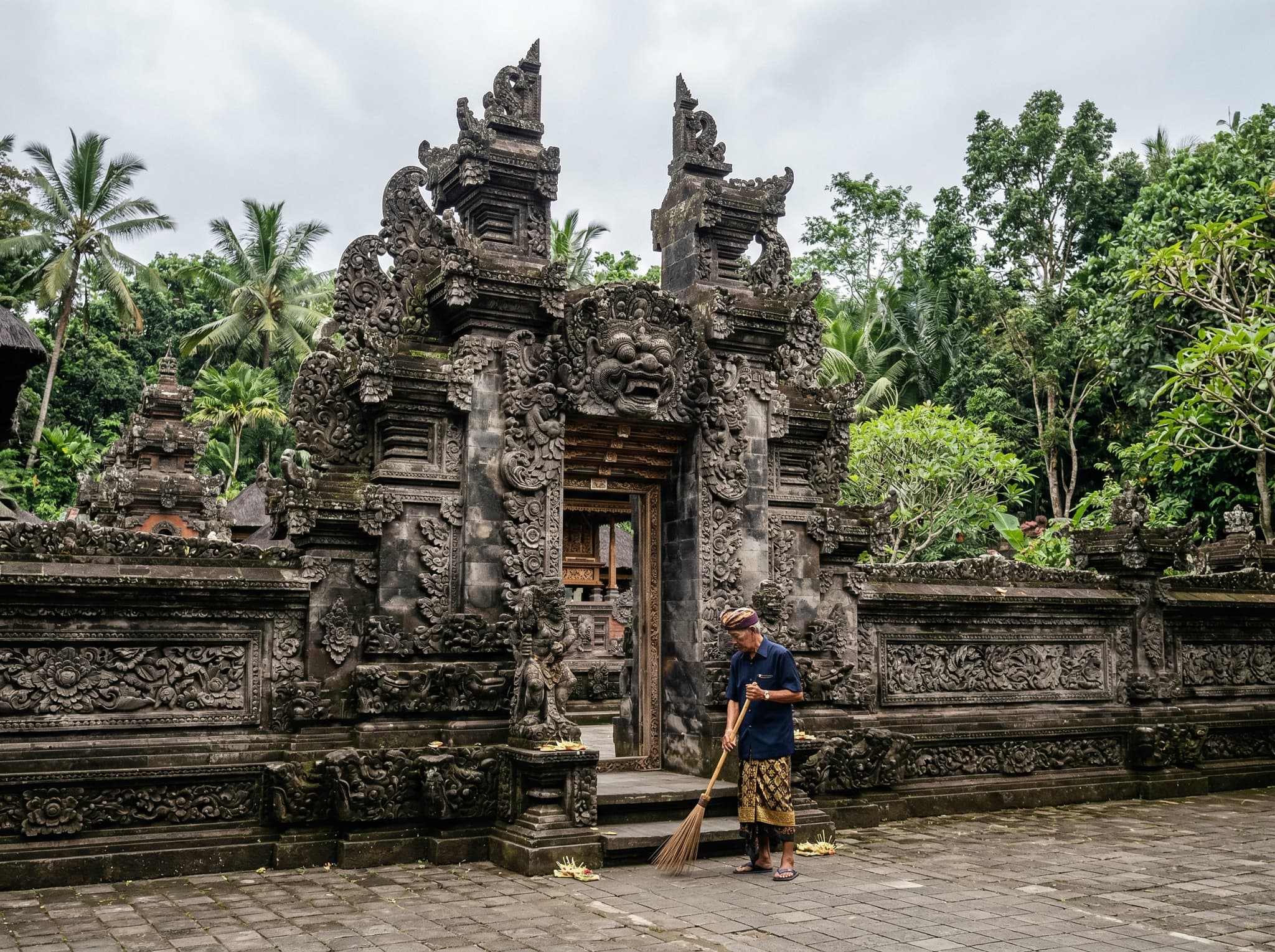
Accommodation in these villages means local homestays with minimal English-speaking services and few Western amenities. For the right traveler — someone comfortable navigating without a concierge — that's a feature.
Tegallalang and the Northern Corridor
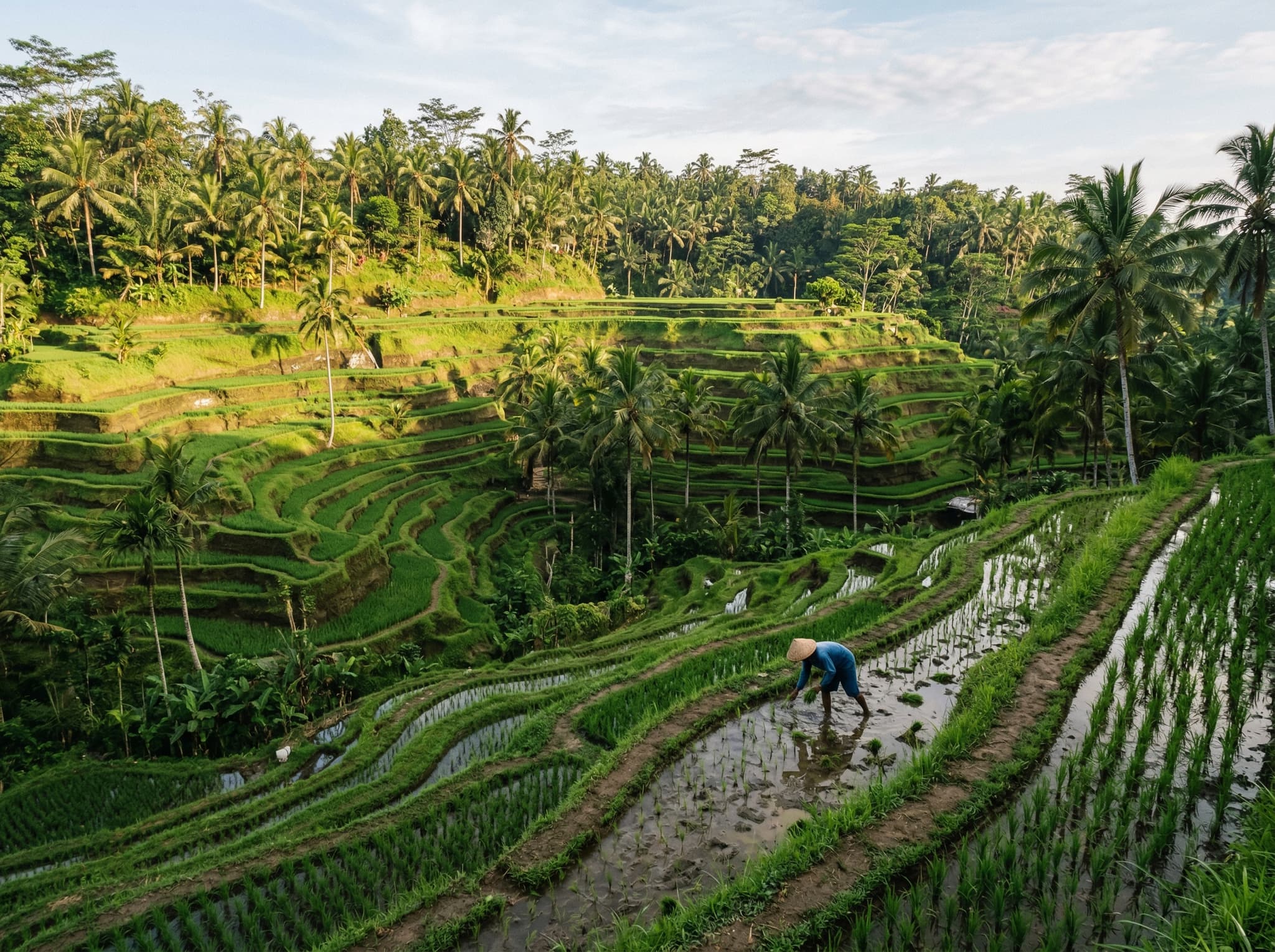
Tegallalang is Ubud's most photographed landscape and its clearest case study in what overtourism does to a rice terrace.
Tegallalang Rice Terraces are still beautiful. The cascading paddies carved into the hillside are a product of the subak irrigation system — a cooperative water management tradition that UNESCO recognized in 2012 as a cultural landscape. The terraces are functional agriculture, not a park. But the tourism infrastructure has encroached significantly: swing platforms, cafés cantilevered over the paddies, and crowds that peak by mid-morning. Some terraces appear dry — not from seasonal variation, but from water diversion to hotels and restaurants upstream. This isn't abstract environmental concern; it's visible.
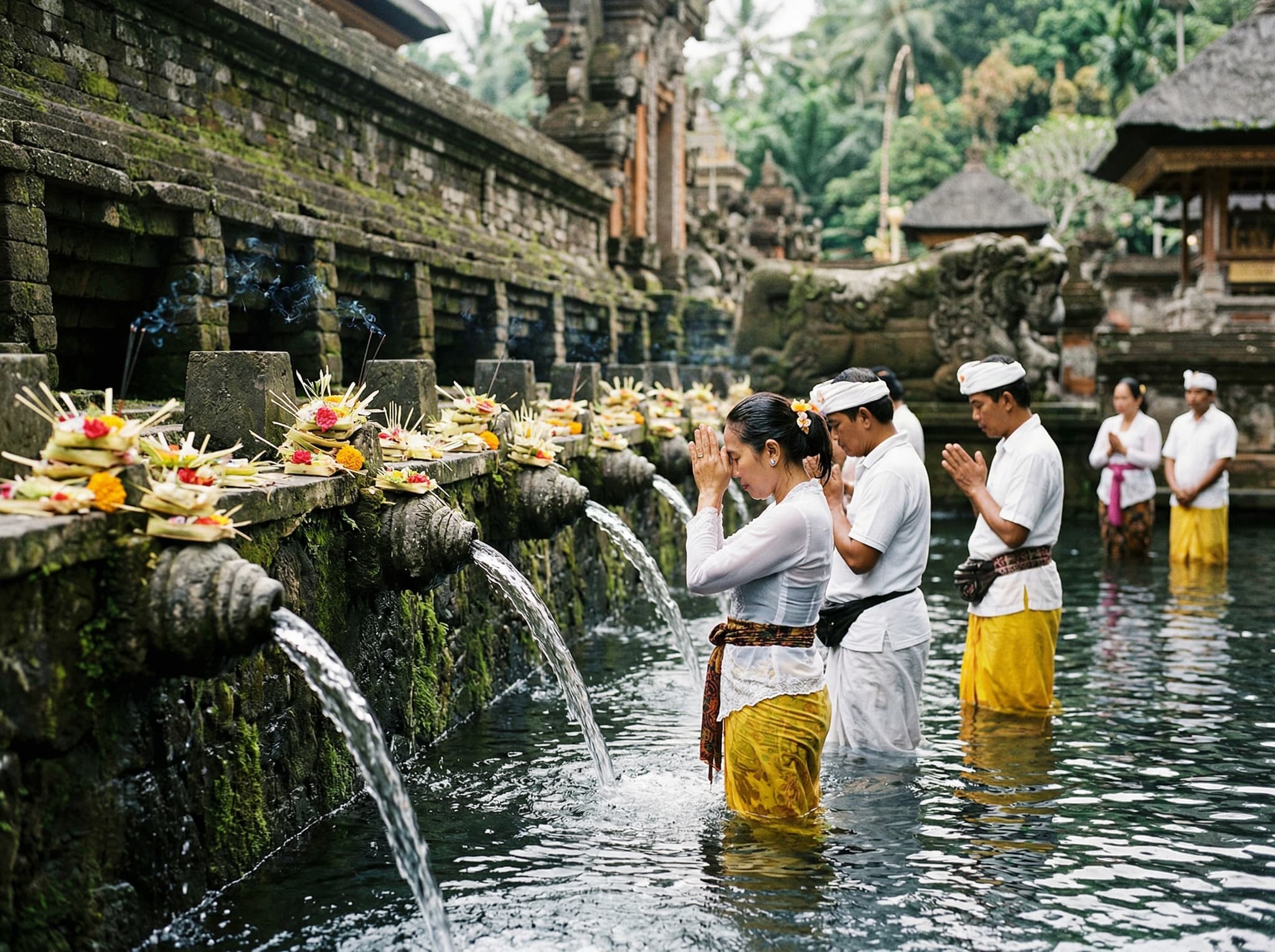
Tirta Empul Temple, twenty minutes north of Ubud center, is built around natural spring pools where Balinese Hindus perform a purification ritual — walking through a series of fountains in sequence, praying at each one. The ritual is genuine and actively practiced, not a tourist invention. Visitors can participate, but etiquette matters: a sarong is required (rental IDR 10,000–20,000 at the entrance), and respectful behavior is expected and enforced.
Northern Corridor
Tegallalang distance
Approximately 7 km / 20–40 minutes by scooter
Tirta Empul (adults)
IDR 75,000
Tirta Empul (children)
IDR 50,000
Sarong rental
IDR 10,000–20,000
Village walking tours operate throughout this corridor — typically 2.5-hour guided walks through rice fields and traditional villages with English-speaking guides. Morning and afternoon sessions run daily. These are a good option for travelers who want the rice field experience without the Tegallalang crowds, and they provide context that walking alone doesn't.
Getting Between Neighborhoods
The neighborhood approach only works if you can move between them. Here's what that looks like in practice.
Walking is viable within central Ubud and south to Monkey Forest and Nyuh Kuning — roughly a ten-to-twenty-minute walk. Sidewalks are inconsistent, and Jalan Monkey Forest has significant pedestrian traffic.
Scooter rental is the default for most independent travelers: IDR 70,000–150,000 per day including a helmet, with fuel costing approximately IDR 10,000 per tank. An honest note: Ubud traffic is real, roads are narrow and shared with trucks, and if someone hasn't ridden a scooter before, this is not the place to learn.
Ride-hailing apps (Grab and Gojek) both operate in Ubud. Short trips run IDR 10,000–30,000 by motorbike, IDR 20,000–50,000 by car. Drivers may not pick up in some areas due to longstanding tensions with local taxi cooperatives — this is a known issue, not a glitch.
Private drivers for a full day cost IDR 400,000–600,000 for approximately ten hours, and are the best option for the Tegallalang and Tirta Empul corridor, where the distances are longer and the roads are winding. From the airport to Ubud, expect IDR 450,000 by private car (1.5–2.5 hours depending on traffic) or IDR 100,000 on the Kura-Kura Bus from Kuta.
Where to Base Yourself
This isn't a hotel list — it's a decision framework based on what kind of trip you're planning.
Central Ubud offers walkability, the densest restaurant scene, and proximity to dance performances. It also means noise, construction, and crowds. Best for short stays of one to two nights, or for travelers who prioritize convenience over atmosphere.
Nyuh Kuning is the budget-friendly, quieter option that's still walkable to the Monkey Forest. At $40–80 per night, it's the best value near the center. Best for longer stays where a scooter ride to dinner is an acceptable tradeoff.
Penestanan and Sayan are the retreat play. River gorge views, wellness infrastructure, luxury villas at $100–300 per night. Best for couples and anyone prioritizing atmosphere and quiet over access to central Ubud.
Peliatan, Mas, and Batuan offer the deepest cultural immersion at the lowest prices — $15–40 per night in homestays. English-language services are minimal and Western amenities are few. Best for experienced travelers comfortable navigating on their own terms.
The Version That's Worth It
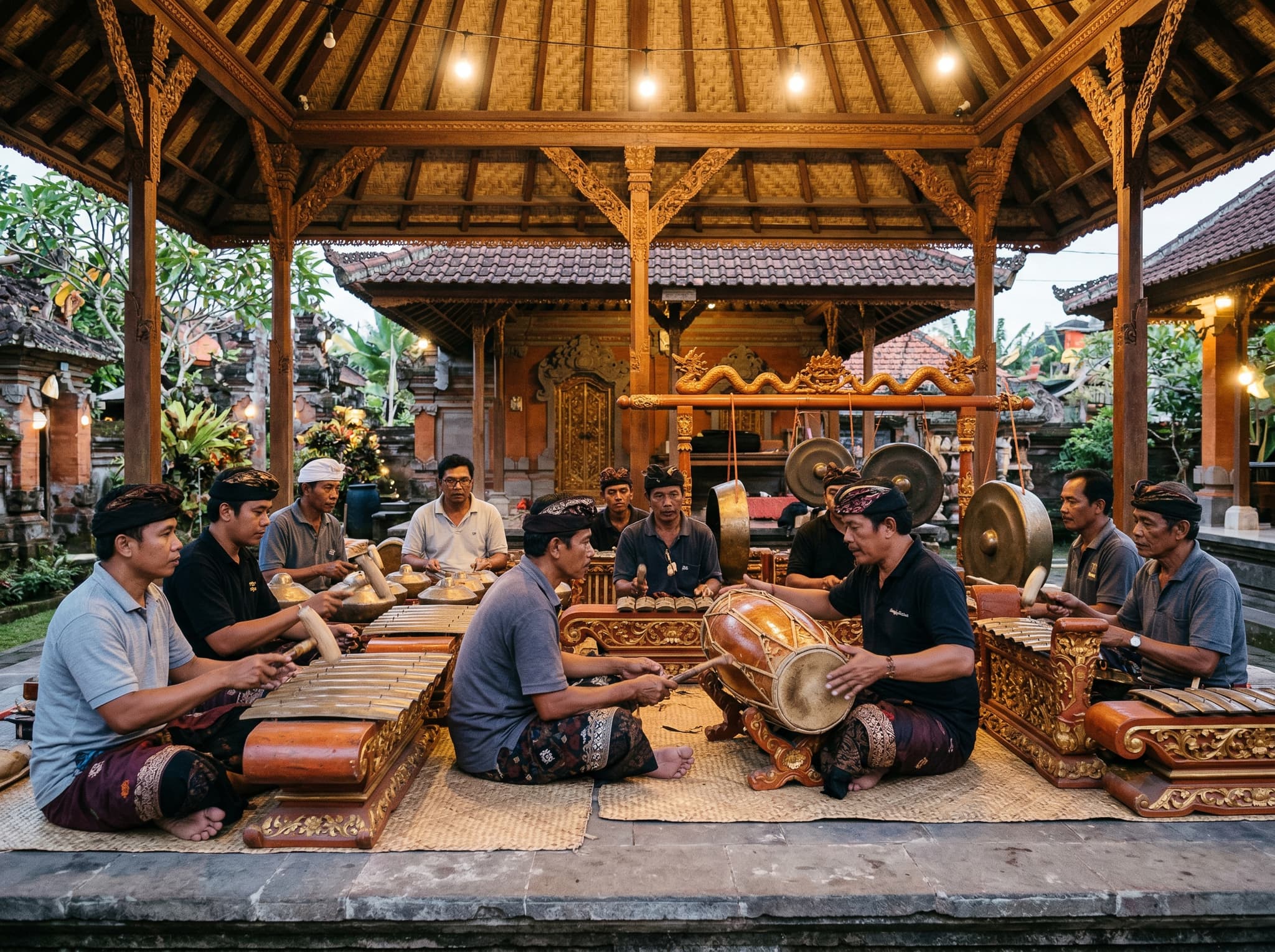
Ubud rewards the traveler who treats it as a collection of villages rather than a single destination. The subak terraces, the family workshops, the evening gamelan rehearsals in village pavilions — these things still exist, but they exist in the neighborhoods where daily life hasn't been fully reorganized around tourism. Choosing where to go and how to spend shapes which version of Ubud survives.