Everything you need to know about Ayung River rafting near Ubud — operators, costs, seasonal conditions, and what the experience is actually like.
Bali's longest river doesn't announce itself with drama. The Ayung winds roughly 75 kilometers from the volcanic highlands near Mount Agung down through the rice terraces and jungle gorges north of Ubud before emptying into the Badung Strait. For most visitors, it registers as the deep green canyon glimpsed from the terrace of a Ubud restaurant — a backdrop so lush it looks staged.
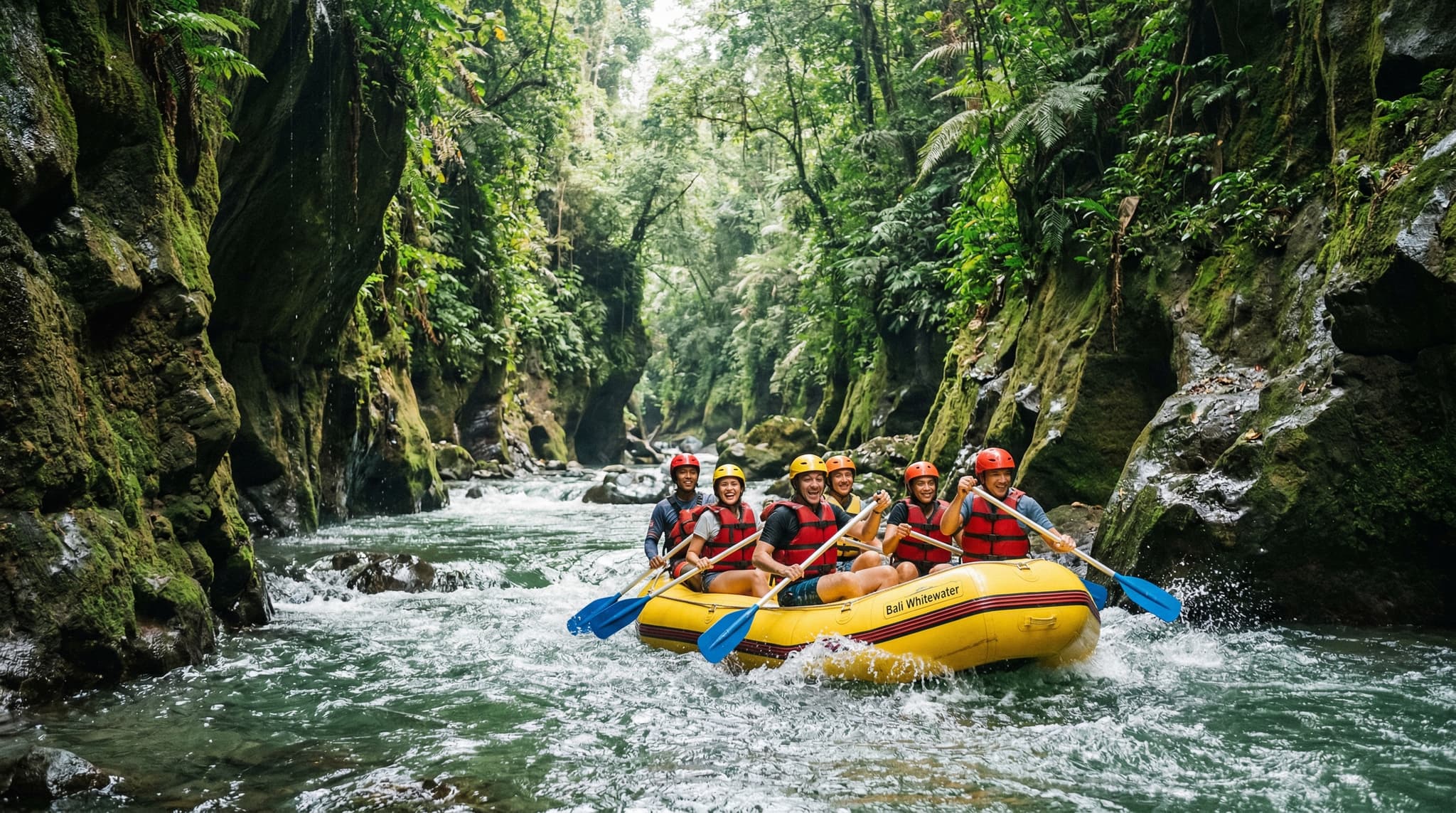
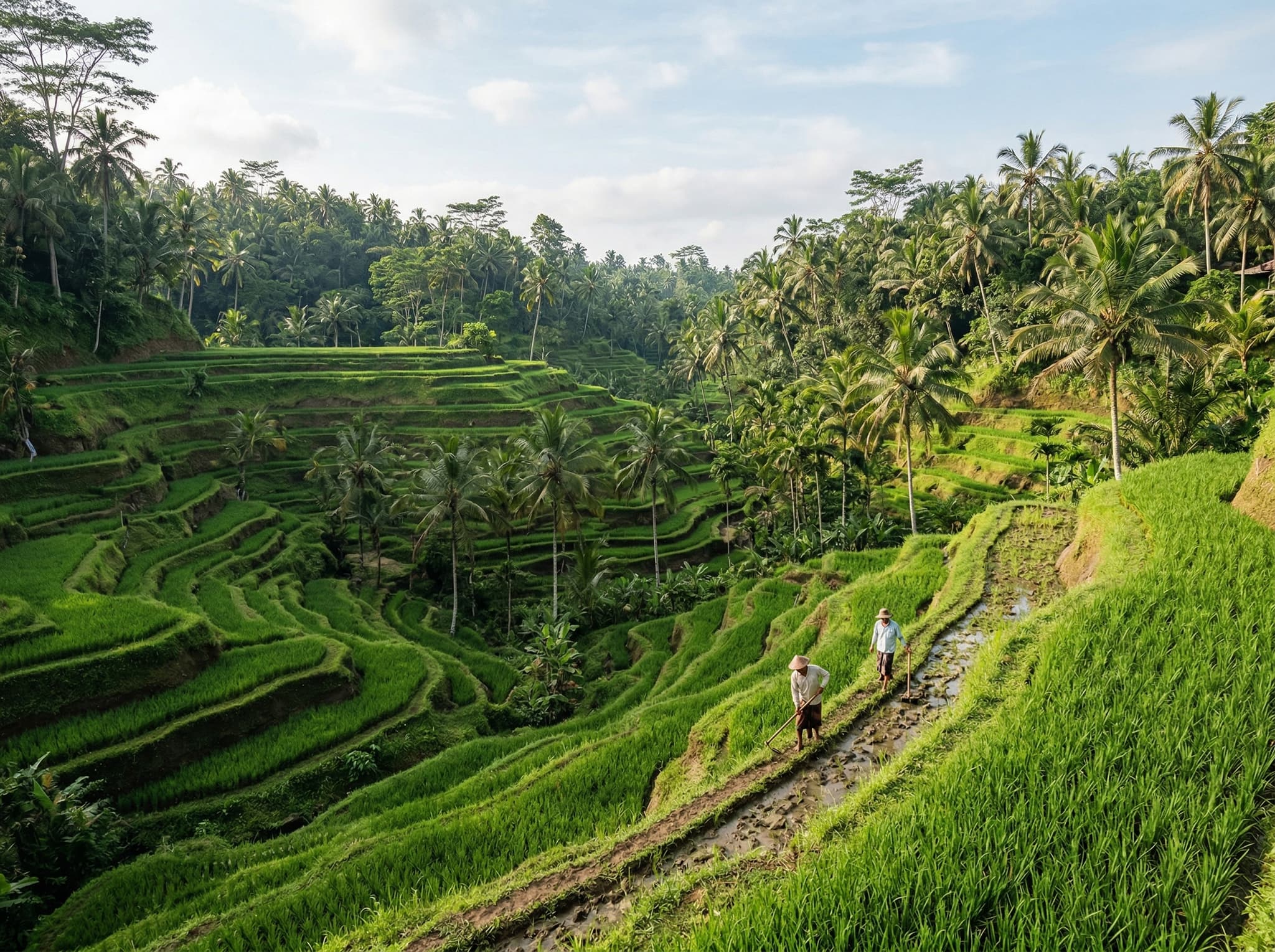
But the Ayung is more than scenery. It's the island's primary water source, irrigating the subak rice terrace system that UNESCO recognized in 2012. And for the past three decades, the 10–12 kilometer stretch north of Ubud has been Bali's most popular white water rafting route — one of the top things to do in Bali — a Class II–III run that threads between moss-covered canyon walls, past carved rock faces, small waterfalls, and canopies dense enough to block the equatorial sun.
What the Rafting Is Actually Like
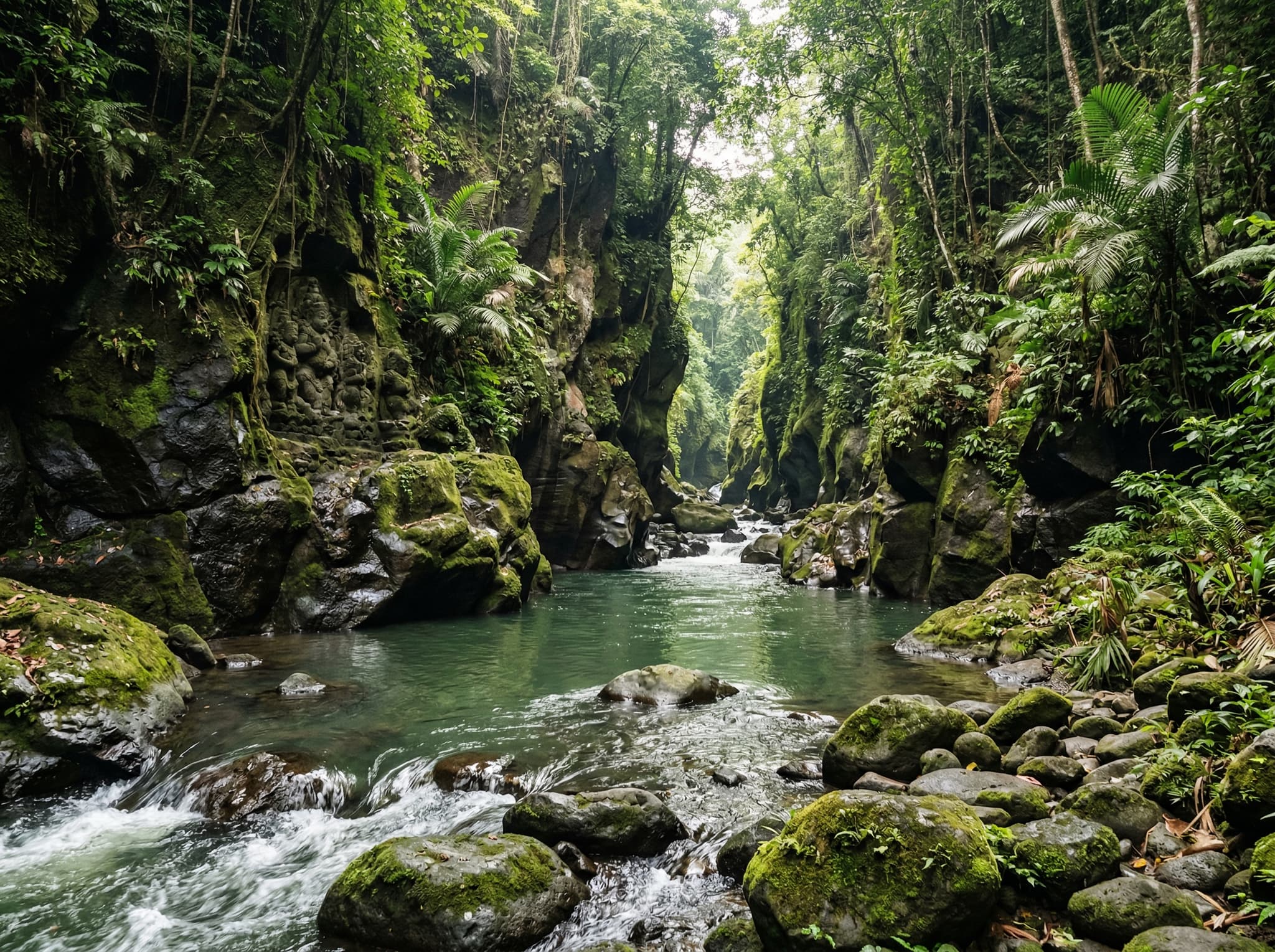
This isn't adrenaline rafting. The Ayung's rapids are gentle — Class II with occasional Class III sections — meaning small waves, straightforward maneuvering, and no significant drops. Operators routinely take children as young as six and adults up to 65. If you've rafted bigger rivers in Colorado or New Zealand, the Ayung will feel tame. That's the point. The draw here is the gorge itself.
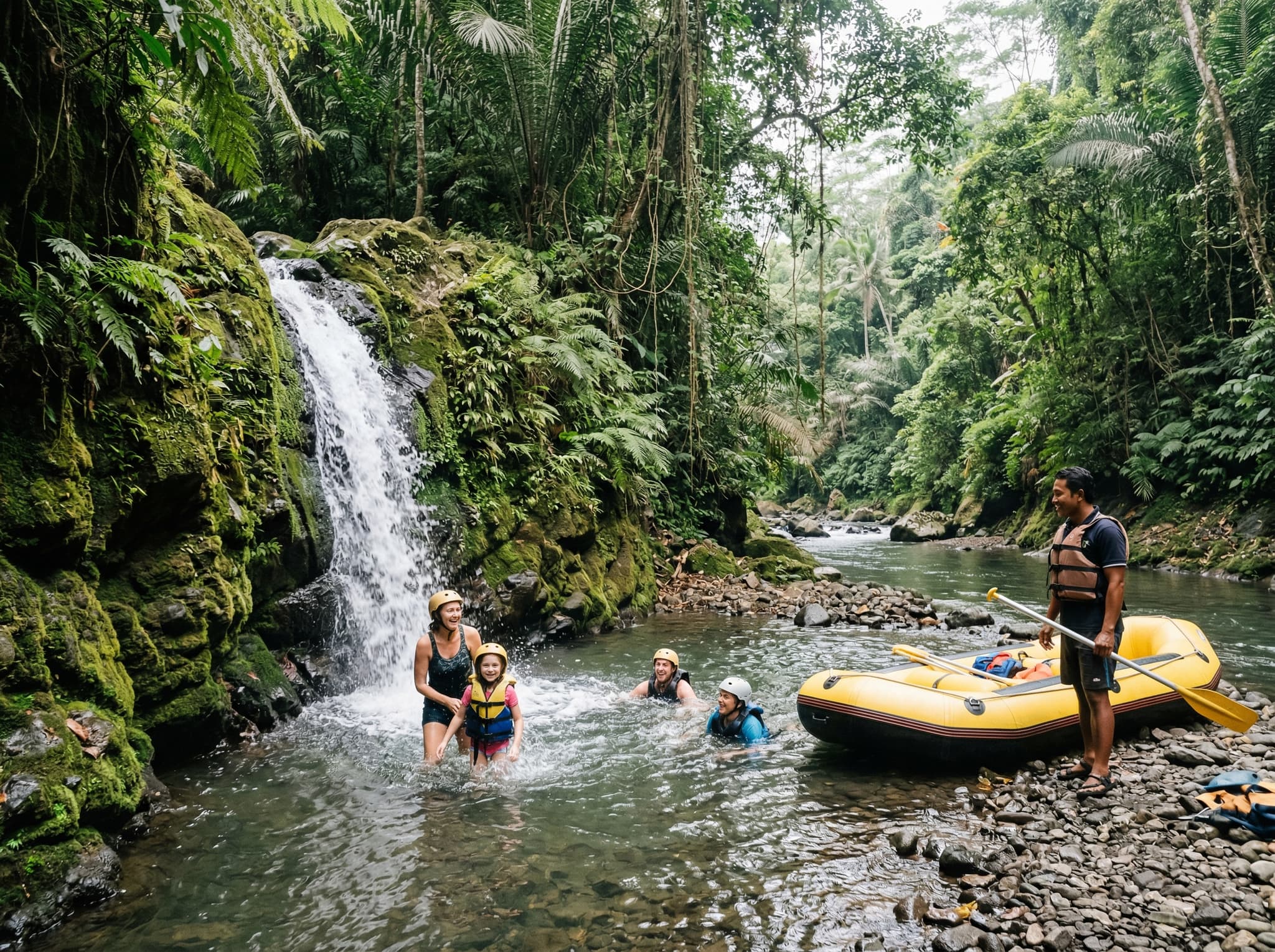
The rafting section runs from put-in points near Payangan or Kedewatan, roughly 20–30 minutes northeast of central Ubud. Most operators begin with a descent of approximately 500 stairs down to the river — worth knowing if you have mobility concerns. From there, it's 1.5 to 2.5 hours on the water, depending on the operator and water levels.
Between rapids, guides typically pause at waterfalls for swimming stops. The calm stretches offer clear water and a chance to look up at the canyon walls, some of which feature stone carvings that local artists have added over the years. It's genuinely beautiful in a way that's hard to oversell.
Choosing an Operator and What to Pay
The price spread is wide, and it mostly reflects transfer logistics and group size rather than dramatic quality differences.
Rafting Price Breakdown
Budget group tours
US$20–27/adult
Mid-range with transfers
US$28–35/adult
Premium/private packages
US$45–70/adult
Without transport (self-drive)
~IDR 370,000 (~US$24)
With transport from Ubud
~IDR 450,000–550,000 (~US$29–35)
Standard packages include all equipment (helmet, life jacket, paddle), a guide, lunch — usually a buffet near the endpoint — and changing facilities. Many mid-range and premium packages include round-trip hotel transfers. Some operators bundle combo options: rafting plus an ATV ride, or rafting plus a visit to a coffee plantation.
A few things to watch for: child and adult pricing is often identical for ages 7–65. Afternoon sessions sometimes require higher group minimums. And self-rafting — showing up with your own gear — isn't permitted. All commercial rafting requires licensed operators.
Booking through platforms like GetYourGuide, Viator, or Klook is straightforward and often cheaper than booking through your hotel. Operators like Bali Bintang Rafting (based in Kedewatan) and Ubud Rafting Adventure are well-reviewed and have been running the route for years.
When to Go
Seasonal Conditions
Dry season
April–October: optimal water levels, clearer skies
Best months
May, June, September
Wet season
November–March: higher water, rain likely
Typical schedule
Hotel pickup ~9 AM, return by 2–3 PM
Dry season is the standard recommendation. Water levels are manageable, visibility is good, and the stairs down to the river aren't slippery. Wet season rafting is still possible — and some experienced rafters prefer the higher water — but conditions change quickly. Heavy rain can spike river levels with little warning.
Getting There
Most rafting packages with transfers handle logistics entirely — a driver collects you from your hotel, delivers you to the put-in point, and picks you up at the endpoint. If you're staying in Ubud, the drive is 20–30 minutes. From Seminyak or Kuta, expect 60–90 minutes each way.
If you prefer to self-drive or hire a private driver, the put-in points near Payangan and Kedewatan are well-signed. A private driver for a full day runs from about US$26, which makes sense if you want to combine rafting with other stops — the Tegallalang rice terraces and Tirta Empul temple are both in the same corridor.
Beyond Rafting
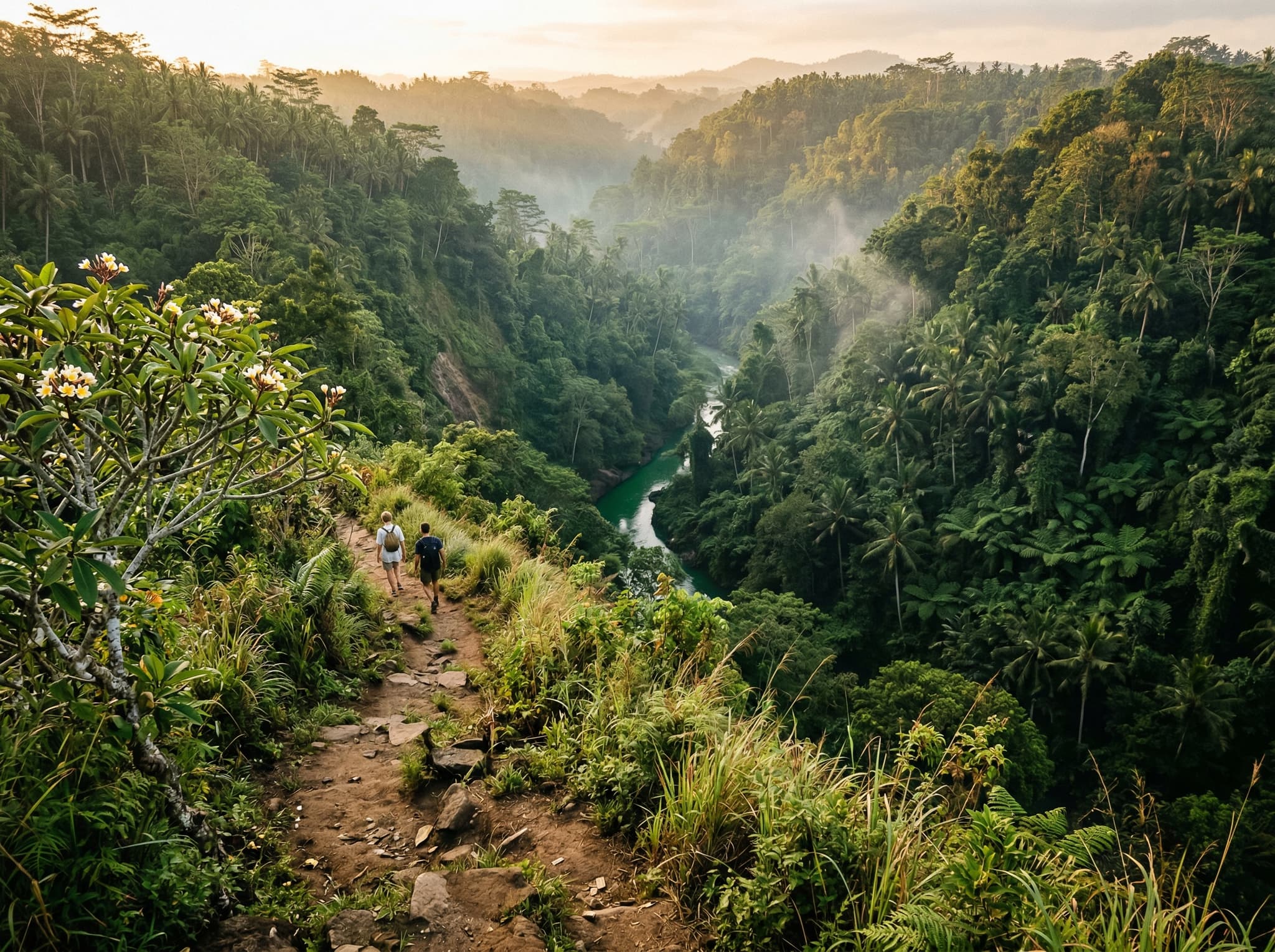
The Ayung River gorge is accessible for free at various points along its banks, particularly near Sayan and along Jalan Raya Ubud. Several luxury hotels — including the Four Seasons at Sayan — are perched on the gorge rim, and the walking paths near them offer views of the river without the commitment of a rafting trip. The Campuhan Ridge Walk, one of Ubud's most popular short hikes, follows a ridge between the Ayung's tributaries.