Ubud blends Balinese culture, rice terraces, and a maturing food scene with the realities of heavy tourism. Here's what to expect and how to visit well.
Ubud is the place people mean when they say they went to Bali and it changed them. Sometimes that's true. Sometimes it just means they had a good smoothie bowl and took a photo at a rice terrace. Both versions of Ubud exist simultaneously, and the town doesn't seem troubled by the contradiction.
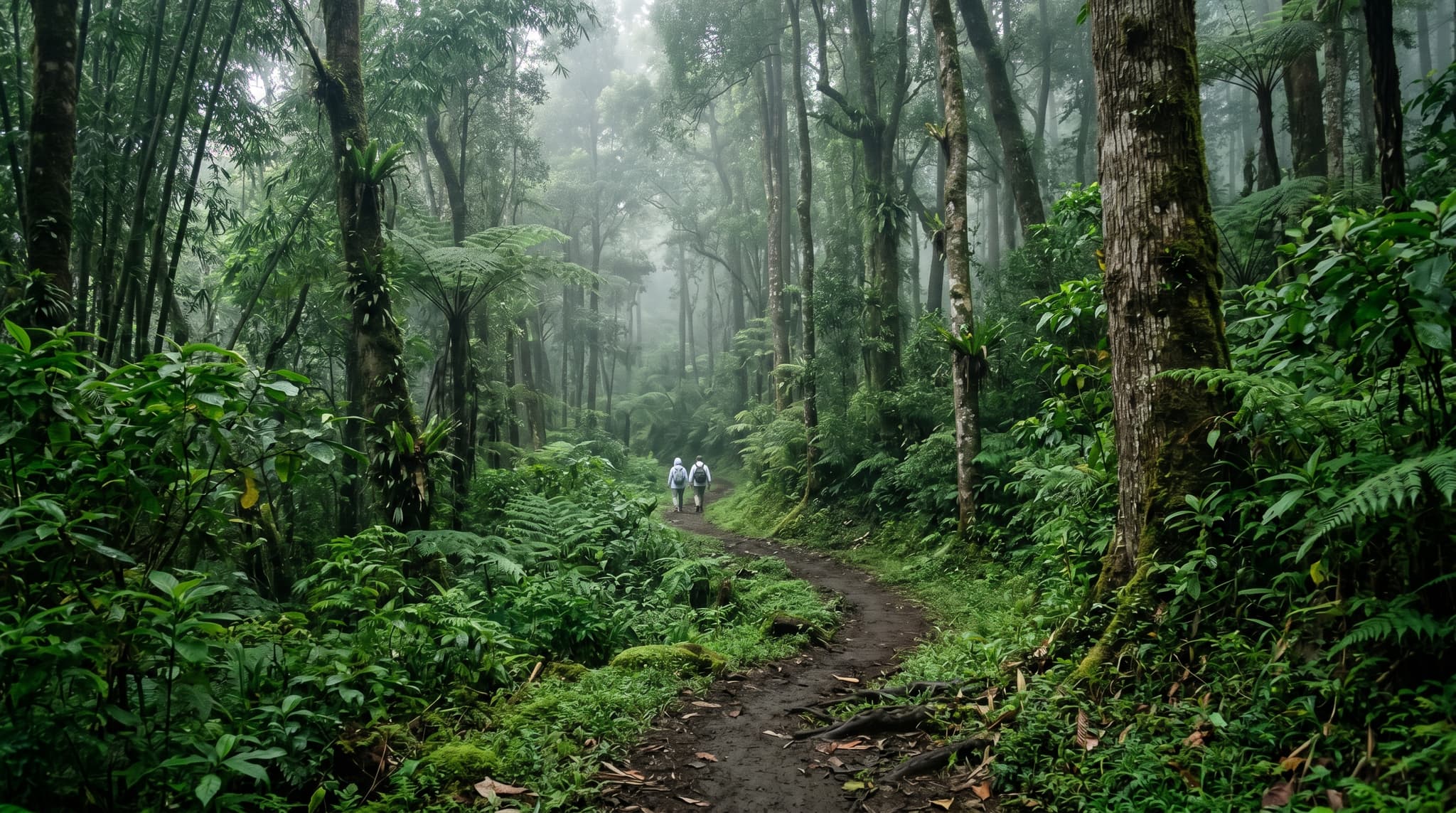
The center of Ubud is small enough to walk in an afternoon — Jalan Raya Ubud, Jalan Monkey Forest, the market, the palace, the lotus pond. You can cover the landmarks before lunch. But Ubud isn't really about the center. It's about the edges, the twenty-minute walks that take you from a crowded café into silence, the sound of water moving through irrigation channels that have been here longer than any of the yoga studios.
The Shape of the Place
Ubud sprawls more than it appears on a map. The name covers not just the town center but a constellation of surrounding villages — Penestanan, Peliatan, Mas, Keliki, Campuhan — each with its own character. Penestanan is quieter, reached by a steep staircase from the main road, full of long-stay artists and modest homestays. Peliatan is where many of Bali's most respected dance troupes are based. Mas is the woodcarving village. These distinctions matter more than the restaurants on Jalan Dewi Sita.
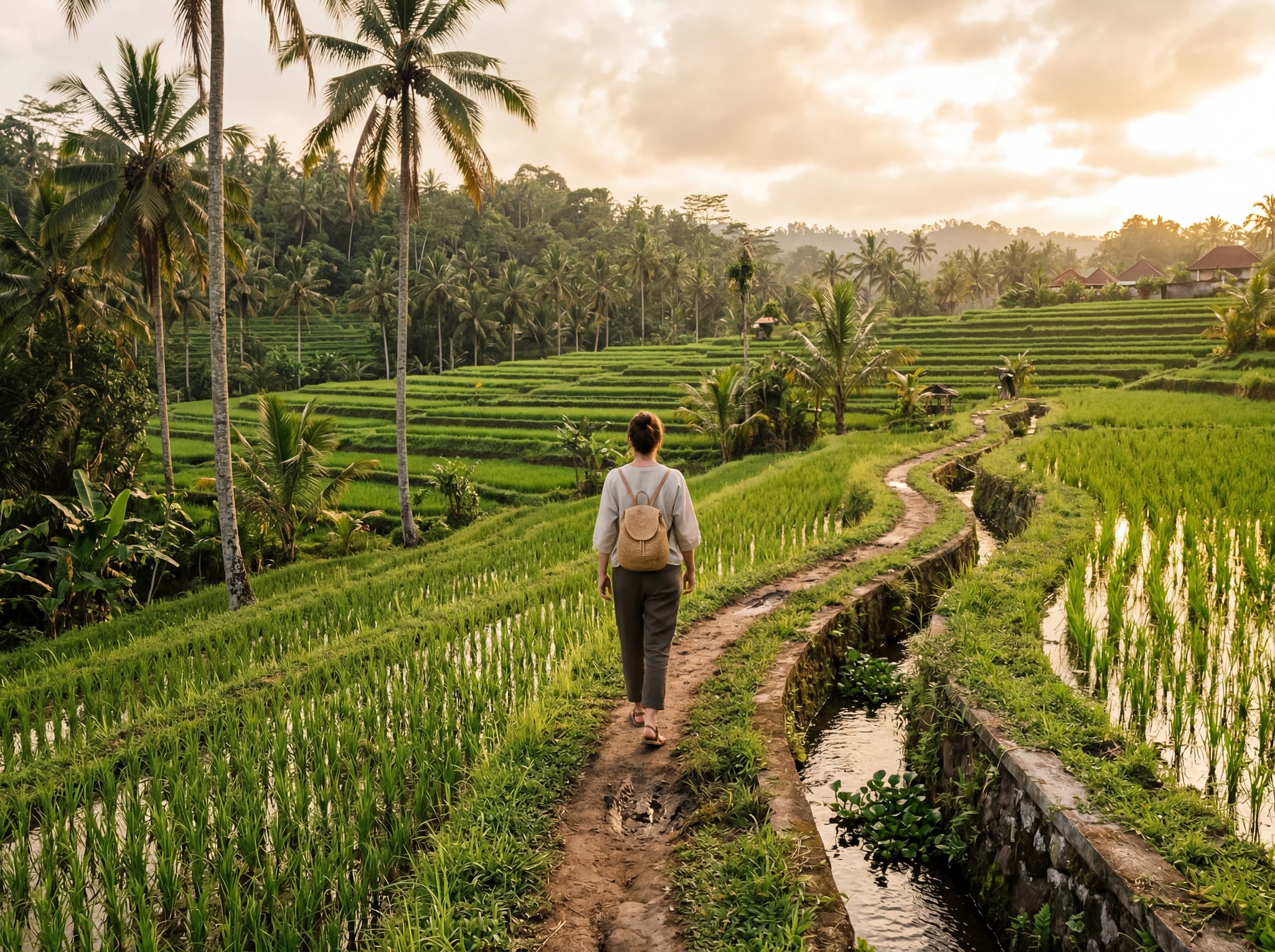
The geography helps. Ubud sits in a river valley, cut through by the Campuhan and Wos rivers, surrounded by terraced rice paddies that climb the hillsides in steps. The elevation — roughly 200 meters above sea level — keeps it slightly cooler than the coast, and the air has a different quality here, especially in the early morning before the motorbikes start.
What Ubud Does Well
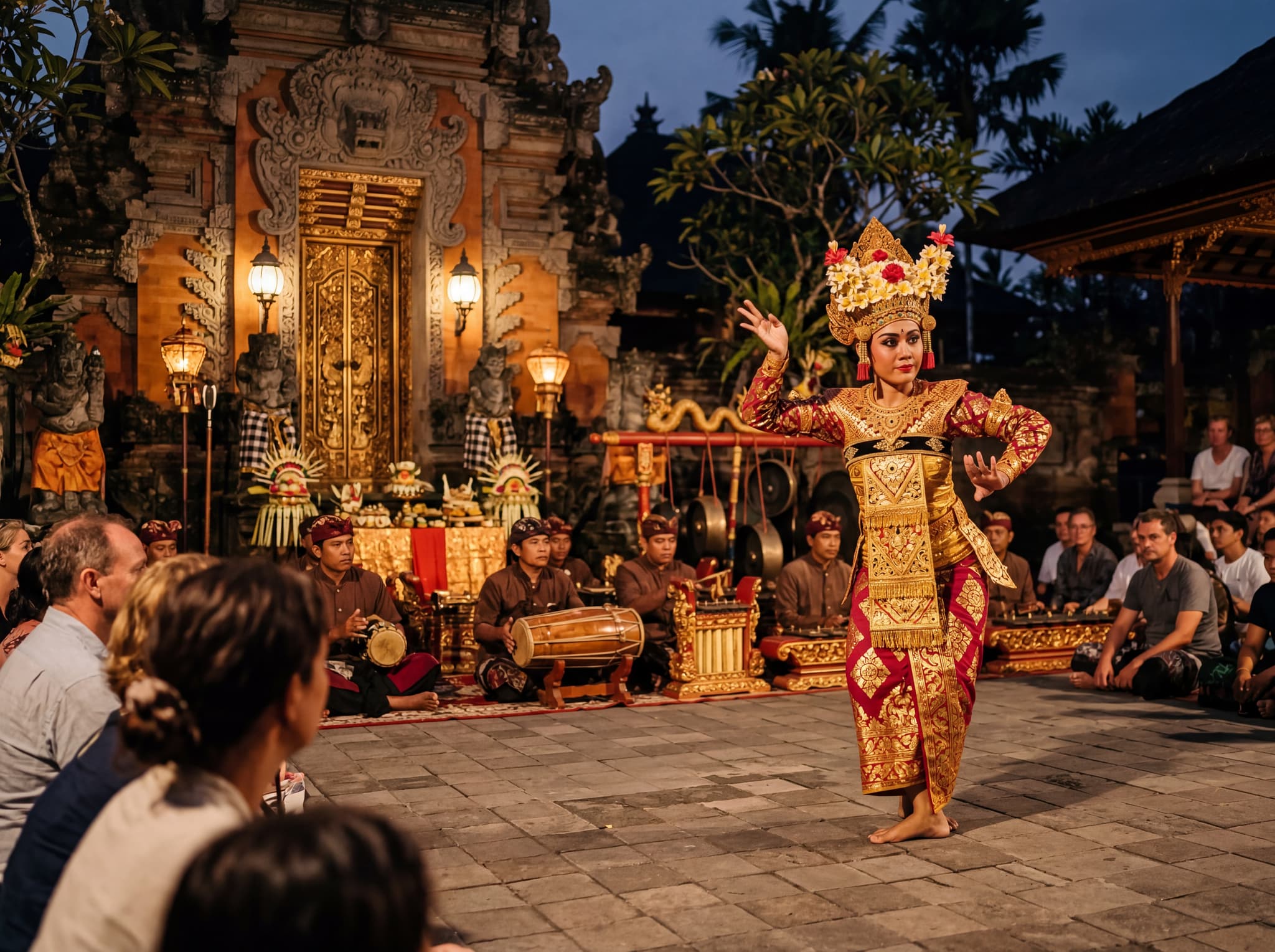
The cultural infrastructure here is real, not manufactured. The Ubud Royal Palace still hosts dance performances most evenings — Legong, Barong, Kecak — and these aren't tourist fabrications. They're living traditions performed by troupes that have trained for generations. A ticket costs around 100,000 IDR (~$6), and the setting, in the open-air courtyard of the palace, makes it worth attending even if you've seen Balinese dance before.
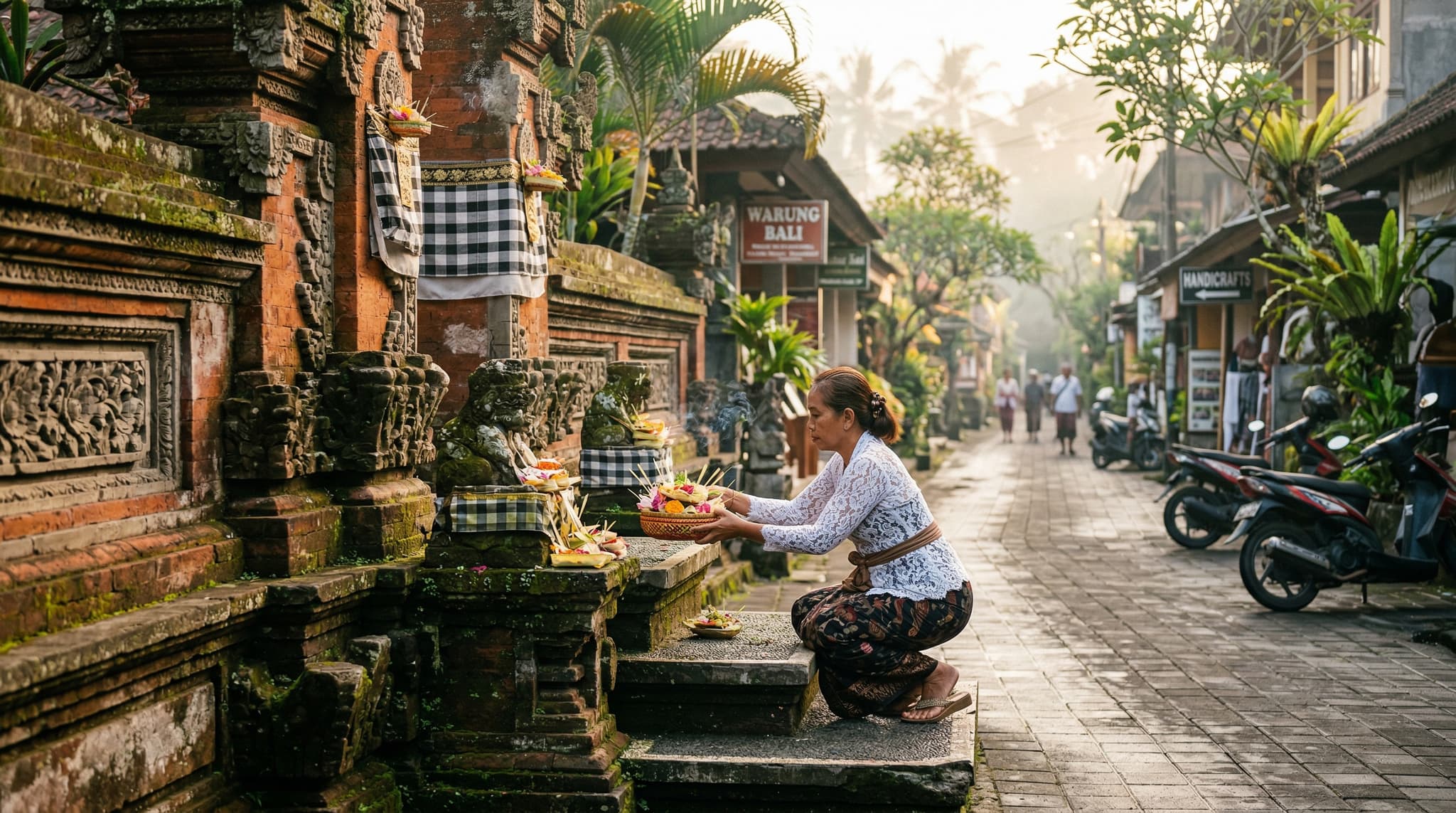
The temples are everywhere. Not the grand tourist temples (though Tirta Empul and Goa Gajah are close enough for half-day trips) but the small neighborhood temples, the family shrines, the daily canang sari offerings placed on sidewalks and doorsteps each morning. Ubud's spiritual life isn't something you need to seek out. It's underfoot.
Cultural Essentials
Ubud Palace Dance Performances
Nightly, ~7:30 PM, ~100,000 IDR
Tirta Empul Temple
30 min north, purification ritual site
Goa Gajah (Elephant Cave)
15 min east, 9th-century rock carvings
ARMA Museum
Traditional & contemporary Balinese art
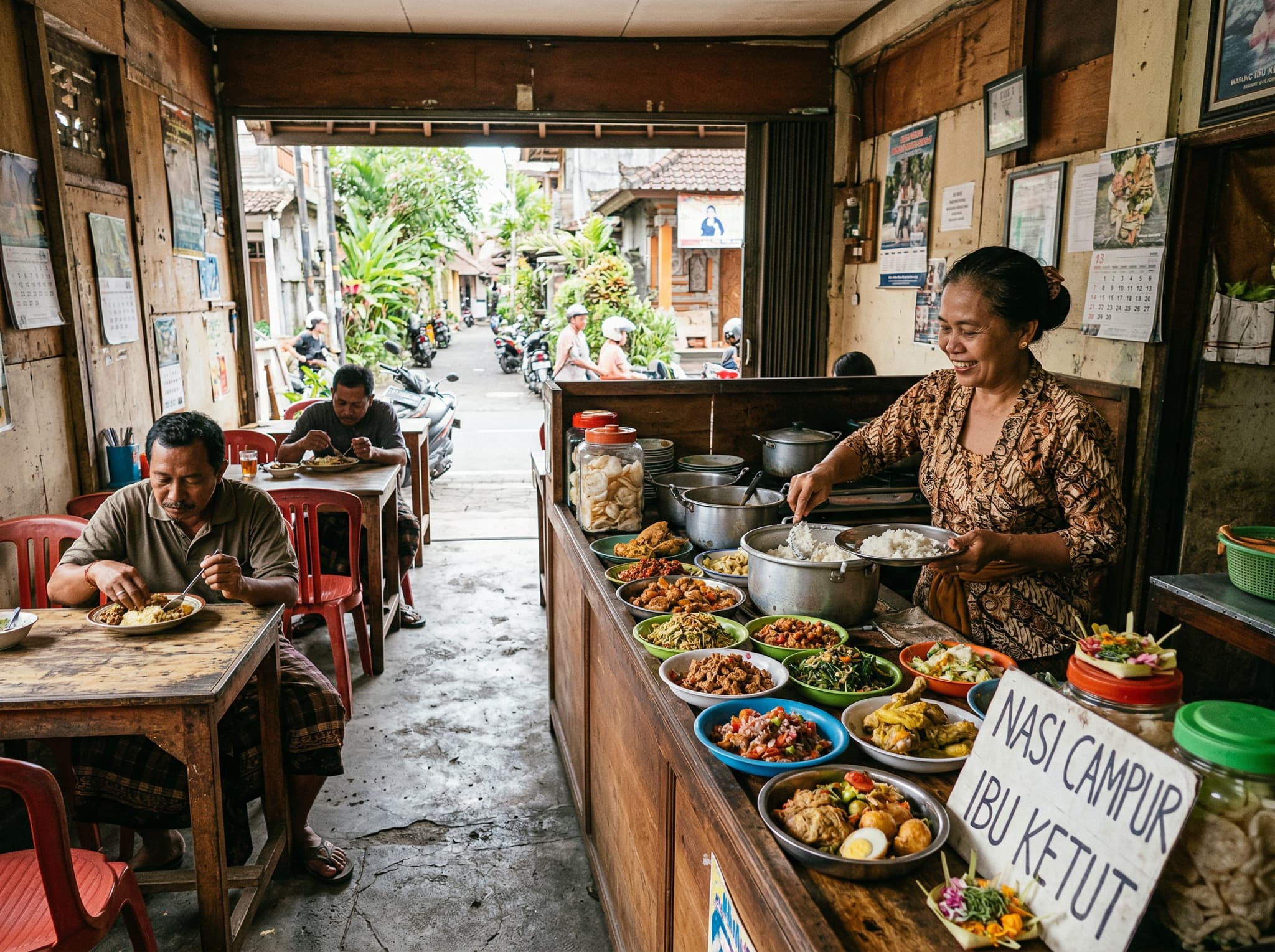
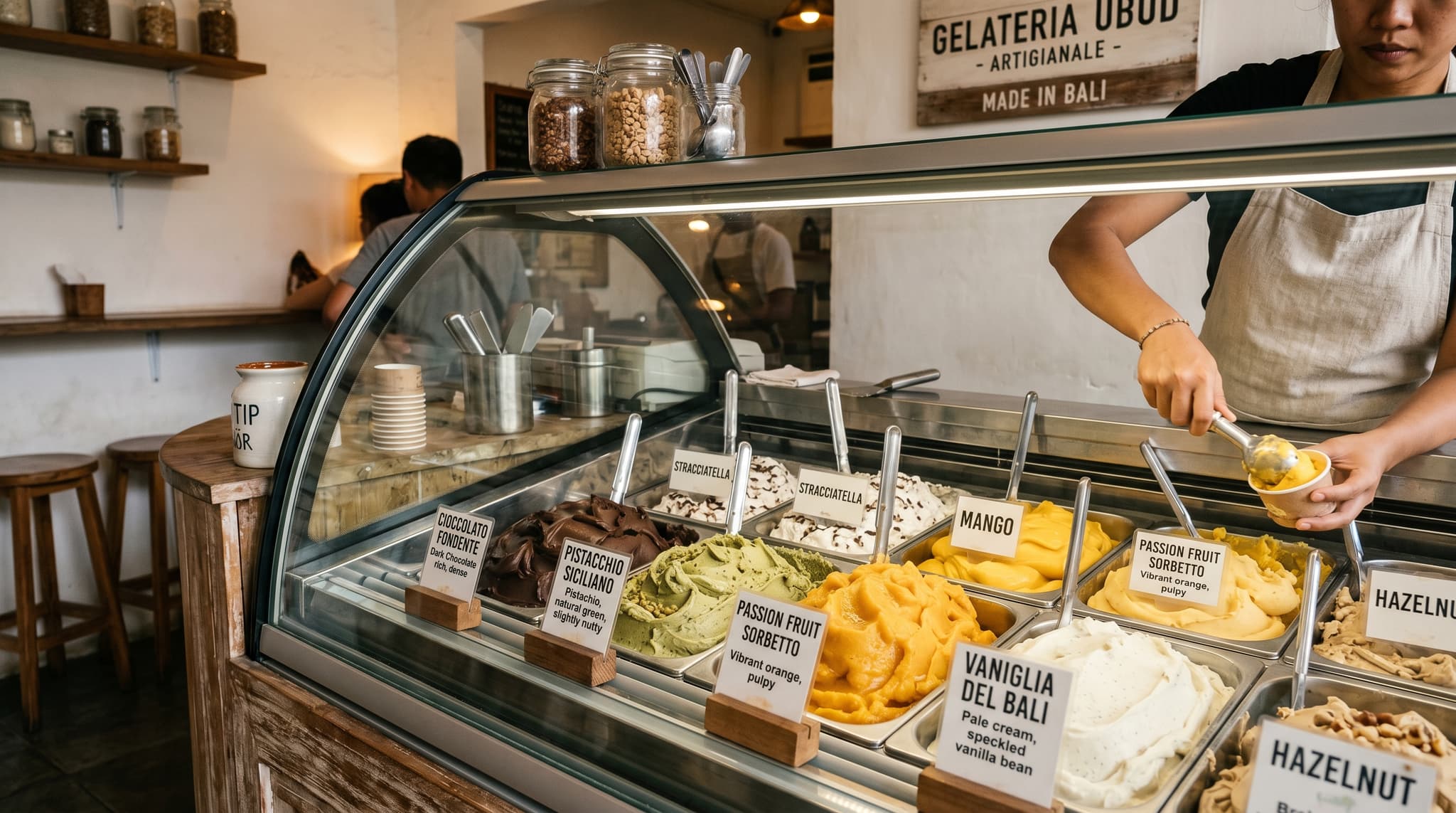
The food scene has matured. A decade ago, Ubud was brown rice and tempeh. Now it ranges from exceptional Balinese babi guling (suckling pig) at Ibu Oka to inventive plant-based cooking at places like Locavore, which sources almost entirely from Indonesian producers. The warung culture is still strong — small family-run spots serving nasi campur for 25,000–35,000 IDR — and these remain the most honest meals in town.
What Ubud Has Become

It would be dishonest to write about Ubud without acknowledging the weight it carries. The town has absorbed enormous tourism pressure over the past fifteen years, accelerated by a certain memoir-turned-film that sent a very specific demographic here looking for transformation. The center can feel congested, loud, and commercially aggressive in ways that contradict the serenity people came seeking.
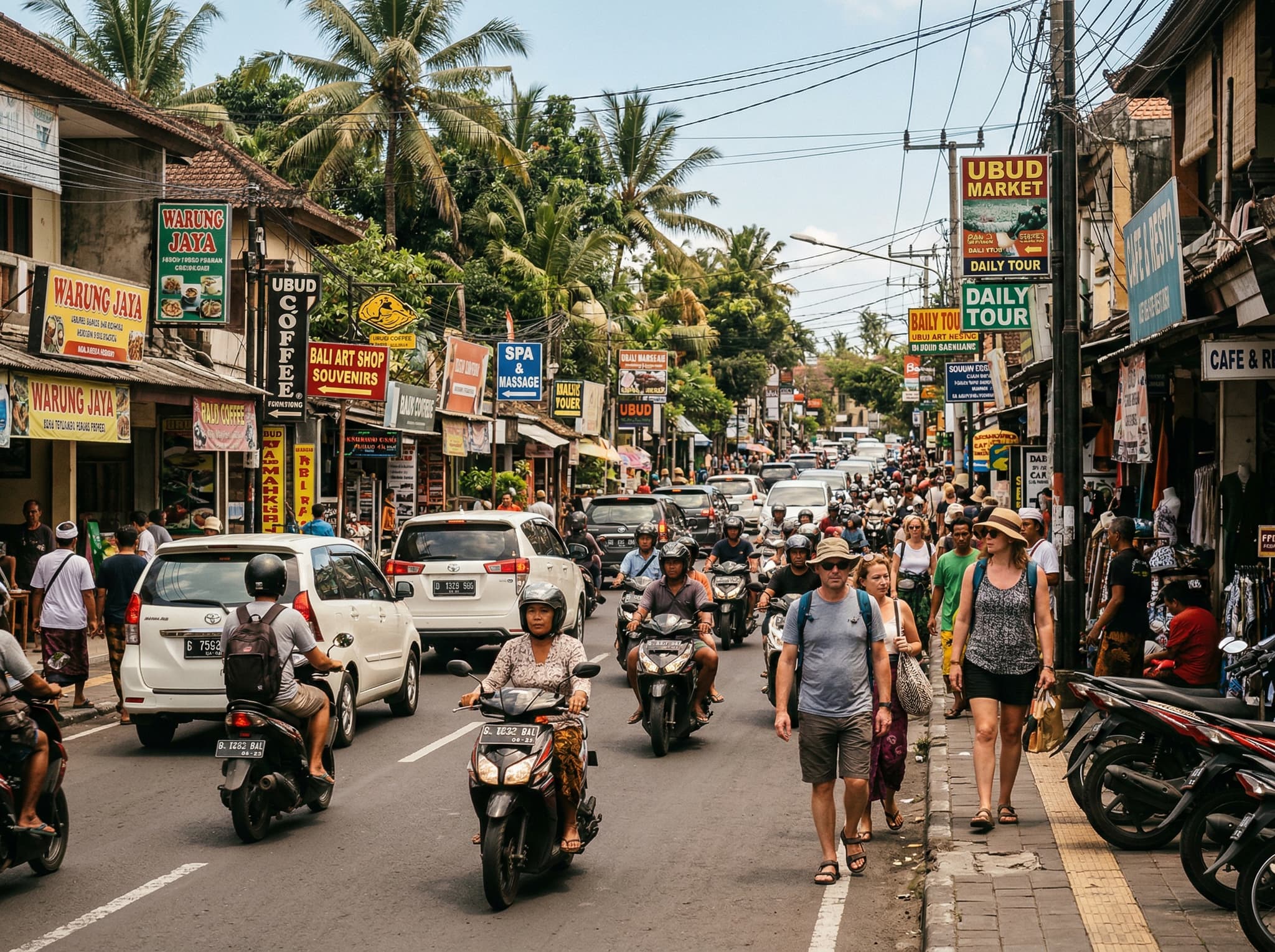
Traffic is the most immediate problem. The roads weren't built for this volume, and during peak hours, Jalan Raya Ubud becomes a slow, exhaust-heavy crawl. Walking is often faster than driving, which is actually a gift if you accept it.
The wellness industry has reshaped parts of the town. Some of it is genuine — Ubud has skilled healers and serious yoga practitioners. Some of it is performance, priced for visitors and emptied of meaning. The difference is usually obvious if you're paying attention.
Practical Realities
Getting around: Rent a scooter if you're comfortable riding one (50,000–75,000 IDR/day). Otherwise, hire a driver for day trips (400,000–600,000 IDR for a full day) or use ride-hailing apps, though pickup points in central Ubud can be restricted due to local transport politics.
Where to stay: The center puts you close to restaurants and the market but comes with noise and traffic. Staying 10–15 minutes outside — in Penestanan, Sayan, or along the Campuhan ridge — gives you the rice-field quiet that Ubud is famous for, with easy access to town by scooter or a short walk.
How long: Three days lets you see the main sights and eat well. Five days lets you settle in — take a cooking class, drive north to the volcanic lakes, sit in a café long enough to stop planning.
Frequently Asked Questions
Ubud is not the Bali of beach clubs and surf breaks. It's the Bali of morning offerings and afternoon rain, of gamelan music drifting from a temple you can't see, of rice terraces that look ancient and are — but are also, now, the backdrop to someone's content shoot. The tension is the point. Ubud holds both things, and it doesn't ask you to choose.