Ubud's legendary roast pork warung serves Bali's most iconic dish — crispy-skinned babi guling with all the fixings. Here's what to expect.
There's a particular kind of fame that attaches to a warung when Anthony Bourdain calls its signature dish the best thing he's ever eaten. For Warung Babi Guling Ibu Oka in Ubud, that 2005 No Reservations episode turned a neighborhood institution into an international pilgrimage site. Nearly two decades later, the line still forms before the doors open.
But here's what matters more than the Bourdain connection: the pork is genuinely, stubbornly excellent. And the story behind it tells you something real about Balinese food culture — why roast suckling pig is sacred and celebratory here in ways it isn't anywhere else in Indonesia.
What Babi Guling Actually Is

Babi guling — whole spit-roasted suckling pig — is arguably the most important ceremonial dish in Balinese Hindu culture. It appears at temple ceremonies, weddings, tooth-filing rituals, and cremations. The preparation is elaborate: a whole pig is stuffed with a paste of turmeric, coriander seeds, lemongrass, galangal, shallots, garlic, and chilies, then roasted slowly over a wood or coconut-husk fire, turned by hand until the skin blisters into a deep, crackling bronze.
This isn't something Bali borrowed from elsewhere. Indonesia is overwhelmingly Muslim, and pork plays almost no role in the cuisines of Java, Sumatra, or most other islands. Bali's Hindu majority makes it a culinary outlier — the one place in the archipelago where pork is not just accepted but central. Babi guling is a direct expression of that religious and cultural identity.
What Ibu Oka did was take a dish that most visitors would only encounter at a ceremony they weren't invited to and make it available daily, in a casual warung setting, at local prices.
The History
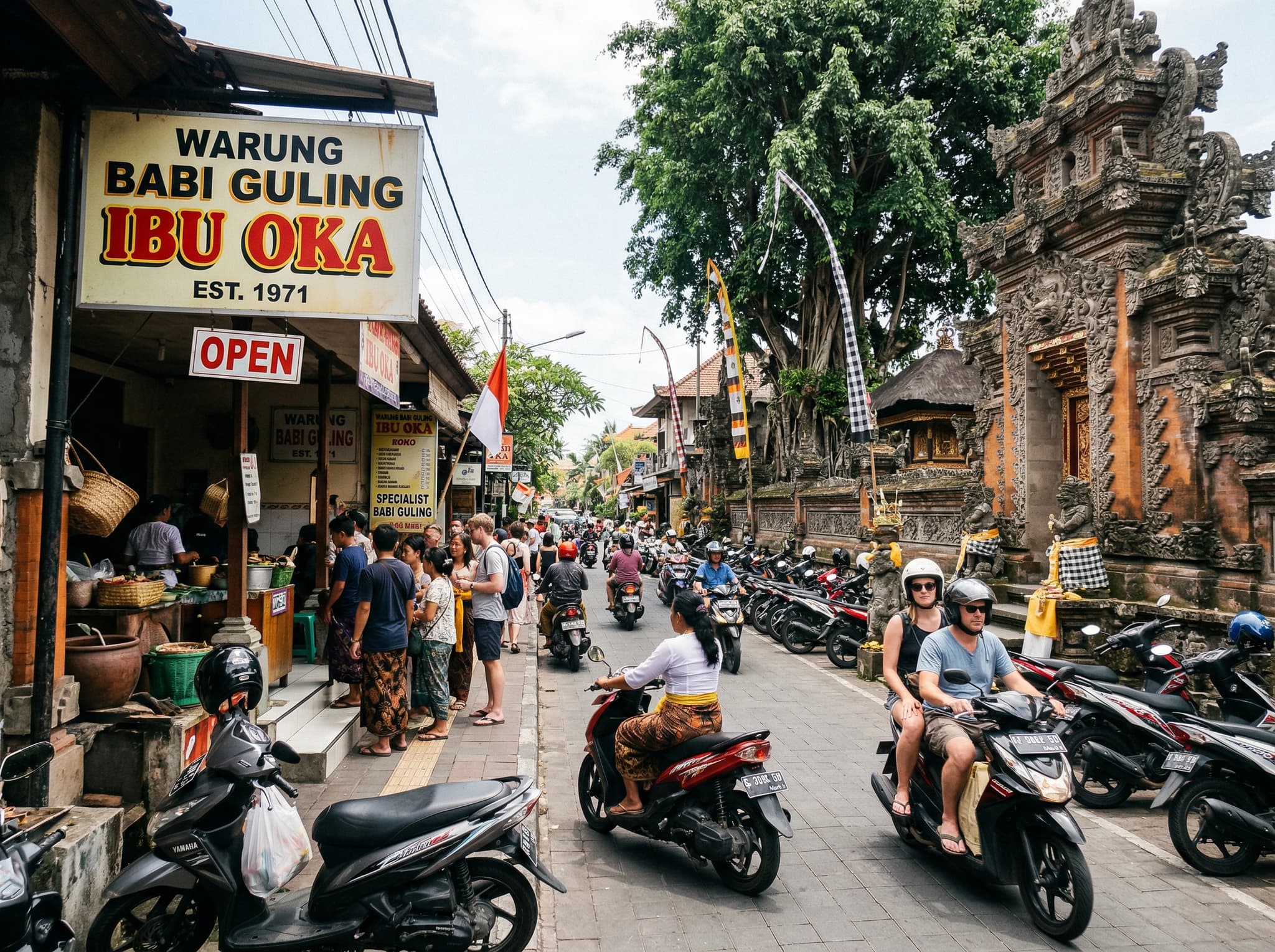
The warung is named for its founder, Ibu Oka herself, who began selling babi guling in Ubud decades before any travel show came calling. The original location sits on Jalan Tegal Sari, directly across from Puri Saren Agung — Ubud's royal palace — in the kind of prime real estate that only long tenure can explain. The family has deep roots in Ubud, and the recipes have been passed through generations.
Bourdain's visit brought international attention, but Ibu Oka was already well known among Balinese and Indonesian food circles. The warung had been feeding locals, ceremony-goers, and the occasional adventurous tourist for years. What changed after 2005 was the audience — suddenly it was tour buses and backpackers, not just families from the next banjar.
What You'll Eat
You don't order from a menu at Ibu Oka. You sit down and receive a plate — or you choose from the few available options, which are all variations on the same animal.
What's on the Plate
Nasi Babi Guling (Special)
Rice with roast pork, crispy skin, sausage, lawar, and soup — the full experience
Crispy Skin (Kulit)
Ordered separately if available — the single best element
Sausage (Urutan)
Balinese pork sausage, coarsely ground, spiced with the same base paste
Lawar
Finely chopped vegetable and coconut mix, sometimes with blood — a Balinese staple
The special plate — nasi babi guling — is what most people order and what you should get. It arrives as a composed plate: steamed rice, slices of roast pork, a shard or two of that legendary crackling skin, a length of urutan sausage, a scoop of lawar, and a small bowl of broth.
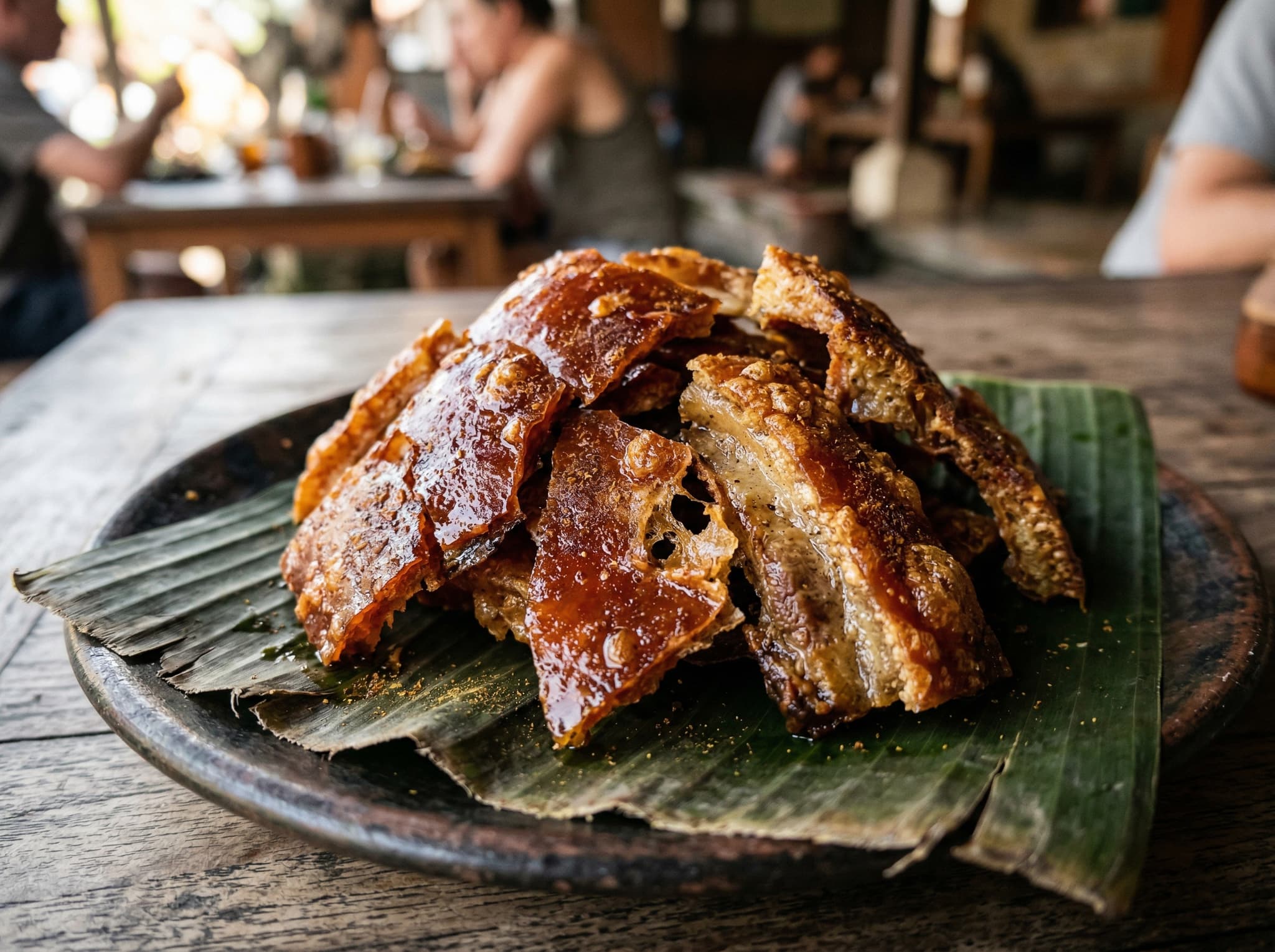
The skin is the star. When Ibu Oka's kitchen is running well, it shatters between your teeth — brittle, deeply caramelized, with a thin layer of rendered fat underneath that carries the turmeric-lemongrass spice paste. The meat itself is tender and heavily seasoned, more complex than Western-style roast pork because the spice paste penetrates from the inside out.
The lawar deserves attention too. It's a dish most visitors overlook, but it's one of the most distinctly Balinese things on the plate — a finely minced mix of green beans, grated coconut, and spices, sometimes enriched with pork blood for a richer, more mineral flavor. Not every plate includes the blood version; it depends on the day.
The Practical Details
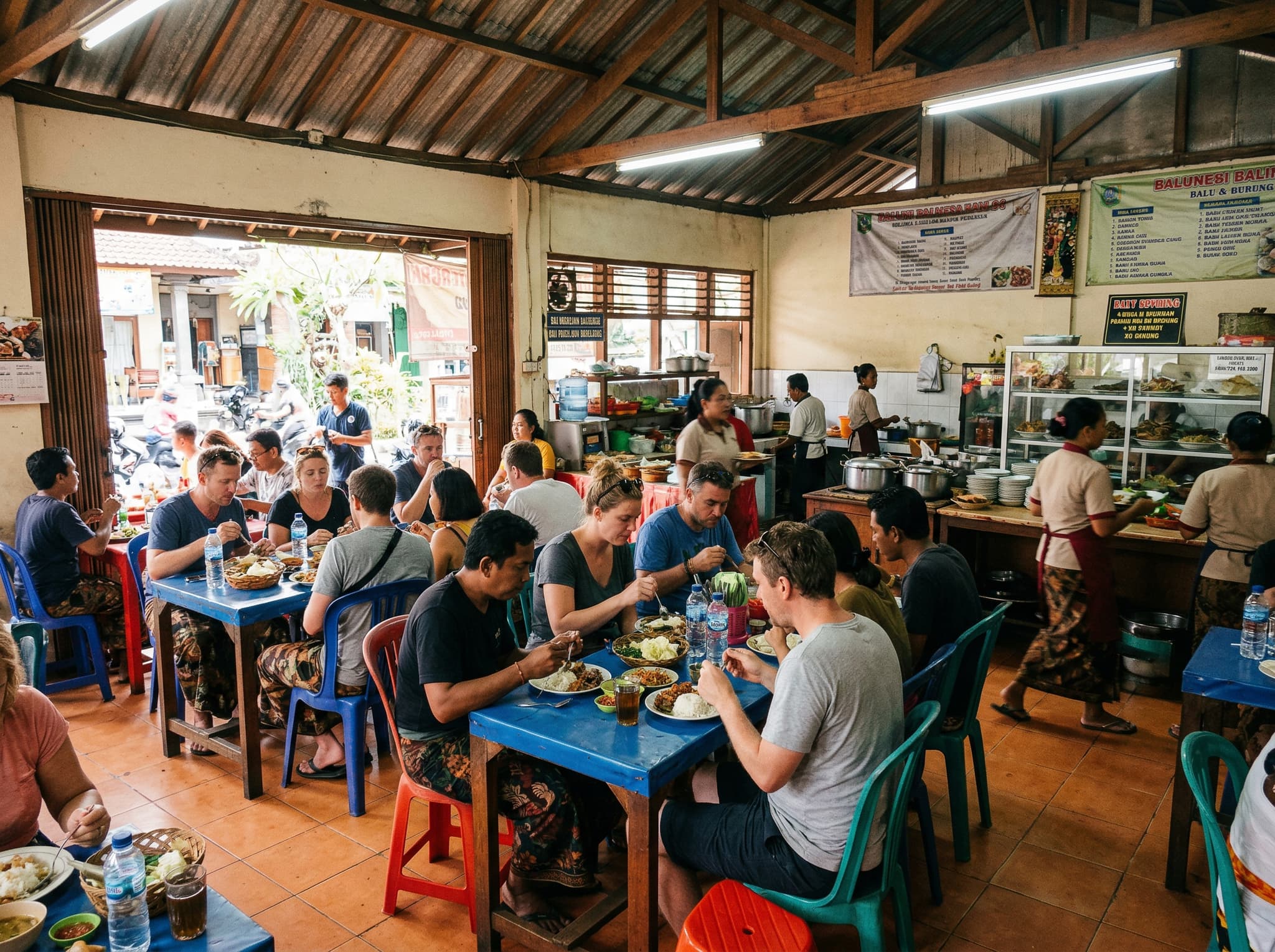
Arrive early. This is the single most useful piece of advice. Ibu Oka typically opens around 11:00 AM and serves until the pork runs out, which on busy days can be as early as 1:00 or 2:00 PM. By noon, you may be waiting in line. By 2:00 PM, you may be out of luck.
Expect the setting to be basic. This is a warung, not a restaurant. Seating is communal, service is fast, and the ambiance is fluorescent lights and plastic chairs. That's the point. You're paying for the food, not the décor.
Multiple locations exist. The family has expanded to additional branches in Ubud (including one on Jalan Suweta). The original Jalan Tegal Sari location draws the biggest crowds and carries the most nostalgia, but regulars report the food quality is consistent across branches. If the main location has a long wait, the secondary spots are worth trying.
Is It Worth the Hype?
The honest answer: mostly yes, with a caveat. Ibu Oka is not the only excellent babi guling in Bali. Locals will tell you — sometimes emphatically — that Babi Guling Pak Malen in Seminyak or Babi Guling Chandra in Denpasar produces pork that's just as good or better, without the tourist premium of Ubud's most famous warung.
They're not wrong. Bali has dozens of outstanding babi guling warungs, and part of the joy of eating here is discovering the ones that don't appear in any guidebook.
But Ibu Oka earns its reputation for a reason. The consistency is remarkable for a place serving this volume. The skin is almost always excellent. The spice paste has a depth — that layered turmeric-lemongrass-chili warmth — that speaks to decades of refinement. And the location, steps from the palace in the heart of old Ubud, gives the meal a sense of place that a strip-mall warung can't replicate.
Go early, get the special plate, and pay attention to the lawar. You'll understand why this dish means what it means here.