Ubud Art Market: Bali's Handcraft Heart, Across the Street from the Palace
Over 200 stalls of handcrafted Balinese goods opposite Ubud Palace. What to buy, what to pay, and when to go for the best experience.
The market sits directly across from Ubud Palace, which means you'll probably find it without trying. What takes more intention is knowing what you're walking into — and what a fair price looks like once you're surrounded by silk scarves and carved Garuda masks on every side.
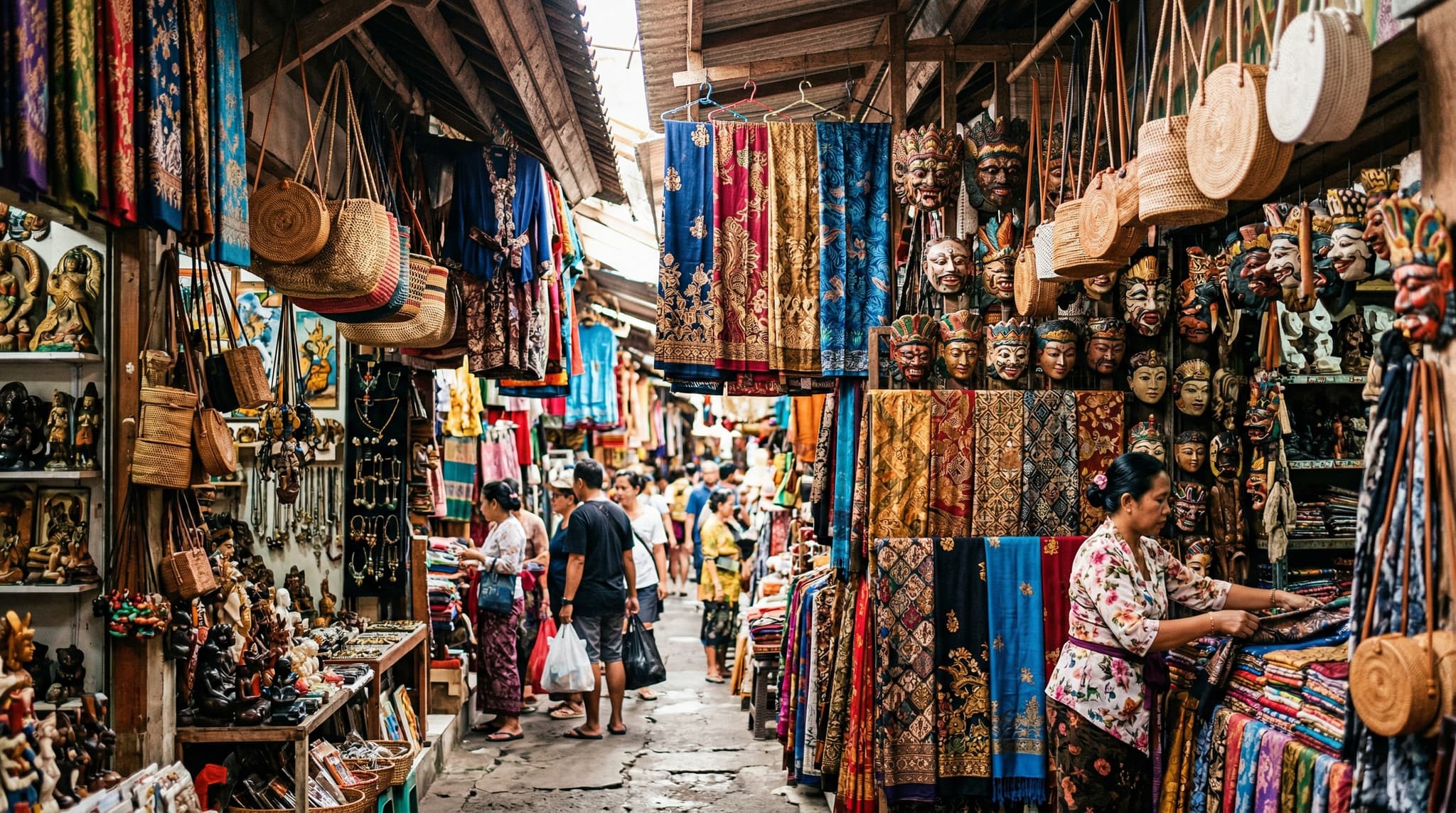
Ubud Art Market is a dense, two-story complex of more than 200 stalls selling handcrafted goods: wood carvings, batik fabric, silver jewelry, woven rattan bags, paintings, sarongs, aromatherapy products, bronze statues, and the kind of elephant-print trousers that somehow follow you across Southeast Asia. The western half of the complex caters to visitors. The eastern side is a traditional market for locals — produce, groceries, daily essentials — and opens hours earlier, from around 4 AM.
Most of what's sold on the tourist side comes from nearby craft villages. Silver pieces are sourced from Celuk. Some carvings and woven goods come from Tegallalang. This doesn't make every item a masterpiece, but it does mean you're closer to the source than you'd be buying the same things in Seminyak or Kuta.
What You'll Find (and What It Costs)
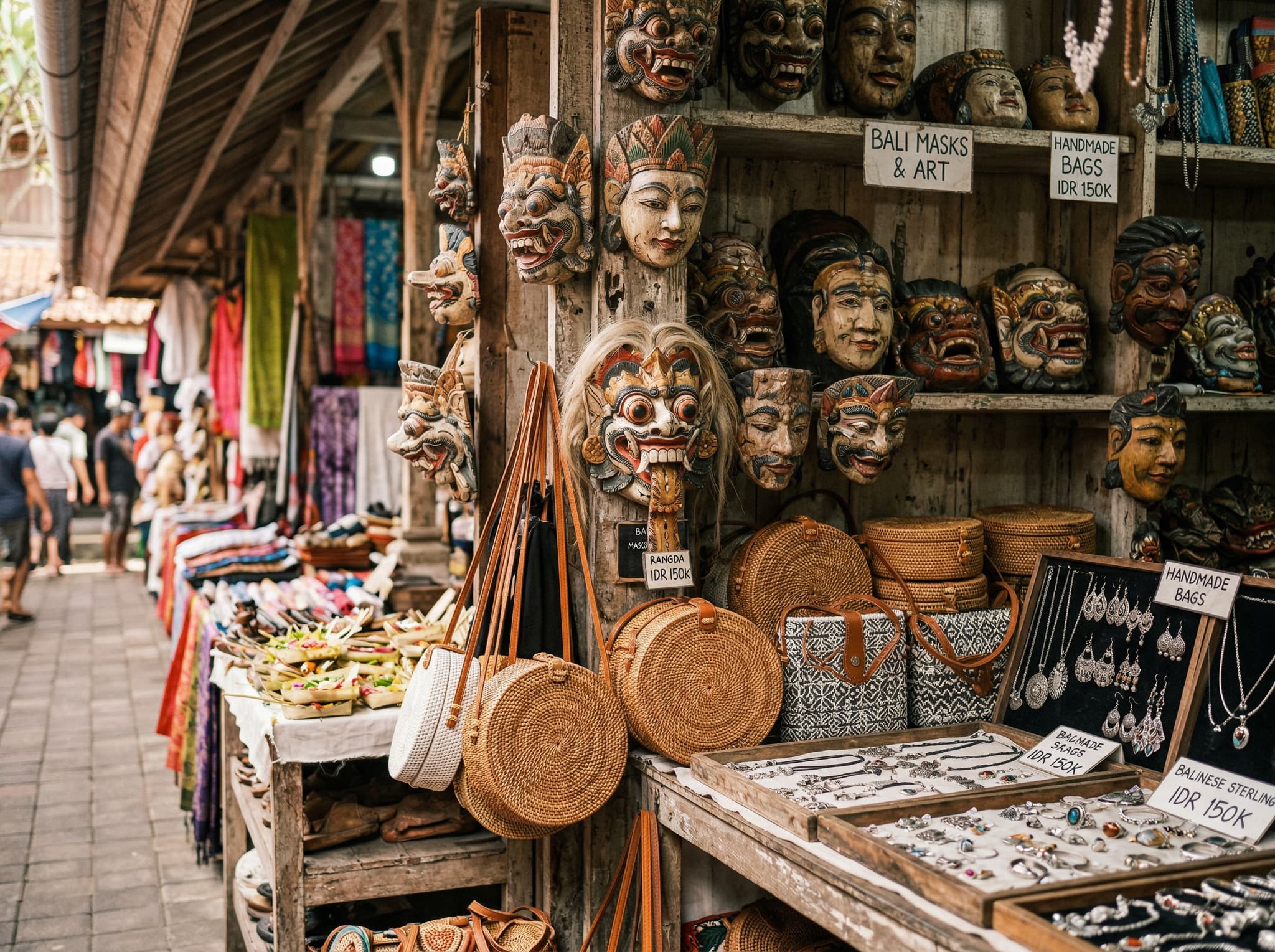
Nothing has a fixed price. Every transaction is a negotiation, and that's part of the experience — or the exhaustion, depending on your temperament.
Typical Starting Prices (Negotiable)
Batik shirts
From ~100,000 IDR (~$6.50)
Woven/rattan bags
From ~80,000 IDR (~$5)
Wood carvings
From ~150,000 IDR (~$10)
Silver jewelry
From ~150,000 IDR (~$10)
Sarongs/scarves
50,000–100,000 IDR ($3–$6.50)
Elephant-print trousers
From ~40,000 IDR (~$2.50)
These are opening prices — what the vendor says first. The accepted practice is to counter at roughly 30–50% of the asking price and work toward something in between. Buying multiple items from the same stall usually brings the per-piece cost down. Walking away, politely, often prompts a final offer closer to what you wanted.
When to Go
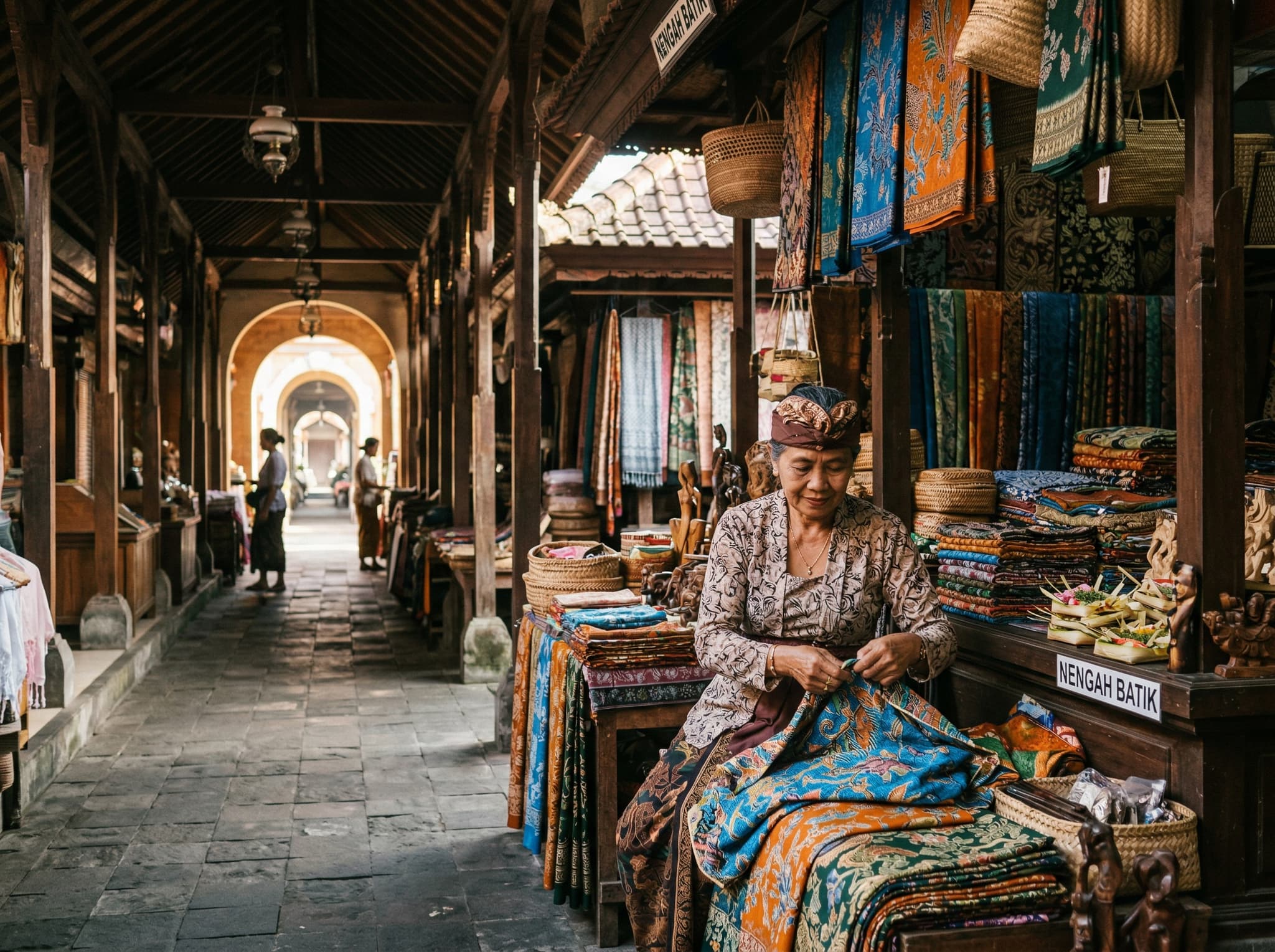
The market opens daily at 8 AM. Most stalls wind down by 6 PM, though a few stay open until 9 PM and others close as early as 5 PM. It operates every day, including public holidays.
The crowd pattern is predictable: tour buses and day-trippers from the southern beach areas arrive mid-morning, and the aisles are tightest between 10 AM and 3 PM. If you're staying in Ubud, an early visit — right at 8 AM — means cooler air, more room to browse, and vendors who are sometimes more willing to negotiate at the start of the day.
The Renovation and What Changed
During the pandemic tourism lull, the market underwent significant renovations. The building was modernized, the layout reorganized, and the complex was officially renamed Ubud Thematic Market — though almost everyone still calls it Ubud Art Market.
The renovation displaced vendors temporarily. Two nearby markets — Arjuna Art Market and Kajeng Street Market — were established to absorb them. Both still operate and are worth a look if you want a quieter browsing experience with many of the same goods.
As of early 2026, the main market is fully operational with no ongoing disruptions.
Getting There
Transport from Southern Bali
From Seminyak
25–32 km, 1–1.5 hours by car
From Kuta
31 km, 1–1.75 hours by car
Grab/Gojek from Seminyak
150,000–250,000 IDR one-way
If you're using a ride-hailing app, note that the immediate area around the market can be a no-ride zone for pickups. You may need to walk a few minutes to a designated pickup point when leaving.
Scooter riders will find underground parking at the market itself. For cars, Ubud Central Parking is a short walk away.
What to Pair It With
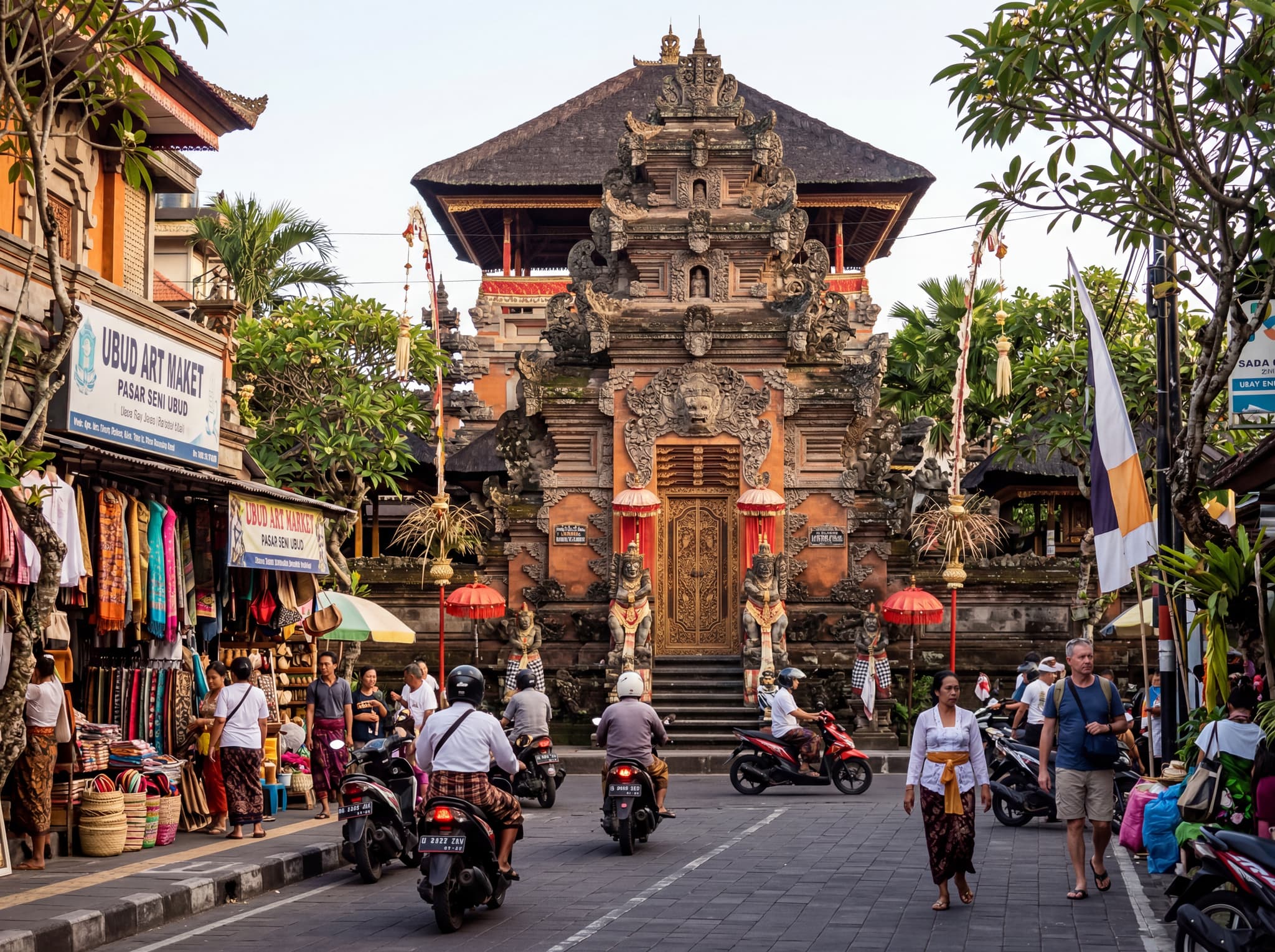
The market's location makes combining visits easy. Ubud Palace is directly across the street. Pura Taman Saraswati — the lotus pond temple — is a two-minute walk. From there, the rest of central Ubud's galleries, cafés, and the Campuhan Ridge Walk are all within reach on foot.

The market itself doesn't need more than an hour or two. It's dense, not sprawling. You'll see the same categories of goods repeated across stalls, which is useful — it means you can compare before committing.
Practical Tips
- Bring cash. No card payments. ATMs are nearby on Jalan Raya Ubud, but withdraw before you arrive to avoid losing browsing momentum.
- Be friendly when bargaining. A smile and some patience go further than aggressive haggling. Most vendors are used to the rhythm.
- Watch for repetition. If you see the same rattan bag at six stalls, the price will vary. Don't buy at the first one.
- End-of-day purchases sometimes come at better prices, though selection thins out.