A free, paved ridge trail on the edge of Ubud offering sweeping valley views and rare quiet — best walked at dawn before the crowds arrive.
There's a narrow paved path that begins just past the bridge where two rivers meet in western Ubud, and for about two kilometers it follows a ridge between two valleys of tall elephant grass. No ticket booth. No parking attendant waving you toward a souvenir stall. Just a trail, two valleys, and — if you time it right — the kind of quiet that reminds you why people started coming to Ubud in the first place.
The Campuhan Ridge Walk is one of Bali's simplest attractions and one of its most satisfying. It requires no particular fitness, costs nothing, and takes less than an hour. What it offers in return is a rare thing in modern Ubud: uninterrupted space to breathe.
Where Campuhan Sits — and Why It Matters
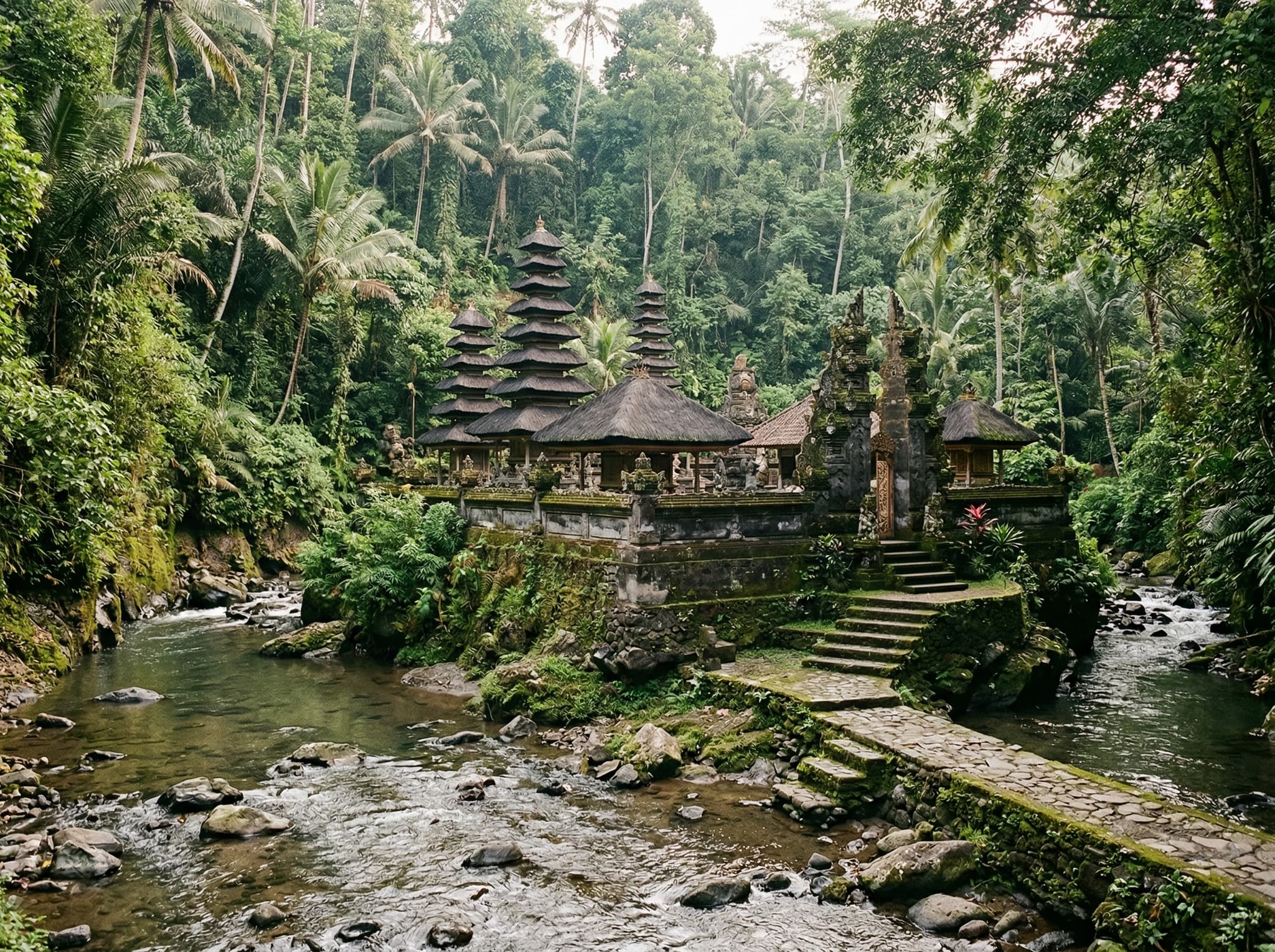
The trail starts at the confluence of the Wos River's two tributaries, just west of central Ubud. Campuhan itself means "where two rivers meet" in Balinese — a location considered spiritually significant in Hindu-Balinese cosmology. Pura Gunung Lebah, a temple dating to the 8th century, sits right at this convergence point. You'll pass its entrance on your way to the trailhead.
This isn't incidental context. The reason the ridge feels the way it does — set apart, slightly elevated, quiet — is partly geographic and partly cultural. The river valleys on either side have kept development at bay. The temple's presence has reinforced the area's sacred character for over a thousand years. What reads as a scenic walking path is, in local terms, a spiritually charged landscape.
Trail Details
Distance
~2 km one way
Elevation
Gentle — mostly flat ridge
Surface
Paved pathway
Difficulty
Easy — suitable for all ages
Walking the Ridge
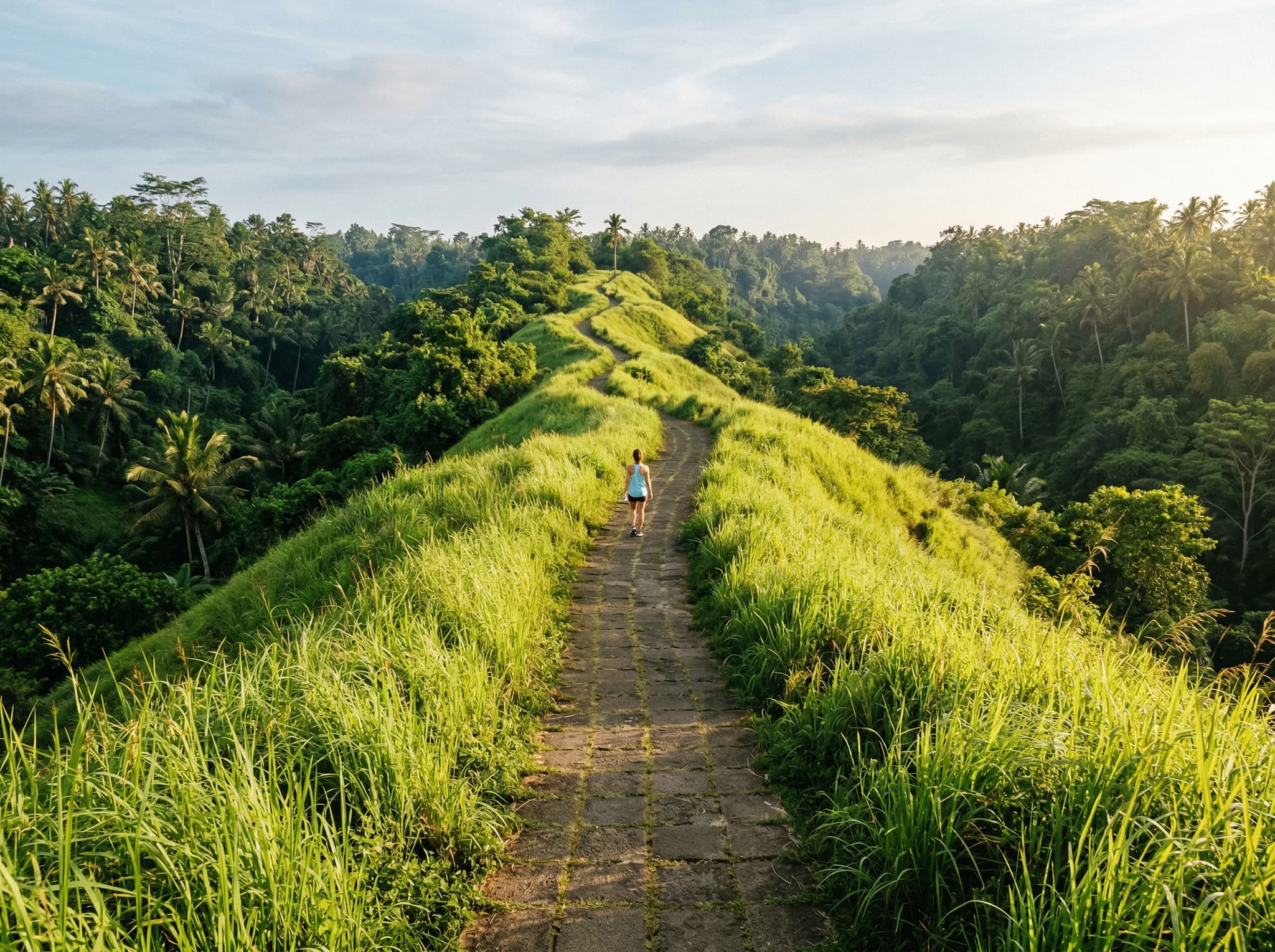
The trailhead is easy to miss if you're not looking. From central Ubud, head west along Jalan Raya Ubud. Just past the Ibah Luxury Villas, a small sign and a set of steps lead down toward Pura Gunung Lebah. The path crosses the temple's outer area — be respectful, stay on the walkway — and then climbs gently onto the ridge itself.
From there, it's straightforward. The paved trail runs along the spine of the ridge, flanked on both sides by sloping valleys thick with alang-alang (elephant grass) that can grow taller than a person. Depending on the season, the grass shifts between vivid green in the wet months and golden brown during the dry season — both are striking in different ways. Coconut palms punctuate the ridgeline. The valleys below are dense with tropical vegetation.
The path eventually descends into the Bangkiang Sidem area, where it connects to rice paddies and a small cluster of warungs and art studios. Most walkers turn around here and retrace their steps, making it a roughly 4-kilometer round trip. There's no dramatic endpoint — just a gradual transition from ridge to village — so set your own turnaround point based on time and energy.
Why Early Morning Changes Everything
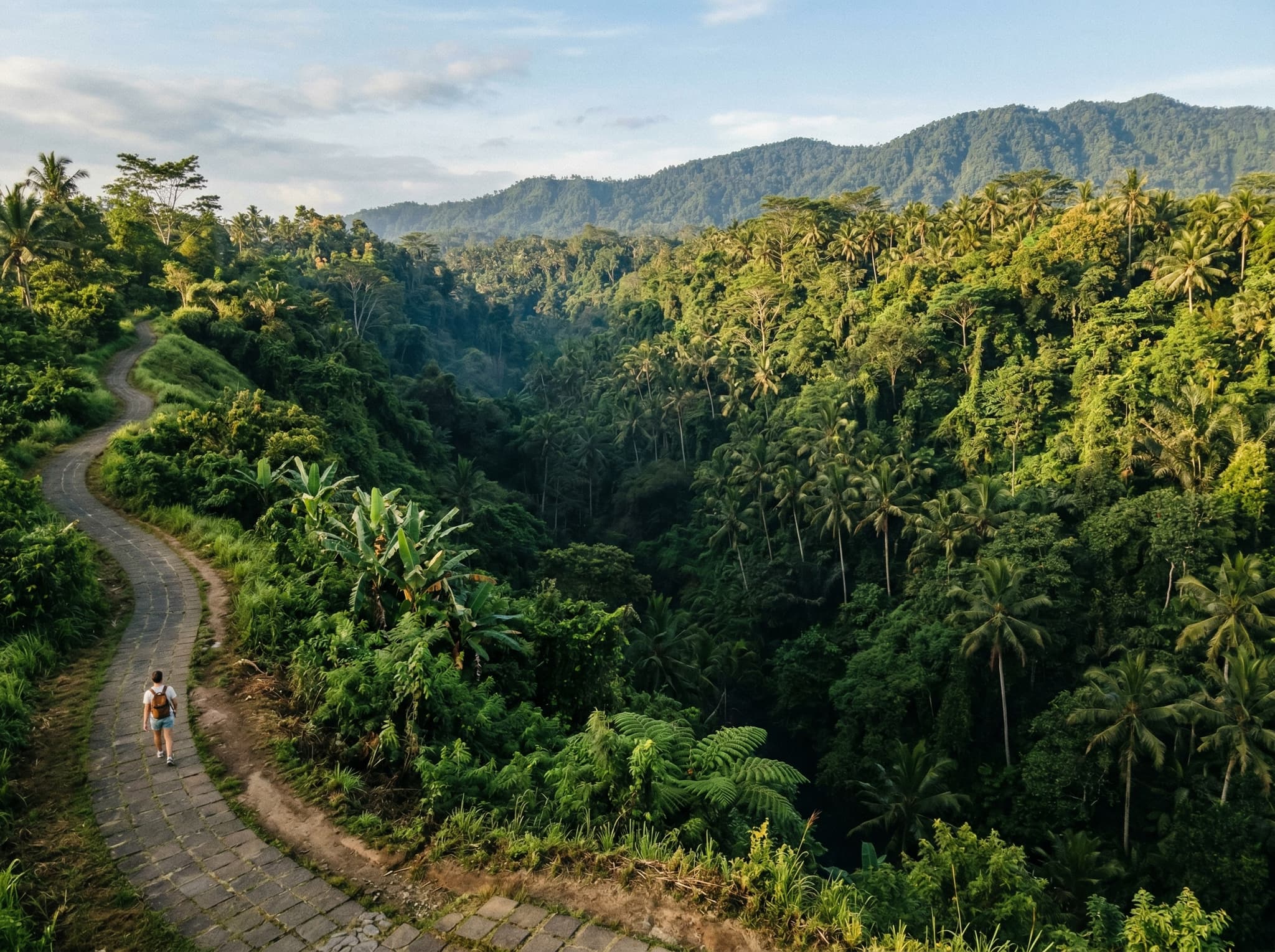
The Campuhan Ridge Walk is popular. It appears on virtually every "things to do in Ubud" list, and by mid-morning the path can feel crowded, especially on the narrower sections where two-way foot traffic creates bottlenecks.
Arriving between 6:00 and 7:00 AM solves this almost entirely. The light at that hour is soft and directional, catching the grass from the side. The air is noticeably cooler — Ubud sits at roughly 200 meters elevation, which helps, but tropical heat still builds fast once the sun climbs. Early walkers often have long stretches of the ridge to themselves.
By 9:00 or 10:00 AM, the combination of heat, humidity, and foot traffic makes the experience substantially different. This isn't a trail that rewards sleeping in.
Practical Details
Getting there: The trailhead is about a 10-minute walk from Ubud's central market, or a short scooter ride. If driving, there's limited informal parking near the Ibah hotel entrance. Most visitors staying in central Ubud simply walk.
What to bring: Water, sunscreen, and a hat. There's no shade on the ridge itself. Comfortable shoes are fine — the path is paved throughout, though some sections have uneven steps near the start.
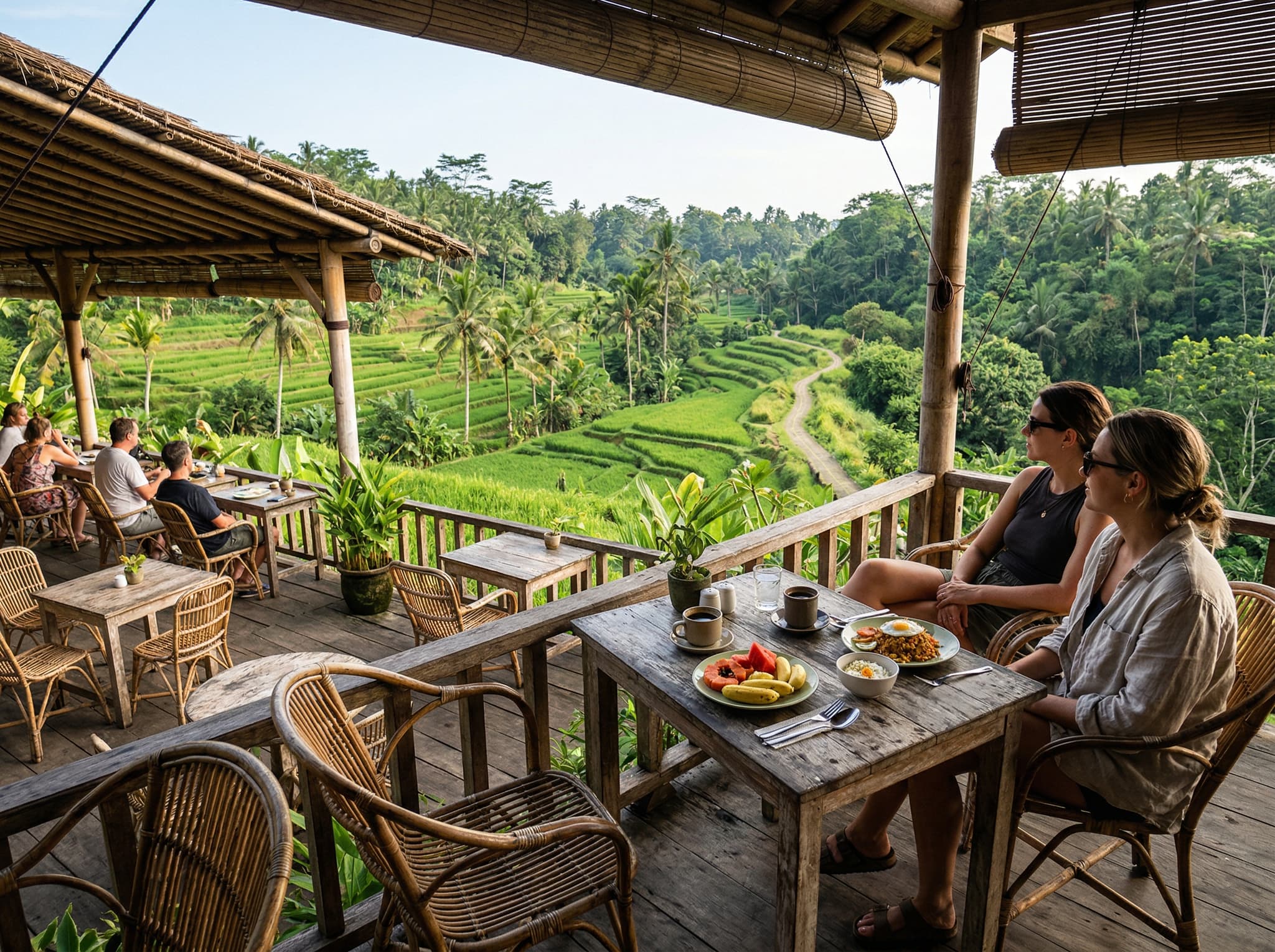
What's nearby: Pura Gunung Lebah is worth a brief stop on the way in or out. The temple is typically open to respectful visitors — a sarong is required if you enter the inner courtyard. After the walk, the cafés along Jalan Raya Campuhan offer breakfast with river valley views. Karsa Kafe, located near the trail's far end among rice terraces, is a popular post-walk stop.
Setting Expectations
The Campuhan Ridge Walk is not a hike. It's not a trek through wilderness. It's a short, paved walk along a scenic ridge on the edge of a busy tourist town. Framing it as anything more sets up disappointment.
What it is — genuinely — is a beautiful, accessible way to experience a quieter side of Ubud. The landscape feels disproportionately expansive for how close you are to the center of town. The valleys create a sense of depth and openness that's hard to find elsewhere in the area, where much of the terrain is carved into rice terraces or built up with villas and restaurants.
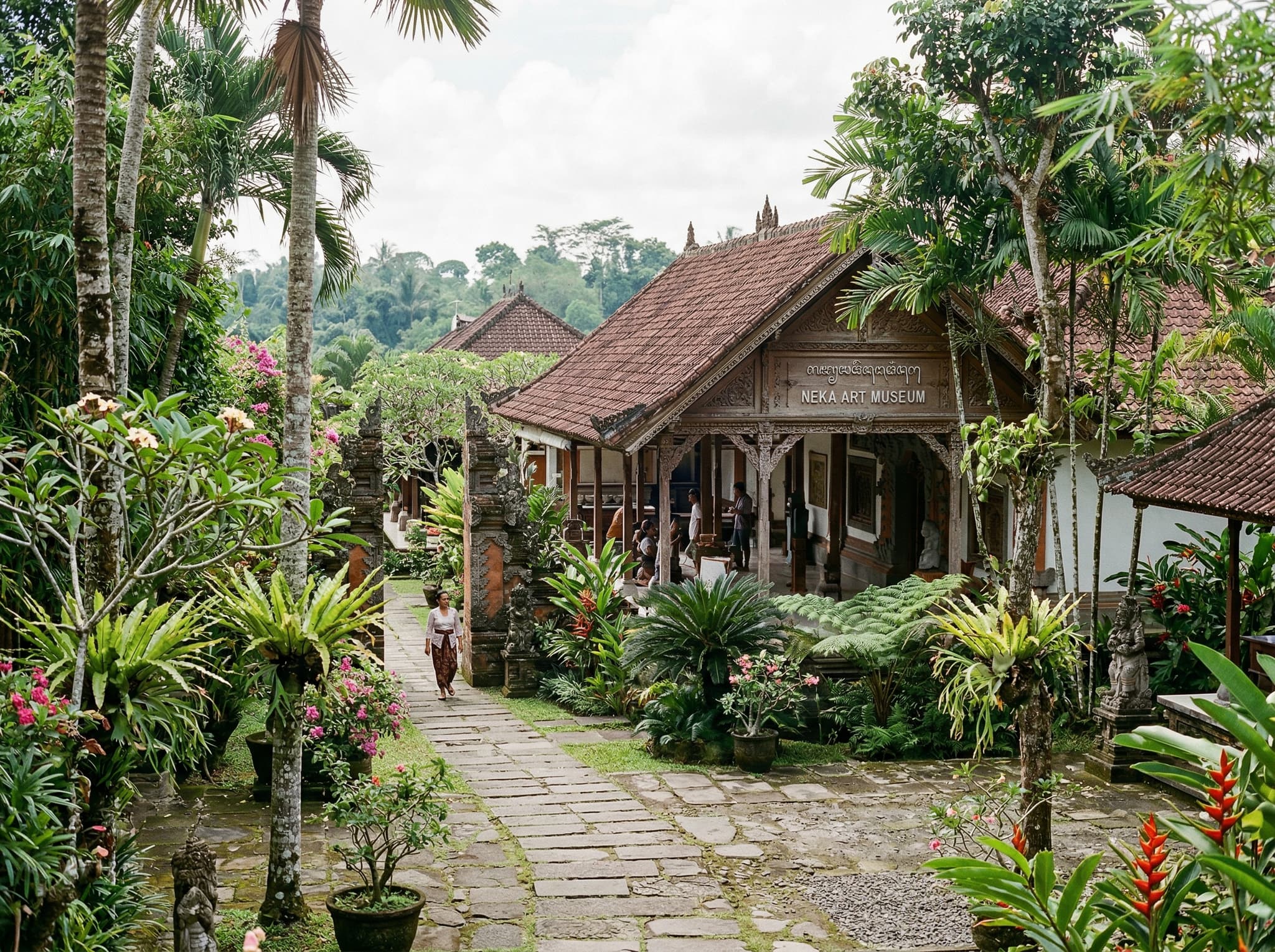
For travelers spending a few days in Ubud, it's an easy early-morning addition that pairs well with breakfast in town and a visit to the nearby Neka Art Museum or the Blanco Renaissance Museum, both within walking distance. It asks very little of you and gives back more than it should.