The Bali Swing is fun, commercial, and Instagrammed to death. Here's what it costs, when to go, and whether it's actually worth your time and money.
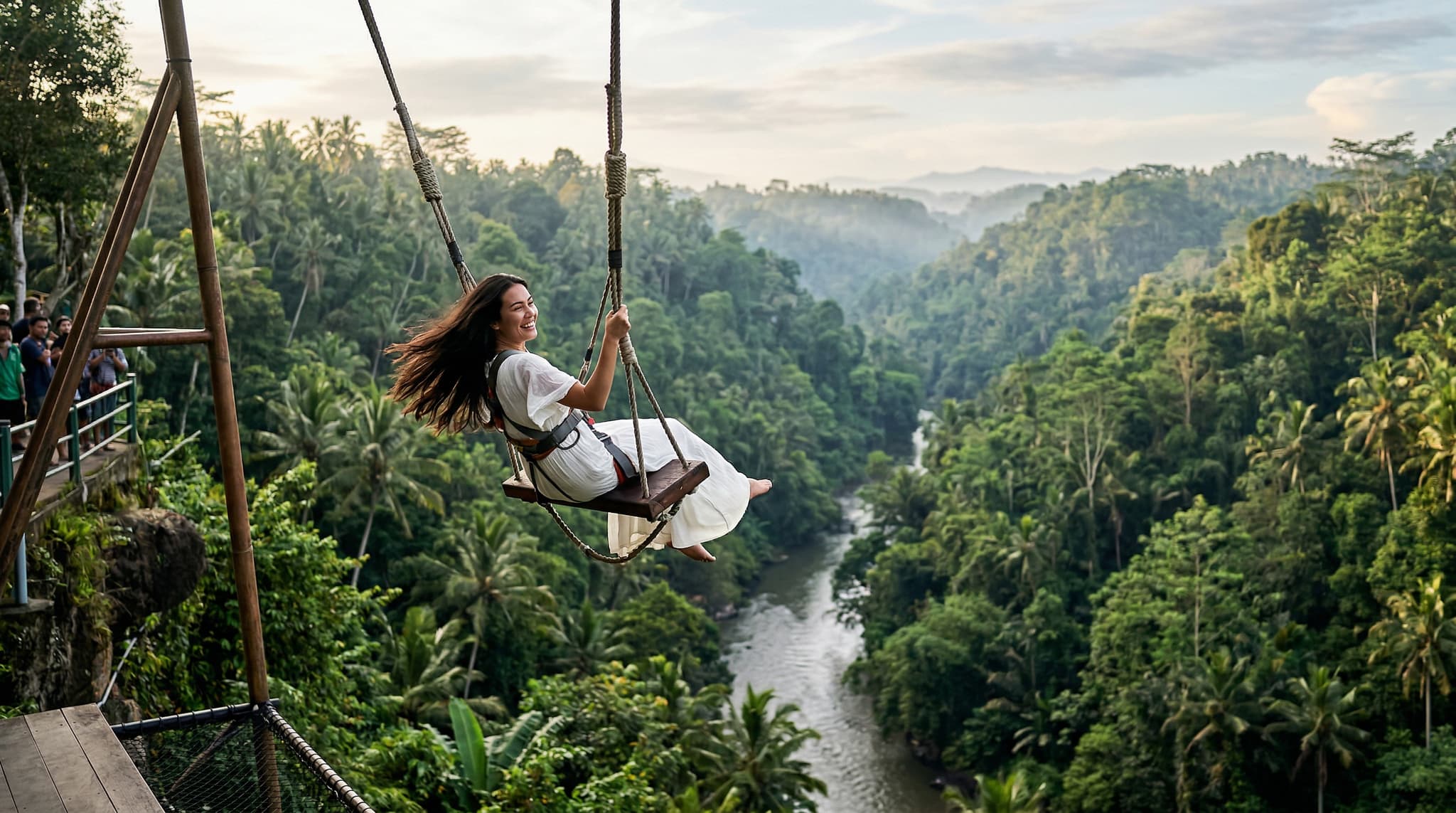
Let's get the obvious out of the way: you've seen the photo. A woman mid-swing above a jungle canopy, hair flowing, dress billowing, the whole frame screaming freedom and spontaneity — except it was probably take number fourteen and there were thirty people in line behind her.
The Bali Swing is one of the most Instagrammed things to do in Bali. It's also one of the most debated. Is it a genuine experience or a photo factory? The honest answer is both — and whether it's worth your time depends entirely on what you're going there for.
What the Bali Swing Actually Is
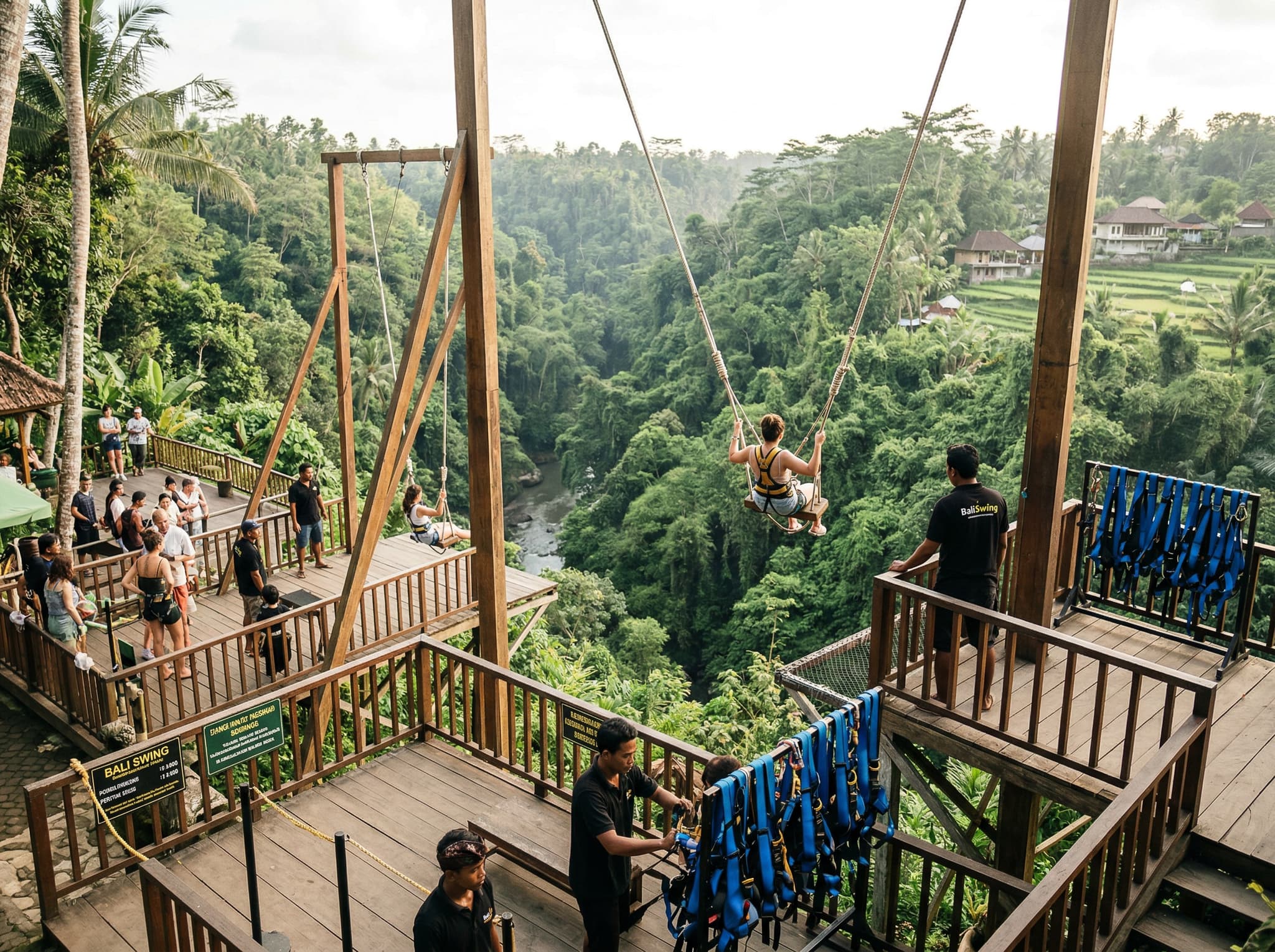
The original Bali Swing — the one that started the trend — sits in Bongkasa Pertiwi village, about 20 minutes north of central Ubud. It opened in 2017 and turned a patch of jungle ravine into one of Bali's most-visited attractions within a year.
The setup: multiple swings suspended over a river valley at varying heights, the highest reaching about 78 meters above the ground. You strap into a harness, get pushed by staff, and swing out over the canopy. The views are legitimately impressive — dense tropical greenery, the Ayung River valley below, mist if you're early enough.
Beyond the swings, the compound includes a series of what I'd call "photo stations" — bird's nests, cliff-edge platforms, hanging bridges, flower baths. These are designed for one purpose: content. The staff know the angles. They'll direct your pose. They've done this ten thousand times.
What's Included in Standard Entry
Swing Access
All swing heights, unlimited rides
Photo Spots
Nests, platforms, hanging bridges
Lunch
Buffet included in most packages
Photos
Staff take them on your phone — no extra charge
The Cost Breakdown
Here's where it gets interesting. The original Bali Swing charges around IDR 400,000–500,000 ($25–31) per person for the full package, which includes all swings, photo spots, and a buffet lunch. Some premium packages with additional activities push past IDR 600,000.
That's not cheap by Bali standards. For context, $25 buys you a solid lunch for two in Ubud, a half-day scooter rental, or entry to Tirta Empul temple with change to spare. You're paying for the infrastructure, the staff, and — let's be direct — the Instagram opportunity.
The Honest Assessment
What's genuinely good: The swings are fun. Not in a profound, life-changing way — in a visceral, stomach-dropping, laughing-out-loud way. The highest swing delivers a real rush, and the valley views are beautiful regardless of whether you photograph them. The staff are professional and safety standards are decent — harnesses, weight checks, maintained equipment.
What's overhyped: The "exclusive jungle experience" framing. By 10 AM on any given day, the compound is packed. Lines for the most popular swings can hit 30–45 minutes during peak season (June–August, December–January). The buffet lunch is forgettable — functional Indonesian food, nothing you'd seek out. And the photo spots beyond the swings — the nests, the platforms — feel like a conveyor belt. You sit, you pose, you move. Next.
What nobody tells you: The best swing is not the highest one. The mid-height swing over the deepest part of the valley gives you the best combination of thrill and view. The highest swing actually arcs over less dramatic terrain. Also: wear shorts or pants, not a long dress. I know the photos look better with flowing fabric, but comfort and safety matter more when you're strapped into a harness 50 meters up.
The Copycat Problem
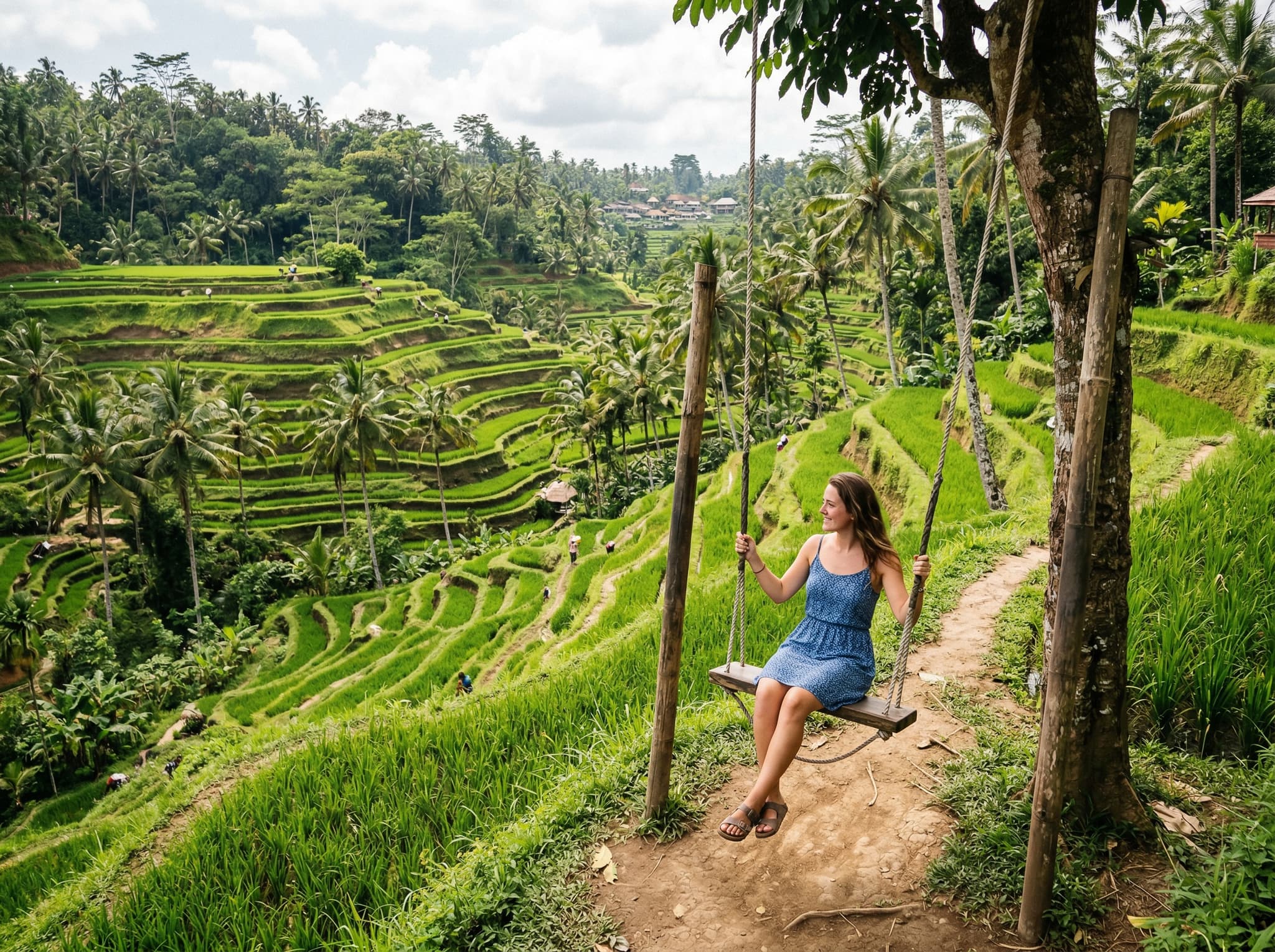
Since the original Bali Swing blew up, dozens of imitations have appeared across the island — in Ubud, Tegallalang, Kintamani, even down in Seminyak. Some are legitimate operations with proper safety equipment. Others are bamboo swings bolted to a tree with a prayer and a liability waiver that wouldn't hold up anywhere.
The Tegallalang rice terrace swings are the most common alternative — cheaper (IDR 100,000–150,000), shorter lines, and set against the iconic terraced landscape. They're lower, slower, and less thrilling, but if your primary goal is a photo with a beautiful backdrop, they deliver at a fraction of the cost.
Who Should Go — And Who Shouldn't
Go if: You want the physical experience of swinging over a jungle valley and you're fine with the commercial setup. Arrive at 8 AM, do the swings first, skip the buffet, and you're out by 9:30 before the tour buses arrive. That's the move.
Skip it if: You're on a tight budget and trying to maximize your Ubud days. The same $25 and two hours gets you a morning at Tirta Empul, a walk through the Campuhan Ridge Walk, and a meal at a warung that'll actually be memorable. The Bali Swing is a single-purpose attraction — once you've swung and taken the photo, there's no reason to linger.
The middle ground: If you're doing a day trip that combines the Tegallalang rice terraces, a coffee plantation visit, and the Bali Swing, the swing works as one stop among several. It's when it becomes the centerpiece of your day that the value proposition gets shaky.
Bali Swing vs. Tegallalang Swings
Price
IDR 400,000–500,000 vs. IDR 100,000–150,000
Height
Up to 78m vs. 10–15m
Thrill Factor
High vs. Mild
Crowds
Heavy after 10 AM vs. Moderate
Best For
The experience vs. The photo
The Bottom Line
The Bali Swing is a well-run commercial attraction that delivers exactly what it promises: a dramatic swing over a jungle valley and a photo that'll perform well on social media. It is not a hidden gem. It is not an authentic cultural experience. It is not something you'll tell your grandchildren about.
But it's fun. And sometimes fun is enough — as long as you know what you're buying.