Seminyak offers Bali's best dining scene, sunset beach clubs, and boutique shopping — a polished neighborhood guide for travelers who like comfort.
Seminyak is the part of Bali that learned how to dress up. Where Kuta went loud and Canggu went cool, Seminyak went sleek — wider roads lined with boutique hotels, design shops selling things you don't need but suddenly want, and restaurants that would hold their own in Melbourne or Singapore. It's Bali's most commercially polished neighborhood, and that polish is exactly what divides opinion.
Some travelers skip it entirely, moving straight to the rice terraces of Ubud or the cliff temples of Uluwatu. Others make it their base for the entire trip. Both choices are defensible. But Seminyak rewards the visitor who walks its side streets slowly, who stays long enough to notice the small ceremonies still happening between the cocktail bars, the incense still burning on the sidewalk outside a concept store.
The Beach and the Sunset Economy
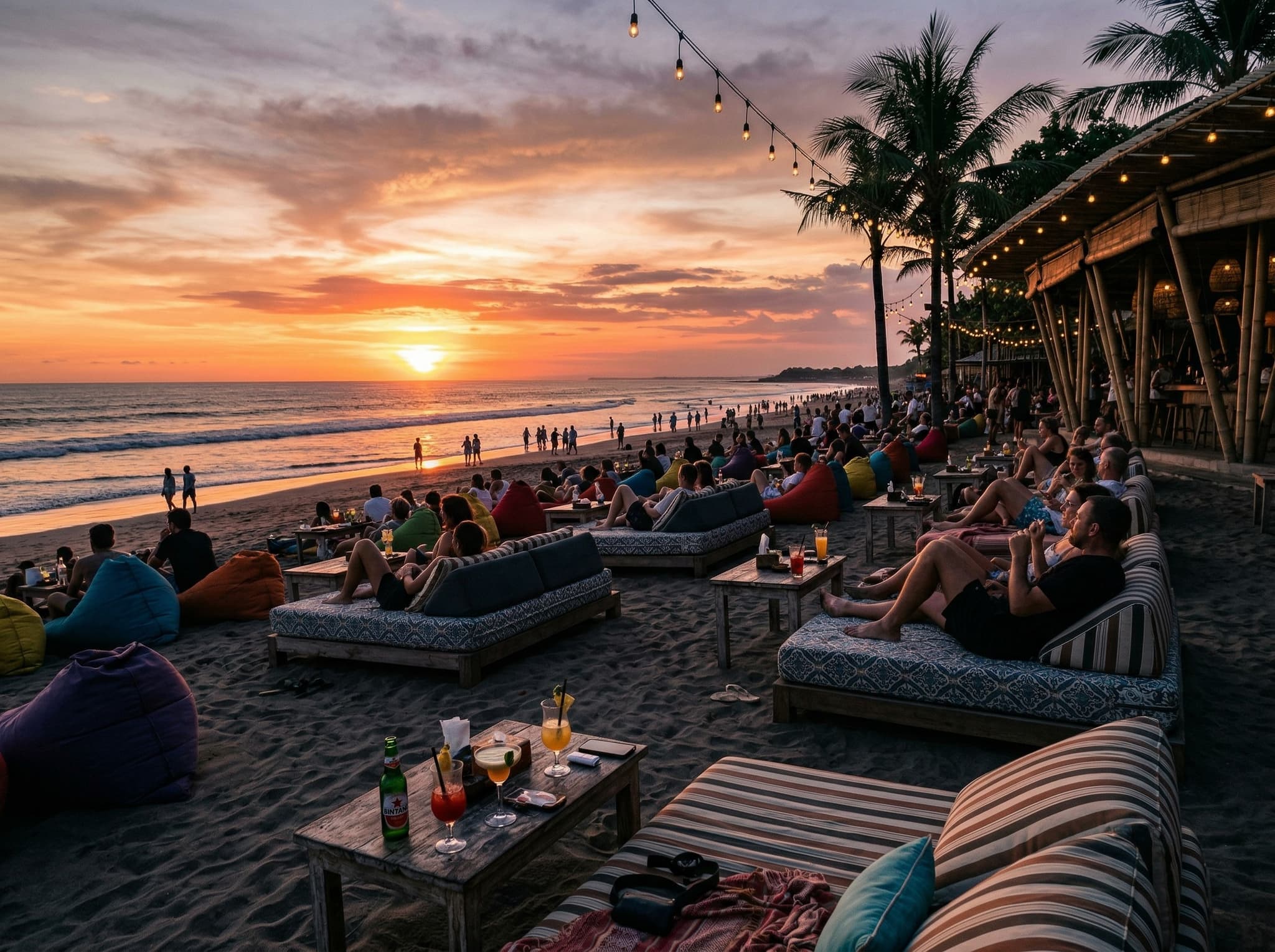
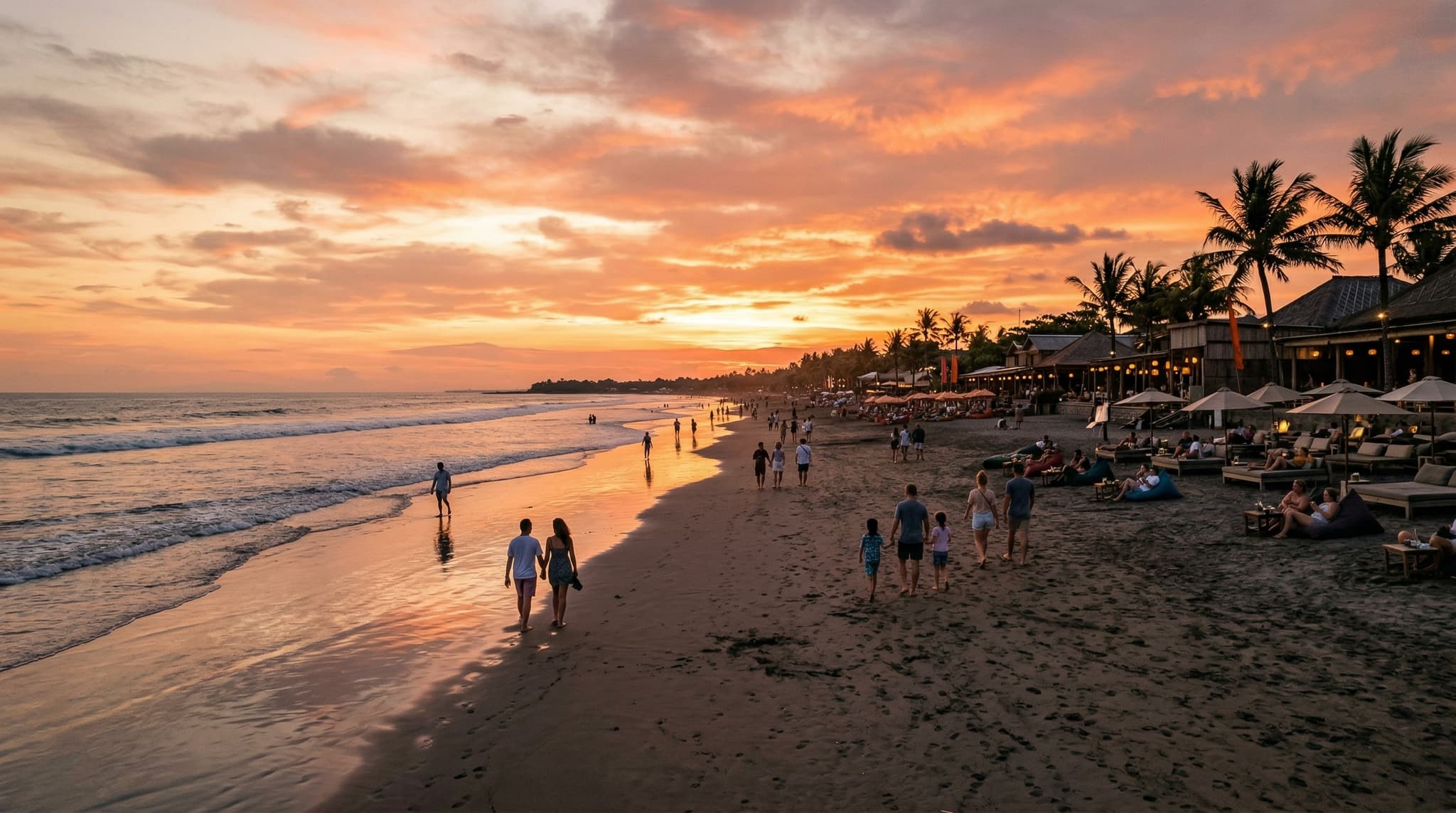
Seminyak Beach is wide, dark-sand, and faces west — which means the sunsets are the neighborhood's most reliable spectacle. Every evening, the beachfront transforms. Bean bags appear. Drinks arrive in coconuts. DJs begin their sets at the beach clubs, and the sky turns the kind of colors that make everyone reach for a phone.
Beach Club Pricing
Day bed (weekday)
300,000–500,000 IDR (~$19–$31)
Day bed (weekend)
500,000–1,000,000 IDR (~$31–$62)
Cocktails
120,000–200,000 IDR (~$7.50–$12.50)
Potato Head Beach Club is the most photographed, its facade built from repurposed wooden shutters, its pool crowded by noon on weekends. Ku De Ta, the older establishment, still draws a well-heeled crowd. Both charge accordingly. But the beach itself is free, and the sunset doesn't care where you're sitting. Walk south past the clubs and you'll find stretches of sand where Balinese families fly kites in the late afternoon light, the ocean wind pulling the strings taut against a tangerine sky.
The surf here is less consistent than Canggu's breaks and less forgiving than Kuta's whitewash, but it's swimmable in calmer conditions. Watch the flags. Red means stay out.
Eating in Seminyak
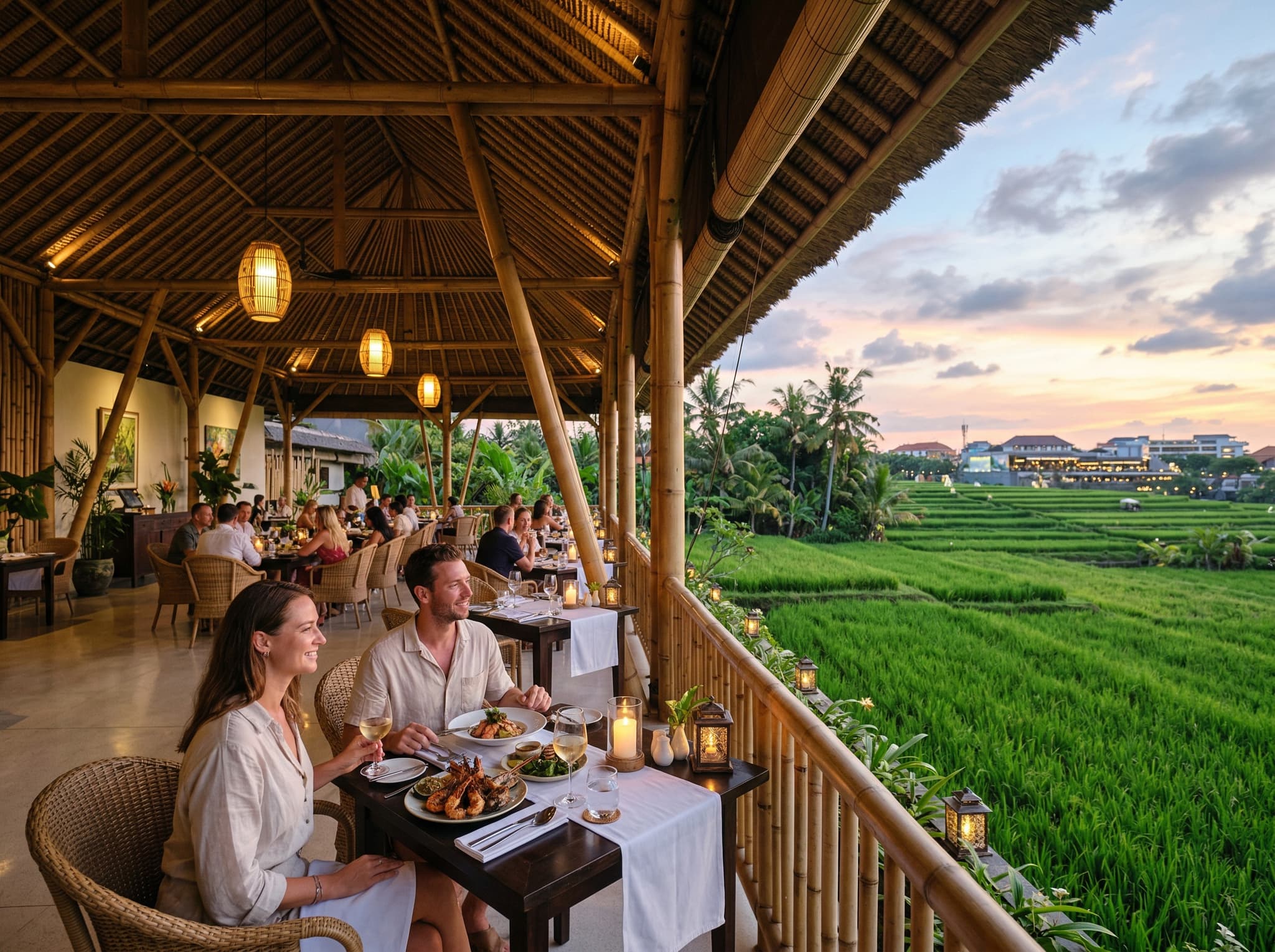
The food scene is where Seminyak genuinely earns its reputation. This is Bali's most concentrated strip of serious restaurants — not just expat brunch spots, though those exist in abundance, but places doing thoughtful work with Indonesian ingredients.
Jalan Petitenget is the main artery. Along it and its side streets, you'll find everything from wood-fired Neapolitan pizza to modern Indonesian tasting menus. Mama San serves pan-Asian dishes in a converted warehouse. Sardine, set beside rice paddies that somehow survived the development around them, does refined seafood in an open-air bamboo pavilion — arrive before dark to see the paddies turn gold.
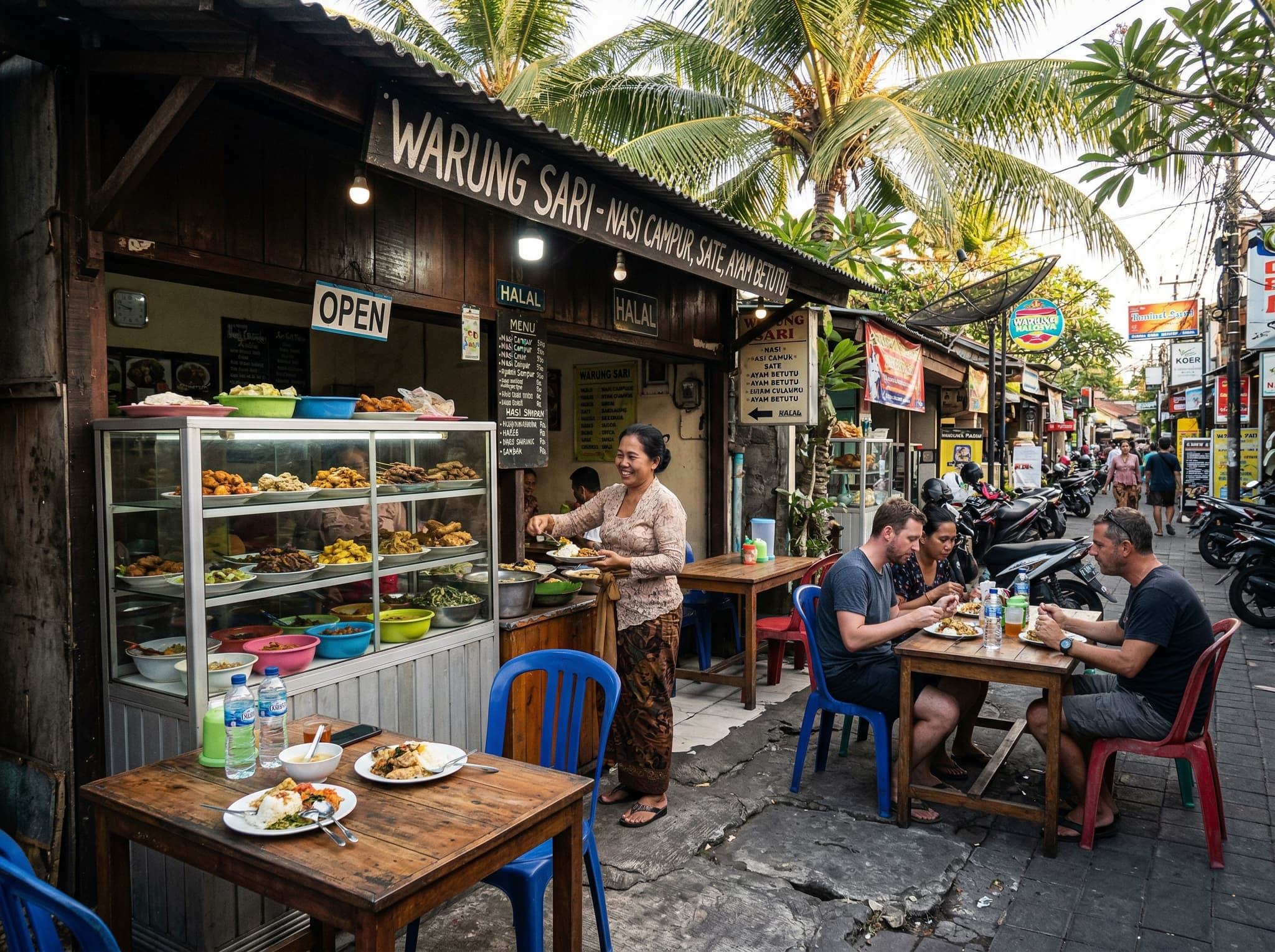
For something closer to the ground, the warungs on Jalan Kayu Aya and the smaller lanes behind Oberoi Road serve nasi campur and mie goreng at prices that remind you this is still Indonesia. A full meal at a local warung runs 25,000–45,000 IDR ($1.50–$2.80). The gap between a $3 plate of rice and a $45 tasting course is about two hundred meters.
Shopping and the Side Streets
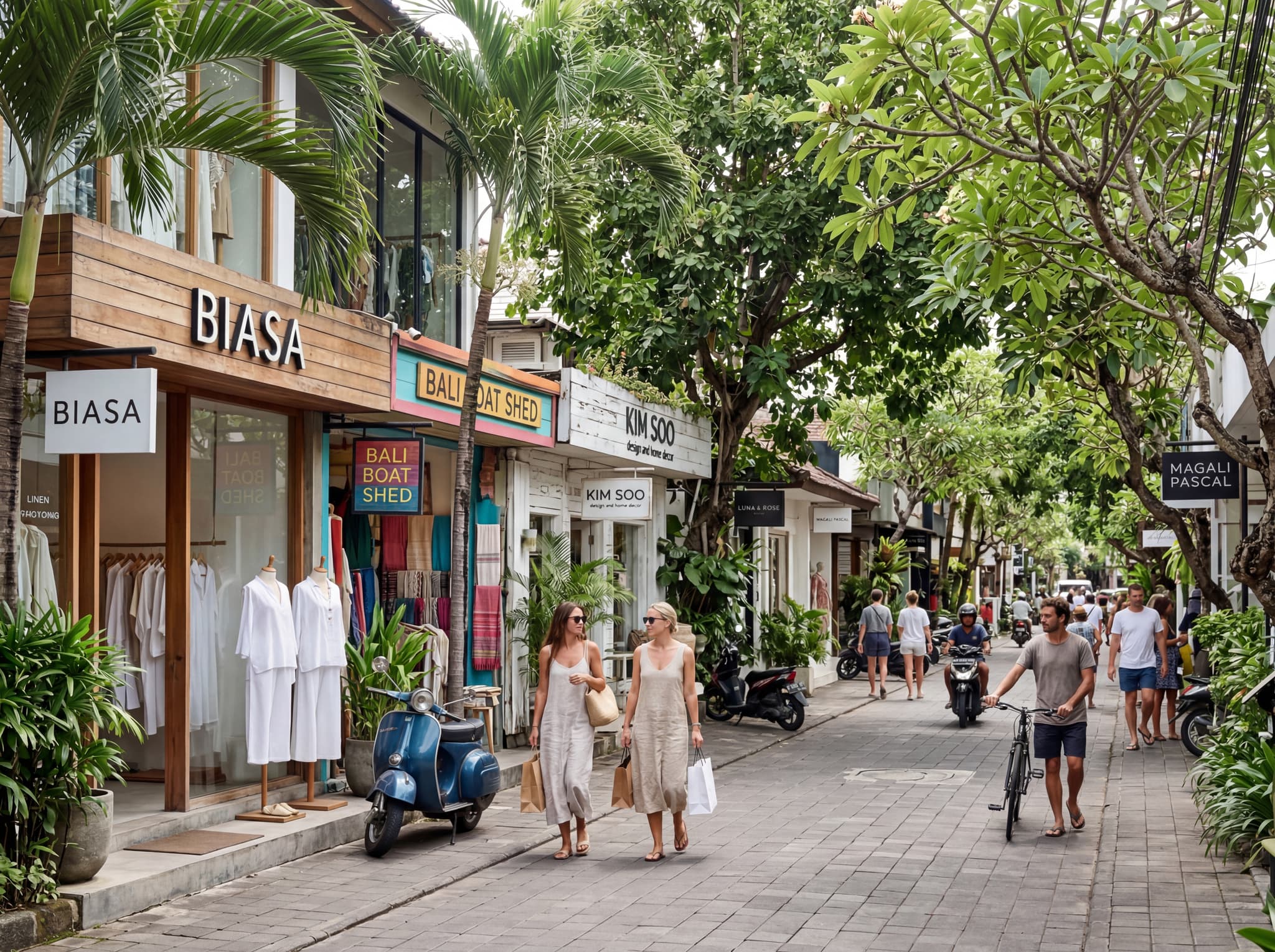
Seminyak's retail identity leans toward curated rather than chaotic. The days of haggling over knockoff sunglasses are mostly Kuta's territory now. Here, the shops sell linen clothing, handmade ceramics, natural skincare, and furniture you'll want to ship home but probably shouldn't.
Jalan Oberoi (also called Jalan Laksmana — Bali's street naming is its own kind of chaos) is the main shopping corridor. Seminyak Village and Seminyak Square are the more conventional mall-style options, air-conditioned and predictable. The better finds are in the independent boutiques tucked into the residential lanes — look for Balinese textile work, locally made jewelry, and the kind of homeware stores that smell like sandalwood and good decisions.
What Seminyak Isn't
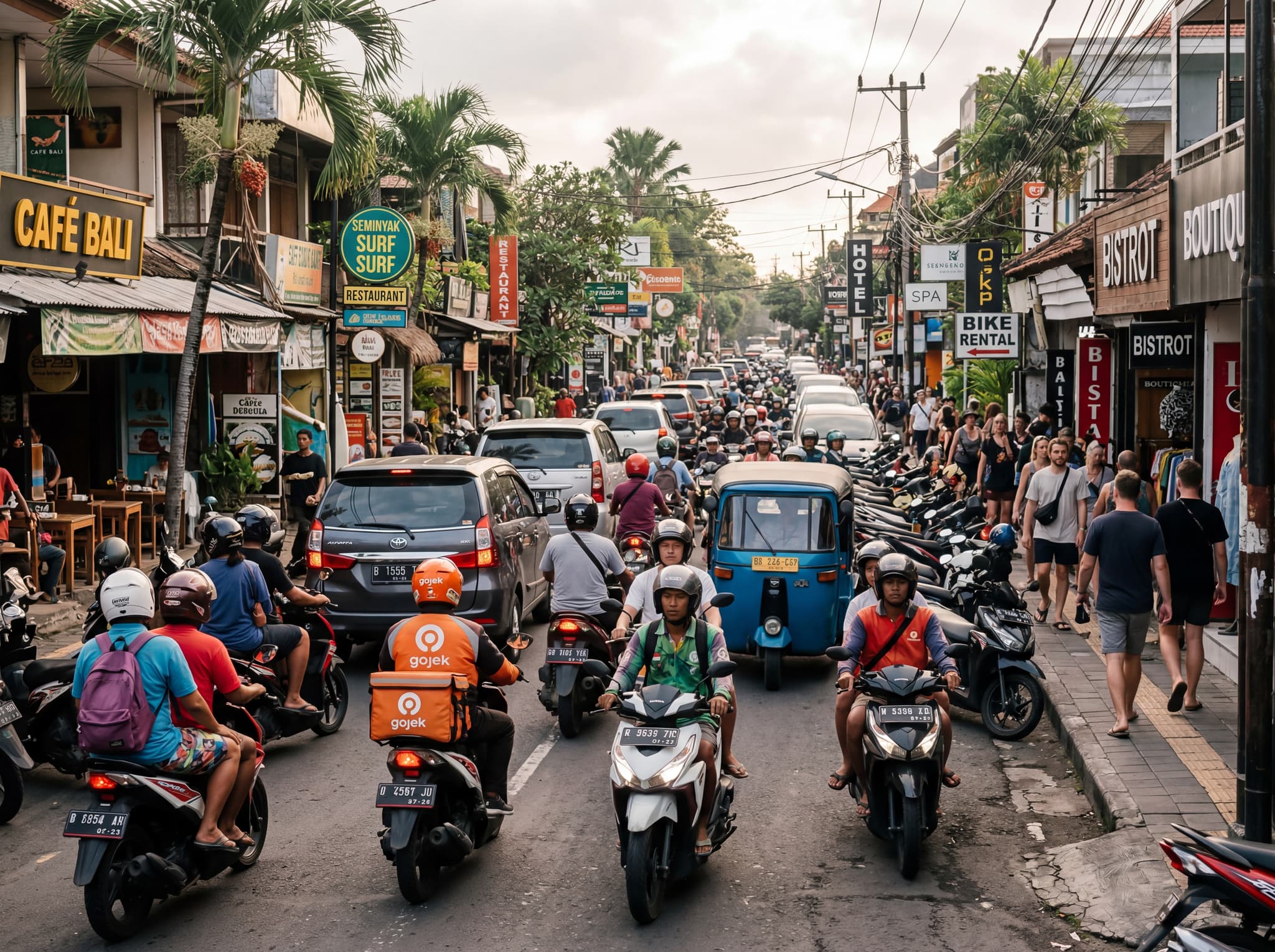
It isn't quiet. Traffic along Jalan Raya Seminyak can be genuinely punishing, especially between 4 and 7 PM. The one-way systems are confusing even for drivers who know them. If you're on a scooter, expect tight squeezes between SUVs and delivery trucks.
It isn't the Bali of temple ceremonies and terraced hillsides. Those exist here — you'll spot small offerings on every doorstep, hear gamelan from a nearby compound — but they're woven into a commercial landscape, not the dominant texture.
And it isn't cheap, at least not by Bali standards. Seminyak's accommodation, dining, and nightlife skew toward mid-range and upscale. Budget travelers can make it work with warung meals and guesthouse stays off the main roads, but the neighborhood isn't designed for them.
Accommodation Ranges
Budget guesthouse
250,000–500,000 IDR/night (~$15–$31)
Mid-range boutique hotel
800,000–2,000,000 IDR/night (~$50–$125)
Upscale villa (private pool)
2,500,000–6,000,000+ IDR/night (~$155–$375+)
Getting Around
Walking is possible along the main strips but limited by narrow sidewalks and heat. Most visitors rent a scooter (70,000–100,000 IDR/day) or use ride-hailing apps — Grab and Gojek both operate here, though some drivers won't enter the most congested lanes. A hired driver for a half-day runs around 400,000–600,000 IDR ($25–$37) and is the most comfortable option for trips to Uluwatu, Ubud, or the airport.
Who Seminyak Is For
Seminyak works best for travelers who want comfort without full resort isolation. Couples, small groups, anyone who likes eating well and doesn't mind spending for it. It's a good first-night landing pad — close to the airport, well-serviced, easy to orient yourself — before heading to quieter parts of the island.
It's not the Bali that changes you. It's the Bali that feeds you, pours you a good drink, and gives you a sunset worth the cliché. That's not nothing.