Perched 70 meters above the Indian Ocean, Uluwatu Temple is one of Bali's most dramatic sacred sites. Here's how to visit, what to expect, and why it matters.
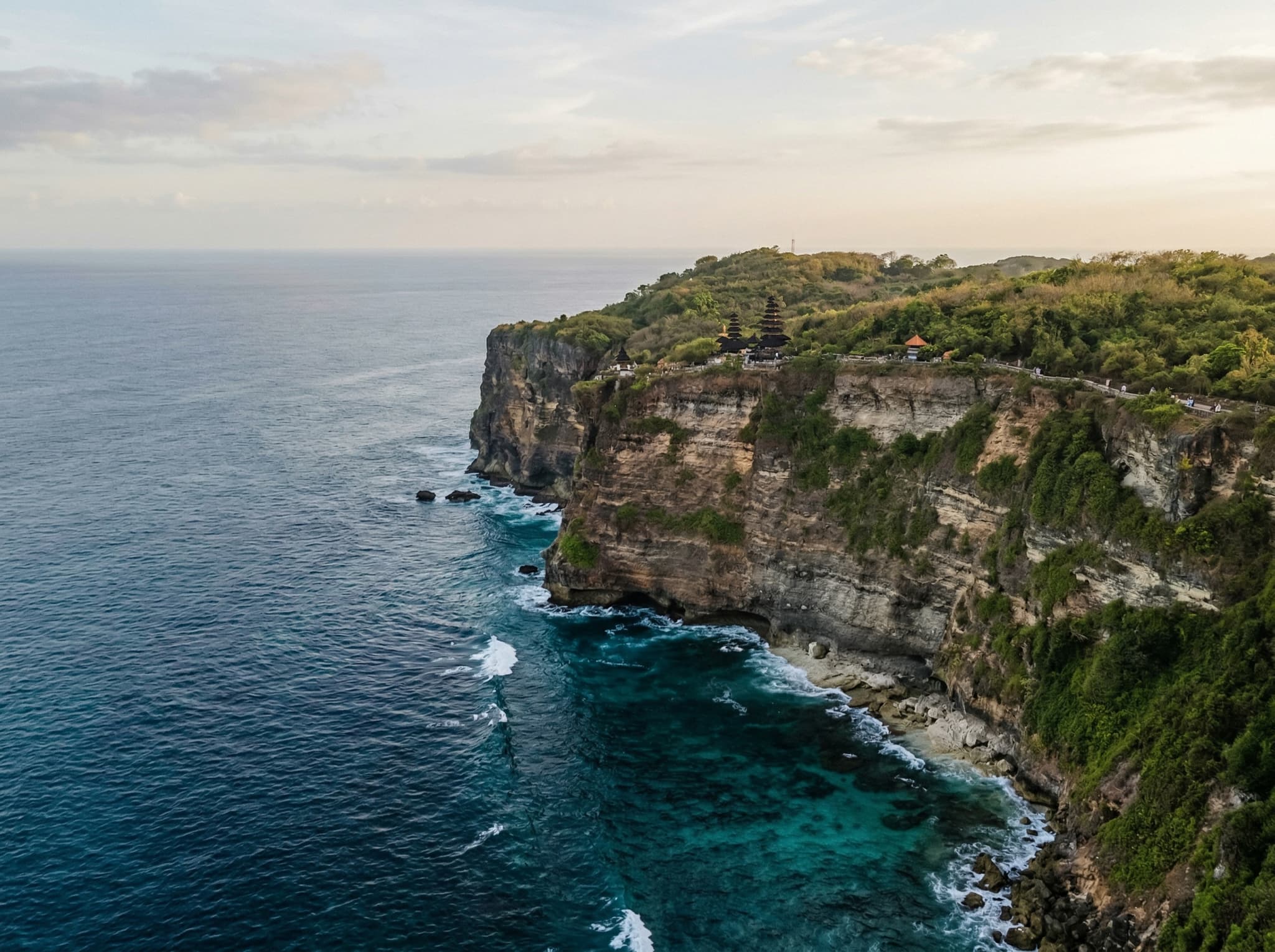
Uluwatu Temple — Pura Luhur Uluwatu in Balinese — sits on a narrow limestone promontory roughly 70 meters above the Indian Ocean. It's one of Bali's six sad kahyangan, the directional temples believed to protect the island from evil spirits. Uluwatu guards the southwest.
That spiritual geography matters. Bali's Hindu temples aren't placed randomly — they form a network of cardinal protections, each one anchoring a corner or edge of the island. Uluwatu's position at the cliff's edge isn't dramatic staging. It's theology expressed in stone and geography. The temple exists here because the Balinese believe the southwestern sea needs guarding.
The site dates to at least the 10th century, though the temple as it stands today owes much to the Javanese priest Dang Hyang Nirartha, who arrived in Bali in the 16th century during the collapse of the Majapahit Empire. Nirartha is credited with establishing the final form of many of Bali's most important sea temples, including Uluwatu and Tanah Lot on the western coast. According to Balinese tradition, he achieved moksha — spiritual liberation — at Uluwatu, which elevated the site's significance permanently.
What You'll Actually See

The temple's inner sanctum is closed to non-worshippers, which is standard for Bali's major temples. What you're visiting is the clifftop grounds surrounding the temple complex — a winding coral-stone path through a small forest, past split gates and shrines, with the ocean crashing far below on both sides.
It's a short walk. The path runs along the cliff edge for perhaps 500 meters, with a few viewing platforms where the scale of the drop becomes visceral. On clear days, the water below shifts between deep navy and electric turquoise depending on the reef beneath it. The temple structures themselves are modest — dark volcanic stone covered in moss, weathered into soft shapes by centuries of salt wind. There's no gilded grandeur here. The architecture is secondary to the setting.
You'll be given a sarong and sash at the entrance if you're not already wearing one — temple dress code requires covered legs and a waist sash for all visitors. Wearing your own sarong is fine and avoids the queue.
The Kecak Fire Dance
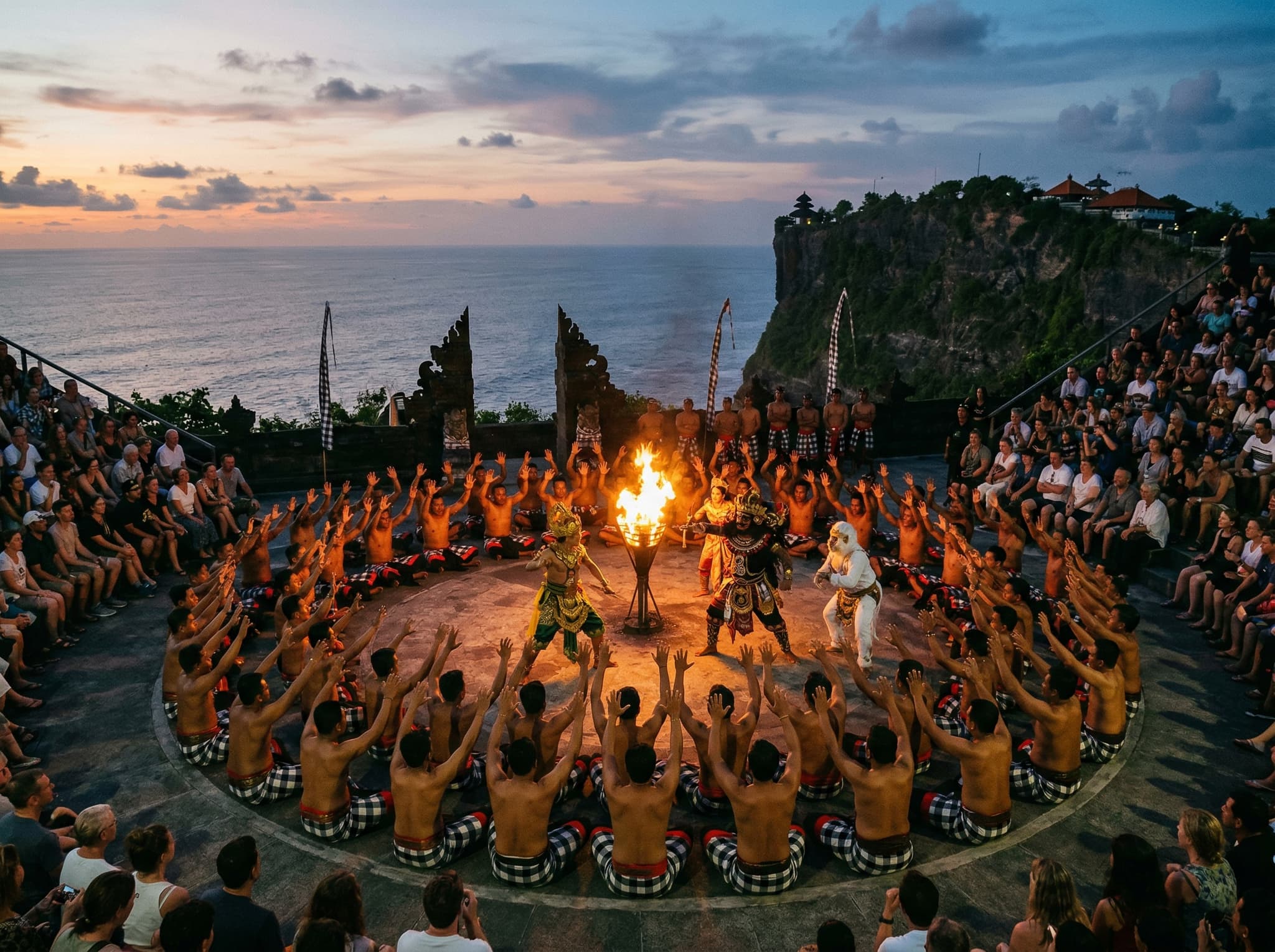
Most visitors time their arrival for the late afternoon, and for good reason. The Kecak performance at Uluwatu is one of Bali's most compelling cultural experiences — not because it's the most "authentic" (Kecak was actually developed in the 1930s with input from German painter Walter Spies), but because the setting transforms it.
Kecak Performance Details
Showtime
6:00 PM daily
Ticket Price
150,000 IDR (~$9)
Duration
Approximately 1 hour
Seating
Open-air amphitheater (arrive by 5:15 PM for good seats)
The performance takes place in a small stone amphitheater perched at the cliff's edge. A circle of 50 or more men chant rhythmically — chak-chak-chak — creating a hypnotic, percussive wall of sound with no instruments at all. The story is drawn from the Ramayana: Rama's rescue of Sita from the demon king Ravana. As the drama unfolds, the sun drops behind the performers into the ocean. The timing is deliberate and effective.
Kecak is worth seeing even if you've encountered other Balinese dance forms. The absence of a gamelan orchestra — replaced entirely by human voice — makes it distinct. And the Uluwatu amphitheater, with its ocean backdrop turning gold and then dark, is arguably the best venue on the island for it.
When to Go and How to Plan Your Visit
Arrive between 4:00 and 4:30 PM. This gives you enough time to walk the temple grounds, watch the light shift over the cliffs, and secure a seat for the Kecak performance. The amphitheater fills up — arriving after 5:30 PM often means sitting on the outer edges with limited sightlines.
Uluwatu is about 45 minutes from Seminyak and 90 minutes from Ubud by car, though Bali traffic can stretch either estimate significantly. Most visitors hire a driver for the half-day — expect to pay around 350,000–500,000 IDR ($22–$31) for a return trip with waiting time, depending on your starting point. Ride-hailing apps work for getting there but can be unreliable for the return trip, since drivers are scarce in the area after dark.
What's Nearby
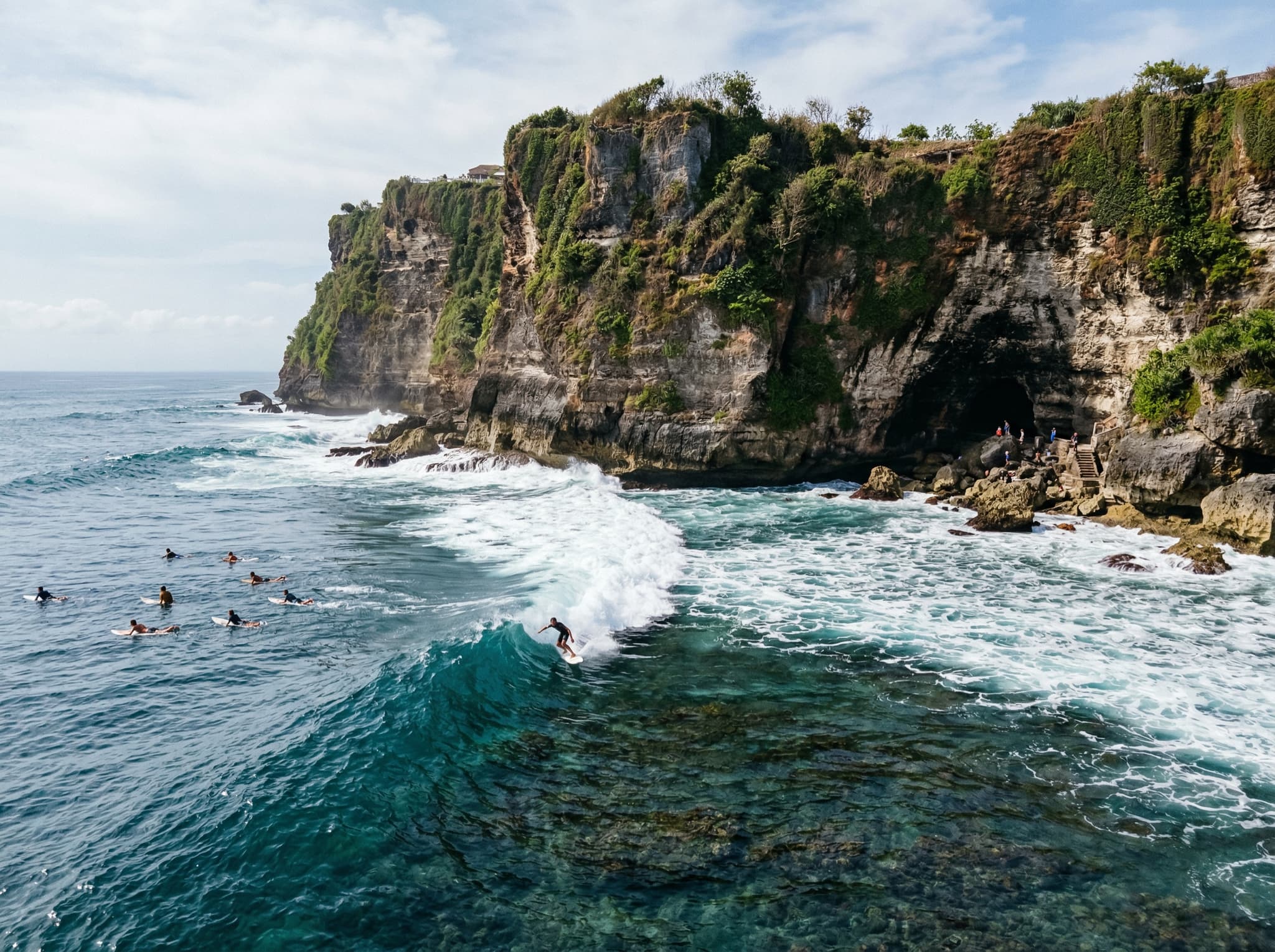
The southern Bukit Peninsula has developed rapidly around Uluwatu. After the temple, you're well-positioned for dinner at one of the clifftop restaurants and bars that line the nearby coast — Single Fin and El Kabron are popular for sunset drinks, though neither is cheap by Bali standards. For surfing, Uluwatu Beach (accessed via a cave at the base of the cliffs, south of the temple) is one of Bali's most famous breaks, best suited to experienced surfers.
Padang Padang Beach is a 10-minute drive north — a small cove reached by a narrow staircase through a rock cleft. It's photogenic and swimmable, though it gets crowded by midday.
The Bigger Picture
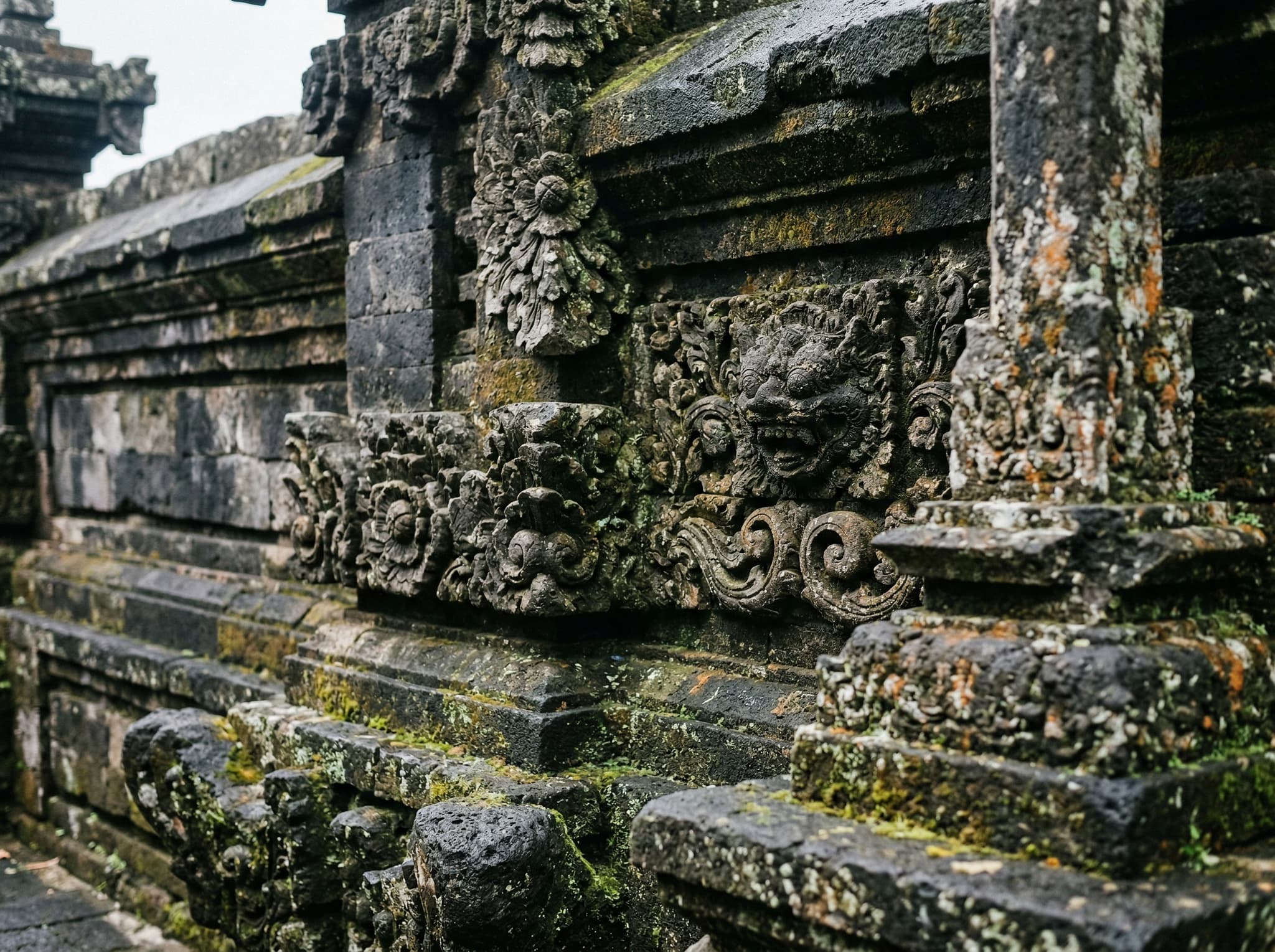
Uluwatu works on two levels. As a spectacle — cliffs, sunset, fire dance — it delivers. But it's also a window into how Balinese Hinduism relates to landscape. The temple isn't built on the cliff for the view. It's built there because the Balinese understand certain places as spiritually charged, and the meeting point of land and ocean is one of them. Every sea temple on the island reflects this belief: that the boundaries between elements are where spiritual energy concentrates, and where protection is most needed.
You don't need to share that belief to feel something at the cliff's edge at Uluwatu. The place does the work.