Bali's Bukit Peninsula offers dramatic limestone cliffs, world-class surf breaks, hidden cove beaches, and a landscape unlike anywhere else on the island.
Most first-time visitors to Bali head north — to the rice terraces of Ubud, the beach clubs of Seminyak, the surf shops of Canggu. The Bukit Peninsula, the island's southern appendage, tends to come later. It rewards the delay. This is a different Bali: dry limestone cliffs instead of volcanic jungle, hidden coves instead of wide sandy stretches, and a landscape that feels more like southern Portugal than the tropical Indonesia most people picture.
The Bukit — "bukit" simply means "hill" in Indonesian — is technically an isthmus connected to mainland Bali by a narrow strip of land near the airport. Geologically, it's distinct from the rest of the island. While northern and central Bali are volcanic, built from the eruptions of Mount Agung and its predecessors, the Bukit is an uplifted limestone plateau. That difference shapes everything: the terrain, the beaches, the surf breaks, even the way communities developed here.
A Landscape Shaped by Limestone
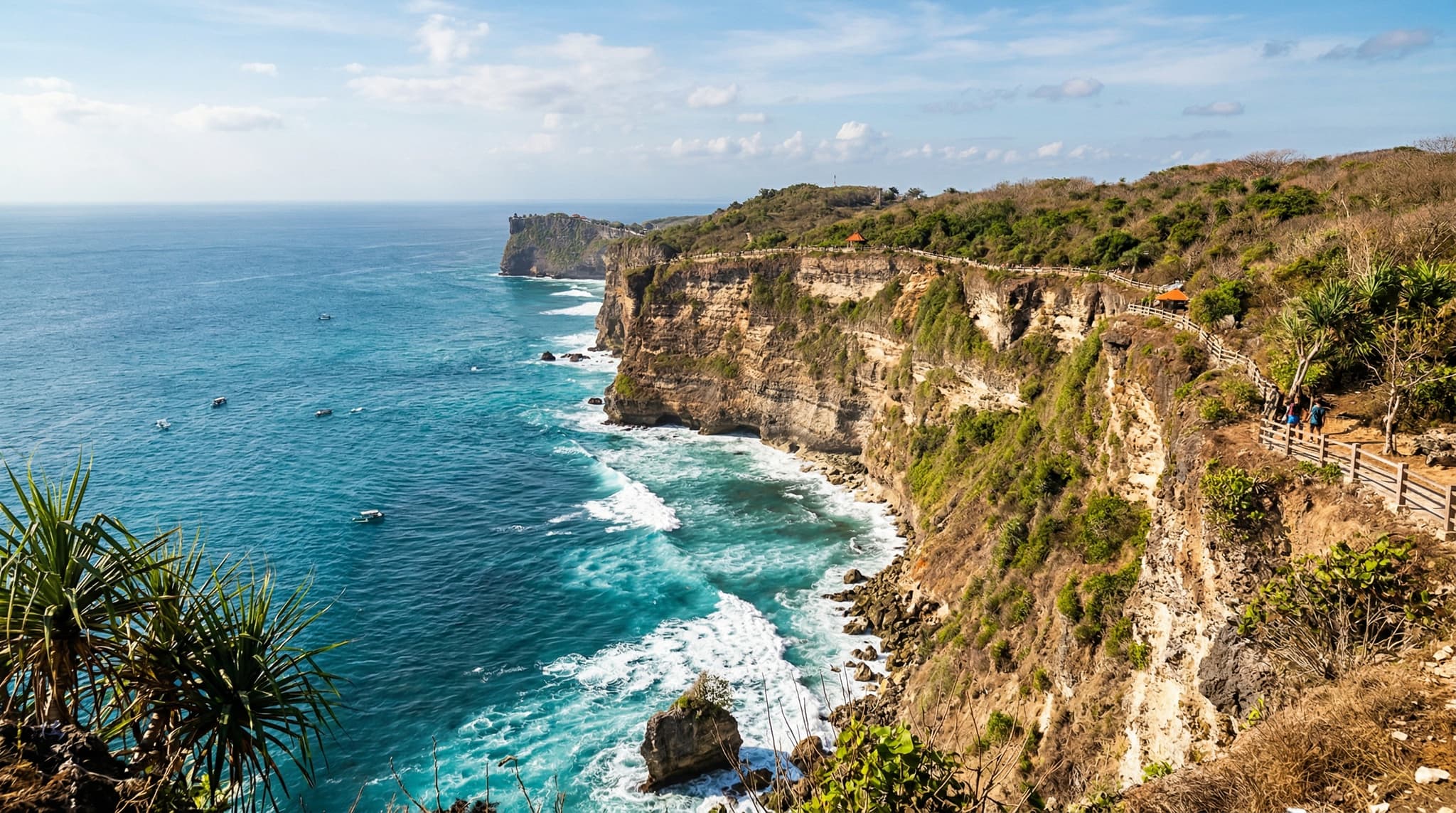
The cliffs are the first thing you notice. The Bukit's coastline drops dramatically into the Indian Ocean, with sheer white-and-gold walls rising 50 to 70 meters above the water. At their base, where the ocean has carved into softer rock, you find the peninsula's famous beaches — small, sheltered coves accessible by steep staircases cut into the cliff face.
This geography kept the Bukit relatively undeveloped for decades. While Kuta and Legian boomed with tourism in the 1970s and '80s, the southern peninsula remained scrubby and dry, home to small farming communities and a handful of temples. Surfers discovered it first, drawn by the world-class reef breaks that the limestone shelf creates. Development followed, but unevenly — the western coast around Uluwatu and Bingin attracted surf culture, while the eastern side around Nusa Dua became a zone of large, gated resorts built with government backing in the 1970s as part of a master-planned tourism district.
That split personality persists. The Bukit contains both Bali's most exclusive resort enclaves and some of its last genuinely low-key coastal spots.
The Western Cliffs: Uluwatu to Bingin
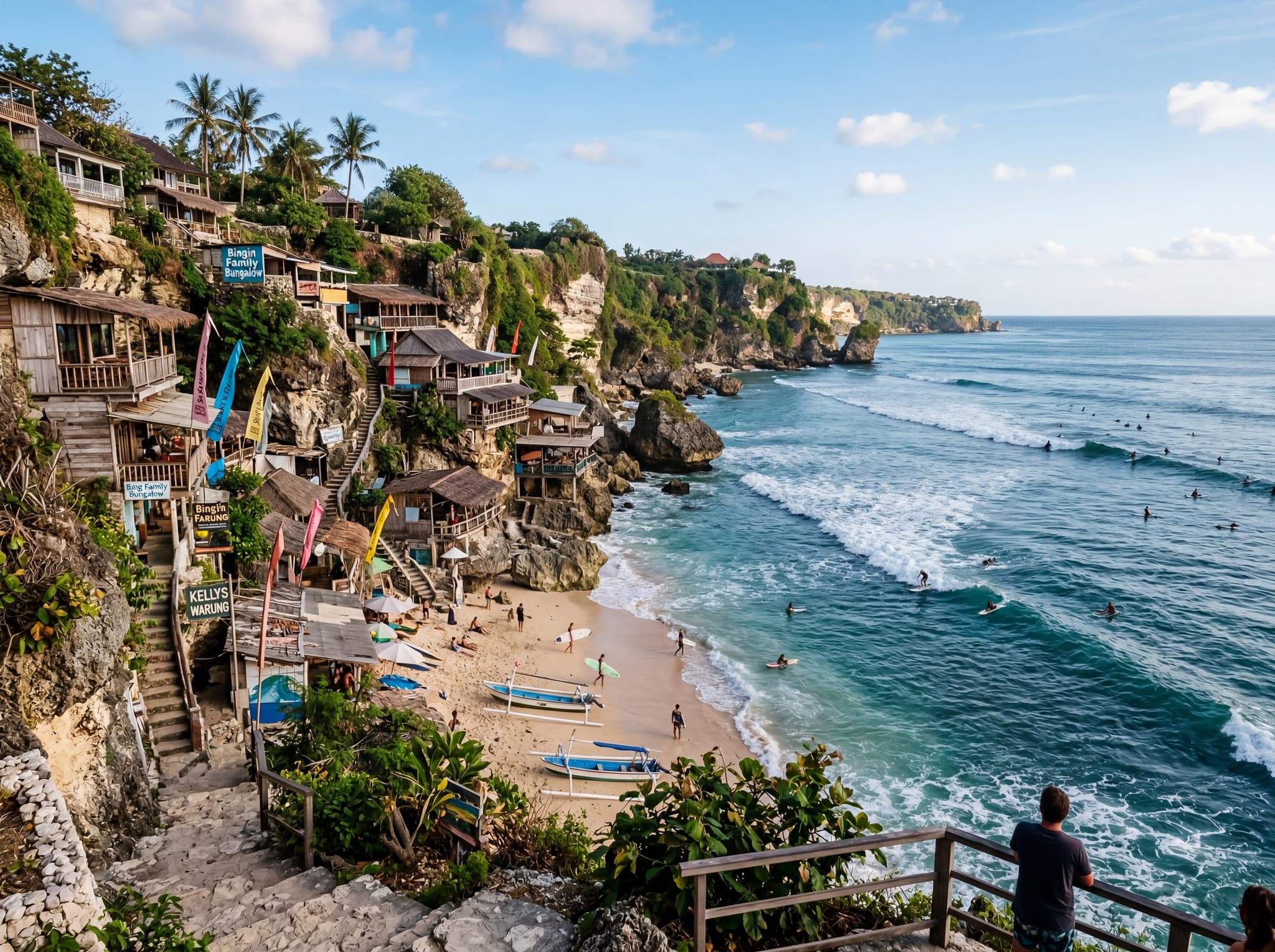
The western edge of the Bukit is where most independent travelers end up, and for good reason. The stretch from Uluwatu north to Bingin concentrates the peninsula's best surf, its most dramatic cliff scenery, and a growing but still manageable collection of warungs, guesthouses, and boutique hotels perched along the bluffs.
Uluwatu Temple (Pura Luhur Uluwatu) anchors the southwestern tip. It's one of Bali's six key directional temples — sad kahyangan — believed to protect the island from evil spirits. The temple sits on a dramatic cliff edge roughly 70 meters above the sea, and the sunset Kecak fire dance performed in its amphitheater is one of Bali's most iconic cultural experiences.
North of the temple, the coastline breaks into a series of beaches that each have their own character. Padang Padang is the most famous, a compact cove that gained mainstream attention after the film Eat Pray Love but remains genuinely beautiful. Bingin Beach draws surfers and budget travelers with its cliffside warungs and laid-back atmosphere. Dreamland Beach (officially Pantai Dreamland) has wider sand but has seen more commercial development than its neighbors.
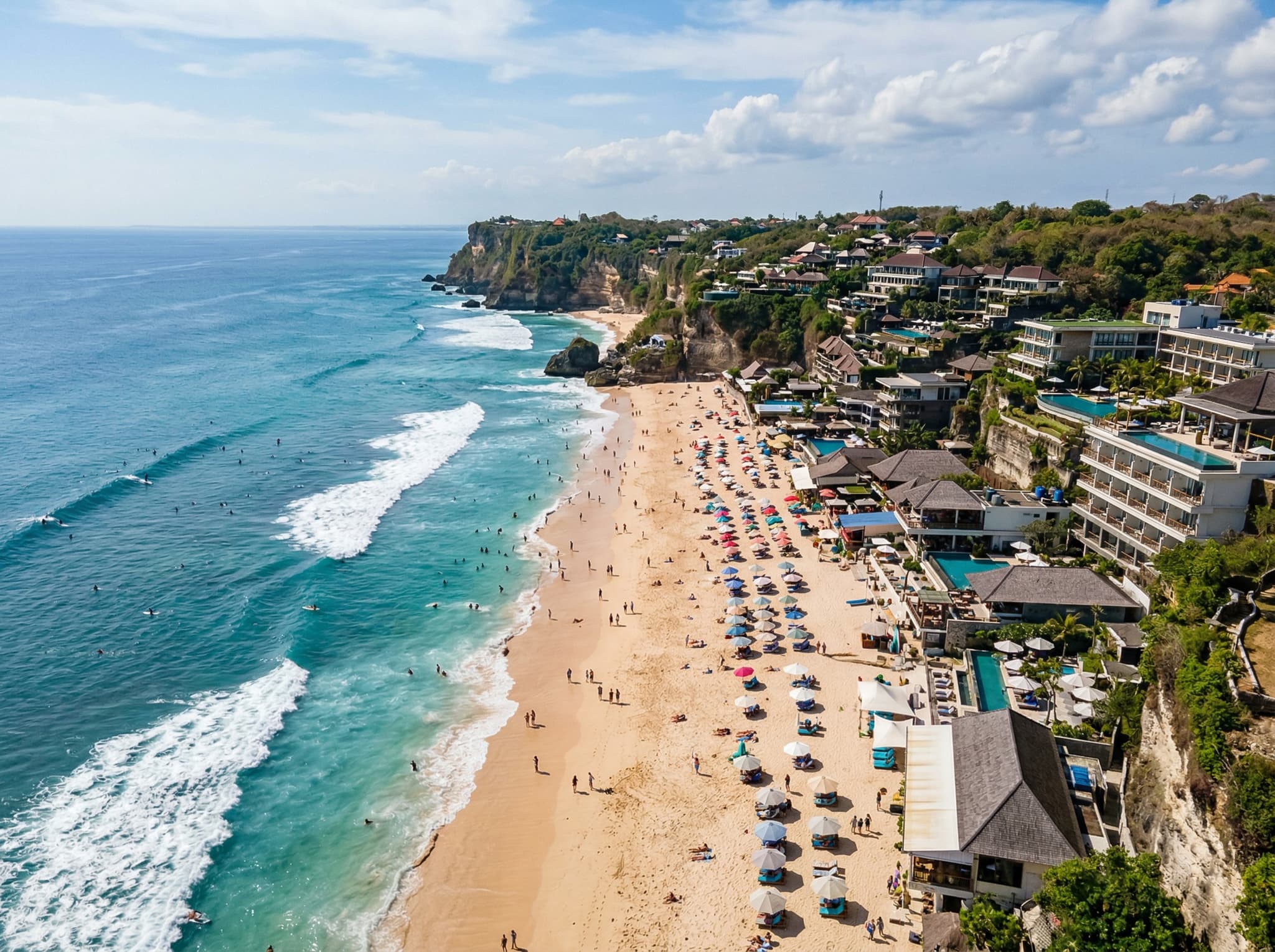
The surf here is serious. Uluwatu's reef break is considered one of the best left-handers in the world, drawing experienced surfers from May through October when the Indian Ocean swells hit the western coast cleanly. These are reef breaks over shallow limestone — not beginner-friendly conditions.
The Eastern Side: Nusa Dua and Beyond
The contrast on the Bukit's eastern coast is stark. Nusa Dua was designed from the ground up as a luxury tourism zone in the early 1970s, a joint project between the Indonesian government and the World Bank. The idea was to contain tourism's impact by concentrating large hotels in one area, separated from local communities by walls and security gates.
The result is a manicured, self-contained resort district that feels nothing like the rest of Bali. Pristine beaches, calm water (the eastern coast is sheltered from the big Indian Ocean swells), and international hotel brands line the shore. It's a different kind of travel — comfortable and predictable where the western cliffs are rugged and unpredictable.
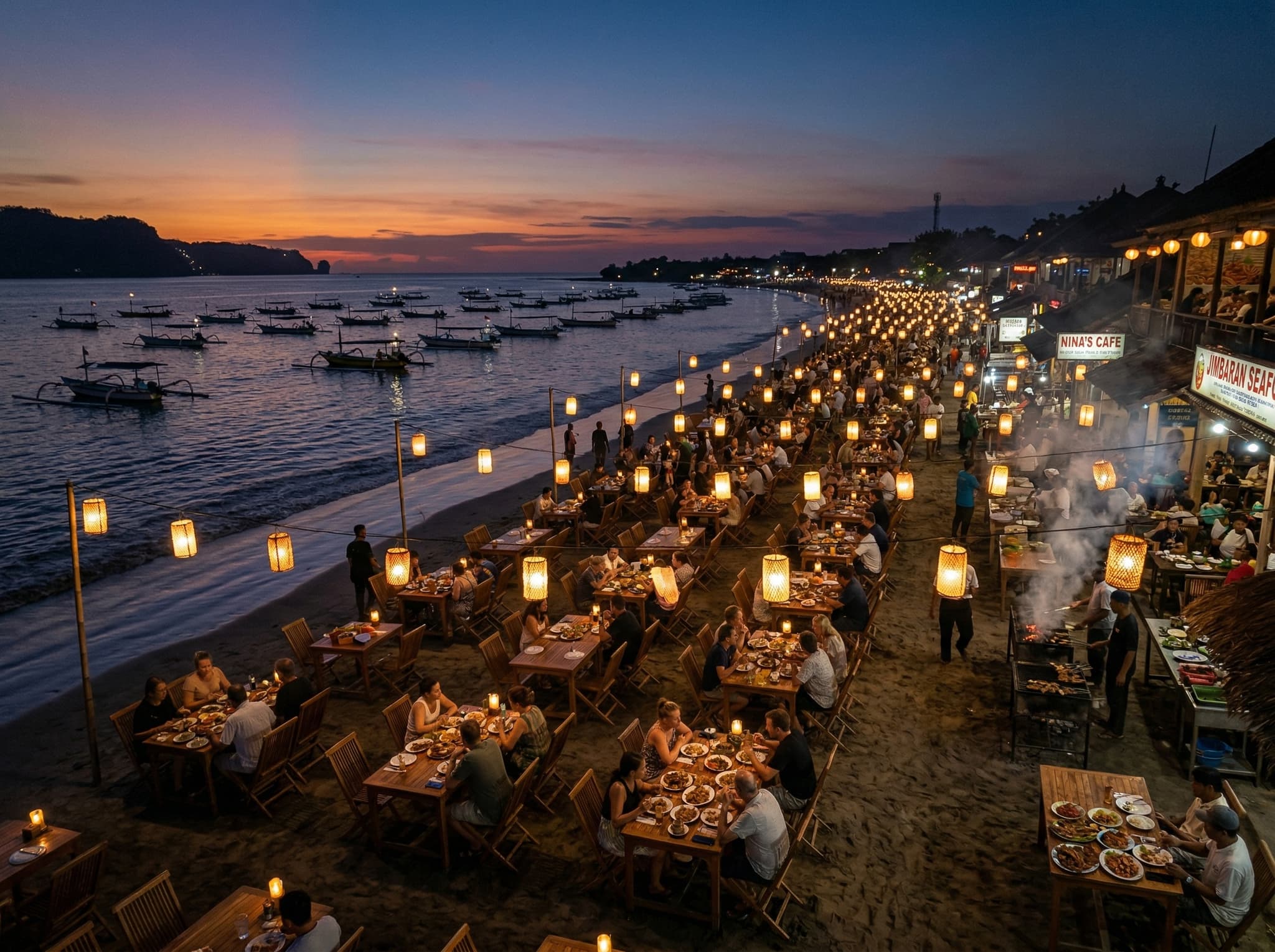
Between the two coasts, Jimbaran sits on the isthmus connecting the Bukit to mainland Bali. It's best known for its seafood — the beach-side fish market and the rows of grilled-seafood warungs along Jimbaran Bay are a Bali institution, though prices have crept up as the area's reputation has grown.
The Southern Tip: Bali's Quiet Edge
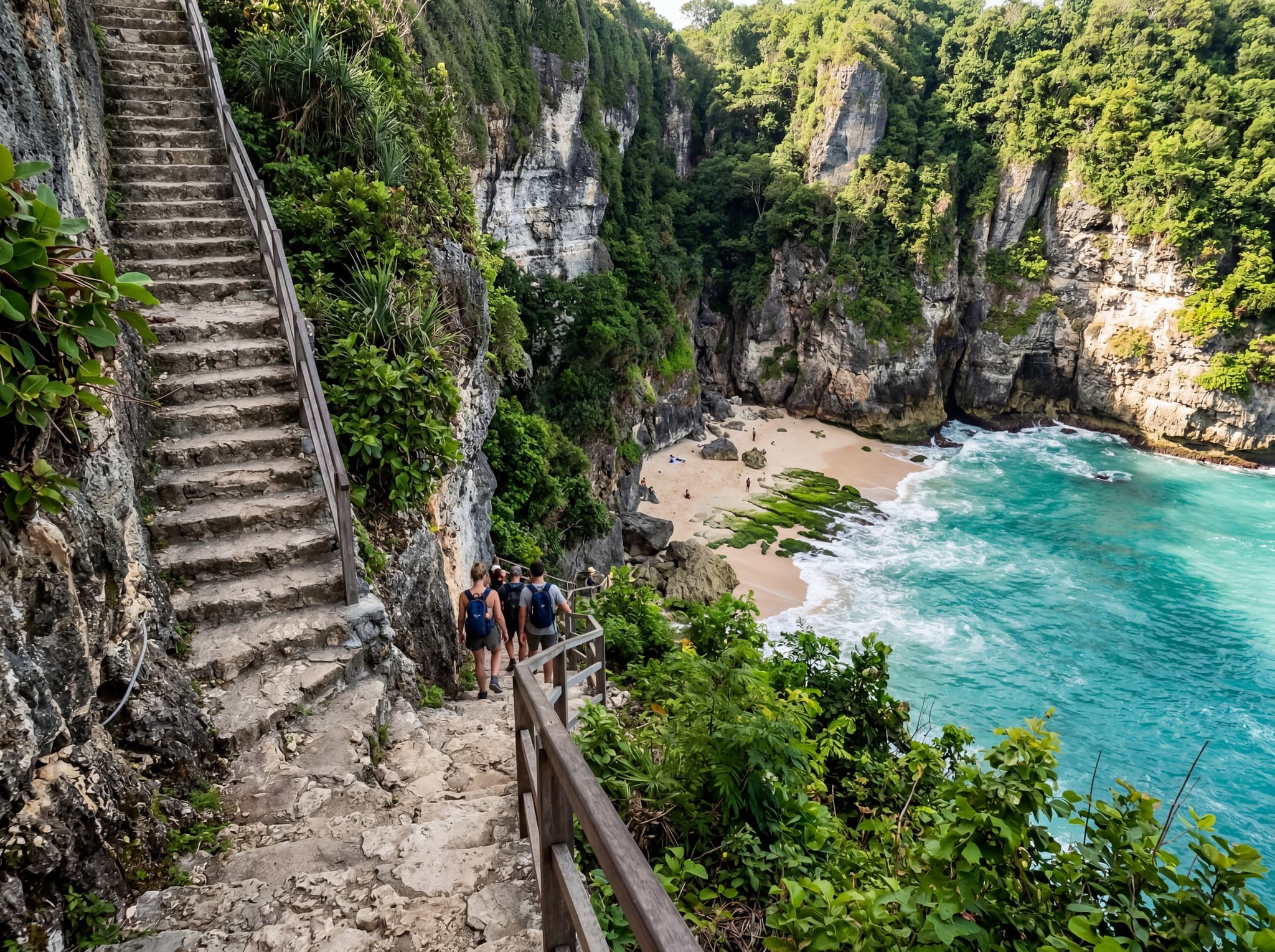
South of the main tourist zones, the Bukit gets quieter. Pandawa Beach, once a hidden local spot, is now accessible via a road carved through the limestone cliffs and has become popular for its photogenic setting. Green Bowl Beach remains one of the more secluded options — a steep descent of several hundred steps keeps casual visitors away.
Beach Access
Padang Padang
Short staircase, easy access
Bingin
Steep stairs, moderate effort
Green Bowl
300+ steps, strenuous
Pandawa
Road access, easy
Practical Considerations
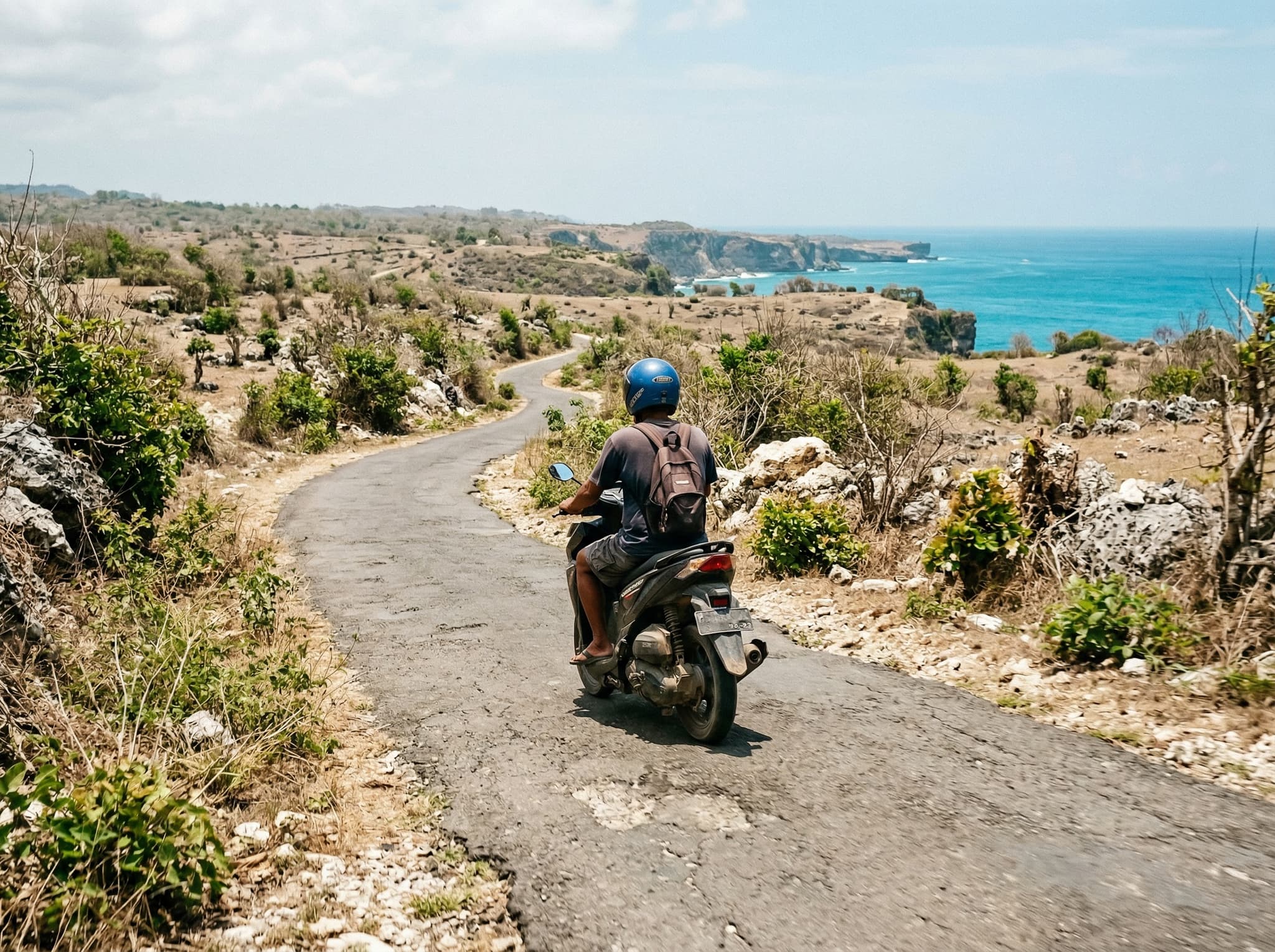
The Bukit is hotter and drier than the rest of Bali, particularly during the dry season. The limestone doesn't hold moisture the way volcanic soil does, and the landscape reflects it — expect scrubby vegetation and open sun rather than the lush canopy of Ubud.
Getting around requires a scooter or private driver. Public transportation is essentially nonexistent on the peninsula, and ride-hailing apps, while technically available, can be unreliable in the more remote southern areas due to local transport regulations. Most visitors rent a scooter, though the roads — particularly the narrow lanes leading to cliff-top accommodations — can be challenging for inexperienced riders.
The Bukit Peninsula is Bali distilled to its geological bones — literally. Strip away the volcanic soil, the rice terraces, the jungle, and you get limestone, ocean, and a coastline that earns every bit of the attention it's getting. It's not the Bali of postcards. It might be the Bali that stays with you longest.