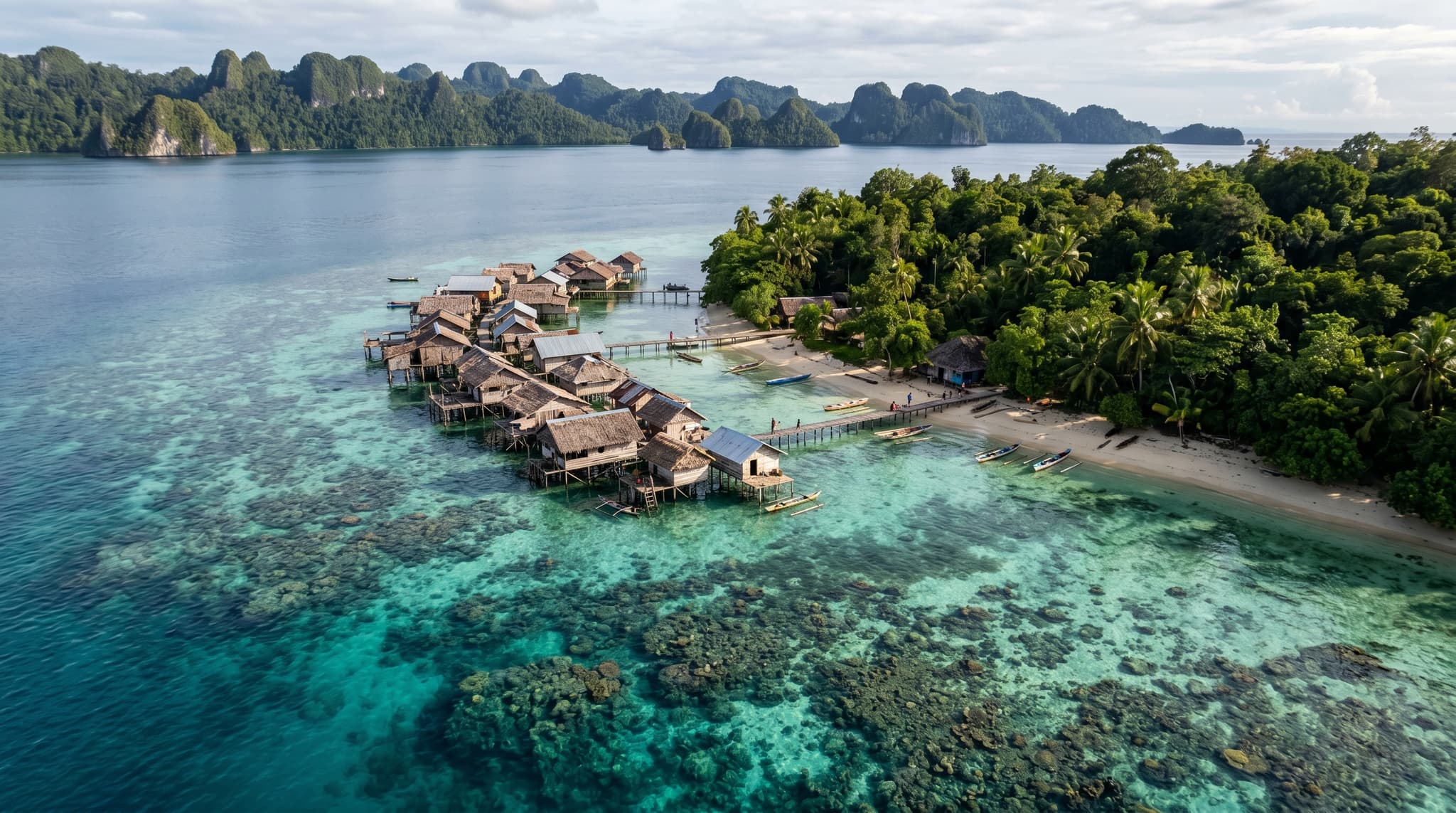
Pandawa Beach on Bali's Bukit Peninsula offers calm water, active seaweed farming, and a dramatic cliff-carved entrance. Practical guide with costs and access.
The road to Pandawa Beach drops through a corridor of carved limestone. The cliffs rise on both sides, cut clean and deliberate, with Hindu statues set into alcoves along the rock face — the five Pandawa brothers of the Mahabharata, watching traffic pass. The road is wide, paved, and gradual enough for a scooter or a car with no difficulty. It's a managed entrance, not a wilderness trail, and it tells you something about the beach before you reach it: this is a place that was designed to be arrived at.
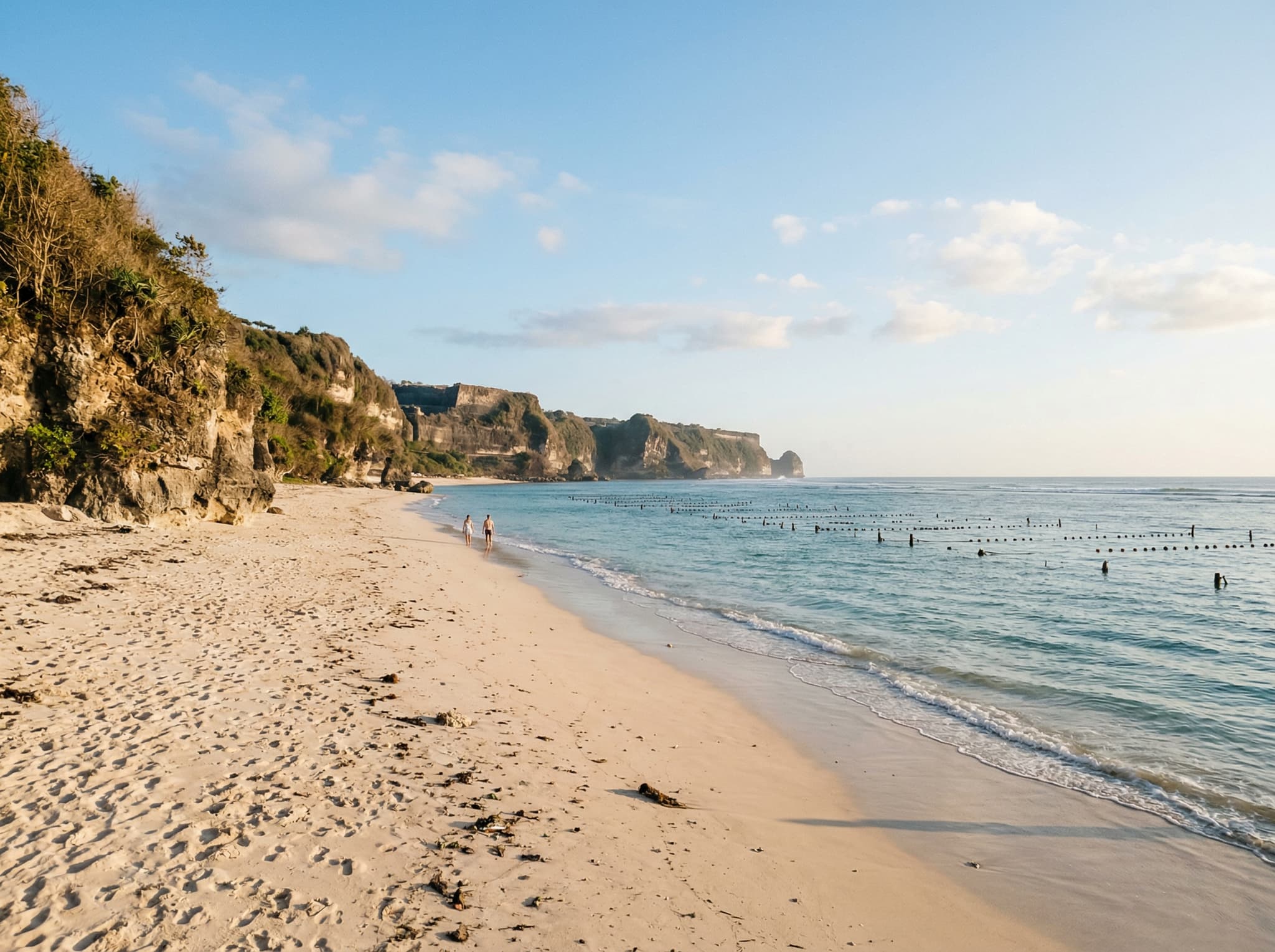
At the bottom, the cliffs open to a long crescent of pale sand and water that stays shallow and calm well past the shore. Pandawa Beach sits on the southern edge of the Bukit Peninsula, roughly 30 minutes from Ngurah Rai Airport without traffic. It doesn't look like the Bali most visitors picture — no rice terraces, no jungle canopy. The landscape is dry limestone and open sky, closer to the Mediterranean than to the tropical postcard.
Getting to Pandawa Beach
Transport from Seminyak
Distance
~24 km by road
Drive Time
25 min (no traffic) / 1–2 hrs (heavy traffic)
Taxi Fare
IDR 210,000–260,000 (Grab, Bluebird)
Scooter Fuel
IDR 42,000–62,000
Public transport to the Bukit Peninsula is limited and unreliable. A scooter rental or ride-hail is the practical choice. Grab and Gojek handle drop-offs without issue, but pickups can require walking back toward the main entrance — local taxi drivers wait at the beach itself and will negotiate a return fare.
Search "Jalan Pantai Pandawa" on Google Maps. The route is straightforward from any direction.
What the Beach Is Actually Like

The sand stretches roughly a kilometer, wide enough that even on busy days there's space to walk away from the concentrated activity near the parking area. The water is notably calm — protected by the reef and the bay's geometry — which makes it one of the few beaches on the Bukit Peninsula where swimming feels relaxed rather than combative.
Sunbeds and umbrellas rent for around IDR 50,000, negotiable. Restrooms (IDR 2,000) and showers (IDR 5,000) are available near the main access point. Two ATMs operate on-site, though cash remains the default for everything at the beach.
Pandawa Beach Seaweed Farming

This is the detail that separates Pandawa Beach from every other stretch of sand on the peninsula. Across the shallows, particularly at the eastern end, lines of rope extend into the water in neat rows, anchored to wooden stakes. Seaweed — mostly Eucheuma cottonii — grows along these lines, tended by local farmers who wade out at low tide to check, harvest, and re-tie.
The beach operates on two registers at once. Visitors rent kayaks and spread towels on one stretch of sand while, a hundred meters away, someone is pulling seaweed from the water and laying it on tarps to dry. The farming predates the tourism. It's the reason the beach was developed in the first place — the road was carved through the cliffs to give the farming community access.
At low tide, the drying racks are visible along the sand. The seaweed has a faint briny smell that carries in the wind. It's not scenic in the way tourism boards prefer, but it gives Pandawa Beach something most Bali beaches have lost: a function beyond being looked at.
Pandawa Beach Surf Conditions

The reef break at Pandawa produces clean, powerful left-handers — a swell magnet that handles everything from small to overhead waves. This is an intermediate-to-advanced spot. The exposed reef and the power of the break make it unsuitable for beginners. Waves regularly reach 2.5–3.5 meters, with westerly winds that can sustain 30 km/h and gust higher.
Where to Eat at Pandawa Beach
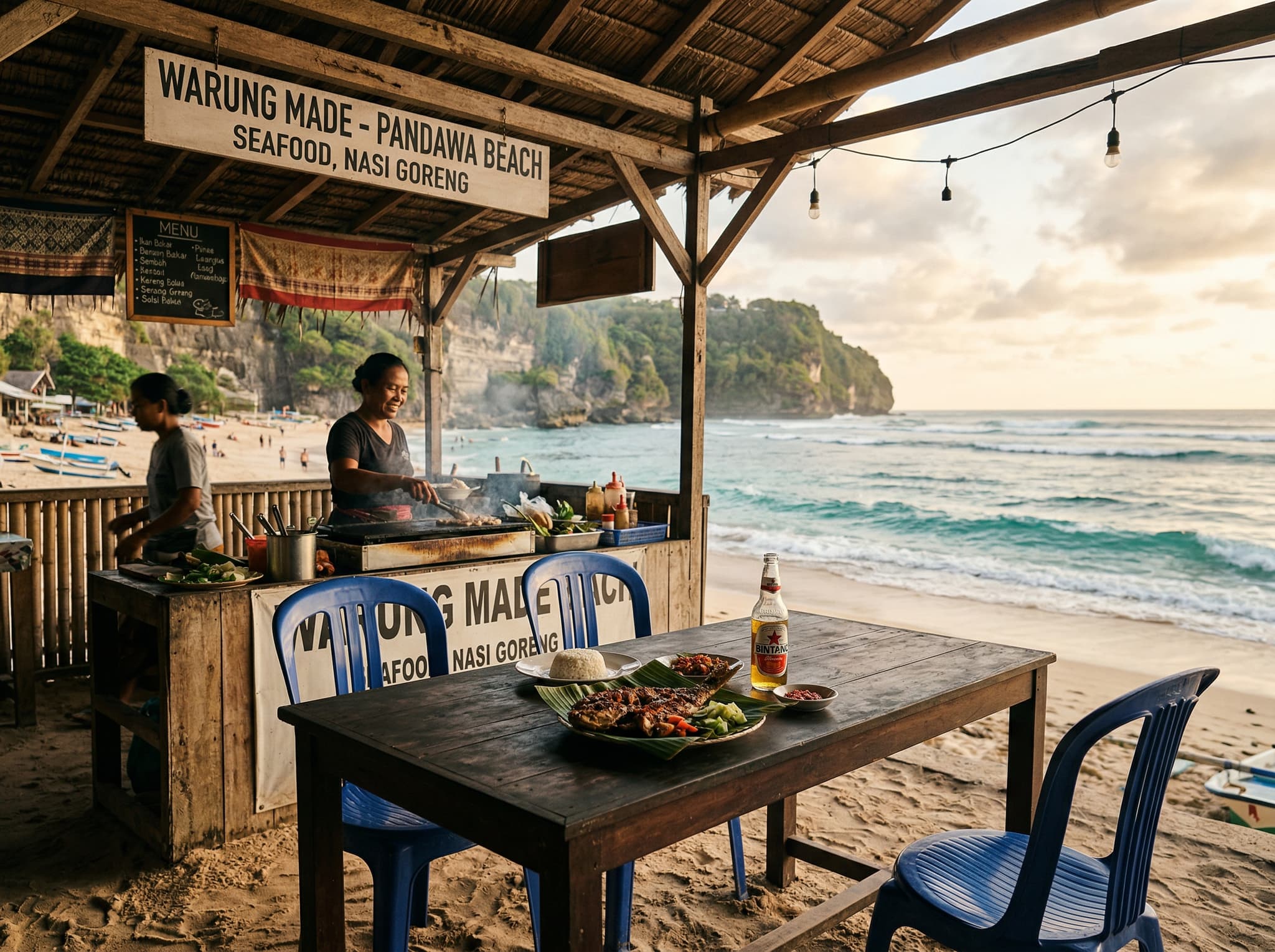
Several warungs line the beachfront, though names and operators shift with the seasons. Oka Warung Pandawa has been a consistent presence for local Indonesian dishes — nasi goreng, grilled fish, fresh coconut. Iga Pandawa offers a mix of local and Western menus. Expect to pay IDR 30,000–70,000 for a meal. Cash is preferred everywhere.
The Honest Version
Pandawa Beach draws tour buses. It appears on Instagram. The cliff-carved entrance is dramatic enough to guarantee that. By midday, the central stretch near the parking area fills with day-trippers, and the sunbed vendors compete for attention.
But the beach is long, and the crowds thin quickly in either direction. Walk east toward the seaweed lines and the atmosphere shifts entirely. The water stays calm. The limestone cliffs hold their shape against the sky. What makes Pandawa Beach worth the visit isn't the entrance — it's what you find once you move past the obvious part.