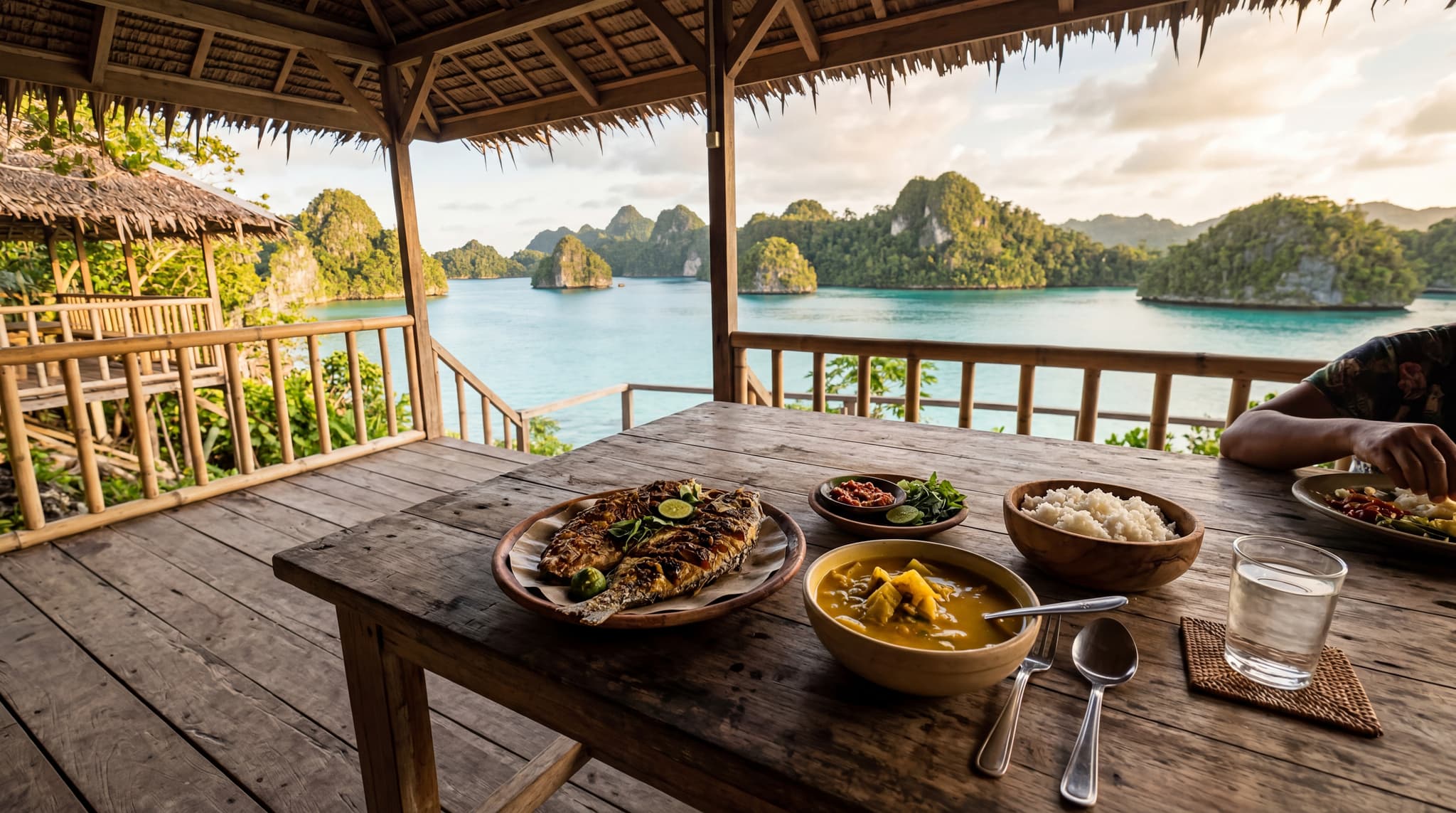
I've eaten in Bali on and off for nearly a decade, and the thing that still catches me is the gap between what visitors think the food is and what the food actually is. Most people arrive expecting nasi goreng and smoothie bowls. What they find — if they look — is one of the most distinctive regional cuisines in Southeast Asia, shaped by Hindu traditions in a Muslim-majority country, by volcanic soil that grows extraordinary produce, and by a spice vocabulary that predates tourism by centuries.
This guide is organized by how the island actually eats: the language first, then the dishes, then where to find them — from roadside warungs to tasting menus.
The Food Vocabulary You Need Before You Eat
A few words will unlock most menus in Bali. You don't need fluent Bahasa Indonesia. You need these:
- Nasi — rice. The foundation of almost everything.
- Mie — noodles.
- Warung — a local eatery, from a roadside table to a proper sit-down restaurant.
- Lawar — finely chopped meat, vegetables, and grated coconut mixed with spices.
- Sambal — chili condiment. Every warung makes its own.
- Jajan — snacks and sweets, usually found at morning markets.
- Babi — pork. This matters: Bali is Hindu, and pork dishes here are central to the cuisine in ways you won't find elsewhere in Indonesia.
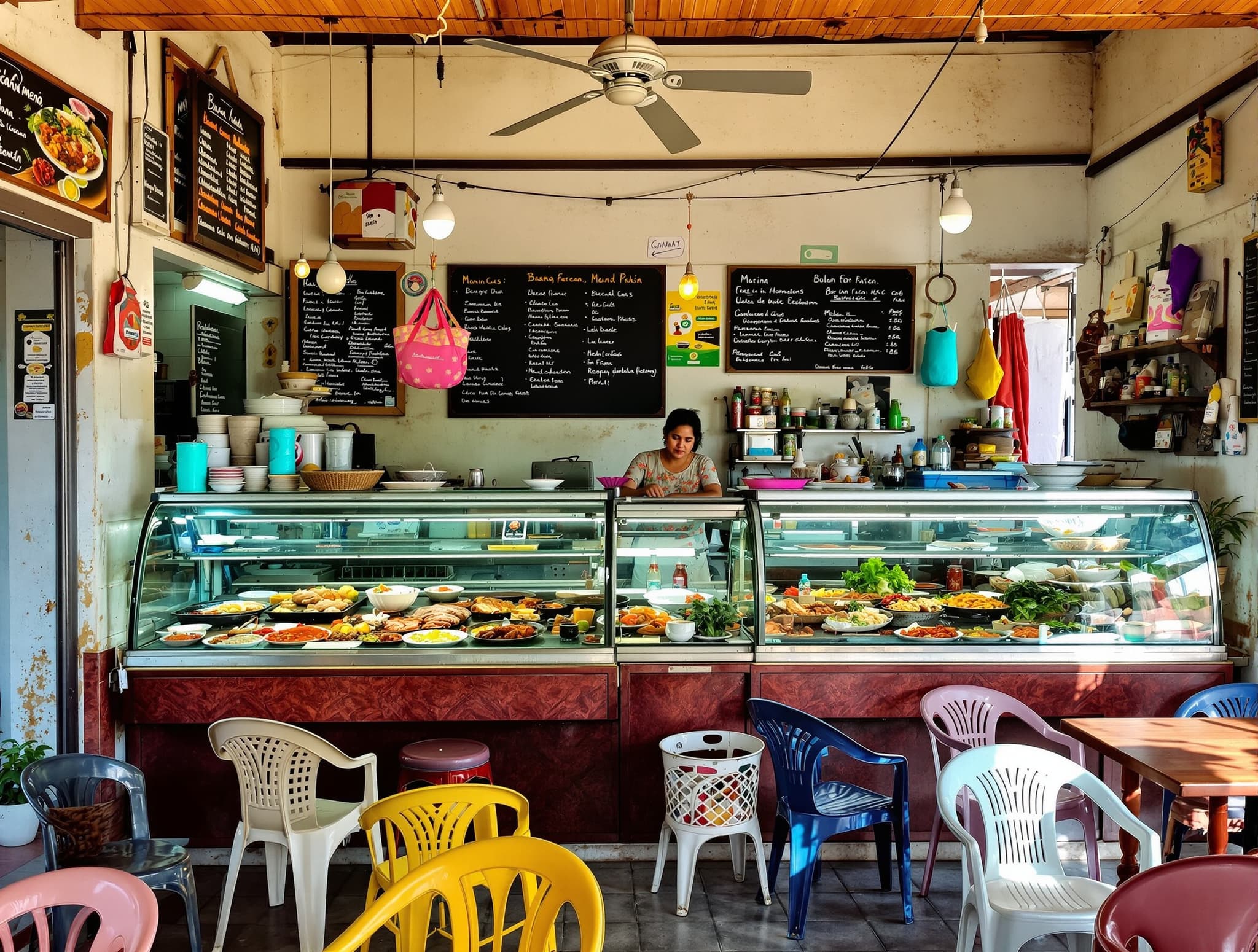
At a typical warung, you'll encounter two systems. The first is the glass-case model: a display of prepared dishes — meats, vegetables, sambals, eggs — and you point at what you want. It arrives on a plate with rice. The second is a printed or handwritten menu, sometimes in Indonesian only. Both are normal. Neither requires language skills beyond pointing and smiling.
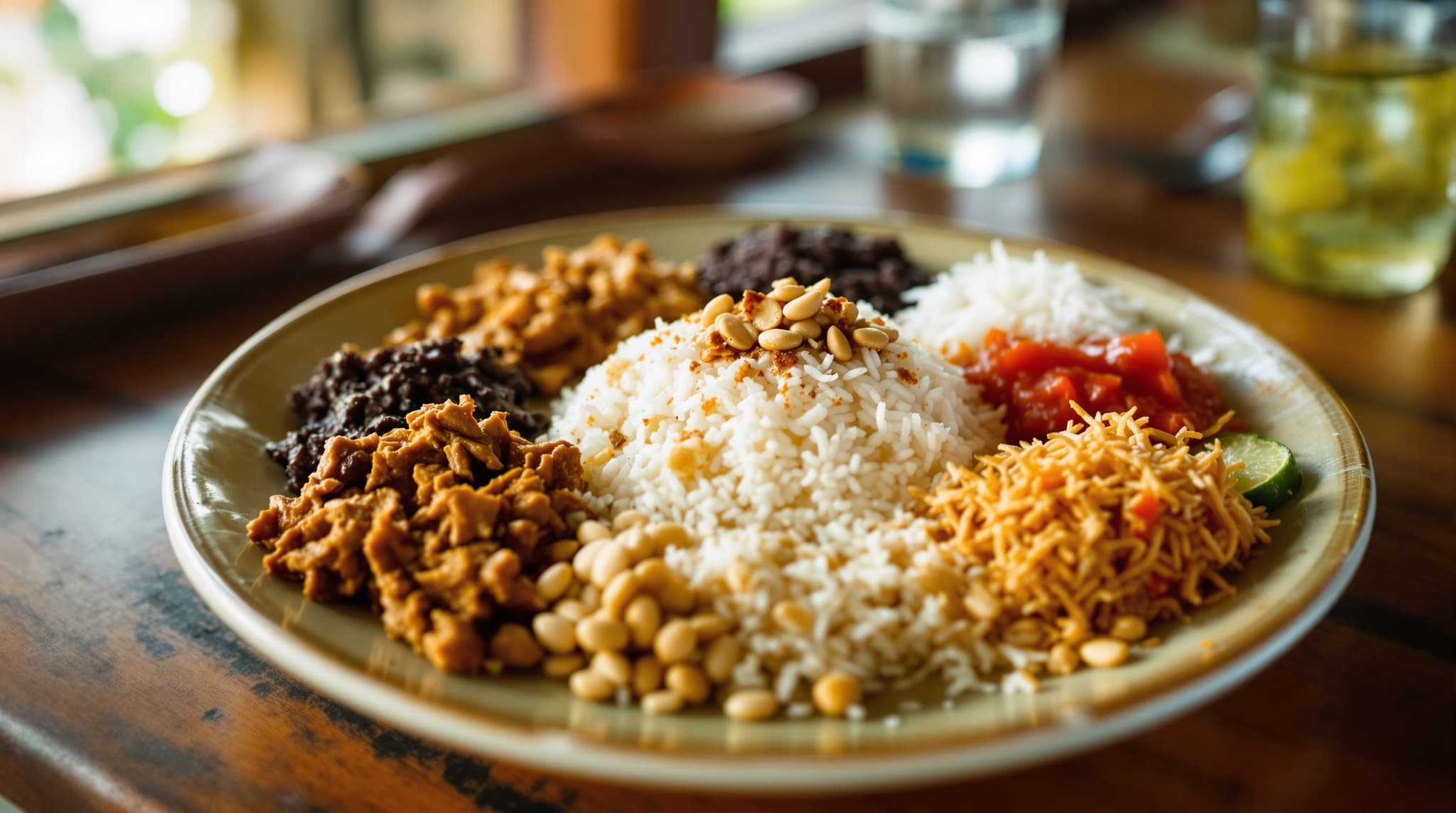
The meal you'll eat most often is nasi campur — rice with small portions of several dishes arranged on a single plate. This is how most Balinese eat most of the time. It's not a specific recipe; it's a format. Once you understand nasi campur, the whole food scene opens up.
One thing worth knowing: Balinese cooking uses its own spice pastes — base genep (a complex blend of up to a dozen spices) and base rajang (a simpler aromatic paste) — that are distinct from Javanese or Sumatran traditions. The food here isn't just "Indonesian food". It's Balinese food, and the difference is real.
Must-Try Dishes in Bali

Signature Dishes at a Glance
Babi Guling
IDR 25,000–40,000 (warung) / IDR 54,000–88,000 (famous spots)
Nasi Campur Bali
IDR 15,000–35,000
Sate Lilit
IDR 1,000–2,500 per skewer (street) / IDR 40,000–75,000 (restaurant set)
Nasi Goreng
IDR 20,000–40,000
Bebek Betutu
IDR 50,000–85,000 (warung to restaurant)
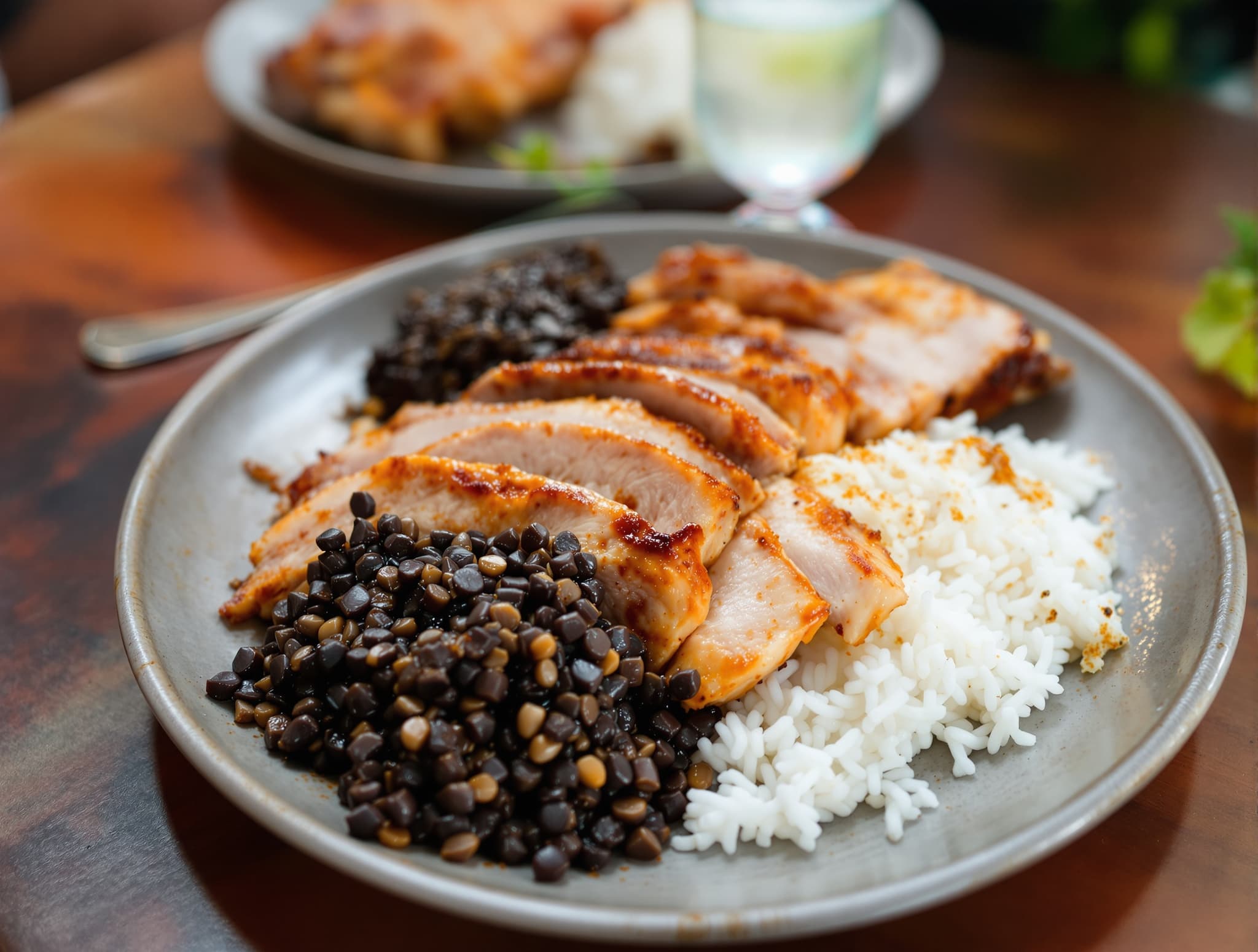
Babi guling is the dish Bali is known for. Whole suckling pig, spit-roasted over wood and coconut husks, stuffed with a paste of turmeric, coriander, lemongrass, and chili. The skin crackles. The meat is served with rice, lawar, and sometimes blood sausage (urutan). It's a Hindu Balinese dish — you won't find it at halal restaurants, and you won't find anything quite like it elsewhere in Indonesia. At a standard warung, a plate runs IDR 25,000–40,000. At famous spots like Warung Babi Guling Ibu Oka in Ubud, expect IDR 54,000–88,000 and a queue.
Nasi campur Bali is the everyday meal. Rice with small portions of whatever the warung has that day — shredded chicken, long beans, sambal, peanuts, a slice of egg, grated coconut. IDR 15,000–35,000. No two plates are the same, and that's the point. The best nasi campur tells you exactly what that warung cares about.
Bebek betutu is the slow one. Duck wrapped in banana leaves, packed in spice paste, and cooked for hours — sometimes buried in rice husks over embers. It's a ceremonial dish that's become a restaurant staple. Rich, deeply spiced, falling apart. When it's done right, it's one of the best things you'll eat in Southeast Asia.
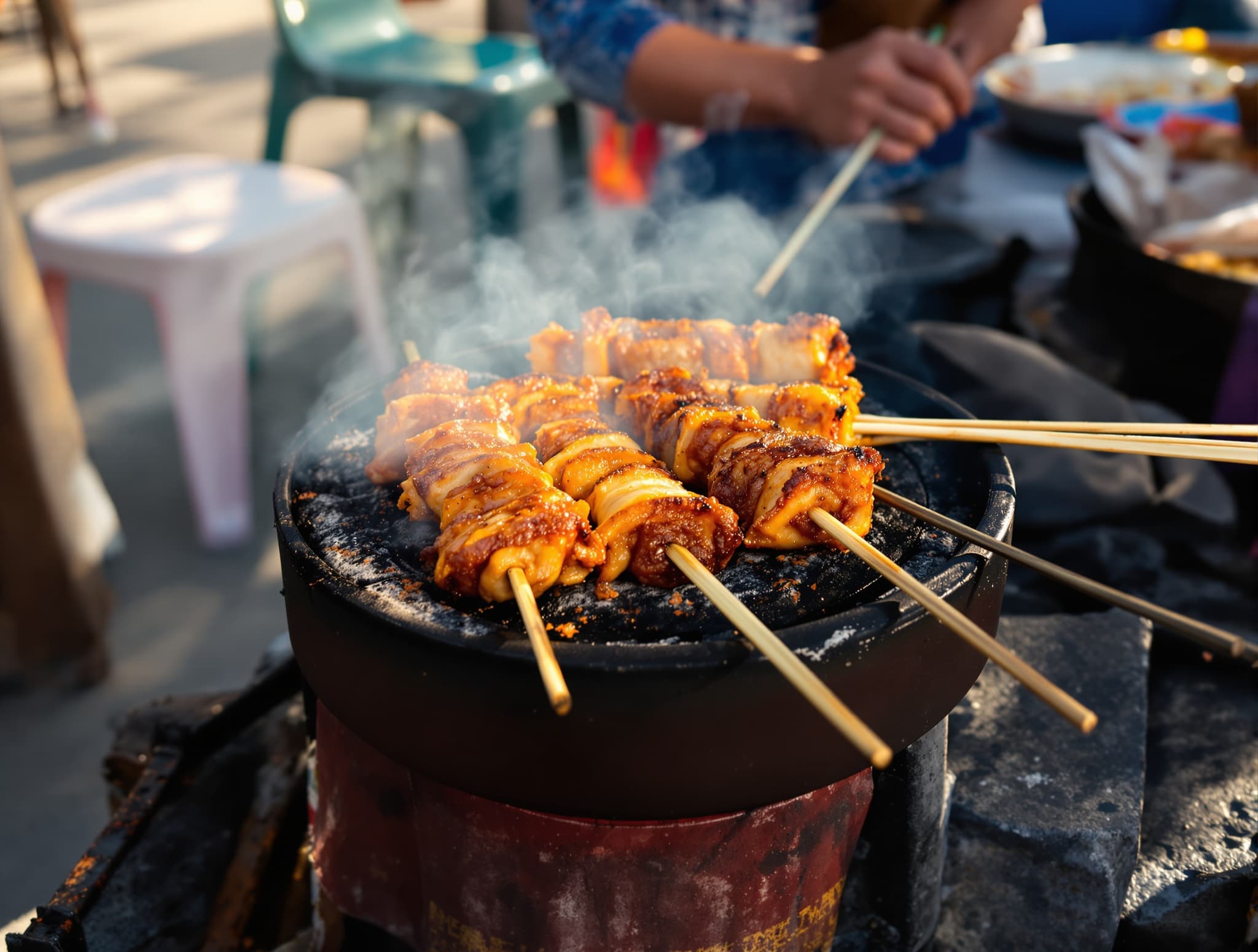
Sate lilit is Bali's version of satay, and it's different from what you'll find in Jakarta or Kuala Lumpur. Minced meat — often fish, pork, or chicken — is mixed with coconut, lime leaves, and spice paste, then wrapped around lemongrass sticks and grilled. The lemongrass infuses the meat as it cooks. IDR 1,000–2,500 per skewer from street vendors; IDR 40,000–75,000 for a restaurant set with rice and sides.
Lawar is the dish that tells you the most about Balinese food culture. Finely chopped meat, vegetables, grated coconut, and spices — sometimes mixed with fresh blood (lawar merah). It's a ceremonial dish, often prepared for temple offerings, but available at warungs daily. The blood version is harder to find and not for everyone, but the standard lawar is essential.
Nasi goreng and mie goreng aren't uniquely Balinese, but they're everywhere — fried rice and fried noodles, IDR 20,000–40,000. They're the baseline meal when you're hungry and not sure what to order. Every warung makes them. Some make them extraordinarily well.
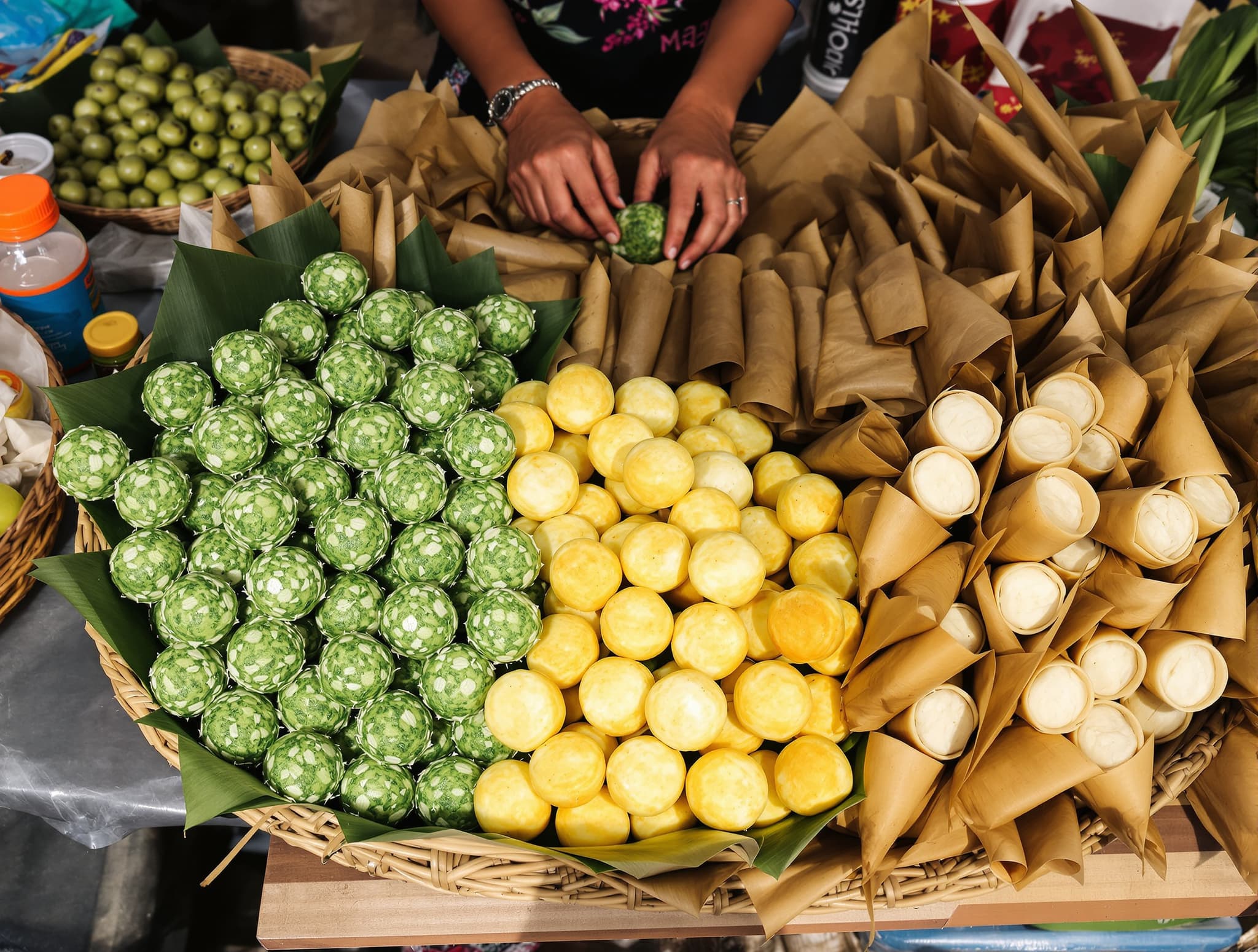
For sweets, look for jajan Bali at morning markets: klepon (pandan-scented rice balls filled with liquid palm sugar that bursts when you bite in), dadar gulung (green coconut crepes), and various rice-flour cakes wrapped in banana leaves. They cost almost nothing and they're best before 9 AM.
Warungs vs. Restaurants — Understanding the Gap
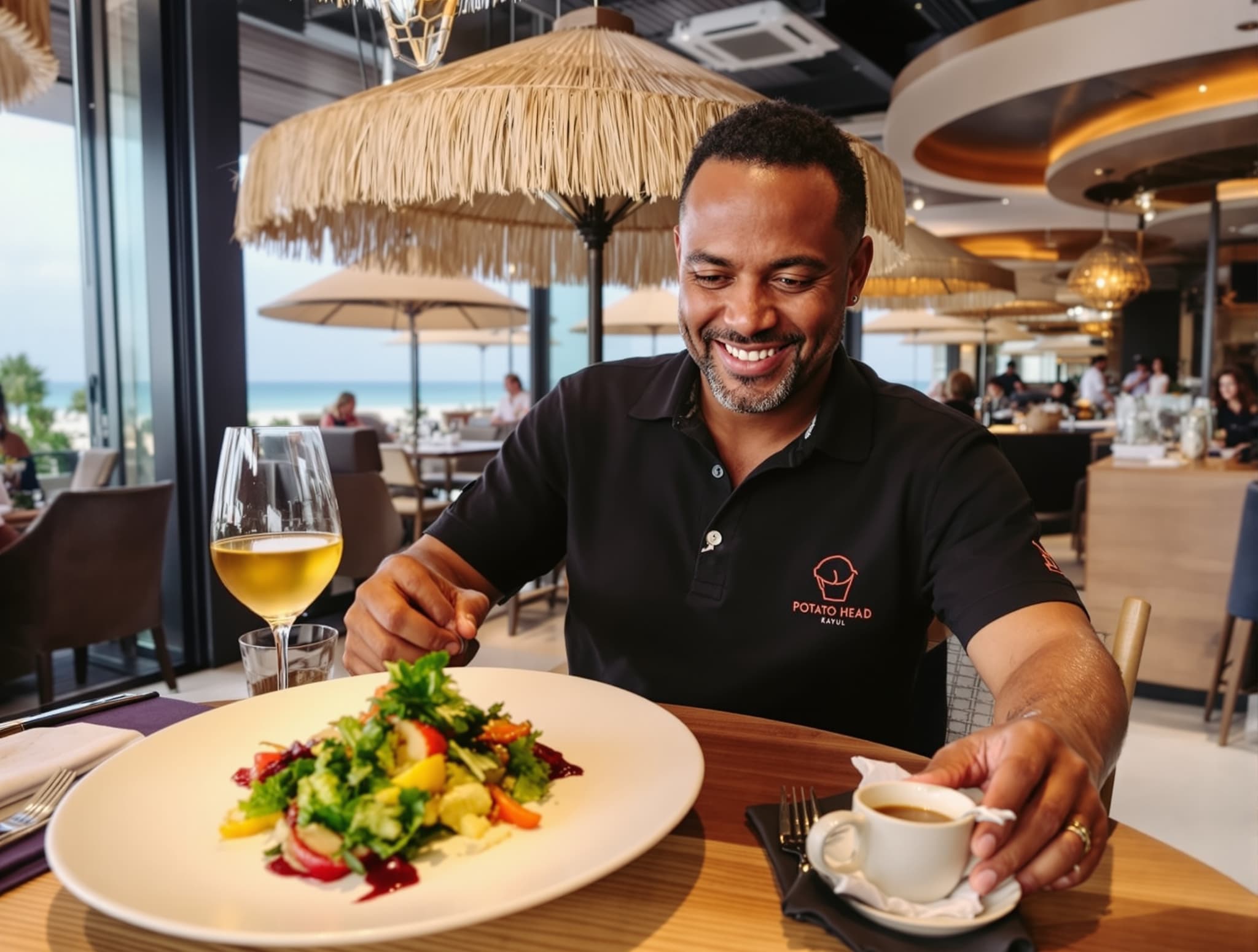
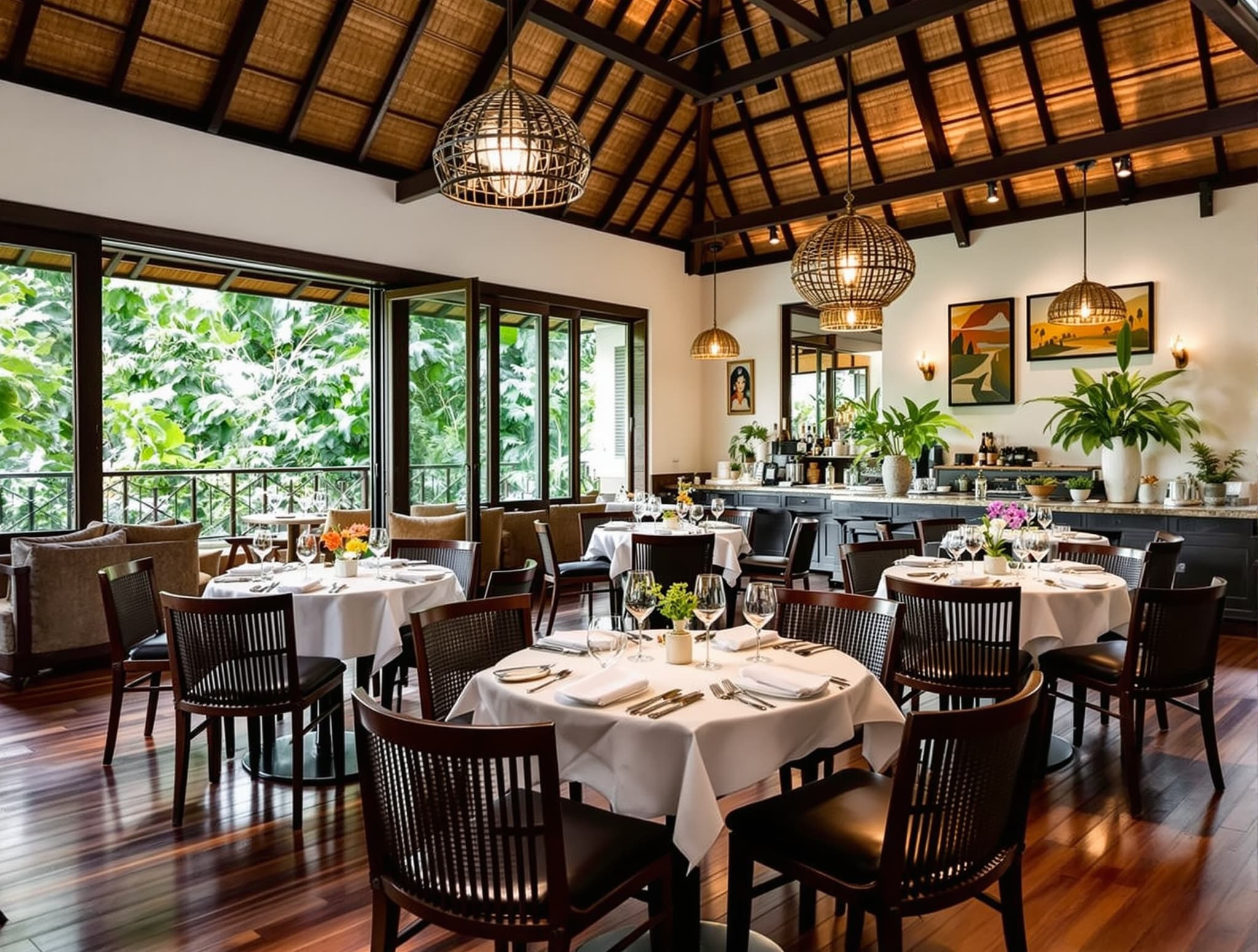
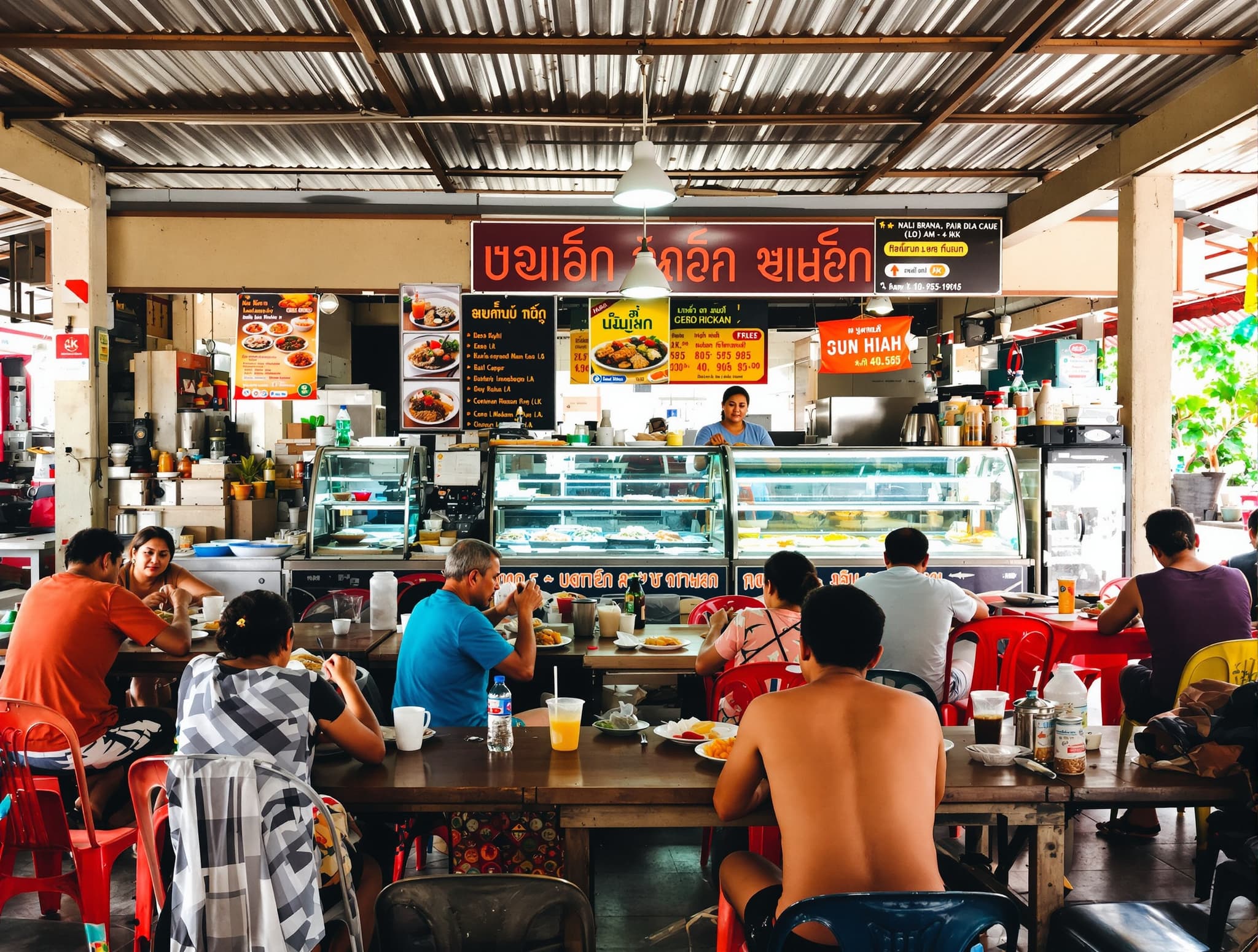
The word warung covers everything from a plastic table under a tarp to a proper sit-down restaurant with a menu and ceiling fans. Some warungs have Instagram accounts. Some have no sign at all. The word describes an ethos more than a format — it means a place where locals eat, at prices locals can afford.
The price gap between warungs and tourist-facing restaurants is the most important thing to understand about eating in Bali. A full warung meal — rice, protein, vegetables, sambal, a drink — runs IDR 25,000–60,000. The same quality of food in a tourist-facing restaurant costs three to five times that. This isn't always a scam. Rent in Seminyak is expensive. Air conditioning costs money. Presentation takes labor. But the food at the warung is often better, because the warung has been making the same dishes for decades and the tourist restaurant opened last year.
The tourist menu problem is real. Many restaurants in tourist zones serve a sanitized version of Balinese food — the spice levels lowered, the unfamiliar ingredients removed, the portions sized for Instagram. Not bad, necessarily, but not the real thing. If the menu is in English only and lists no Balinese dishes beyond nasi goreng, you're eating for tourists.
Daily Food Budget Comparison
Warung meals (3x) + snacks
IDR 150,000–250,000 (~$9–15 USD)
Tourist restaurants (3x)
$30–50+ USD
Mixed (warung lunch, restaurant dinner)
$15–30 USD
Where to Eat by Area
Ubud
Ubud has the most interesting food scene on the island. Traditional warungs serving babi guling and nasi campur sit within walking distance of serious fine dining. This is where Bali's food identity is most visible — the old and the new coexist without pretending to be the same thing.
Warung Babi Guling Ibu Oka is the famous one. Anthony Bourdain put it on the map, and the queue hasn't shortened since. Expect IDR 54,000–88,000 for a plate of babi guling with all the sides. It's good — the skin is genuinely extraordinary — but it's not the only babi guling in Ubud, and some of the unnamed warungs on side streets do it just as well for half the price.
Pasar Ubud (Ubud Morning Market) is worth an early visit. Arrive before 8 AM for the local food section — jajan, fresh fruit, spice pastes, ceremonial offerings stacked on banana-leaf trays. After 8 AM, the market shifts to tourist souvenirs and the food vendors start packing up. The morning market is where you see the intersection of food, religion, and daily life that defines Balinese culture.
Ubud also has the island's strongest cooking class scene — more on that below.
Seminyak
Seminyak is more polished, more international. This is where Bali's global dining ambitions live.
Babaganoush on Jl. Petitenget does Mediterranean-Middle Eastern food — mezze platters, hummus, fresh produce — in a setting that feels a long way from a warung. Buzo, Will Meyrick's Italian-Japanese izakaya on Jl. Kayu Aya, uses local farmers' produce in a space that evokes Tokyo's back-alley drinking spots. Kaum at Potato Head serves fine Balinese food — traditional recipes treated with real precision — with beachside seating.
Canggu
The cafe-and-brunch capital, yes. Specialty coffee, smoothie bowls, the digital nomad breakfast economy. But Canggu's food scene has grown past that.
Meimei (Gold, Bali's Best Awards 2025) does late-night Southeast Asian barbecue with real ambition — local flavors, serious technique. Sazón in Batu Bolong, from chefs Andrew Walsh and Javier Vicente, serves Spanish tapas with parrilla-grilled meats in a sleek space with an open kitchen. Canggu has the widest range from cheap to expensive within a small area — you can eat a IDR 20,000 nasi goreng for lunch and a $60 dinner without changing neighborhoods.
Kuta and Legian
Honestly, the weakest food area for visitors. Kuta and Legian have chain restaurants, tourist traps, generic international menus. Chain restaurants, tourist traps, generic international menus. Some decent warungs exist but you have to look harder than the food justifies. Not where you go to eat well.
Uluwatu and the Bukit Peninsula
Uluwatu has cliff-top cafes with views, an improving warung scene. Less variety, but what's there tends to be good because it serves a smaller, more local crowd alongside surfers. The isolation helps — restaurants here can't coast on foot traffic, so the ones that survive are usually worth eating at.
Sanur
Sanur is quieter, older, less hyped. Good morning food scene, solid warungs, a few cooking classes. The pace of eating here is slower, which suits the food. Sanur rewards people who aren't in a hurry.
Bali's Cafe Culture
Bali's specialty coffee scene is legitimate. The island grows its own beans — Kintamani highland arabica, cultivated on volcanic soil above 1,000 meters — and the cafe culture has attracted serious roasters and baristas from across Asia and Australia.
The Instagram cafe phenomenon is most visible in Ubud (rice-terrace-view cafes) and Canggu (designed-to-photograph interiors). Some are genuinely good. Many charge $5–8 for a coffee and exist primarily as content backdrops. The tell: if the furniture is more interesting than the menu, you're paying for the photo.
The digital nomad economy has reshaped Canggu and parts of Ubud. Cafes double as coworking spaces with fast wifi, good coffee, and $4–6 brunch plates. This is a real part of Bali's food culture now. You can have opinions about it, but it's not going away.
Kopi Bali — traditional Balinese coffee — is worth seeking out. Fine-ground coffee brewed directly in the cup; the grounds settle to the bottom as you drink. It's served with palm sugar, sometimes with a small jajan on the side. It costs almost nothing — IDR 5,000–10,000 at a warung — and it's the most common way Balinese people actually drink coffee.
Fine Dining in Bali
Bali has a legitimate fine dining scene — not just expensive restaurants, but chefs doing serious, original work with local ingredients.
Locavore in Ubud is the name most food-literate travelers know. Indonesian ingredients, tasting-menu format, farm-to-table philosophy that predates the trend. Book well in advance. (Reservation details and dress code change — check their official site directly rather than relying on third-party information.)
Syrco BASÈ, north of Ubud, opened in early 2024 under two-Michelin-starred chef Syrco Bakker. Seasonal menus, intimate setting, ingredient-driven in a way that feels personal rather than performative. It topped 2025 fine dining lists for the Ubud area and represents where the scene is heading — smaller, more focused, less interested in spectacle.
Kaum at Potato Head in Seminyak takes traditional Balinese recipes and treats them with fine-dining precision. It's the best argument on the island that Balinese food itself — not fusion, not reinterpretation — belongs at the top of the dining hierarchy.
The broader picture: Bali draws culinary talent from across Asia and Europe. Sazón's chefs came from Singapore and Spain. Will Meyrick built Buzo after years in Bangkok. They come because the produce is extraordinary — volcanic soil, tropical climate, ocean on every side — and because the audience is international enough to support ambitious cooking.
Fine Dining Price Reality
Tasting menu (Locavore, Syrco BASÈ)
$80–150+ per person
Kaum dinner
$50–80 per person
Upscale casual (Sazón, Buzo)
$40–70 per person
These prices are a different Bali from the warung Bali. Both are real. The island holds both without contradiction.
Food Markets and Street Food Worth Seeking Out
Pasar Ubud in the early morning is the market experience most worth having. Before 8 AM, the ground floor is local food: jajan arranged on banana leaves, pyramids of tropical fruit, bags of freshly ground spice paste, ceremonial offerings being assembled. It's not a tourist attraction at that hour. It's a working market.
Night markets (pasar malam) rotate locations, often appearing near temple ceremonies. This is where Balinese families eat out — satay over charcoal, nasi campur assembled to order, grilled corn brushed with sweet soy, martabak (stuffed pancakes, sweet or savory). Finding one requires asking locals or your accommodation; they don't have websites.
Street foods to look for:
- Martabak manis — sweet stuffed pancake with chocolate, peanuts, and condensed milk. Sounds excessive. Is excessive. Worth it.
- Pisang goreng — fried banana fritters, crispy batter, often served with palm sugar.
- Bakso — meatball soup from pushcarts. A Javanese import that's become universal.
- Grilled corn — brushed with sweet soy and chili, charred over coals.
Bali Belly — How to Eat Safely Without Missing Out
Bali belly — traveler's diarrhea, primarily caused by bacteria like E. coli — is common. Bali's tropical climate makes food hygiene a persistent challenge. Pretending this isn't an issue doesn't help anyone eat better.
The actionable rules:
-
Water: Tap water is not safe to drink. Use bottled or boiled water. Ice at established restaurants and cafes is generally factory-produced (tubular or cylindrical shape) and safe. Ice from unknown sources is a risk.
-
Eat freshly cooked, high-heat food. Grilling, stir-frying, deep-frying, and wok cooking kill bacteria. If the food is hot and just came off the flame, the risk is low.
-
Avoid the high-risk list: pre-cooked buffet dishes sitting out, uncovered food exposed to flies, raw or undercooked seafood from beach shacks, unpasteurized dairy, fresh juices made with tap water, communal sambal bowls left out all day, delivery food that's been sitting in humidity.
-
Choose warungs wisely. Crowded with locals means high turnover means fresher food. Look for organized workspaces, absence of flies, separate handling of money and food. These indicators matter more than how the place looks.
-
If it happens: Stay hydrated — electrolyte sachets are available at any pharmacy (apotek). Eat plain rice. Rest. If symptoms persist beyond 48 hours or include fever or blood, see a clinic. Unicare is one option with locations across southern Bali. Travel insurance that covers medical visits is worth having.
The honest take: most travelers who eat adventurously in Bali will have at least one uncomfortable day. That's not a reason to avoid warungs and street food. It's a reason to choose them with intention — busy, clean, freshly cooked.
Cooking Classes — Learning to Make It Yourself
Ubud is the cooking class capital. Dozens of operators, ranging from $29 to $111 per person, running two to seven hours depending on format and inclusions.
Cooking Class Options
Pemulan Bali Farm Class
From $38 / 5 hours / includes farm visit
Cookly Ubud Market Class
$51 / 4–5 hours / market tour included
Full-day 9-dish class (Cookly)
$111 / full day / market + rice paddies
Art Cafe Bumbu Bali
$85++ / Tuesdays only
Sanur classes
~$40 per person / minimum 2 people
Morning classes starting between 8 and 9:30 AM typically include a market visit — worth choosing for the market access alone, even if you're not deeply invested in learning to cook. You'll walk through Ubud's morning market with someone who can explain what everything is, which is more valuable than any guidebook paragraph.
Most classes offer vegetarian options on request. Transport from Ubud is usually included; pickup outside Ubud may cost extra. Book at least a few days ahead in high season — Pemulan Bali Farm in particular is noted for selling out.
Afternoon classes skip the market but focus more on cooking technique. Choose based on what you actually want: cultural immersion (morning) or kitchen skills (afternoon).
Bali's food scene holds more range than most visitors expect. A IDR 20,000 plate of nasi campur at a roadside warung and a $120 tasting menu at Syrco BASÈ exist on the same island, sometimes on the same road. Neither is more "authentic" than the other. The warung has been there longer. The fine dining restaurant is using the same ingredients with different ambitions. The best way to eat in Bali is to move between them without ranking one above the other — to eat the babi guling at 10 AM and the tasting menu at 8 PM and understand that both of them are telling you something true about this place.