Every "where to stay in Bali" article you've read says the same thing: Seminyak is "vibrant," Ubud is "spiritual," Canggu is "trendy." Then it leaves you to figure out what any of that actually means for your trip, your budget, and your tolerance for traffic.
This one's different. I'm going to tell you who each area is genuinely best for, who should skip it, and what you'll actually pay — in both IDR and USD, at every tier. I've spent enough time on this island to know that picking the wrong neighborhood is the single most common mistake visitors make. Bali isn't one destination. It's a collection of micro-destinations that happen to share an airport. Get the "where" right, and the trip practically plans itself.
How to Choose Where to Stay in Bali (The Decision Framework)
I spent years in management consulting before I started writing about travel, and the instinct stuck: when a decision has too many variables, you simplify it into a framework. Here's the one I use for Bali.
Four variables that matter:
- What you're there to do. Surf, eat, temple-hop, party, work remotely, decompress — each one points to a different area. (Our things to do in Bali guide covers the full list.)
- Your budget tier. Not just nightly rate, but total spend. A cheap villa in a remote area plus daily Grab rides can cost more than a mid-range hotel you can walk from.
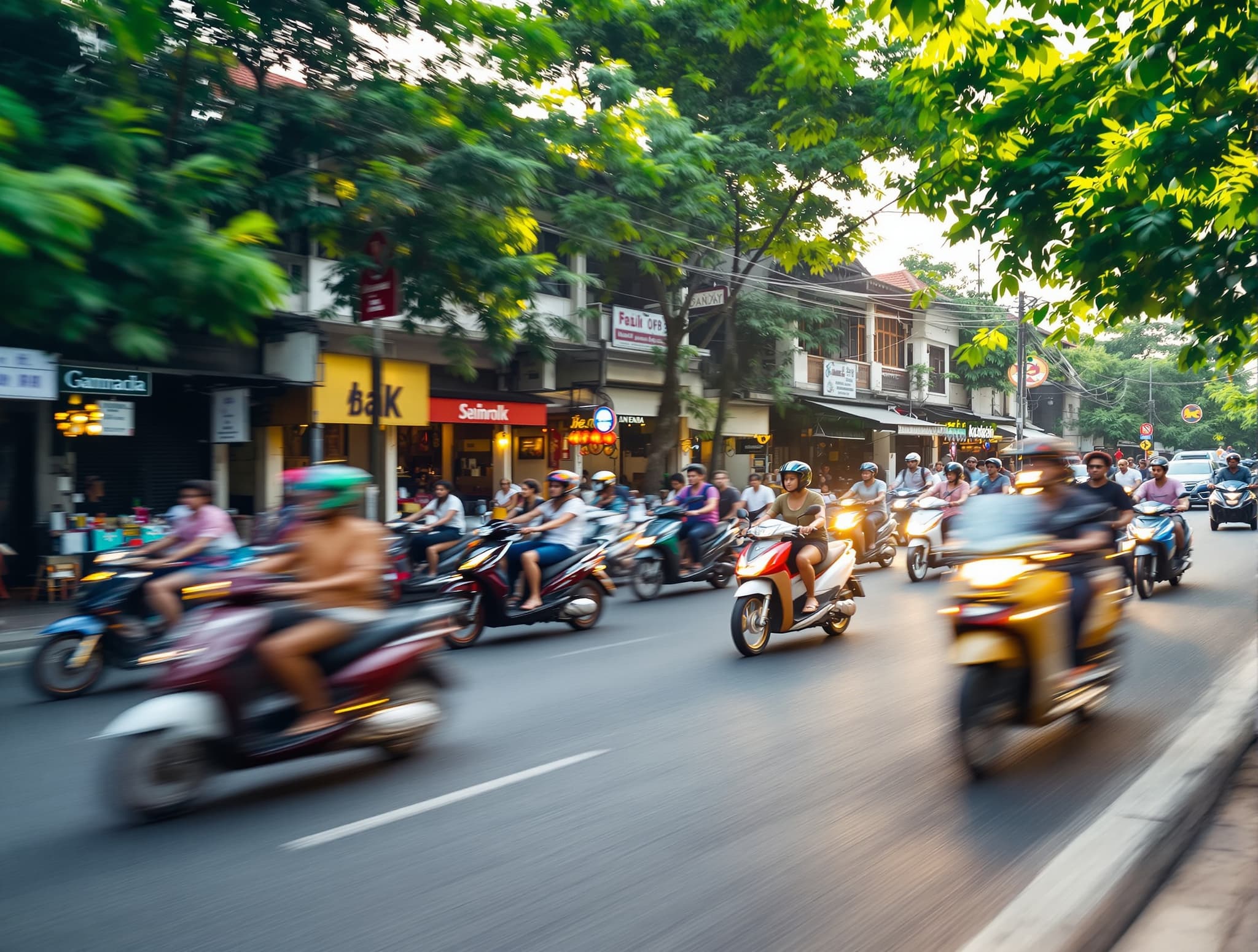
- How you feel about traffic and transport. Bali has no metro, no reliable public transit. You're on scooters, Grab, or private drivers. Distance in kilometers is meaningless here — distance in traffic minutes is everything.
- Airport proximity. This matters more than people think, especially on departure day when you're staring at a 90-minute drive to catch a flight. (See our guide to getting to Bali for airport transfer options.)
The split-stay principle: If your trip is longer than five days, don't stay in one area. Combine a coastal base (Seminyak, Canggu, or Uluwatu) with two or three nights in Ubud. You'll experience two fundamentally different versions of Bali, and the contrast is what makes the trip memorable.
Bali Tourist Levy: All international visitors pay a one-time IDR 150,000 (~$10) levy per trip, implemented February 2024. Pay it online before arrival at lovebali.baliprov.go.id to skip the airport queue — there's a small ~IDR 4,500 online surcharge. This is separate from your hotel bill. Standard hotel taxes (10–12% service + 11% VAT) may apply on top of listed room rates.
One more thing: villas. Everyone asks about them. They're typically 20–50% more expensive than comparable hotels, but the math changes if you're splitting costs with a group. A four-bedroom villa at IDR 4,000,000/night split four ways is IDR 1,000,000 per couple — often better than a mid-range hotel, with a private pool and kitchen. Solo or as a couple? Hotels are almost always the better value.
Now, the quick-scan version before we go deep.
Quick Comparison: Every Bali Area at a Glance
Area-by-Area Comparison
Seminyak
Best for: Couples, foodies, first-timers · Polished, walkable, sunset-facing · IDR 200K–2M+/night ($12–123+) · Beach: Yes · Walkable: Yes · Airport: 30–45 min · Our take: The safest first-timer bet — not the cheapest, not the most exciting, but the most complete
Canggu
Best for: Nomads, surfers, long stays · Energetic, creative, congested · IDR 200K–2M+/night ($12–123+) · Beach: Yes (not swimmable) · Walkable: Partly · Airport: 45–60 min · Our take: Where Bali's energy is — and where the traffic is too
Ubud
Best for: Culture, wellness, nature · Spiritual, lush, cooler · IDR 400K–7M+/night ($25–432+) · Beach: No · Walkable: Town center only · Airport: 75–90 min · Our take: Non-negotiable for any trip over 4 days
Uluwatu
Best for: Surfers, luxury seekers · Dramatic, spread-out, cliffside · IDR 1.5M–6M+/night ($93–370+) · Beach: Yes (staircase access) · Walkable: No · Airport: 40–60 min · Our take: Best views on the island, worst logistics
Nusa Dua
Best for: Families, resort lovers · Calm, manicured, gated · IDR 1.2M–13.5M+/night ($74–833+) · Beach: Yes (swimmable) · Walkable: Within resort complex · Airport: 20–30 min · Our take: The anti-Bali Bali — and some families love it for exactly that
Sanur
Best for: Repeat visitors, older travelers · Quiet, local, flat · IDR 300K–2.5M+/night ($19–155+) · Beach: Yes (swimmable) · Walkable: Yes · Airport: 25–35 min · Our take: The most underrated area on the island
Jimbaran
Best for: Start/end of trip, seafood lovers · Peaceful, beachy, convenient · IDR 500K–5M+/night ($31–309+) · Beach: Yes (swimmable) · Walkable: Partly · Airport: 10–20 min · Our take: Excellent for a night or two, not a full-trip base
Kuta
Best for: Ultra-budget, airport proximity · Chaotic, cheap, dated · IDR 200K+/night ($12+) · Beach: Yes · Walkable: Yes · Airport: 10–15 min · Our take: Skip it unless your flight leaves at 5 AM and you need a $12 bed
Budget tiers in USD: under $75/night is budget, $75–185 is mid-range, $185+ is luxury. These are island-wide benchmarks — some areas skew heavily toward one end. Nusa Dua, for instance, barely has a budget tier. Kuta barely has a luxury one.
Seminyak — Best for Couples, Foodies, and First-Timers Who Want Polish
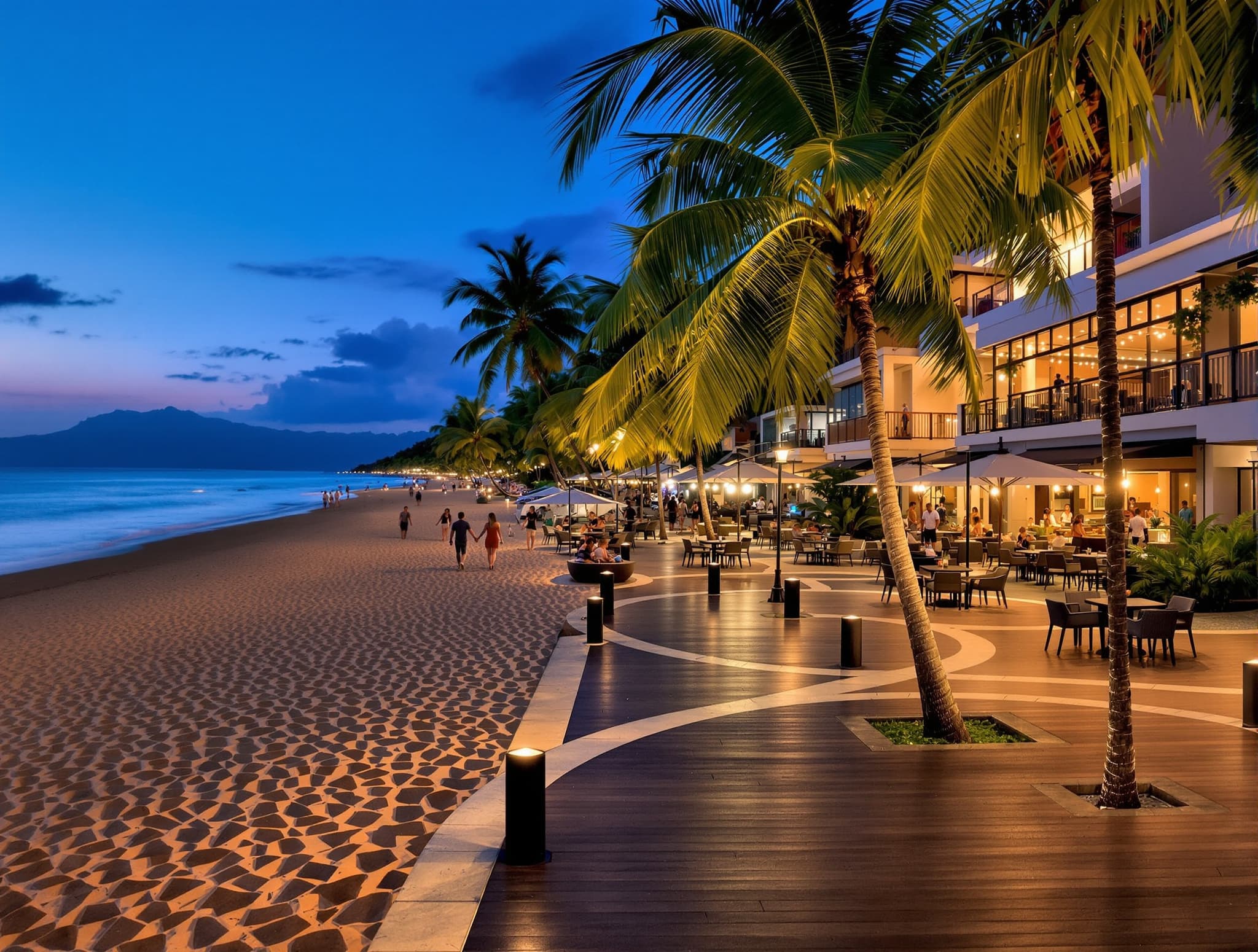
Here's my honest take: Seminyak is the most complete package for a first Bali trip. Not the most exciting area, not the cheapest, and not the one I'd personally choose for a month-long stay. But if you're coming for 5–10 days and want good restaurants within walking distance, reliable sunsets, and a beach you can actually get to without a scooter, Seminyak is the answer that won't let you down.
The real strength isn't the beach clubs — it's the dining scene. Within a 15-minute walk of most Seminyak hotels, you'll find Indonesian food that ranges from IDR 50,000 ($3) warung meals to IDR 500,000 ($31) tasting menus, plus excellent Italian, Japanese, and Mexican. That density of quality food in a walkable radius doesn't exist anywhere else on the island.
Seminyak Price Tiers
Budget
IDR 200,000–400,000/night ($12–25) — guesthouses, basic rooms
Mid-Range
IDR 700,000–1,500,000/night ($43–93) — boutique hotels with pools
Luxury
IDR 2,000,000+/night ($123+) — villas and design hotels
Luxury Benchmark
Desa Potato Head: suites from IDR 4,800,000/night (~$296)
The honest downside: Beaches get crowded during peak hours (10 AM–4 PM in high season), the area is more commercial than authentic, and prices run 20–30% higher than Canggu for comparable accommodation. If you're on a tight budget, Seminyak will eat through it faster than you planned.
The move: Head to Batu Belig Beach at the northern end of Seminyak. Bigger waves, cleaner sand, more organized beach setup, and noticeably fewer crowds than the main Seminyak stretch. It's a 10-minute walk that makes a real difference.
Skip it if: You're a budget traveler, a digital nomad looking for a monthly base, or someone who finds polished tourist infrastructure more annoying than convenient.
Canggu
— Best for Digital Nomads, Surfers, and Long Stays
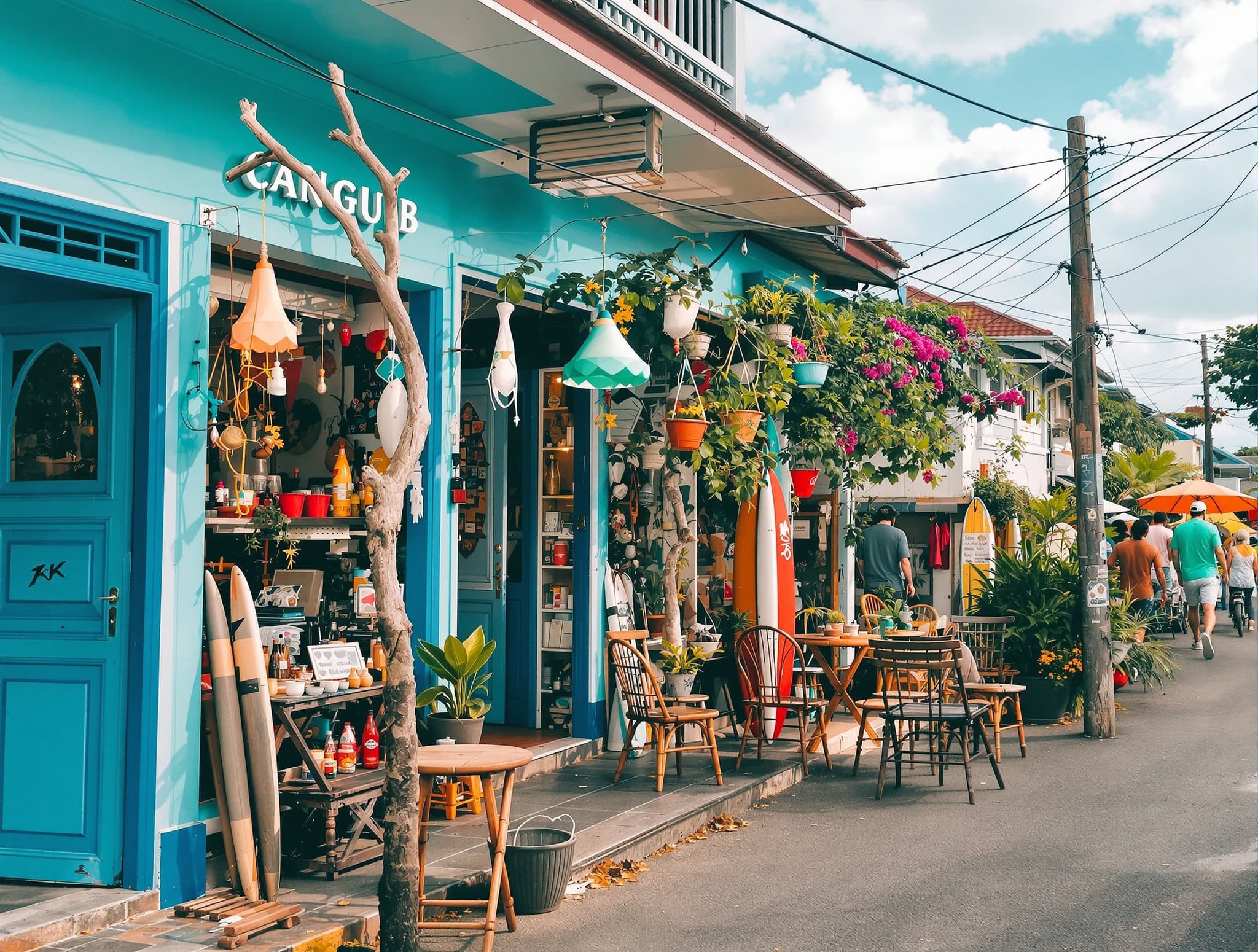
Canggu is where Bali's energy is right now — and that's both the appeal and the problem.
The digital nomad ecosystem here is genuinely unmatched in Southeast Asia. Coworking spaces with fast wifi, cafés designed for laptop work, yoga studios, organic food, surf breaks you can walk to between calls. If you're working remotely and want a base for a month or more, Canggu is the default answer for a reason. Monthly villa rentals still run 20–30% cheaper than equivalent options in Seminyak, and the two areas are only 7–10 km apart — easy day trips between them.
Canggu Price Tiers
Budget
IDR 200,000–400,000/night ($12–25) — hostels and guesthouses
Mid-Range
IDR 700,000–1,500,000/night ($43–93) — boutique hotels, surf lodges
Luxury/Villas
IDR 2,000,000+/night ($123+) — private villas, new resorts
Mid-Range Benchmark
Shore Amora: from IDR 1,500,000/night (~$93)
The honest downside: Traffic around Batu Bolong is genuinely bad — the kind of bad where a 2 km trip takes 25 minutes on a scooter. The beach is great for surfing but not for swimming. And the "authentic Bali" ship sailed from central Canggu years ago. What you get now is a well-developed, sometimes congested, increasingly expensive hub that happens to have rice paddies in the background.
The new hotel wave confirms the shift. The Regent Bali Canggu opened in winter 2025 with 150 suites and villas, nine pools, and five dining concepts — this isn't backpacker territory anymore. The Holiday Inn Resort opened on Batu Bolong beach in December 2023, adding family-friendly resort infrastructure to what was once a surfer village. Canggu is growing up, and the prices are following.
The recommendation most guides miss: Tumbakbayuh. About 10 minutes north of central Canggu, Tumbakbayuh still has rice paddies that aren't just backdrop for brunch photos. A fraction of the crowds, noticeably cheaper accommodation, and close enough to Canggu's cafés and coworking spaces that you get the ecosystem without the congestion. If I were setting up a monthly base in Bali right now, this is where I'd look first.
Skip it if: You want a swimmable beach, you're sensitive to traffic, or you're looking for quiet evenings.
Ubud
— Best for Culture, Wellness, and Escaping the Beach Crowd
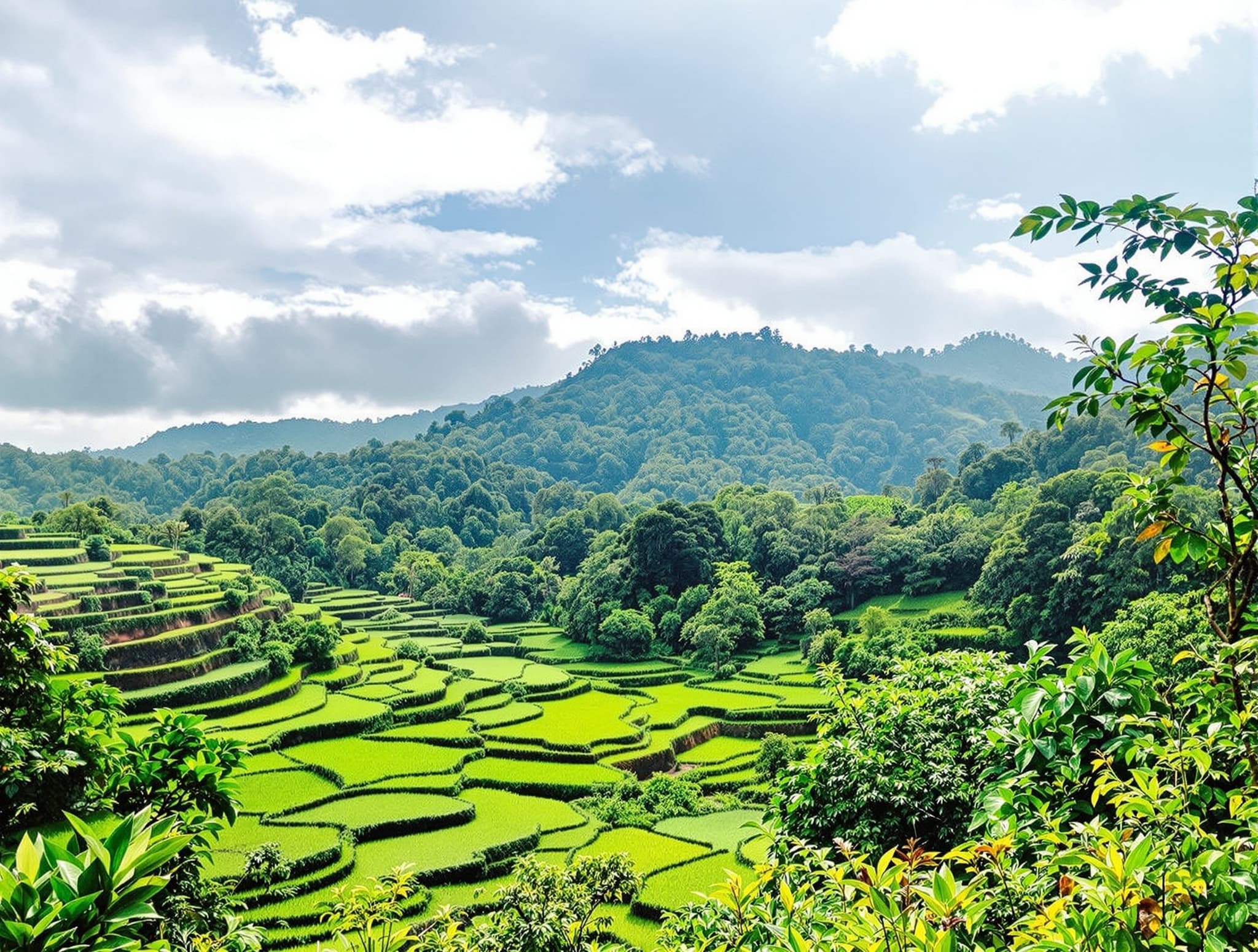
Ubud is non-negotiable. Even if you don't stay here for your whole trip, carve out at least two or three nights. It's a fundamentally different experience from coastal Bali — cooler temperatures from the higher elevation, terraced rice fields, stone temples, and the closest you'll get to traditional Balinese culture without going fully off-grid.
The wellness and yoga scene is world-class and not just Instagram fluff. There are serious retreat centers here — multi-day programs with experienced practitioners, not just drop-in classes with a smoothie bowl upsell. If that's what you came for, Ubud delivers at a level that justifies the trip on its own.
Here's what surprised me about Ubud: the value at the luxury tier. You can get a stunning jungle-view villa with a private infinity pool for what a mid-range hotel room costs in Seminyak. The price-to-experience ratio at the top end is the best on the island.
Ubud Price Tiers
Budget
IDR 400,000–810,000/night ($25–50) — guesthouses, homestays
Mid-Range
IDR 810,000–1,800,000/night ($50–111) — boutique hotels like Ari Cottages
Luxury
IDR 2,000,000–7,000,000+/night ($123–432+) — jungle villas, spa resorts
Practical Note
~90 minutes from airport depending on traffic
The honest downside: No beach. Ubud is inland, in the central highlands. If you need ocean access daily, this is your split-stay complement, not your base. Also, the town center is increasingly touristed — the real magic is 15–20 minutes outside town, in the surrounding villages and rice terraces. And that 90-minute airport drive means you don't want to schedule Ubud for your last night before an early flight.
Families with older kids do particularly well here. Cooler climate, cultural activities (silver-making workshops, cooking classes, dance performances), and far less party atmosphere than the coast. Over 100 new hotels are planned across Bali for 2025–2026, and a significant portion are wellness retreats in the Ubud area — the market is responding to real demand.
Skip it if: You need beach access every day or your trip is under four days and you can't afford the transit time.
Uluwatu — Best for Clifftop Luxury and Serious Surfers
Uluwatu has the most dramatic landscape on the island. Full stop. If you're an experienced surfer or you want to wake up in a clifftop villa watching waves break 200 feet below you, nothing else on Bali comes close.
The beach club scene here — Single Fin, Ulu Cliffhouse — rivals Seminyak but with better views and less pretension. And the hidden beaches are genuinely stunning. Padang Padang, Thomas Beach, Suluban — all accessed by steep staircases carved into the cliff face, which keeps the crowds manageable and adds a sense of discovery that the main tourist beaches lost years ago.
Uluwatu Price Tiers
Budget
Limited — expect IDR 1,500,000+/night ($93+) for anything decent
Mid-Range
IDR 1,500,000–3,000,000/night ($93–185) — surf lodges, smaller hotels
Luxury
IDR 3,000,000–6,000,000+/night ($185–370+) — clifftop villas, boutique resorts
Transport
Scooter or driver essential — hilly, spread-out, not walkable
The honest downside: Uluwatu is spread out, hilly, and you absolutely need a scooter or driver. It's not walkable. The dining scene is improving but still thin compared to Seminyak or Canggu. Budget options are genuinely scarce — this is primarily a mid-range to luxury zone. If you don't surf and you don't care about views, the trade-offs in convenience aren't worth it.
New luxury hotel development is concentrated here as part of Bali's 100+ hotel pipeline for 2025–2026, which will add more options but also push prices up.
Best for: Couples on a splurge trip, experienced surfers, anyone who prioritizes landscape over convenience. Skip it if: You're budget-conscious, you don't ride a scooter, or you want walkable nightlife and dining.
Nusa Dua — Best for Families and All-Inclusive Resort Stays
Nusa Dua is the anti-Bali Bali. If you want calm, swimmable beaches, resort pools, and zero chaos, it delivers exactly that. If you want anything resembling local culture or independent exploration, look elsewhere.
The gated resort complex means clean beaches, security, and kid-friendly infrastructure. These are genuinely the best swimming beaches on mainland Bali — calm, clear water with a gentle slope that parents of small children will appreciate. The Paradisus by Meliá Bali relaunched in April 2024 after a full renovation, repositioned as a premium all-inclusive — worth checking if that model appeals to you.
Nusa Dua Price Tiers
Budget
IDR 1,200,000–2,000,000/night ($74–123) — Nusa Dua's floor is other areas' mid-range
Mid-Range
IDR 2,000,000–4,000,000/night ($123–247) — resort hotels
Luxury
IDR 7,000,000–13,500,000+/night ($432–833+) — private villas, premium resorts
Airport
20–30 min — among the closest areas
The honest downside: It feels isolated from real Bali. Few local warungs, limited nightlife, resort pricing on food and drinks. A main course at a resort restaurant runs IDR 200,000–400,000 ($12–25) for something you could get for IDR 50,000–80,000 ($3–5) at a warung in Seminyak. You're paying for the bubble, and you should know that going in.
Skip it if: You want to experience Bali as a place, not just as a backdrop for a resort vacation.
Sanur
— Best for a Quieter, More Local Experience
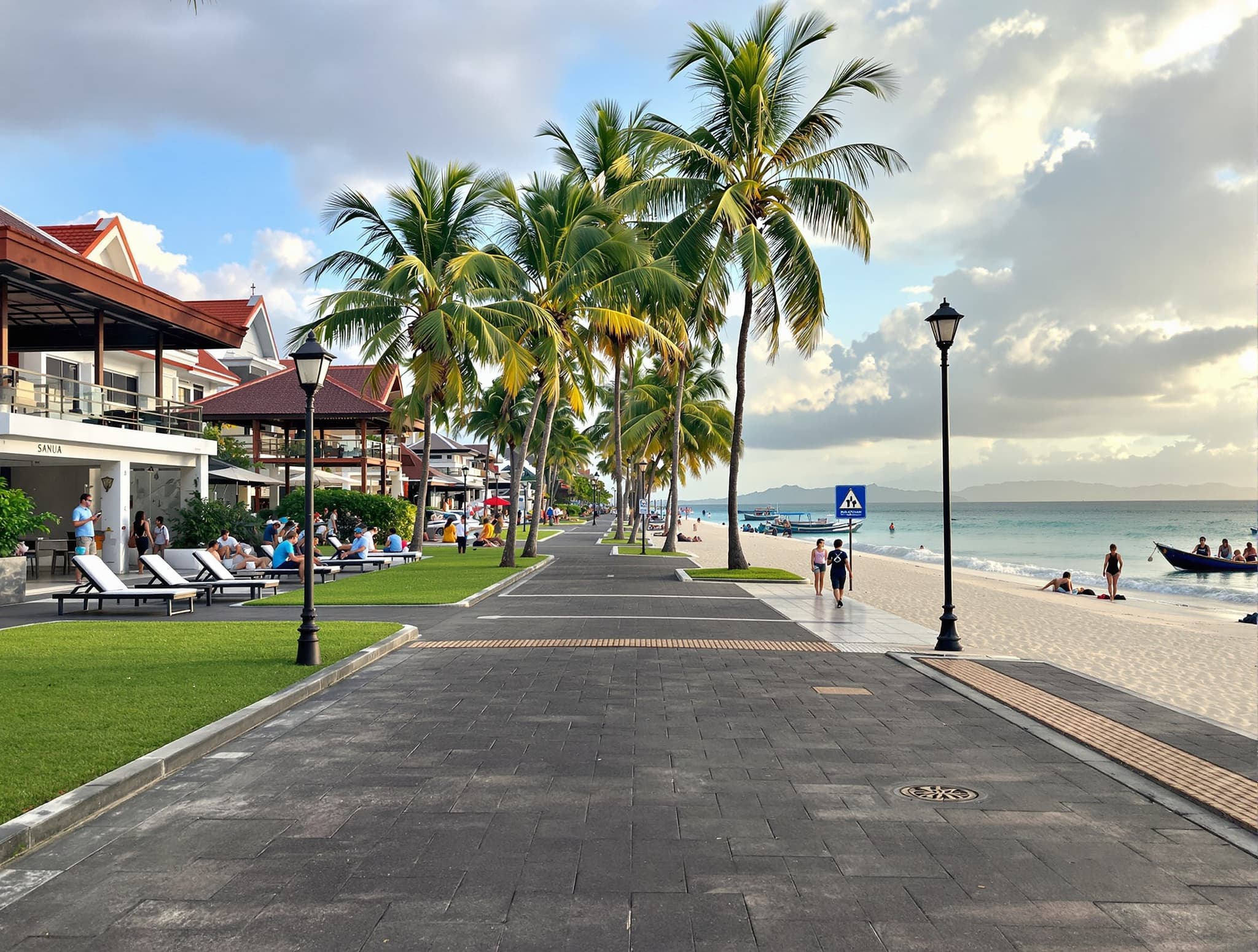
Sanur is Bali's most underrated area, and I'll defend that position. If you've been to Southeast Asia before and don't need the greatest-hits circuit, Sanur offers something increasingly rare on this island: calm.
The beachfront promenade is flat, paved, and walkable — genuinely rare for Bali. You can stroll or cycle along it for kilometers without dodging scooters or navigating broken sidewalks. The beach is swimmable. There's a real community feel — local families, long-term expats, small restaurants that haven't been redesigned for Instagram. It's also the gateway to Nusa Lembongan and Nusa Penida, with fast boats departing from Sanur harbor daily.
Sanur Price Tiers
Budget
IDR 300,000–700,000/night ($19–43) — guesthouses, small hotels
Mid-Range
IDR 700,000–1,500,000/night ($43–93) — beachfront boutique hotels
Luxury
IDR 1,500,000–2,500,000+/night ($93–155+) — resort hotels
Airport
25–35 min
Comparable quality runs noticeably cheaper here than in Seminyak or Canggu. A well-reviewed mid-range hotel with pool and breakfast in Sanur often costs what a basic room costs in Seminyak. The value proposition is real.
The honest downside: Quieter also means less exciting. Limited nightlife, fewer trendy restaurants, not where the 25-year-old crowd goes. Sanur is an east coast beach — you get sunrises, not sunsets. That's the trade-off, and for the right traveler, it's no trade-off at all.
Best for: Older travelers, families with small kids, repeat Bali visitors, anyone planning day trips to the Nusa islands. Skip it if: You want nightlife, beach clubs, or the energy of the south coast.
Jimbaran
— The Overlooked Middle Ground
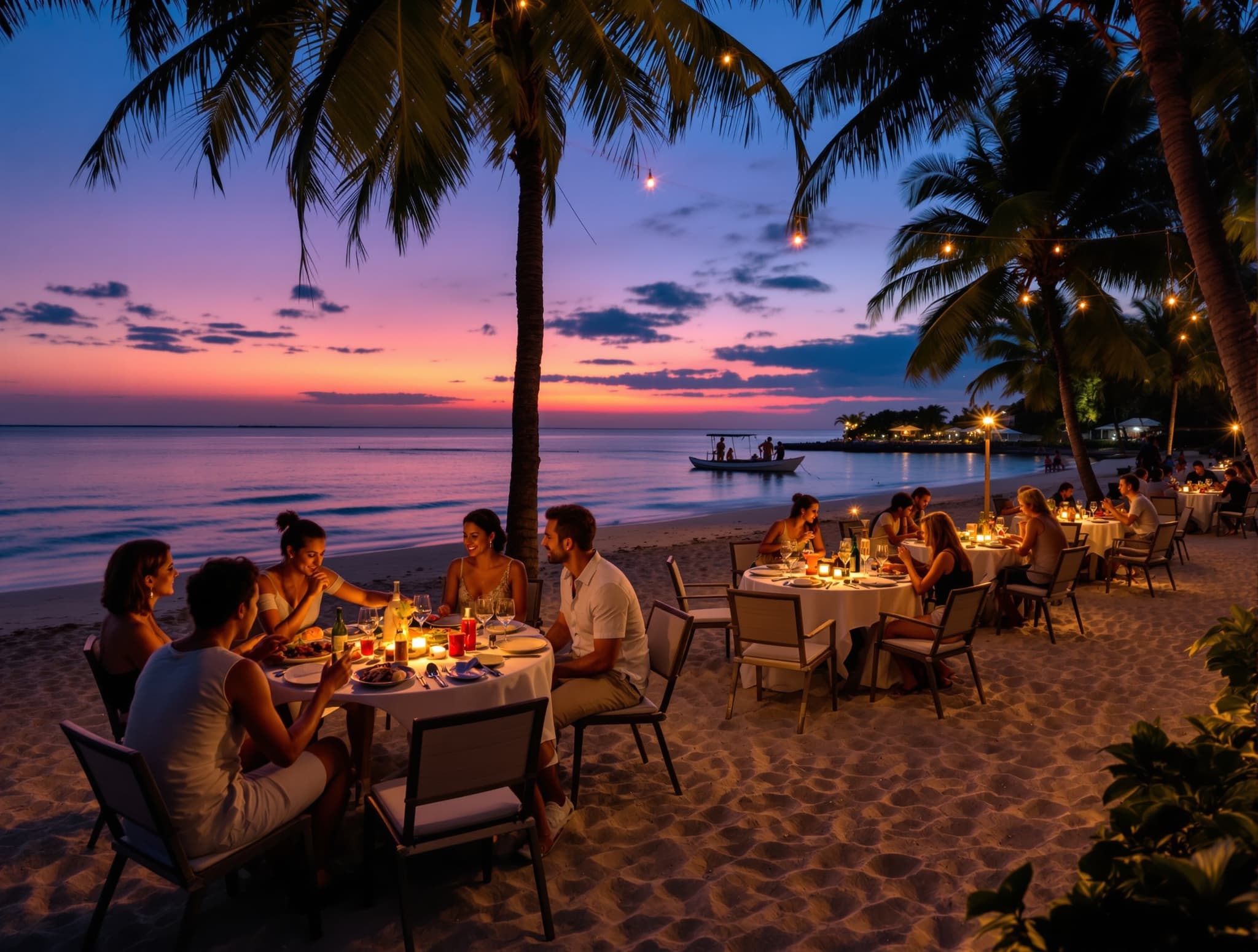
Jimbaran sits between the airport and Uluwatu, and it's the area I recommend for your first or last night in Bali. The beach is peaceful and swimmable, the airport is 10–20 minutes away, and the seafood warungs on the sand at sunset are a genuine Bali experience — even if they've become a tourist institution.
Jimbaran at a Glance
Price Range
IDR 500,000–5,000,000+/night ($31–309+)
Airport
10–20 min — the closest beach area
Best For
Start/end of trip, couples, seafood lovers
Vibe
Peaceful, sunset-facing, family-friendly
Jimbaran isn't a full-trip base — there aren't enough activities beyond beach and dining to fill a week. But as part of a split-stay itinerary, it's excellent. Fly in, spend a night or two decompressing on the beach, eat grilled fish with your feet in the sand, then move on to Ubud or Canggu. On the way back, another night here before your flight means you're not white-knuckling a 90-minute drive from Ubud at 4 AM.
The honest call: The seafood market dinner on the beach is worth doing once. You'll pay tourist prices (budget IDR 150,000–300,000 per person for a full spread), but the setting — tables on the sand, the sun going down, grilled prawns — earns it.
Kuta — The Budget Option (and Why Most Travelers Skip It Now)
I'll be direct: Kuta was Bali's original tourist hub, and it shows in the worst way. It's the cheapest area to stay on the island, and for pure budget travelers who need a bed near the airport, it works. For almost everyone else, the money you save isn't worth the experience you lose.
What's actually there: the cheapest accommodation on the island (guesthouses from IDR 200,000/night, ~$12), proximity to the airport (10–15 minutes), a long beach that's decent for beginner surfing, and a chaotic nightlife strip that attracts a specific crowd.
What's also there: dirty beaches, aggressive touts, traffic, noise. The party scene skews young and messy. Multiple travel guides — not just ours — explicitly recommend against Kuta for first-time visitors.
The one case for Kuta: You have an early morning flight, you want to spend under $15/night, or you're a solo backpacker who genuinely doesn't care about ambiance. No judgment — I've been that traveler. But if you have even a slightly flexible budget, an extra $15–20/night gets you Sanur or a basic guesthouse in Seminyak, and the difference in experience is enormous.
Where NOT to Stay (Areas and Situations That Disappoint)
A few mistakes I've watched people make, so you don't have to:
Don't book a villa in central Canggu if you're sensitive to noise and traffic. The Batu Bolong area is congested from morning to night. Push north to Pererenan or Tumbakbayuh — 10 minutes further, dramatically more peaceful, and still connected to Canggu's ecosystem.
Don't stay in Nusa Dua if you want to experience Bali. You'll experience a resort that happens to be in Bali. That's fine if it's what you want. Just know what you're choosing.
Don't book a "cheap villa" from Instagram without checking reviews on Booking.com or Google. Villa quality in Bali varies wildly. Some are exceptional. Some are scams with good photography. Use established booking platforms, read recent reviews (not ones from 2022), and confirm what's included — breakfast, airport transfer, daily cleaning. The villa market is unregulated, and your recourse if something goes wrong is limited.
Don't stay in one area for your entire trip if you have 7+ days. The split-stay approach gives you a fundamentally better trip. Strong pairings: Seminyak + Ubud (polish and culture), Canggu + Ubud (energy and calm), Uluwatu + Ubud (drama and depth), Jimbaran + Canggu + Ubud (convenience, coast, highlands).
Don't assume listed prices are final. Many Bali properties offer 10–20% lower rates when booked direct through their own website, especially for stays of 5+ nights. Always cross-check. And remember that villa rates are typically 20–50% higher than comparable hotels — worth it for groups splitting costs, rarely worth it for couples.
Practical Tips for Booking Accommodation in Bali
When to book: 2–3 months ahead for high season (July–August, December holidays). Shoulder season — April through June and September through October — offers the best value with reliably good weather. This is when I go.
Where to book: Booking.com and Agoda have the widest Bali inventory. Always cross-check the property's own website for direct booking discounts. I've seen 15% differences on the same room, same dates.
The levy: Pay the IDR 150,000 (~$10) tourist levy online before arrival at lovebali.baliprov.go.id. It's a one-time fee per trip — if you do a side trip to Lombok and come back, you don't pay again. The online surcharge is about IDR 4,500. Paying in advance saves you a queue at the airport.
Price reality check: Bali accommodation prices are projected to increase 5–15% annually through 2026 due to sustained tourism demand and over 100 new hotels in the pipeline. All prices in this guide are 2025 benchmarks. Verify current rates before booking — a five-minute check on Booking.com or Agoda takes less time than being surprised at check-in.
The split-stay cheat code: Book your first night near the airport (Jimbaran or Kuta), your main stay in your chosen area, and your last night near the airport again. That last-night buffer eliminates the stress of a long departure-day drive and usually costs less than the anxiety it prevents.
The Bottom Line
If this is your first time and you want ease: Seminyak. If you're working remotely: Canggu, or better yet, Tumbakbayuh. If you want the Bali that actually stays with you: Ubud. If you want the best views on the island: Uluwatu. If you want peace, a real community, and a swimmable beach without the resort markup: Sanur.
The best Bali trip almost always involves two bases, not one. The areas are so different from each other that staying in just one is like visiting New York and never leaving Midtown — you'll have a fine time, but you'll miss the point.
Pick your areas. Book the beds. The rest of Bali will take care of itself.