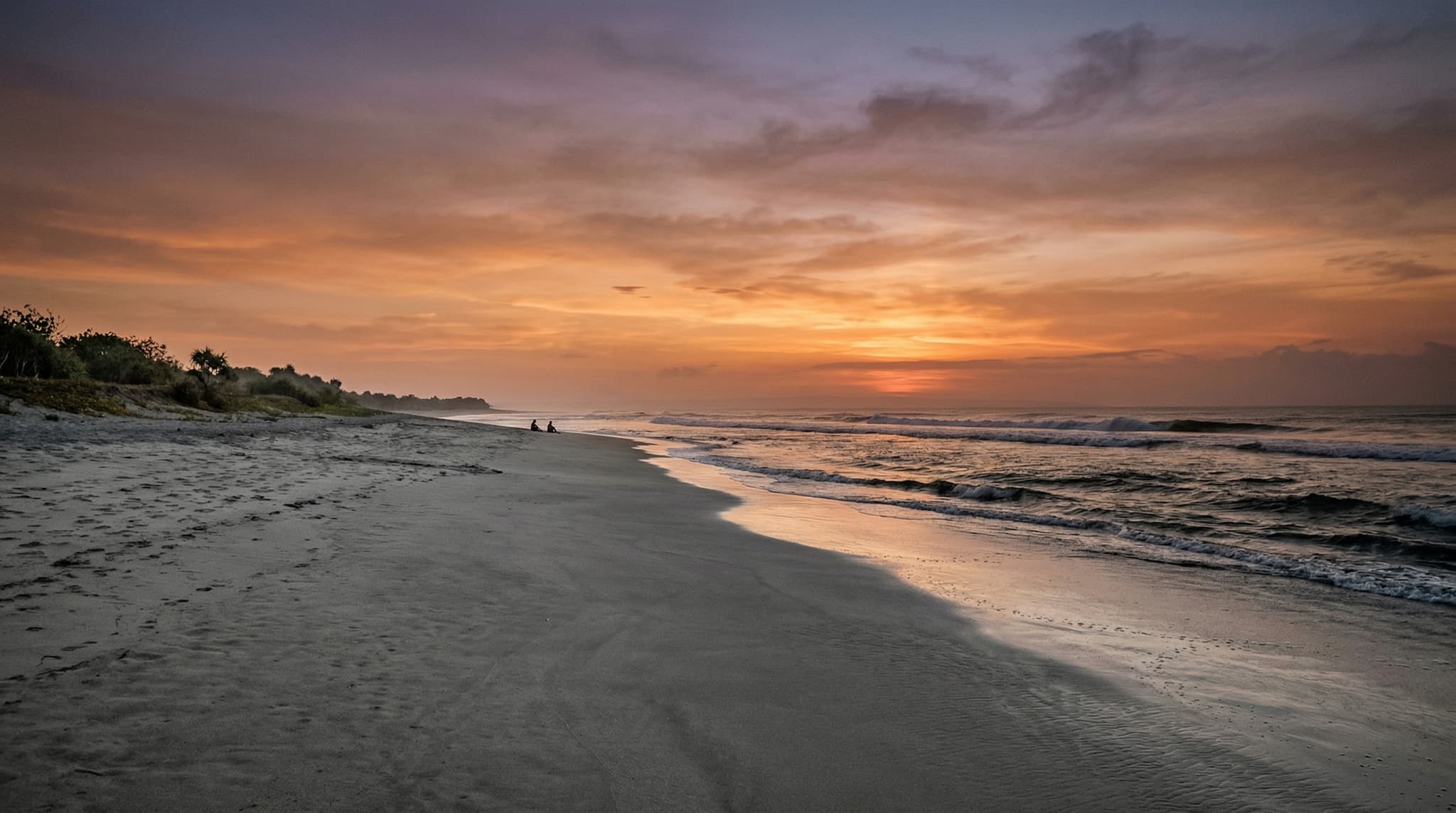
Pantai Batu Belig: The Stretch of Sand Between Bali's Two Loudest Neighborhoods
Batu Belig sits between Seminyak and Canggu — quieter, less polished, and changing fast. Here's what to expect from this in-between beach.
Batu Belig doesn't announce itself. There's no archway, no cluster of tour buses, no Instagram-ready sign staked in the sand. You turn off Jalan Petitenget onto Jalan Batu Belig, pass the Aloft Hotel, follow a narrow road through what's left of the rice paddies — fewer each year — and arrive at a modest stretch of white-grey sand where the Indian Ocean does what it wants.
That's the appeal. Pantai Batu Belig sits in the administrative district of Kerobokan, technically belonging to neither Seminyak nor Canggu, though it borders both. It has the geography of a buffer zone and, for now, something of the temperament of one — quieter on weekdays, less performative, the kind of beach where people actually sit and watch the water instead of filming it.
What the Beach Is (and Isn't)

Honesty first: Batu Belig is not a postcard beach. The sand is decent but not powder-fine. There are no palm-fringed backdrops. Plastic debris washes ashore regularly — a problem shared across Bali's west coast but visible here because there's less infrastructure to clean it up. About 500 meters to the right of the main entrance, a river empties into the ocean, muddying the water and creating currents that compound an already rough surf.
For surfers, the waves — typically 1 to 1.5 meters — are manageable and often described as beginner-friendly, though "beginner-friendly" in Bali still means respecting the ocean. Board rentals are available from vendors along the sand.
What Batu Belig does well is the end of the day. The sunset here is unobstructed and, on clear evenings, the sky runs through the full spectrum from copper to violet. Several beachfront warungs serve drinks and food as the light changes, and the atmosphere stays relaxed in a way that Seminyak's beach clubs and Canggu's crowded shoreline often don't.
Eating Along Jalan Batu Belig
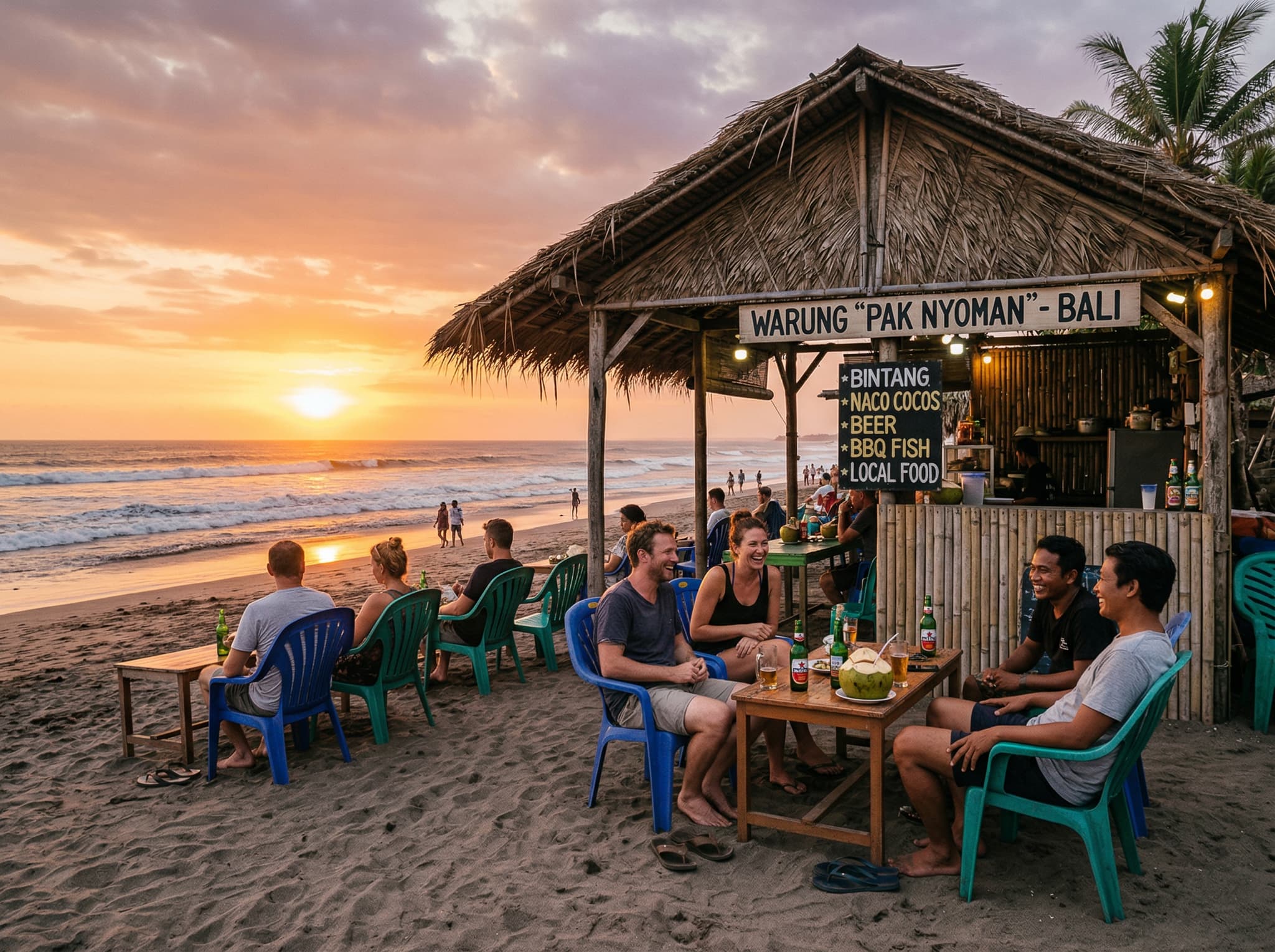
The road leading to the beach has quietly developed its own dining strip — not the polished restaurant row of Petitenget, but a mix of warungs, cafés, and newer arrivals that reflect the neighborhood's transitional character.
Where to Eat Near the Beach
Ti Moris Bali
Mauritian-Creole fusion — curries, rougailles, samosas. Jl. Batu Belig No. 22. Mains from IDR 45,000. Open 10 AM–11 PM.
The Spicy Coconut
Vegan brunch — smoothie bowls, cold-pressed juices. Jl. Batu Belig No. 21A. Open 7:30 AM–6 PM.
707 Beach Restaurant
Beachfront drinks and Indonesian staples. Live DJ on Fridays (deep house, reggae). Rosé bottles from IDR 250,000. Jl. Batu Belig No. 33A. Open 10 AM–8 PM.
Warung Pantai
Oceanfront warung with sun loungers and free Wi-Fi. Walk-in only, no reservations. Open daily 7–8 AM to 10 PM. Closed on Nyepi.
Nui da Mano
Newer addition to the area. Expect around IDR 350,000 per person. Open 11 AM–11 PM.
Also within short walking or scooter distance: Oyster Dealer Beach Haus, Sukuta Kitchen & Bar, and 48 DM Coffee for a morning flat white before the heat sets in. The general rule with warungs here applies everywhere in Bali — choose the busy ones. High turnover means hotter, fresher food.
Getting There
From Seminyak, head north on Jalan Petitenget and turn left onto Jalan Batu Belig. From Canggu, follow Jalan Pantai Berawa or Jalan Raya Canggu and turn right onto the same road. By scooter, it's 10 to 15 minutes from either direction — in theory. During peak hours (roughly 11 AM to 2 PM and again around sunset), traffic on these narrow roads can push that to 40 minutes or more.
Grab and Gojek both operate here without issue. Parking near the beach is available and cheap.
What's Changing
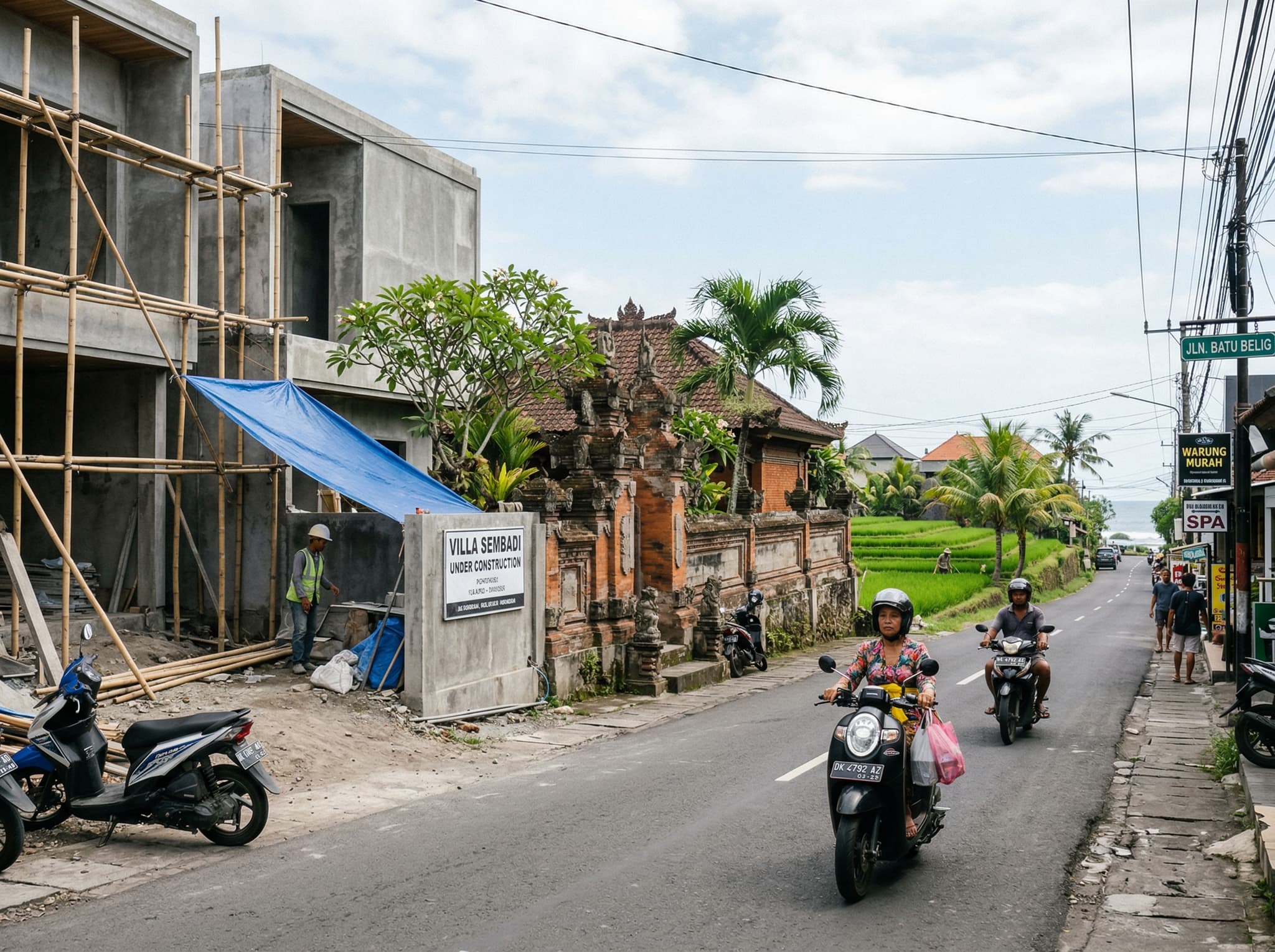
Batu Belig is in transition. Construction is visible along Jalan Batu Belig as of 2025: boutique villas going up, older properties being gutted and redesigned, commercial spaces being converted into the kind of venues that signal a neighborhood tipping toward the next price bracket. The rice paddies that once lined the road are being replaced by walls and rooftops.
This is a pattern familiar across Bali's southwest coast — the quiet zone between two developed areas doesn't stay quiet forever. For now, Batu Belig still has breathing room. The beach remains free to access, the warungs are affordable, and the sunsets don't cost anything. How long that particular balance holds is the question nobody along this coast can answer with confidence.