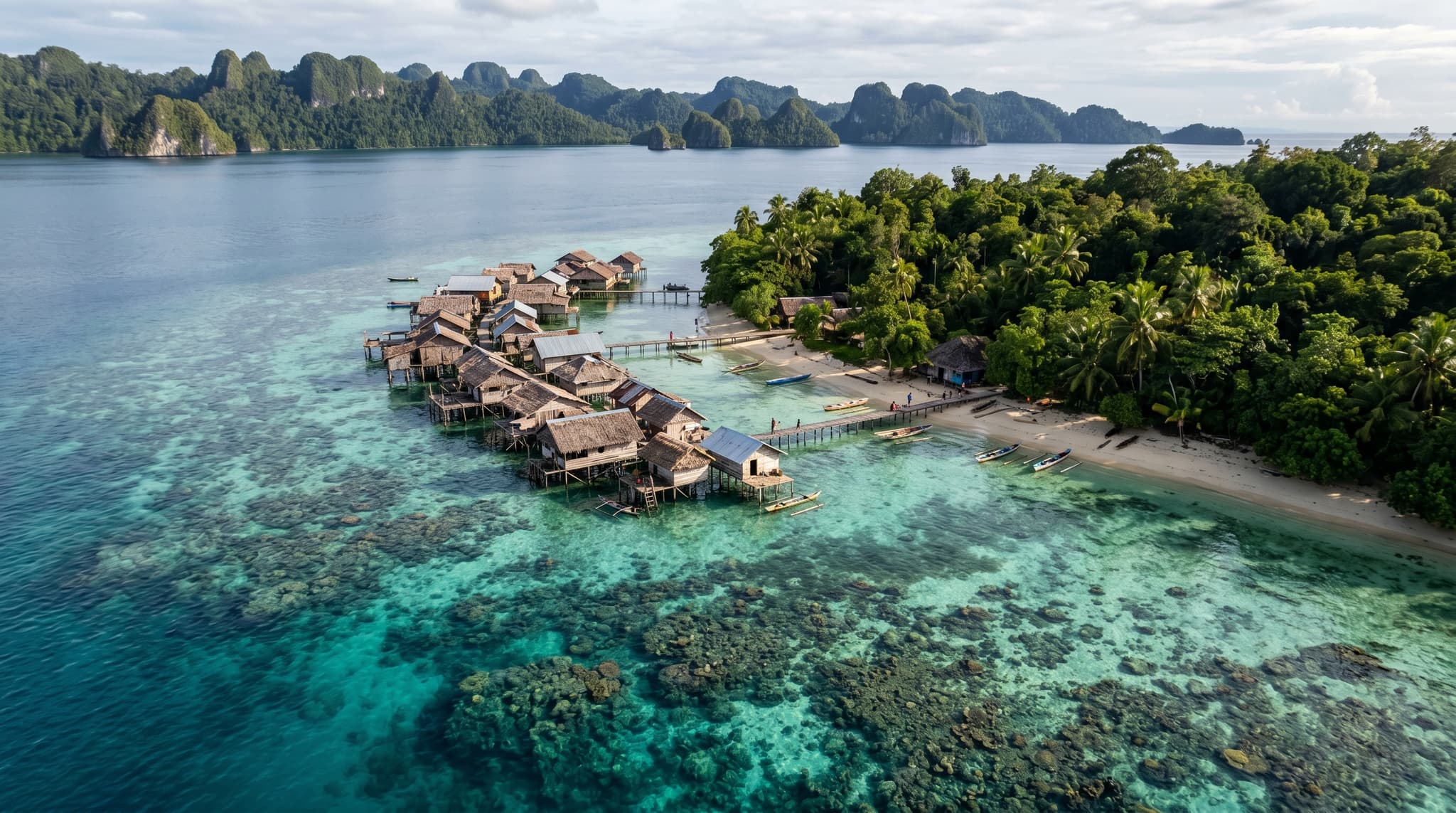
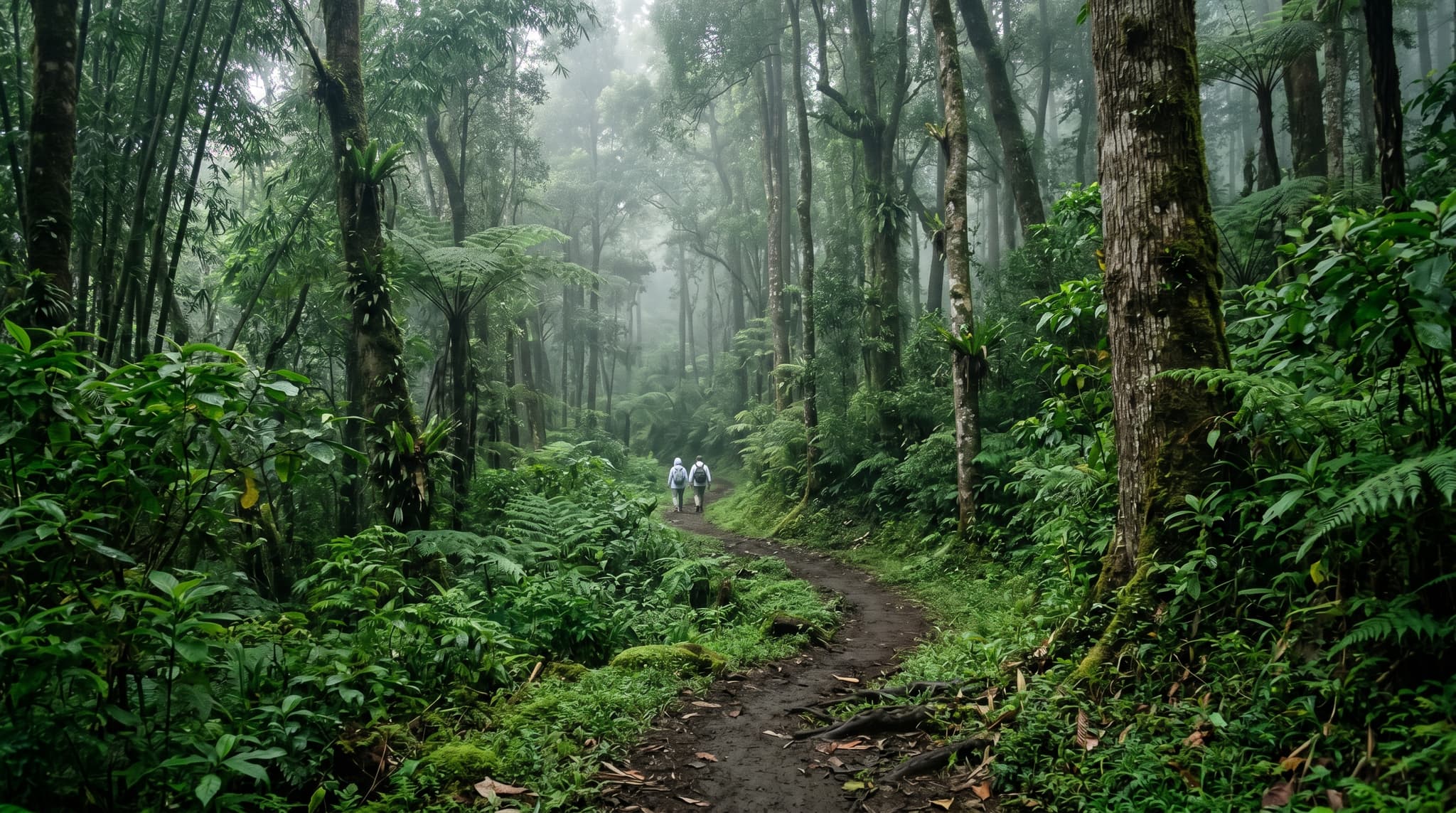
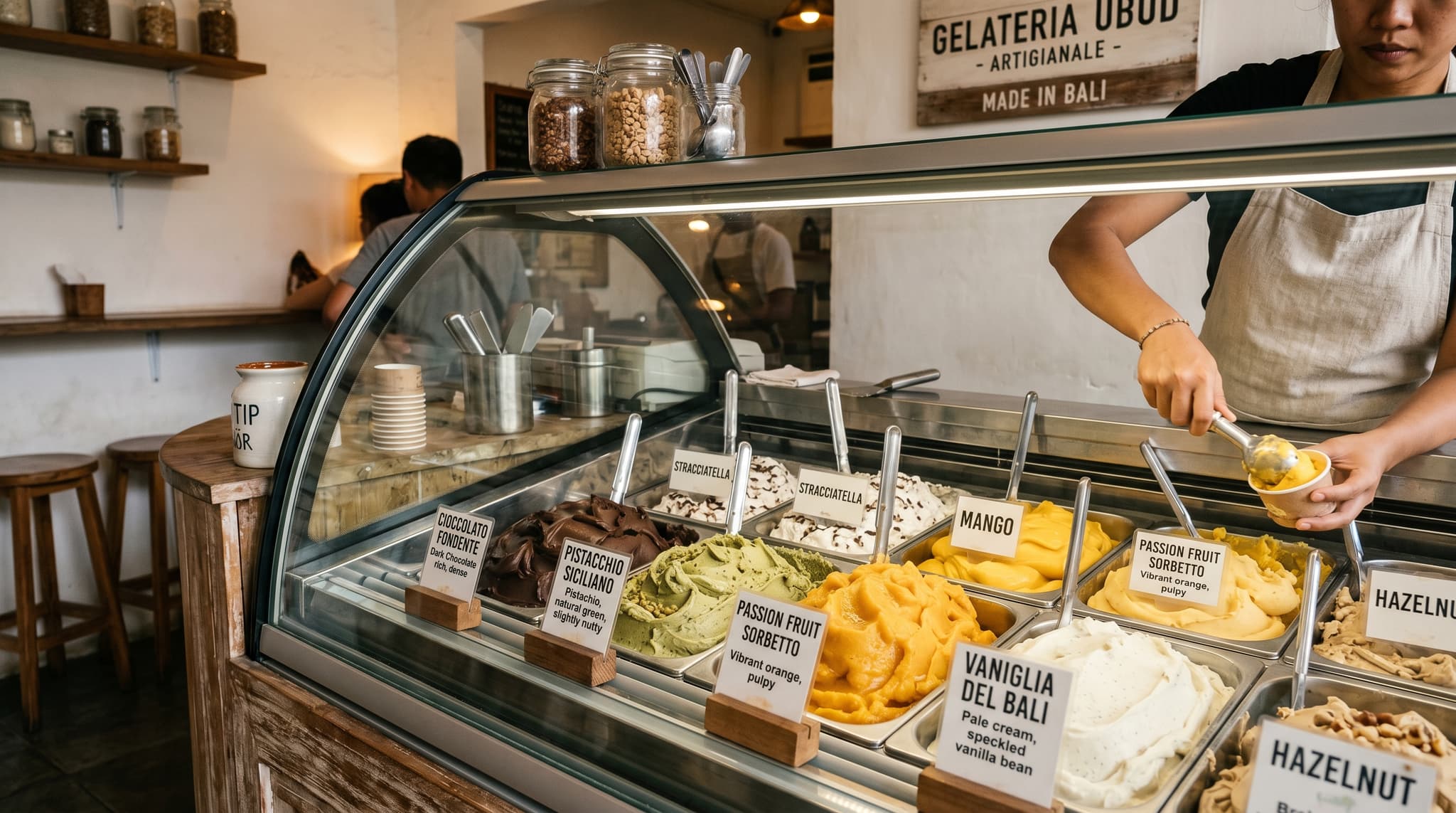
Sanur Beach is Bali's oldest resort area — calm, reef-protected, and refreshingly low-key. Here's what to expect and why it still works.
Sanur doesn't compete. That's the first thing you notice. There are no beach clubs with bottle service, no influencers blocking the sidewalk for a ring-light photo, no construction cranes promising another co-working space. The beachfront promenade runs for five kilometers along a calm, reef-protected shore, and the loudest sound most mornings is a fishing jukung being dragged across the sand.
This is Bali's oldest resort area — the place where tourism on the island essentially began, when Belgian painter Adrien-Jean Le Mayeur settled here in the 1930s. And while Seminyak, Canggu, and Uluwatu have each had their moment as the island's center of gravity, Sanur has stayed more or less the same. It's quieter. Older. A little unfashionable. Which is exactly why certain travelers keep coming back.
The Beach Itself
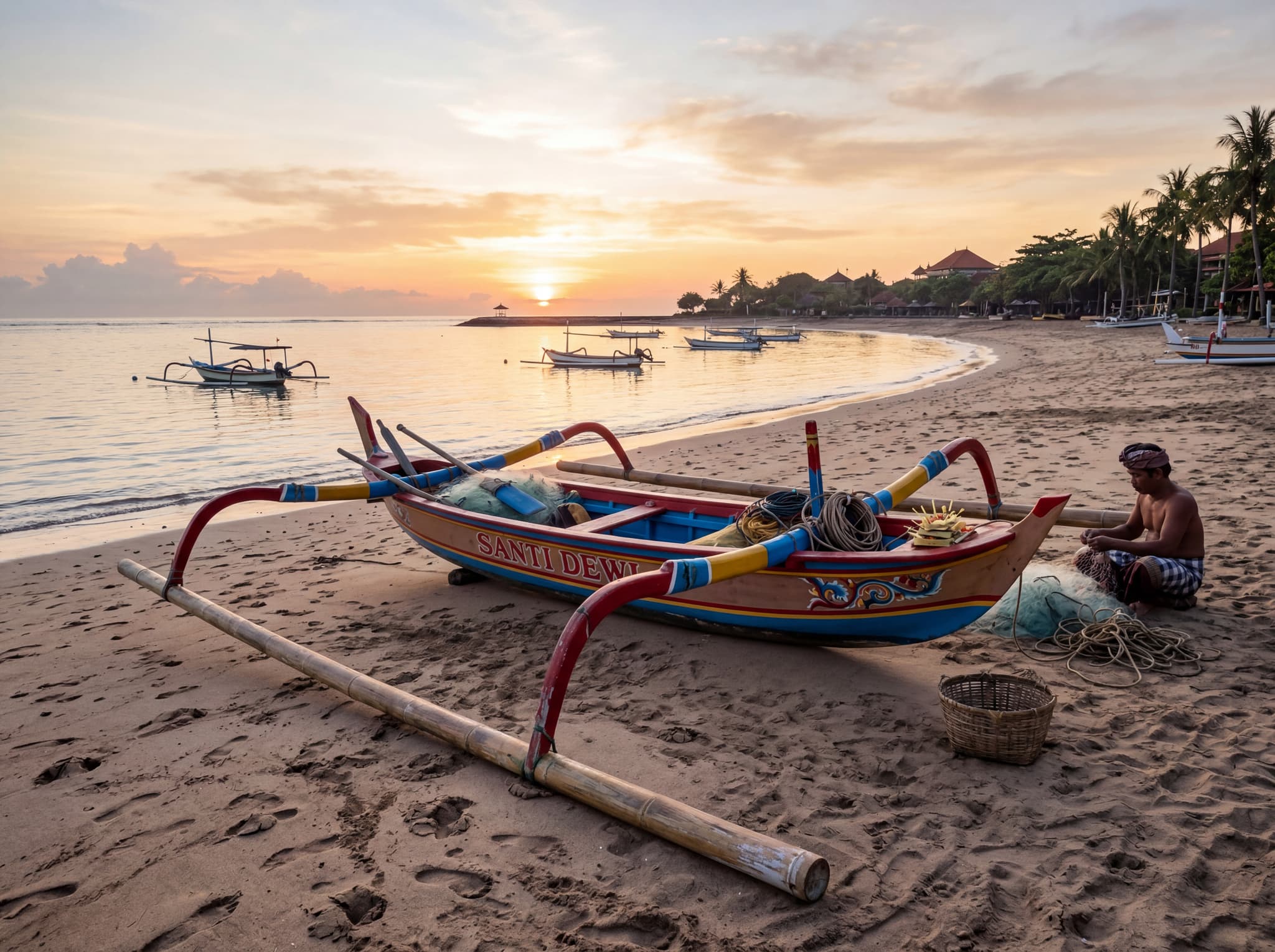
Sanur Beach faces east, which means sunrises instead of sunsets. This is a meaningful distinction — it shapes the rhythm of the place. People here wake early. By 6:30 a.m., the promenade is already alive with joggers, elderly Balinese doing tai chi, and expats walking their dogs. By mid-morning, the light flattens and the beach settles into a long, unhurried afternoon.
The water is shallow and calm, protected by a reef that breaks the Indian Ocean swells well offshore. This makes Sanur poor for surfing but excellent for swimming, kayaking, stand-up paddleboarding, and simply wading without being knocked sideways. For families or anyone who doesn't want to fight the ocean, it's one of the most comfortable beaches in Bali.
The sand is a mix of white and coarse coral fragments — not the powdered sugar of Nusa Dua, but honest and clean. At low tide, the water retreats significantly, exposing seagrass beds and reef flats. Time your swim for mid- to high tide and it's a different beach entirely.
Sanur Beach at a Glance
Beach Length
~5 km along the promenade
Swimming
Best at mid to high tide
Surf Conditions
Flat — reef-protected lagoon
Sunbed Rental
30,000–50,000 IDR (~$2–$3)
The Promenade
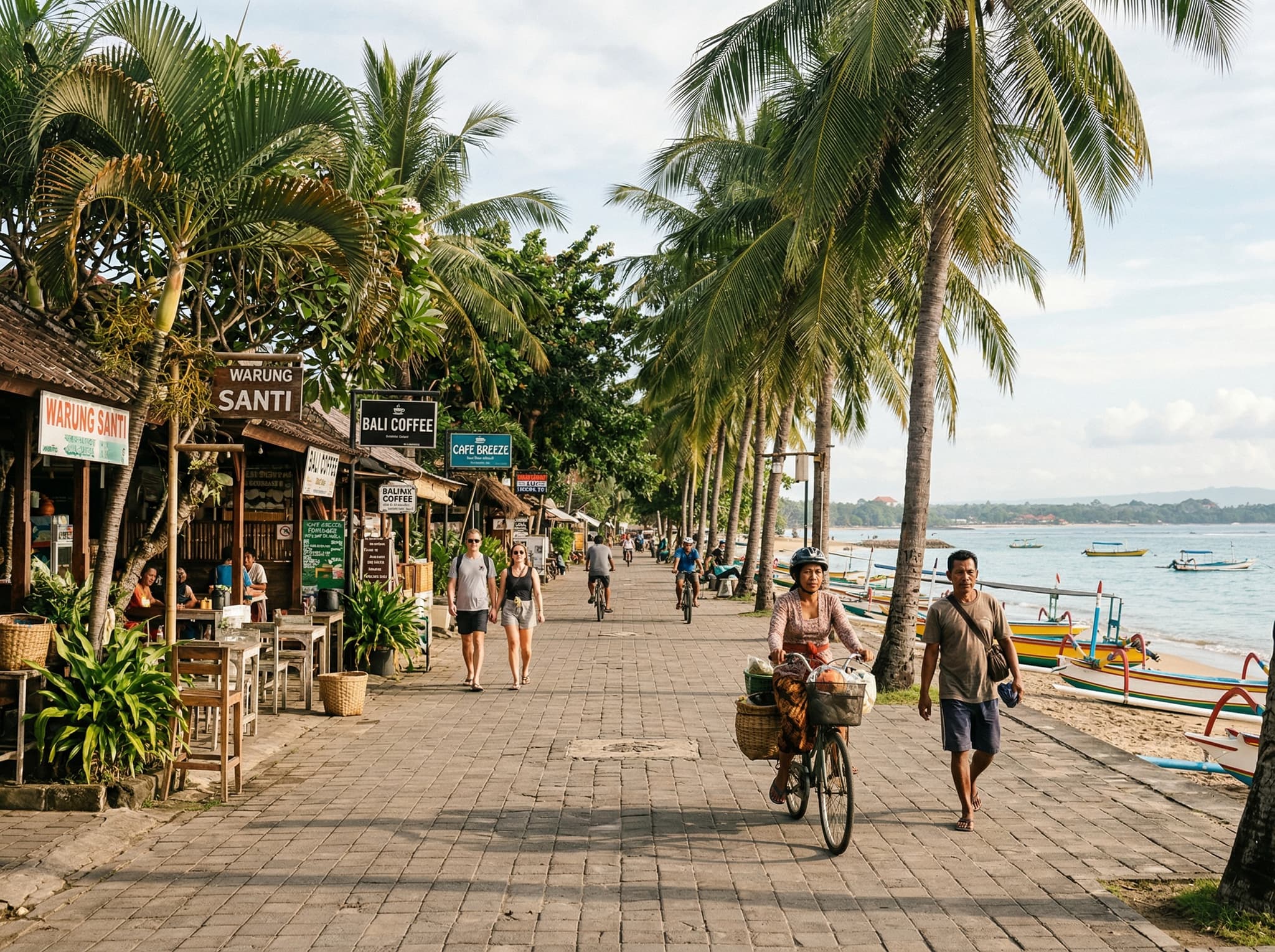
The paved beachfront path — locals call it the jalan pantai — is Sanur's spine. It connects the entire stretch of coast from the Inna Grand Bali Beach hotel in the north to the Mertasari mangrove area in the south. You can walk it in about an hour, cycle it in twenty minutes, or take it in pieces over several days.
Along the way: small warungs selling nasi campur for 25,000 IDR, beachside cafés with decent espresso, kite shops, a few art galleries, and the occasional temple ceremony spilling color onto the sand. It's not curated. Some stretches are a bit worn. But it holds together as one of the most pleasant coastal walks in Bali — maybe because nobody designed it to be one.
Where to Eat and Drink
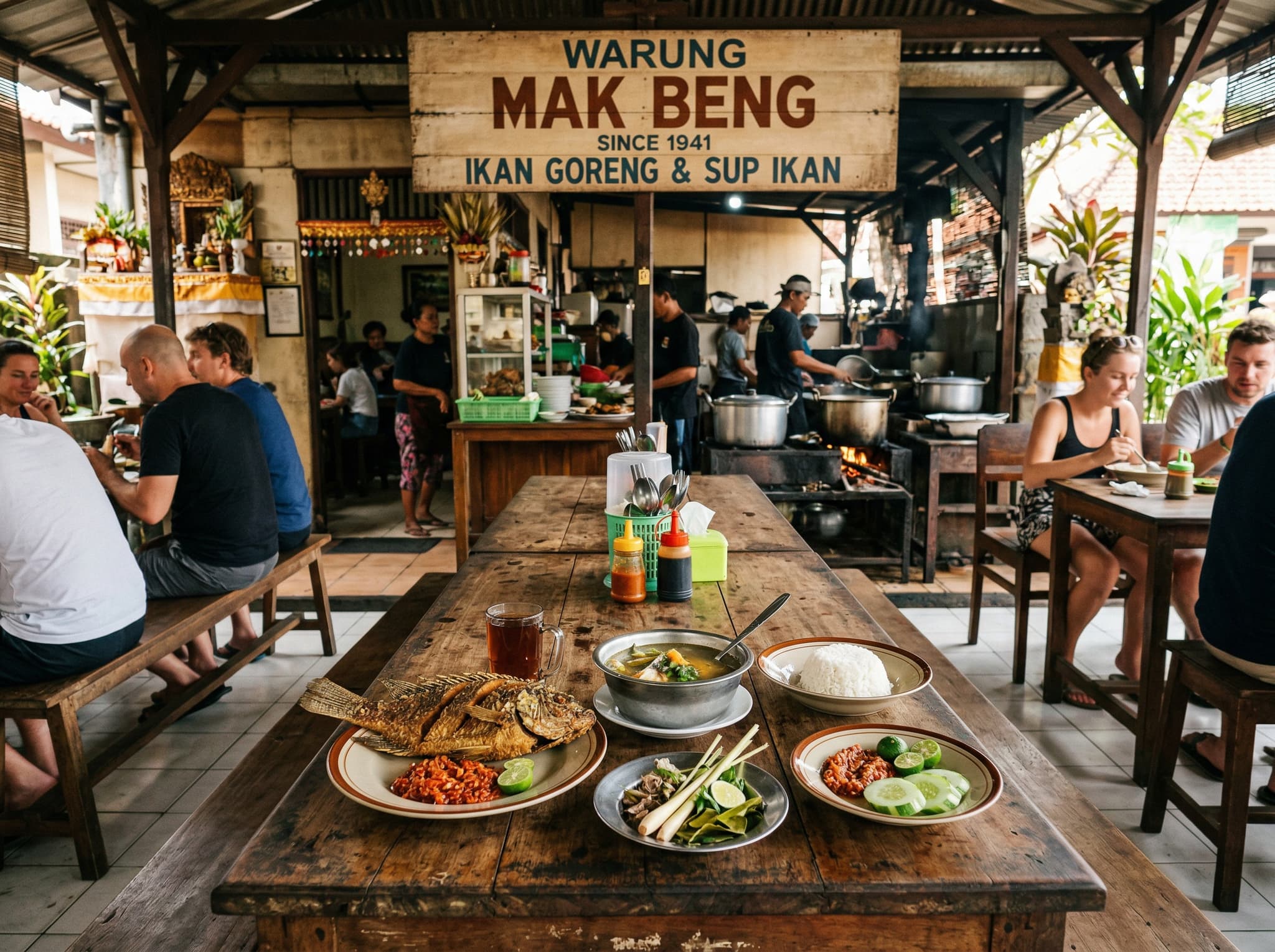
Sanur's food scene is unpretentious and surprisingly varied. Jalan Danau Tamblingan, the main road running parallel to the beach, holds most of the restaurants, and the quality has quietly improved over the years without the prices following Seminyak upward.
Warung Mak Beng is the most famous stop — a no-menu fish-and-rice institution that's been serving the same meal since the 1940s. You sit down, you get fried fish, rice, soup, and sambal. It costs around 50,000 IDR. There's nothing else to decide.
For something more contemporary, Genius Café does clean breakfasts and strong coffee. Massimo has served reliable Italian food for over two decades — it's an expat staple. And the night market near Jalan Danau Poso offers the usual Indonesian street food spread at local prices.
Dining Price Range
Warung Meal
25,000–50,000 IDR ($1.50–$3)
Mid-Range Restaurant
80,000–150,000 IDR ($5–$10)
Coffee
20,000–40,000 IDR ($1.25–$2.50)
Gateway to the Islands
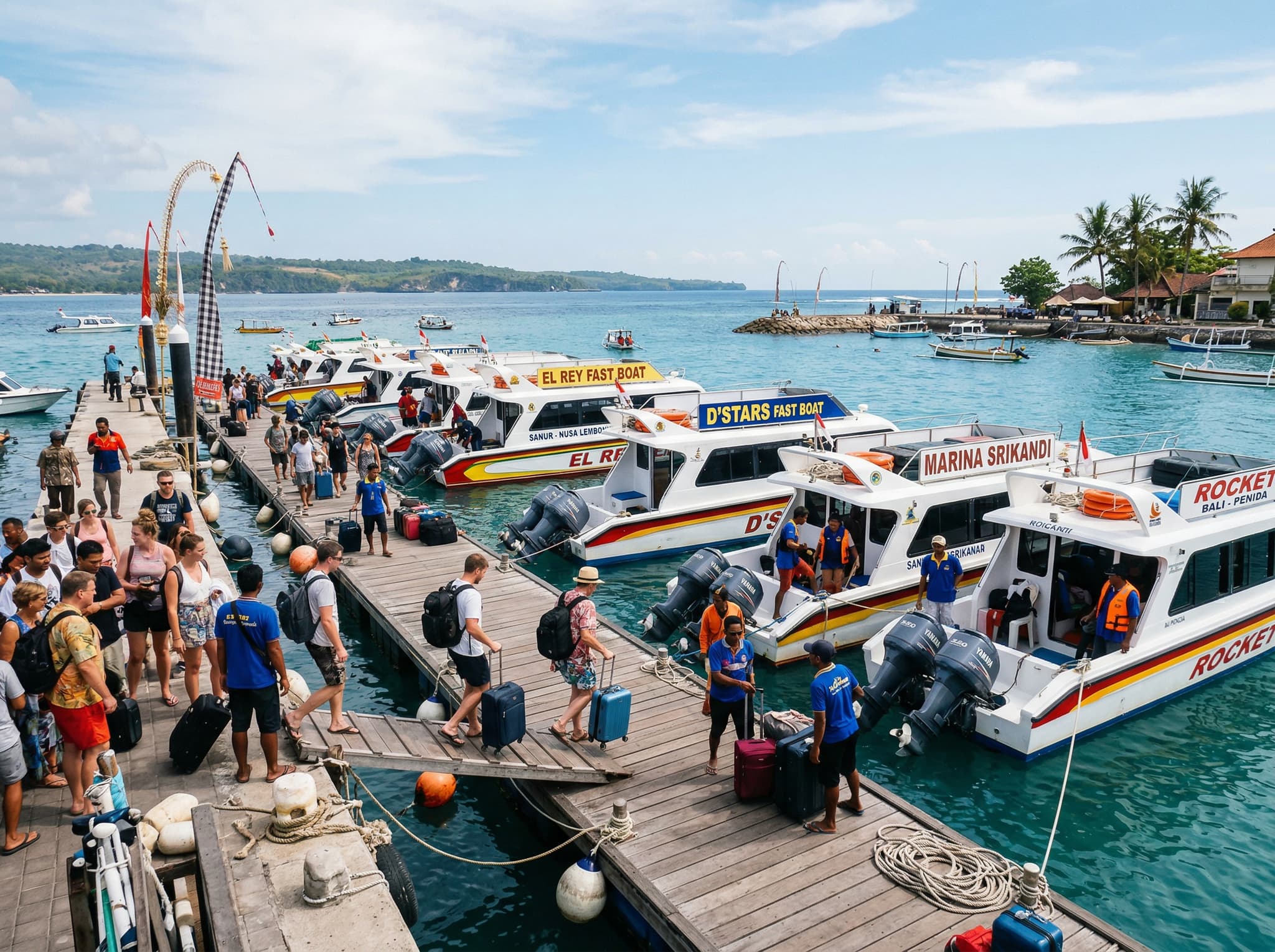
Sanur's practical importance extends beyond its own beach. The harbor is the main departure point for fast boats to Nusa Lembongan, Nusa Penida, and Nusa Ceningan. Boats leave throughout the morning, and the crossing to Lembongan takes about 30 minutes.
This makes Sanur a natural base for island-hopping — spend a few nights here, take a day trip or overnight to the Nusas, and return without needing to cross Bali's congested interior.
Who Sanur Is For
Sanur draws a specific kind of visitor: older couples, long-stay expats, families with small children, and travelers who've done the Canggu-Seminyak circuit and want something slower. It also attracts divers and snorkelers using it as a base for trips to Nusa Penida or Padang Bai.
It is not for anyone looking for nightlife, surf culture, or the social energy of southern Bali's busier strips. The town gets quiet after 10 p.m. Some people find this boring. Others find it a relief.
What Sanur Gets Right
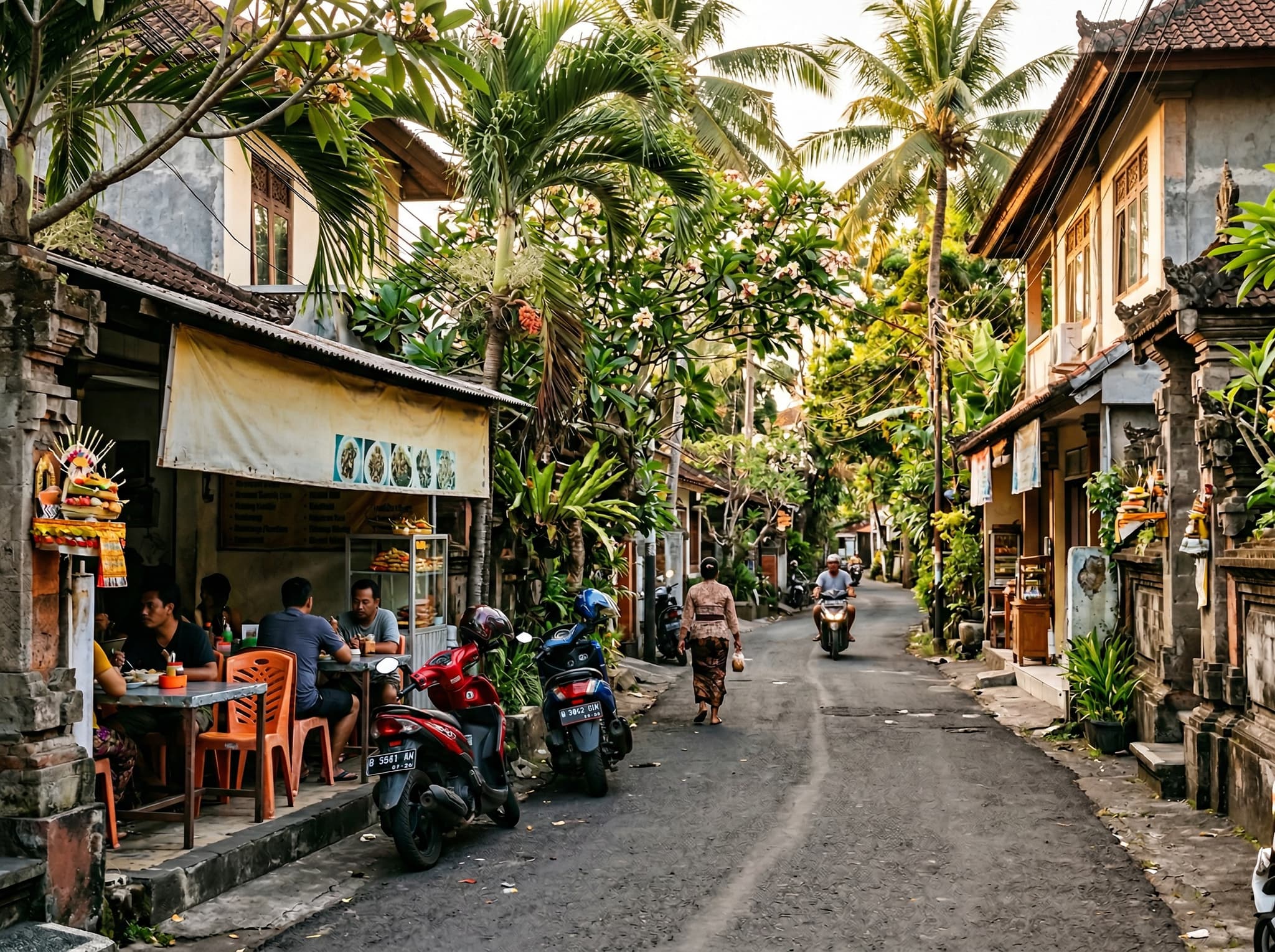
There's a Balinese concept — Tri Hita Karana — about harmony between people, nature, and the spiritual world. Sanur doesn't always articulate it, but it practices something close. The development is low-rise, mandated by a regulation that no building can stand taller than a coconut palm. The temples along the shore are active, not decorative. The fishing boats still go out.
None of this is accidental. It's the result of a community that chose, decades ago, not to chase the version of tourism that other parts of Bali embraced. Whether that holds as pressure mounts is an open question. But for now, Sanur remains what it has been for a long time: a place that doesn't need to convince you of anything.