Warung Mak Beng has served one meal since 1941 — fried fish, rice, soup, sambal. No menu, no reservations. Here's what to expect at Sanur's most iconic warung.
There is no menu at Warung Mak Beng. There hasn't been one in over eighty years.
You walk in, take a number, find a seat at one of the communal tables, and wait. Within minutes, the same meal that has been served here since 1941 arrives: a plate of white rice, a piece of crispy fried saltwater fish, a bowl of spicy fish soup, and a saucer of sambal. That's it. That's the entire operation. And it has been enough to make this small warung on a Sanur side street one of the most recognized dining institutions in Bali — ranked the third most legendary diner in the world by TasteAtlas.
The simplicity is the point. Warung Mak Beng doesn't need to convince you with variety. It convinces you with the fish.
What Arrives at the Table

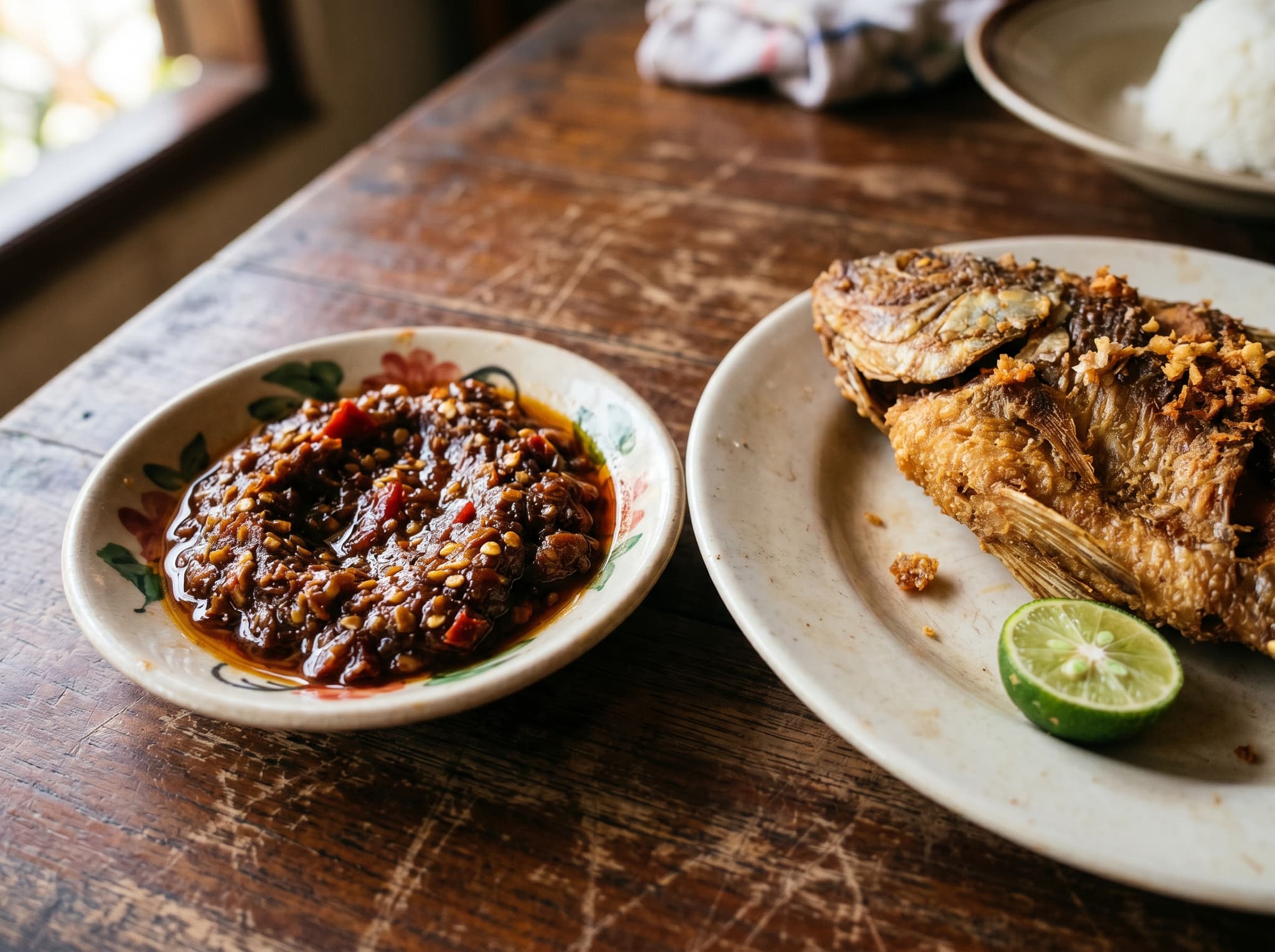
The set meal is the same for every person who sits down. The fried fish — typically snapper, pulled from the day's catch — is deep-fried whole until the exterior turns dark and shattering. The skin crackles. The flesh inside stays tender and faintly sweet. Bones are left intact, so eat with attention.
Beside it, a bowl of sup ikan laut: a light, tangy broth built on tamarind, turmeric, and lemongrass, with chunks of fish head or fish pieces floating in it. It's spicier than it looks. Several reviews describe it as sweat-inducing, and they're not exaggerating. The heat is layered — it builds slowly and stays.
The sambal terasi — a chili-shrimp paste relish sharpened with kaffir lime — ties the plate together. You mix it into the rice, press it against the fish, stir it into the soup. It's the kind of condiment that makes you reconsider every sambal you've had before.
The Set Meal
Fried fish
Whole crispy snapper, bones intact
Fish soup
Tamarind-turmeric broth with fish head
Rice
White steamed rice
Sambal
Sambal terasi with kaffir lime
There is nothing decorative about the presentation. The food arrives on simple plates and in small bowls, the same way it has for decades. The speed is notable — roughly fifteen minutes from sitting down to eating. The kitchen runs like a system that long ago eliminated every unnecessary step.
The Room and the Ritual
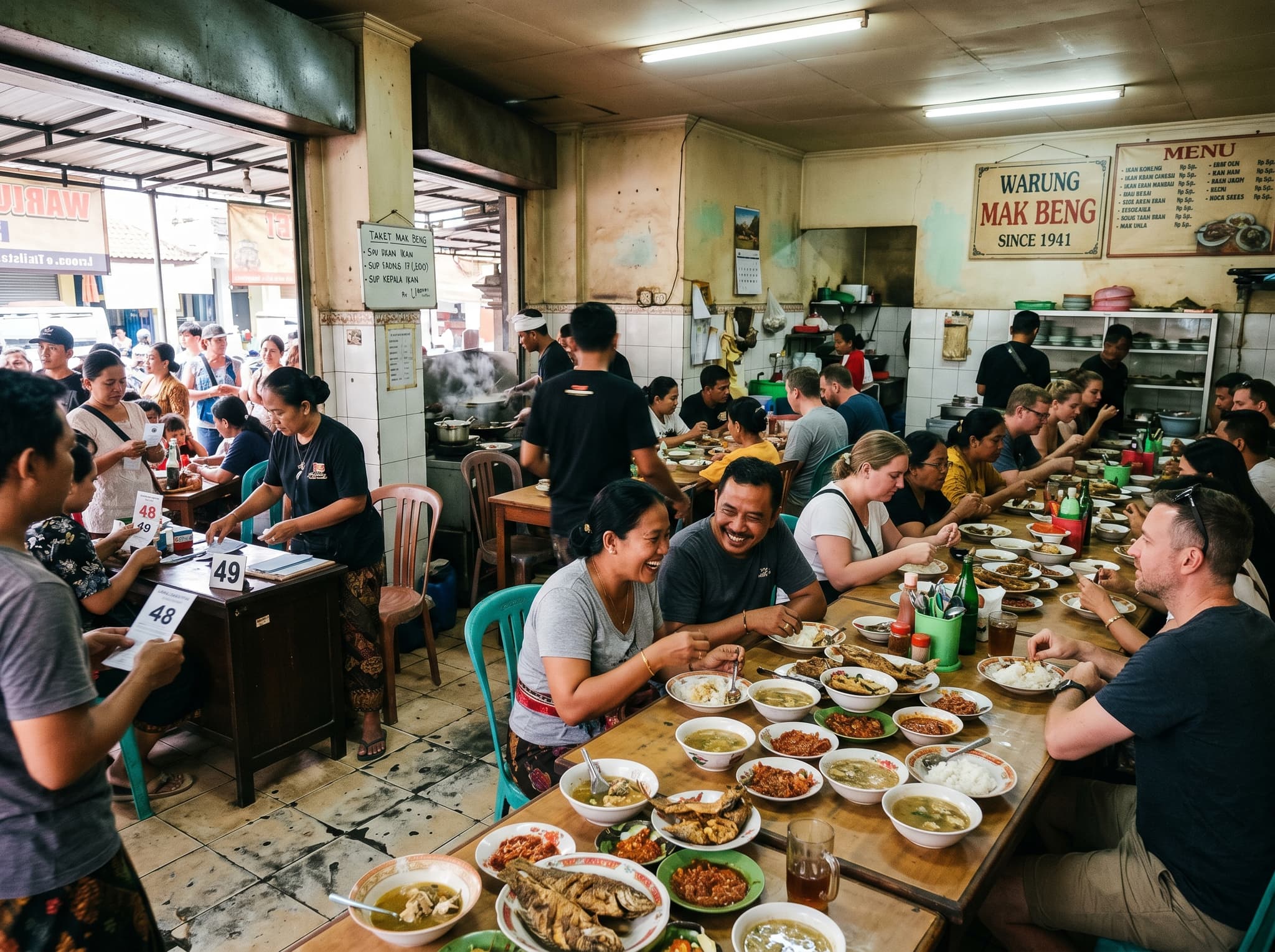
Warung Mak Beng is not a quiet place. The dining room is tight, communal, and loud with the sounds of conversation, clinking bowls, and the steady rhythm of a kitchen that never stops plating. Seating is shared — you'll sit next to strangers, which is standard for warungs of this kind but worth knowing if you're expecting a private table.
The process is straightforward: arrive, take a numbered ticket, wait for your number to be called. At peak lunchtime — roughly 12:00 to 1:30 PM — waits can stretch to thirty minutes. The line moves, but it moves at its own pace. Weekends are worse.
The walls carry the weight of the place's history. Warung Mak Beng has operated from this same location on Jalan Hang Tuah since the early 1940s, passed through generations of the same family. It doesn't advertise. It doesn't need to. The line outside does that work.
How to Visit Warung Mak Beng
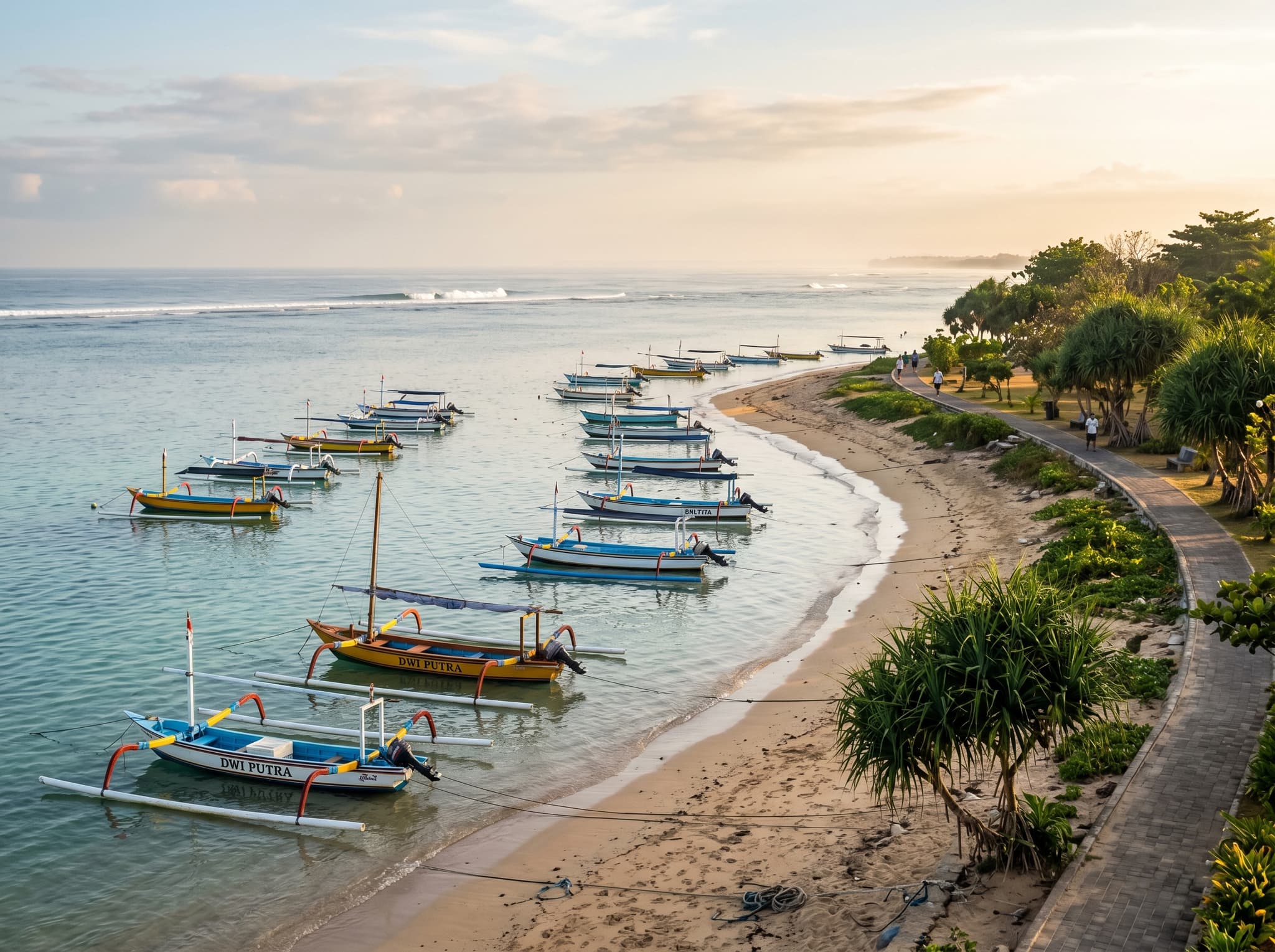
The warung sits on Jalan Hang Tuah, one of Sanur's main streets, a short walk from Sanur Beach. If you're staying in Sanur, it's likely walkable. From Seminyak or Kuta, expect a 30–40 minute drive depending on traffic. From Ubud, roughly 45 minutes to an hour.
Before You Go
Payment
Cash only (IDR) — no cards accepted
Reservations
None — walk-in only, first come first served
Peak wait
Up to 30 minutes at lunchtime
Seating
Communal tables, self-seating after number is called
Spice level
High — soup and sambal are genuinely hot
Warung Mak Beng pairs naturally with a morning or afternoon along Sanur's beachfront. Eat first, then walk it off along the coastal path — or the reverse, if you prefer arriving hungry.
Why It Endures
There are thousands of warungs across Bali. Many serve excellent fried fish. What separates Warung Mak Beng is the refusal to become anything other than what it already is. One meal. One price. No negotiation with trends or tourist expectations. The fish is fresh, the sambal is made daily, and the soup recipe hasn't changed in living memory.
That kind of consistency, sustained across more than eight decades, isn't stubbornness. It's a statement about what a single dish can be when it's made with total conviction, every day, without distraction.
You don't go to Warung Mak Beng for choice. You go because someone decided a long time ago that this one meal was enough — and eighty-four years later, the line out the door still agrees.