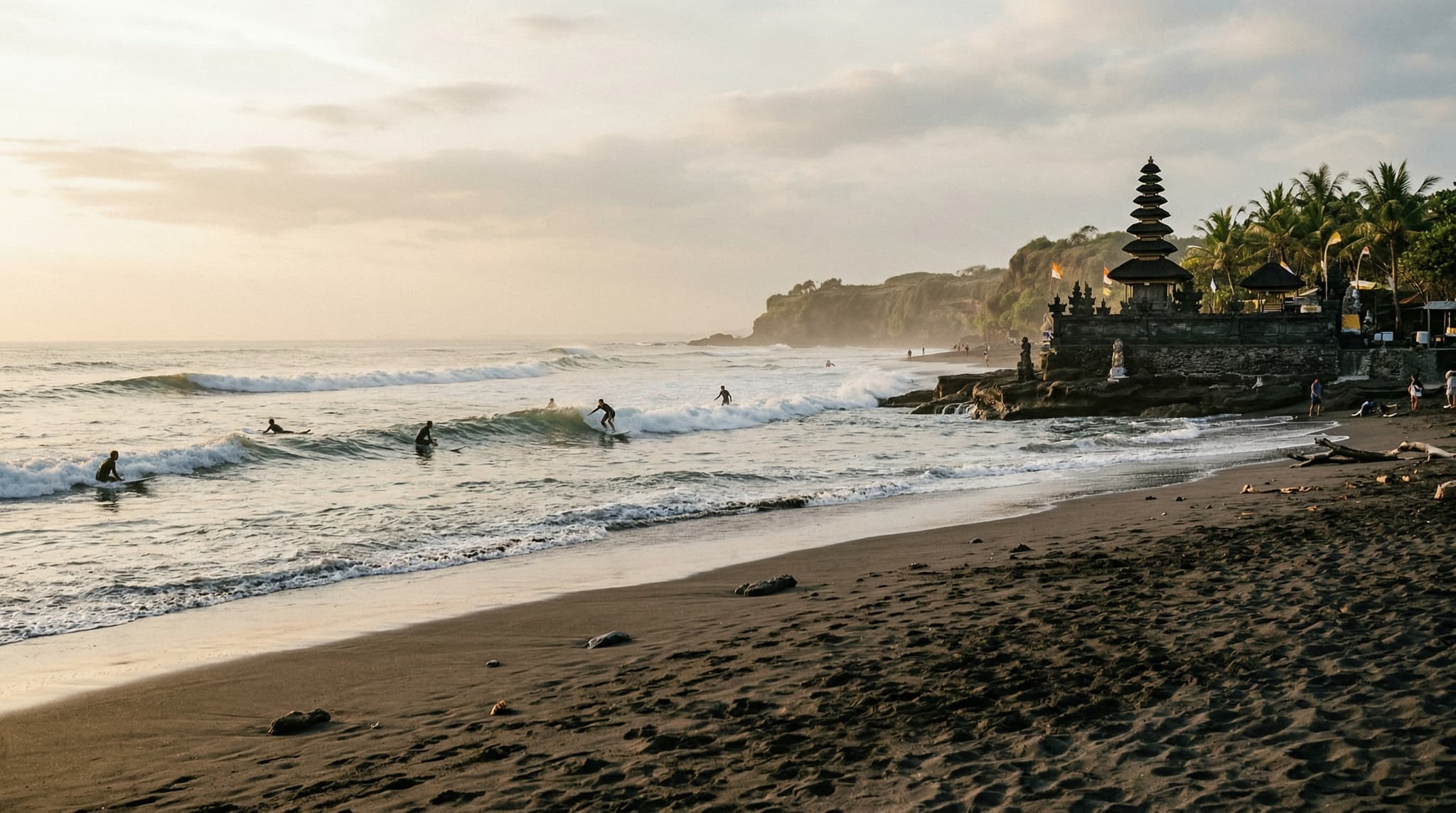
Pererenan Beach, Bali — dark volcanic black sand shoreline with consistent surf waves breaking in the middle distance, Pura Masceti temple silhouette visible at the water's edge, warm late-afternoon light, a handful of surfers in the lineup, low coastal cliffs in the background. Establishes the beach's moody, uncrowded character central to the article's premise.

Pererenan: Bali's Quieter Coast, Five Minutes From the Chaos

Bali, Indonesia
6 min read
AI-generated illustration

Pererenan Beach offers Bali's southwest coast experience with less crowd and better value — here's exactly what to expect, eat, and spend.

Canggu got loud. If you've been paying attention to Bali's southwest coast over the past five years, you already know this. What was once a surf village with a handful of warungs became a full-blown scene — influencer cafés stacked three deep, traffic that turns a 2-kilometer ride into a 25-minute ordeal, and nightlife that bleeds well past dawn.

Pererenan is what happens when people who came to Canggu for the original promise — rice paddies, surf, good coffee, relative calm — decide to walk ten minutes north. It's not undiscovered. Let's get that out of the way immediately. But it operates at a different frequency, and that difference is worth understanding before you book.

What Pererenan Actually Is
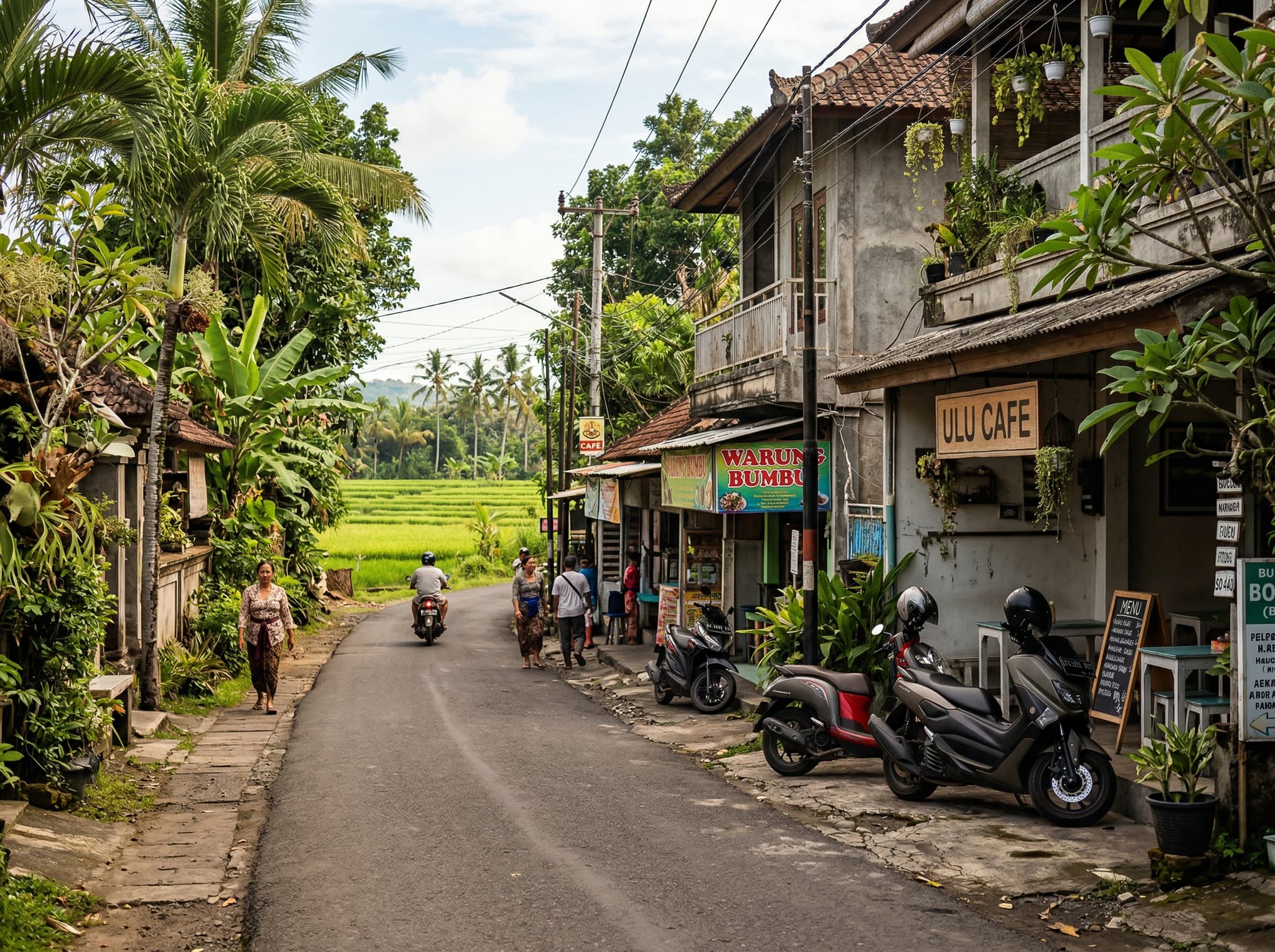
Jalan Pererenan main road, Bali — a narrow lane flanked by low-rise cafés, a yoga studio, and lush tropical vegetation, with rice paddies visible through a gap between buildings in the background. Illustrates the article's key point that agricultural land still exists between the development, distinguishing Pererenan from Canggu proper.
Jalan Pererenan main road, Bali — a narrow lane flanked by low-rise cafés, a yoga studio, and lush tropical vegetation, with rice paddies visible through a gap between buildings in the background. Illustrates the article's key point that agricultural land still exists between the development, distinguishing Pererenan from Canggu proper.AI-generated illustration

Pererenan is a coastal village on Bali's southwest shore, wedged between the northern edge of Canggu and the quieter Seseh area. Administratively, it's part of the greater Canggu district, which is why you'll sometimes see it listed as a Canggu neighborhood. Functionally, it's its own thing.

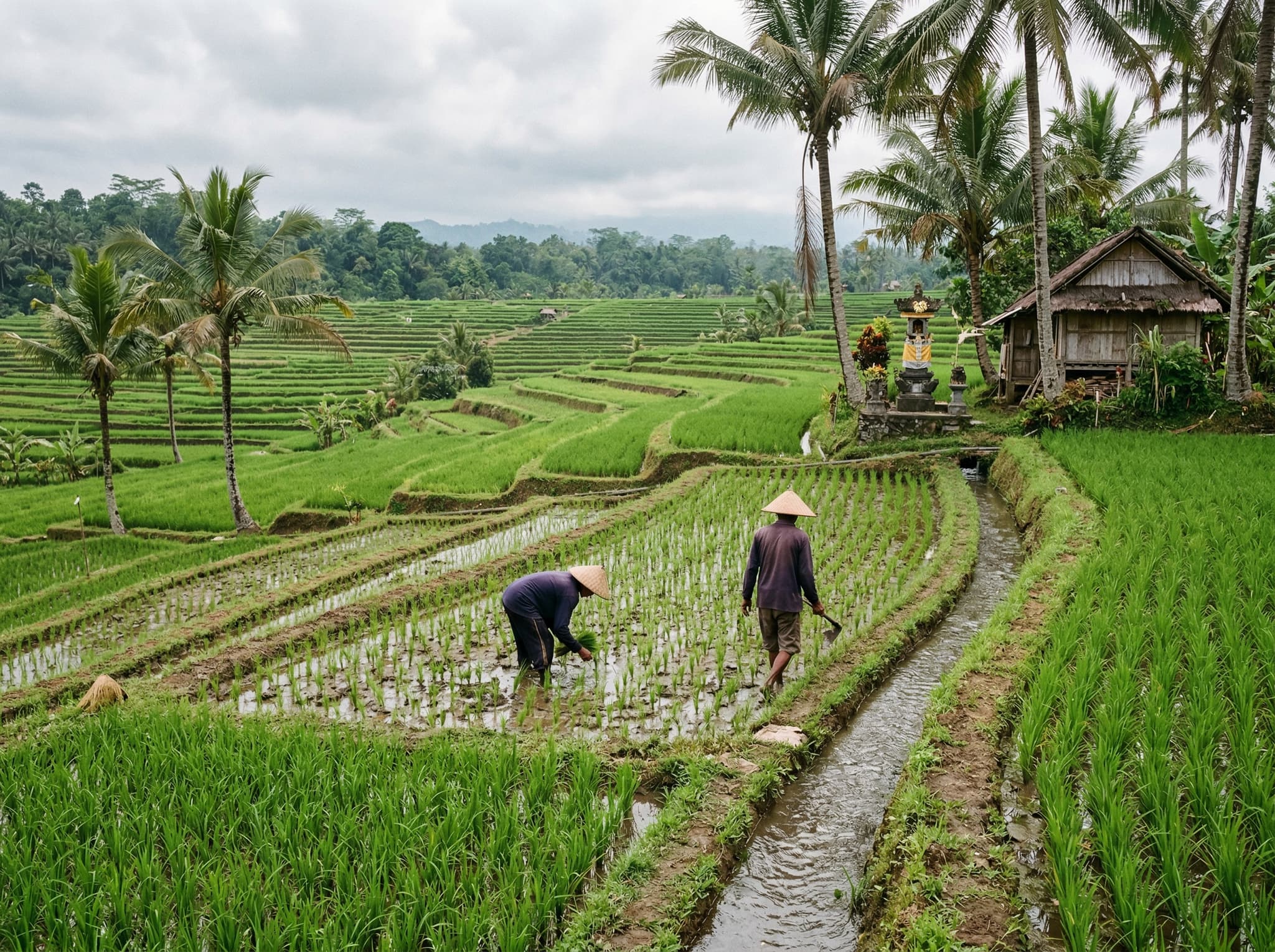
The main road — Jalan Pererenan — runs roughly parallel to the coast, lined with cafés, yoga studios, a few boutique shops, and an increasing number of villas. Side roads cut through rice fields toward the beach. The development is real and accelerating, but as of now, you still get actual agricultural land between the buildings. That's the key difference from Canggu proper, where the rice paddies are mostly decorative backdrops for brunch spots.

Getting to Pererenan

From Ngurah Rai Airport

60–90 min by car ($12–18 via Grab)

From central Canggu (Batu Bolong)

5–10 min by scooter

From Seminyak

20–30 min by scooter

From Ubud

60–75 min by car

The Beach
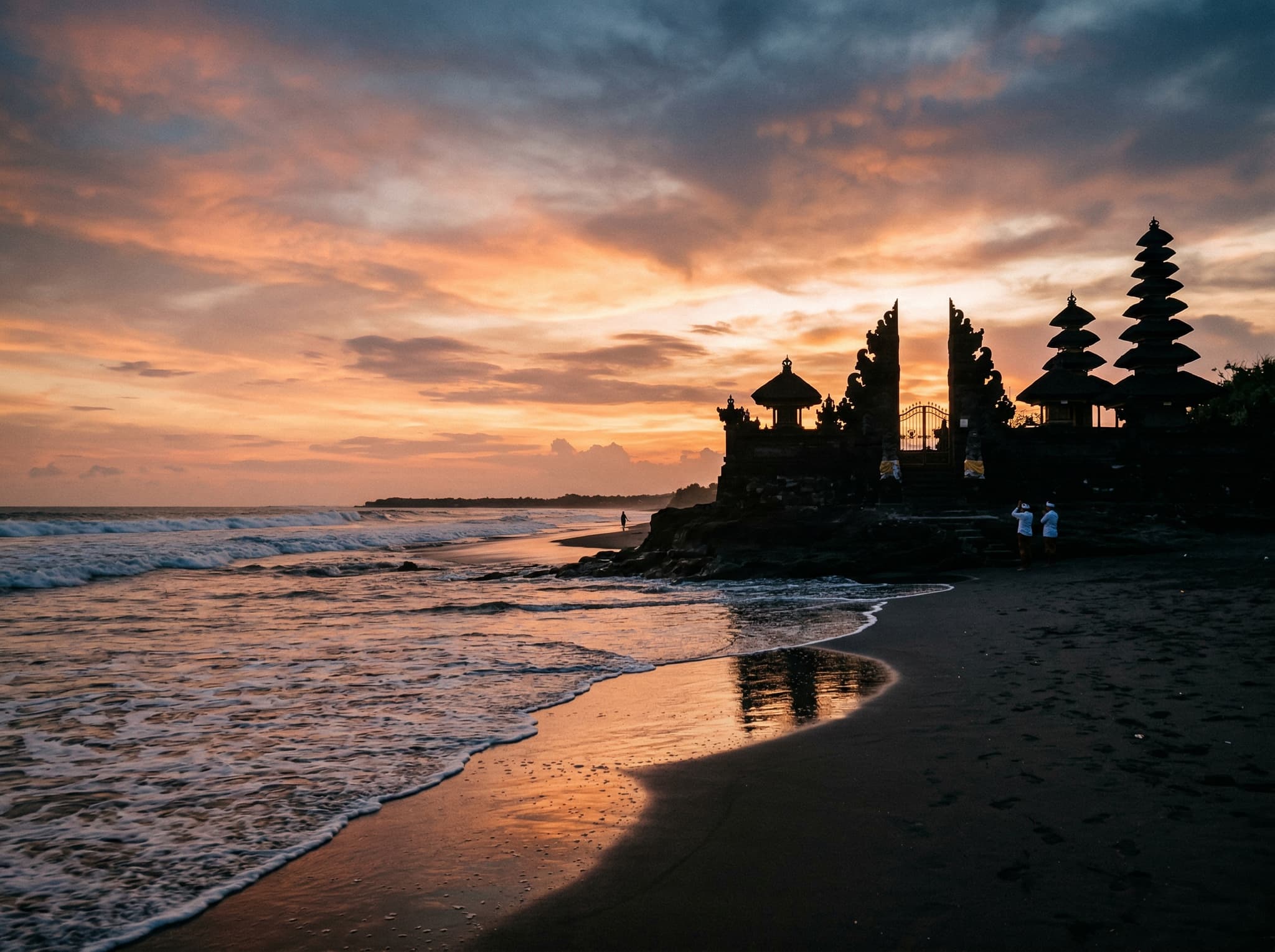
Pura Masceti temple at Pererenan Beach, Bali at sunset — the dark stone temple gate silhouetted against a warm orange and pink sky, waves washing onto black sand in the foreground, no beach club infrastructure visible. Directly illustrates the article's callout tip about the temple sunset being one of the better free views on the coast.
Pura Masceti temple at Pererenan Beach, Bali at sunset — the dark stone temple gate silhouetted against a warm orange and pink sky, waves washing onto black sand in the foreground, no beach club infrastructure visible. Directly illustrates the article's callout tip about the temple sunset being one of the better free views on the coast.AI-generated illustration

Pererenan Beach is a black-sand stretch backed by low cliffs and a Hindu temple — Pura Masceti — that sits right on the shoreline. The sand is dark volcanic, the waves are consistent, and the crowd is a fraction of what you'd find at Batu Bolong or Echo Beach.

Swimming conditions vary. The current can be strong, especially during high tide, and there are rocks in sections. This isn't a lazy float-in-the-shallows beach. It's a surf beach with a moody personality, and that's precisely why it hasn't attracted the sunbed-and-cocktail crowd.

For surfing, the break works best at mid to high tide. It's a beach break — punchy, not particularly long, but fun and uncrowded compared to the Canggu lineup where you're competing with 40 other people for every wave. Intermediate surfers will get the most out of it. Beginners should stick to Batu Bolong, where the wave is more forgiving and board rentals are everywhere.

Sunset at Pererenan Beach is genuinely good — the temple silhouette against the sky is one of the better free views on this coast. Arrive by 5:30 PM and bring your own drink. There's no beach club markup here.

Where to Eat and Drink

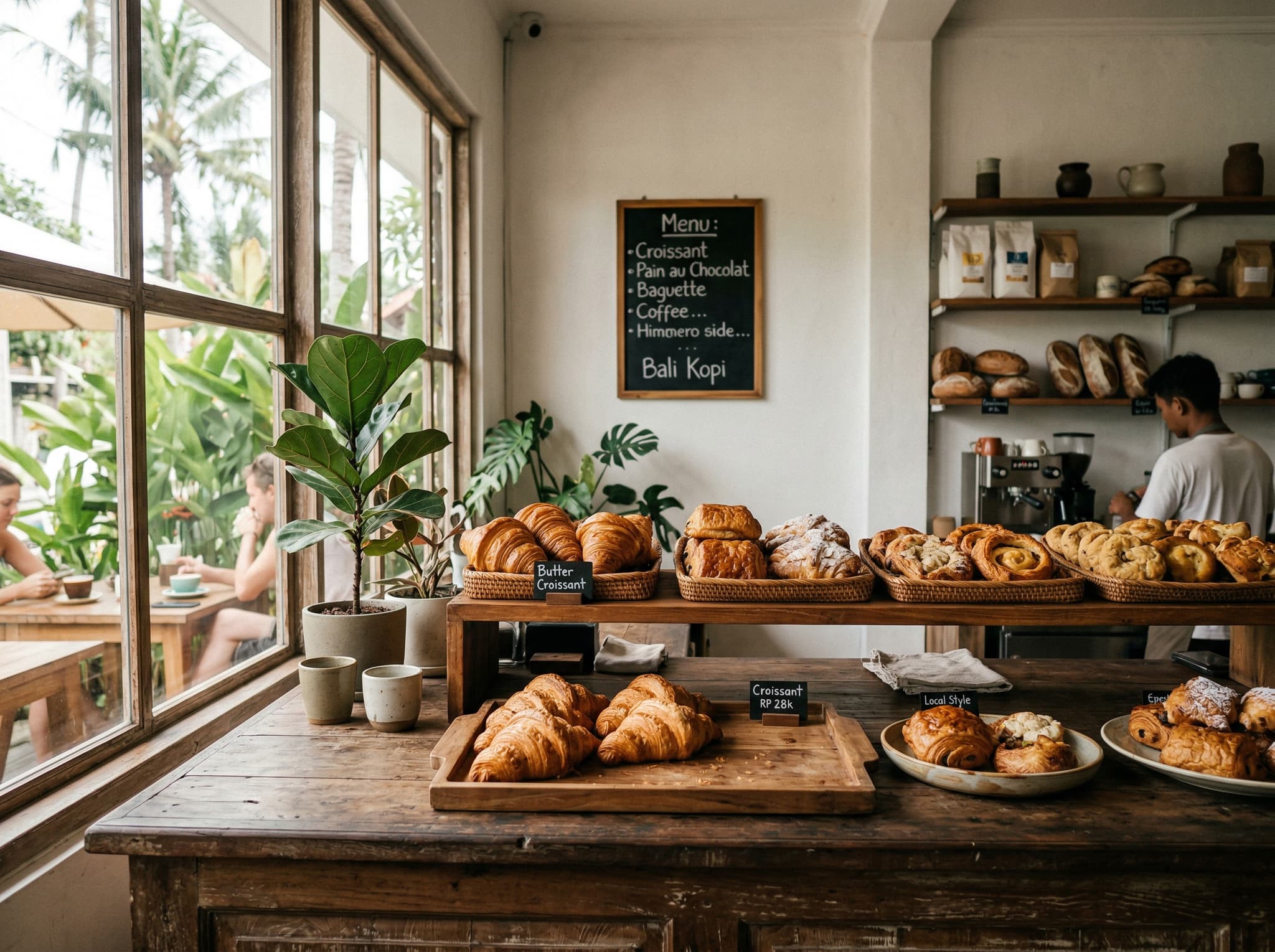
Interior or exterior of Monsieur Spoon bakery in Pererenan, Bali — freshly baked croissants and pastries on a wooden counter or display shelf, warm natural light from a window, simple café aesthetic. Supports the food section's recommendation and conveys the relaxed, less-chaotic atmosphere of the Pererenan location versus the Batu Bolong original.
Interior or exterior of Monsieur Spoon bakery in Pererenan, Bali — freshly baked croissants and pastries on a wooden counter or display shelf, warm natural light from a window, simple café aesthetic. Supports the food section's recommendation and conveys the relaxed, less-chaotic atmosphere of the Pererenan location versus the Batu Bolong original.AI-generated illustration

Pererenan's food scene has matured quickly. A few standouts worth your time:

Monsieur Spoon — The bakery that half of Canggu's expat population already knows. The Pererenan location is less chaotic than the Batu Bolong original. Croissants are 35,000–45,000 IDR ($2.20–$2.80) and legitimately good. Not Paris good. Bali good, which is its own category.

Shady Shack — Vegetarian and vegan menu, well-executed. Bowls and salads run 65,000–95,000 IDR ($4–$6). Popular with the yoga crowd but the food earns the reputation independently.

Warung Nasi Ayam Bu Oki — Local warung serving nasi campur for 25,000–35,000 IDR ($1.50–$2.20). This is where the price-to-quality ratio makes the café scene look absurd. If you're eating every meal at Western-style cafés in Pererenan, you're overspending and eating worse.
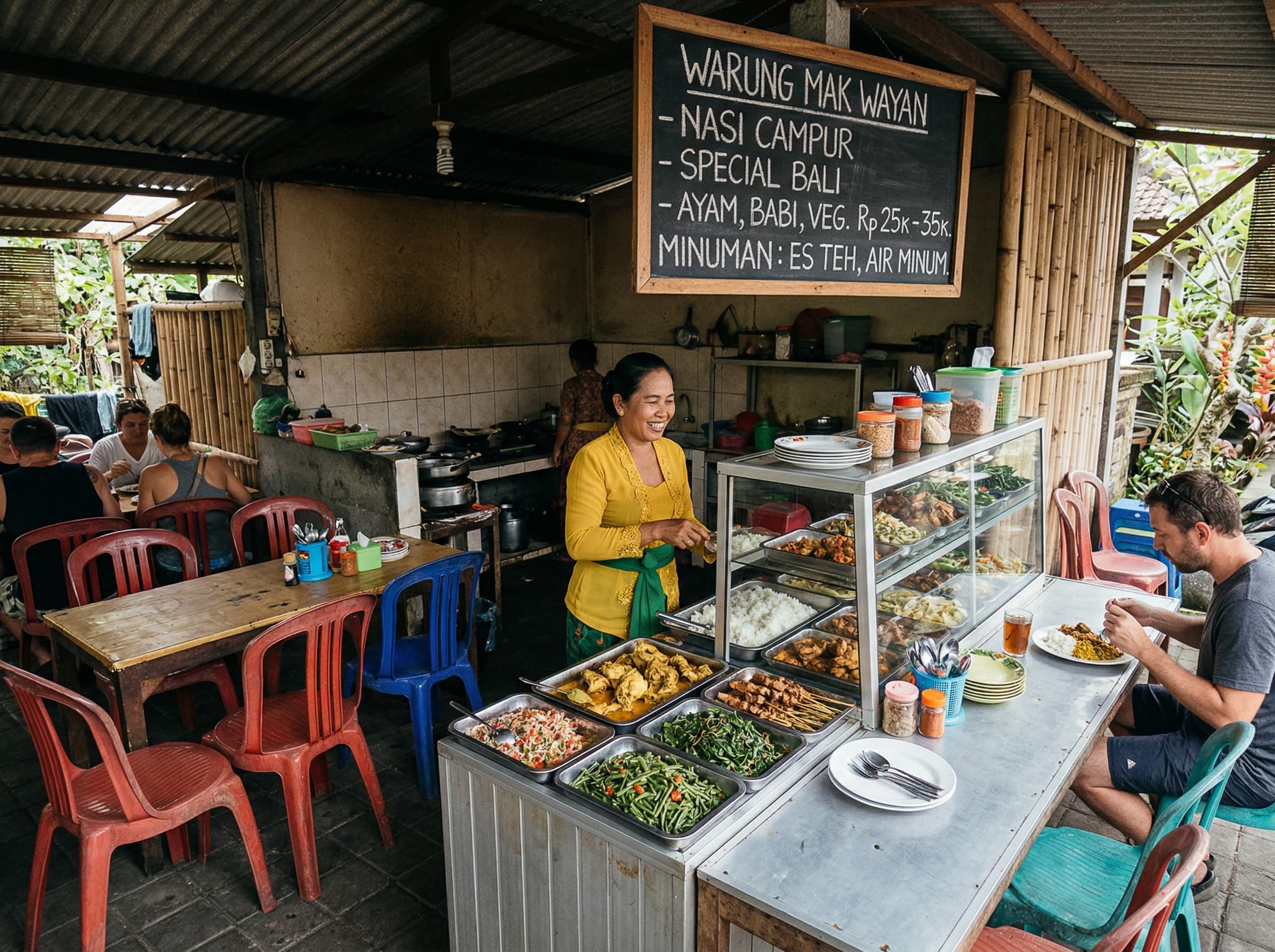
A local Balinese warung — small open-air roadside food stall with nasi campur dishes displayed in metal trays, a Balinese woman serving behind the counter, simple plastic chairs and tables, natural daylight. Illustrates the article's recommendation of Warung Nasi Ayam Bu Oki and its argument that local warungs offer better value and quality than Western-style cafés.
A local Balinese warung — small open-air roadside food stall with nasi campur dishes displayed in metal trays, a Balinese woman serving behind the counter, simple plastic chairs and tables, natural daylight. Illustrates the article's recommendation of Warung Nasi Ayam Bu Oki and its argument that local warungs offer better value and quality than Western-style cafés.AI-generated illustration

Desa Potato Head — The sprawling creative village just south in Petitenget is technically outside Pererenan, but it's a 15-minute scooter ride and worth mentioning. It's corporate-creative Bali at its most polished — expensive, designed within an inch of its life, and genuinely impressive as a space. Day passes to the beach club start around 250,000 IDR ($16). Go once for the architecture. You don't need to go twice.

Meal Cost Comparison

Local warung meal

25,000–40,000 IDR ($1.50–$2.50)

Mid-range café meal

65,000–120,000 IDR ($4–$7.50)

Upscale dinner

200,000–400,000 IDR ($12–$25)

Bintang beer (shop)

25,000 IDR ($1.60)

Where to Stay
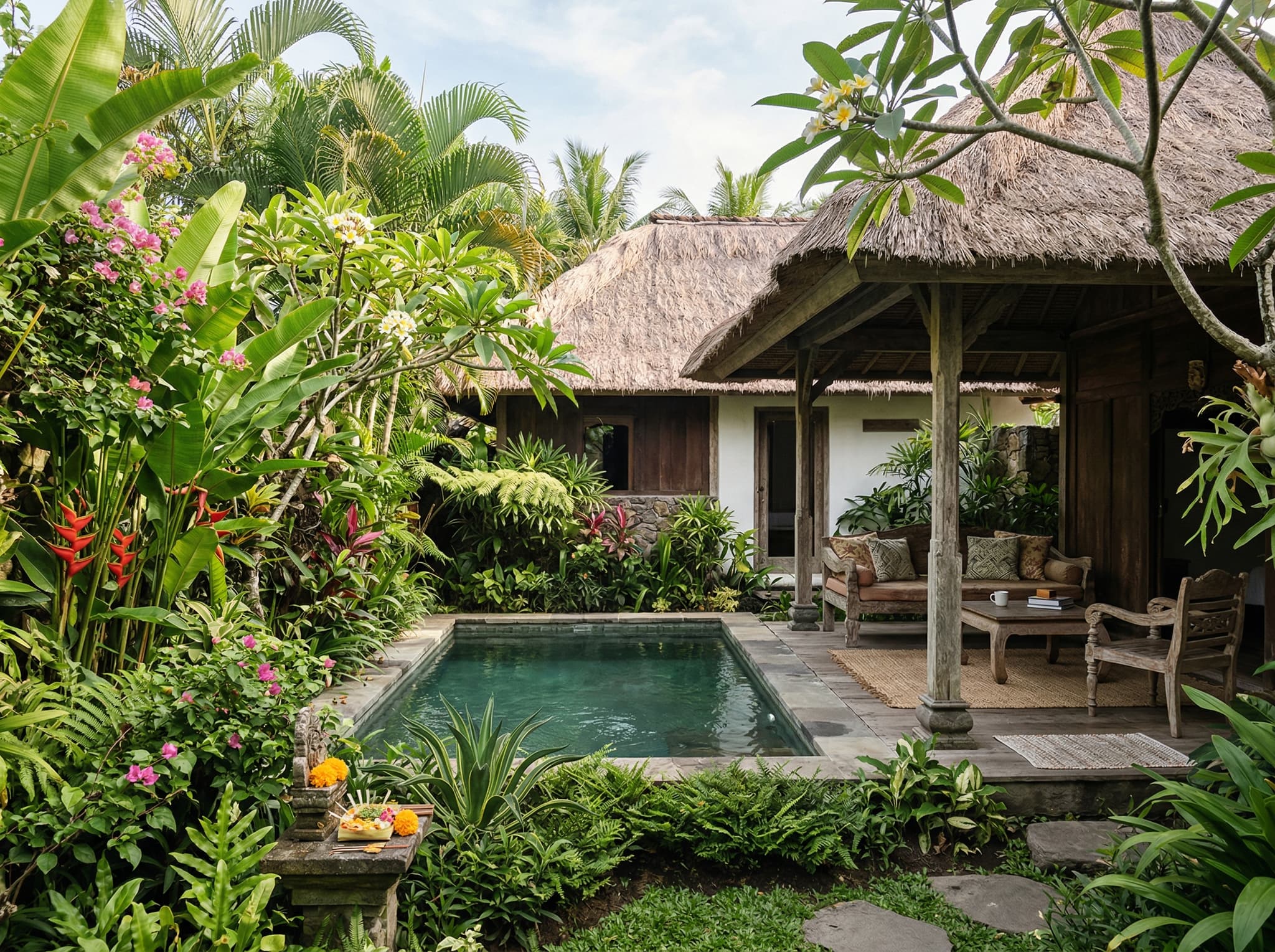
A private villa with a small pool surrounded by tropical garden in Pererenan, Bali — open-air living pavilion, lush greenery, morning light on the water. Supports the accommodation section's argument that Pererenan offers more space and value than Seminyak, with private villas at $40–80/night.
A private villa with a small pool surrounded by tropical garden in Pererenan, Bali — open-air living pavilion, lush greenery, morning light on the water. Supports the accommodation section's argument that Pererenan offers more space and value than Seminyak, with private villas at $40–80/night.AI-generated illustration

Pererenan's accommodation skews toward private villas and mid-range guesthouses rather than big hotels. This is a feature, not a bug.

A well-reviewed one-bedroom villa with a private pool runs $40–$80/night on Booking.com or Airbnb. For that price in Seminyak, you're getting a cramped hotel room with a view of a construction site. The value proposition in Pererenan is straightforward: more space, more quiet, less money.

Budget travelers can find guesthouses and homestays for $15–$25/night. They won't have pools, but they'll be clean, central, and run by families who'll point you toward the best local warungs — which is worth more than a pool anyway.

Book directly with villa owners when possible. Many Pererenan villas offer 10–20% discounts for direct bookings versus platform rates. Ask via WhatsApp — it's the standard communication channel here.

The Honest Assessment

Aerial or ground-level view of active rice paddies in Pererenan or northern Canggu, Bali — terraced green fields with irrigation channels, a few palm trees, a traditional Balinese farmhouse or shrine at the edge. Anchors the article's closing argument that Pererenan's rice fields are still functioning agricultural land, not decorative backdrops — the defining difference from Canggu proper.
Aerial or ground-level view of active rice paddies in Pererenan or northern Canggu, Bali — terraced green fields with irrigation channels, a few palm trees, a traditional Balinese farmhouse or shrine at the edge. Anchors the article's closing argument that Pererenan's rice fields are still functioning agricultural land, not decorative backdrops — the defining difference from Canggu proper.AI-generated illustration

Pererenan is not a secret. It's on the same trajectory Canggu was on five years ago, and anyone telling you otherwise is selling nostalgia. New construction is visible everywhere. The café density is climbing. Rents are rising.

But right now — and "right now" is doing real work in that sentence — it offers a better version of the southwest Bali coast experience. The surf is less crowded. The rice fields are still rice fields. The food is good without the two-hour brunch queue. And you're five minutes from everything Canggu offers when you want it.

The practical question isn't whether Pererenan is worth visiting. It's whether you want your Bali base to be in the middle of the action or just beside it. If you want nightlife, social density, and maximum options, stay in Canggu proper. If you want the same coast with the volume turned down by about 60%, Pererenan is the obvious move.

It won't stay this way forever. But for now, the math works.
Frequently Asked Questions

Conditions are mixed. The current can be strong, especially at high tide, and rocky sections exist. It's primarily a surf beach. For calmer swimming, head south to Berawa or consider a villa with a pool.
Strongly recommended. The village is spread out along a main road with side lanes branching toward the beach and rice fields. Daily scooter rental runs 60,000–80,000 IDR ($3.75–$5). Grab is available but less reliable here than in central Canggu.
Yes. Several cafés have solid WiFi (20–50 Mbps), and co-working spaces like Outpost Canggu are a short ride south. Villa WiFi varies — confirm speeds before booking if you're working remotely.
Seminyak is 20–30 minutes by scooter, Ubud is about 60–75 minutes by car, and Uluwatu is roughly 90 minutes. The airport takes 60–90 minutes depending on traffic.
Share

Related Articles