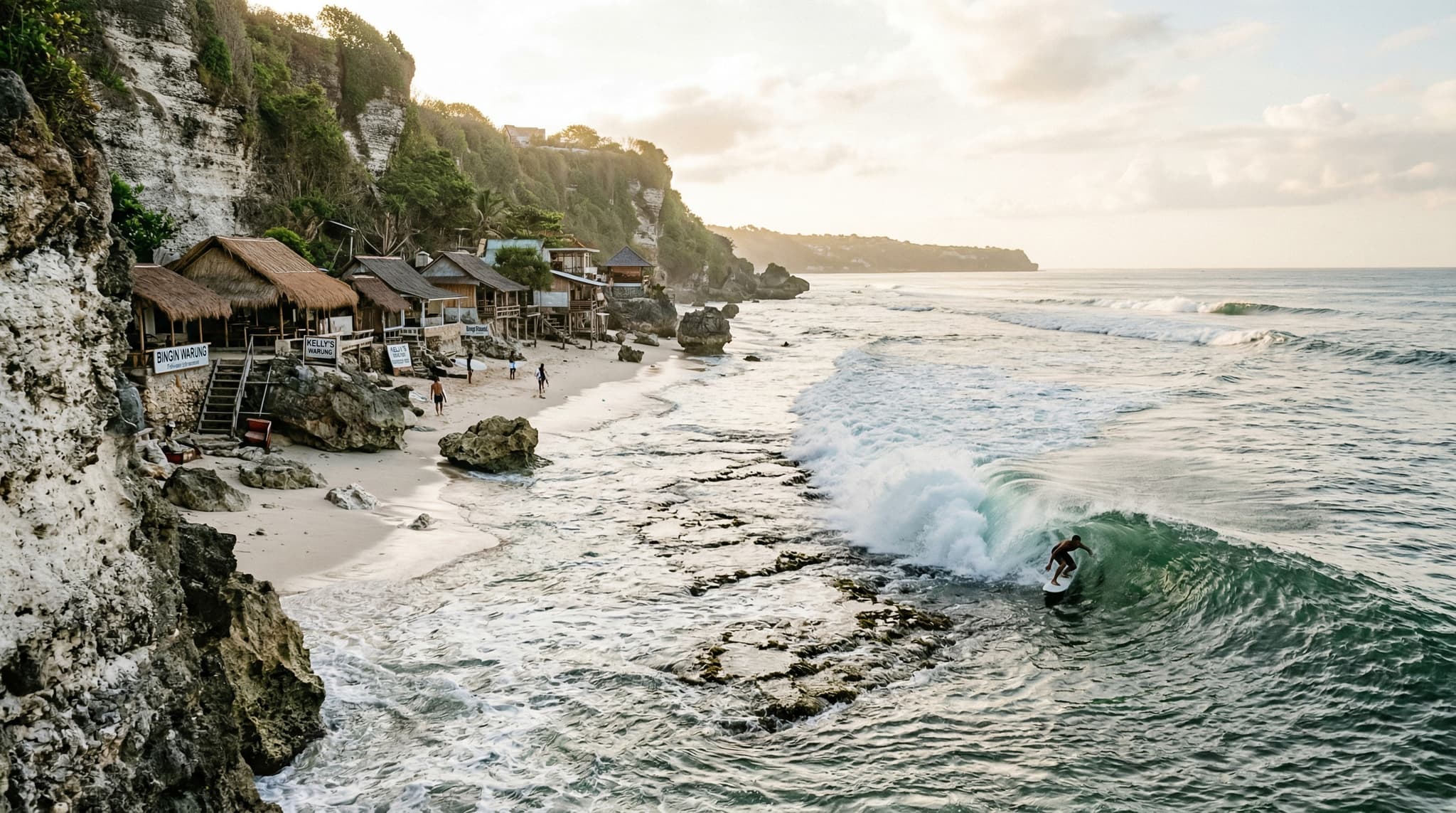
Bingin Beach on Bali's Bukit Peninsula rewards surfers and beachgoers who descend 187 cliff-carved steps with world-class lefts and sand-level warungs.
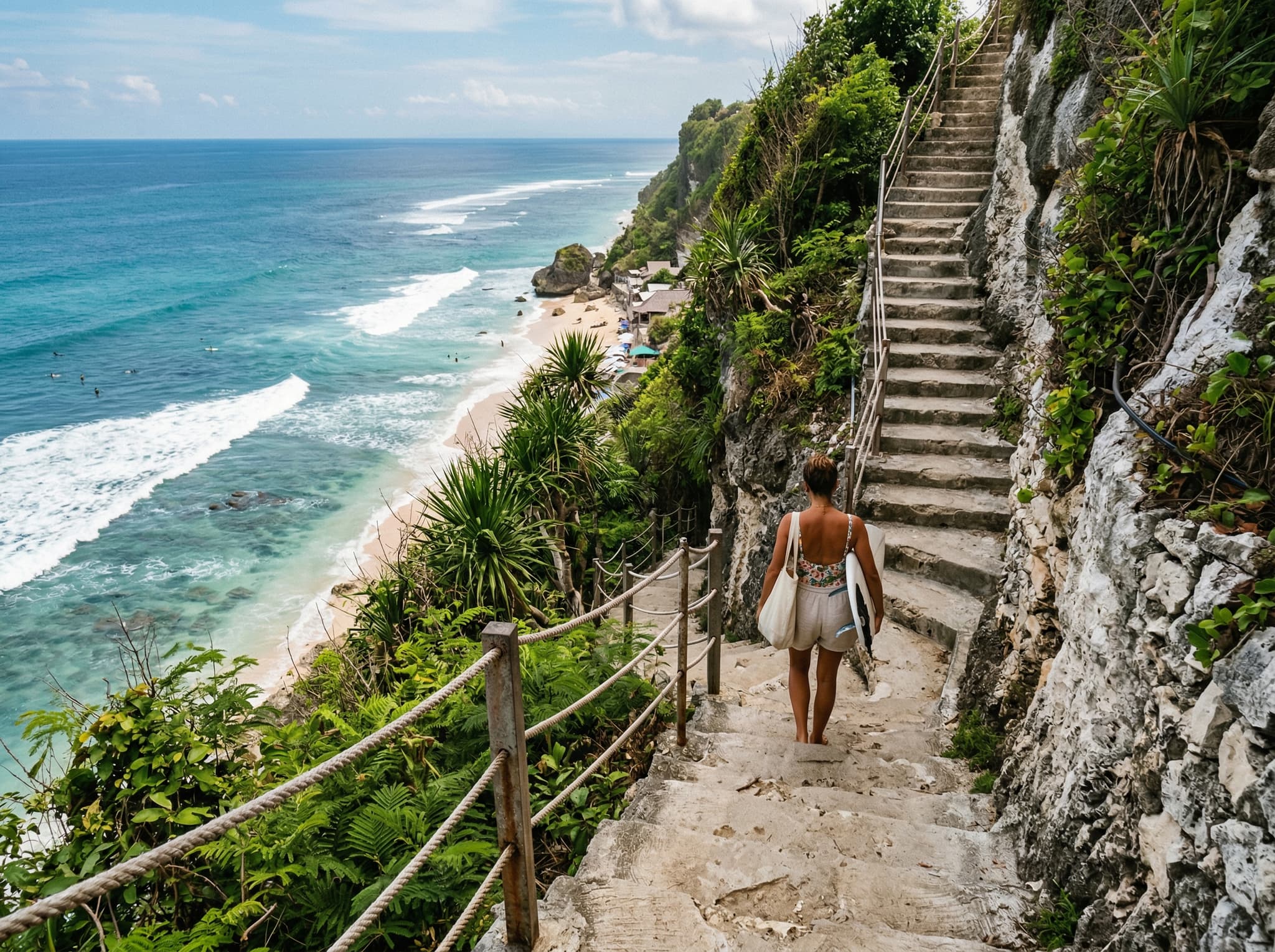
Bingin Beach sits at the bottom of a limestone cliff on Bali's Bukit Peninsula, which is both its defining feature and its best defense against overdevelopment. To reach the sand, you park in a dirt lot at the cliff's edge, walk through a narrow lane lined with guesthouses and surf shops, and then descend roughly 187 steep concrete steps carved into the rock face. There's no vehicle access to the beach itself. No shuttle. No elevator. Just stairs, gravity, and the knowledge that you'll be climbing back up later.
This natural gatekeeping is what makes Bingin feel like a different Bali from the one most visitors encounter. While Seminyak and Canggu have expanded into sprawling commercial strips, Bingin has remained compact by necessity — a pocket-sized beach backed by cliffs, framed by limestone outcrops, and oriented toward some of the most consistent left-hand barrels in Southeast Asia.
The Surf
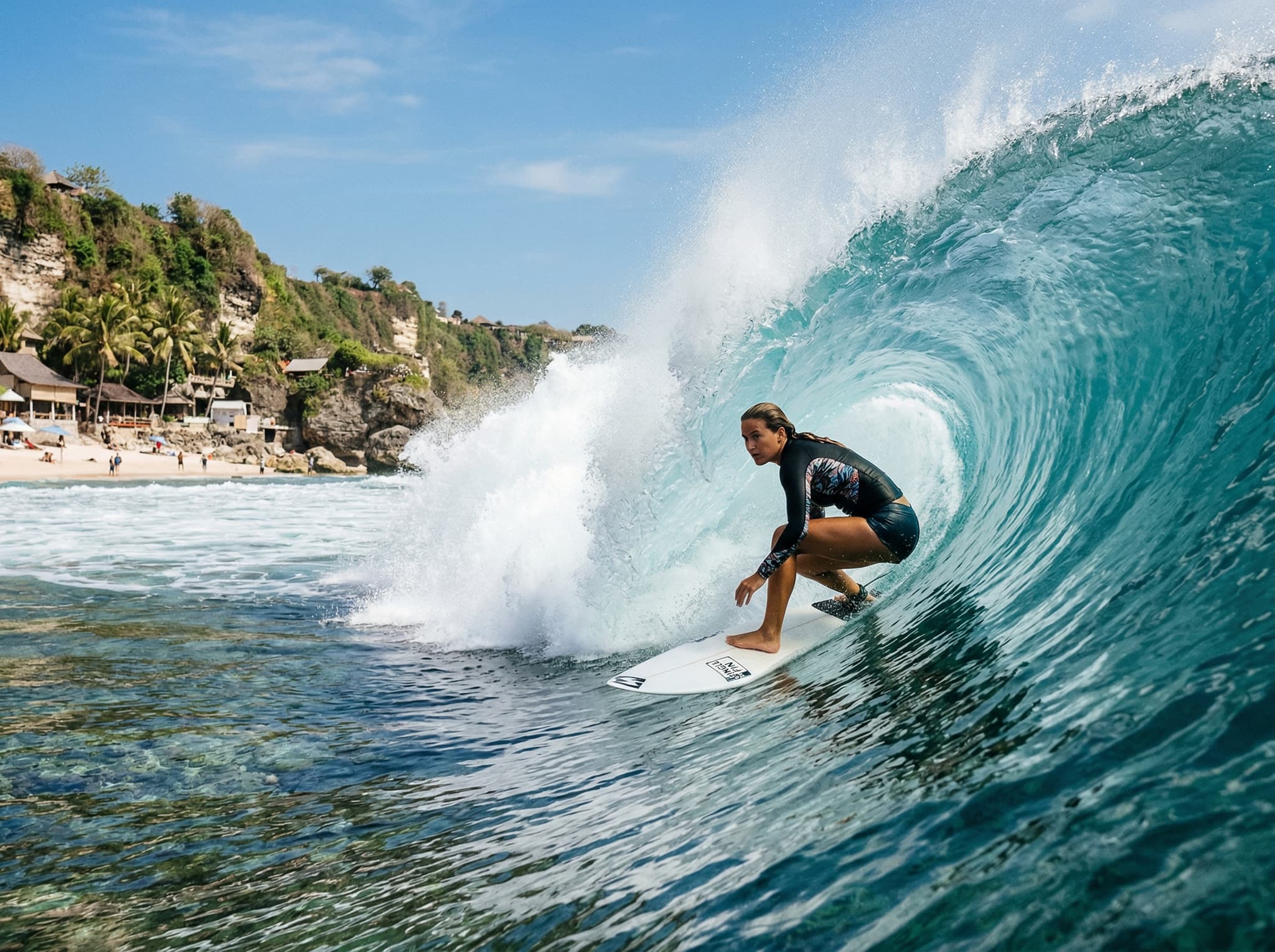
Bingin is a reef break, and it's not subtle about it. The wave breaks over shallow coral, producing hollow, fast lefts that barrel reliably during the dry season. Southwest swells between June and August push faces from waist-high to double overhead, and the southeast trade winds blow offshore, grooming the waves into the kind of clean lines that surf photographers build careers around.
Surf Conditions
Wave Type
Left-hand reef break
Swell Direction
S–SW
Best Tide
Mid to neap; high tide for safer barrels
Crowd Level
Consistently heavy
Skill Level
Intermediate to advanced
This is not a beginner wave. Low tide exposes the reef to a degree that makes even experienced surfers cautious — takeoffs are steep, the coral is shallow, and drifting onto the reef is a real risk. High tide offers longer rides and more forgiving conditions, but the lineup is crowded with surfers who know what they're doing. Localism runs strong here. Respect the rotation, don't drop in, and if the vibe feels tense, paddle to the shoulder.
April and October are solid shoulder months — transitional swells with lighter winds and thinner crowds. November through March brings smaller, less consistent surf and onshore winds that generally make Bingin not worth the staircase.
The Beach
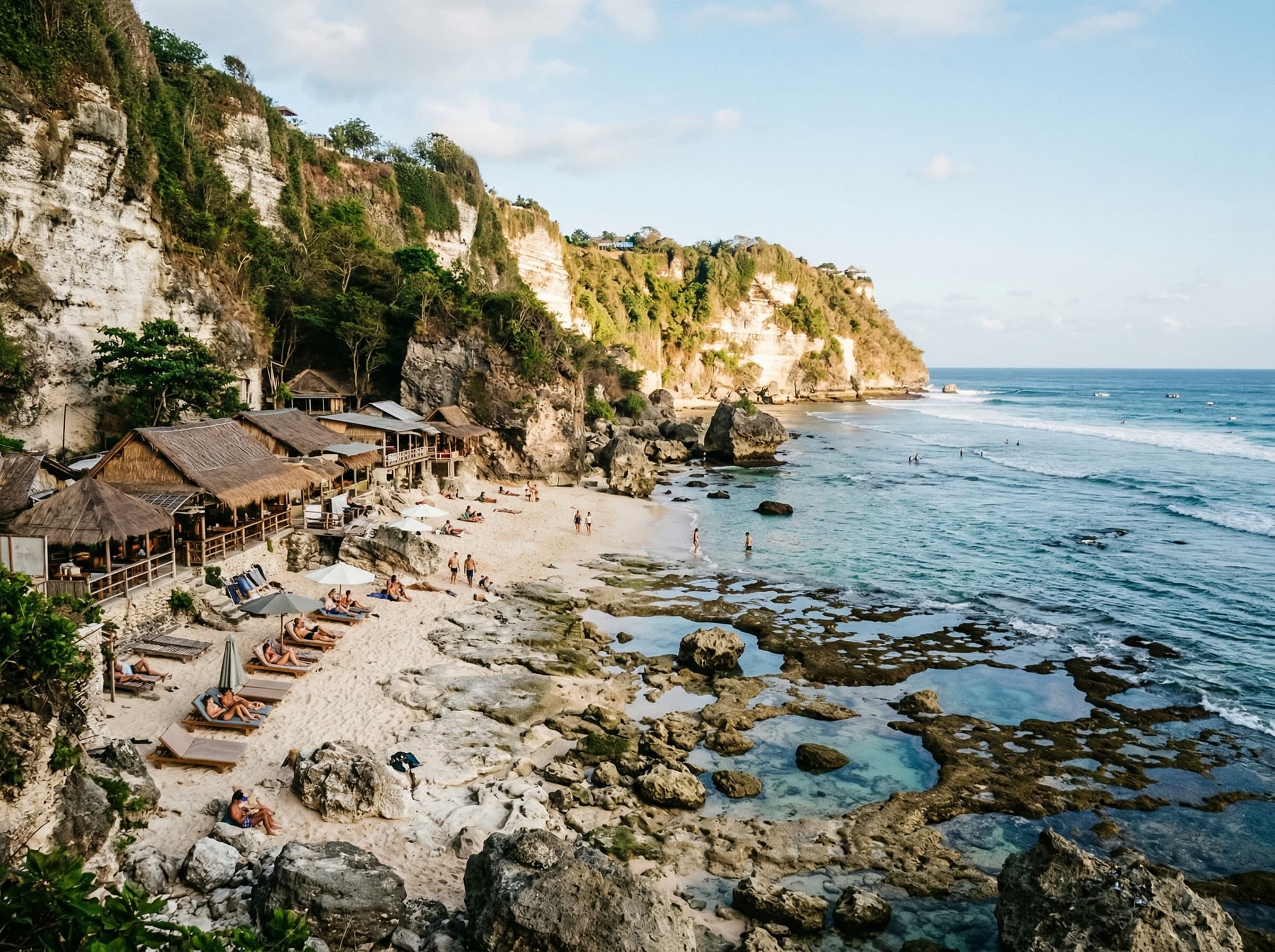
Beyond the surf, Bingin is a genuinely beautiful stretch of sand. The beach is narrow — especially at high tide, when waves push up against the cliff base — but at low tide it opens up into a wider strip of white sand dotted with limestone boulders and tide pools. The cliffs provide natural shade in the afternoon, and the whole scene has a scale that feels intimate rather than grand.
Sunbed rentals are available from the beachfront warungs, though prices aren't published and tend to fluctuate. Bring cash — card payment is rare down on the sand.
Where to Eat
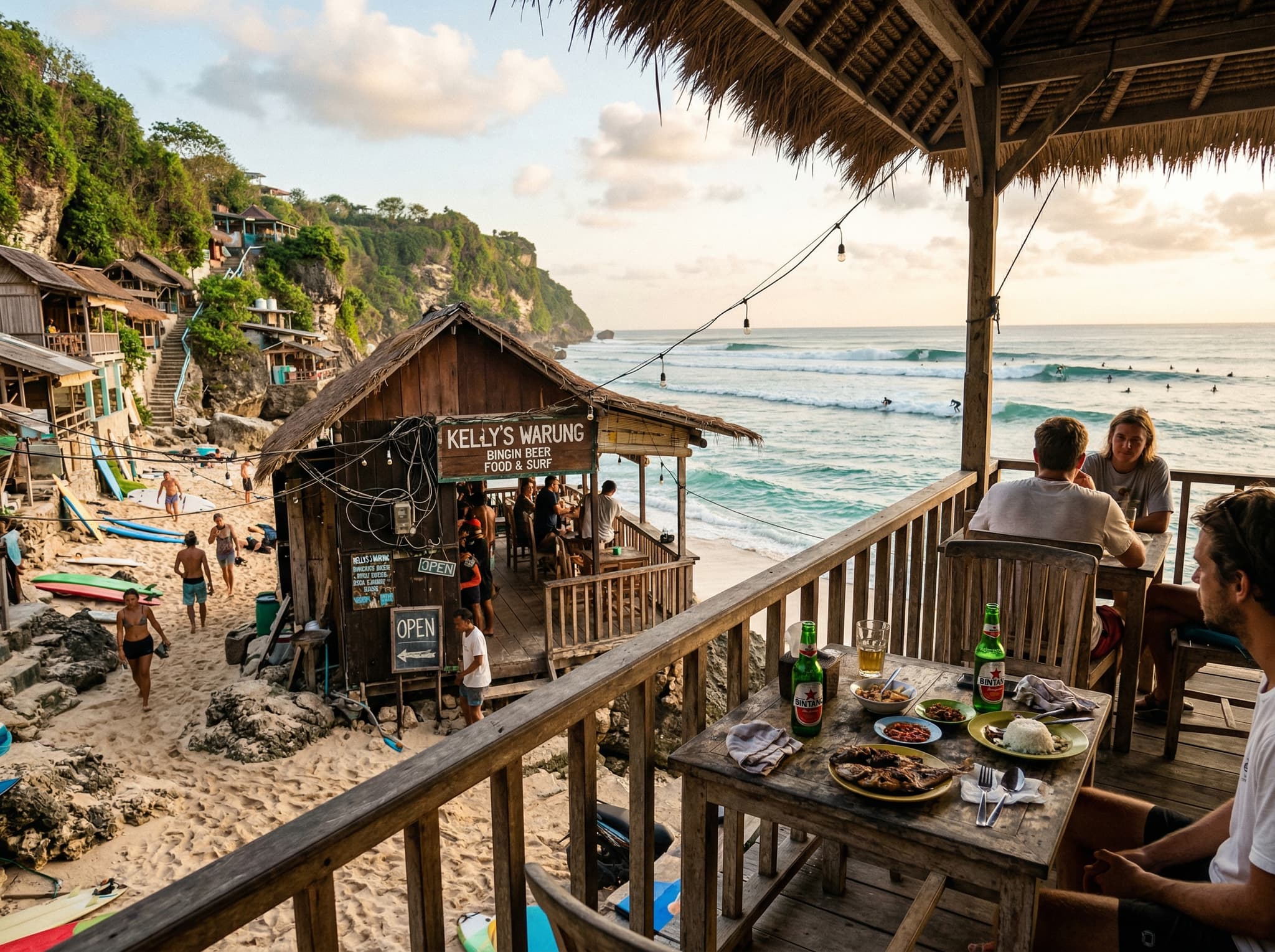
The two anchor spots on the beach are Kelly's Warung and Bingin Ombak Warung, both operating at sand level with views directly onto the break.
Kelly's Warung is the more established of the two — a two-level setup serving grilled fish, prawns with rice and vegetables, and cold Bintangs. Meals start around IDR 70,000 (~$4.50). It's cash only. The upper deck is the spot for watching the sunset lineup.
Bingin Ombak Warung sits further down the beach and leans into the evening scene, with live music at sunset and a bar perched above the sand. It's the better pick if you're staying for the golden hour.
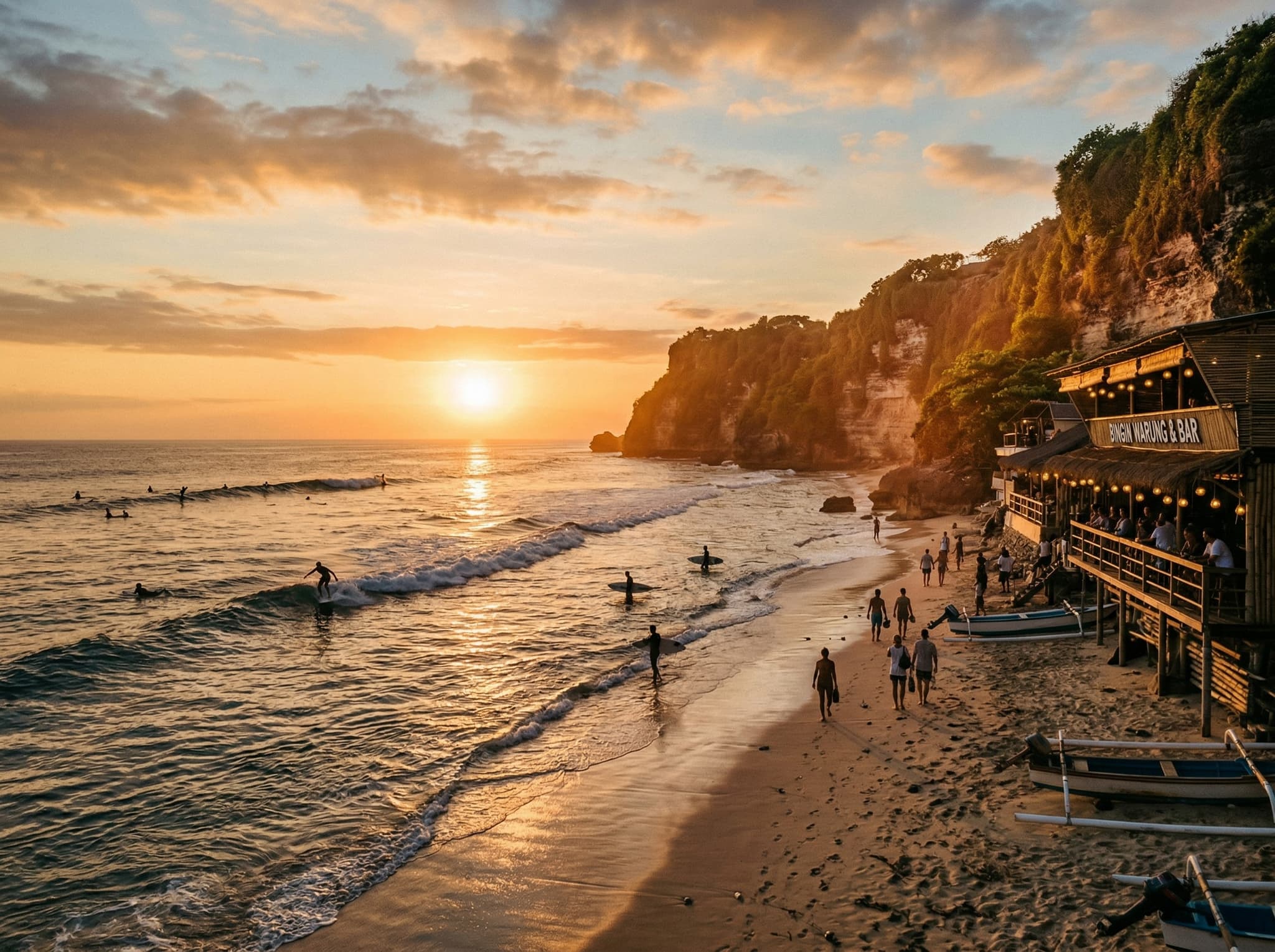
For something more upscale, the cliffs above Bingin host a handful of restaurants in the $$–$$$ range. El Kabron serves Spanish-influenced cuisine with dramatic ocean views. Akasa focuses on seafood and health-forward dishes. Both require heading back up the stairs and driving a short distance.
Getting There
Bingin is in the Pecatu area, at the southern tip of the Bukit Peninsula. From Seminyak, it's about 21 kilometers — a drive that takes anywhere from 45 minutes to 90 minutes depending on when you leave.
A Bluebird metered taxi from Seminyak runs approximately IDR 170,000–220,000 (~$10–13). Grab and Gojek are generally cheaper but may face pickup restrictions in some areas of the Bukit. On a scooter, expect about 70 minutes in light traffic. Parking at the cliff-top lot costs IDR 2,000 — essentially nothing.
There are two entrance points from the road. Both lead to the same cliff-top parking area and the same staircase descent.
What's Changing
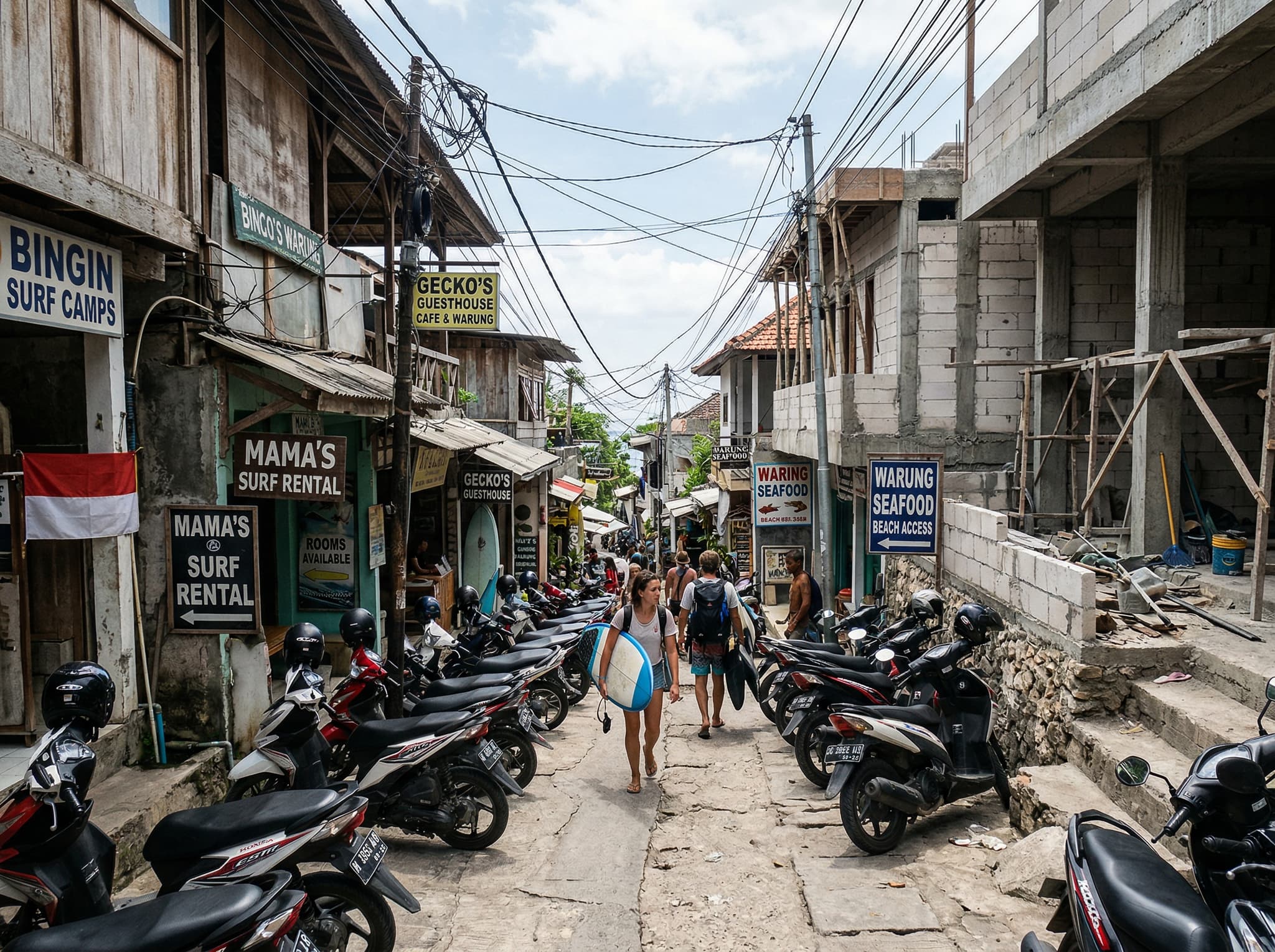
Bingin's cliffside is seeing significant new construction as of late 2025. New guesthouses and businesses have altered the skyline above the beach, and the narrow lanes leading to the staircase are more congested than they were even a couple of years ago. Foot traffic has surpassed pre-pandemic levels. Some demolition activity near the beach has intermittently affected access routes and conditions — it's worth checking recent visitor reports before heading down if you're planning around a specific window.
The beach itself hasn't fundamentally changed. But the infrastructure around it is in flux, and the Bingin of 2026 is busier, more built-up, and harder to park near than the one that earned its reputation as a hidden gem a decade ago. It's still worth the stairs. Just don't expect to have them to yourself.