Penestanan is a traditional artist village on Ubud's western edge, known for its rice field walks, painter studios, and a calm that central Ubud lost years ago.
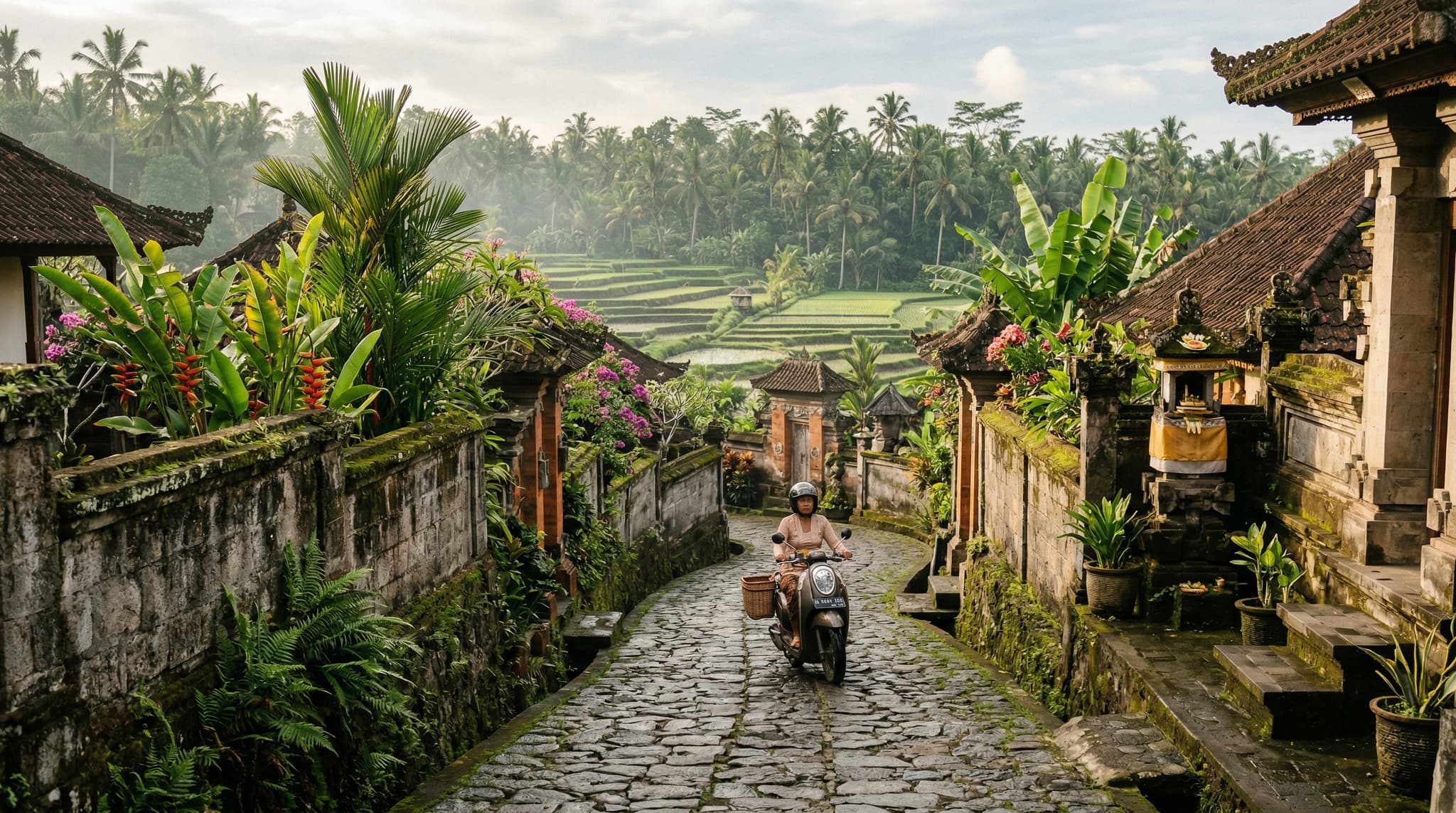
The first thing you notice in Penestanan is the quiet. Not silence — there are roosters, the clatter of a warung kitchen, the hum of a farmer's scooter threading through a path barely wider than its handlebars. But it's the absence of the other Ubud: the traffic on Jalan Raya, the honking at Monkey Forest Road, the general press of people trying to get somewhere. In Penestanan, most people are already where they want to be.
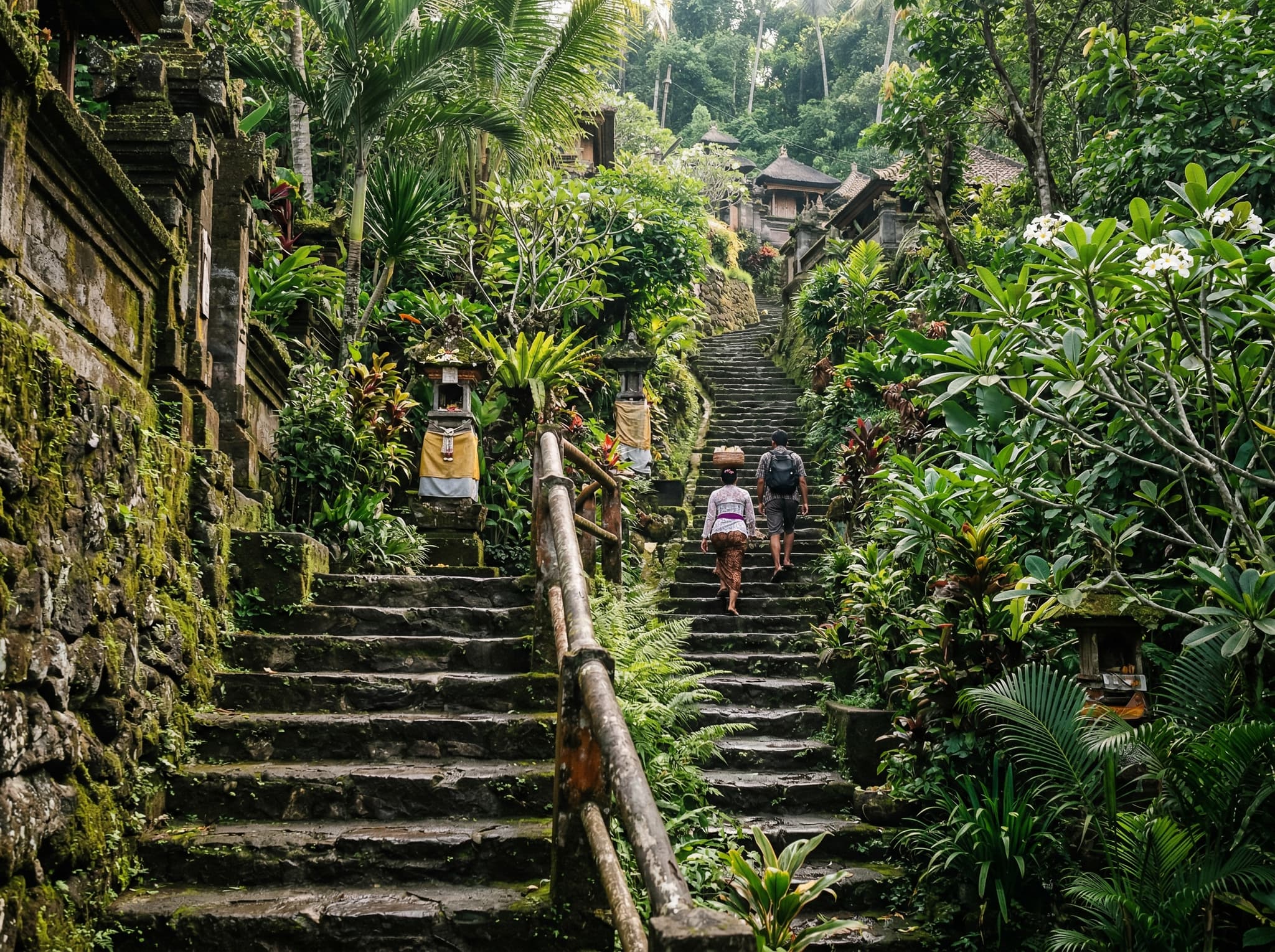
The village sits on a ridge west of central Ubud, separated by a river valley and connected by the Penestanan Steps — a steep stone staircase climbing from the Campuhan bridge. That short ascent functions as a kind of threshold. At the bottom, you're in the flow of Ubud tourism. At the top, you're in a neighborhood where painters still work in open-air studios and the dominant view is terraced rice fields stretching toward a canopy of coconut palms.
The Young Artists Village
Penestanan's identity as an artist enclave dates to the late 1950s, when Dutch painter Arie Smit settled here after becoming an Indonesian citizen. Smit began supplying art materials to local children, encouraging them to paint the landscapes and daily life around them. What emerged — bright, spontaneous, almost naive depictions of rice harvests, temple ceremonies, and village scenes — became known as the Young Artists Style. It was Bali seen through the eyes of people who had never needed to romanticize it.
That movement didn't appear in a vacuum. Decades earlier, Walter Spies and Rudolf Bonnet had co-founded the Pita Maha Association in 1936, fostering Balinese artistic development from Spies's villa in nearby Tjampuhan (now part of Hotel Tjampuhan). Their artists won silver medals at the 1937 Paris Colonial Art Exhibition. Spies hosted Margaret Mead and Gregory Bateson at that same villa. By the time Smit arrived, the creative infrastructure was already woven into the hillside.
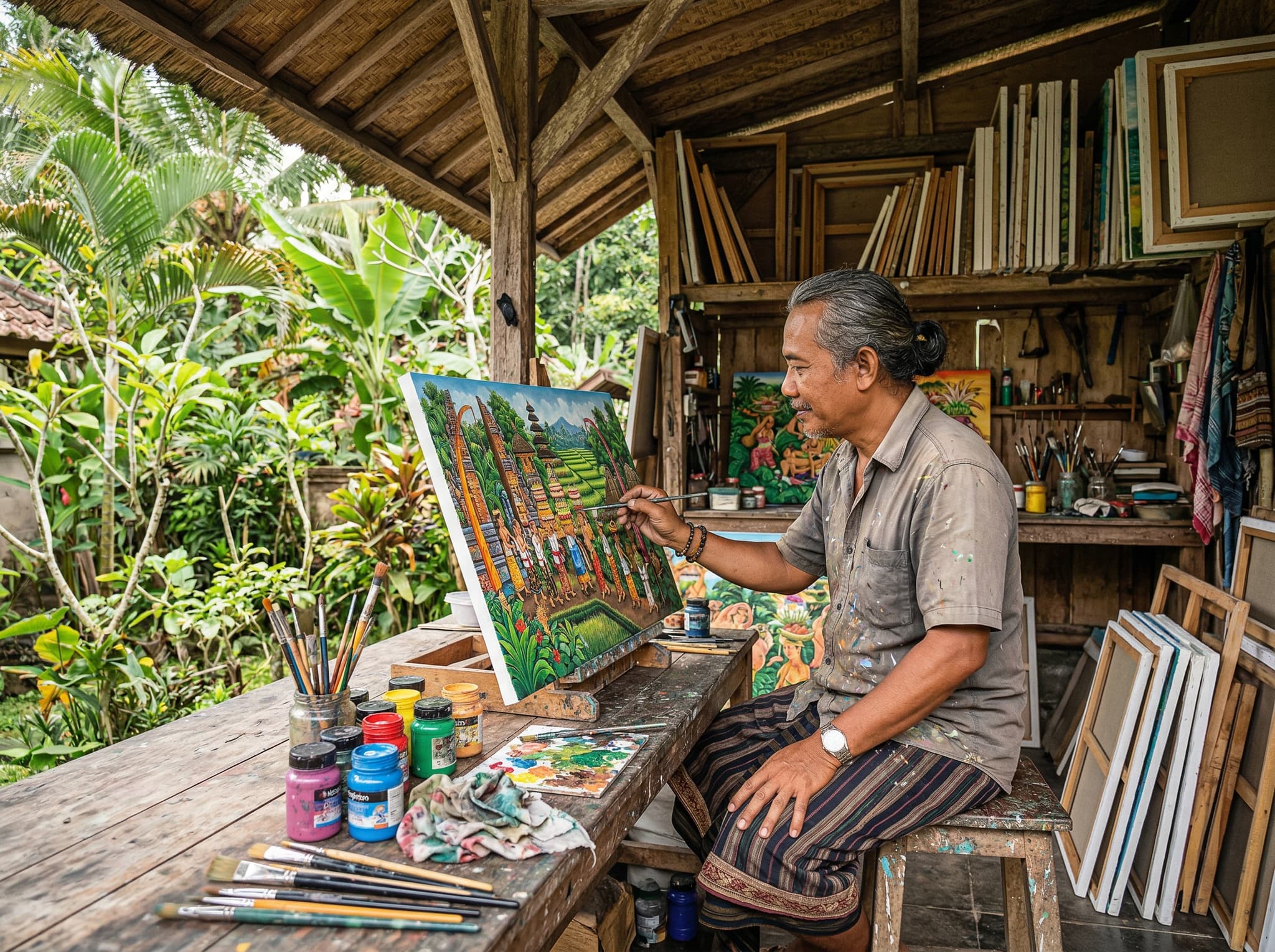
Today, you can see Young Artists Style works at the Agung Rai Museum of Art and Puri Lukisan in Ubud. In Penestanan itself, small studios and galleries still operate along the village lanes — less formal than a museum, more like walking into someone's workspace.
The Rice Field Walk
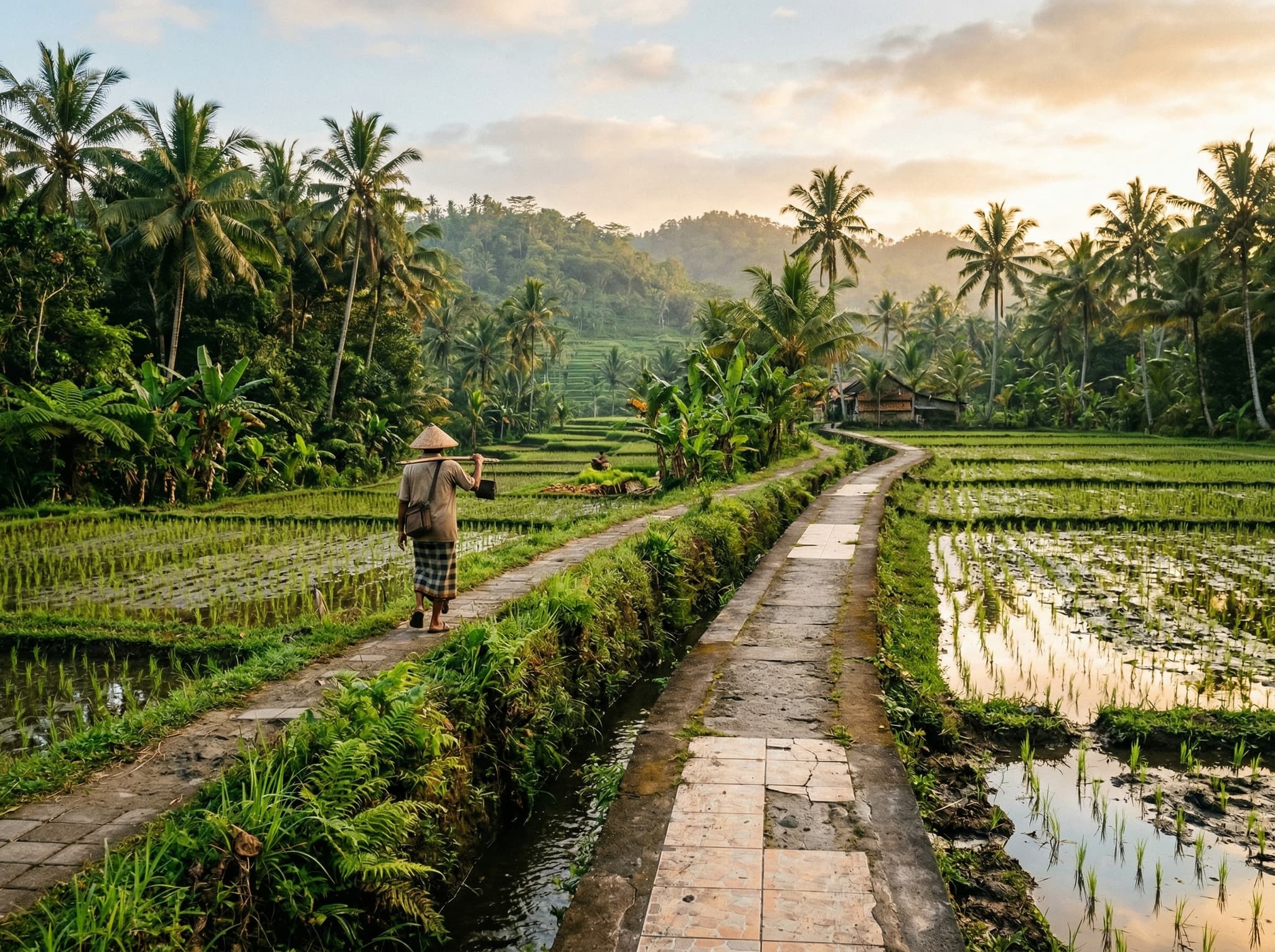
The Penestanan rice field walk is the village's main draw for visitors, and it's one of the better walks near Ubud precisely because it hasn't been engineered into an attraction.
Rice Field Walk Details
Distance
~1–2 km one way
Time
About 1 hour with stops
Surface
Narrow paved or tiled paths; muddy after rain
Fee
Free
There's no single designated entrance. Two popular starting points: the path beside Ms. Lazy Cafe on Jalan Raya Lungsiakan, or the narrow lane near Indian Tandoor Restaurant. Both lead into the same network of walkways that cut between flooded paddies and through temple compounds.
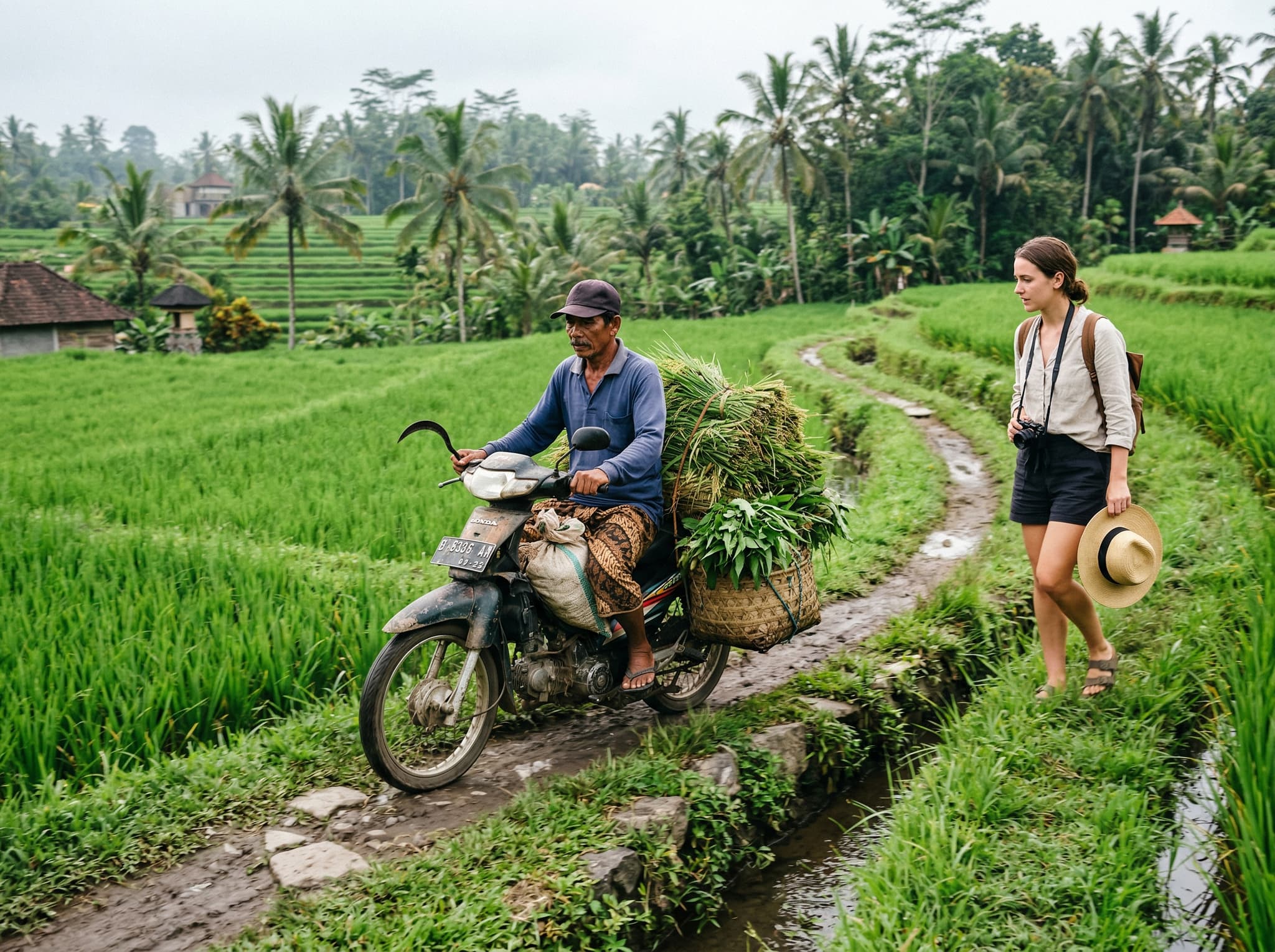
The paths are shared with farmers on scooters hauling crops — pull to the side when you hear one coming. After rain, sections get slippery. Wear shoes you don't mind getting muddy. The walk connects naturally to the Campuhan area, so you can loop back toward the ridge walk or continue into Ubud without retracing your steps.
Go early. By 7 a.m., the light is low and warm across the paddies, the paths are empty, and the air hasn't thickened yet. By mid-morning, the heat and the scooter traffic both pick up.
Eating and Drinking
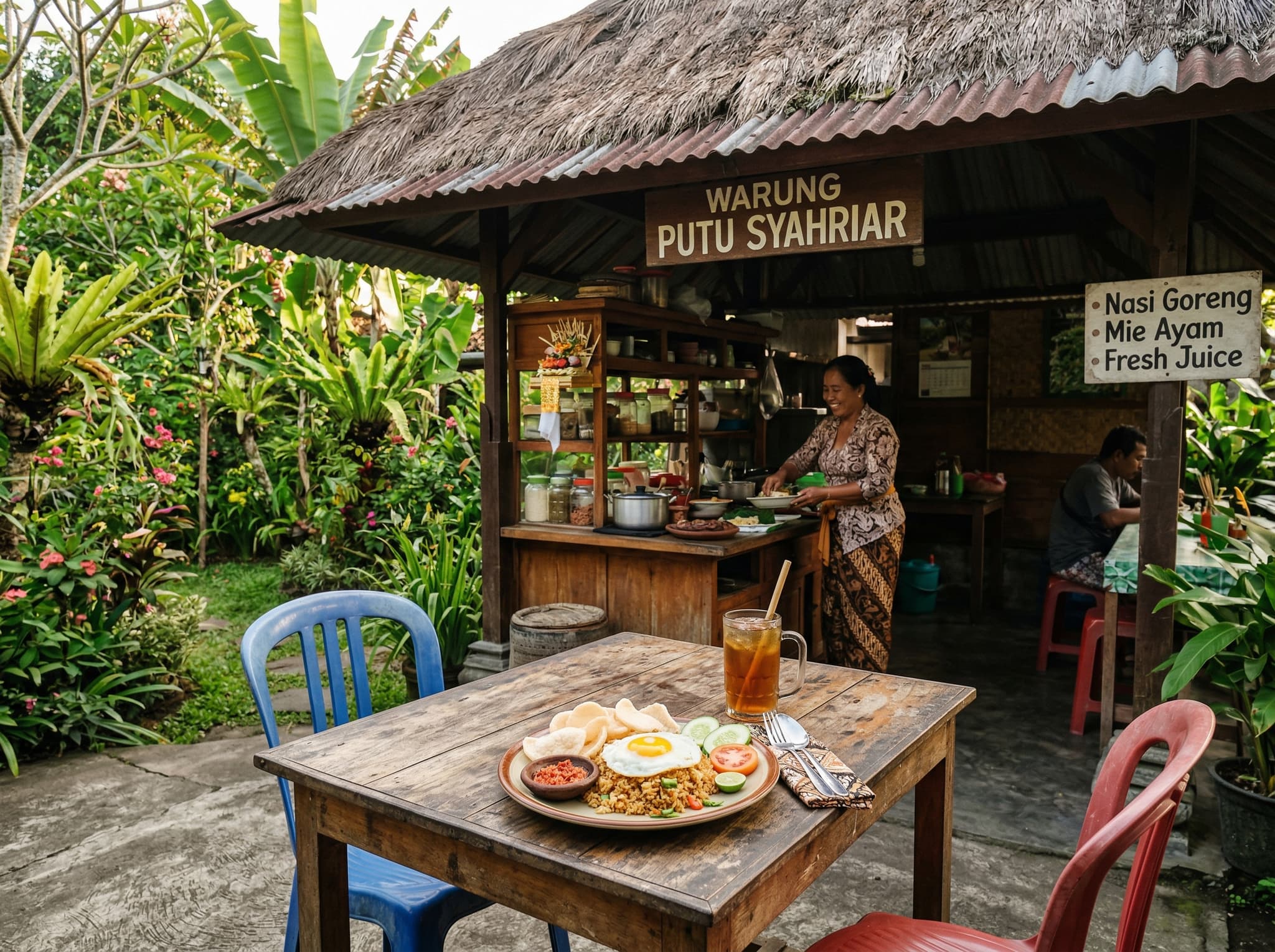
Penestanan's dining scene is small, informal, and mostly semi-outdoor. Warungs along the village lanes serve Indonesian staples — nasi goreng, soto ayam, grilled chicken — at local prices. Two Sisters is a reliable stop for this kind of cooking.
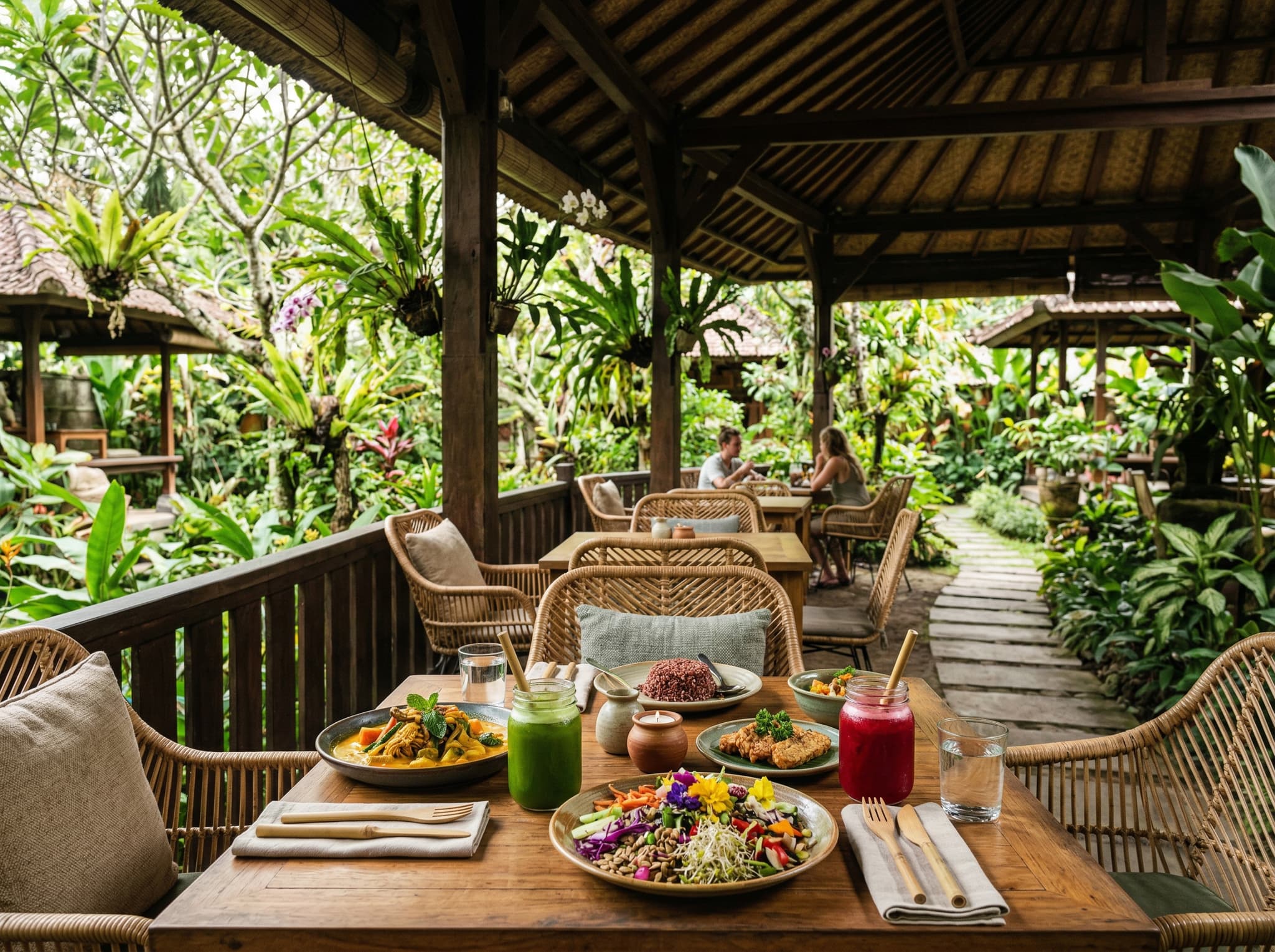
For something more specific: Moksa, about a seven-minute walk through the rice fields, serves outstanding vegetarian food with an emphasis on organic ingredients. It's not visible from the road, so follow the path signs. Cafe Vespa is a 10–15 minute stroll through the village. Cupit sits closer to the Campuhan Steps in the busier tourist zone — continue 100 meters past the first left on the main road, then up the steps.
Cafes in the Penestanan area tend to fill by early evening. If you want a seat with a view, arrive before sunset.
Where to Stay
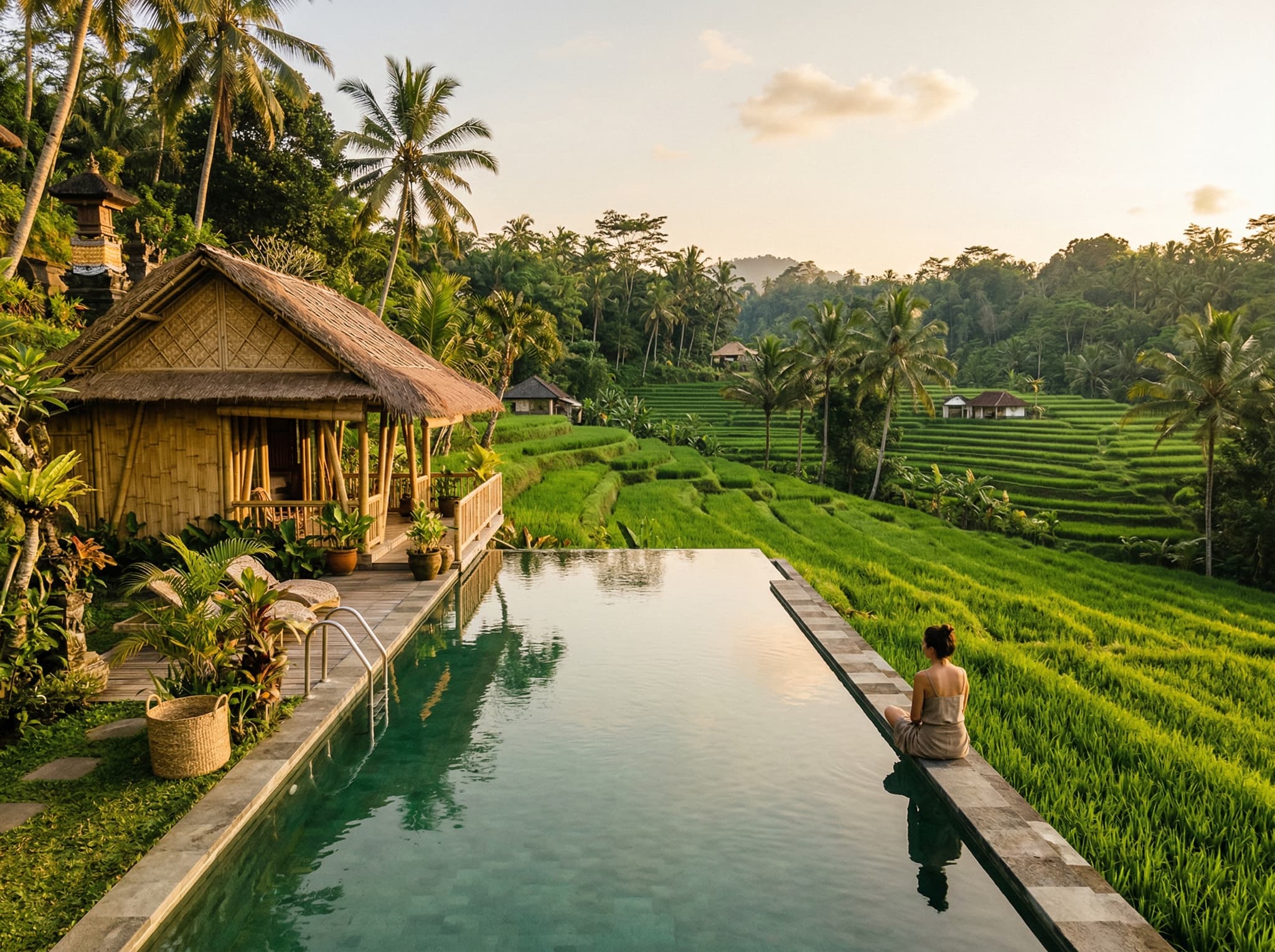
Penestanan has a range of accommodation, from private villas to coliving spaces. Most are a 10–20 minute walk to central Ubud.
Outpost Ubud Penestanan is a coworking and coliving space with 24 air-conditioned rooms, a pool, yoga deck, rooftop cafe, and community events — built for the remote-work crowd. Sri Ratih Cottages offers traditional Balinese-style rooms with a pool and restaurant; breakfast here — fresh eggs, fruit, pancakes — gets consistently good reviews. Bamboo Village Le Sabot takes a different approach: bamboo huts with an infinity pool overlooking the paddies. Villa d'Uma, set in the pedestrian zone, delivers breakfast to your room.
Getting to Penestanan
By scooter
~5 min from Ubud center; rentals from ~$5/day
By taxi
~$5, about 5 minutes
On foot
15–20 min from Ubud center via Campuhan bridge and the Penestanan Steps
Free parking is available at the village edges. Don't try to ride a scooter deep into the rice field paths — they're too narrow and you'll end up reversing past annoyed farmers.
What Else Is Nearby
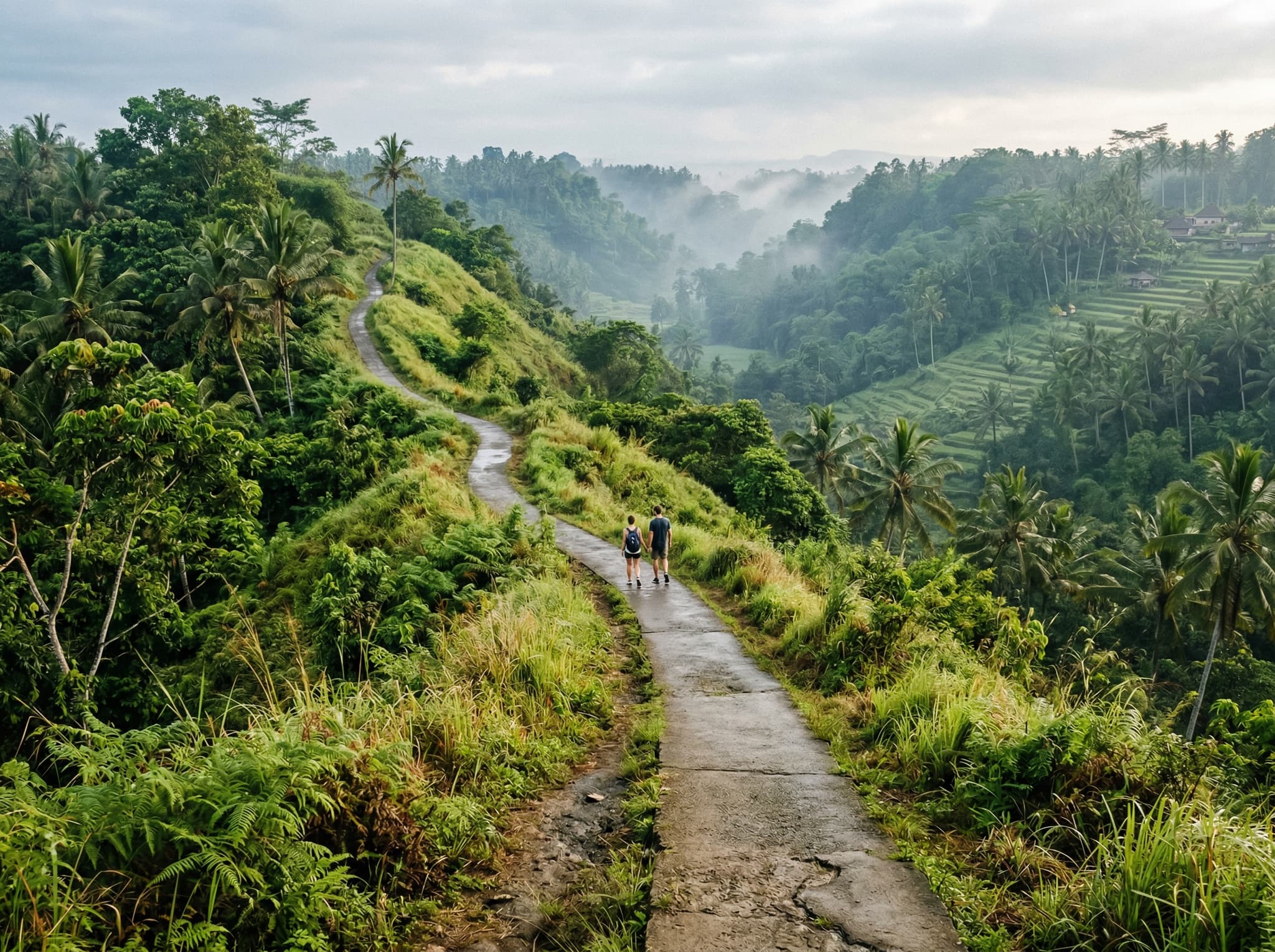
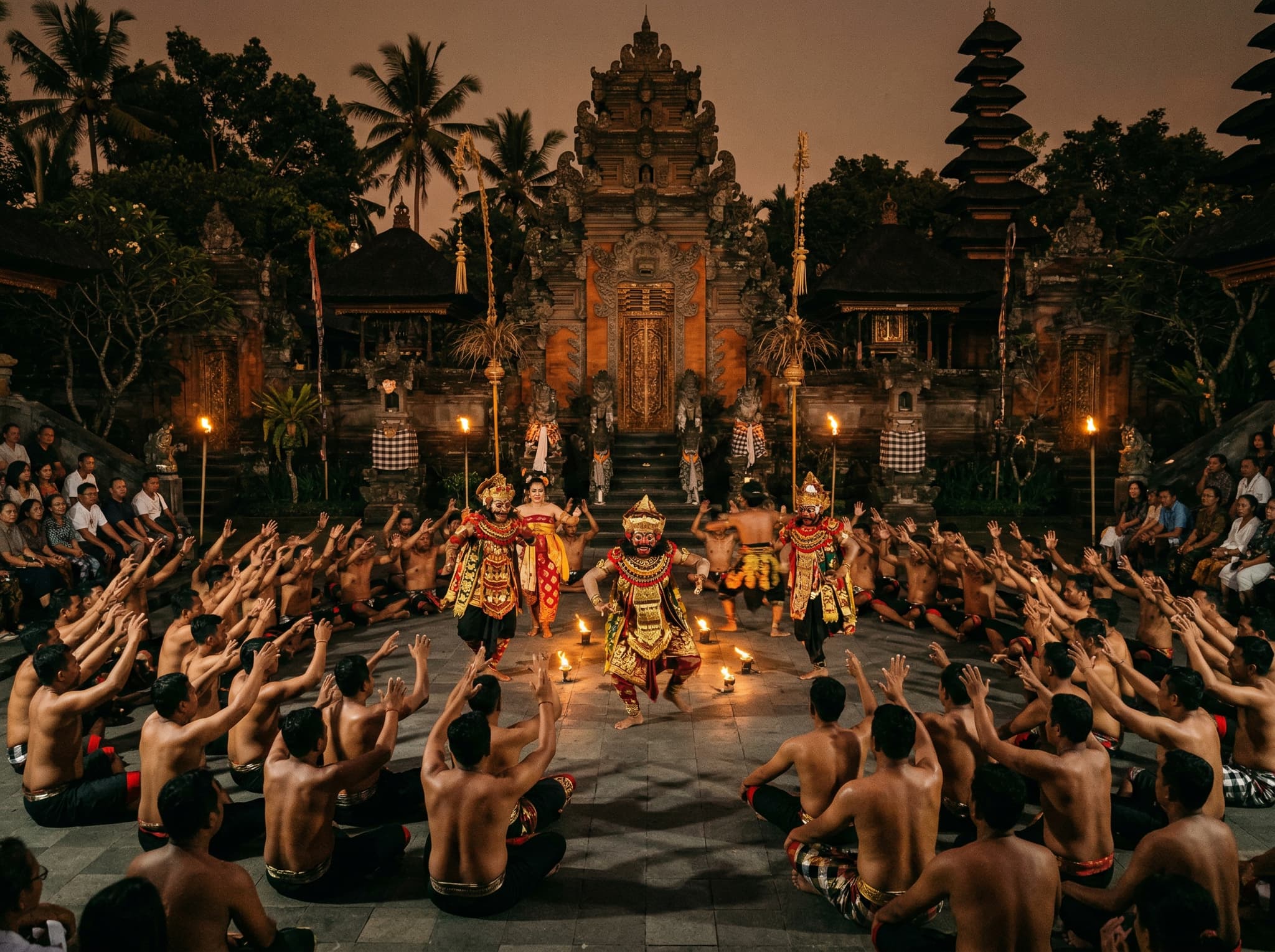
Penestanan's location makes it a quiet base for reaching Ubud's main attractions. The Campuhan Ridge Walk starts minutes away. Tegallalang Rice Terraces, Tanah Lot temple, and Ayung River rafting are all manageable day trips. Monday evenings, Kecak and Legong dance performances take place at Junjungan temple. Intuitive Flow Yoga Center is a 15-minute walk; Chantika Zest spa operates in the Penestanan area for treatments.
The village also holds older layers — an eighth-century meditation site associated with the priest Rsi Marhandya and a shrine linked to Dang Hyang Niratha — though these are quiet, local places rather than tourist stops.