Geger Beach is one of the few genuinely public beaches in Nusa Dua — calm reef-protected water, independent warungs, and a clifftop temple. Here's what to expect.
Geger Beach sits at the southern edge of the Nusa Dua resort enclave, but it doesn't feel like it belongs there. No lobby music drifting across manicured lawns. No wristband checks. It's one of the few genuinely public-access beaches on this stretch of coastline, and it operates at a different speed — warungs instead of poolside bars, plastic chairs instead of daybeds, and a reef-protected shoreline where the water stays calm enough that you can actually swim without thinking about it.
Getting to Geger Beach

The beach is roughly 15–20 km south of Kuta or Seminyak. Without traffic, that's a 25-minute drive. With traffic — and there's usually traffic — plan for 40 minutes.
Transport Costs
Grab/Gojek from Seminyak
Rp 15,000–25,000 one-way
Taxi from Kuta/Seminyak
Rp 20,000–30,000 one-way (~$2 USD)
Scooter rental (daily)
Rp 70,000–100,000
There's no public transport to Geger Beach. Ride-hailing apps are the most practical option if you're not on a scooter. The access road is Jl Pura Geger, which passes a golf course and runs between the Mulia and St. Regis resorts before reaching the parking area near the temple.
The entry fee at the access point near Pura Geger is nominally Rp 5,000 per person, though reports range from Rp 3,000 to Rp 10,000. These fees are collected informally by locals — technically, all Bali beaches are public by law. It's a small amount either way. Have cash in rupiah; nothing else is accepted. Guests at nearby resorts like the Hilton sometimes access the beach through the hotel grounds without paying.
What the Beach Is Like

Geger Beach is a crescent of soft white sand, maintained daily, backed by low vegetation and the occasional coconut palm. The reef offshore breaks the swell before it reaches the shore, which means the water in the swimming area stays calm and clear — waist-deep for a good distance out. It's the kind of beach where you can set down your things and not worry about waves pulling your bag into the sea.
At low tide, the water pulls back enough to expose rocks and small caves along the edges of the beach. You can walk out across the shallows and explore them, though the footing gets uneven. The seaweed farms that local families maintain are visible in the shallows too — neat rows of cultivation lines stretching across the reef flat. They're part of the landscape here, not a nuisance.
Beach Facilities
Sunbed & umbrella rental
~Rp 200,000–300,000 for a set (approx. $20 AUD)
Surfboard rentals
Available on the beach
Water sports vendors
Not currently active as of 2025
SUP boards
Available for rent
The surf break farther out is a different story — a fast right-hander with head-high to overhead sets and a strong current. That's for experienced surfers, and it works best at high tide. But the protected inner water is where most visitors spend their time, and it's genuinely good for swimming.
Where to Eat at Geger Beach

This is where Geger Beach earns its keep. The warungs along the beach serve food that's honest in both price and quality — the kind of places where the nasi goreng comes on a plate, not a slate, and the fish was swimming that morning.
Fresh coconuts are everywhere, cracked open and handed to you with a straw. The seafood is the thing to order: grilled fish, prawns, squid, usually served with rice, sambal, and a few sides. Prices are low by Nusa Dua standards, which means they're roughly what you'd pay in Jimbaran or Sanur without the markup.
Dining Options
Beach warungs
Nasi goreng, grilled seafood, fresh coconuts
Nusa Dua Beach Grill
Open 9 AM–10 PM, more polished menu
Warung meal cost
Rp 30,000–60,000 per dish
The Nusa Dua Beach Grill is the more structured dining option nearby, open from 9 AM to 10 PM, with a wider menu. But the warungs are the reason to eat here. Sit in a plastic chair, order grilled fish and a Bintang, and watch the seaweed farmers work. That's the meal.
Pura Geger Temple

The clifftop temple that gives the beach its name is a short walk from the parking area, up stone stairs and along uneven paths. Pura Geger is a small Balinese Hindu temple perched on the headland with views down the coastline. It's not a major tourist temple — it's a working one, which is part of what makes it worth visiting.
Pura Geger Temple Details
Entry fee
No formal fee; donation of Rp 30,000–50,000 encouraged
Dress code
Sarong and sash mandatory; shoulders covered
Sarong rental
Available at the entrance
Footwear
Comfortable shoes for stairs and stone paths
The dress code is standard for Balinese temples but strictly observed: a sarong (kain) from waist to ankles, a sash (selendang) at the waist, and covered shoulders. No shorts above the knee, no swimwear, no tank tops. Hats and sunglasses should come off on temple grounds. Sarongs can be borrowed or rented at the entrance, but bringing your own is a better gesture.
The Character of the Place
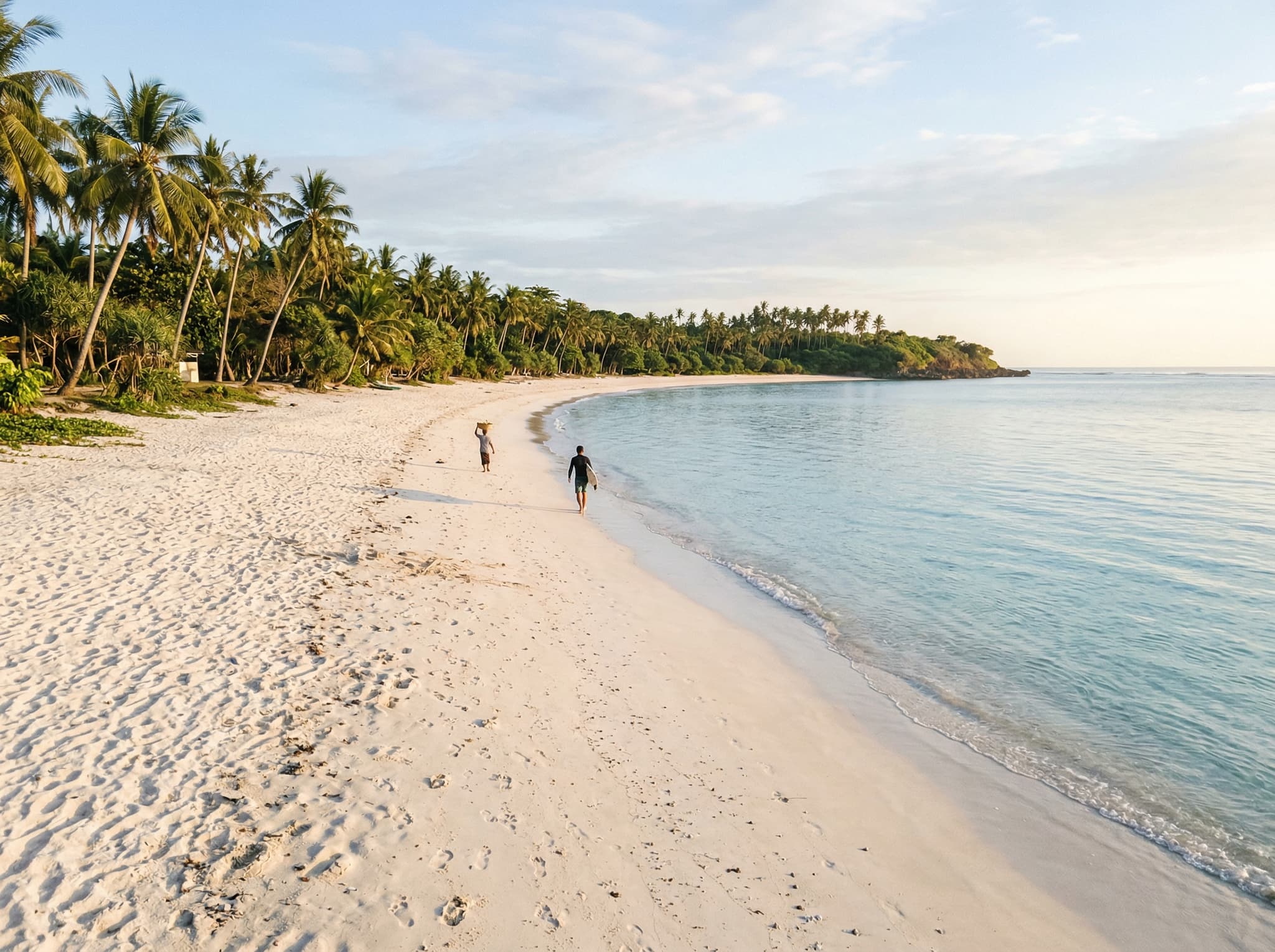
Geger Beach is quiet. That's the defining quality, and it's worth stating plainly because "quiet beach in Bali" has become something people say about places that aren't quiet at all. Geger is actually quiet. No jet skis. No banana boats. No one will approach you with a parasailing pitch. As of 2025, there are no active water sports vendors on the beach.
The commercial activity is limited to the sunbed rentals and the warungs. That's it. The beach fills modestly on weekends — local families, couples from the nearby resorts who've wandered past the property lines, the occasional surfer checking the break. On weekdays, you might have a long stretch of sand largely to yourself.
This is the Nusa Dua that existed before the resort gates went up. The seaweed farms, the temple on the cliff, the warungs with their hand-lettered menus. It's not undiscovered — 49,000 people a month search for it — but it hasn't been redesigned for the people searching. The gap between those two things is what makes it worth the drive.