Every Bali temple requires a sarong. Here's the dress code, where to buy one, what they cost, and what to expect at major temples.
Every Balinese temple requires a sarong. Not most. Not the major ones. All of them — from the clifftop crowds at Uluwatu to a village shrine you stumble on during a morning walk through the rice fields. The rule applies regardless of gender, age, or religion. Understanding why, and knowing how to handle the practicalities, makes the difference between feeling like a respectful visitor and feeling like you're scrambling at the gate.
Why the Sarong Matters
The sarong isn't a formality. In Hindu-Balinese belief, the body carries a spiritual division — the upper half is considered sacred, the lower half profane. The sash (selendang) tied at the waist marks that boundary. Wearing a sarong with a sash signals that you acknowledge the sanctity of the space you're entering. It's a gesture of spiritual purity and balance, not a dress code invented for tourists.
This is a cultural expectation, not a legal requirement. No one will fine you. But temple staff will turn you away at the inner gate, and the discomfort of being underdressed at someone's place of worship is its own consequence.
What to Wear
The full temple dress code is straightforward:
- Sarong covering at least to the knees, ideally mid-calf or ankle length. Can be worn over shorts, pants, or a skirt.
- Sash (selendang) tied around the waist over the sarong.
- Shoulders covered. Sleeveless tops need a scarf, shawl, or light layer on top.
- Slip-on shoes recommended — several temple areas require removing footwear, and fumbling with laces on wet stone steps gets old fast.
Swimwear, see-through fabrics, and shorts or skirts above the knee without a sarong covering them are all prohibited in inner temple areas. Hijabs and headscarves are permitted as long as the sarong, sash, and coverage requirements are met.
Buy or Borrow?

Most major temples provide sarongs and sashes at the entrance — either included in the entry fee or available for a small rental. But "most" is doing real work in that sentence. Smaller temples, village ceremonies, and less-visited sites may not have a lending station. Carrying your own sarong eliminates the uncertainty entirely, and recent etiquette guides increasingly frame it as the more respectful choice.
Buying one is cheap and easy. A basic polyester or rayon sarong at a street market runs IDR 20,000–60,000 ($1.30–$4). Bargain — starting prices are aspirational. Mid-range cotton sarongs from tourist areas cost IDR 75,000–250,000 ($5–$16), and you can negotiate these down to IDR 85,000–180,000. Multiple travelers report paying around IDR 60,000 each for perfectly adequate temple-appropriate sarongs.
Where to Buy a Sarong
Ubud Art Market
Wide selection of Balinese fabrics and silk scarves. Quality tends higher; prices negotiable.
Sukawati Art Market (Gianyar)
Traditional woven items, less crowded than Ubud. Good for unhurried browsing.
Pasar Badung (Denpasar)
Bali's largest traditional market. Handmade textiles alongside daily local goods — the least touristy option.
[Kuta Art Market](/places/bali/kuta-art-market-bali-s-most-convenient-souvenir-stop-but-not-its-best)
Budget batik sarongs and beachwear. Functional, not refined.
Seminyak Flea Market
More upscale. Bohemian styles blending modern and traditional patterns.
Nogo Bali Ikat (Sanur)
High-quality traditional ikat sarongs in muted, authentic colors. Worth the trip for something lasting.
What to Expect at Major Temples
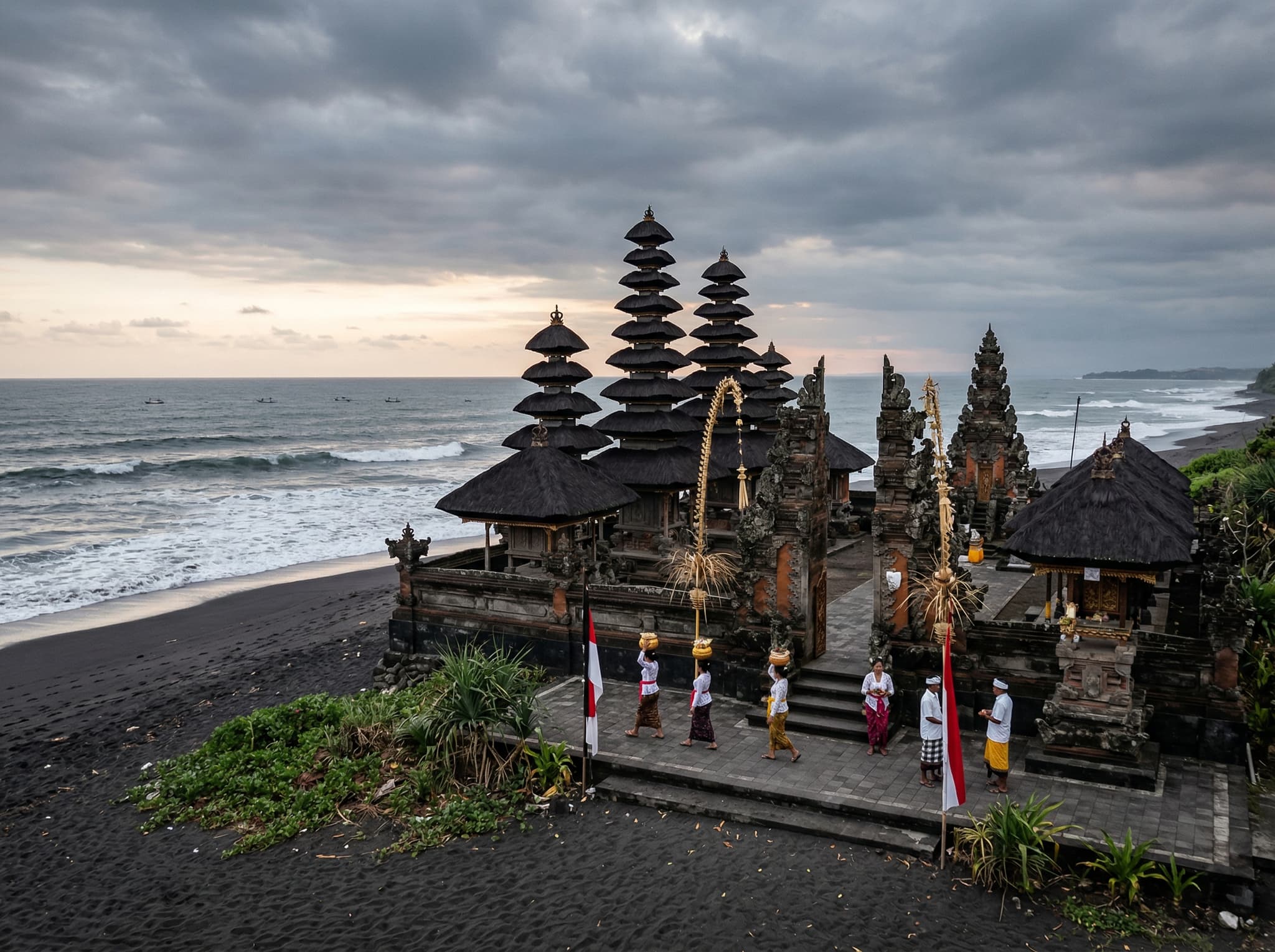
Temple-specific policies vary slightly, but the pattern is consistent:
Sarong Policies at Key Temples
Uluwatu
Free sarong and sash provided at entrance for all visitors.
Tirta Empul
IDR 75,000 adults / IDR 50,000 children. Sarong and sash included. Melukat (purification) ceremony requires an extra green bathing sarong rental plus locker.
Pura Besakih
IDR 150,000 adults. Sarong, sash, and shuttle ride included.
Tanah Lot
Sarong and sash available at entrance. Standard dress code enforced.
Pura Masceti
Free entry, open 24 hours. Bring your own sarong — no guaranteed lending station.
If you're planning the purification ritual at Tirta Empul, wear quick-dry underwear beneath your sarong. The temple provides an additional cloth for the water ceremony, but you'll be soaked through. A change of dry clothes in your bag saves an uncomfortable ride home.
A Note on Wearing It Right
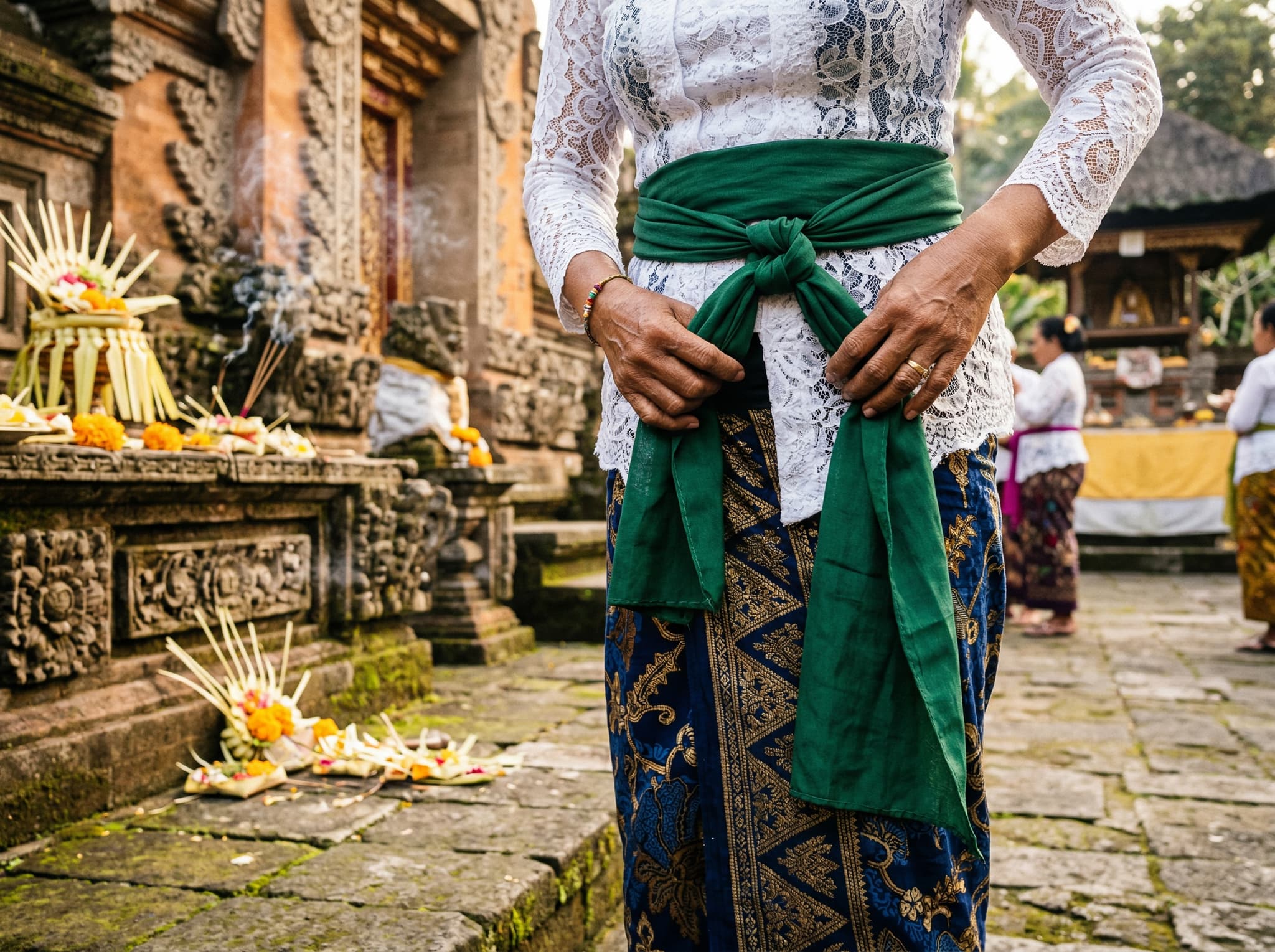
Wrap the sarong around your waist so the fabric overlaps in front. Fold the excess over and tuck it in at the waist, or secure it with the sash. The sash goes over the sarong, tied snugly but not tight — it should sit at the natural waist. There's no single correct method, and temple staff will often help if you're unsure. Asking is not embarrassing. It's appreciated.
The sarong is the simplest thing you'll deal with in Bali. It costs almost nothing, weighs nothing in your bag, and opens every door that matters. Bring one. Wear it without being asked. The rest takes care of itself.