Tanjung Benoa is Bali's water sports hub — calm seas, affordable activities, and a multicultural village history most visitors never discover.
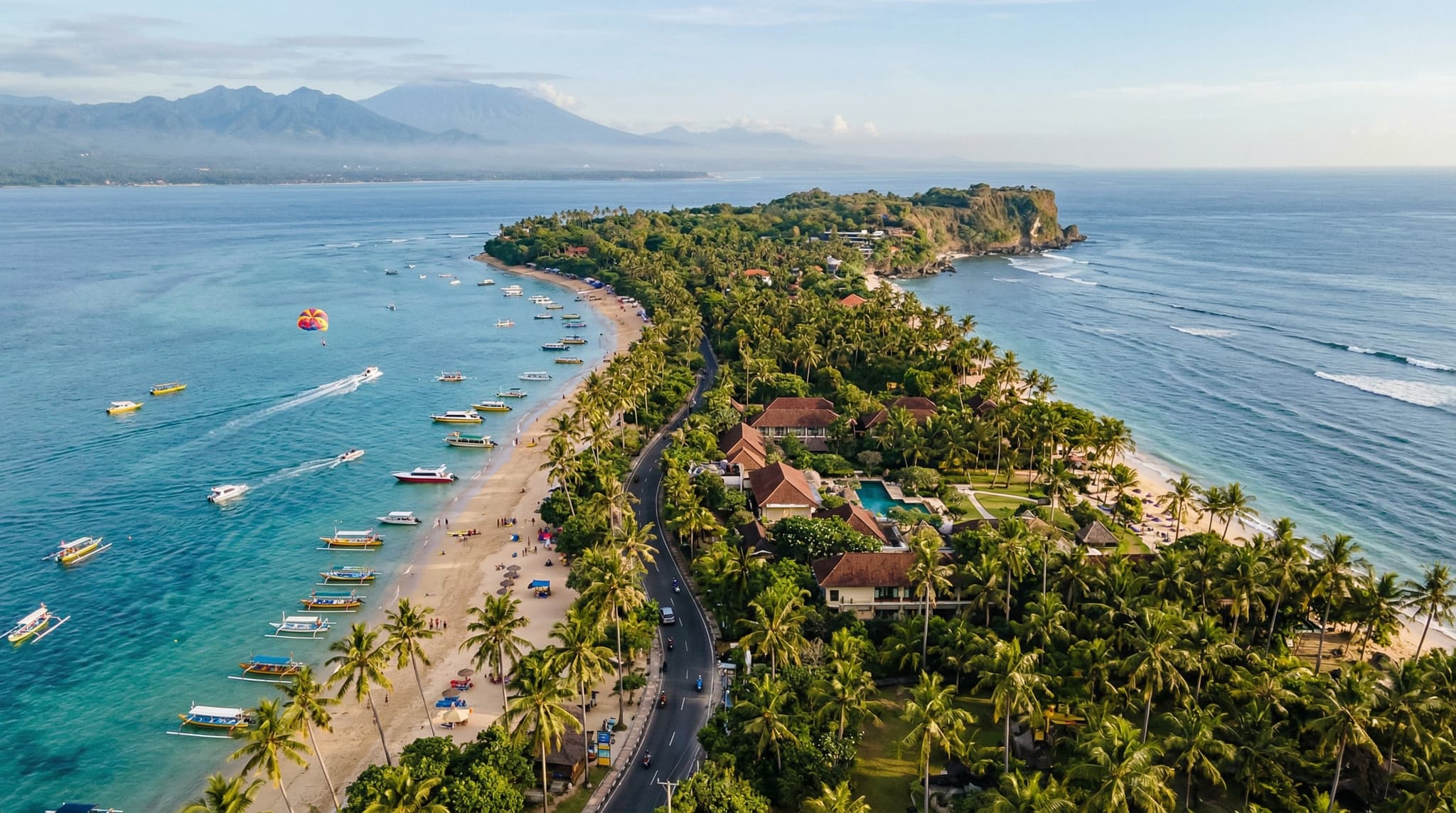
Tanjung Benoa occupies a narrow spit of land at the northern end of Bali's Nusa Dua peninsula, curving into Benoa Harbour like a finger pointing toward the open strait between Bali and Nusa Penida. It's a place that exists in an interesting middle ground — quieter and more local-feeling than Kuta, less manicured than the gated resort zone of Nusa Dua to its south, and almost entirely defined by two things: water sports and a multicultural history most visitors never learn about.
If you've seen photos of parasailing, jet skis, and banana boats against Bali's southern coastline, there's a good chance they were taken here. Tanjung Benoa is where Balinese tourism meets the ocean in its most accessible, activity-driven form.
The Water Sports Strip
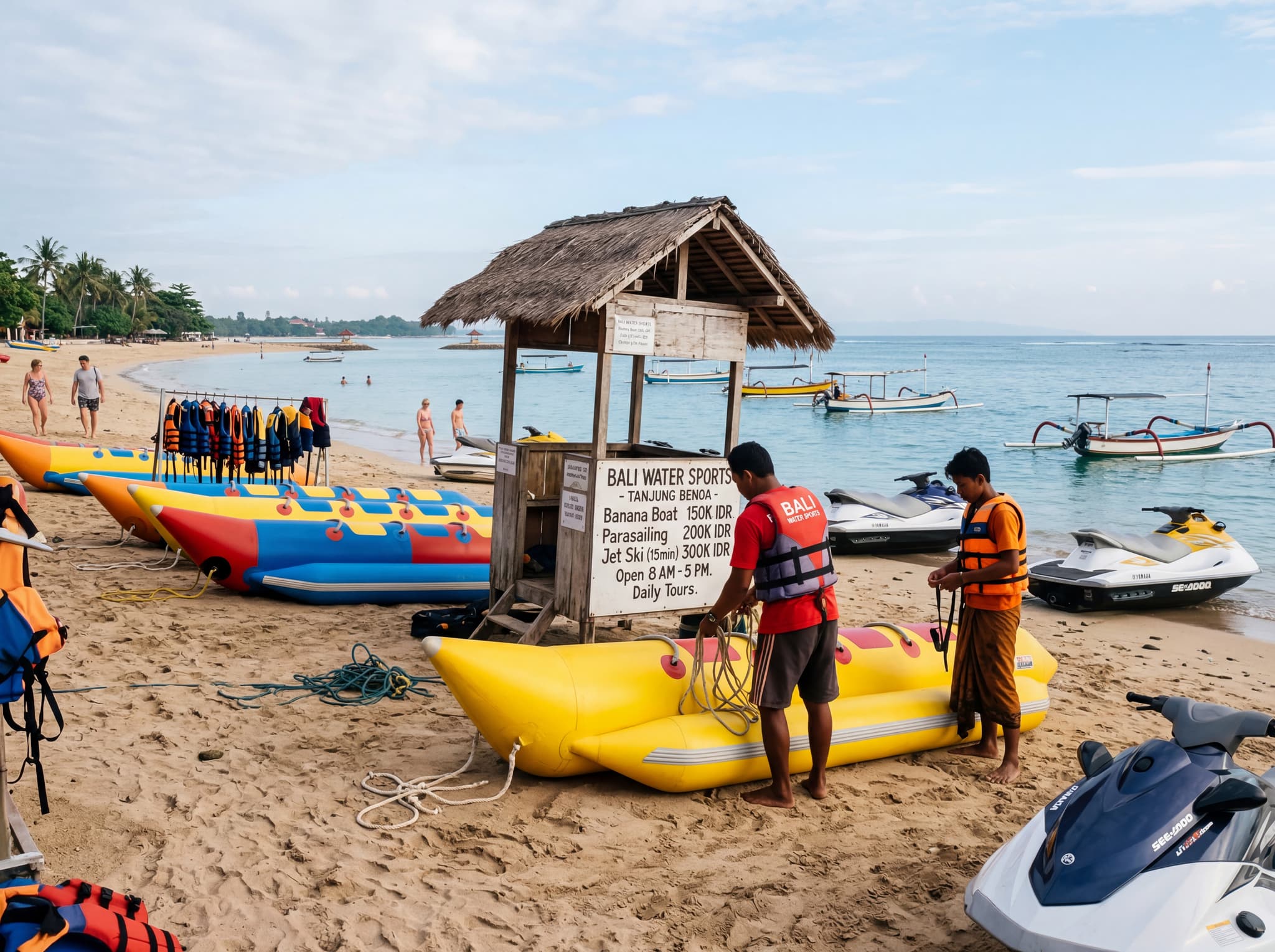
The beach road running along Tanjung Benoa's eastern shore is essentially a continuous lineup of water sports operators. This is the most concentrated stretch of marine recreation in Bali, and the range of activities is broad enough that most visitors find something regardless of fitness level or comfort in the water.
Popular Activities & Typical Prices
Parasailing
IDR 150,000–250,000 (~$9–$16)
Banana Boat Ride
IDR 100,000–150,000 (~$6–$9)
Jet Ski
IDR 200,000–350,000 (~$13–$22)
Snorkeling Trip
IDR 150,000–300,000 (~$9–$19)
Sea Walker
IDR 300,000–500,000 (~$19–$31)
Flyboarding
IDR 350,000–500,000 (~$22–$31)
The sea here cooperates. Tanjung Benoa sits inside a shallow, reef-protected bay, which means the water stays calm even when swells are hitting the western beaches. That's the practical reason this stretch became the water sports hub — not marketing, just geography.
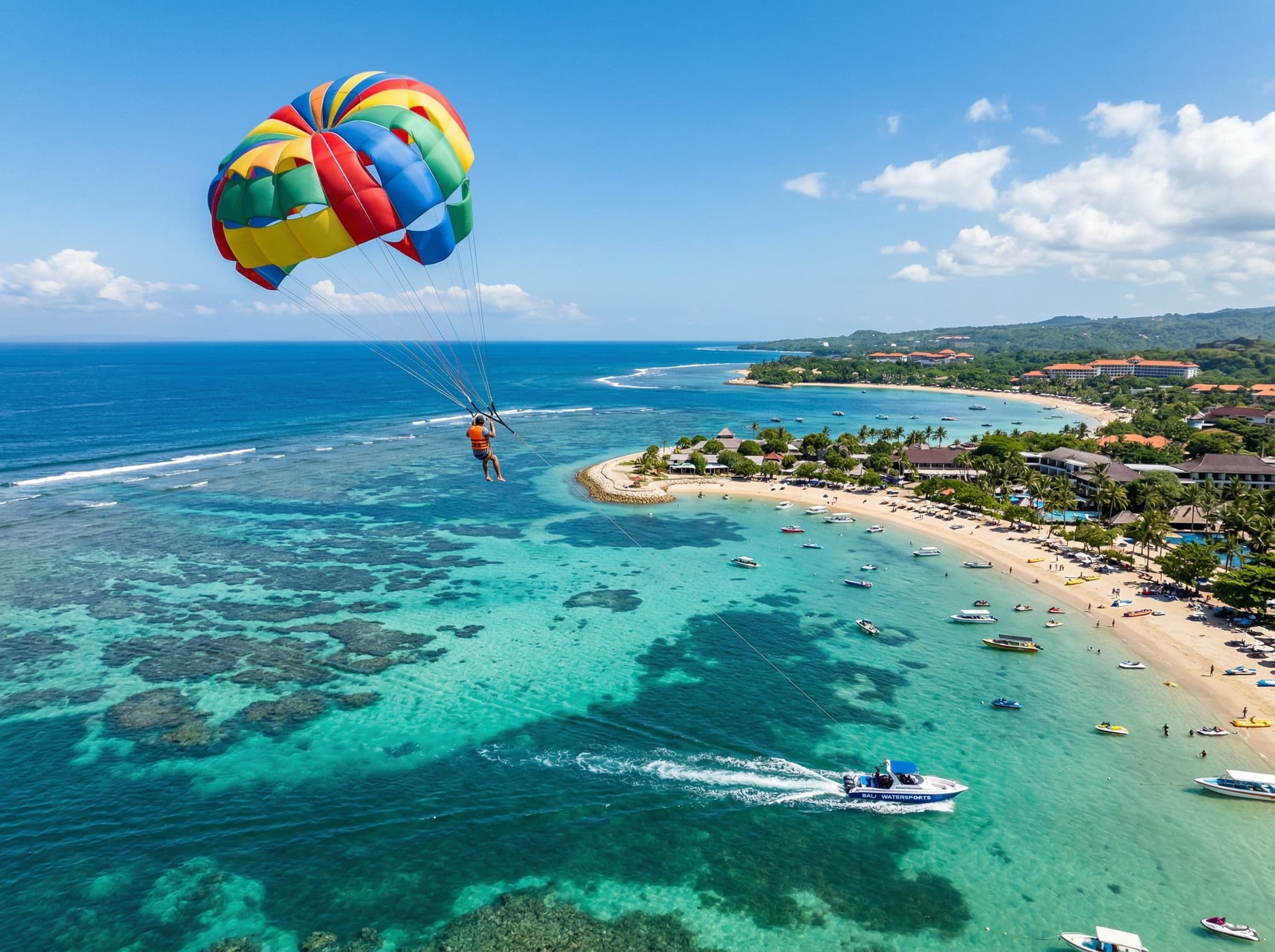
Morning visits — arriving by 9 or 10 a.m. — generally mean calmer water, fewer crowds, and better visibility for snorkeling. By early afternoon, the wind picks up and the bay gets choppier, which is fine for jet skis but less ideal for anything that requires clear, flat conditions.
Beyond the Banana Boats
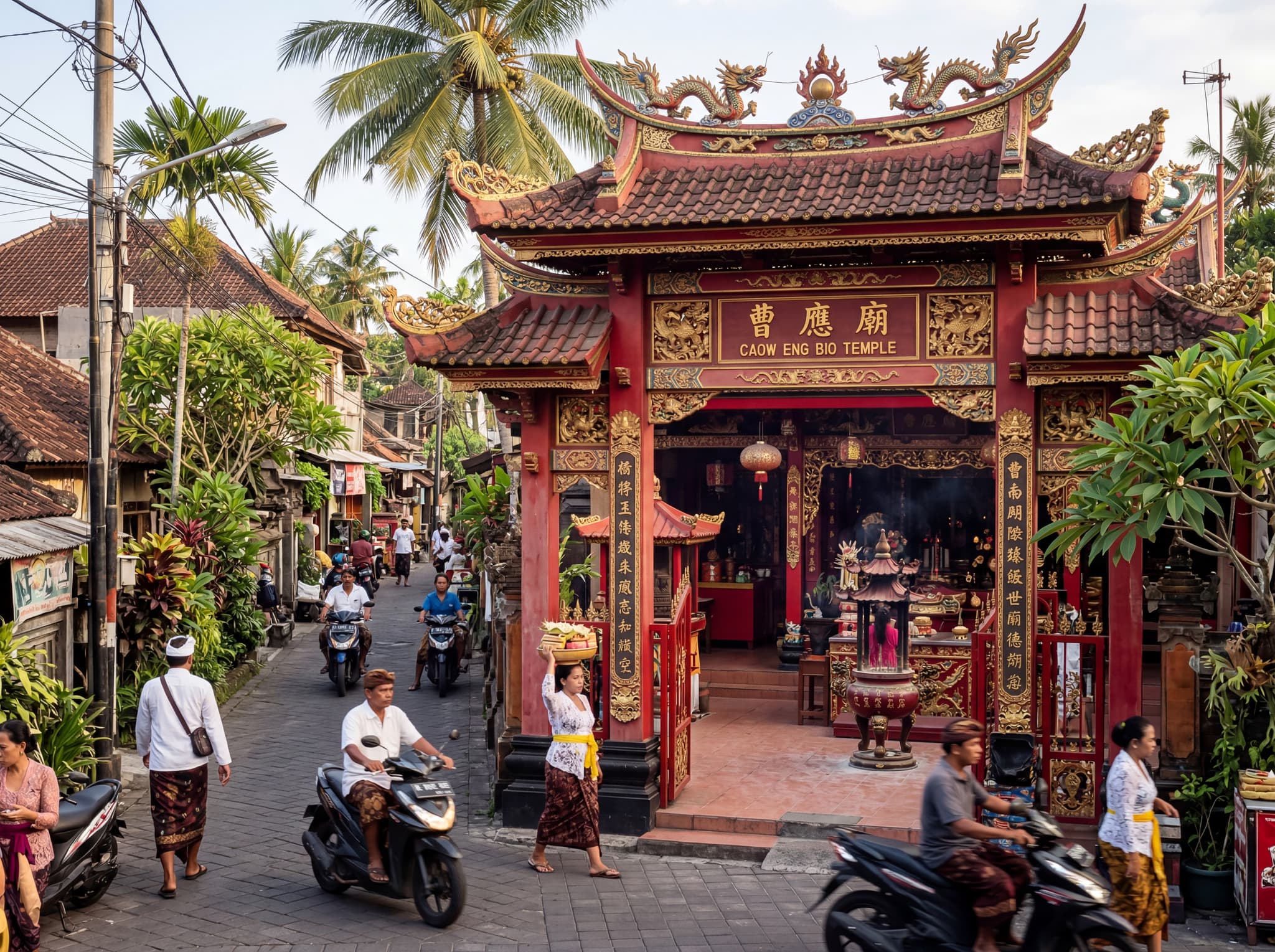
What most visitors miss about Tanjung Benoa is its cultural texture. The peninsula has been a fishing and trading community for centuries, and its history as a port meant that Chinese, Malay, Bugis, and Balinese communities settled here side by side. That layered history is still visible in the village's religious architecture.
Within a few hundred meters of each other, you'll find a Hindu temple, a Chinese Buddhist temple, and a mosque — a density of coexisting faiths that's unusual even by Indonesian standards. The Chinese temple, Caow Eng Bio, dates to the early 18th century and reflects the long presence of Chinese traders along Bali's southern coast. The mosque serves a small Muslim community descended from Bugis sailors who arrived from Sulawesi.
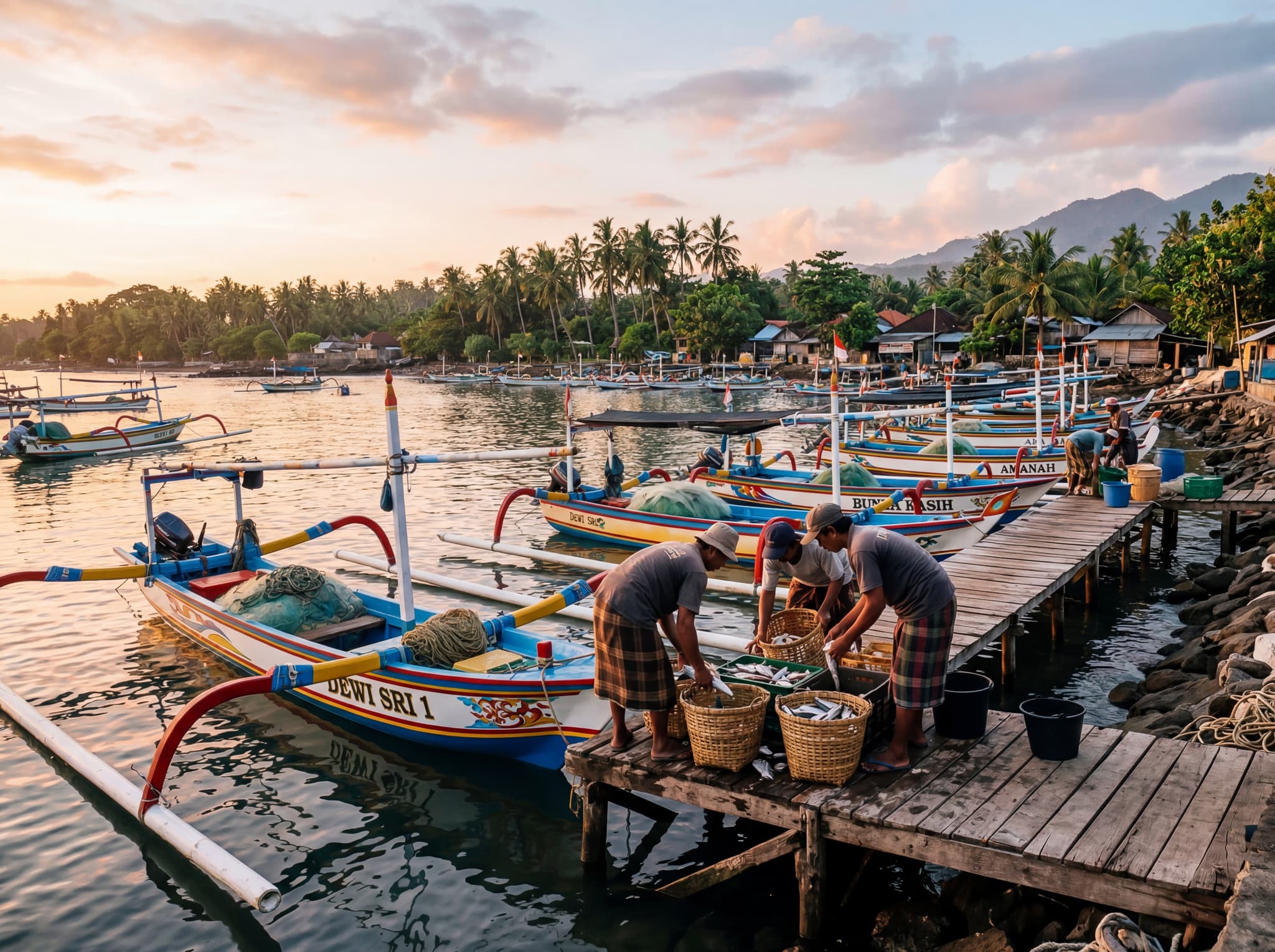
The village also has a small but active fishing fleet. Early mornings at the harbor end of the peninsula — before the water sports operators set up — you can watch boats coming in with the night's catch. It's not scenic in a postcard way, but it's real, and it grounds the place in something older than tourism.
Where Tanjung Benoa Fits in a Bali Trip
Tanjung Benoa works best as a half-day or full-day activity stop rather than a base. The area has hotels — mostly mid-range resorts along the beach road — but the nightlife and dining options are limited compared to Seminyak or even Sanur. Most visitors come from elsewhere in southern Bali, spend a morning on the water, and head back.
Getting There
From Kuta/Seminyak
30–45 min by car
From Ubud
60–90 min by car
From Ngurah Rai Airport
20–30 min by car
From Nusa Dua resort zone
10 min by car
The proximity to Nusa Dua makes Tanjung Benoa a natural pairing. You can spend the morning doing water sports here and the afternoon at one of Nusa Dua's beaches or the Bali Collection shopping complex. The two areas are essentially contiguous — Tanjung Benoa is the northern extension of the same peninsula.
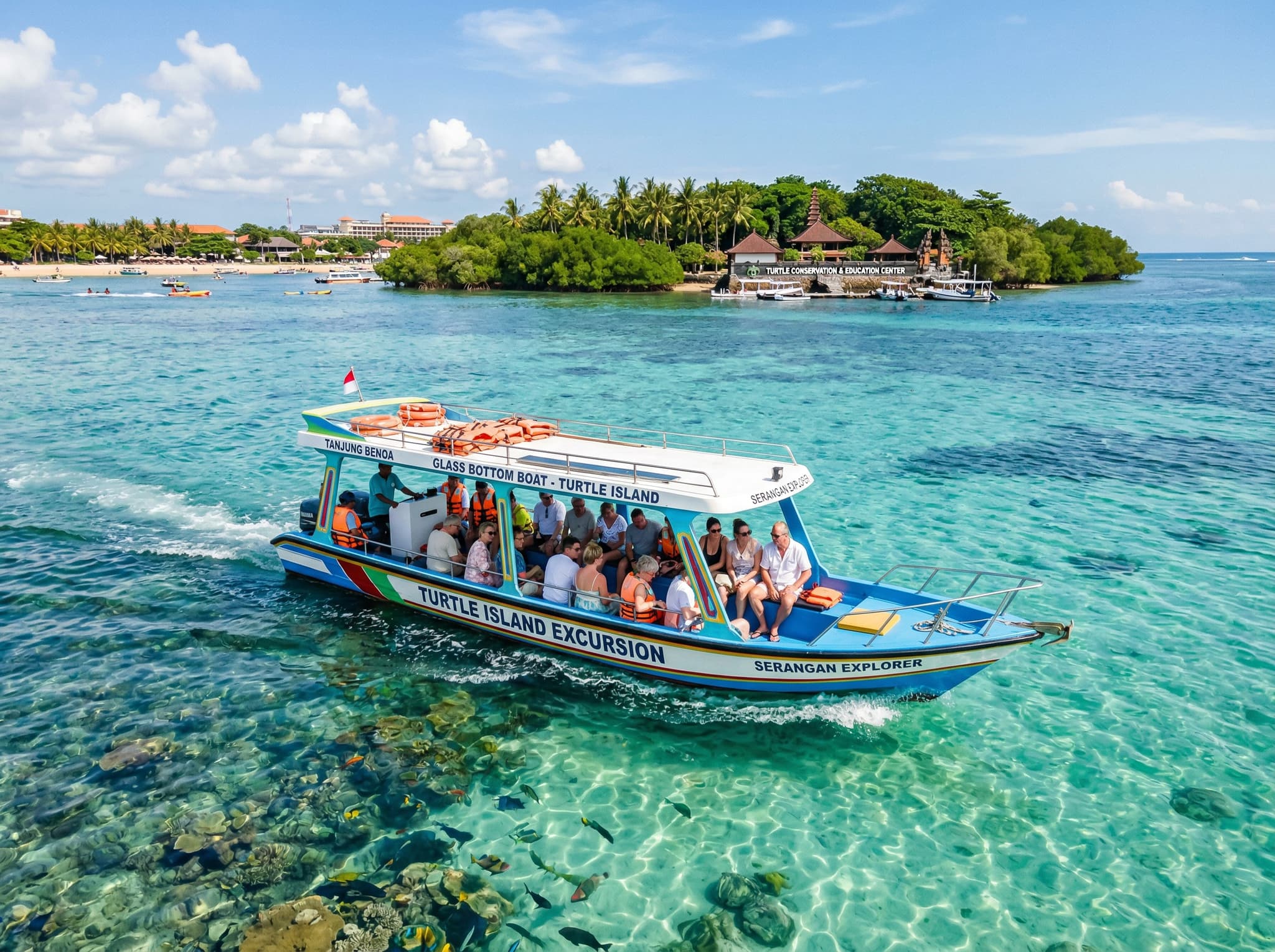
For snorkeling or diving, Tanjung Benoa also serves as a departure point for boat trips to Turtle Island (Pulau Serangan) and to the reefs around Nusa Penida and Nusa Lembongan, though dedicated dive operators in Sanur and Padang Bai generally offer better-organized trips to those destinations.
Practical Considerations
The beach itself is functional rather than beautiful. The sand is decent but narrow, and at low tide the water retreats significantly, exposing reef flats and seagrass. This isn't a lounging beach in the way that Nusa Dua's main strand or the beaches of the Bukit Peninsula are. It's a working waterfront that happens to offer recreation.
Tidal conditions matter here more than at most Bali beaches. Water sports operators typically work around the tides, but it's worth checking conditions before you go — some activities require a minimum water depth that isn't always available at low tide.
The Honest Assessment
Tanjung Benoa isn't Bali at its most photogenic or its most culturally immersive. It's a specific, functional destination that does one thing exceptionally well: accessible ocean activities at reasonable prices in calm, protected water. If that's what you're after — especially if you're traveling with kids or with a group that wants variety — it delivers.
The multicultural village beneath the tourist layer is a genuine bonus, the kind of detail that rewards the curious. But it requires walking away from the beach road and into the lanes where the operators don't follow.