Desa Kitsuné brings Maison Kitsuné's French-Japanese aesthetic to Canggu with a pool, restaurant, bar, and retail space. Here's what to expect and who it's for.
Bali's beach club scene has been expanding for years, and at this point the coast between Seminyak and Canggu holds enough daybeds and infinity pools to furnish a small country. Desa Kitsuné enters that crowded field with a different pedigree. It's the hospitality extension of Maison Kitsuné, the French-Japanese label known for its fox logo, its music compilations, and its cafés in Paris, Tokyo, New York, and a handful of other cities where a certain kind of creative-class traveler tends to congregate. "Desa" means village in Indonesian, and the name signals the intent: this isn't a pop-up or a branded corner inside someone else's venue. It's a full compound — restaurant, pool, bar, retail — designed as a standalone destination.
Whether that distinction matters to you depends on what you're looking for in a Bali afternoon.
What Desa Kitsuné Actually Is

The property sits in the Canggu area, which has become Bali's default neighborhood for digital nomads, surfers who also do branding work, and anyone who wants beach proximity without Kuta's density. Canggu has changed enormously in the last decade — rice paddies replaced by smoothie bowls and co-working spaces — and Desa Kitsuné is very much a product of that transformation.
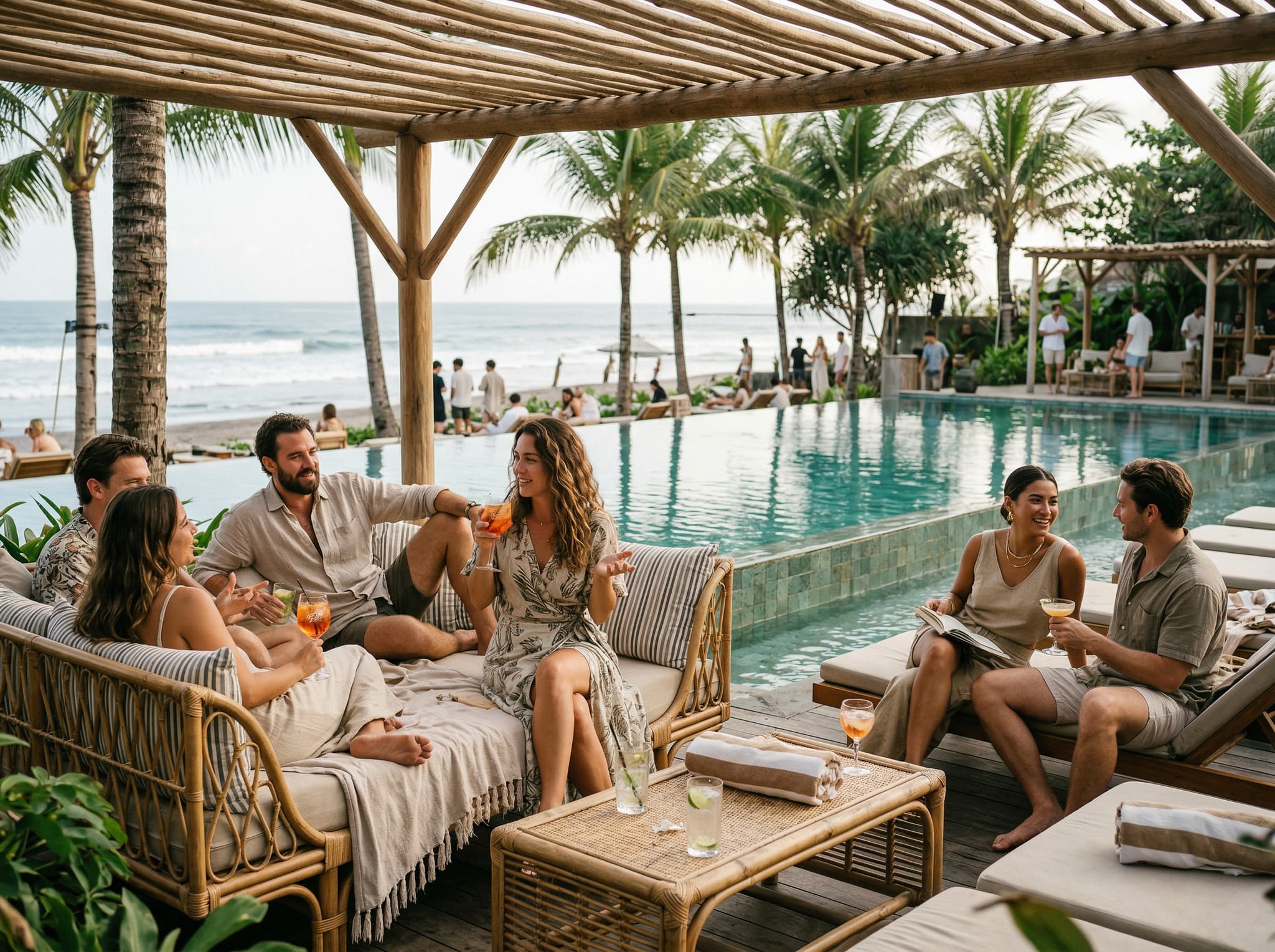
The venue is built around a pool area with a restaurant, a bar, and a Maison Kitsuné retail shop. The design leans into natural materials — wood, stone, open-air structures — which is standard for upscale Bali hospitality but executed here with the kind of restraint you'd expect from a brand that started in fashion. It doesn't look like a theme park. The proportions are considered. The music, predictably, is good — Kitsuné built its early reputation partly on curated compilations, and the DJ programming reflects that lineage.
It functions as a day-to-night venue. Afternoons by the pool, cocktails as the light changes, dinner if you want to stay. The retail component means you can buy Kitsuné clothing and accessories on-site, which either appeals to you or doesn't.
The Scene and Who It Draws
Every beach club in Bali attracts a slightly different crowd, and the differences matter more than they might seem. Potato Head draws the design-conscious and the see-and-be-seen set. Finns draws families and large groups. La Brisa draws people who want to photograph themselves against reclaimed wood.
Desa Kitsuné draws a crowd that skews younger, fashion-aware, and international — the overlap between people who know the Kitsuné brand from its cafés or clothing and people who travel to Bali for more than temples and rice terraces. It's a lifestyle-brand venue, and it attracts lifestyle-brand people. That's not a criticism. It's a description.
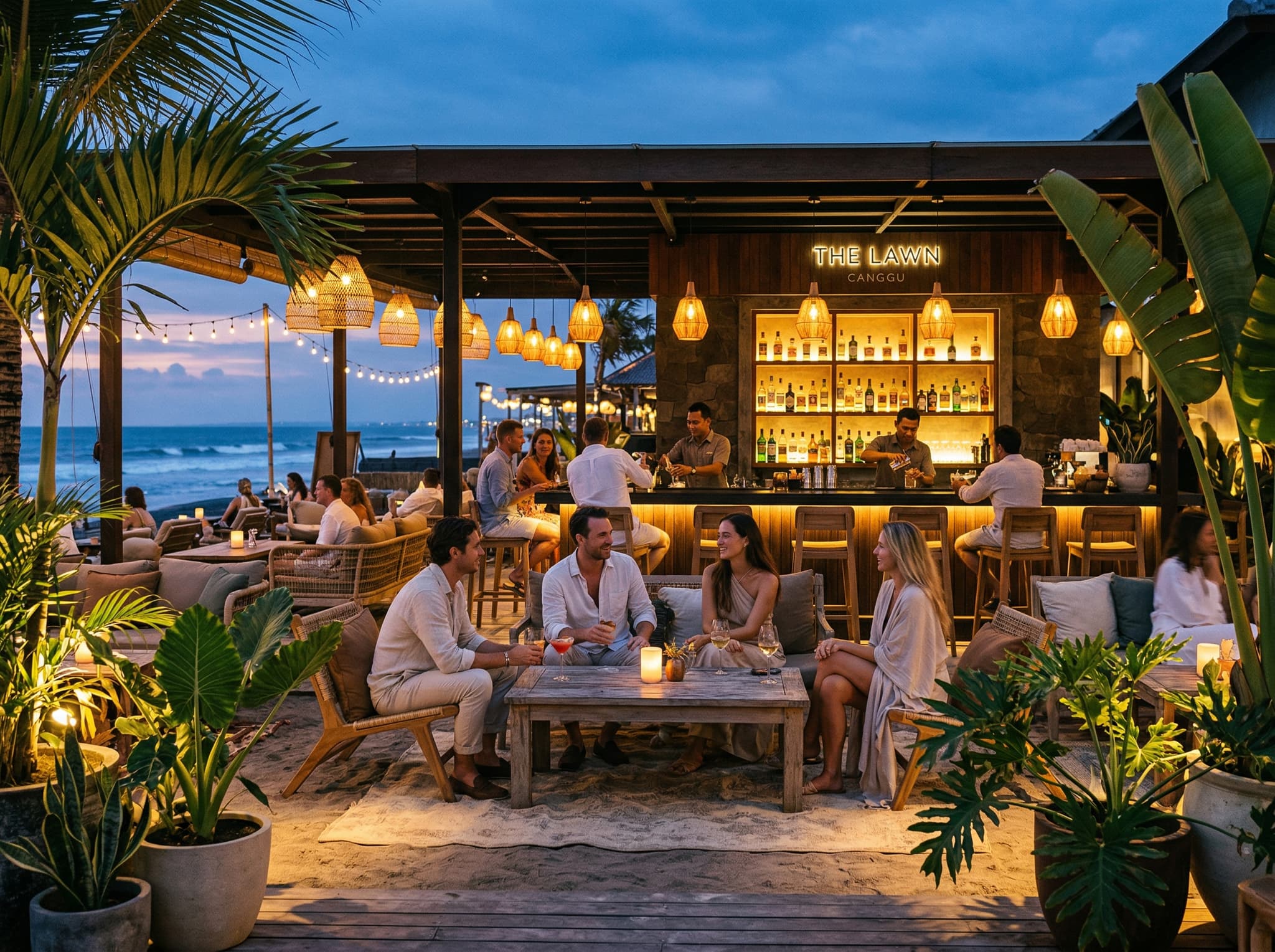
The atmosphere tends toward relaxed rather than performative. Compared to some of Canggu's louder pool parties, the energy here is more controlled — closer to a long lunch that extends into evening than a club event. That said, they do host DJ sets and events, particularly on weekends, when the pace picks up.
How It Compares
Vibe
Fashion-forward, curated, mid-energy
Crowd
International creatives, 25–40 age range
Music
Curated DJ sets, house and electronic-leaning
Differentiator
Maison Kitsuné brand identity and retail integration
Food and Drink
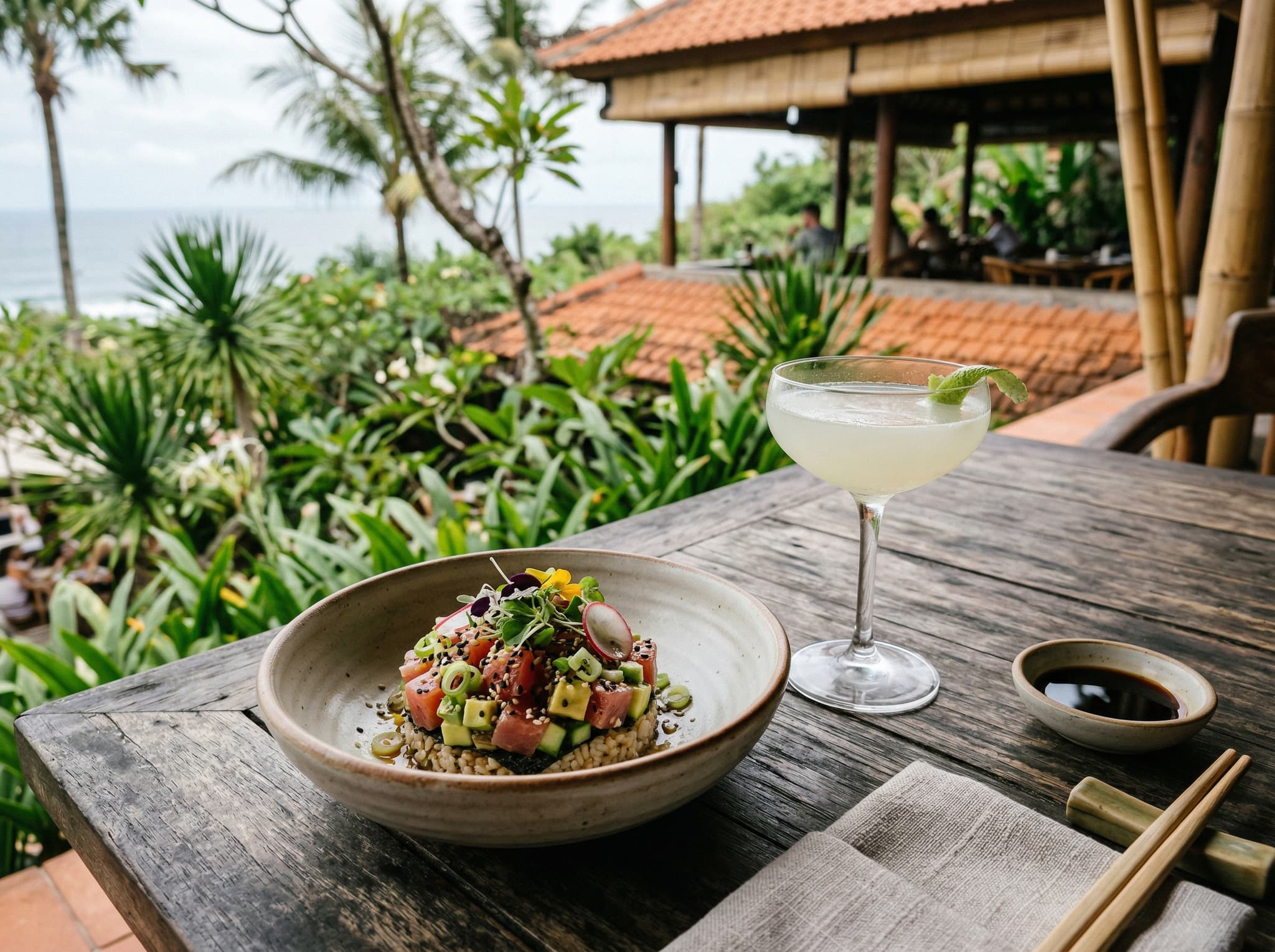
The menu blends French and Japanese influences with Indonesian ingredients — a combination that mirrors the brand's own identity. Expect dishes that lean toward the light and photogenic: poke-style bowls, tartares, grilled seafood. The cocktail list is where the Kitsuné sensibility comes through most clearly — well-constructed drinks with enough originality to justify the pricing, which sits in the upper range for Canggu without reaching the extremes of Seminyak's most expensive venues.
Coffee is also part of the offering, which makes sense given that Kitsuné Café is one of the brand's most recognizable formats globally. If you've had coffee at their Paris or Tokyo locations, the Bali version carries the same general approach.
Getting There and Practical Details
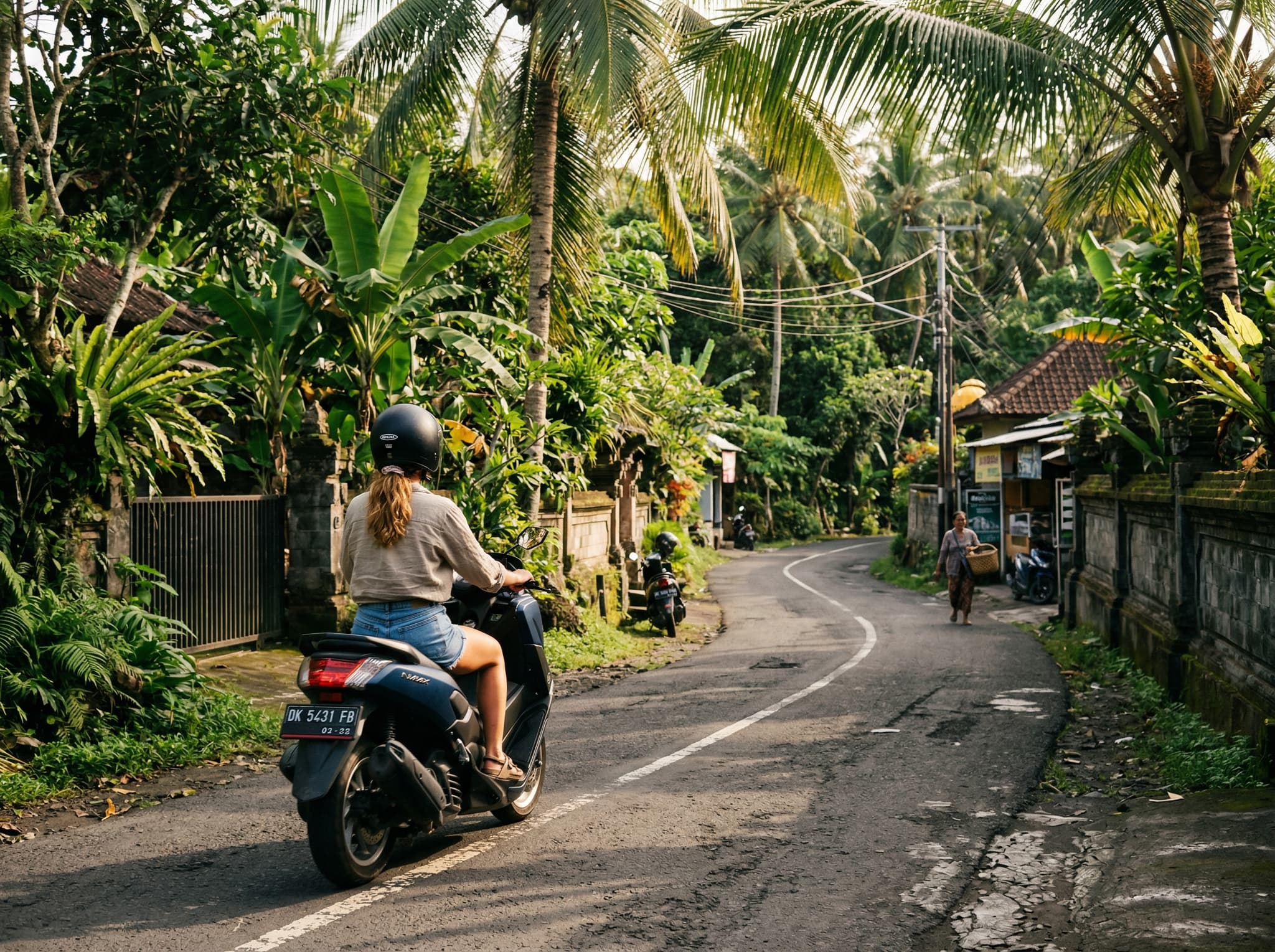
Canggu is roughly 45 minutes to an hour from Ngurah Rai International Airport, depending on traffic — and traffic in southern Bali is unpredictable enough that "depending on traffic" should be read as a genuine warning. From central Seminyak, it's about 20 minutes by scooter or car.
Most visitors reach Desa Kitsuné by scooter (the default Bali transport for anyone comfortable with it) or by ride-hailing apps like Grab and Gojek. Parking is available on-site, though scooter parking is easier to manage than car parking during peak hours.
Getting There
From Airport
45–60 minutes by car
From Seminyak
15–20 minutes
Transport
Scooter, Grab/Gojek, or private driver
Parking
Available on-site; scooter easiest
There's no minimum spend requirement that's been widely reported, though beach clubs in Bali frequently adjust these policies depending on the day and season. Weekends and holidays tend to be busiest. If you want a daybed by the pool on a Saturday, arriving before noon is advisable.
What to Know Before You Go
A few things worth being direct about:
This is a branded venue. If you're looking for something that feels distinctly Balinese — a local warung, a quiet temple, a fishing village — this is not that. Desa Kitsuné is a global lifestyle brand operating in Bali, and it makes no pretense otherwise. The experience is polished, intentional, and international. That's the product.
Canggu itself has become a polarizing neighborhood. Some travelers love its energy and convenience. Others find it overdeveloped and disconnected from the Bali they came to see. Desa Kitsuné sits squarely within Canggu's current identity — it reflects where the neighborhood is now, for better or for worse.
The venue is relatively new, and details — menu items, event programming, pricing — are likely to evolve. Treat any specific numbers you find online (including in this article) as approximate and verify directly before planning around them.
Is It Worth a Visit?
If you already know and like the Kitsuné brand — its aesthetic, its music, its particular blend of French-Japanese cool — then Desa Kitsuné delivers that sensibility in a Bali setting, and it does so with more coherence than most brand extensions manage. The design is thoughtful, the music programming is better than average, and the food and drink are competent for the category.
If you're indifferent to the brand and simply looking for a good beach club in Canggu, it's one of several solid options, and whether it's the right one depends on what you prioritize. For a quieter, more curated afternoon, it works well. For a big-group party day, other venues may suit better.
It's a considered addition to a coastline that doesn't lack for options. Whether Bali needed another beach club is a separate question — one that Canggu stopped being able to answer honestly some time ago.