The Four Seasons Jimbaran has spent three decades not competing on spectacle. Private villas, Balinese village architecture, and a bay that still smells like grilling fish.
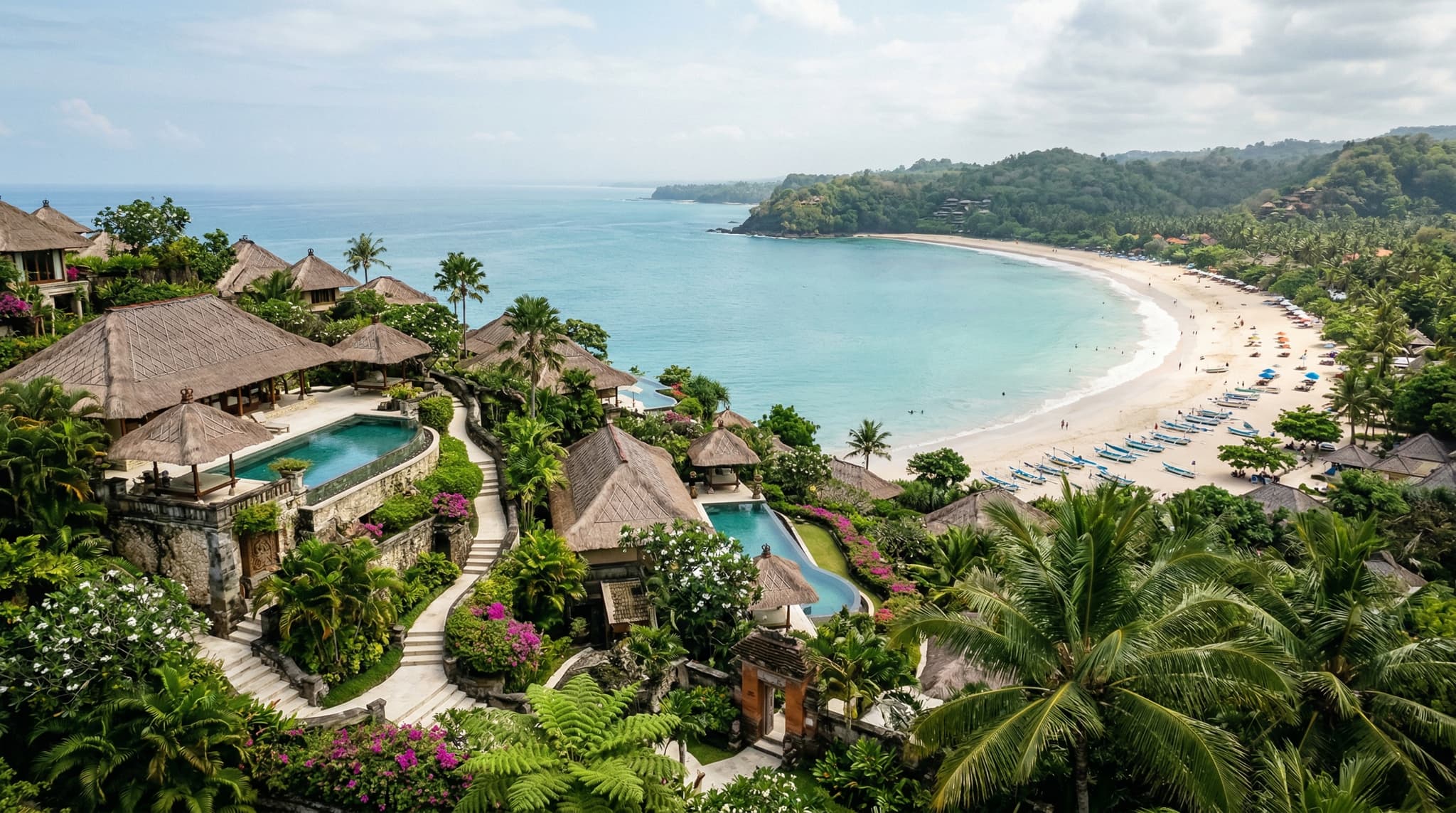
Jimbaran Bay curves gently south of the airport, and the first thing you notice — before the resort gates, before the plumeria-lined paths — is the fishing fleet. Dozens of jukung outriggers rest on the sand in the early morning, painted in blues and greens that have faded unevenly in the salt air. The Four Seasons Resort Bali at Jimbaran Bay sits just above this scene, terraced into the hillside, and it has spent three decades not trying to erase it.
That restraint is the point. In a part of Bali where luxury properties increasingly compete on spectacle — infinity pools cantilevered over cliffs, DJ-driven pool parties, architectural statements designed for a single Instagram angle — the Jimbaran Four Seasons operates on a quieter frequency. It opened in 1993. It has been renovated, updated, and expanded since then, but its fundamental proposition hasn't changed: private villas, Balinese village architecture, and a relationship with the bay below that feels residential rather than performative.
The Villas
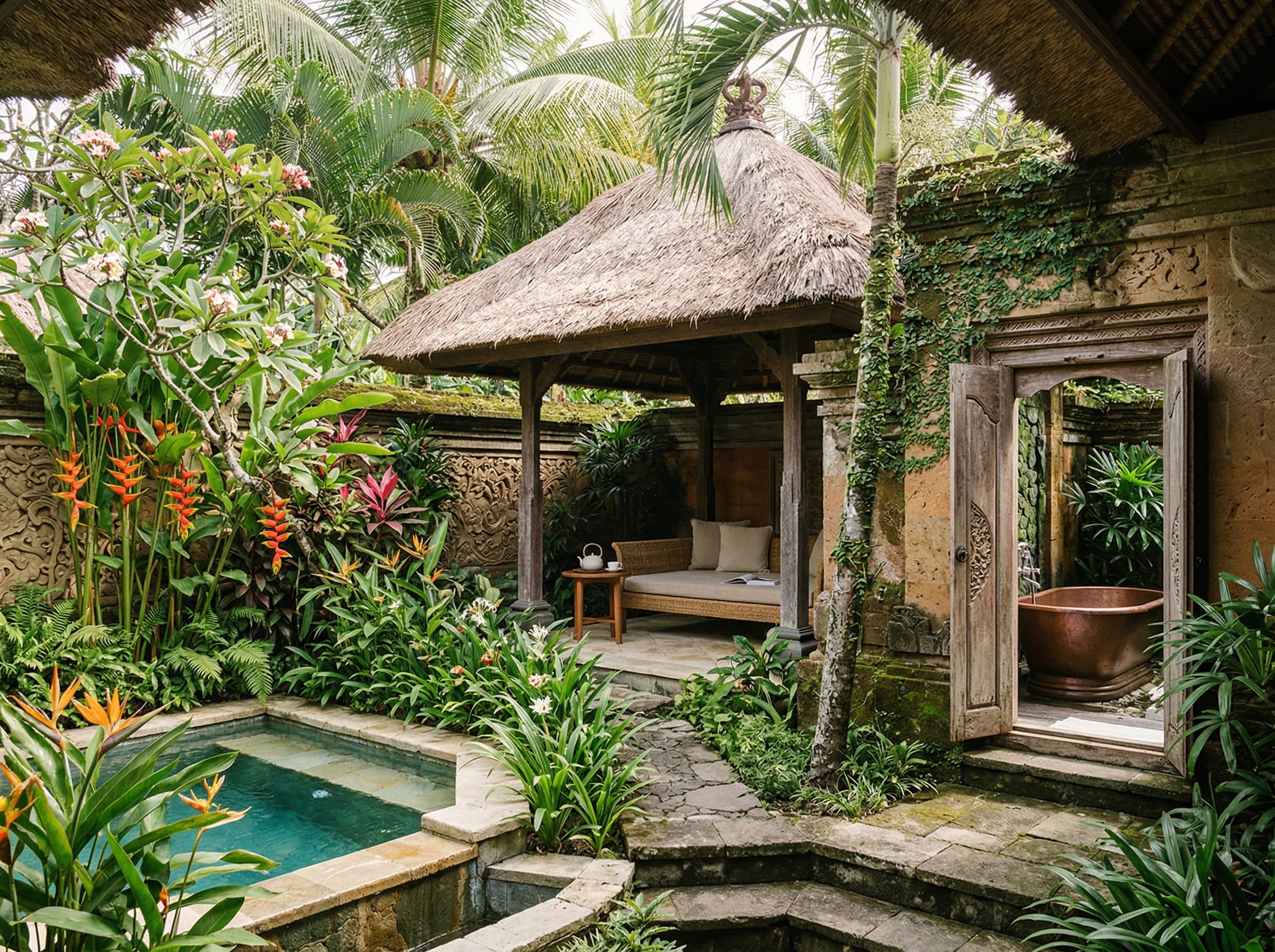
There are 156 villas spread across 14 hectares of landscaped hillside. Each one has a private plunge pool. This was novel in 1993; it's expected now. What still distinguishes the layout is the sense of enclosure. Thatched roofs, stone walls, garden courtyards — the design borrows from traditional Balinese compound architecture, and it works because the scale is right. You can't see your neighbors. The sound that carries is mostly birdsong and, depending on your position on the hill, the low wash of surf.
Villa Categories
One-Bedroom Villa
From ~$650/night, plunge pool, garden courtyard
Premier One-Bedroom
From ~$900/night, elevated position, bay views
Two-Bedroom Family Villa
From ~$1,200/night, connecting layout
Residence Villa
From ~$2,500/night, full kitchen, private pavilion
Imperial Villa
POA — the estate-level option, rarely advertised
The entry-level villas are genuinely good. This matters because many luxury properties in Bali create a steep quality gap between their base and premium rooms to push upgrades. Here, the difference between a garden villa and a premier villa is mostly elevation and view angle. The bones — outdoor shower, deep soaking tub, thatched-roof living pavilion — remain consistent.
The Beach and the Bay
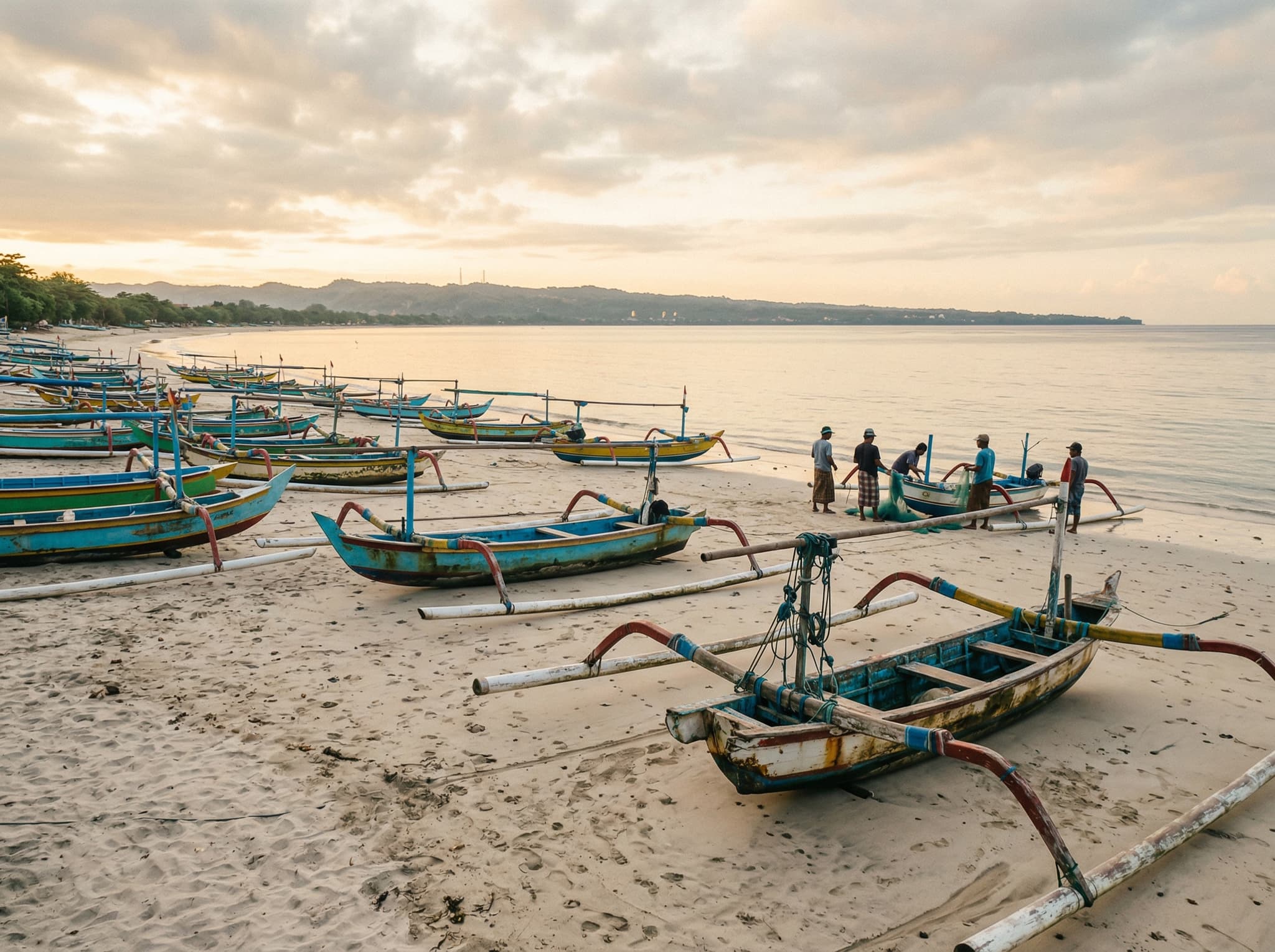
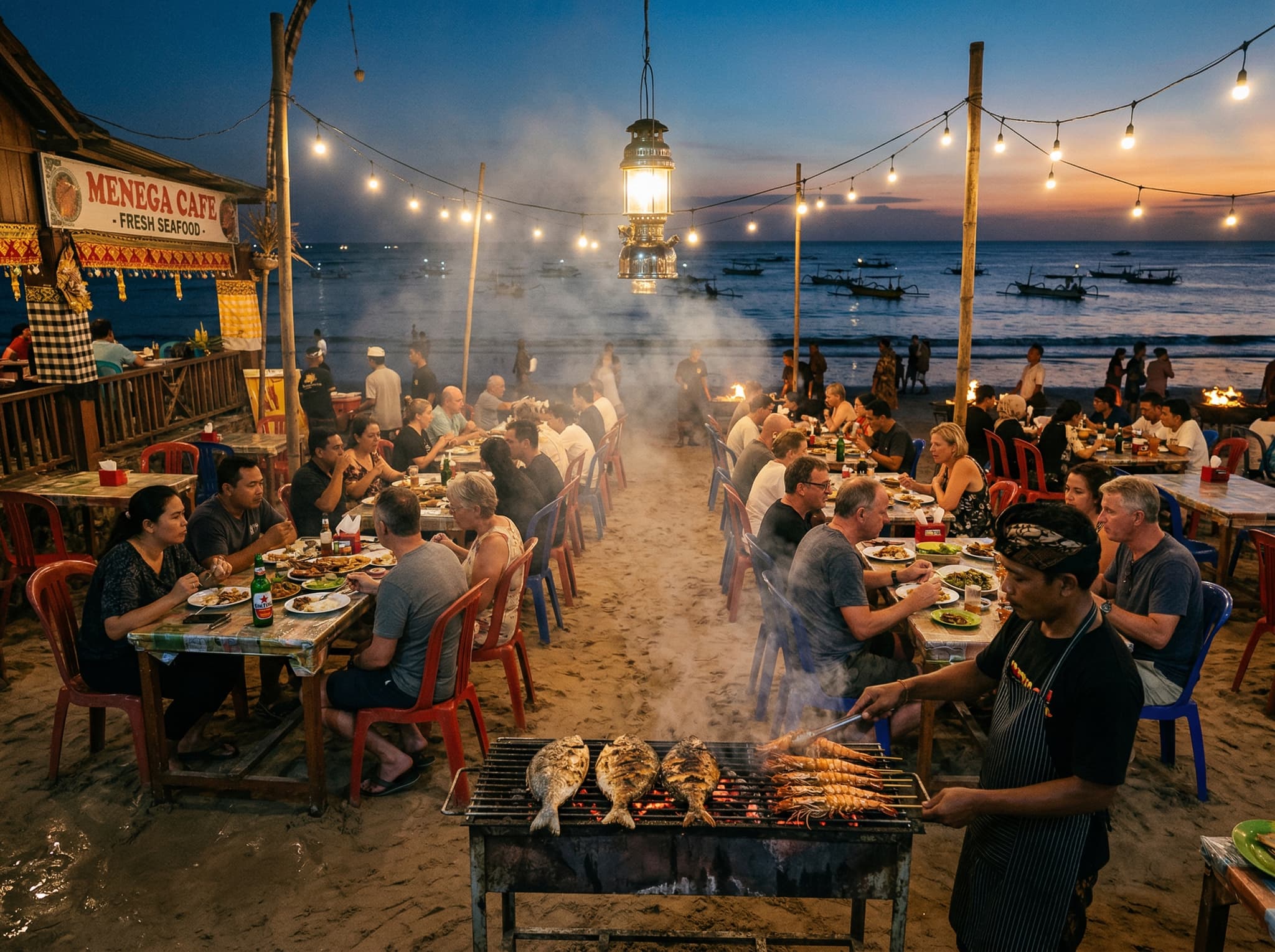
Jimbaran's beach is public, which means the resort doesn't own the sand. This is sometimes listed as a drawback in reviews. It's actually one of the property's best features. The beach is shared with local fishermen, a handful of seafood warungs, and families from the surrounding village. In the late afternoon, smoke from grilling fish drifts across the sand. It smells like dinner.
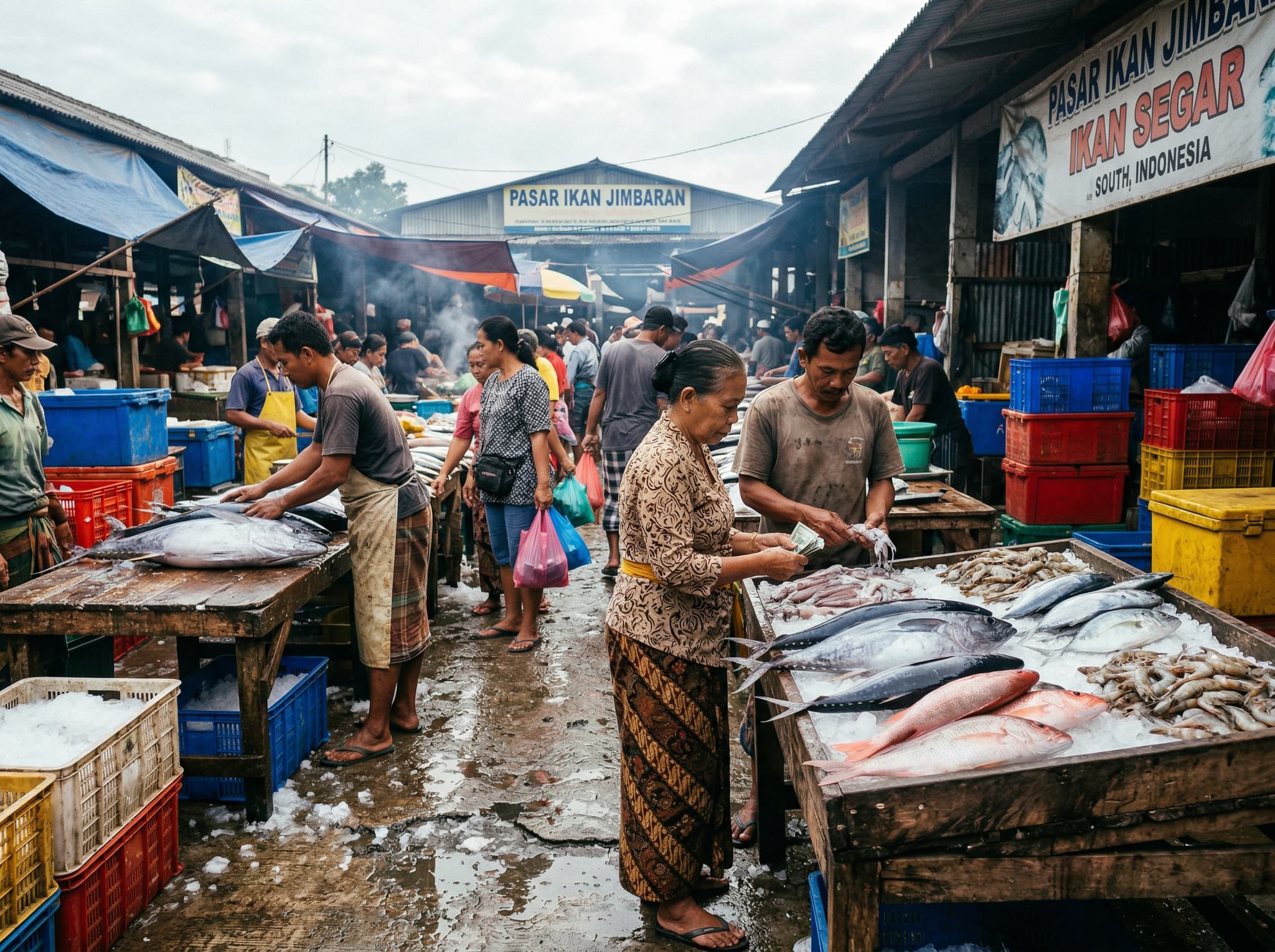
The resort maintains a section with loungers and attendants, but the boundary is soft. Walk five minutes south and you're at the fish market. Walk north and you reach the string of beachfront seafood restaurants — Jimbaran's most famous draw — where plastic tables are set on the sand and whole fish is priced by weight.
Dining On-Property
The resort's main restaurant, Sundara, occupies a beachfront position and serves modern Indonesian-influenced cuisine. It's the property's public-facing draw — non-guests book here regularly, particularly for the weekend brunch, which has become one of south Bali's better-known long lunches. The food is precise without being fussy. The cocktail program is strong.
Taman Wantilan, the more traditional restaurant, handles breakfast and dinner with a broader, less curated menu. Breakfast here is generous and unhurried — the kind of spread that justifies a late start.
For the price point, the dining is competitive with Bali's best standalone restaurants. That's not always true at resort properties, where captive audiences sometimes subsidize mediocrity.
What It Gets Right
The service culture is the hardest thing to describe and the easiest thing to feel. Staff here tend to stay for years — some for decades. The result is a quality of attention that doesn't feel scripted. Requests are anticipated without being presumptuous. There's a Balinese cultural program — temple visits, offering-making workshops, cooking classes — that functions as genuine cultural exchange rather than resort entertainment.
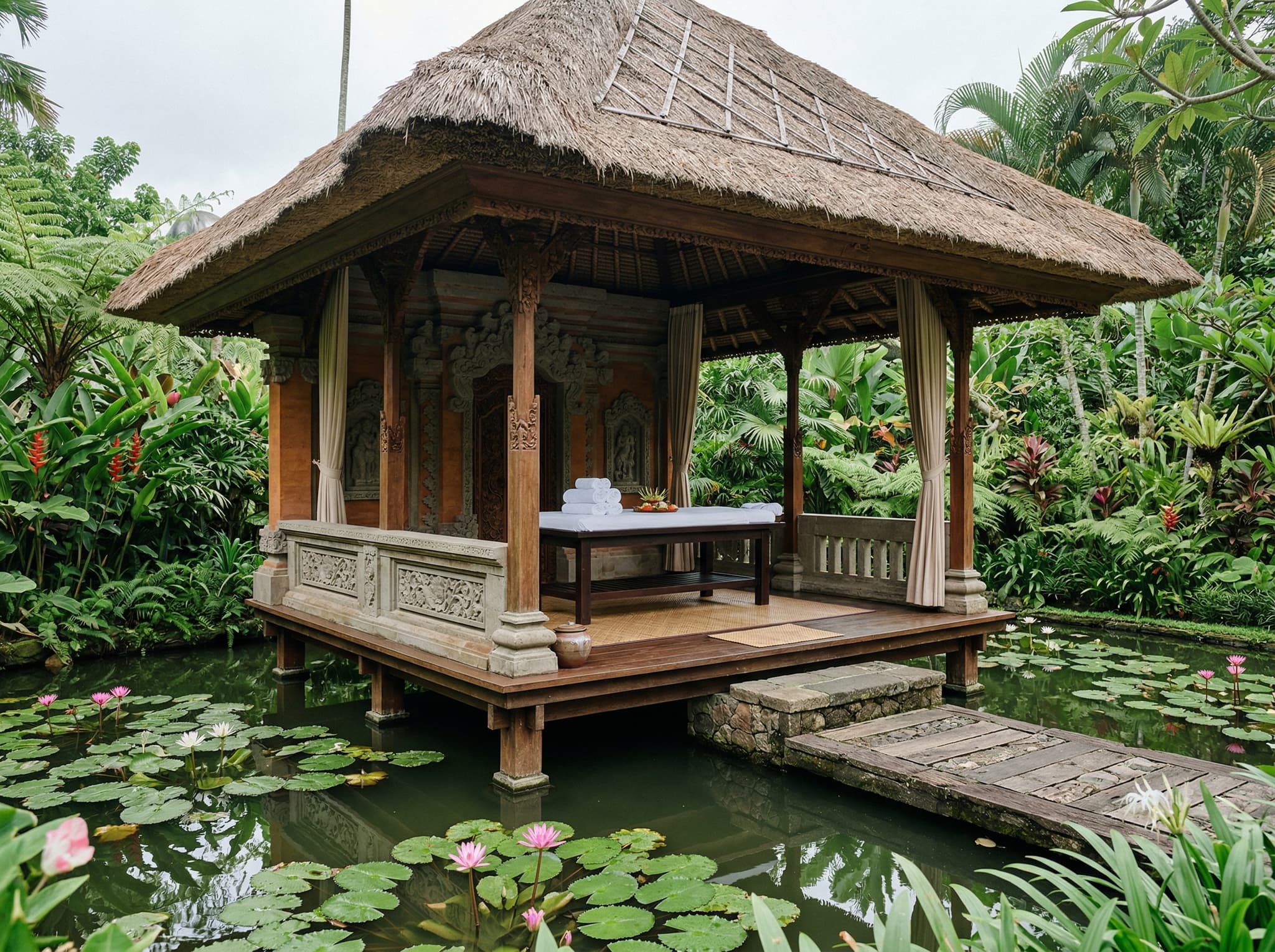
The spa, set in a garden compound with lotus ponds, is among the best in Bali's luxury tier. Treatments draw from Balinese healing traditions with enough skill that it doesn't feel like costume.
Practical Details
Airport Transfer
15–20 minutes; resort arranges private car
To Seminyak/Canggu
30–50 minutes depending on traffic
To Uluwatu
25–35 minutes
Wi-Fi
Reliable throughout the property
Check-in / Check-out
3:00 PM / 12:00 PM
What It Doesn't Do
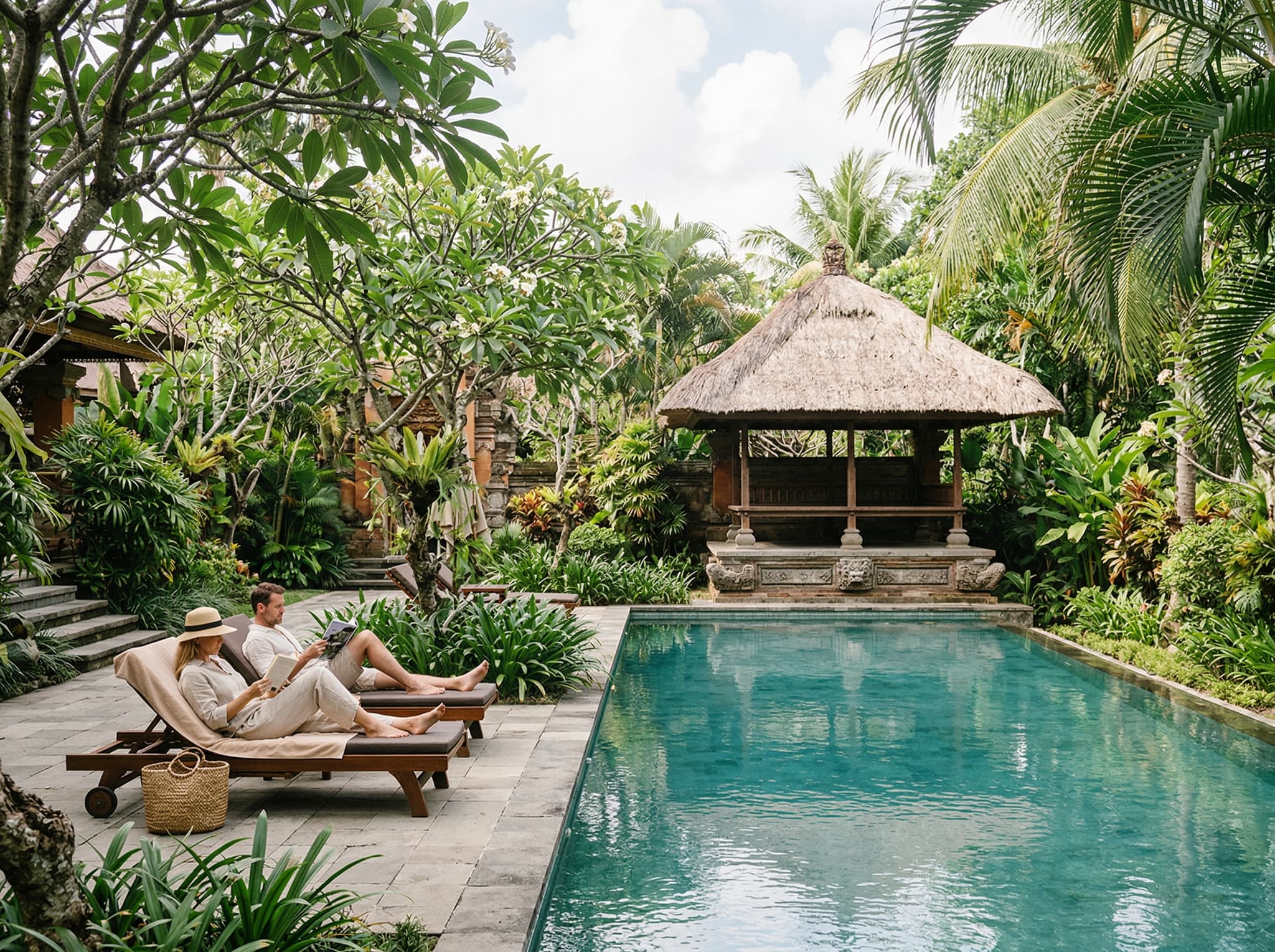
This is not a party property. There is no rooftop bar with a resident DJ. The pool scene is calm to the point of quiet. Couples seeking a lively social atmosphere — the kind that Potato Head or W Seminyak cultivates — will find this too subdued. That's by design, but it's worth naming.
It's also not isolated. Jimbaran is a real town with traffic and construction noise that occasionally reaches the lower villas. The resort doesn't pretend to be on a private island. If complete seclusion is the priority, the Four Seasons at Sayan, the property's sister resort near Ubud, or Aman properties like Amanusa deliver that more fully.
Who It's For
Travelers who want high-end comfort without theatrical luxury. Couples and families who value privacy and quiet over scene. Repeat Bali visitors who've done Seminyak and Ubud and want a slower base in the south. Anyone who finds the phrase "luxury redefined" in hotel marketing exhausting.
The property earns its rate not through novelty but through consistency — the accumulated weight of doing the same things well for thirty years, in a place that keeps changing around it.