Gianyar Night Market is where Balinese locals eat — babi guling, sate lilit, lawar, and more at street-food prices. What to order, how to navigate it, and when to go.
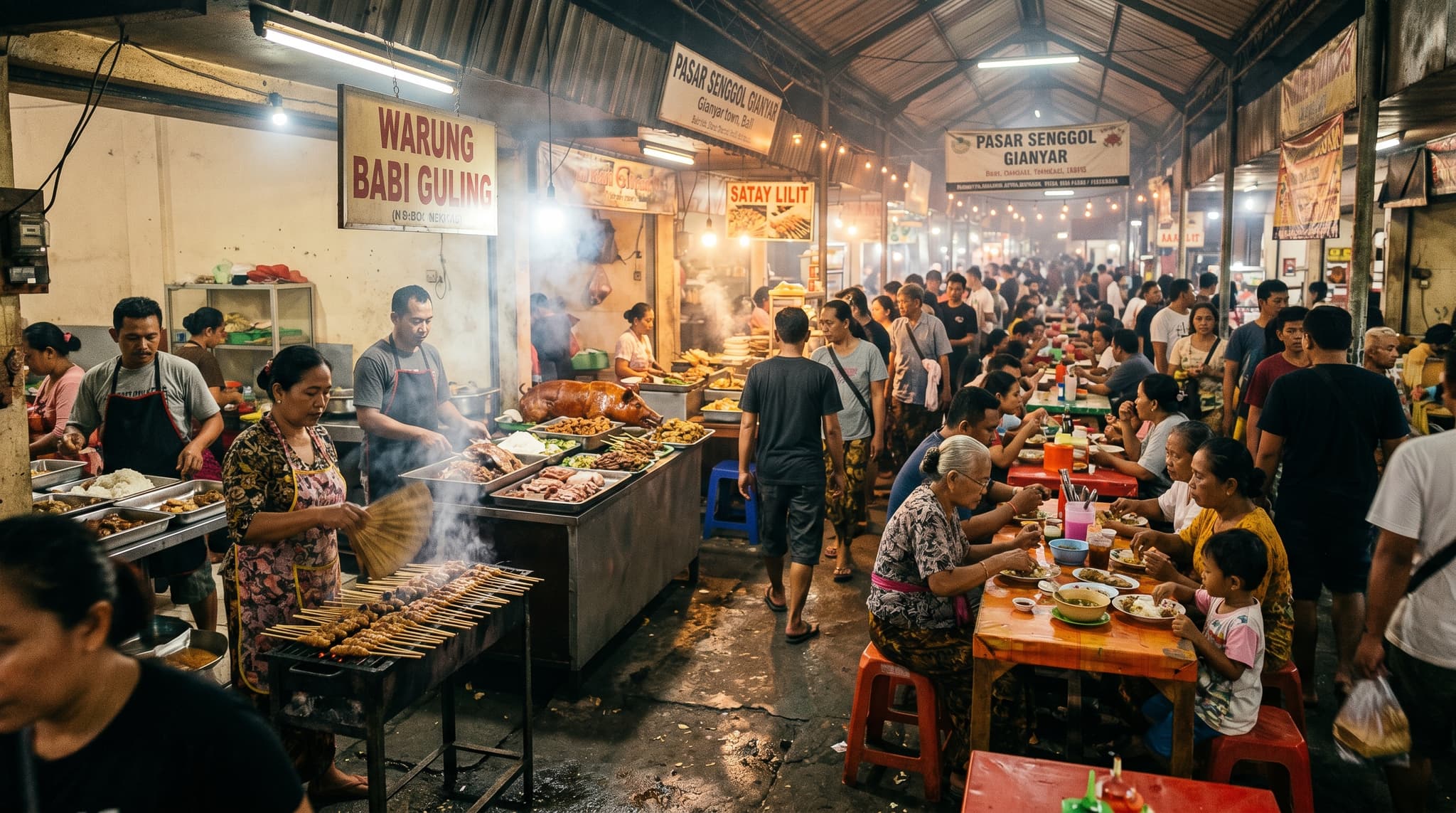
The smoke hits first. Charcoal and coconut husk, layered with the sweet-fatty pull of roasting pork and the sharper edge of chili paste meeting a hot grill. Then the noise — vendors calling out, metal tongs clacking against steel trays, the low murmur of dozens of people eating on plastic stools at communal tables. Gianyar Night Market fills a covered area along Jalan Ngurah Rai in the center of Gianyar town, and by 6 PM on any given evening, it is loud, crowded, and working.
This is not a market that exists because tourists found it. Gianyar Night Market — Pasar Senggol Gianyar — has been a gathering point for Balinese families and workers for decades. The crowd on a typical night is mostly local: families with kids, groups of friends splitting dishes, motorbike drivers grabbing a fast plate between rides. Tourists show up too, increasingly so, but the market hasn't reorganized itself around them. The menus are in Indonesian. The prices haven't split into local and foreigner tiers. Nobody's hawking to get you into a seat. You walk, you point, you eat.
What to Eat and Why It Matters
The stalls at Gianyar Night Market rotate somewhat, but the core offerings stay fixed because they reflect what Balinese cooking actually is — a cuisine built on pork, coconut, spice pastes, and fresh-killed preparations that don't keep well and taste best eaten immediately.
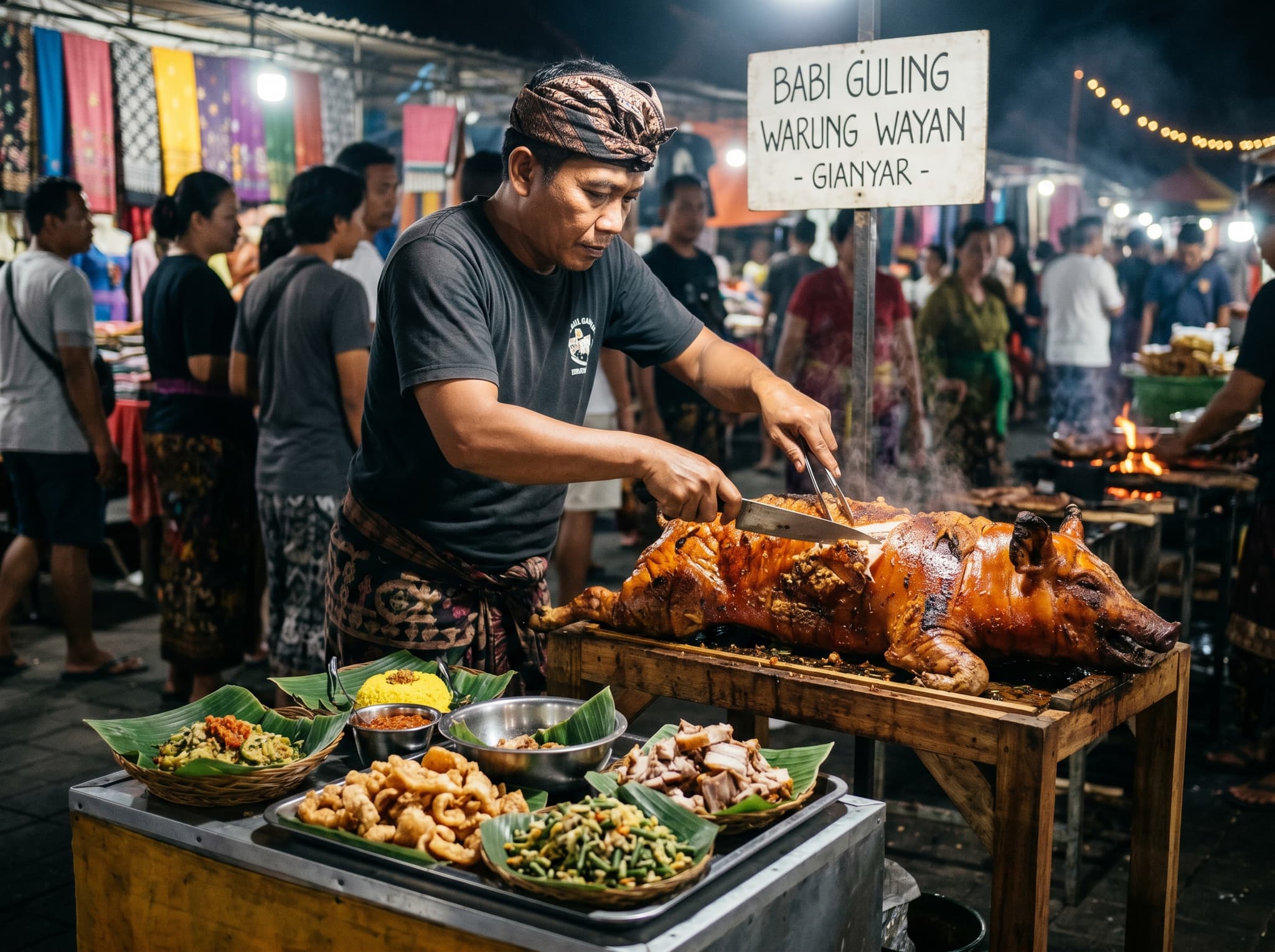
Babi guling is the anchor. This is Bali's signature dish: a whole pig stuffed with a paste of turmeric, coriander, lemongrass, galangal, garlic, and chili, then spit-roasted over wood coals until the skin turns glassy and brittle. At the market, vendors break down the pig and serve it over rice — you get slices of the crispy skin, tender belly meat, bits of the spiced stuffing, and usually a scoop of lawar and some blood sausage (urutan) on the side. A plate runs IDR 25,000–35,000. The best stalls have a visible pig on the spit or a freshly carved one on the counter. If the tray looks like it's been sitting, move to the next vendor.
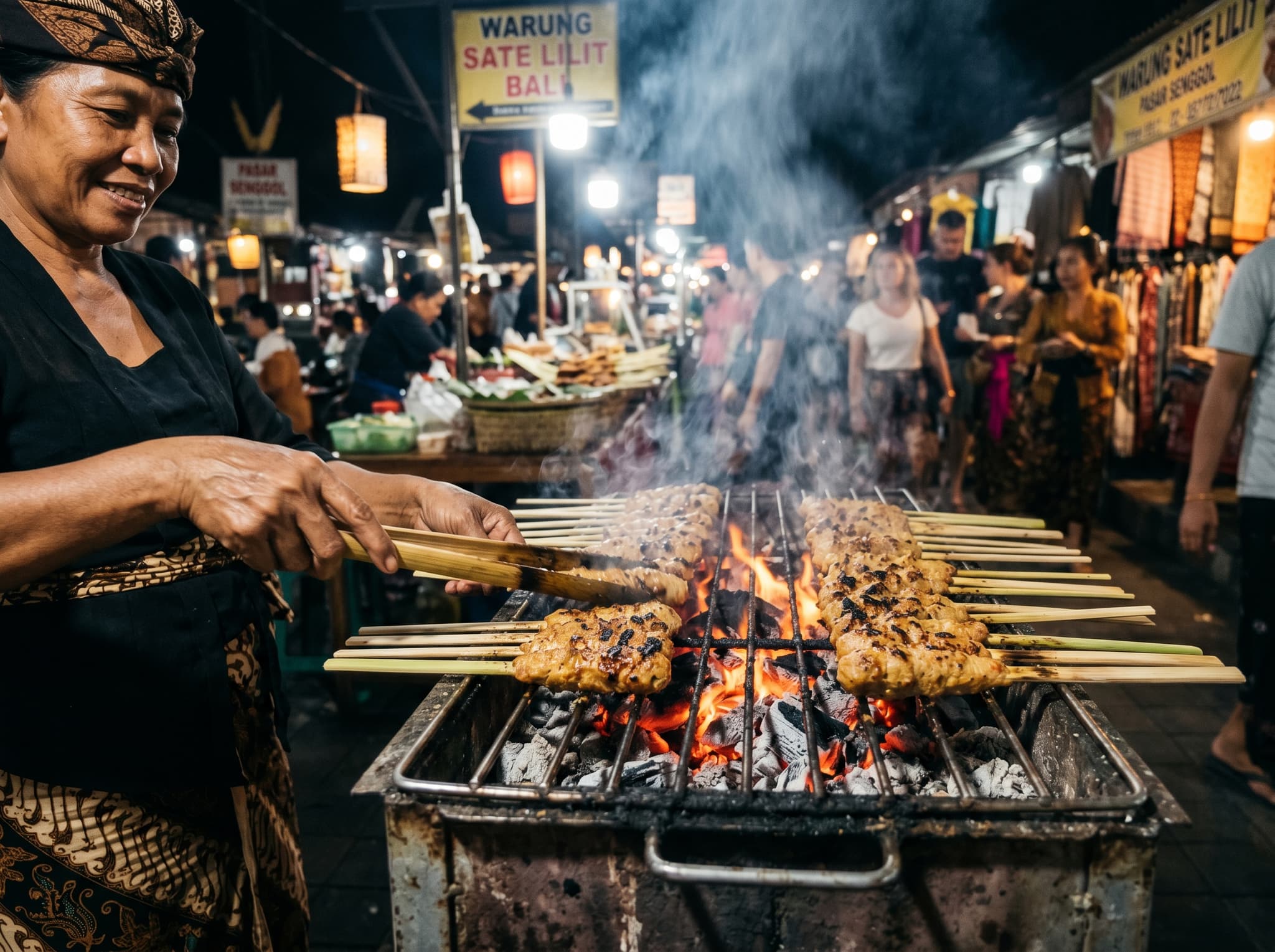
Sate lilit is the other thing to prioritize. Unlike the skewered-meat satay most people know from elsewhere in Indonesia, sate lilit is a Balinese preparation where minced meat — often pork, sometimes fish or chicken — gets mixed with grated coconut, coconut milk, lime leaves, and shallots, then pressed around lemongrass stalks or flat bamboo sticks and grilled. The texture is softer and more fragrant than standard satay, almost like a grilled mousse. Five or six sticks cost IDR 10,000–15,000.
Lawar deserves a mention beyond its cameo on the babi guling plate. It is a finely chopped salad of green beans, grated coconut, minced meat, and spices, sometimes mixed with fresh blood (lawar merah) and sometimes without (lawar putih). It is ceremonial food in Bali — prepared for temple offerings and community feasts — and finding it at a night market stall means you are eating something that carries real cultural weight in Balinese Hindu life. It is not a side dish in the way Westerners think of salads. It is a preparation with rules and meaning.
Beyond those three, the market has stalls selling nasi campur (mixed rice plates with small portions of several dishes), tipat cantok (pressed rice cakes with peanut sauce and vegetables), grilled corn, fried bananas, and various es (iced drinks) including es daluman, a jelly drink made from green leaf extract that tastes like sweetened grass in the best possible way.
The Layout and Flow
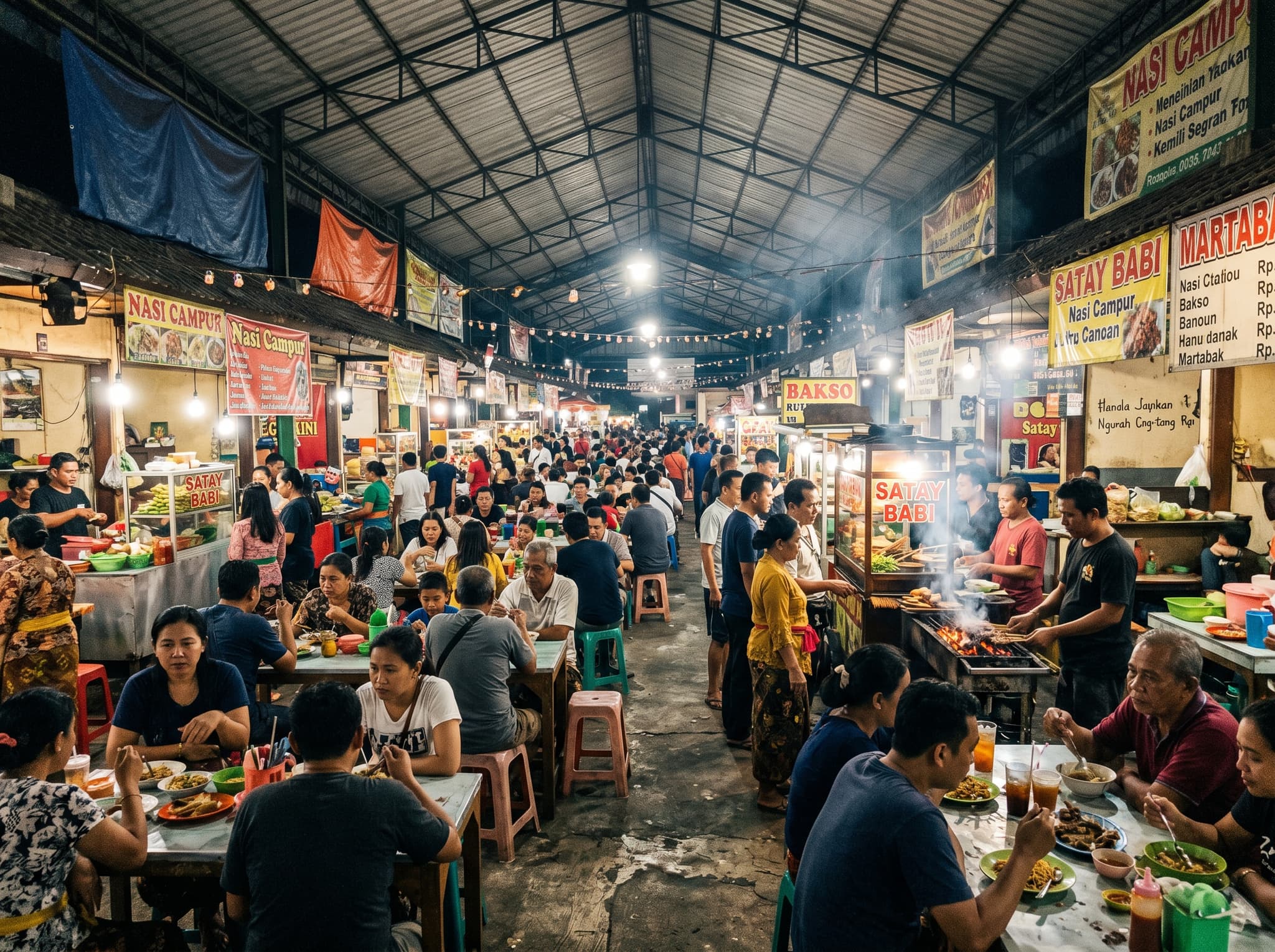
The market occupies a covered hall and spills into the surrounding street area. Food stalls line the perimeter, with shared seating — plastic tables and stools — filling the center. There is no assigned seating; you grab what is open. The unspoken system: walk the full perimeter first, see what looks good, then commit. Ordering from multiple stalls and eating at one table is normal and expected.
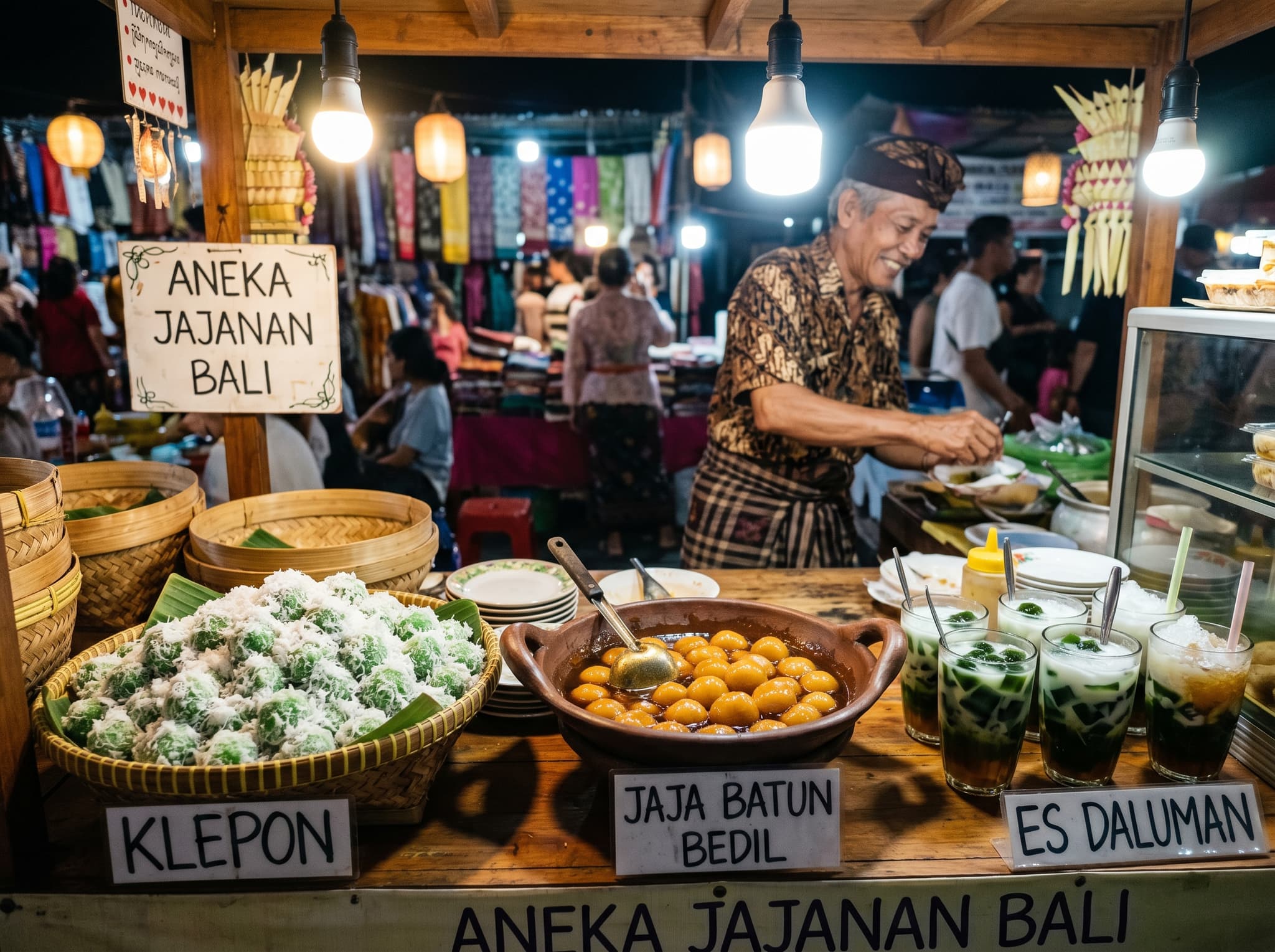
The busiest stretch is the section nearest the main road entrance, where the babi guling and sate lilit vendors tend to cluster. Deeper into the market, stalls get quieter and lean more toward sweets, snacks, and drinks. The back area is where you will find the dessert vendors — klepon (pandan rice balls filled with palm sugar), jaja batun bedil (small sticky rice balls in palm sugar syrup), and various kueh.
Getting There
Address
Jalan Ngurah Rai, Gianyar town center
From Ubud
About 13 km east, 25–35 minutes by car or scooter
From Seminyak/Kuta
About 35 km, 60–90 minutes depending on traffic
Parking
Street parking available along Jalan Ngurah Rai; motorbike easiest
Who This Market Is For (and Who It Is Not)
Gianyar Night Market is the market Balinese friends recommend when you ask where to eat, not where to shop. There are no handicraft stalls, no sarong vendors, no carved wooden cats. This is a food market. If you are looking for the Bali night market experience that combines shopping and eating — stalls selling dreamcatchers next to stalls selling noodles — the night markets in Seminyak and Sanur are closer to that model, though they cater heavily to tourists and price accordingly.
Gianyar is the food-specific answer. It is also the answer to a question travelers ask often: where are the best night markets in Bali for actual Balinese food? The short list is Gianyar, the smaller night market in Singaraja on the north coast, and scattered pasar malam (night markets) in regency towns like Tabanan and Klungkung. Gianyar is the largest, the most accessible from the tourist centers of central Bali, and the one with the deepest concentration of stalls.
Practical Notes
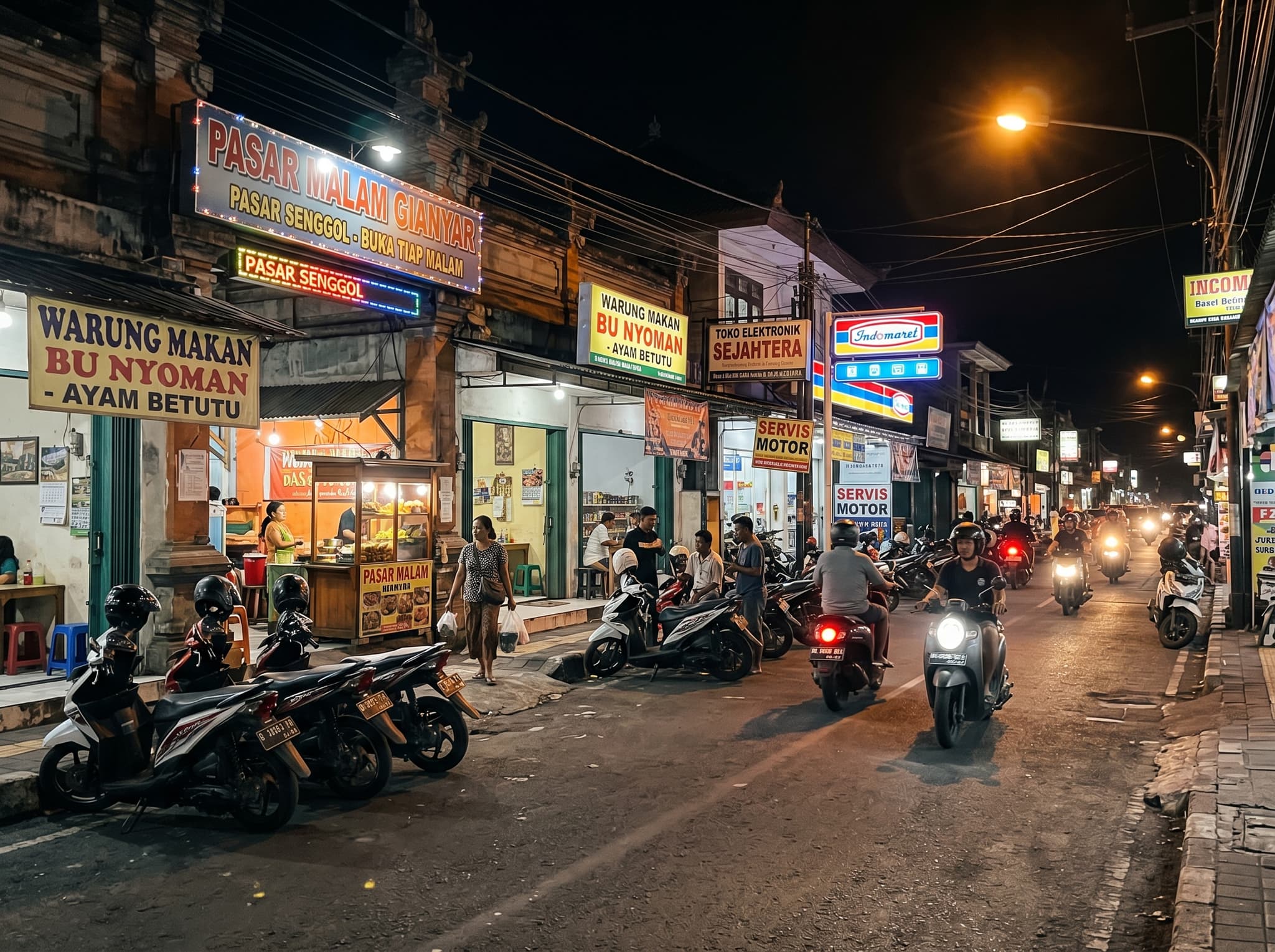
Bring cash. Small bills — IDR 10,000 and 20,000 notes — make everything easier. No stall takes cards. There are ATMs along Jalan Ngurah Rai if you arrive short.
The market is covered, so rain is not a problem for eating, though the surrounding streets can flood briefly during heavy downpours in wet season (November through March). Arrive by 6 PM for the best selection. By 9 PM, popular stalls start running out of their main dishes. By 10:30 PM, the market is winding down.
Hygiene is street-food standard. The stalls with the highest turnover — the ones with lines — are generally the safest bet, because nothing has been sitting long. If you have a sensitive stomach, start with grilled items (sate lilit, grilled corn) rather than the raw-blood lawar preparations.