Kayu Aya Square is Seminyak's open-air market hub and navigation landmark. Here's what it looks like, what's sold there, and why it matters.
Kayu Aya Square is one of those places that shows up in directions more than it shows up in itineraries. It sits on Jalan Kayu Aya — also signed as Jalan Laksmana, because Bali loves giving streets two names — in the middle of Seminyak's commercial core. Think of it less as a destination and more as a landmark: the kind of reference point that makes everything around it easier to find.
The square is a small, open-air commercial complex anchored by a cluster of market stalls selling the usual Bali rotation of sarongs, woven bags, wooden carvings, and knockoff sunglasses. Around its edges, you'll find a few cafés, a minimart, and some shopfronts that turn over every year or two. It's not architecturally distinctive. There's no grand entrance or plaza fountain. It's a concrete-and-tile commercial block with an open central area where vendors set up, and that's about it.
That sounds dismissive, but it's not meant to be. Kayu Aya Square matters because of where it sits and what it organizes, not because of what it looks like.
What the Square Actually Does
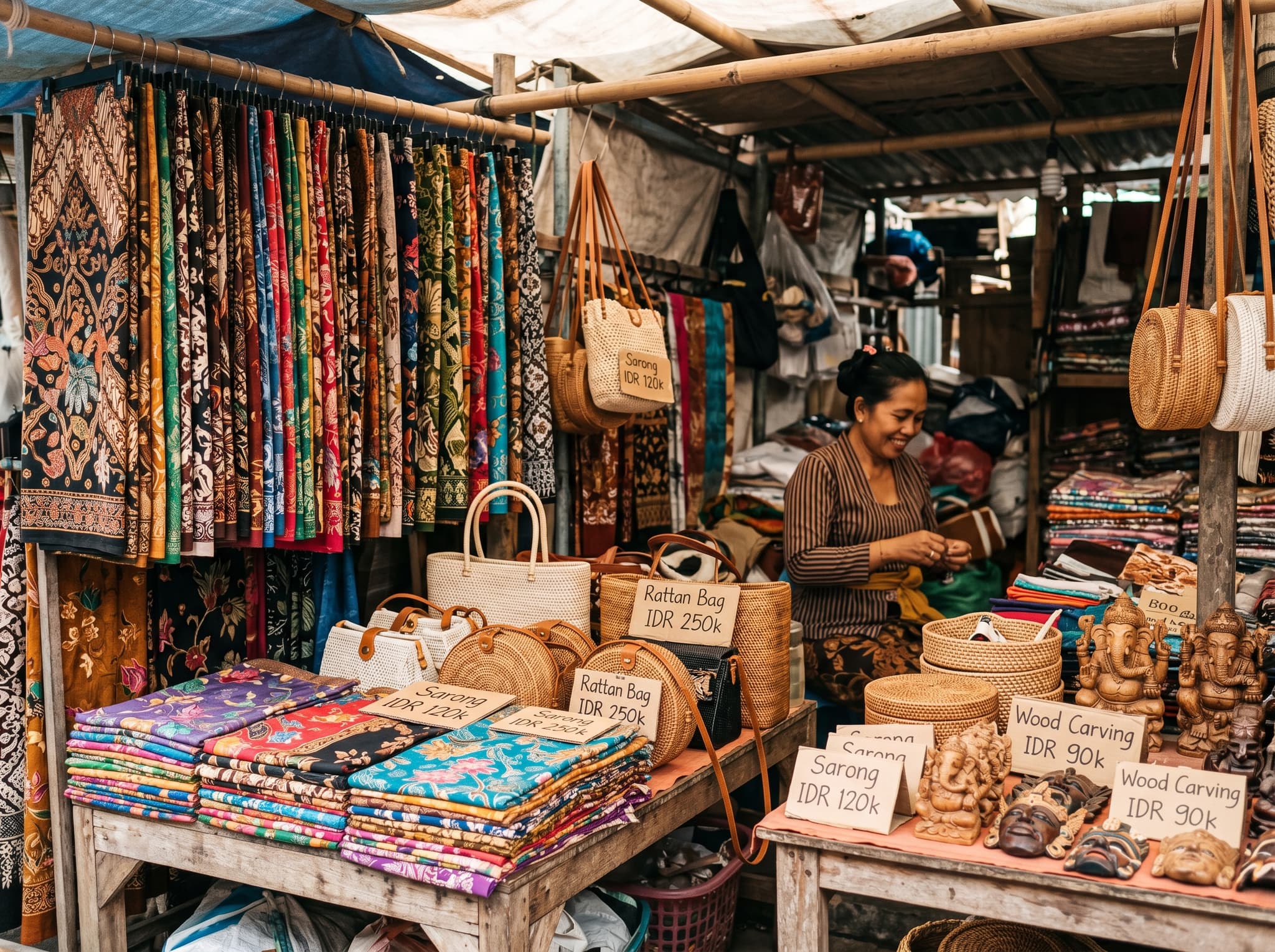
Kayu Aya Square functions as the anchor point for the market activity that spills along this stretch of Jalan Kayu Aya. The stalls inside the square itself are the densest concentration, but vendors and small shops extend outward along the street in both directions. If someone tells you to meet them "near the Seminyak market," there's a good chance they mean here or within a two-minute walk of here.
The market stalls inside the square sell mostly to tourists, and the pricing reflects that. Sarongs typically start at IDR 100,000–150,000 before bargaining; you should be paying closer to IDR 50,000–80,000 for a basic one. Souvenir items — keychains, small wood carvings, woven bracelets — start around IDR 30,000–50,000 at asking price. A reasonable starting offer is 40–50% of whatever the vendor quotes first, then work toward a middle ground. Nobody gets offended by this; it's the expected rhythm.
Kayu Aya Square vs. Seminyak Square
This trips people up, so let's clear it immediately: Kayu Aya Square and Seminyak Square are different places. Seminyak Square is a larger, more modern shopping complex located further south along Jalan Kayu Aya, closer to the Jalan Raya Seminyak intersection. It has more structured retail — branded stores, restaurants with fixed menus, that kind of setup.
Kayu Aya Square is smaller, more market-oriented, and rougher around the edges. If you're looking for air-conditioned retail therapy, you want Seminyak Square. If you're looking for the open-air market stalls and the landmark that locals reference for directions, you want Kayu Aya Square.
At a Glance: Kayu Aya Square vs. Seminyak Square
Kayu Aya Square
Open-air market stalls, small cafés, souvenir vendors
Seminyak Square
Structured retail, branded shops, sit-down restaurants
Distance Apart
Roughly 600 meters along Jalan Kayu Aya
What's Around It
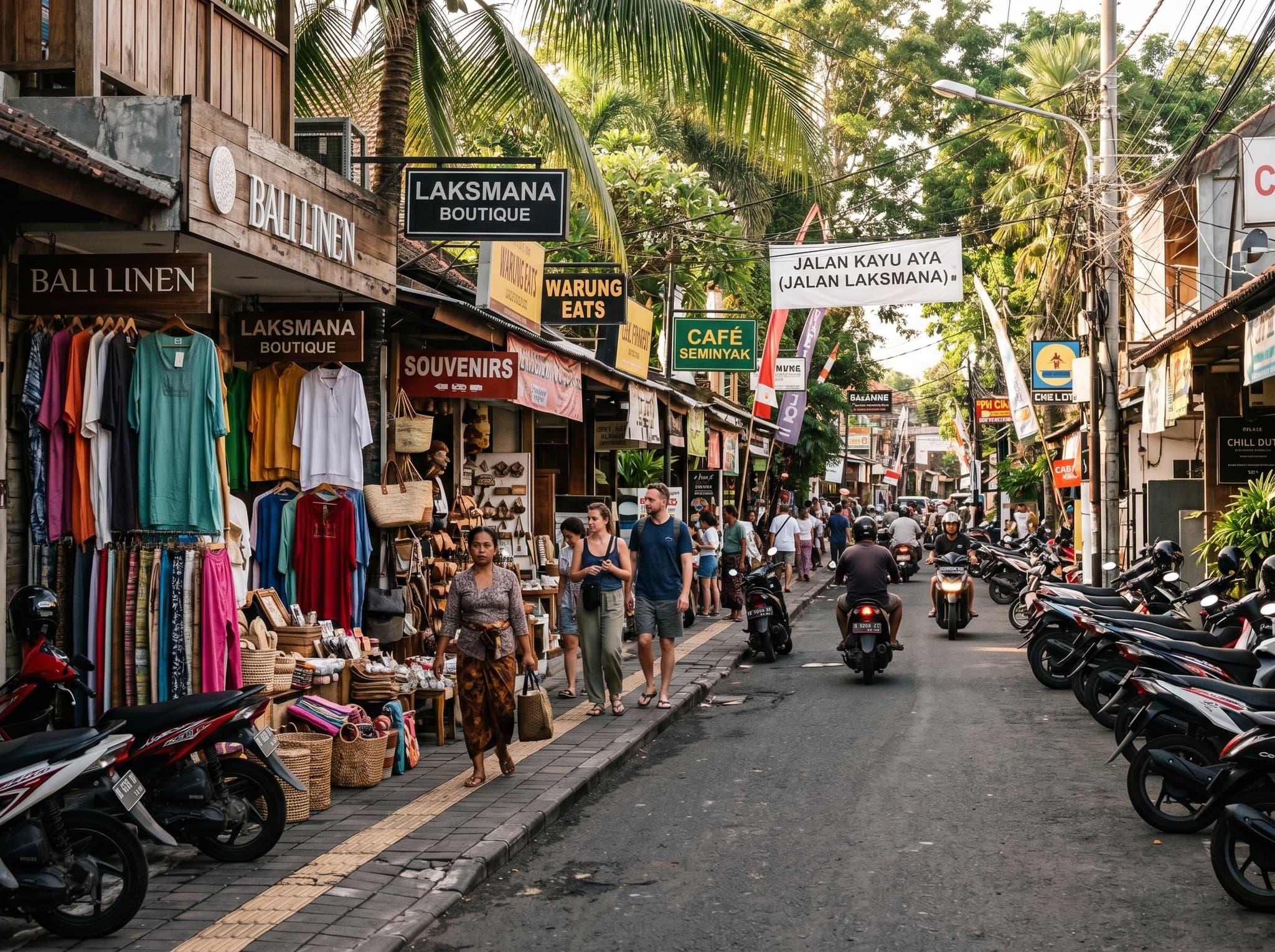
The square's real value is its position. Jalan Kayu Aya is one of Seminyak's main east-west arteries, connecting the beach to Jalan Raya Seminyak. Within a five-minute walk of Kayu Aya Square, you're in range of a significant chunk of Seminyak's restaurant and bar scene. The boutique shops that Seminyak is known for — the ones selling linen clothing and coconut-scented everything — line the streets branching off in every direction.
The beach is roughly 500 meters west. Grab drivers and ojek riders know the square by name, which makes it a reliable pickup and drop-off reference. That alone makes it worth knowing about, because giving a driver "Kayu Aya Square" as a landmark is faster and more reliable than trying to pin-drop a specific shop on a one-way street.
Is It Worth a Deliberate Visit?
Honestly? Only if you're already walking Jalan Kayu Aya, which — if you're staying in Seminyak — you almost certainly will be. The market stalls are fine for picking up cheap sarongs or last-minute gifts, but this isn't a destination market like Ubud Art Market. The selection is standard tourist fare, and the experience is transactional rather than atmospheric.
What makes Kayu Aya Square useful is that it orients you. It's the point on the map where the market activity clusters, where drivers know to find you, and where the surrounding streets start to make spatial sense. In a neighborhood where one-way streets and inconsistent signage can turn a five-minute walk into a fifteen-minute loop, having a reliable fixed point matters more than it sounds.
Stop by, browse if something catches your eye, bargain if you're buying, and use it as your compass for the rest of Seminyak.