Kedonganan Beach sits next to Bali's busiest fish market — a working shoreline of charcoal smoke, fishing boats, and affordable seafood warungs along Jimbaran Bay.
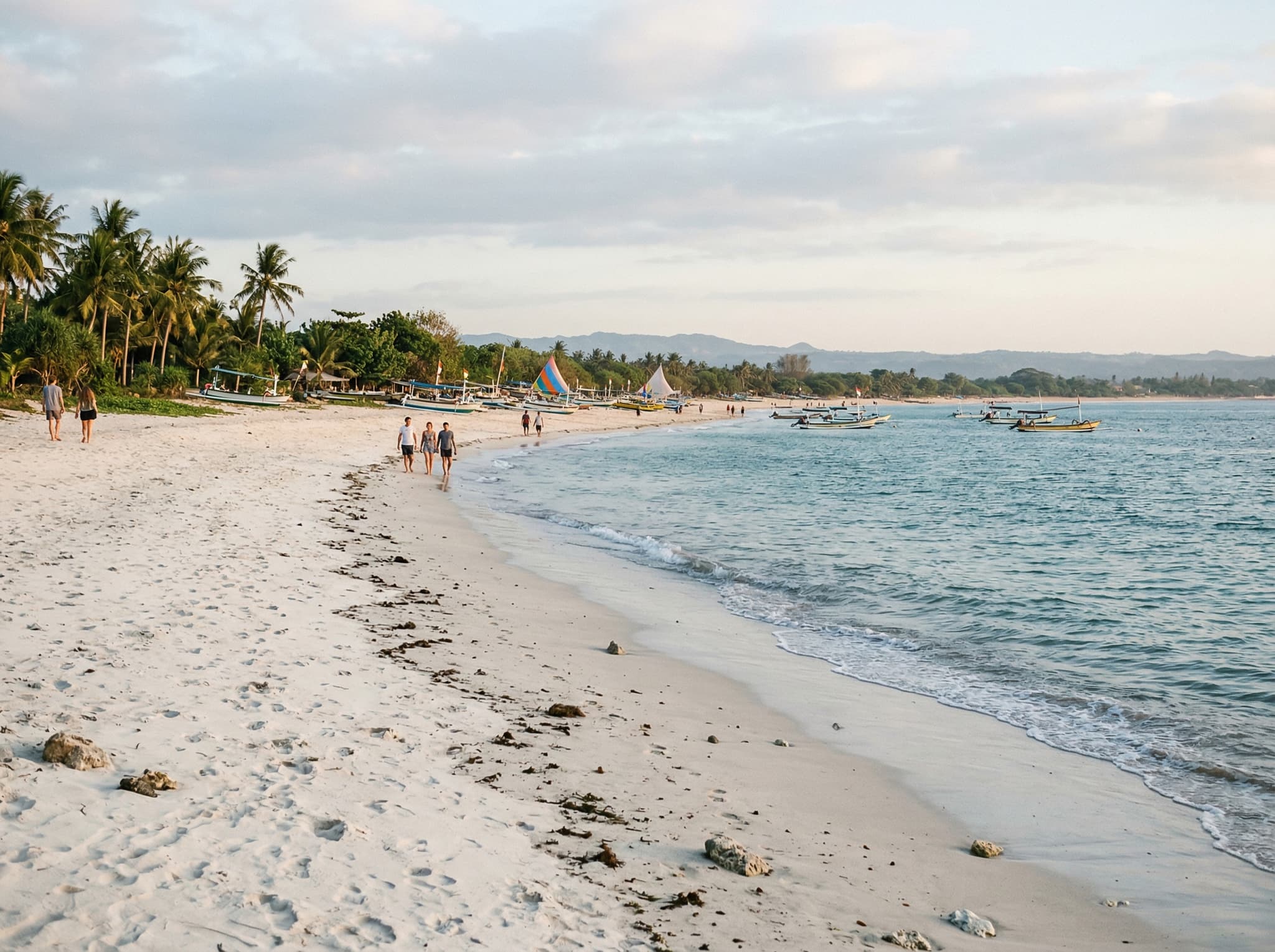
Kedonganan Beach is not the Bali beach you picture when you close your eyes. There are no cliff-top infinity pools in the background, no DJ sets drifting across the sand. What you get instead is a working shoreline — fishing boats pulled up on pale sand, the sharp mineral smell of fresh catch carried on the wind, and a row of seafood warungs whose charcoal grills start smoking well before sunset.
That's the draw. Kedonganan Beach exists in the overlap between a fishing village and a dining destination, and the people who love it love it precisely for that rough, unpolished quality.
What Kedonganan Beach Actually Looks Like
The sand here is light — closer to white than the volcanic grey you find further north. The water is calm, with small waves that make it manageable for swimming, though this isn't a surf beach by any measure. The shoreline curves gently along Jimbaran Bay, and on clear evenings the sun drops straight into the water ahead of you.
Walk south from the fish market pier and the beach improves. Near the pier itself, you'll find what you'd expect from an active fishing harbor: boats in various states of repair, nets drying, and — honestly — litter. The area gets cleaned daily, but the reality of a working pier means the sand closest to it is not where you want to lay your towel.
Move a few hundred meters south and the character shifts. The warungs thin out, the sand gets cleaner, and the crowd — already sparse compared to Jimbaran — drops further. This is the stretch worth settling into.
Kedonganan Beach is roughly a 5-minute walk from Jimbaran Beach. The two share the same bay, but Kedonganan sits closer to the fish market and pier, giving it a distinctly more local, working-harbor atmosphere.
The Fish Market and the Beach: How They Bleed Together

You can't write about Kedonganan Beach without writing about the fish market, because the two aren't really separate places. The Pasar Ikan Tradisional Kedonganan occupies the northern end of the beach, centered around the pier where fishing boats unload each morning.
Kedonganan Fish Market
Hours
Approximately 7:00 AM – 7:00 PM
Location
Northern end of beach, around the pier
Common catch
Tuna, mahi-mahi, prawns, squid
Best time
Early morning for unloading; late afternoon for dinner prep
Fishermen head out around 3:30 PM and return in the early morning hours. If you're on the beach by 7:00 AM, you'll catch the tail end of the unloading — crates of tuna and mahi-mahi passed hand to hand from boat to shore, then carried to the market stalls where hotel buyers and warung owners are already negotiating.
By late afternoon, the energy reverses. The warungs lining the beach start firing their grills — coconut husk charcoal, which gives the smoke a sweetness you don't get from wood or gas. The smell reaches you before you see the flames. It mixes with salt air and diesel from the boats, and that particular combination is what Kedonganan Beach smells like. It's not unpleasant. It's specific.
Eating on the Beach

The seafood warungs are the main reason most visitors come to Kedonganan Beach, and they operate on a model worth understanding before you sit down.
Most warungs display their seafood in tanks or on ice at the front. You choose your fish, prawns, or squid, agree on a price per weight, and they grill it with Balinese spices over that coconut husk charcoal. The meal arrives with rice, sambal, vegetables, and usually a view of the water.
There's a cheaper route: buy your own fish directly from the market, then bring it to a warung and pay a cooking fee per kilogram. Not every warung welcomes this — ask before you assume — but it's a well-known practice here and can cut your bill significantly.
Kedonganan's seafood warungs are generally more affordable than the more famous Jimbaran Bay seafood restaurants to the south. If you're choosing between the two for a sunset seafood dinner, Kedonganan offers a similar experience with lower prices and fewer crowds.
Prices vary by season and catch, but expect to pay less than you would at the more polished Jimbaran spots. The trade-off is atmosphere — Kedonganan's warungs are simpler, the seating more basic, the sand underfoot less manicured. Whether that's a downside depends entirely on what you're looking for.
What to Know Before You Go
Getting there. Kedonganan Beach is accessible via Jalan Pantai Kedonganan. From Kuta, it's roughly 500 meters — close enough that a Grab ride costs around IDR 50,000, though the exact fare fluctuates. A scooter rental runs IDR 100,000–200,000 per day excluding fuel, which gives you flexibility to explore the broader Jimbaran Bay area.
Cleanliness. This is the thing to be honest about. Kedonganan Beach is a working harbor beach, not a resort beach. Near the pier, you'll encounter boat debris, occasional rubbish, and the smell of fish. Daily cleanup crews maintain the sand, but conditions vary. Move south of the warung cluster and things improve noticeably.
Rainy season warning. During the wet months — roughly November through March — Kedonganan Beach is susceptible to what locals call trash tides: ocean debris including plastic waste and driftwood that washes ashore in volume. A significant event in December 2025 brought heavy debris to this stretch. Badung Regency deploys cleanup crews, but if beach cleanliness is a priority for your visit, the dry season is a safer bet.
During the rainy season (November–March), ocean debris can wash ashore in large quantities. Check local conditions before planning a visit during these months. The beach may be heavily littered despite daily cleanup efforts.
Water sports. Jet-skiing, parasailing, and banana boating are available on the beach, though this isn't the primary draw. Operators set up along the sand — negotiate prices before you commit.
Getting to Kedonganan Beach
From Kuta
~500m south; IDR 50,000 by Grab
From airport
~20 minutes by car
From Jimbaran Beach
5-minute walk north along the sand
Access road
Jalan Pantai Kedonganan
Parking
IDR 5,000 (car) / IDR 2,000 (scooter)
Nearby
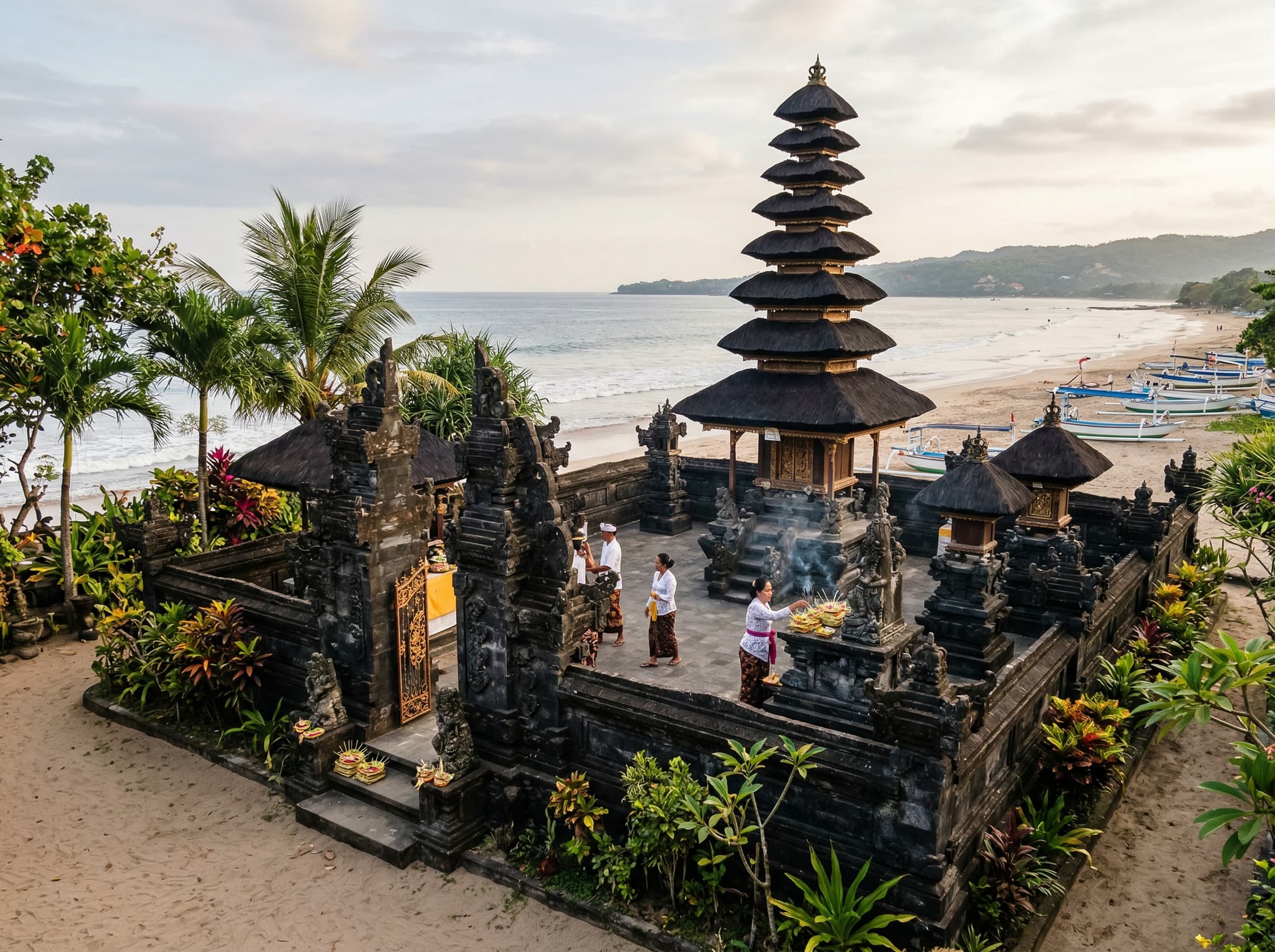
Pura Dalem Beach Temple sits within walking distance and is worth a brief stop if you're already here. The Tanjung Benoa Peninsula, with its concentration of water sports operators, is a short drive south. And Jimbaran's more established seafood strip — pricier, more polished, more crowded — runs along the bay to the south if you want to compare.
Who Kedonganan Beach Is For
This is not a beach for people who want pristine sand and attentive service. It's a beach for people who want to watch a fishing village operate, eat grilled fish where it was caught, and sit in the smoke and noise of a place that hasn't been redesigned for visitors.
The light here at sunset is the same light you get anywhere along Jimbaran Bay — wide, golden, the kind that makes everything look better than it is. But at Kedonganan Beach, that light falls on fishing nets and charcoal grills and plastic chairs, and somehow that makes it feel more earned.