Mejekawi brings tasting-menu precision to Balinese ingredients inside Seminyak's Ku De Ta complex. Here's what to expect and whether it's worth it.
There's a particular kind of restaurant that exists in every beach town with enough money flowing through it — the kind where the view does most of the work and the kitchen coasts on atmosphere. Seminyak has dozens of them. Mejekawi is not one of them.
Tucked into the upper level of the Ku De Ta complex on Jalan Kayu Aya, Mejekawi operates as a separate entity from the beach club below. Where Ku De Ta trades on sunset cocktails and see-and-be-seen energy, Mejekawi is quieter, more deliberate. The space is minimal — a long chef's counter, a handful of tables, a kitchen that's open but unhurried. You come here to eat, not to perform the act of dining out.
What Mejekawi Actually Is
 complex on Jalan Kayu Aya in Seminyak at dusk — the beachfront venue that houses Mejekawi on its upper level, showing the contrast between the buzzing beach club below and the quieter fine-dining space above.](/_next/image?url=https%3A%2F%2Fhcsauzofnowpfpbudclf.supabase.co%2Fstorage%2Fv1%2Fobject%2Fpublic%2Farticle-images%2Fd7ca3467-c1ae-4a78-930f-458d8d725636%2Fplace-1.jpg&w=2048&q=75)
Mejekawi is a tasting-menu restaurant built around what its kitchen calls "food laboratory" principles — ingredient-driven courses that lean on Indonesian produce, foraging networks, and modern technique. The menu changes regularly, structured around seasonal availability and whatever the team has been developing.
The format is straightforward: a multi-course tasting menu, typically eight to twelve courses, with an optional wine or cocktail pairing. There's no à la carte. You sit, you trust the kitchen, and the courses arrive.
Dining Details
Format
Multi-course tasting menu only
Courses
8–12 depending on current menu
Pairing Option
Wine or cocktail pairing available (additional cost)
Seating
Chef's counter or table seating
Dress Code
Smart casual — no beachwear
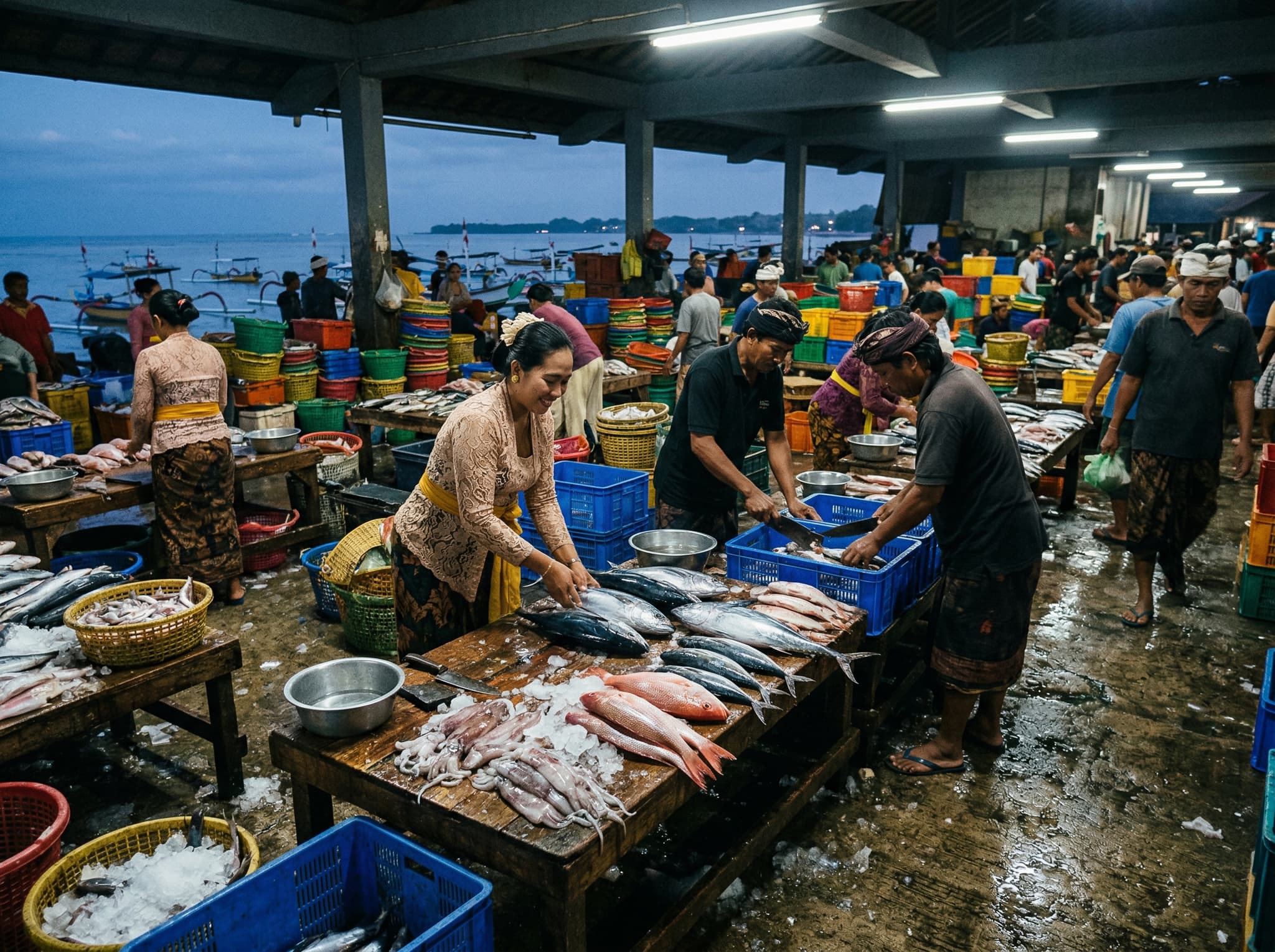
This isn't molecular gastronomy for its own sake. The technique serves the ingredient, not the other way around. A course might involve slow-cooked Balinese pork with a fermented sambal that took weeks to develop, or a seafood preparation sourced from Jimbaran's morning market that morning. The kitchen's relationship with local suppliers is genuine — not a marketing line printed on the menu but a practice that shapes what ends up on the plate.
The Food, Honestly
The best courses at Mejekawi tend to be the ones rooted closest to Bali itself. Indonesian flavors — galangal, candlenut, torch ginger, long pepper — appear throughout, treated with a precision that elevates without erasing. When the kitchen reaches too far toward European fine-dining conventions, the results can feel less distinctive. But those moments are rare enough to forgive.
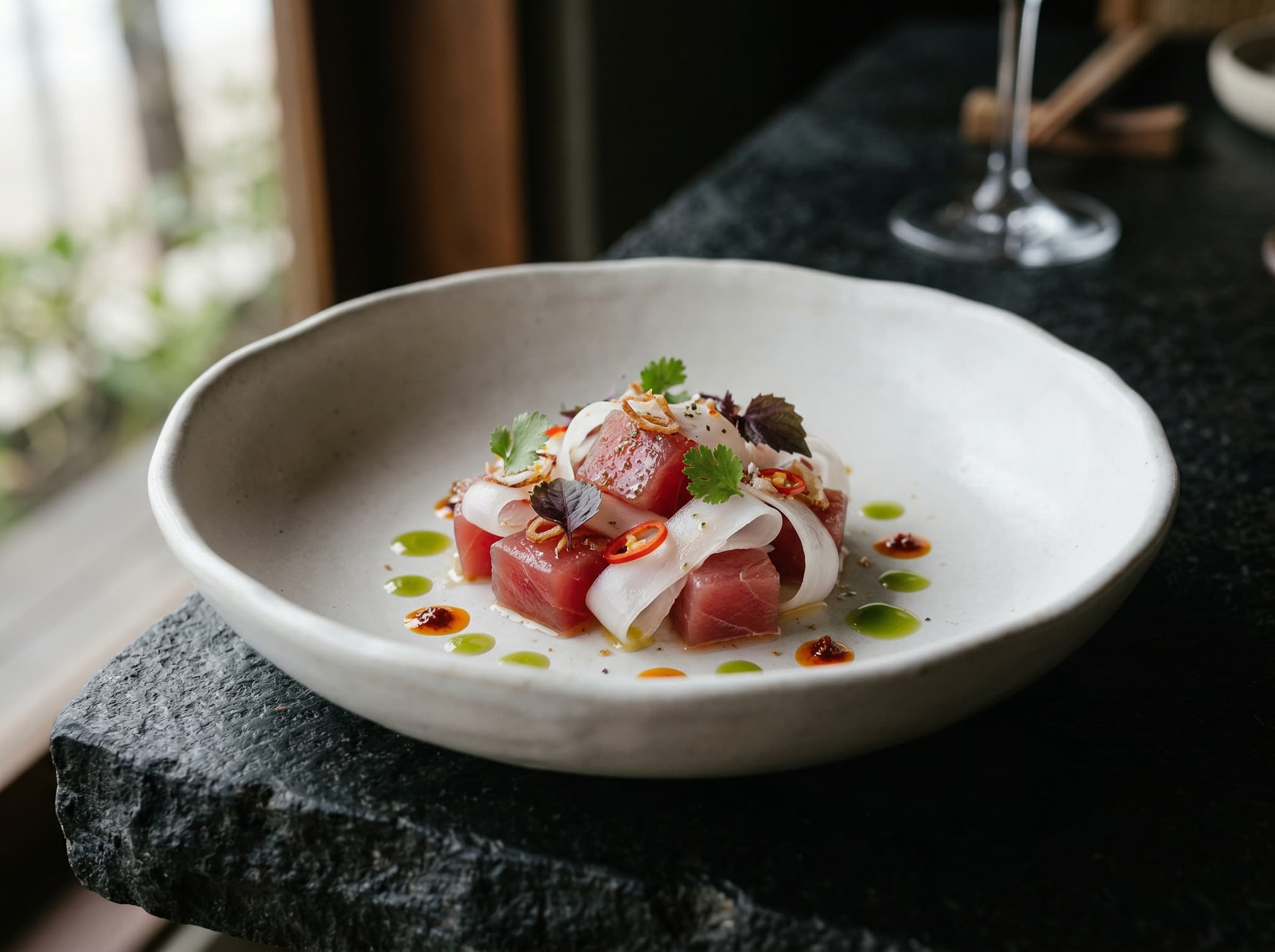
A recent iteration of the menu featured a raw yellowfin preparation with young coconut and kaffir lime that was striking in its simplicity. A later course involving smoked duck with a black rice element showed the kitchen's comfort with texture and restraint. Dessert courses lean botanical — pandan, turmeric, cacao from East Java — and avoid the trap of sweetness for its own sake.
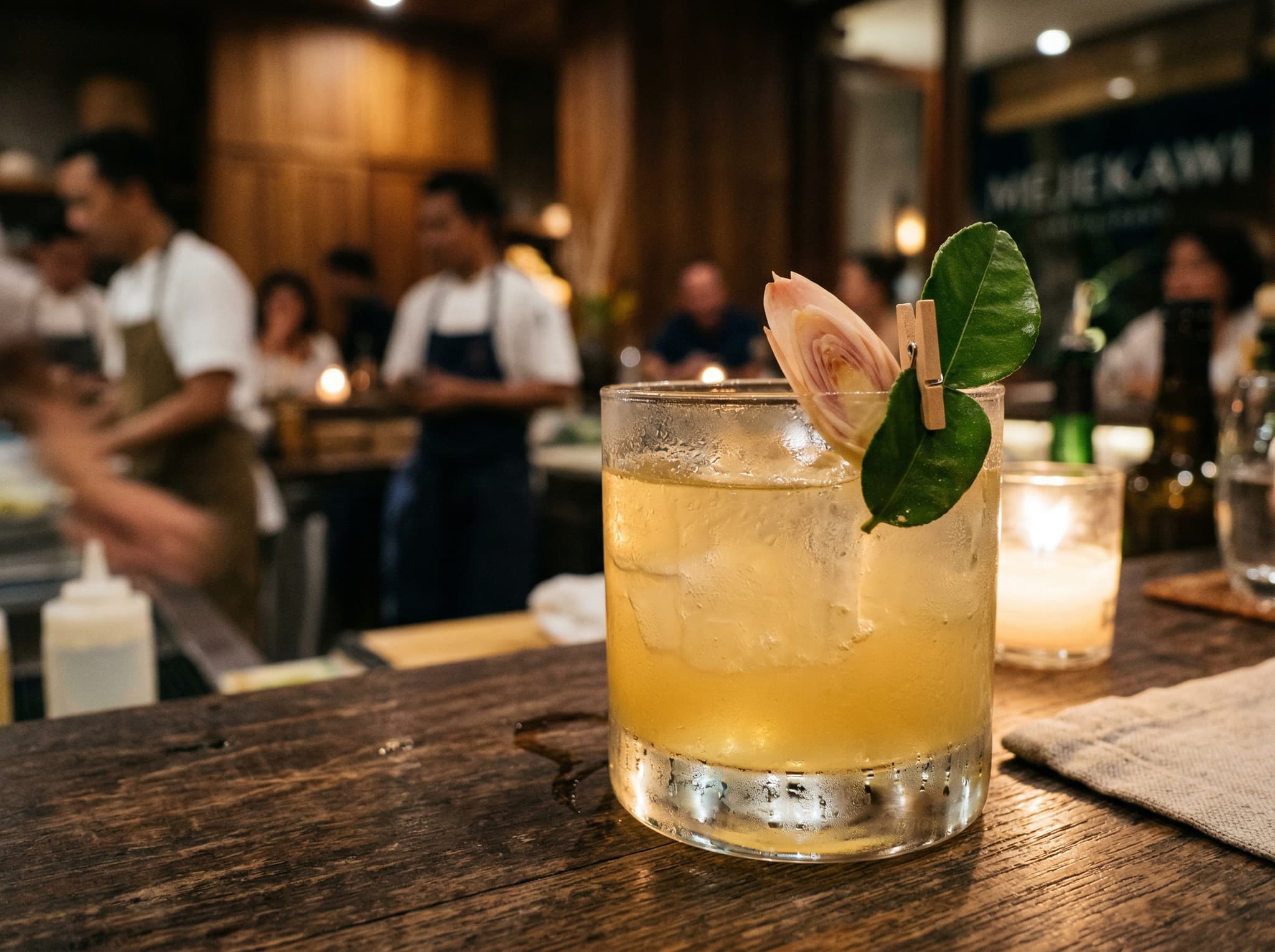
The wine pairing is competent but the cocktail pairing tends to be more interesting, drawing on local spirits and ingredients that mirror what's happening on the plate. At roughly IDR 900,000–1,200,000 for the pairing, it's a significant addition to the bill, but it's not filler.
Who This Is For (and Who It Isn't)
Mejekawi is for the traveler who has eaten well in other cities and wants to understand what Bali's dining scene is capable of beyond warungs and beach clubs — without pretending those things aren't also excellent. It's for people who find genuine pleasure in sitting still for three hours and letting a kitchen tell a story.
It is not a casual dinner. It's not where you go after a day at the beach club downstairs, sand still in your hair. It's not a place to bring someone who checks their phone between courses, though that's more of a philosophical position than a house rule.
Practical Information
Address
Jl. Kayu Aya No. 9, Seminyak
Reservations
Required — book via website or WhatsApp
Hours
Dinner service only, typically from 6:00 PM
Payment
Credit cards accepted; service charge included
Getting There
10 min from central Seminyak by scooter, 15 by car
Context Within Seminyak's Dining Scene
Seminyak doesn't lack for restaurants. Jalan Kayu Aya and the streets branching off it hold everything from excellent Indonesian fare at Mama San to the polished Mediterranean of Sardine. But Mejekawi occupies a specific niche — it's one of the few places in the area committed to a tasting-menu format that takes Indonesian ingredients seriously at a fine-dining level.
The comparison point most people reach for is Locavore in Ubud, and the comparison is fair in spirit if not in execution. Both kitchens prioritize local sourcing and seasonal menus. Locavore is more ambitious in scope and harder to book. Mejekawi is more accessible — both in terms of reservations and in its willingness to meet diners where they are rather than demanding they already understand the project.
What It Costs and Whether It's Worth It
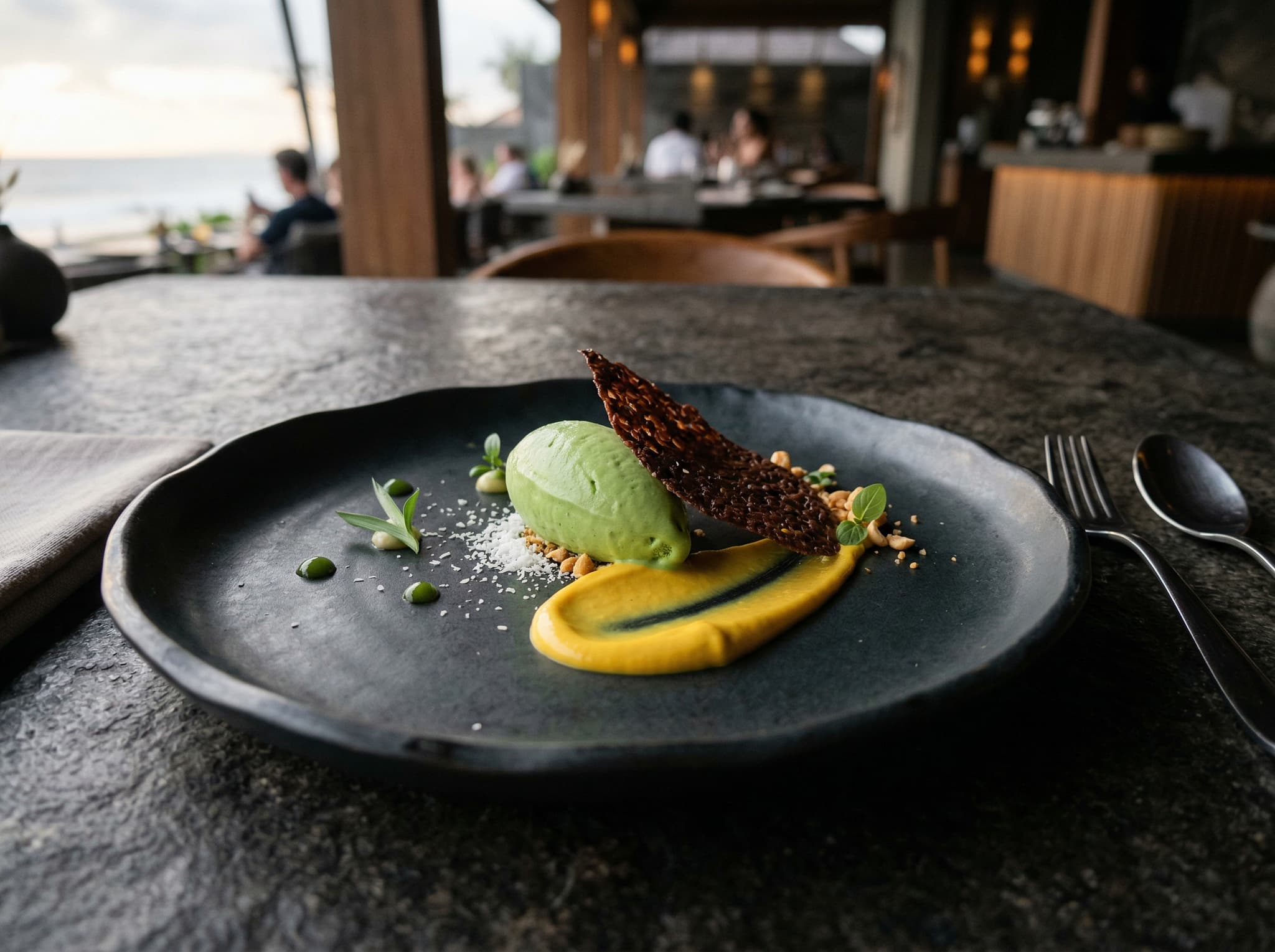
A tasting menu for two with the cocktail pairing, water, and the included service charge will run roughly IDR 5,500,000–6,500,000 ($350–$415). By Bali standards, that's expensive. By the standards of comparable tasting-menu restaurants in Singapore, Tokyo, or Sydney, it's moderate.
The value question depends on what you're measuring. If you're comparing it to the IDR 35,000 nasi campur down the road, nothing justifies the price. If you're asking whether the kitchen, the ingredients, and the three hours of your evening deliver something you'll remember — they do. Not because it's the best meal of your life, but because it's a meal that could only happen here, in this place, with these ingredients, prepared by people who clearly care about the answer to that question.