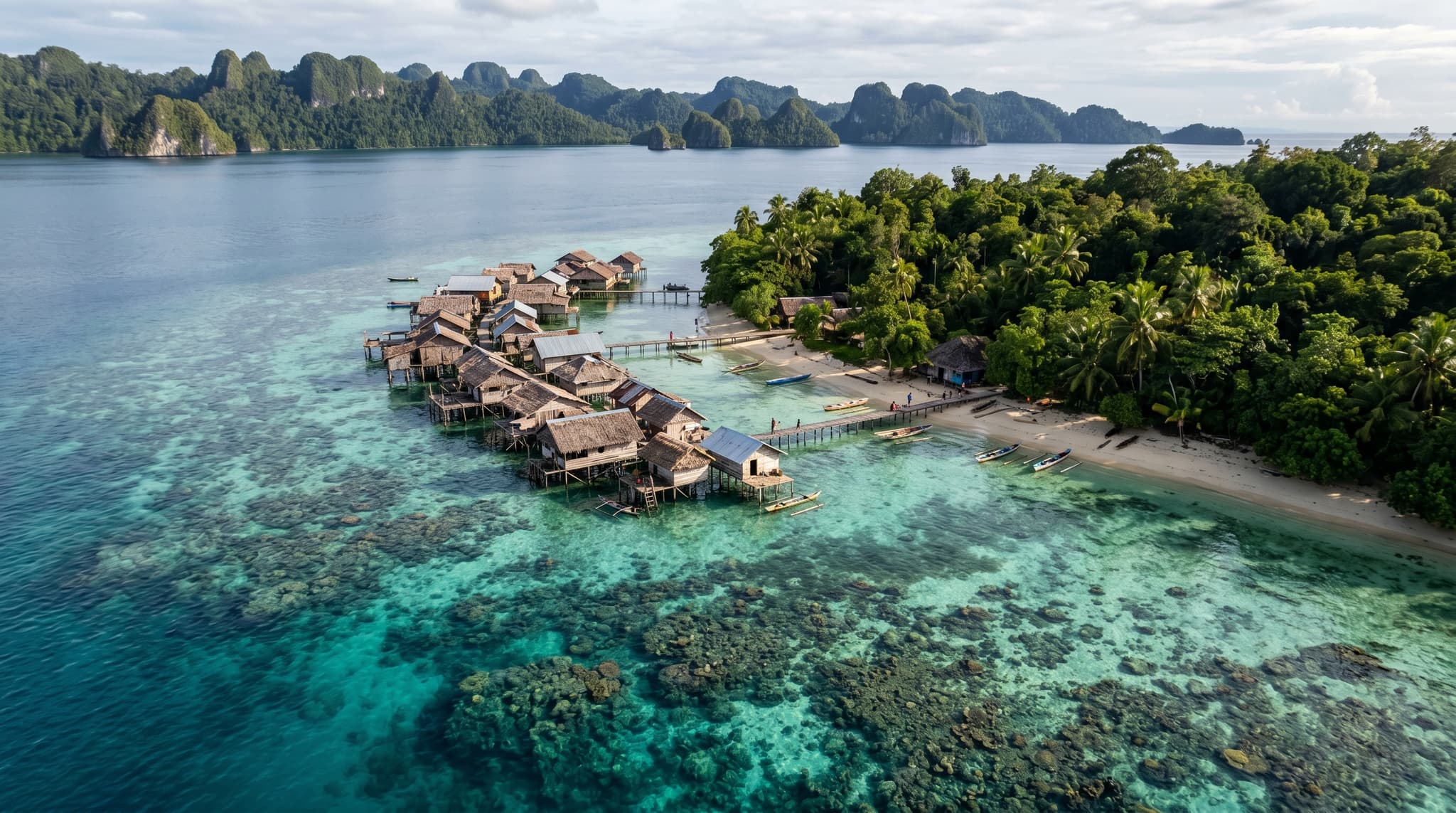
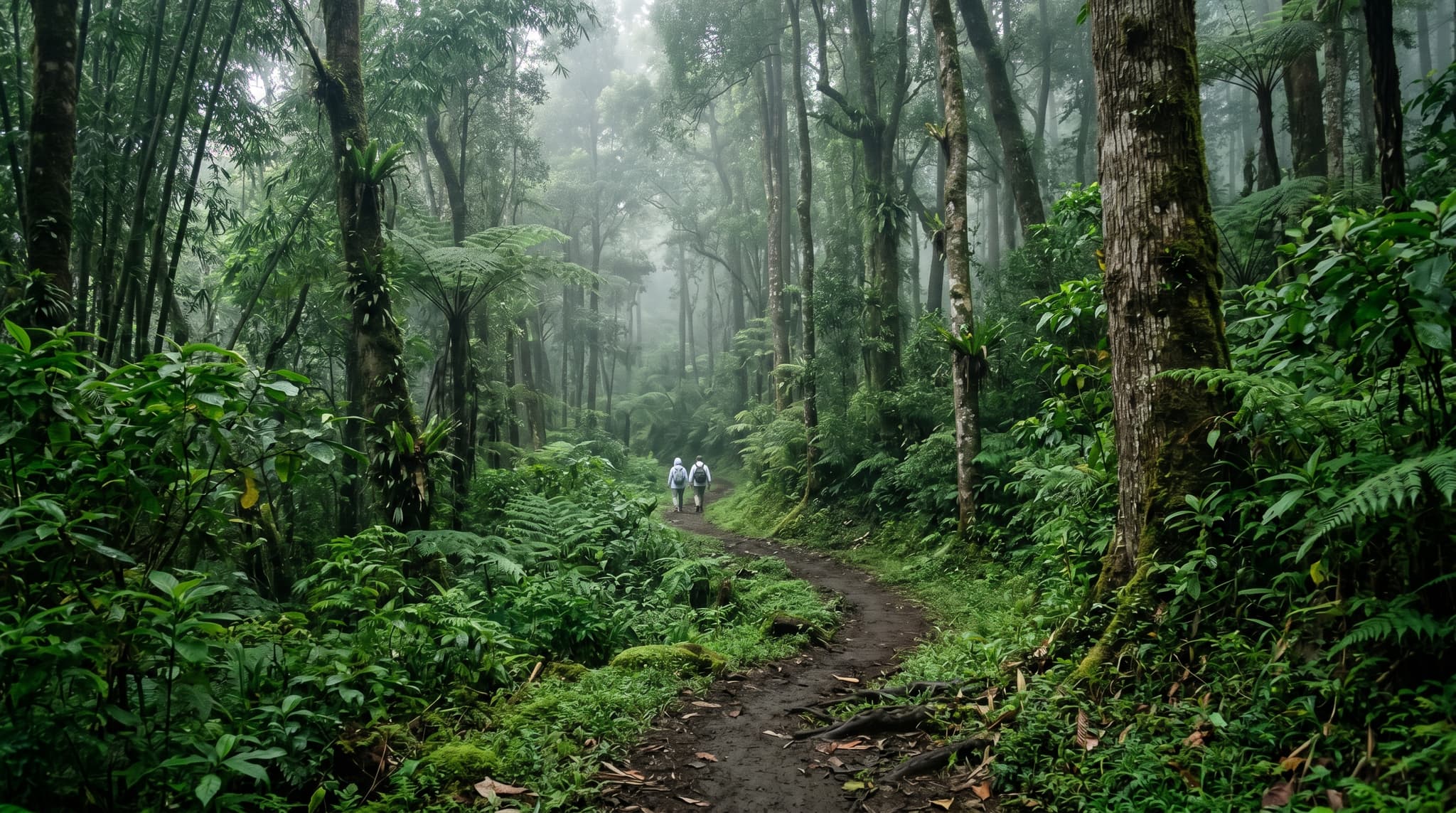
West Bali National Park covers Bali's wild northwest tip — monsoon forest, Menjangan Island reefs, and mandatory guides. Here's what it costs and how to visit.
West Bali National Park occupies the entire northwestern tip of the island — roughly 19,000 hectares of monsoon forest, mangrove, savanna, and shallow reef. It's Bali's only national park, and it feels like a different island entirely. No rice terraces, no ceremony traffic, no smoothie bowls. Just dry coastal forest thinning into grassland, the occasional rustle of a long-tailed macaque in the canopy, and the kind of quiet that reminds you how loud the rest of Bali has become.
Most visitors come for Menjangan Island and its reefs. That's a fair reason. But the park itself — the mainland trails, the birdlife, the strange stillness of the mangrove coast — deserves more than a drive-through on the way to a boat.
Getting There and Getting In

There are two entry points: the Cekik ranger station, near the Gilimanuk ferry terminal at the park's western edge, and the Labuan Lalang office, about 13 km east along the coast road, which is where boats depart for Menjangan Island. If you're coming from south Bali, you'll approach from the east and hit Labuan Lalang first.
Getting to the Park
From Seminyak/Kuta
3–4 hours by car (115 km via Tabanan)
From Ubud
3.5–4 hours by car
From Denpasar (bus)
~4.5 hours via Terminal Ubung, 180,000–210,000 IDR
Taxi from Seminyak
900,000–1,100,000 IDR one way
From Java
Banyuwangi–Gilimanuk ferry, ~8,000 IDR, 45–60 min
The drive from south Bali is long but not unpleasant. The road narrows past Tabanan, the tourist infrastructure falls away, and the landscape shifts to black-sand coastline and coconut groves. Budget the full half-day for travel if you're coming from Seminyak or Kuta. Staying in Pemuteran — a quiet coastal village about 20 minutes east of Labuan Lalang — is the smarter move if you want more than a rushed day trip.
Costs: What You'll Actually Pay
The fee structure is layered. Entry permit is one cost. Activities, boats, and vehicle parking are separate. It adds up, but nothing here is expensive by international standards.
Fee Breakdown (Foreign Visitors)
Entry permit (weekday)
200,000 IDR per person
Entry permit (weekend/holiday)
300,000 IDR per person
Guide fee
~50,000 IDR per person
Trekking permit
5,000 IDR per person
Snorkeling permit
15,000–25,000 IDR per person
Diving permit
25,000 IDR per person
Boat to Menjangan
350,000–600,000 IDR per person (often includes gear)
Car parking
10,000 IDR per day
Visit on a weekday and you save 100,000 IDR on the entry permit alone — worth planning around if your schedule allows. Pay everything at the ranger station in cash. Small IDR notes are preferred. Some stations reportedly accept cards, but don't count on it.
The Mandatory Guide System
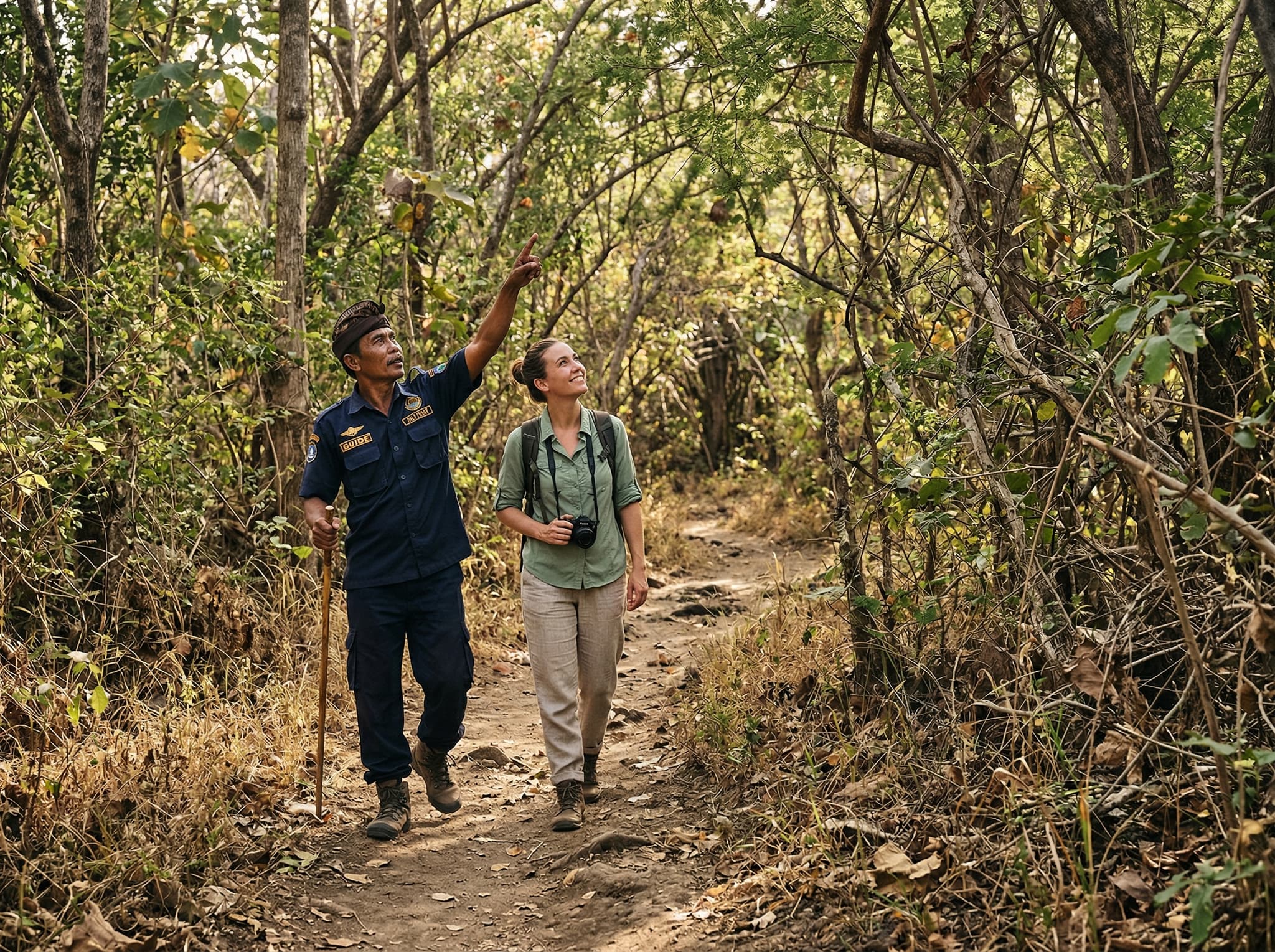
This is the part that trips people up. You need a guide. Not optionally, not as a recommendation — it's a hard requirement enforced at the ranger stations. You won't be issued a permit without one.
The guides are licensed by the park authority and assigned at the station. They know the trails, the wildlife patterns, and where the Bali starling — the park's most famous and critically endangered resident — has been spotted recently. Treks range from two hours to a full day depending on the route and your stamina. The guide fee is modest (around 50,000 IDR per person), and most guides speak enough English to communicate the essentials.
If you're the type who prefers to walk alone, this will feel like a constraint. But the guides earn their keep. Mine pointed out a black-naped oriole I would have walked straight past — a flash of yellow in the upper canopy, gone in two seconds. Without the guide, I'd have heard the forest. With him, I saw it.
The Mainland: Trekking and Birdlife
The mainland park gets far fewer visitors than Menjangan Island, which is part of its appeal. Trails wind through monsoon forest that shifts between dense canopy and dry, open savanna depending on the season. During the dry months (April through October), the forest floor crackles underfoot and visibility through the trees opens up. In the wet season, everything closes in — greener, heavier, louder with insects.
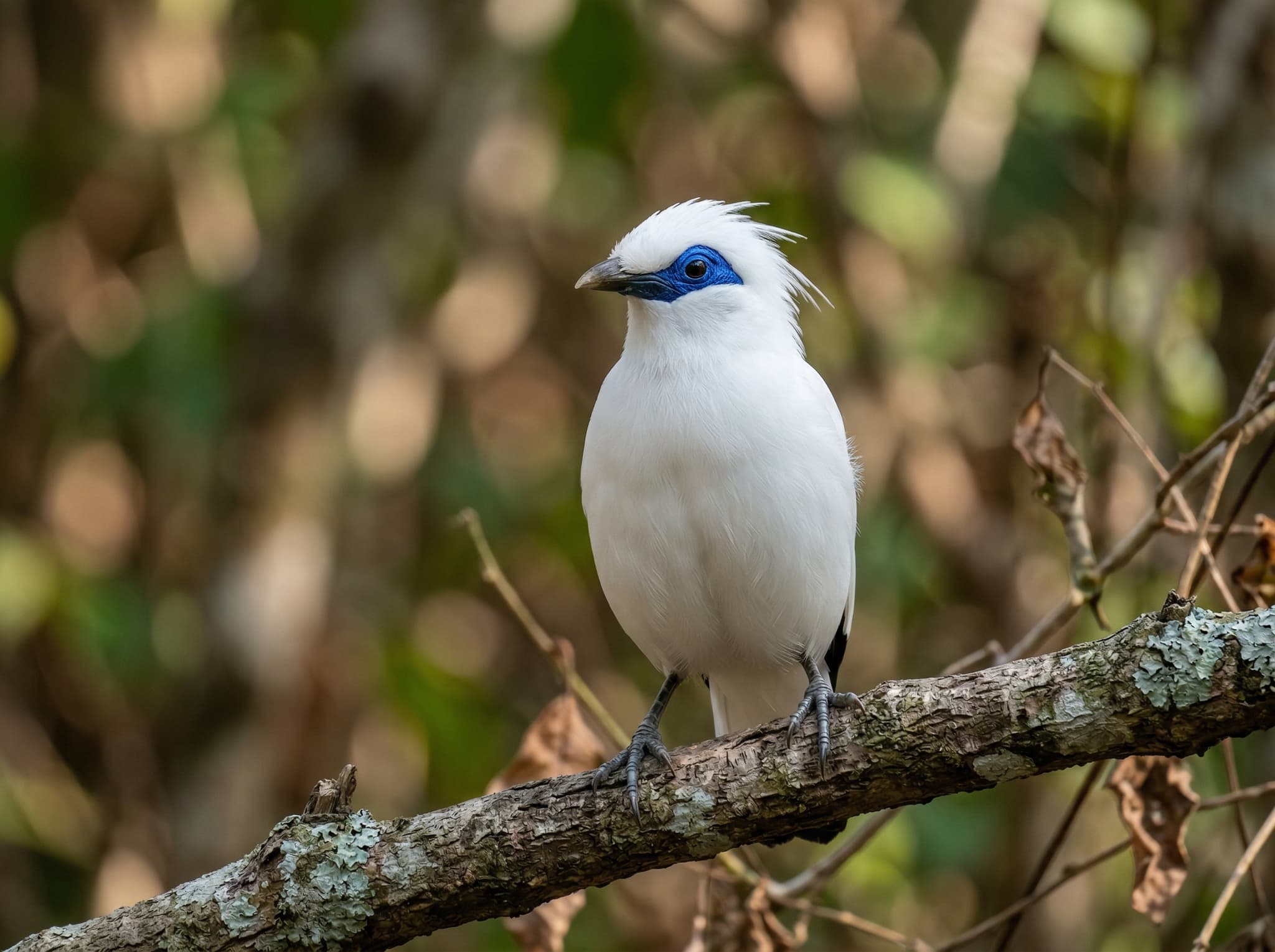
The park is home to over 160 bird species, but the one that matters most is the Bali starling (Leucopsar rothschildi), a white bird with striking blue skin around its eyes. It's endemic to this corner of the island and critically endangered — wild populations have hovered in the low dozens for years. Seeing one is not guaranteed, and your guide will tell you as much. But the possibility shapes the walk. You pay closer attention to every white flicker in the branches.
Beyond the starling, the forest holds Java sparrows, black-winged starlings, and several species of kingfisher. The birdwatching is best in early morning — arrive when the gates open at 7:30 AM if this matters to you.
The trails themselves are not technical. Flat to gently rolling terrain, manageable in basic hiking shoes. Heat is the main challenge. Even in the dry season, midday temperatures push past 30°C with high humidity. Bring water. More than you think you need.
Menjangan Island
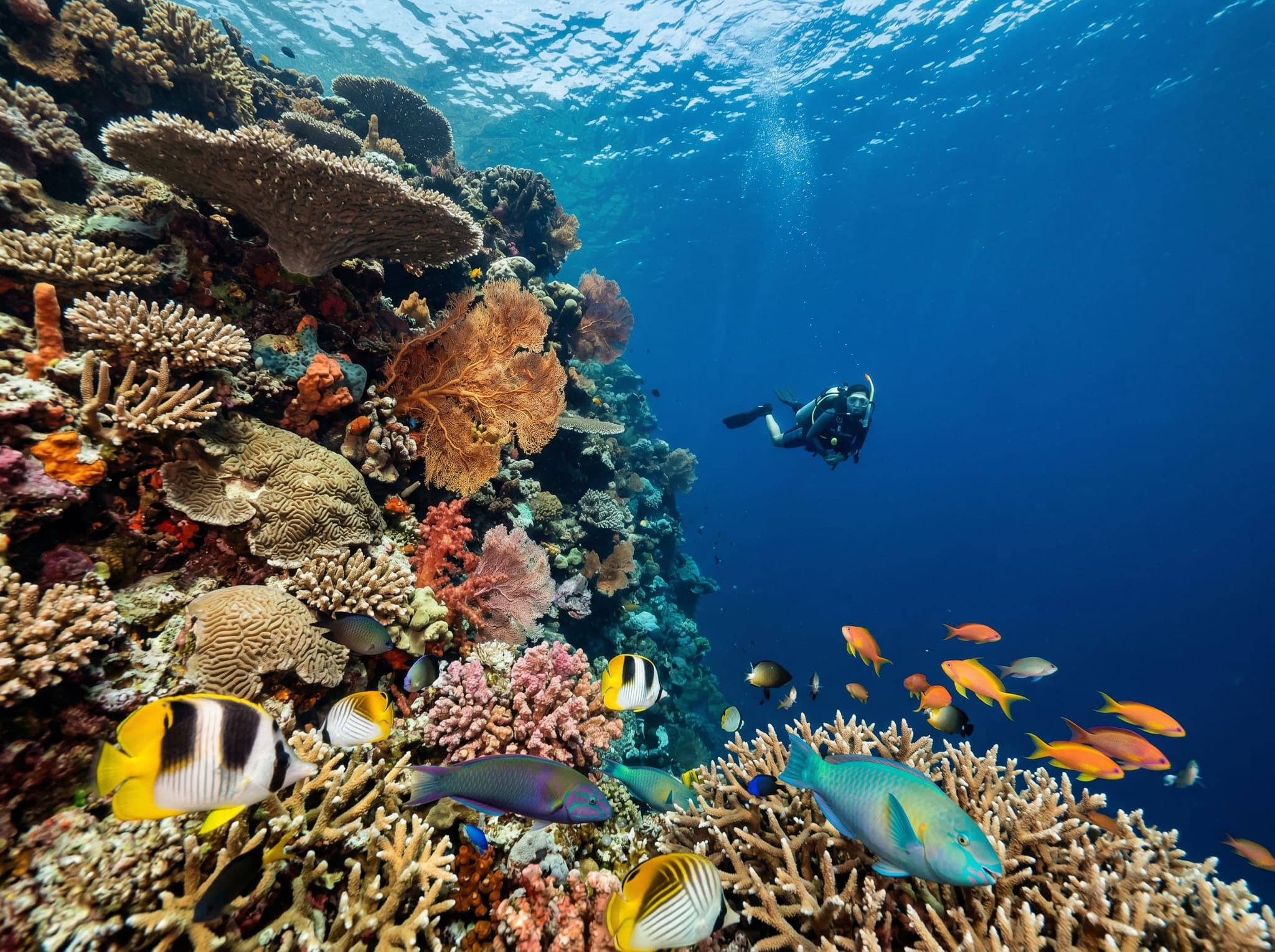
For most visitors, Menjangan is the main draw. A 30-minute boat ride from Labuan Lalang brings you to a small, uninhabited island ringed by coral walls that drop steeply into deep blue water. The snorkeling is genuinely good — healthy hard coral, decent visibility, sea fans, and reef fish in quantity. It's not the Coral Triangle's most spectacular site, but for Bali, it's among the best.
Diving requires at least a PADI intermediate (Advanced Open Water) certification. Currents around the island can be strong and unpredictable, and the wall dives drop to 40+ meters. This isn't a beginner site. Snorkeling, by contrast, is accessible to anyone comfortable in open water — the reef starts close to shore and much of the best coral sits in shallow water.
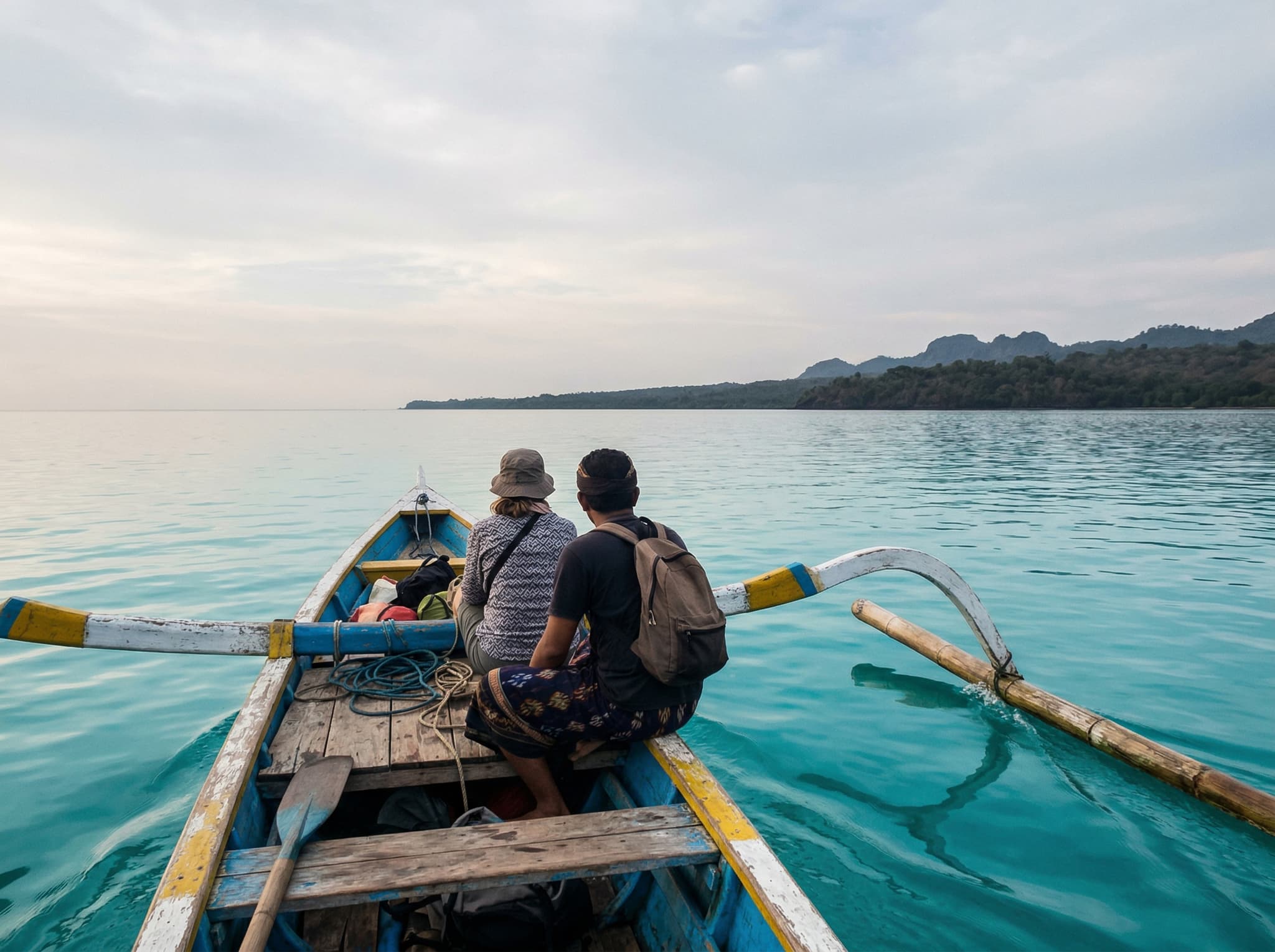
Boat fees (350,000–600,000 IDR per person) typically include basic snorkel gear. If you're diving, arrange equipment and a dive guide through an operator in Pemuteran before heading to the park — the ranger station doesn't rent dive gear.
Staying Nearby
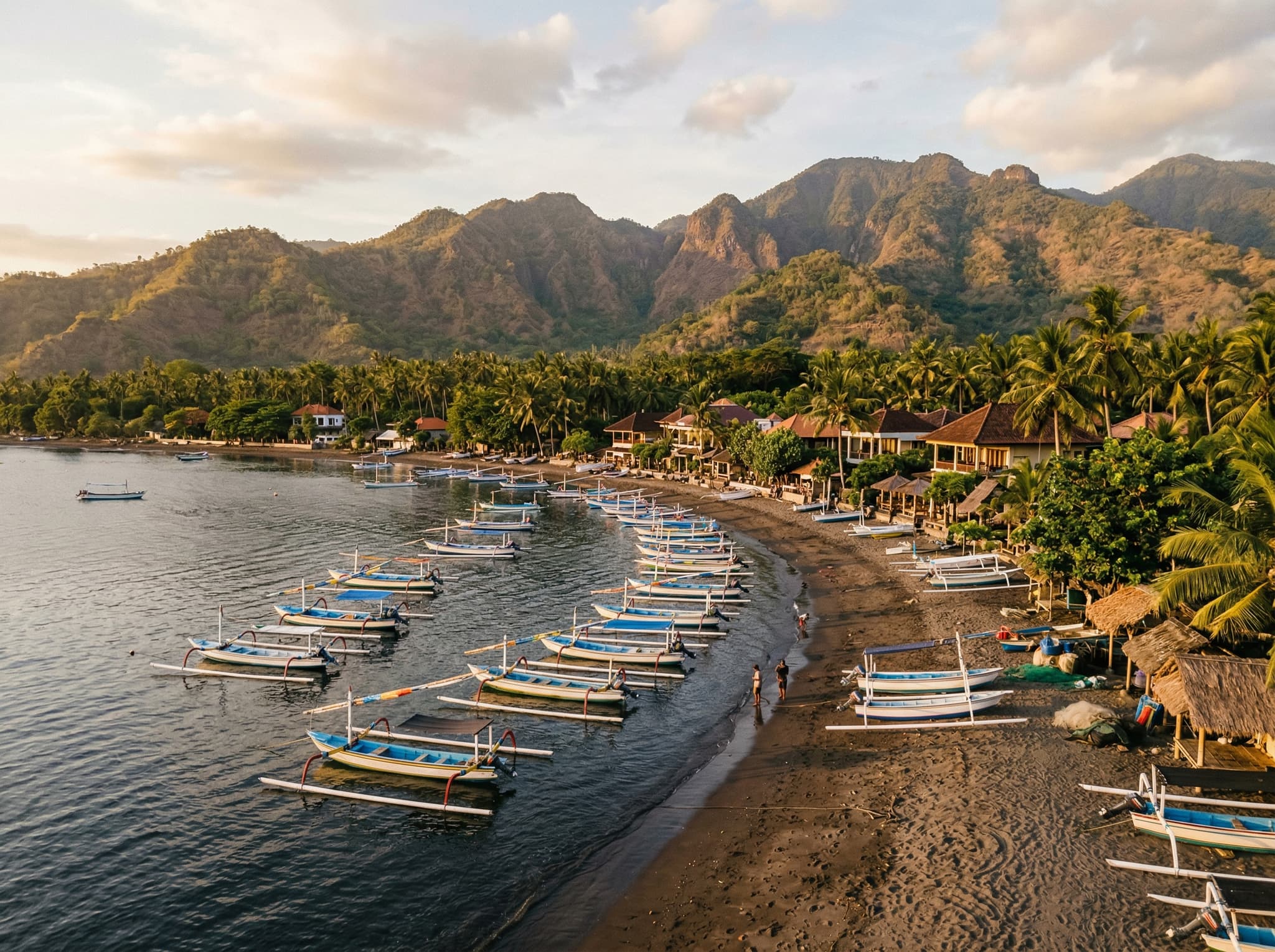
There's no accommodation inside the park. Your options are Pemuteran to the east or the area around Gilimanuk to the west. Pemuteran is the better base — a handful of guesthouses and mid-range hotels line a quiet bay, and the village has enough restaurants to keep you fed for a few days without repetition. It's also the hub for dive operators running Menjangan trips.
Gilimanuk is a ferry town. Functional, not charming. Stay there only if you're arriving late from Java and need a bed before morning.
What to Expect, Honestly
West Bali National Park is not a polished ecotourism destination. The infrastructure is basic. Signage is minimal. The ranger stations are bureaucratic in the way that Indonesian government offices tend to be — patient, paper-heavy, unhurried. None of this is a problem if you arrive expecting it.
What the park offers is something increasingly rare on Bali: a landscape that hasn't been optimized for visitors. The forest doesn't perform for you. The reef doesn't have an Instagram hashtag painted on a sign above it. You go, you walk with a guide who knows the birds, you sit on a boat crossing flat water to an island where the coral is still alive, and you come back sunburned and quiet. That's enough.