Three volcanic crater lakes, each a different color, shifting without warning. Here's how to reach Kelimutu, what to expect at dawn, and what you need to know.
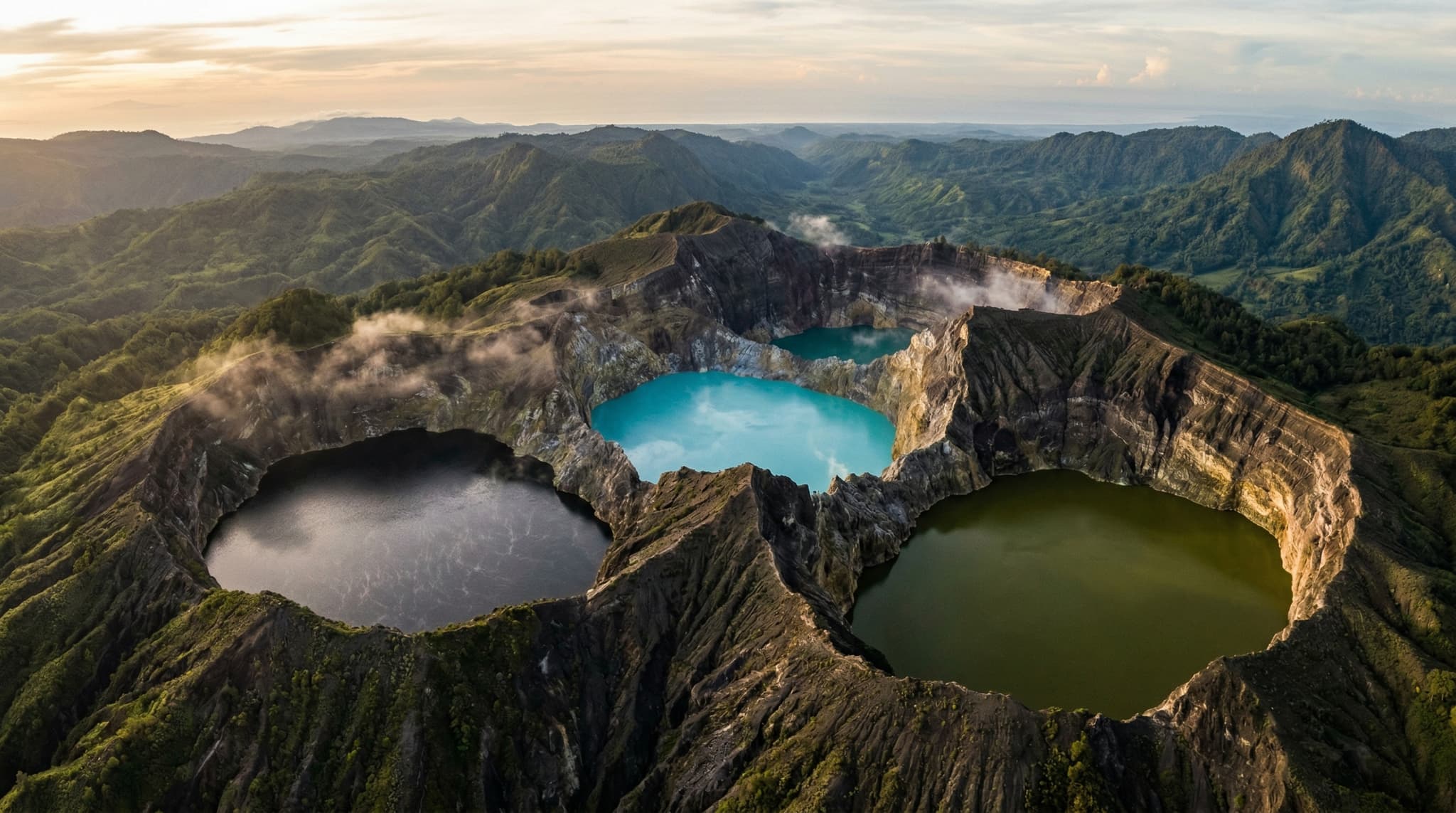
Three crater lakes sit near the summit of a volcano in central Flores, each one a different color. They change — sometimes over weeks, sometimes overnight — because of shifting mineral concentrations and volcanic gases beneath the surface. On a given morning, one lake might be turquoise, another dark green, the third nearly black. A month later, the palette could be entirely different.
That's the premise. What no one tells you is that getting to Kelimutu is half the story.
Getting There
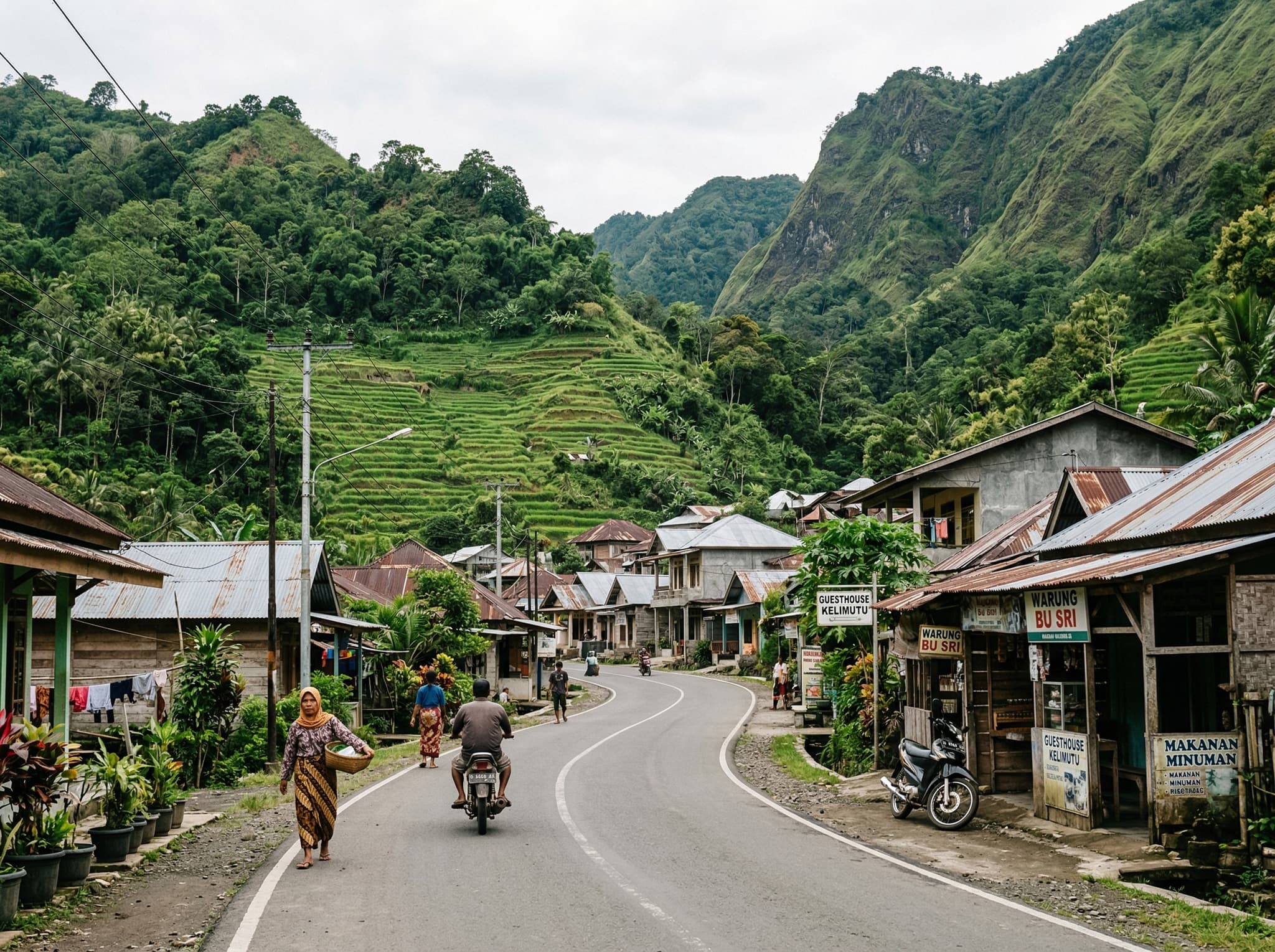
Most travelers reach Kelimutu as part of an overland journey across Flores, usually heading east from Labuan Bajo toward Ende. The nearest airport is Ende's H. Hasan Aroeboesman (ENE), which receives domestic flights from Bali and Kupang. From Ende, the road climbs southeast to the village of Moni — the staging point for Kelimutu.
Ende to Moni Transport
Private driver
1.5–2 hours, ~400,000 IDR
Shared van/bemo
2–2.5 hours, 20,000–50,000 IDR
Local bus (Wolowona station)
2.5+ hours, 20,000–40,000 IDR
Ende itself is a small, functional port town — not a destination, but a reasonable overnight stop if your flight arrives late. Moni is where you want to be. It's a quiet village with a handful of guesthouses, a few warungs, and not much else. That's the point. You're here for one reason.
The Pre-Dawn Routine

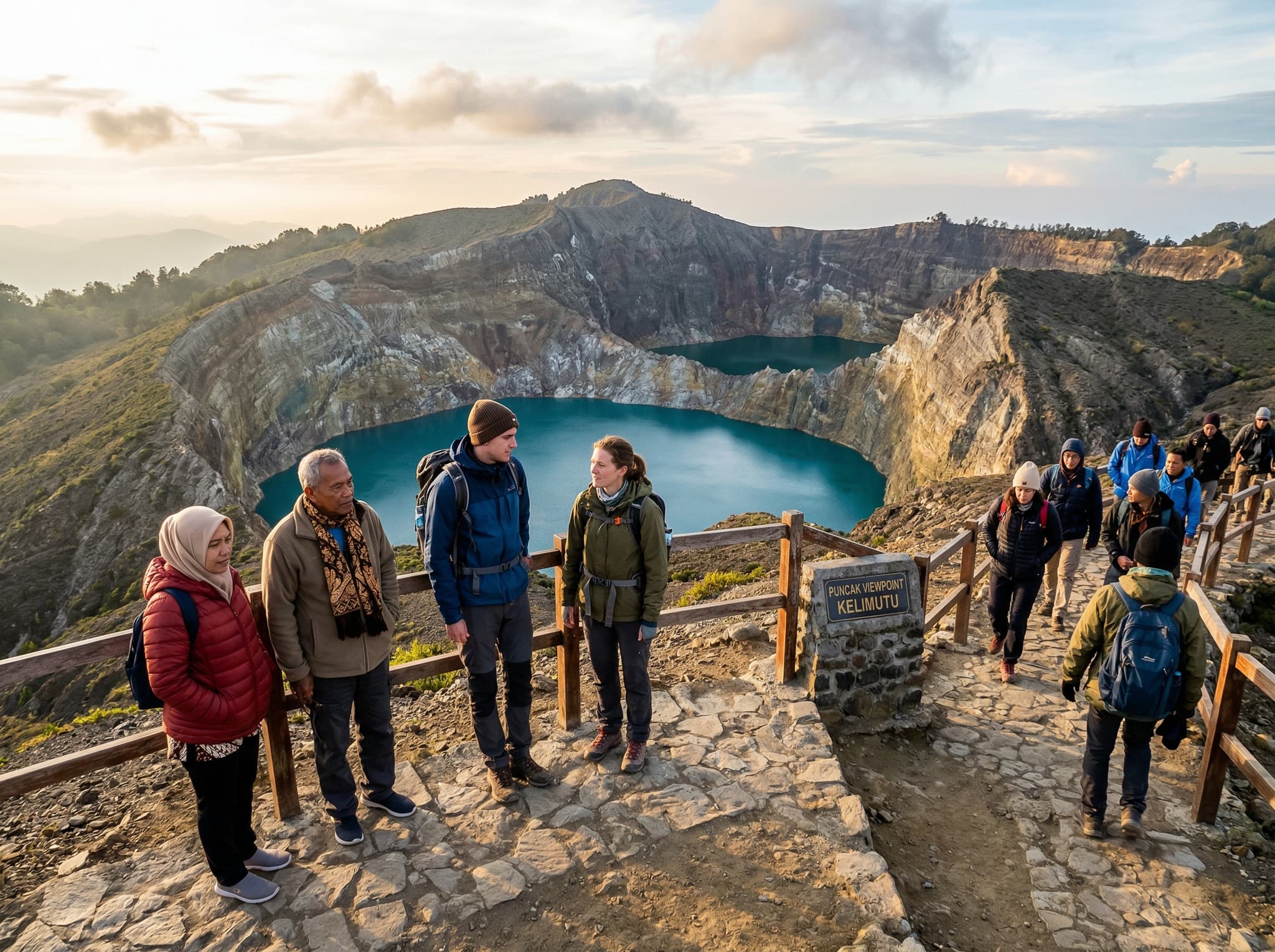
The standard approach: wake up between 2 and 4 AM, arrange transport from your Moni guesthouse to the Kelimutu parking area (most guesthouses handle this for 100,000–200,000 IDR return), and begin the walk to the viewpoint in the dark.
The gate opens around 4:30–5:00 AM. From the parking area, it's a 1.4-kilometer walk up paved paths and concrete stairs — roughly 25 minutes at a steady pace. The trail is well-maintained and easy to follow even before dawn, though a headlamp is essential. No guide is needed.
Sunrise hits the lakes between 5:40 and 6:00 AM depending on the time of year. The first light does something particular here: the colors of the lakes intensify as the sun angle changes, which is why most visitors time their arrival for that window. Even on mornings when cloud cover obscures the actual sunrise, the lakes tend to be vivid before 7 or 8 AM. After that, mist builds and the view narrows.
The Lakes
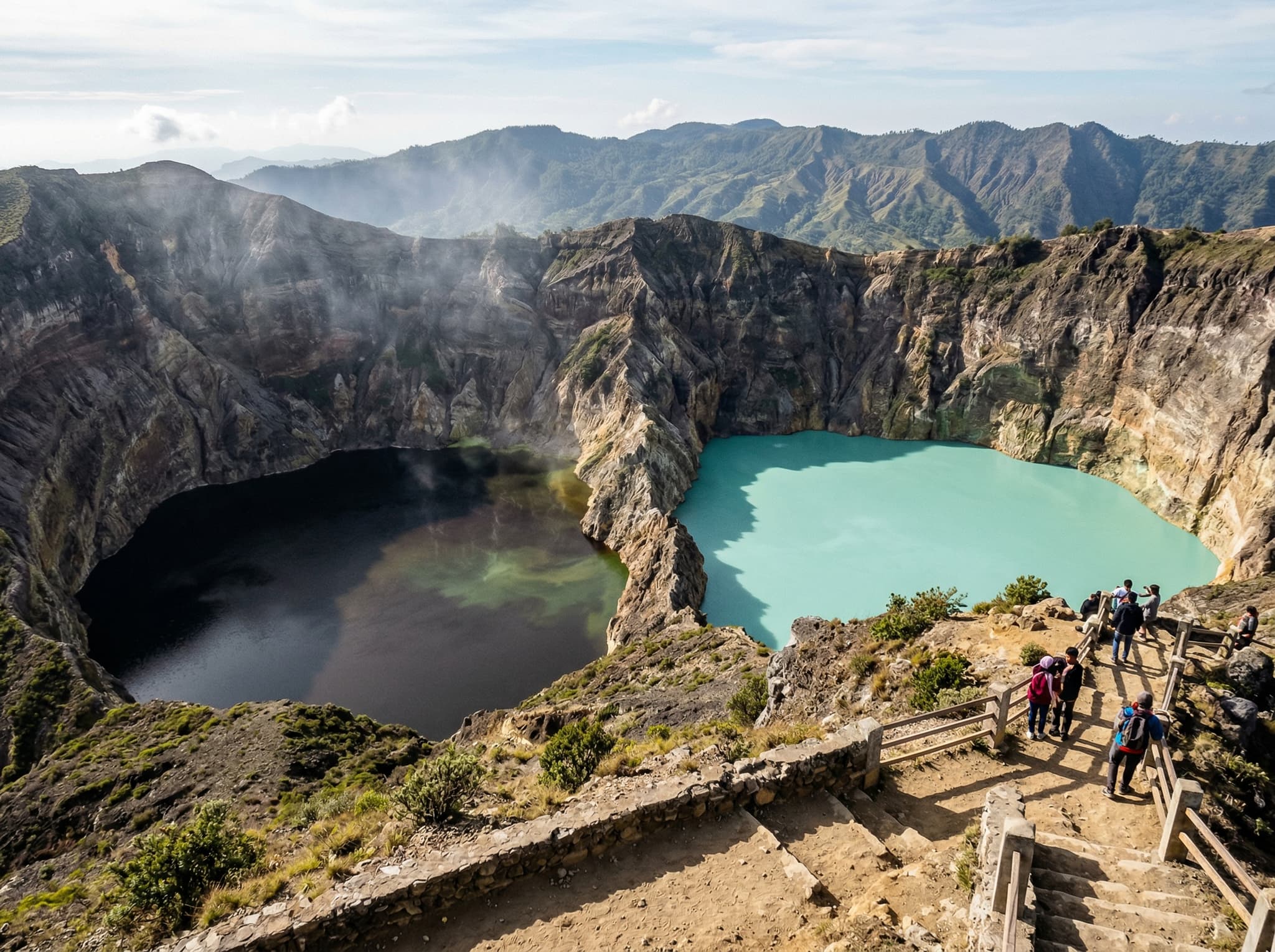
The three crater lakes have Lio names that carry spiritual weight for the local community. Tiwu Ata Polo (Lake of Evil Spirits) and Tiwu Koofai Nuwamuri (Lake of Young Men and Maidens) sit side by side, separated by a thin crater wall. Tiwu Ata Bupu (Lake of Old People) occupies its own crater slightly apart.
The colors are real and genuinely unpredictable. In mid-2024, Tiwu Ata Polo shifted from green to blackish-brown over the course of a few weeks, accompanied by bubbling and sulfur odor. Tiwu Koofai Nuwamuri stayed light blue through the same period. The changes are driven by magmatic-hydrothermal activity — variations in acidity, dissolved minerals, iron content, and volcanic gases beneath the surface.
The possible range includes blue, green, turquoise, brown, red, white, and black. You don't get to choose what you see. That's part of what makes the place honest — it doesn't perform for visitors.
What to Know Before You Go
Practical Details
Park hours
5 AM–5 PM (pre-dawn access practiced)
Entry fee (foreigners)
150,000 IDR weekdays / 225,000 IDR Sundays
Parking fee
10,000 IDR per car
Payment
Cash only (IDR)
KITAS/KITAP holders
Full foreigner rate
Ojek from Moni (return)
~100,000 IDR
A few things worth noting:
Footwear matters. The path is paved but can be slippery, especially in the wet season or after overnight rain. Sturdy shoes, not sandals.
Unofficial rim trails circle some of the craters. These are marked with landslide warnings. Some visitors walk them anyway. The signs are there for a reason.
Wet season (October–April) frequently brings fog that blocks the view entirely. Travelers who visit during this period sometimes see nothing but white. The dry season — May through September — offers the best odds of clear skies.
Bring water and a snack. There are vendors along the route, but selection is limited at 4 AM.
Moni and Beyond

Moni is small enough that a few hours covers it. The village sits in a valley surrounded by rice terraces, and there are waterfalls within walking or short driving distance. But most travelers spend one night, see the lakes at dawn, and continue east toward Maumere or backtrack to Ende.
For those on the overland Flores route, Kelimutu typically falls in the middle of the journey — a natural stopping point between the Komodo region to the west and the traditional villages and diving around Maumere and Alor to the east.
It's not the most remote place in eastern Indonesia. It's not the hardest to reach. But standing at the rim before 6 AM, watching three bodies of water hold three different colors for reasons that are geological but feel almost willful — that's the kind of thing that stays with you longer than the early alarm.