Komodo National Park: A Complete Guide to Indonesia's Prehistoric Wilderness
Everything you need to plan a trip to Komodo National Park — from dragon treks and world-class diving to fees, logistics, and the best time to visit.
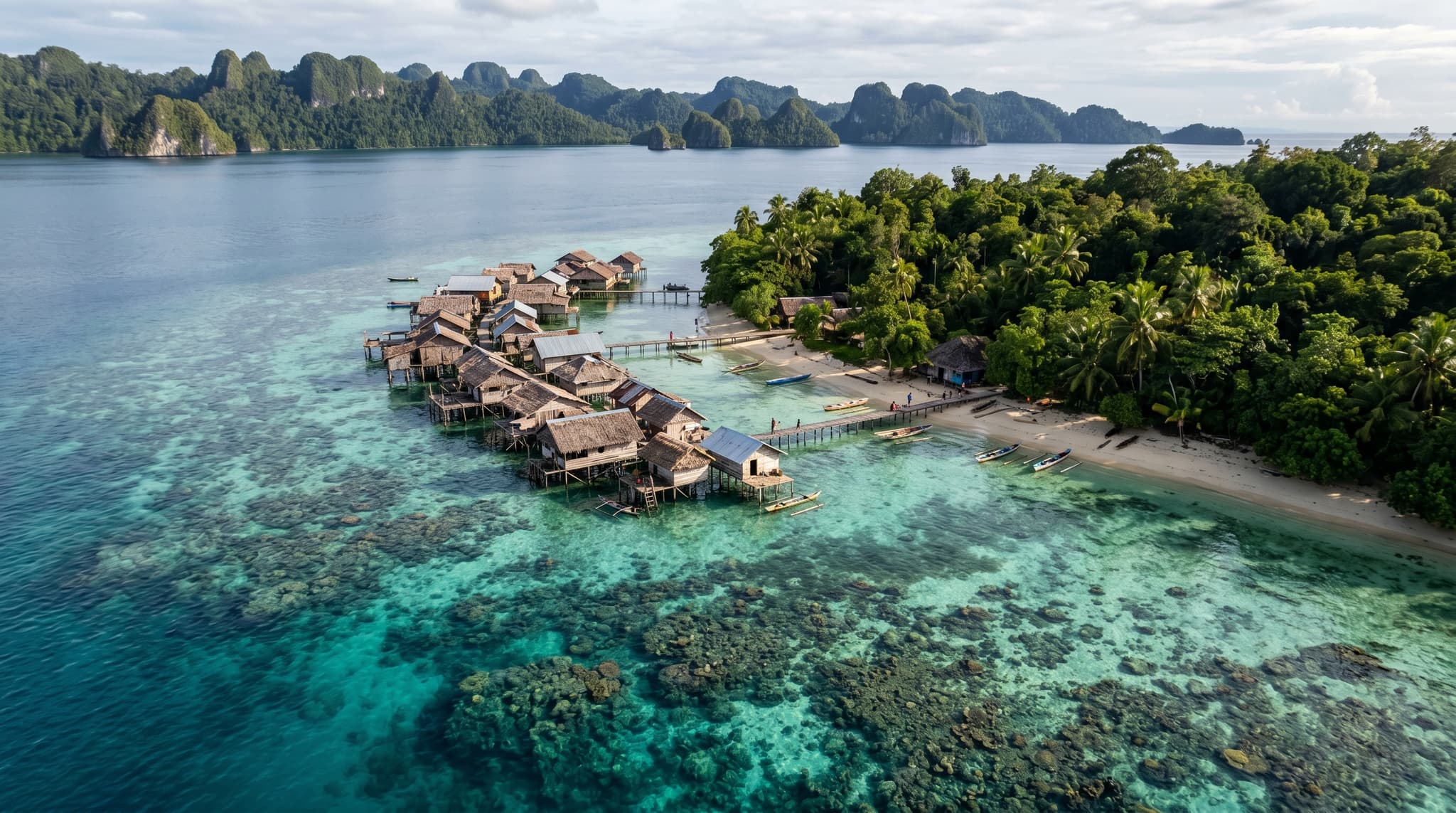
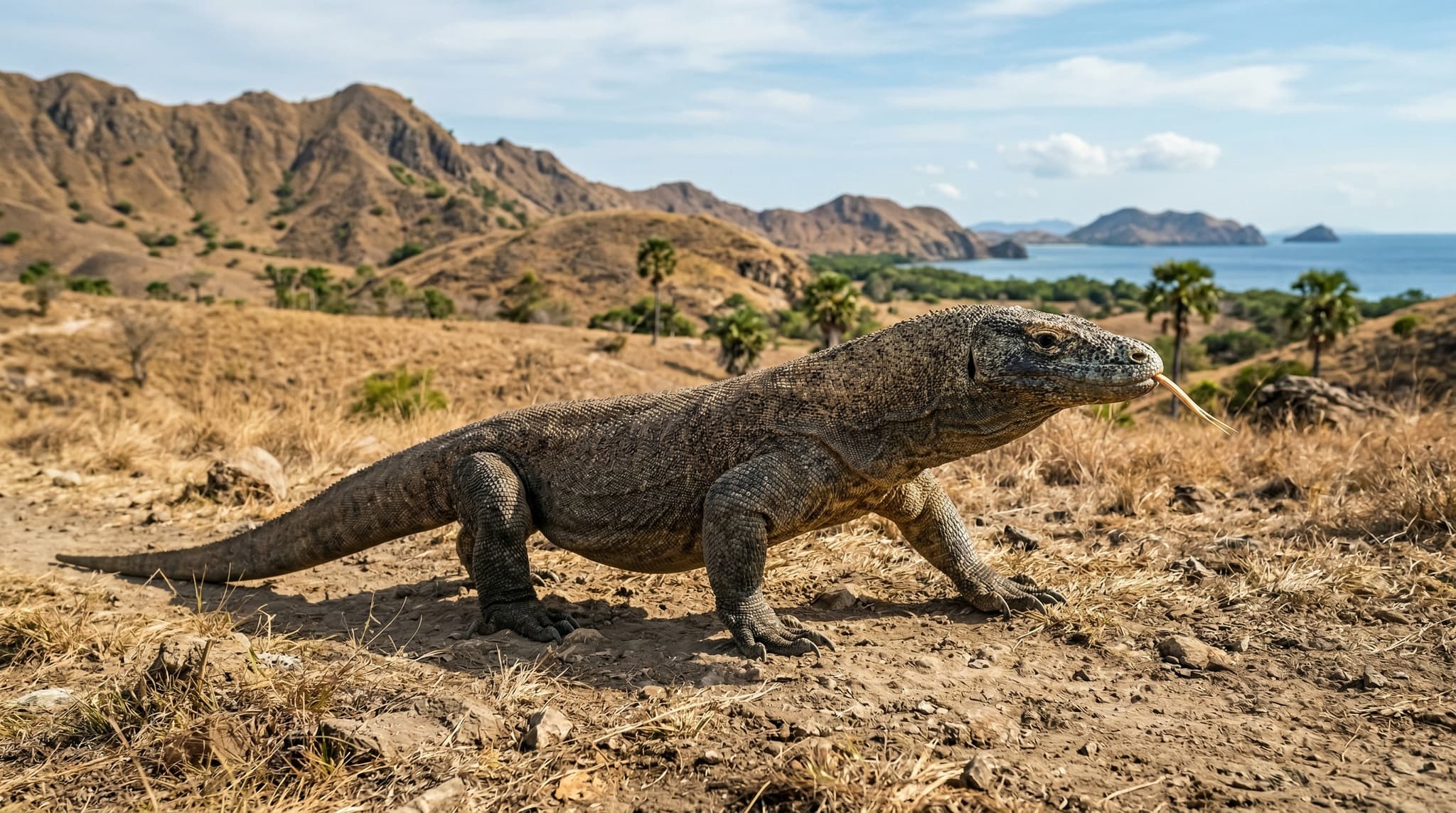
There's a reason Komodo National Park feels like it belongs to a different geological era. The landscape — bleached savanna, volcanic hills, water so blue it looks digitally saturated — hasn't changed much in the millions of years since the Komodo dragon's ancestors first roamed here. The dragons themselves are the headline, obviously. The largest living lizards on Earth, growing up to three meters long, with venomous bites and a hunting patience that borders on unsettling. But the park is far more than a reptile exhibit. It's one of the richest marine environments in the coral triangle, a world-class diving destination, and a landscape unlike anything else in Southeast Asia.
The park sits in the strait between the islands of Sumbawa and Flores, where nutrient-rich currents from the Indian and Pacific Oceans collide. That collision is what makes everything here — on land and underwater — so extraordinarily alive.
The Islands and What to Expect
Komodo National Park covers roughly 1,733 square kilometers, most of it ocean. The three main islands each offer something different.
Komodo Island is the largest and the park's namesake. It's where the earliest Western scientific accounts of the dragons originated in the early twentieth century, though local communities on Flores had known about them for centuries. The terrain is dry, hilly, and covered in lontar palms and savanna grass. Guided treks here range from short loops near the ranger station to longer hikes into the interior.
Rinca Island is closer to Flores and sees slightly fewer visitors, though that gap has narrowed in recent years. Dragon sightings here are reliable — the animals frequently linger near the ranger station and along the main trails. The landscape is similar to Komodo but feels more intimate, with shorter trekking routes and good viewpoints accessible within an hour.
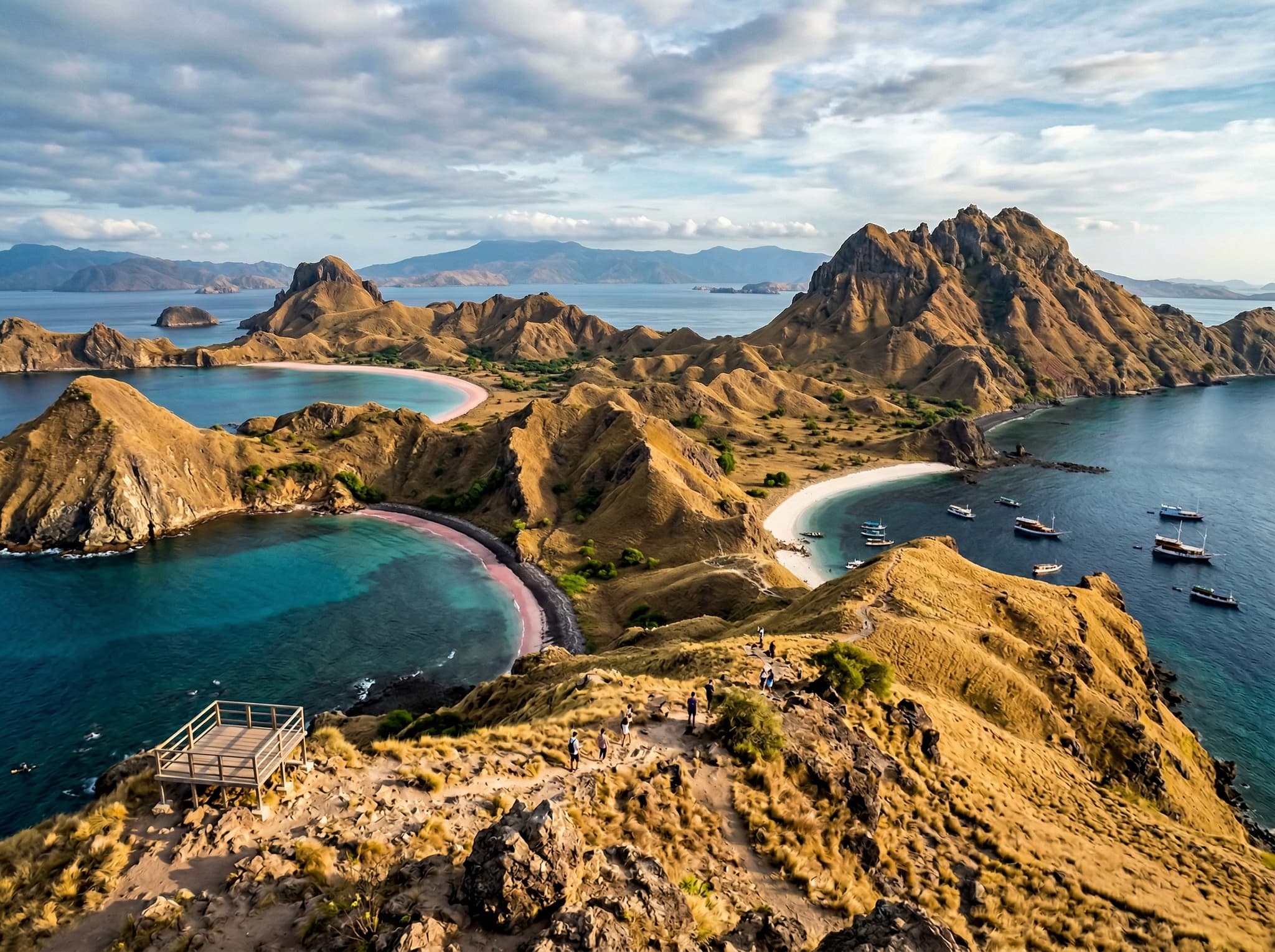
Padar Island has no dragons but arguably the most photographed scenery in the park. A steep 30-minute climb leads to a summit overlooking three crescent bays — one white sand, one pink, one black. It's become one of the most recognizable images in Indonesian tourism.
Main Islands at a Glance
Komodo Island
Largest island; primary dragon habitat; longer trek options
Rinca Island
Closest to Flores; frequent dragon sightings; shorter treks
Padar Island
No dragons; iconic viewpoint; three-colored beaches
Seeing the Dragons
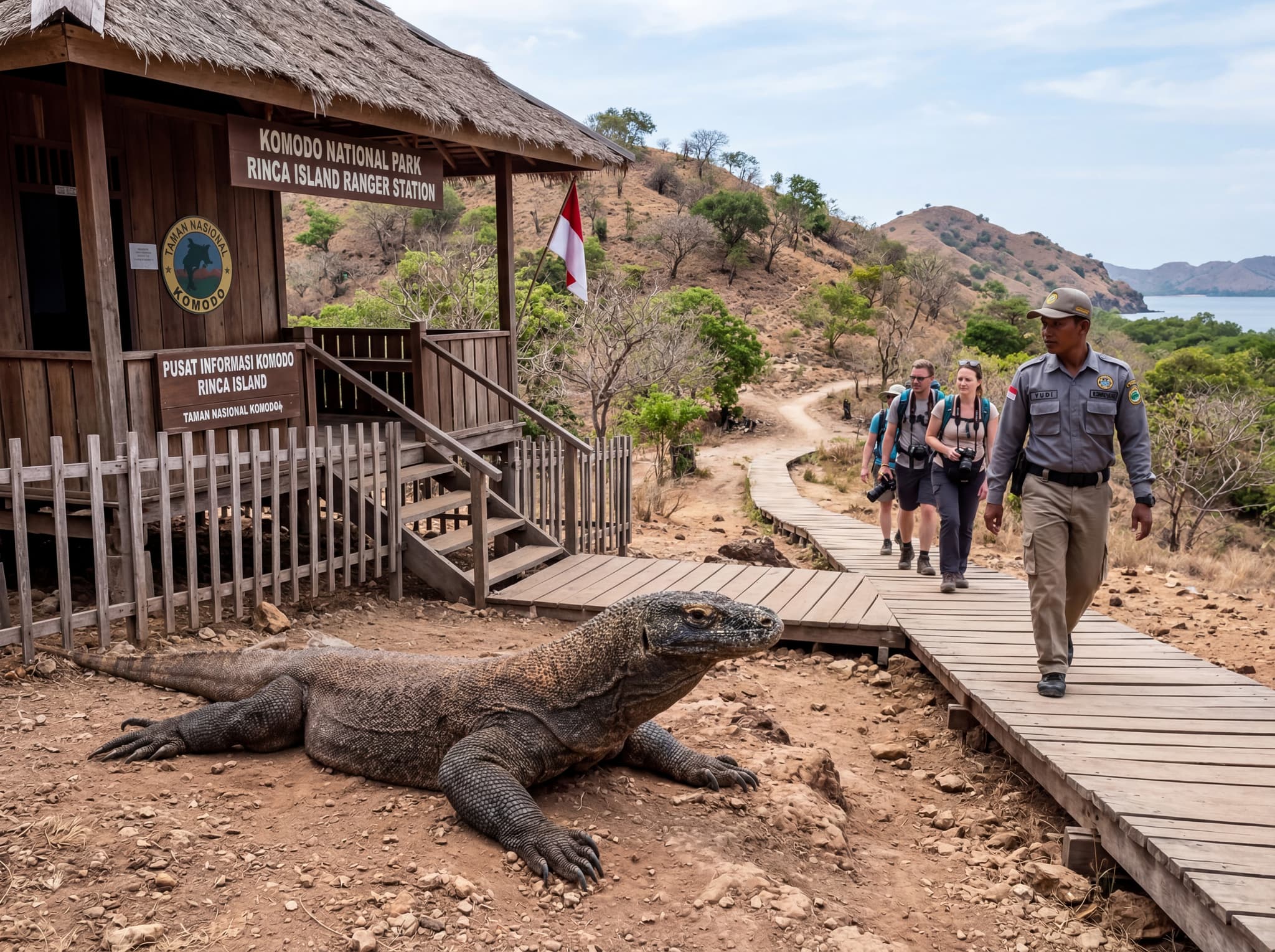
Every visit to dragon habitat requires a licensed park ranger. This isn't optional and it isn't a formality — Komodo dragons are ambush predators with a documented history of attacking humans. Rangers carry forked wooden sticks, which sounds almost comically low-tech until you understand that the dragons respond to the visual cue of the stick more than to any physical barrier.
The dragons are most active in the cooler morning hours. During midday heat, they tend to rest in shade near water holes or under buildings. The best sightings usually happen on early-morning treks. Breeding season (May–August) can bring more visible activity as males compete for mates.
Komodo dragons have an acute sense of smell and can detect blood from several kilometers away. Park authorities advise anyone with open wounds or who is menstruating to inform their guide before trekking. This is a standard safety protocol, not a restriction on entry.
Diving and Snorkeling
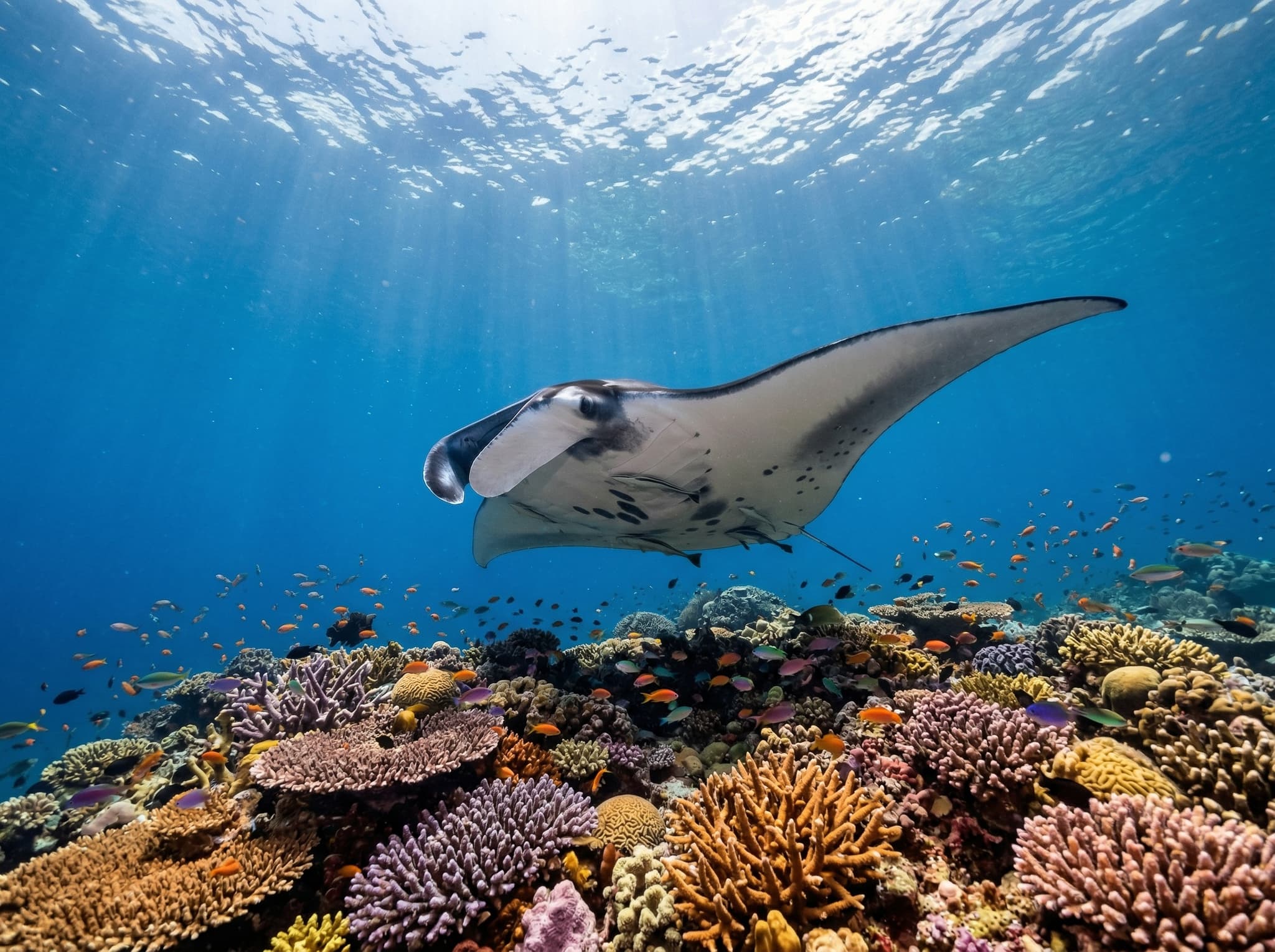
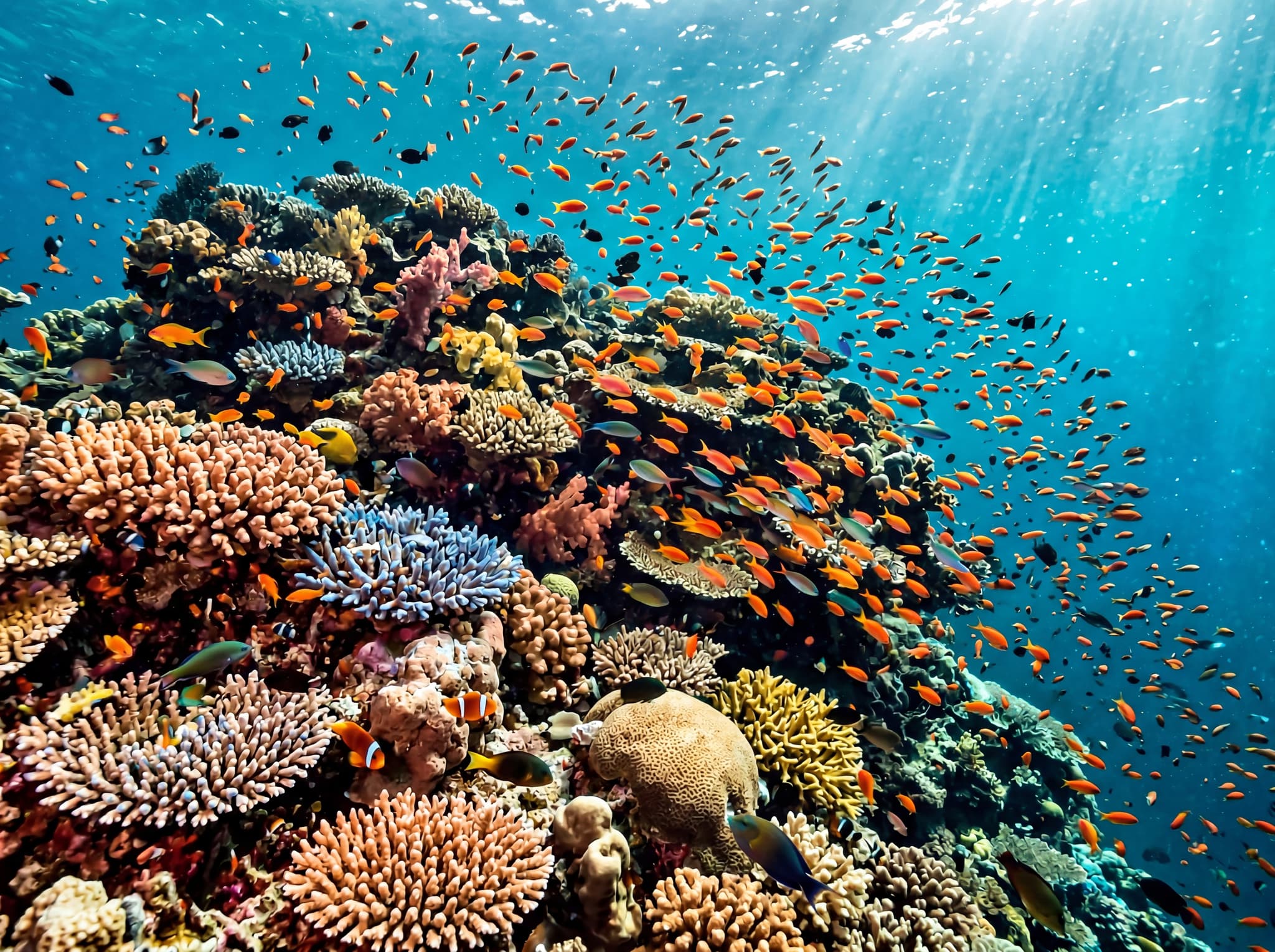
For many visitors, the underwater world rivals the dragons as the main draw. The park's position at the convergence of major ocean currents creates conditions that support over 260 species of reef-building coral and more than 1,000 species of fish, according to conservation surveys conducted within the park.
Popular dive sites include Batu Bolong, a submerged pinnacle with dramatic wall diving and strong currents, and Manta Point (officially Makassar Reef), where reef manta rays gather at cleaning stations. Castle Rock and Crystal Rock offer drift dives through schools of fusiliers, trevally, and occasional reef sharks.
Currents here are serious. Many of the best sites are intermediate to advanced, and conditions change rapidly with the tides. Reputable dive operators based in Labuan Bajo brief divers thoroughly on current conditions before each outing.
 (Pantai Merah) on Komodo Island, Indonesia, showing the distinctive rose-tinted shoreline and shallow turquoise water with coral visible beneath the surface — illustrating the snorkeling site mentioned in the diving section](/_next/image?url=https%3A%2F%2Fhcsauzofnowpfpbudclf.supabase.co%2Fstorage%2Fv1%2Fobject%2Fpublic%2Farticle-images%2Ff042dfe0-7dbc-47df-a2d0-134af3ee9c02%2Fplace-4.jpg&w=2048&q=75)
Snorkeling is excellent at more sheltered sites — Pink Beach (Pantai Merah) on Komodo Island is a common stop, with healthy coral starting in shallow water just offshore.
Getting There and Getting Around
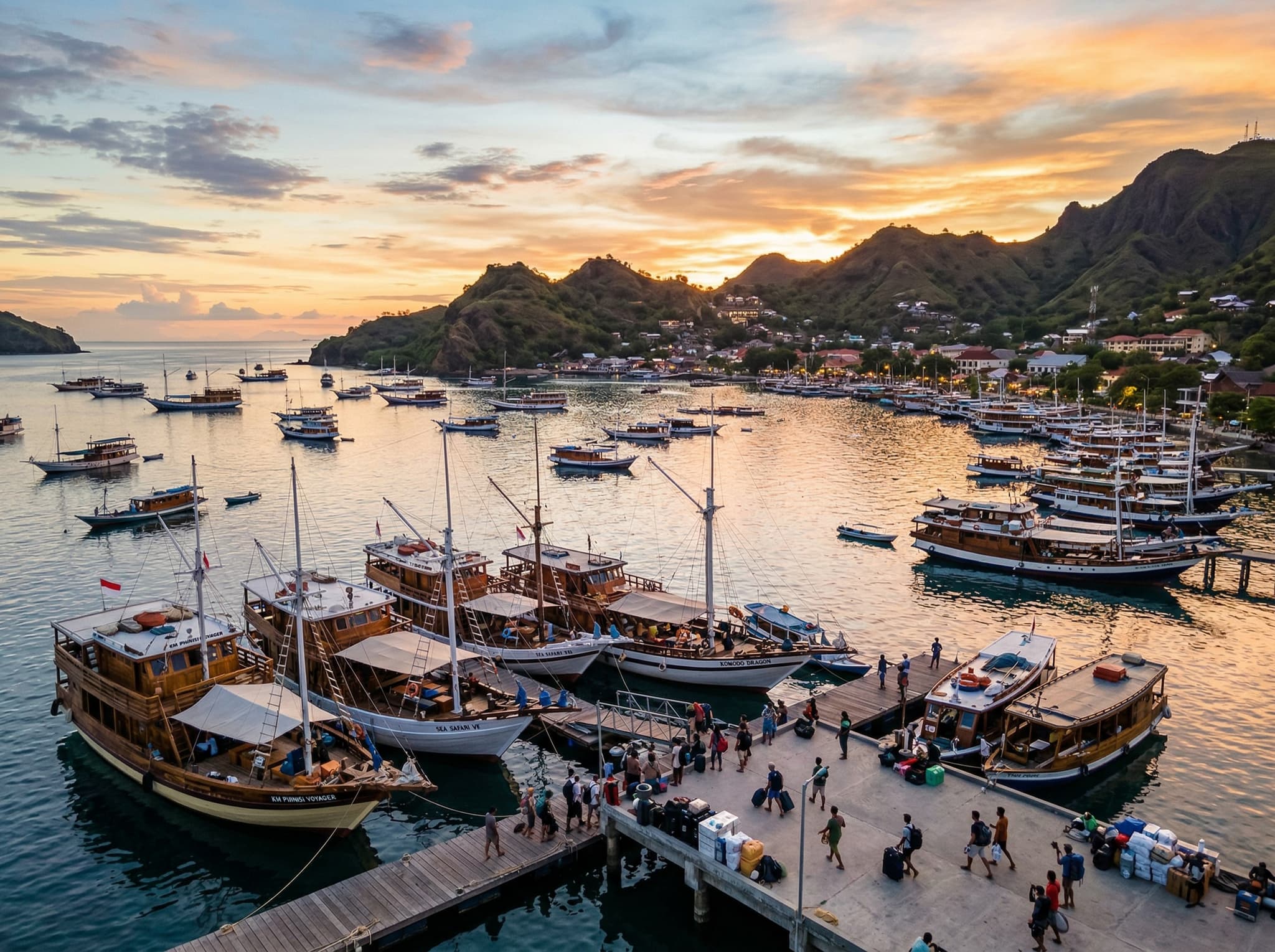
The gateway to Komodo National Park is Labuan Bajo, a small port town on the western tip of Flores. Labuan Bajo's Komodo Airport receives direct flights from Bali (roughly one hour) and Jakarta, with several airlines operating daily service.
From Labuan Bajo, the park is accessible only by boat. Most visitors book either a day trip or a multi-day liveaboard. Day trips typically cover one or two islands plus a snorkeling stop. Liveaboard trips of two to four days allow for a more complete experience — multiple islands, dedicated diving, and less rushed trekking.
Multi-day liveaboard trips offer the best ratio of time in the park to time on a boat. Day trips from Labuan Bajo involve 2–4 hours of transit each way depending on the island, which cuts significantly into your time on land and in the water.
Fees, Permits, and Conservation
Komodo National Park overhauled its fee structure in 2023, replacing the old system of modest entry fees with significantly higher tiered pricing for foreign visitors. The stated goal is to reduce overcrowding and fund conservation. Fees vary depending on nationality and which islands you visit.
Entry fees have changed multiple times in recent years and may continue to be adjusted. Confirm current pricing directly with the Komodo National Park authority or a licensed tour operator in Labuan Bajo before booking. Do not rely on prices published more than a few months ago.
The park is managed by a joint authority involving Indonesia's Ministry of Environment and Forestry. Conservation efforts focus on protecting dragon habitat, managing visitor numbers, and maintaining the marine protected area. The reef systems here face pressure from rising sea temperatures and, historically, from dynamite fishing — a practice that park enforcement has significantly curtailed but not entirely eliminated in surrounding waters.
When to Go
The dry season (April through December) is the best window, with April–June and September–November offering the most comfortable conditions — warm but not scorching, with calm seas ideal for boat travel and diving. July and August bring peak tourist numbers and higher prices. The wet season (January–March) sees rougher seas, occasional trip cancellations, and reduced visibility for diving, though the islands are greener and crowds thin dramatically.