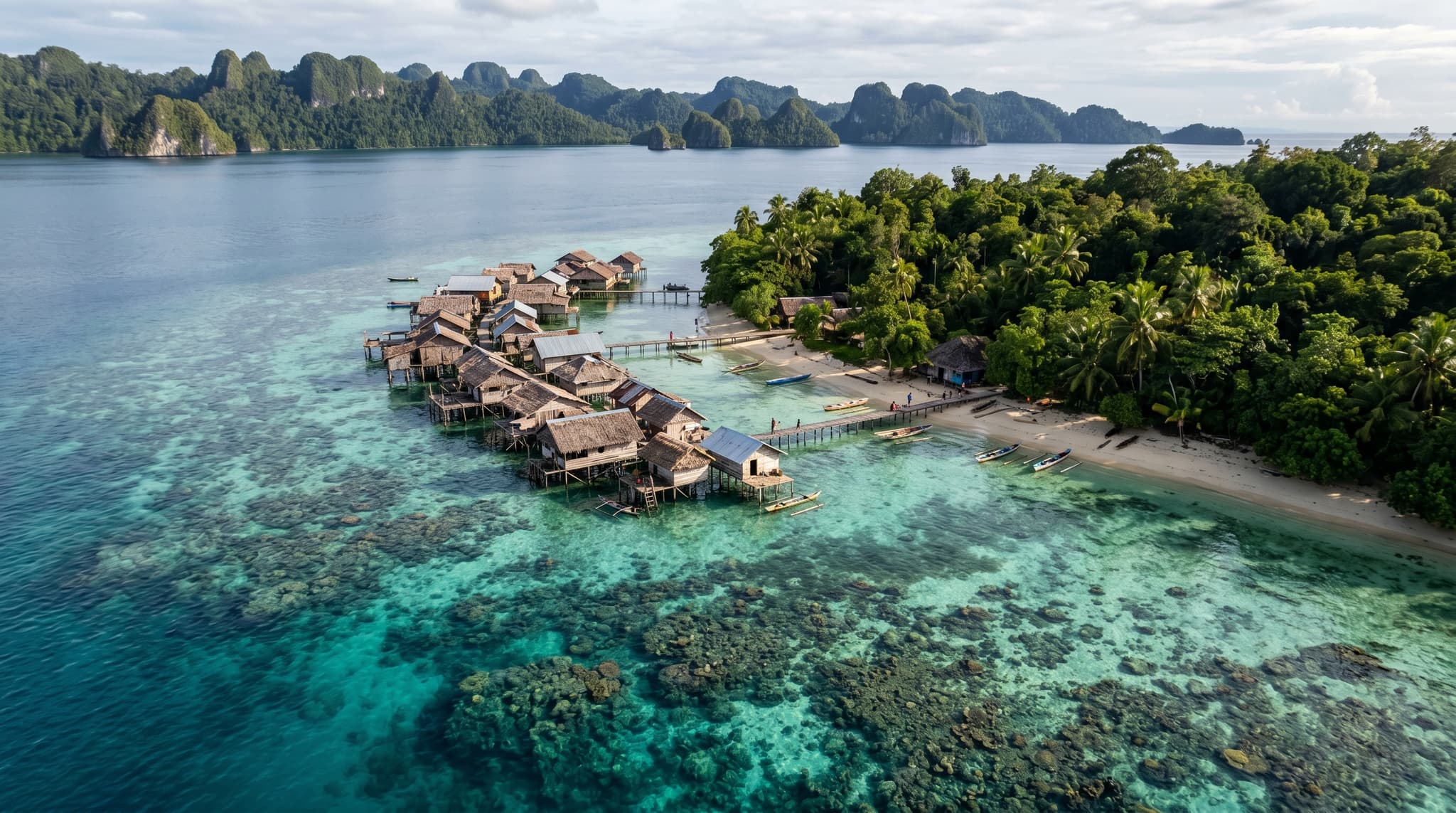
Pink Beach in Komodo National Park is accessible only by boat from Labuan Bajo. Here's what the snorkeling is like, when to go, and what it costs.
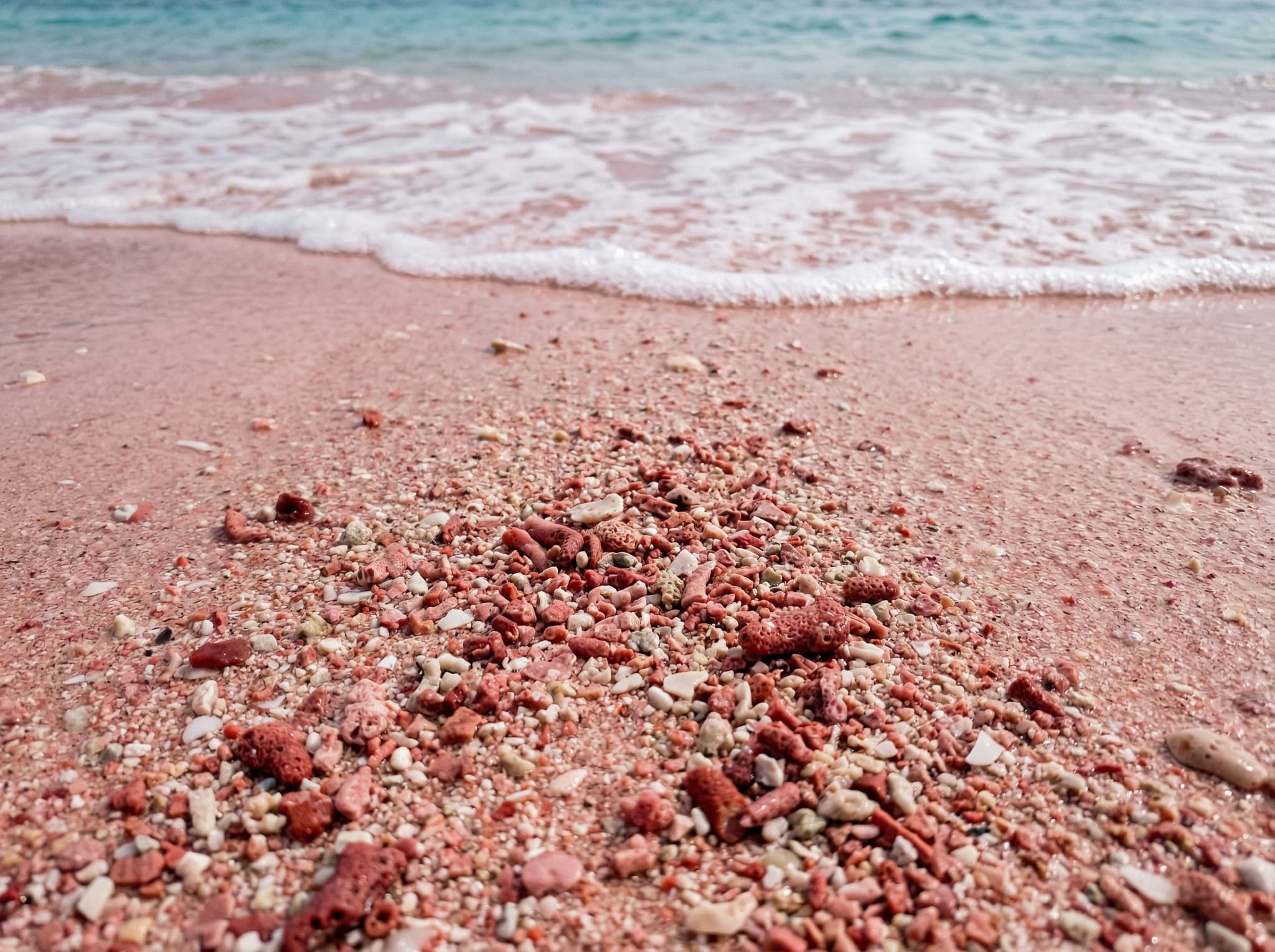
Locally called Pantai Merah, Pink Beach is one of the standard stops on any Komodo National Park day trip from Labuan Bajo. The sand really is pink — a soft, muted blush created by fragments of red coral mixing with white sand — though how vivid it looks depends on the light, the tide, and whether the sand is wet or dry. Midday sun washes it out. Early morning and late afternoon bring the color closer to what you've seen in photographs. It's a genuinely unusual place, but it's also a place you'll share with other boats, and one where your time is measured in minutes rather than hours.
There are no roads here, no hotels, no facilities. You arrive by boat, you swim, you look at the reef, and you leave. That simplicity is part of what makes it worth the trip.
Getting to Pink Beach

Every visit to Pink Beach starts in Labuan Bajo. There is no independent access — no public ferry, no road, no way to walk in. You book a tour, you board a boat, and the park determines the rest.
Tour Options
Group day tour
From ~US$120/person
Private speedboat charter
Up to 8 passengers, 10–12 hrs total
Liveaboard
2–4 days, all-inclusive with meals and cabin
Typical departure
6:30–8:00 AM from Labuan Bajo harbor
Most travelers take a group day tour. These depart early — usually between 6:30 and 8:00 AM — and return by 5:00 or 6:00 PM. Pink Beach is one stop on a circuit that typically includes Padar Island for the hiking viewpoint, Komodo or Rinca Island for the dragons, and sometimes Manta Point for open-water snorkeling. You'll get one to two hours at the beach itself.
By speedboat, the crossing takes roughly an hour to ninety minutes. Slower wooden boats take two to three hours each way, which eats significantly into your day. If your budget allows, the speedboat is worth it — not for comfort, but for time.
Private charters give you control over the itinerary and let you arrive at Pink Beach before or after the group boats cluster. Liveaboards, running two to four days, include Pink Beach as part of a broader route through the park's northern, central, and southern sites.
Group day tours typically include lunch, basic snorkel gear, and a guide. Park entry fees are sometimes included in the price and sometimes charged separately — confirm before booking. Fees must be paid in IDR cash. ATMs are available in Labuan Bajo but not inside the park.
What the Beach Is Actually Like
Pink Beach is small. The curve of sand runs maybe 200 meters, backed by dry scrubby hills that turn green after the rains. There are no sun loungers, no shade structures, no vendors selling coconuts. A few boats anchor offshore. People spread out along the sand, some snorkeling, some sitting in the shallows.
The color is real but subtle. Think of it less as pink and more as sand that has been lightly blushed — the kind of thing you notice most when you scoop a handful and look at it against your palm. Crushed red organ-pipe coral gives the sand its tint. When the beach is wet from a receding wave, the pink deepens. When the sun is directly overhead, it fades to something closer to pale peach.
There are no lifeguards, no changing rooms, no freshwater rinse. Whatever you need — water, sunscreen, a towel — you bring from the boat. Your tour guide will tell you when it's time to leave.
Snorkeling at Pink Beach
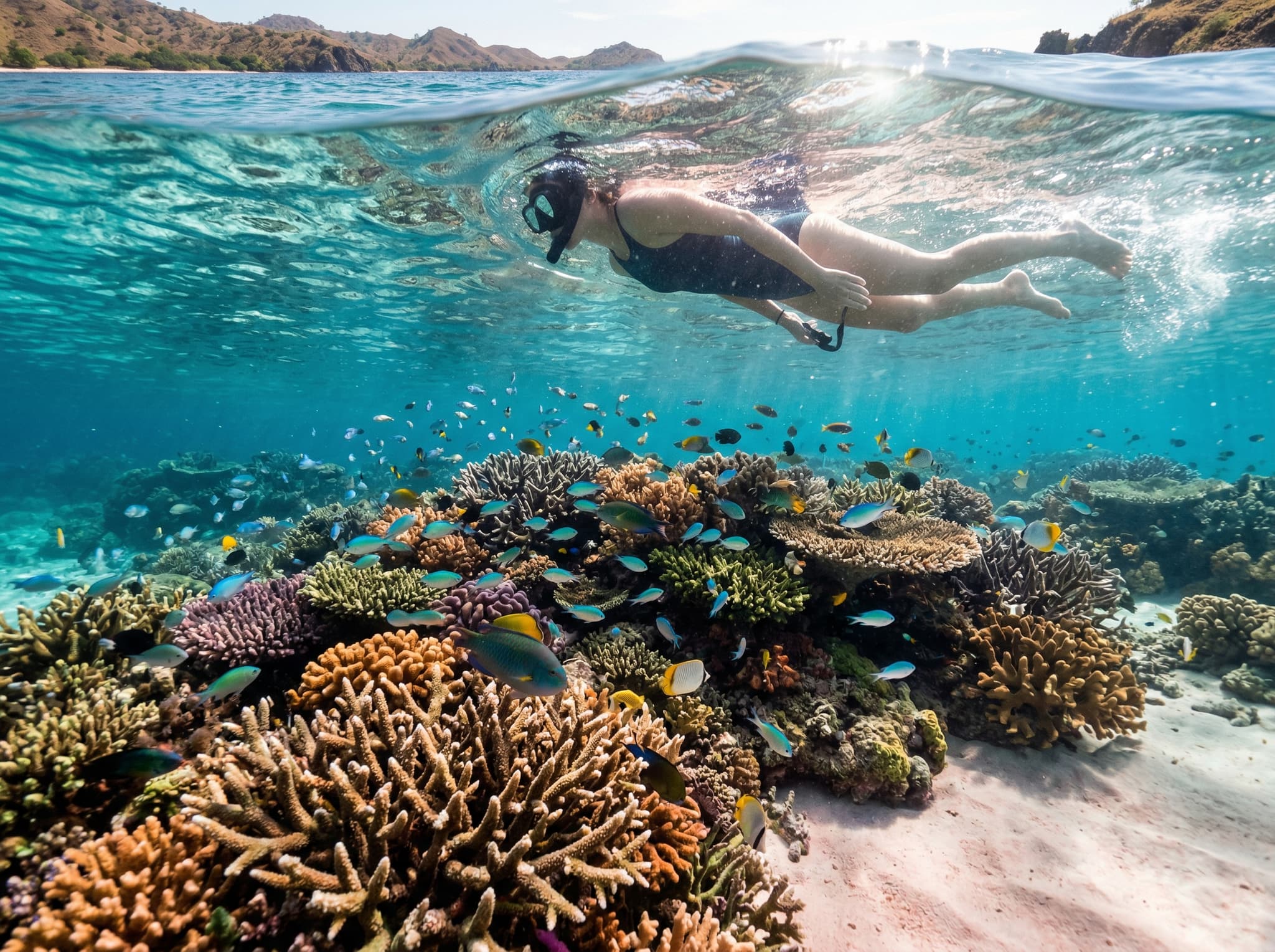
The reef is the real reason to come. It starts close to shore — in some places just a few meters from where the sand drops off — and the water is shallow enough that even a nervous first-time snorkeler can see plenty without venturing far.
Snorkeling Conditions
Visibility (dry season)
Exceeds 30 meters at peak
Currents
Minimal at this site
Depth
Shallow reef accessible from shore
Experience level
Suitable for beginners
What you'll see depends on the day and the season, but in the dry months — April through October — the water is clear enough that you can float on the surface and watch the reef below in sharp detail. Hard corals in branching formations. Soft corals that sway with the current. Schools of small tropical fish — damselfish, wrasses, butterflyfish — moving through the coral heads. Starfish on the sandy patches between formations. Sea cucumbers sitting motionless on the bottom.
It's not dramatic in the way that a deep wall dive is dramatic. There are no mantas here, no big pelagics cruising past. But the density and variety of life in shallow water is genuinely impressive. You can spend forty-five minutes in waist-to-chest-deep water and see more than some people see on a dedicated dive trip.
Most tour operators provide masks, snorkels, and fins. The gear is often well-used — if fit and quality matter to you, bring your own. A rashguard is worth wearing; the sun is strong and the shallow water offers no shade.
Do not touch or stand on the coral. This is a national park, and the reef is both fragile and protected. Penalties for violations include ejection from the park. Swim in designated areas only — your guide will point these out.
When to Visit Pink Beach
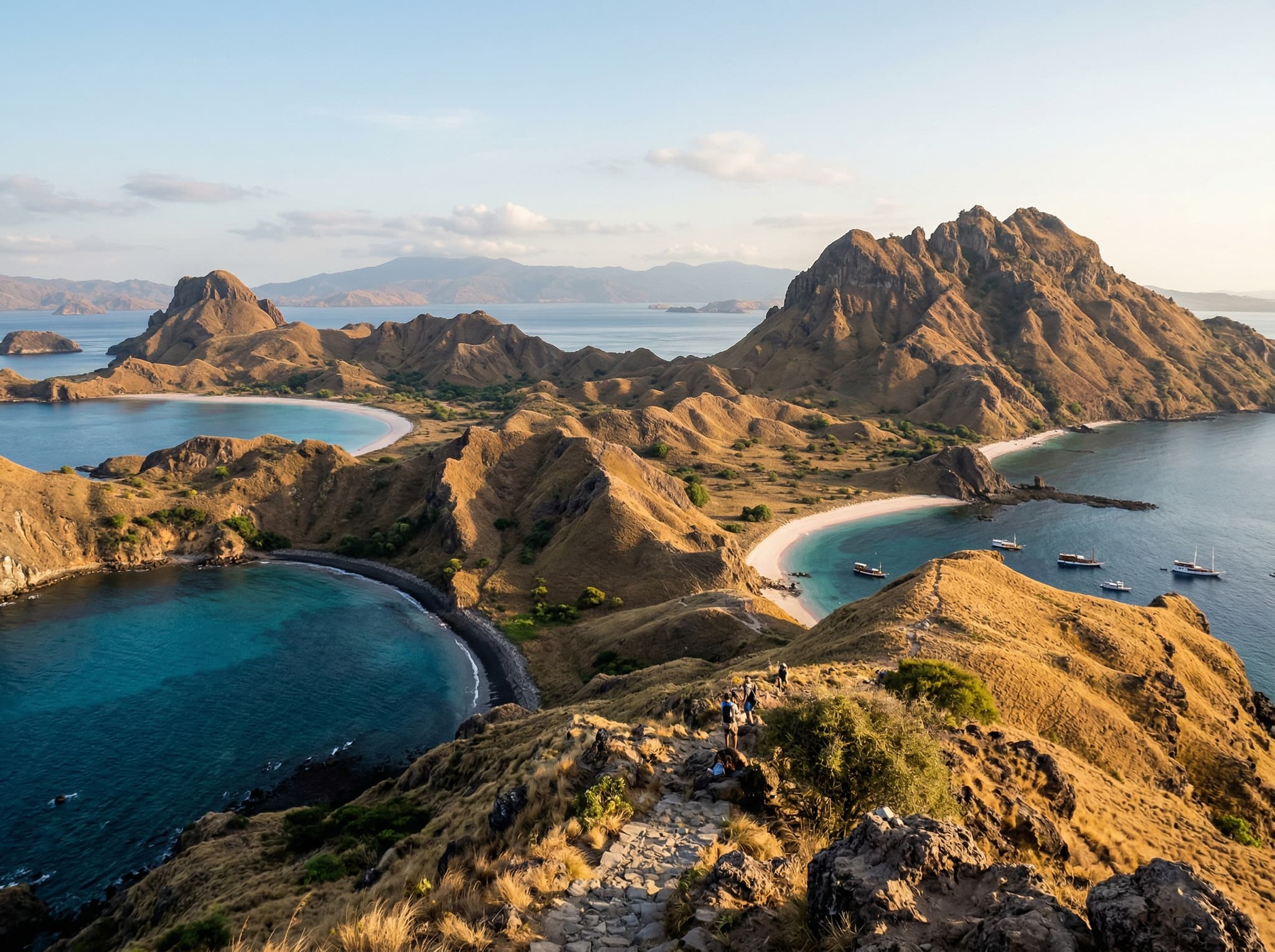
The dry season, April through October, is the clear choice. Calm seas make the boat crossing smoother, underwater visibility peaks, and the pink sand shows its color best under consistent sun.
Within that window, the months break down differently:
April–June is shoulder season. The rains have recently stopped, the hillsides behind the beach are still green, and the water is clearing. Fewer boats, lower prices, and a quieter beach. This is my preference if I'm choosing.
July–August is peak season. Maximum sun, vivid sand color, highest visibility. But also the most boats anchored offshore, the most people on the beach, and the hottest midday temperatures. If you're on a group tour, you'll feel the crowds here more than at other stops.
September–October is the sweet spot for marine life. Visibility still exceeds 30 meters, winds are dying down, and the tour boat traffic thins. The water feels slightly warmer than earlier in the dry season.
November–March brings rain, rougher seas, reduced visibility, and unpredictable conditions. Boats still run, but crossings can be uncomfortable, and snorkeling is less rewarding. Some operators reduce schedules or cancel trips in heavy weather.
Park Rules and Safety
Komodo National Park takes its rules seriously, and enforcement is real. A licensed ranger must accompany all guided activities — you cannot wander independently on any island in the park. On the beach, stay in designated swimming and snorkeling areas. Currents can be present at certain sites in the park, though Pink Beach itself is generally calm.
Life jackets are required on boats. Don't feed or approach wildlife — this applies to Komodo dragons on the island stops, but also to marine life in the water. Carry out all your trash. Smoking is banned in sensitive areas.
What to Bring
Sun protection
Reef-safe sunscreen, rashguard, hat
Water
At least 1 liter — none available on site
Snorkel gear
Own set if you prefer quality fit
Cash
IDR for park fees if not prepaid
Towel
No facilities on the beach
Is It Worth the Trip?
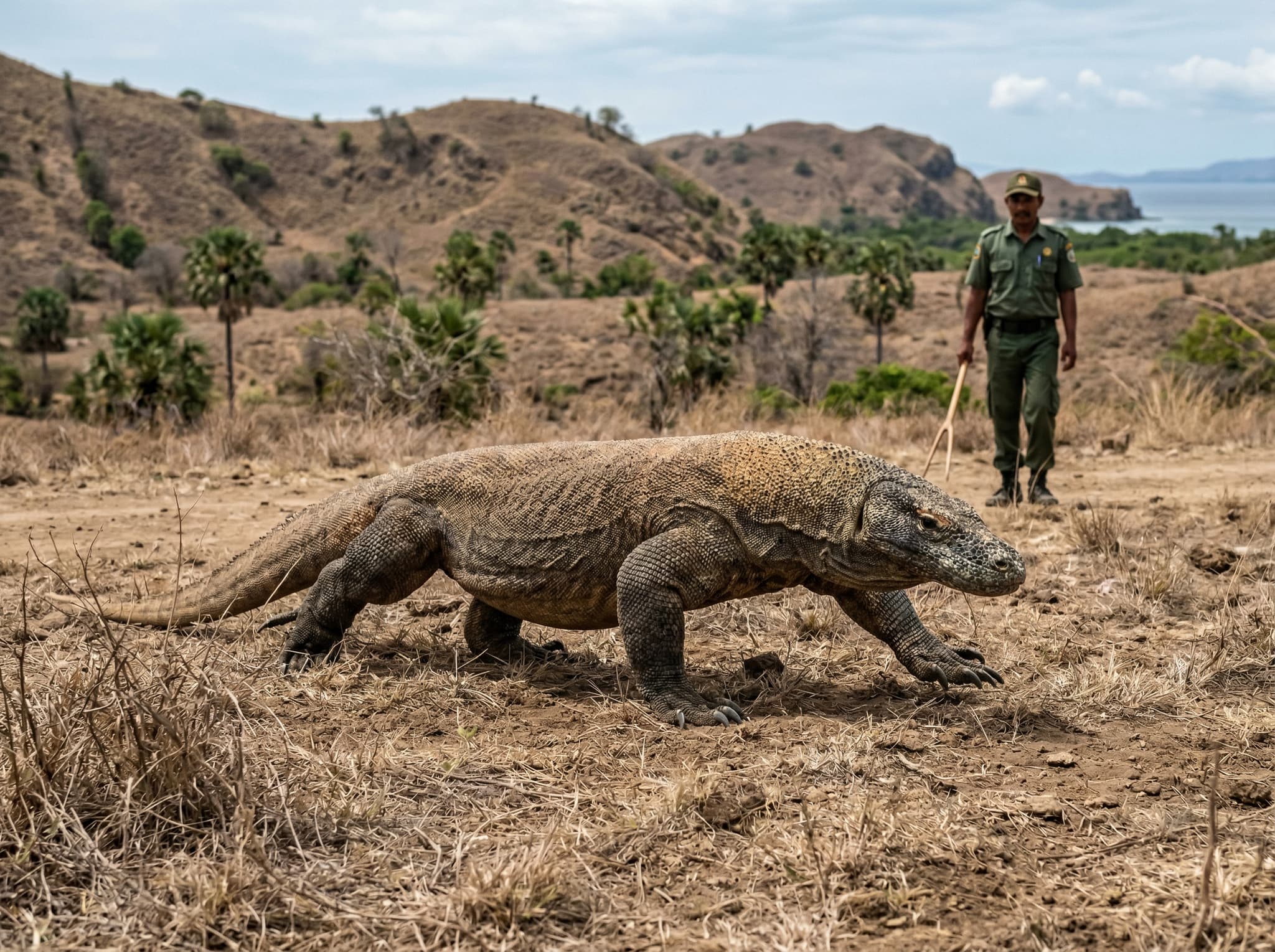
Pink Beach is not a place you visit on its own. It's a stop — one piece of a day that also includes volcanic islands, Komodo dragons, and open ocean. Taken alone, it's a pretty beach with good snorkeling and an unusual color. Taken as part of the full Komodo day trip, it's the moment where you slow down. After the steep climb on Padar Island and before the intensity of seeing dragons up close, you float in clear water over a shallow reef and watch small fish dart through coral. The sand beneath you is faintly, undeniably pink.
That's enough. It doesn't need to be more than what it is.