Sendang Gile Waterfall sits at the foot of Mount Rinjani in North Lombok. Here's what the trek, the falls, and the drive north are actually like.
The road north from Mataram narrows as the land climbs. Strip malls and warungs thin out, replaced by tobacco fields and stretches of jungle that press close to the asphalt. By the time you reach Senaru, the air has changed — cooler, damper, carrying something green in it. You're at the foot of Mount Rinjani now, Indonesia's second-highest volcano, and the village exists in its shadow the way a port town exists around its harbor. Everything here orients toward the mountain.
Sendang Gile Waterfall is the first thing Rinjani offers you. Not the caldera, not the crater lake, not the punishing multi-day trek that draws serious hikers from around the world. Just water — falling roughly 30 meters down a moss-covered rock face into a pool that catches the light differently depending on the hour. It's the threshold experience. The place where Rinjani stops being a name on a map and becomes something physical, loud, and wet.
Getting There

From Mataram or the Senggigi tourist strip, the drive north takes between 1.5 and 2 hours depending on traffic and road conditions. The route passes through Pusuk Pass — a winding mountain road with monkeys that will approach your vehicle if you slow down — before descending into the northern coastal plain and climbing again toward Senaru.
Most visitors hire a private driver for the day or arrange transport through their accommodation. Public transport options exist but are inconsistent in schedule and don't run directly to the waterfall entrance. A return trip with a driver from the Senggigi or Mataram area typically costs in the range of IDR 400,000–600,000, though prices vary by season and negotiation.
The waterfall entrance is in Senaru village, well-signed from the main road. You'll pay a small entrance fee at a ticket booth — amounts have been reported in the range of IDR 10,000 to 25,000, though these fees are set locally and may change without notice. A local guide is sometimes offered or encouraged at the entrance; this is optional but supports the community.
The Walk Down

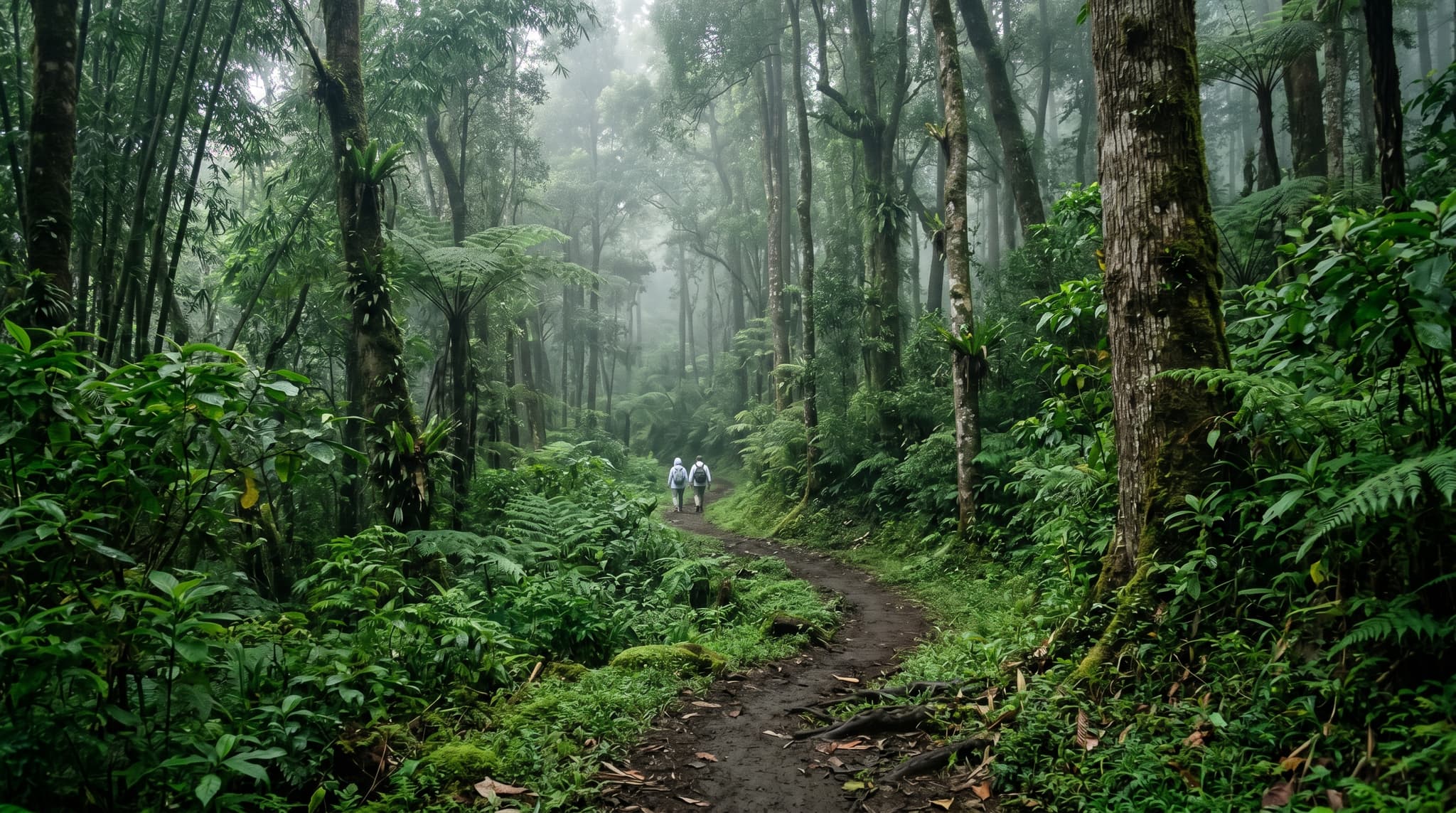
The trail from the entrance to Sendang Gile descends through forest on a path of concrete steps and packed earth. It takes roughly 15 to 20 minutes at a comfortable pace. The steps can be slippery, particularly after rain — this is not a difficult hike, but it demands attention underfoot.
What makes the walk worth noting isn't its difficulty but its compression. You move from open village air into dense canopy quickly. The sound of the waterfall arrives before the sight of it — a low roar that builds as you descend, layered under birdsong and the drip of moisture from overhead leaves. By the time you round the final bend and see the falls, the sound has already told you what to expect. The scale still surprises.
Trail Details
Trail Type
Concrete steps and packed earth, descending
Difficulty
Easy to moderate — slippery when wet
Distance
Approximately 500–700 meters one way
Return
Same trail back up — steeper going out
The Waterfall

Sendang Gile drops in a single curtain from a ledge thick with moss and ferns. The rock face behind the water is dark volcanic stone — the kind that stays wet even when the falls are at their thinnest. During the wet season, roughly November through April, the volume is heavy enough that mist fills the basin and you'll feel it on your skin from a distance. In the dry months, the flow narrows but the falls remain active.
There's a viewing area at the base with enough space to stand and watch. Some visitors wade into the shallower edges of the pool, though the current near the base of the falls can be strong. The water is cold — noticeably so after the humid walk down.
What stays with you isn't the height or the volume but the enclosure. The basin feels contained — walls of rock and jungle on three sides, the falls on the fourth. Sound bounces. The air is heavy with moisture. It's a place that imposes a kind of quiet on visitors, even when it's not empty.
When to Visit
Peak Flow
November through April (wet season)
Dry Season
May through October — less dramatic but still flowing
Crowd Timing
Mornings before 10 AM tend to be quieter
Light
Midday sun reaches the basin; morning light is softer
Sendang Gile and Tiu Kelep

The same trail entrance serves both Sendang Gile and Tiu Kelep, a larger waterfall roughly 30 to 45 minutes further up the trail. Many visitors plan to see both, and guides at the entrance will often describe the two as a single trip.
They're different experiences. Sendang Gile is the shorter, more accessible stop — reachable without a guide, without river crossings, without significant exertion. Tiu Kelep requires a more involved trek with at least one river crossing and is generally recommended with a local guide.
Many visitors reach Sendang Gile and turn back, either by choice or because they didn't realize Tiu Kelep existed. There's no shame in that. Sendang Gile is a complete experience on its own — not a preview of something better, but a different kind of waterfall entirely.
The Rinjani Context

Senaru is the most common starting point for treks up Mount Rinjani, and the village's economy is built around that traffic. Guesthouses, guide services, and porters line the road. Sendang Gile sits at the bottom of this ecosystem — literally and figuratively. It's the thing you can do in Senaru without committing to a multi-day mountain trek.
That positioning matters. For travelers passing through on their way to or from Rinjani, the waterfall is a warm-up or a cool-down. For everyone else — those who came north just for the day, or who aren't interested in high-altitude trekking — it's the main event. Both experiences are valid, but they feel different. The trekkers tend to move through quickly. The day-trippers tend to stay.
There are a handful of warungs near the entrance where you can eat before or after the walk. Simple Indonesian food — nasi goreng, mie goreng, fresh fruit. Nothing remarkable, but welcome after the climb back up.
The drive back south, if you're returning the same day, is the same road in reverse. But the light has usually shifted by afternoon, and Pusuk Pass looks different heading downhill. Lombok has a way of showing you the same landscape twice and making it feel new.