How to get from Bali to Senggigi, what to expect when you arrive, and why Lombok's faded coastal town is worth the crossing.
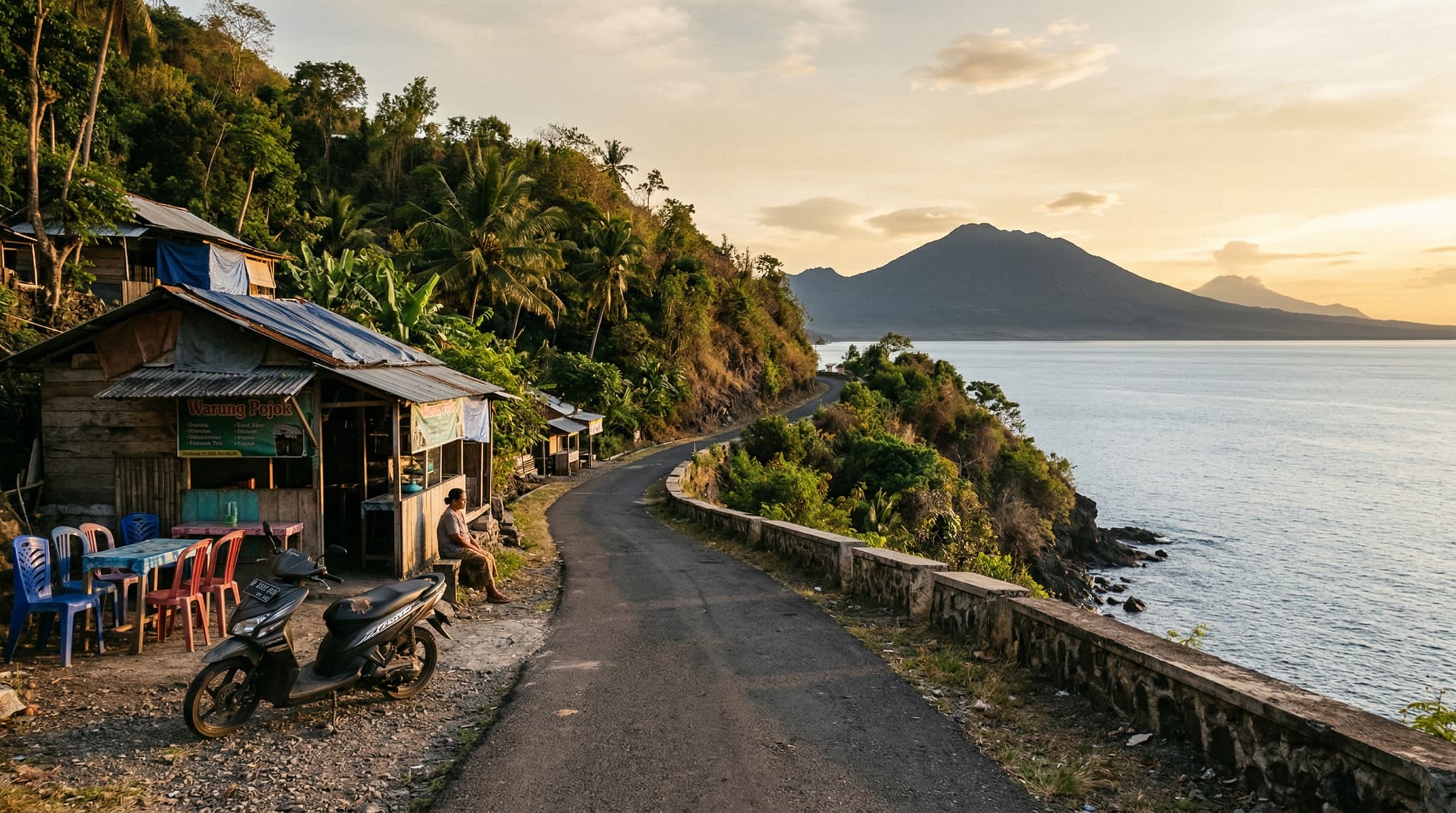
There's a stretch of road along Senggigi's coast where the pavement narrows and the hillside drops toward the Lombok Strait. If you're riding a scooter north in the late afternoon, the sun sits low over Bali's volcanic silhouette across the water. It's the kind of view that would have a cocktail bar built around it on the other island. Here, it's just the road, a few warungs with plastic chairs, and the sound of the call to prayer drifting from a mosque behind the trees.
That's Senggigi in a single frame. A place that has the raw material for heavy tourism but never quite got there — and now exists in a strange, appealing limbo between what it almost became and what it still is.
Getting From Bali to Senggigi
The crossing from Bali to Senggigi is straightforward, but the options differ enough in cost, time, and comfort that it's worth understanding them clearly.
Bali to Senggigi: Transport Options
Fast Boat (Padang Bai → Senggigi/Bangsal)
1.5–2.5 hrs, ~$25–$45 one way
Public Ferry (Padang Bai → Lembar)
4–5 hrs, ~$3–$5, then 1-hr drive to Senggigi
Flight (Ngurah Rai → Lombok International)
25 min, from ~$30, then 1.5-hr drive to Senggigi
Private Speedboat Charter
Varies, $150+, arranged through operators in Amed or Sanur
The public ferry from Padang Bai to Lembar is the cheapest option and runs roughly every two hours. It's slow and no-frills, but it works. From Lembar port, Senggigi is about an hour north by taxi or pre-arranged pickup. Negotiate the fare before getting in — expect around 150,000–200,000 IDR.
Flying is fastest door-to-door if you're coming from southern Bali, but Lombok International Airport (Praya) sits on the island's south side, meaning you'll still face a 90-minute drive north to Senggigi. It makes more sense if you're connecting from elsewhere in Indonesia.
What Senggigi Actually Feels Like
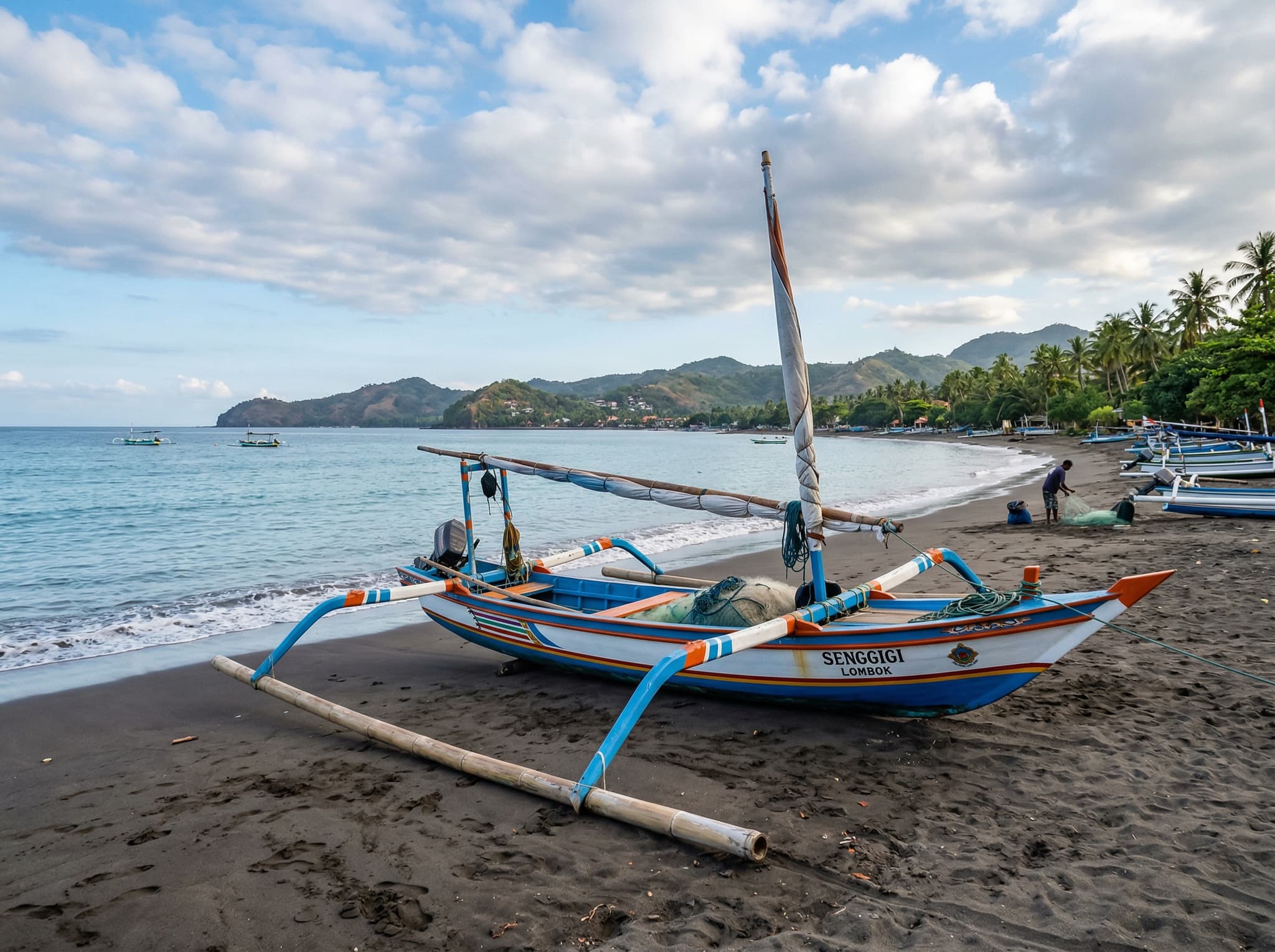
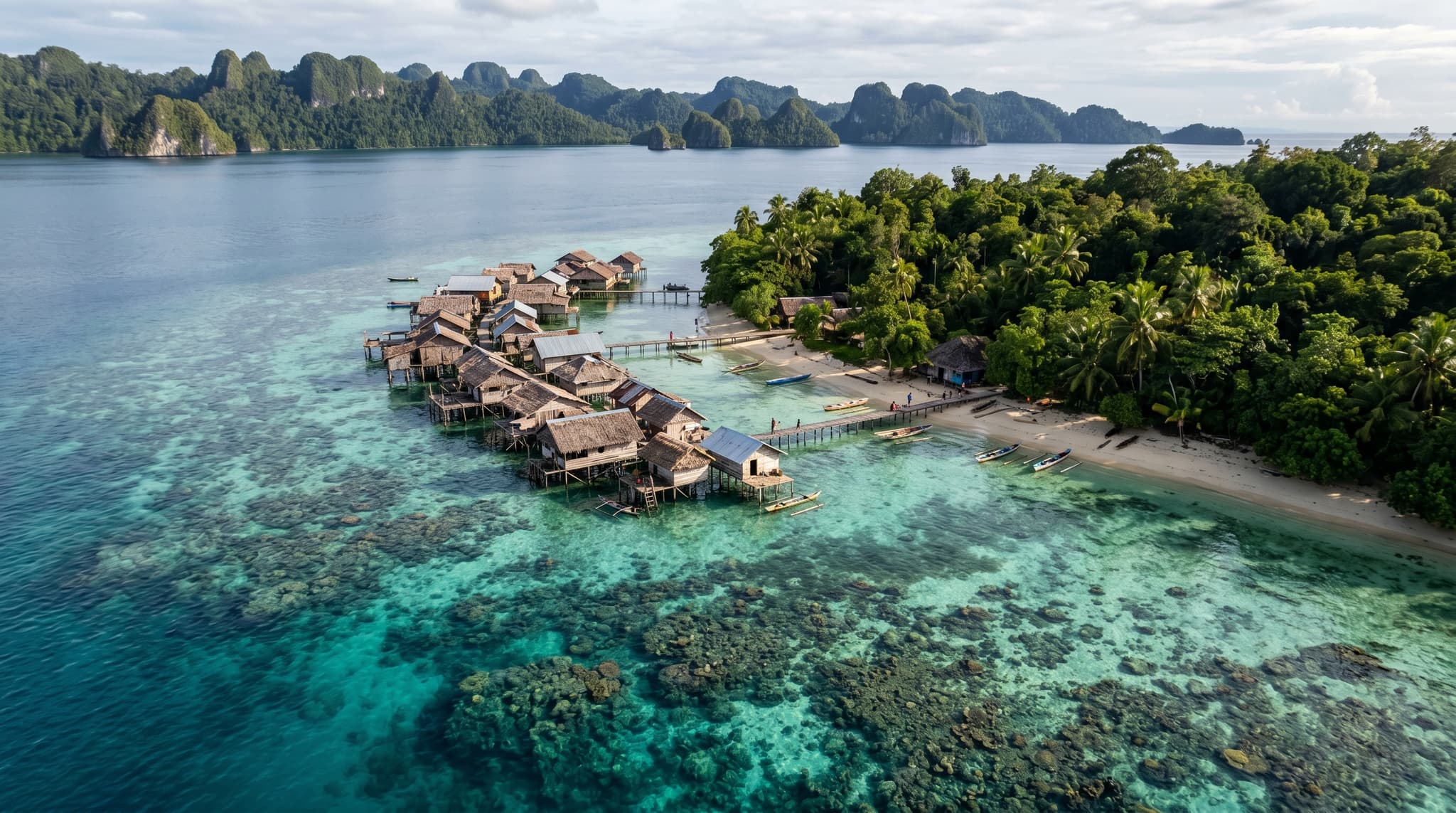
Senggigi isn't a single beach. It's a loose string of bays, hotels, and small commercial stretches along Jalan Raya Senggigi, the coastal road running north from the town center toward [Mangsit](/places/lombok/mangsit-lombok-s-quiet-answer-to-senggigi-s-noise) and beyond. The "center" — if you can call it that — clusters around the Art Market and the strip of restaurants and dive shops near Senggigi Beach itself.
The town had its moment in the 1990s, when it was positioned as Lombok's answer to Kuta. Some of that era's infrastructure remains: mid-range resorts with dated lobbies, a few dive operators that have been running for decades, restaurants with laminated menus in four languages. But the boom never fully arrived. The 2018 earthquakes accelerated a slowdown that was already underway, and while Senggigi has recovered, it hasn't reinvented itself the way Canggu or Seminyak did on the other side of the strait.
What's left is a town with real breathing room. Traffic is light. Beaches aren't crowded. Prices haven't inflated to Bali levels. A solid meal at a beachfront warung runs 30,000–60,000 IDR. A clean guesthouse with air conditioning and breakfast costs 250,000–400,000 IDR per night.
The Beaches Worth Finding
Senggigi Beach, the main one, is fine — dark sand, calm water, a few jukung boats pulled up on shore. But the better stretches are north.
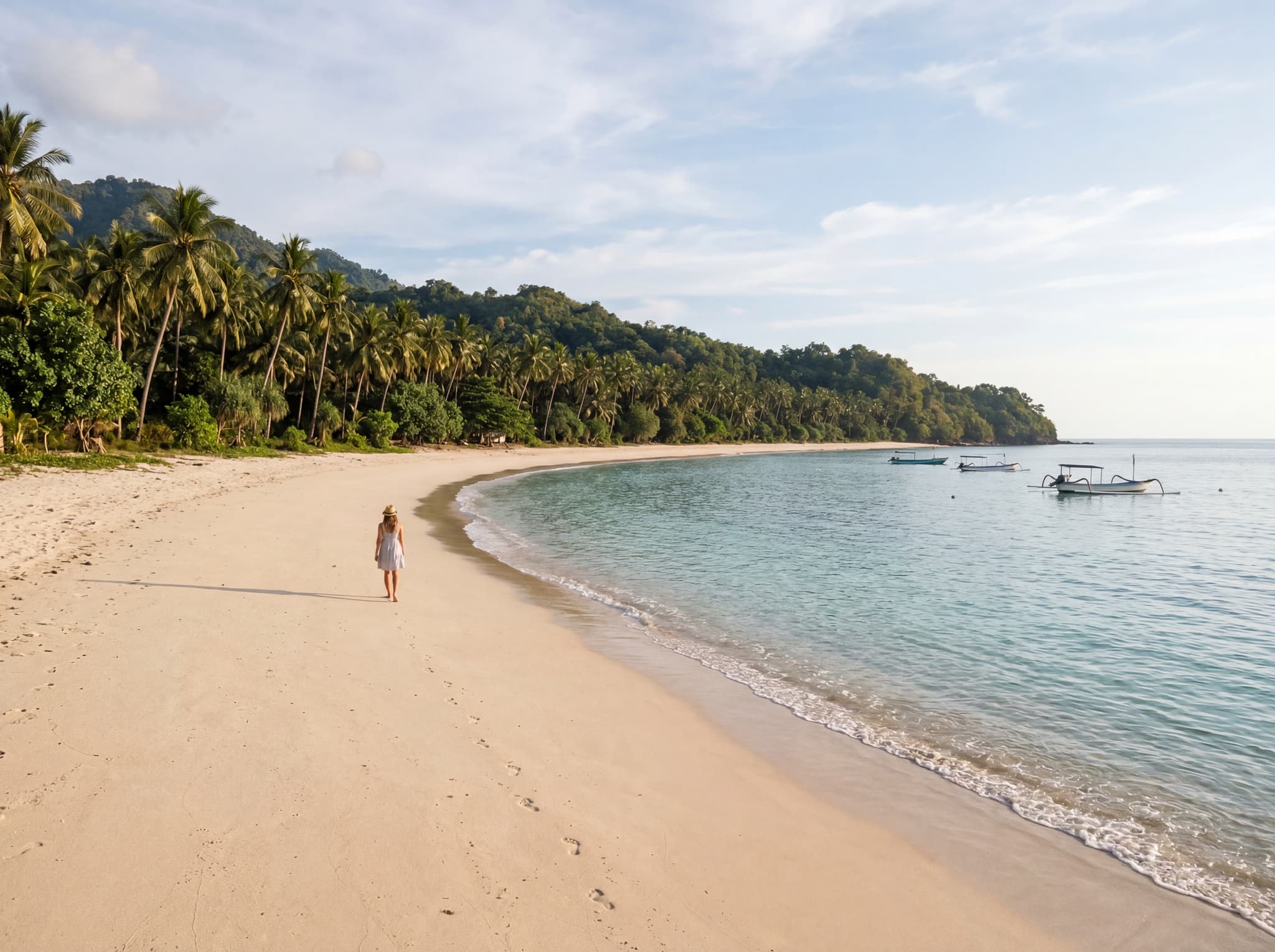
Mangsit Beach, about 15 minutes up the coast road, is quieter and backed by a handful of small boutique hotels rather than the commercial strip. The sand is lighter, the water is cleaner, and the crowd thins to almost nothing on weekday mornings.
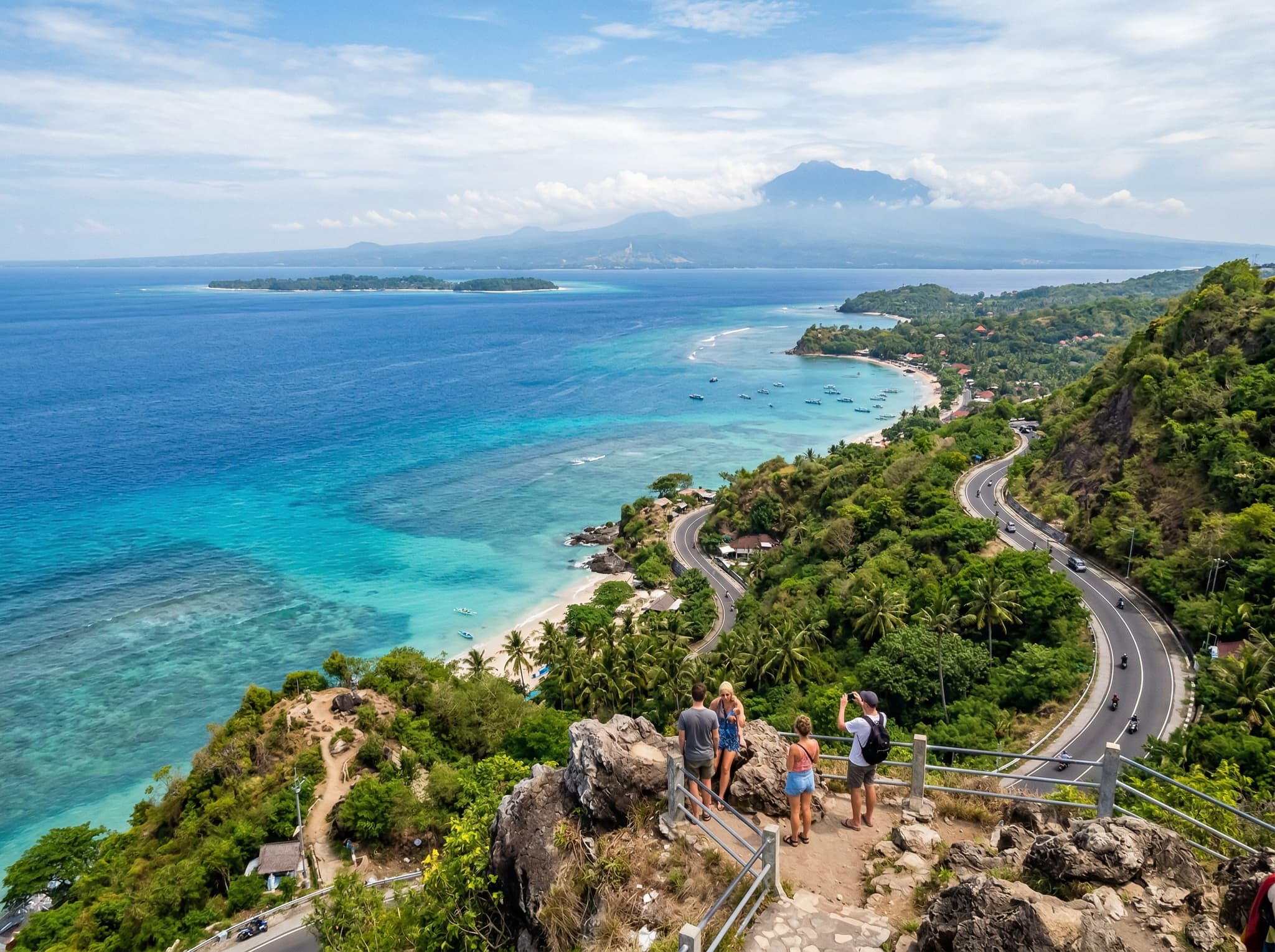
Malimbu Beach, further north still, is more of a viewpoint than a swimming beach — the hillside overlooks the Gili Islands, and on a clear day the water shifts through three or four shades of blue. It's a common stop on the drive to Bangsal Harbor, where boats depart for the Gilis.
Pura Batu Bolong
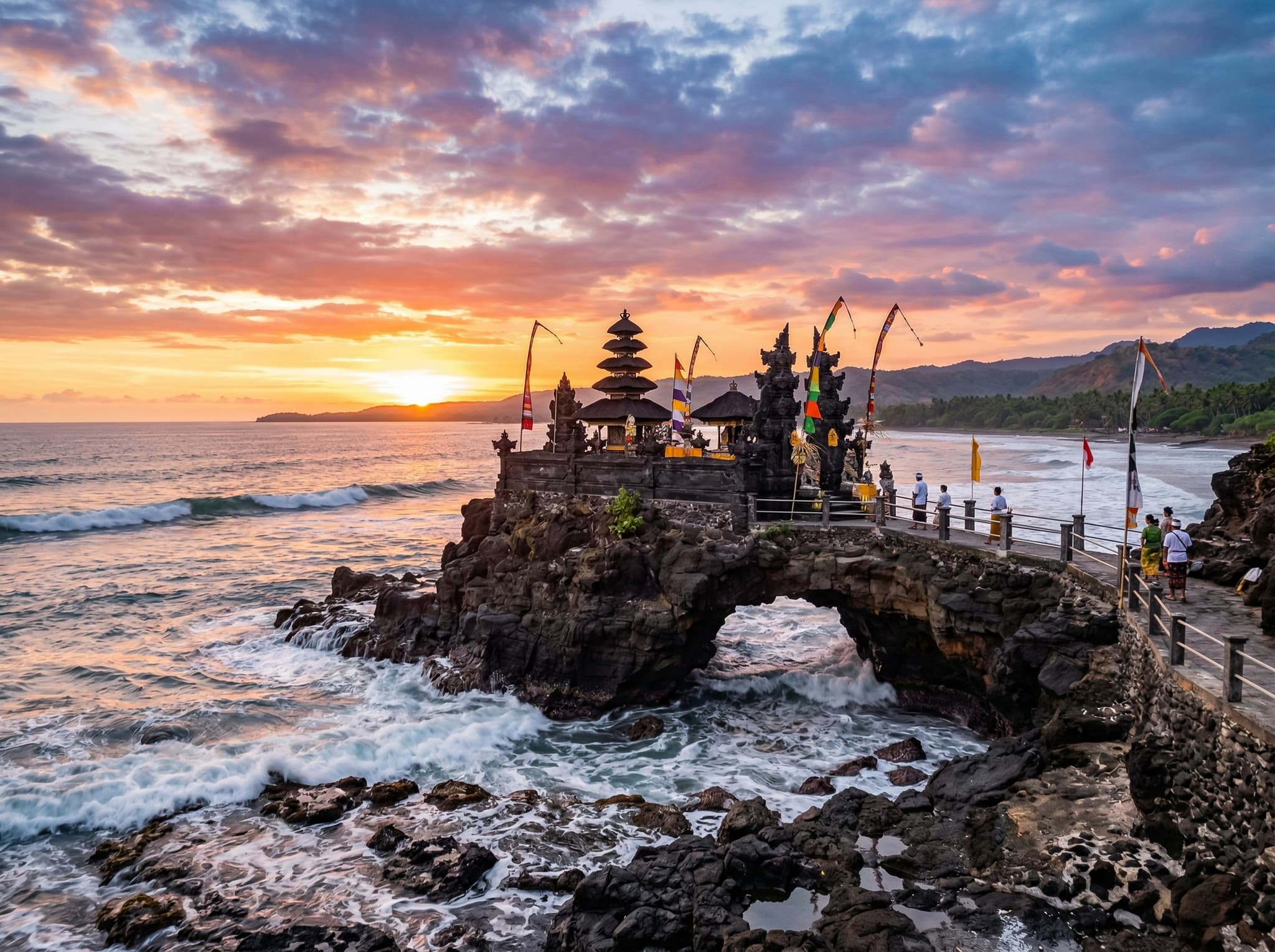
Just south of Senggigi's center, Pura Batu Bolong sits on a rocky outcrop above the water — a small Hindu temple built over a natural hole in the rock. It's one of Lombok's most photographed spots, and for good reason. The temple is modest, the setting is not. Sunset here is genuinely striking, and unlike Tanah Lot in Bali, you won't be sharing it with hundreds of people.
Lombok's Hindu minority — descendants of Balinese settlers — maintains several temples along the west coast. Batu Bolong is the most accessible and the most visited, but it still feels like a place of worship rather than an attraction.
Who Senggigi Is For
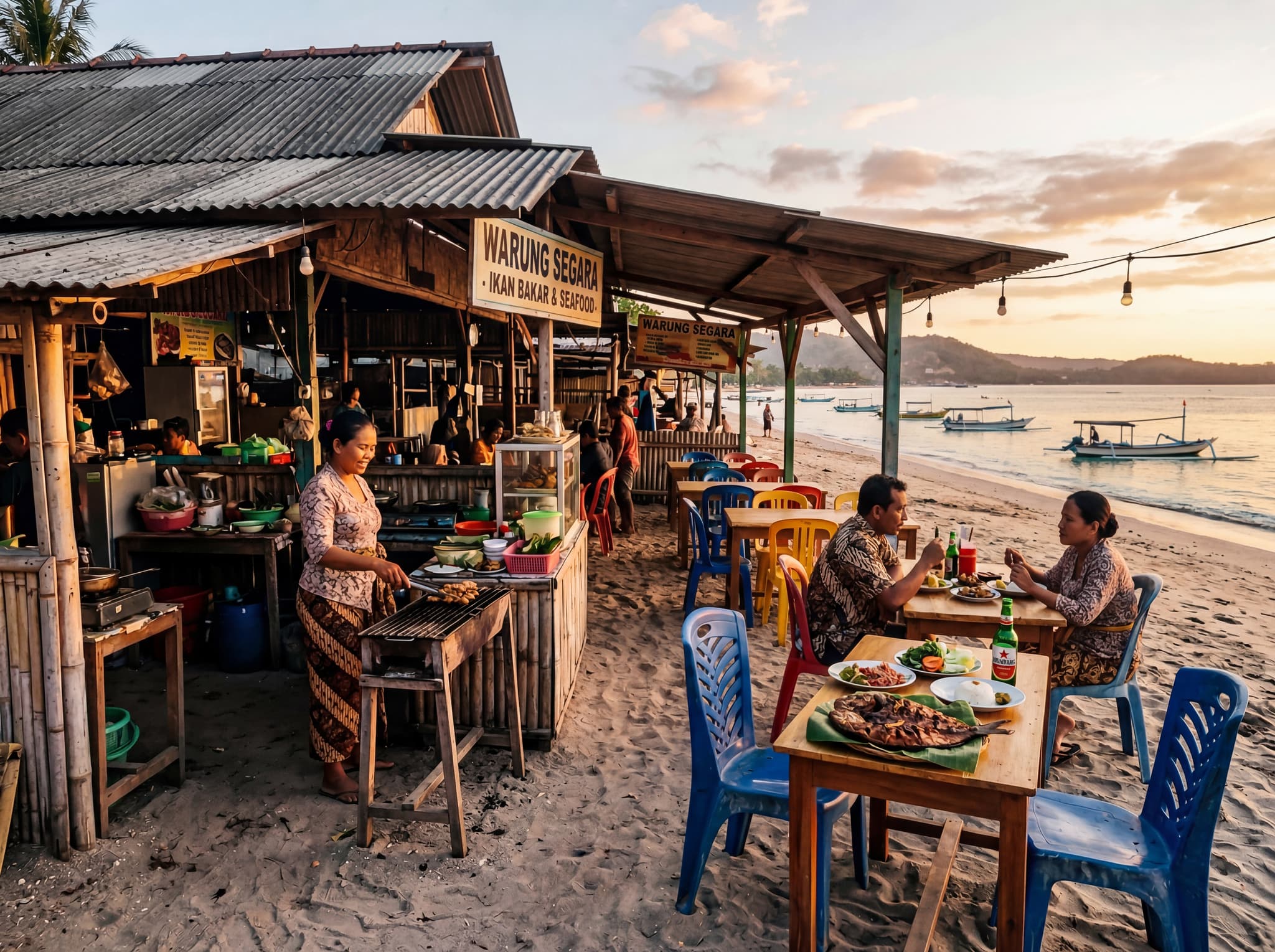
Senggigi doesn't try to compete with Bali's energy, and travelers who arrive expecting a quieter version of Seminyak will find something different altogether. It's slower, simpler, and less polished. That's not a limitation — it's the entire appeal.
It suits travelers who want a comfortable base without resort pricing. Divers heading to the Gilis who'd rather sleep somewhere calmer. People who like eating well for very little. Anyone who's spent a week in southern Bali and wants to feel the pace change.
It doesn't suit travelers who need nightlife, curated coffee shops on every corner, or a wide range of high-end dining. Senggigi's restaurant scene is adequate, not exciting. The town is quiet after 10 p.m., and that's being generous.
Senggigi at a Glance
Vibe
Relaxed, unhurried, slightly faded
Best For
Budget travelers, divers, Gili Island staging
Skip If
You want nightlife or luxury polish
Getting Around
Scooter rental (~60,000 IDR/day) or ojek
The honest thing about Senggigi is that it's not a destination that will redefine your trip. It's a place that slows you down just enough to notice what you've been rushing past. The light on the strait in the afternoon. The taste of grilled fish at a warung where nobody's trying to upsell you. The particular quiet of a town that was supposed to become something else and decided, maybe, that it was fine as it was.