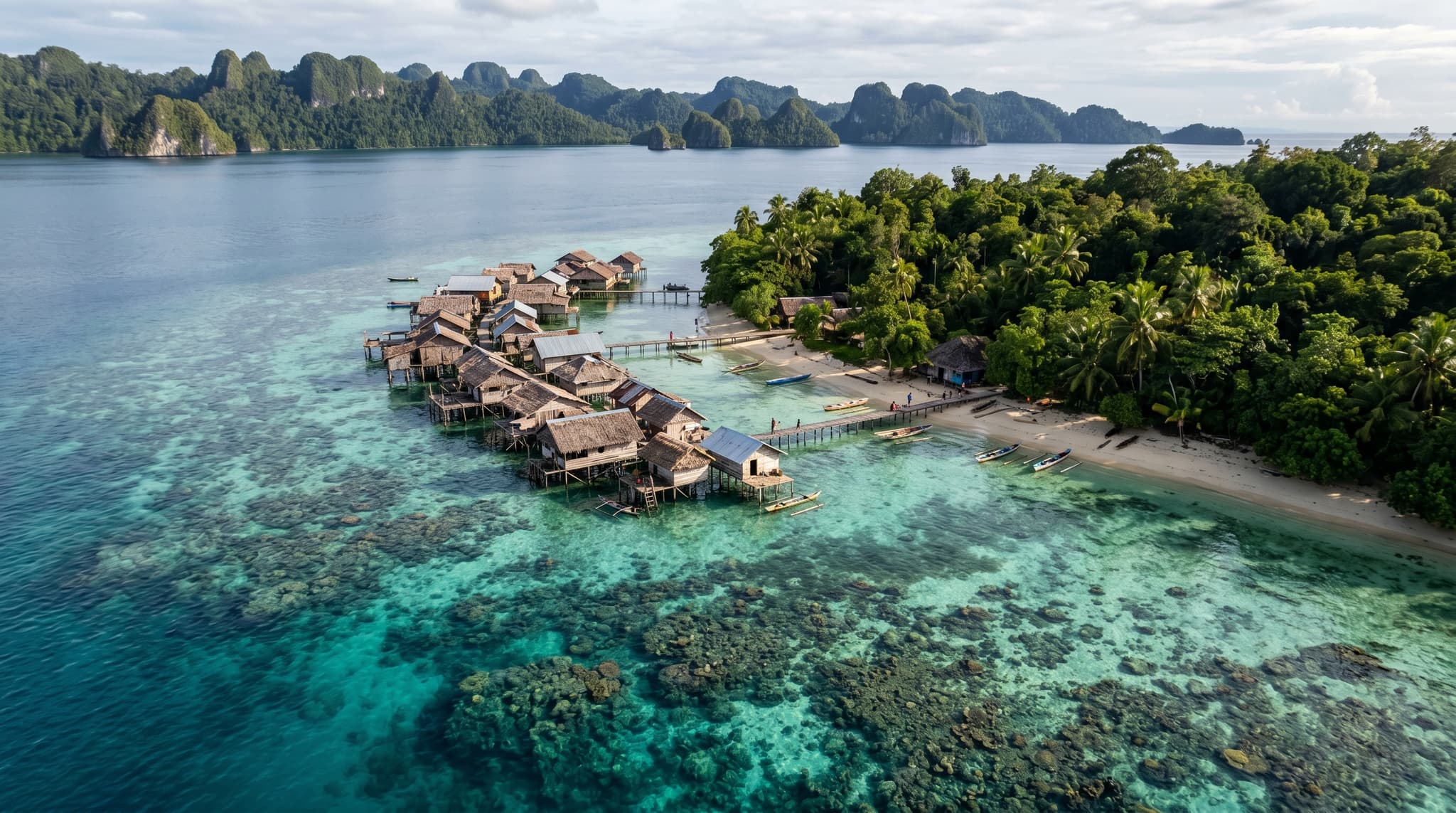
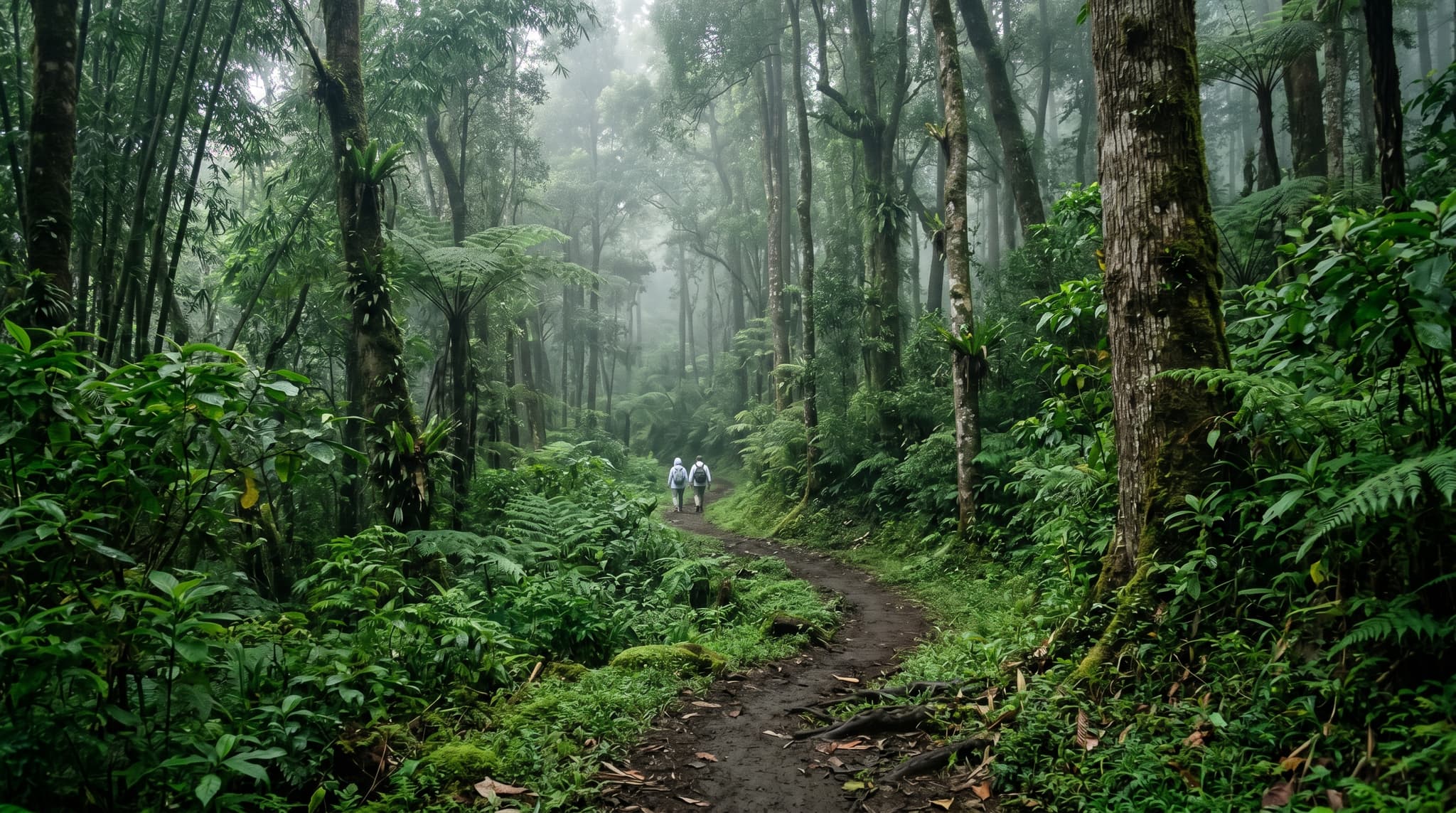
Gili Meno is the smallest, quietest Gili Island — best for snorkeling with turtles, couples, and genuine disconnection. Here's who it suits and who should skip it.
Three islands sit off the northwest coast of Lombok, separated by channels you can swim across if you're ambitious and slightly reckless. Most travelers land on Gili Trawangan — the biggest, the loudest, the one with the beach parties and the dive shops stacked three deep. Others choose Gili Air, which splits the difference between social and serene. And then there's Gili Meno, the middle island, which has made a deliberate decision to be none of those things.
Gili Meno is the smallest, the quietest, and the least developed of the three. No nightlife to speak of. No cars, no motorbikes — that's true of all three Gilis, but on Meno you actually feel it. The silence isn't a branding exercise. It's just what happens when an island has more sea turtles than bars.
So who is this island actually for? Let me be specific.
The Decision: Meno vs. Trawangan vs. Air
This is the question everyone asks, and most articles answer it with vague adjectives. Here's the trade-off framework:
Gili Islands Comparison
Gili Trawangan
Largest island. Beach clubs, bonfires, dive shops. Best for groups, nightlife, social energy. Most crowded beaches.
Gili Air
Best balance. Largest local Sasak population. Laid-back bars, best-value accommodation, beautiful beaches without Trawangan's crowds.
Gili Meno
Smallest, quietest. Best snorkeling (especially turtles). Virtually no nightlife. Ideal for couples, honeymooners, and anyone who wants to genuinely disconnect.
If you want a social scene with easy access to restaurants and bars, Gili Meno is the wrong island. If you want the best snorkeling of the three and a place where the loudest sound at 9 PM is waves, it's exactly right.
Gili Meno works best for: honeymooners, couples who don't need external entertainment, solo travelers who actually want solitude, and anyone doing a multi-island trip who wants one leg of it to be truly quiet. It also works as a day trip from Trawangan or Air — inter-island boats run roughly every 30 minutes and cost IDR 50,000–100,000 (~$3–6) per trip, cash only.
Getting There
Most travelers arrive from Bali or Lombok. Here's what each route actually costs and takes:
From Bali (Serangan or Padang Bai): Fast boats run 4–8 times daily, first departures around 7–8 AM, last sailings by 2–4 PM. From Serangan, expect IDR 500,000–800,000 ($32–52) one-way. From Padang Bai or Amed, slightly less: IDR 400,000–700,000 ($26–45). Travel time is 1.5–2.5 hours depending on the departure port. Operators include Blue Water Express, Eka Jaya, and Gili Getaway. Note that some boats stop at Trawangan first — a direct Meno stop from Serangan can carry a surcharge of around IDR 100,000.
From Lombok (Bangsal Harbor): Faster, cheaper, less dramatic. Boats depart roughly every 30–60 minutes from 8 AM to 5 PM. One-way fares run IDR 150,000–250,000 ($10–16). Travel time: 20–30 minutes. A private transfer from Lombok's airport to Bangsal costs IDR 300,000–500,000 ($19–32).
A government port tax of IDR 10,000 per person applies at certain ports (Padang Bai, Gili ports). This is separate from the IDR 20,000 arrival fee. Neither is included in ticket prices. Carry small bills.
One important administrative note: Gili Meno is part of West Nusa Tenggara (Lombok province), not Bali. Bali's IDR 150,000 tourist tax does not apply here, and travelers returning to Bali from the Gilis are not required to pay it again.
What You Actually Do on Gili Meno
The honest answer: you snorkel, you walk, you read, you eat, you watch the sunset, and you do it all again tomorrow. If that sounds boring, this isn't your island. If it sounds perfect, keep reading.
Snorkeling and Marine Life

This is Gili Meno's strongest card. The snorkeling here is genuinely better than on the other two islands, particularly for turtle encounters.
Turtle Point, on the northeastern side, is the main draw. Green and hawksbill sea turtles graze on seagrass beds in shallow water, and visibility regularly exceeds 20 meters. The best window is 7–9 AM — calmest water, fewest people, most active marine life. Avoid 11 AM–2 PM: stronger currents, reduced visibility, and tour boat crowds.
Beyond Turtle Point, the BASK Nest underwater statues have become an artificial reef attracting coral growth and marine life. The Bounty Wreck — a sunken pier platform — is another reliable spot. Fringing reefs extend almost entirely around the island, and you can enter from any sandy beach and swim 150–200 meters offshore to reach coral areas. Reef drop-offs start at just 2–6 meters deep.
Guided snorkel tours cost IDR 500,000–900,000 (~$32–58) and typically depart between 6–10 AM, covering multiple sites with roughly 30-minute stops at each. Worth it if you want to hit Turtle Point, the statues, and the wreck in one morning.
Walking the Island
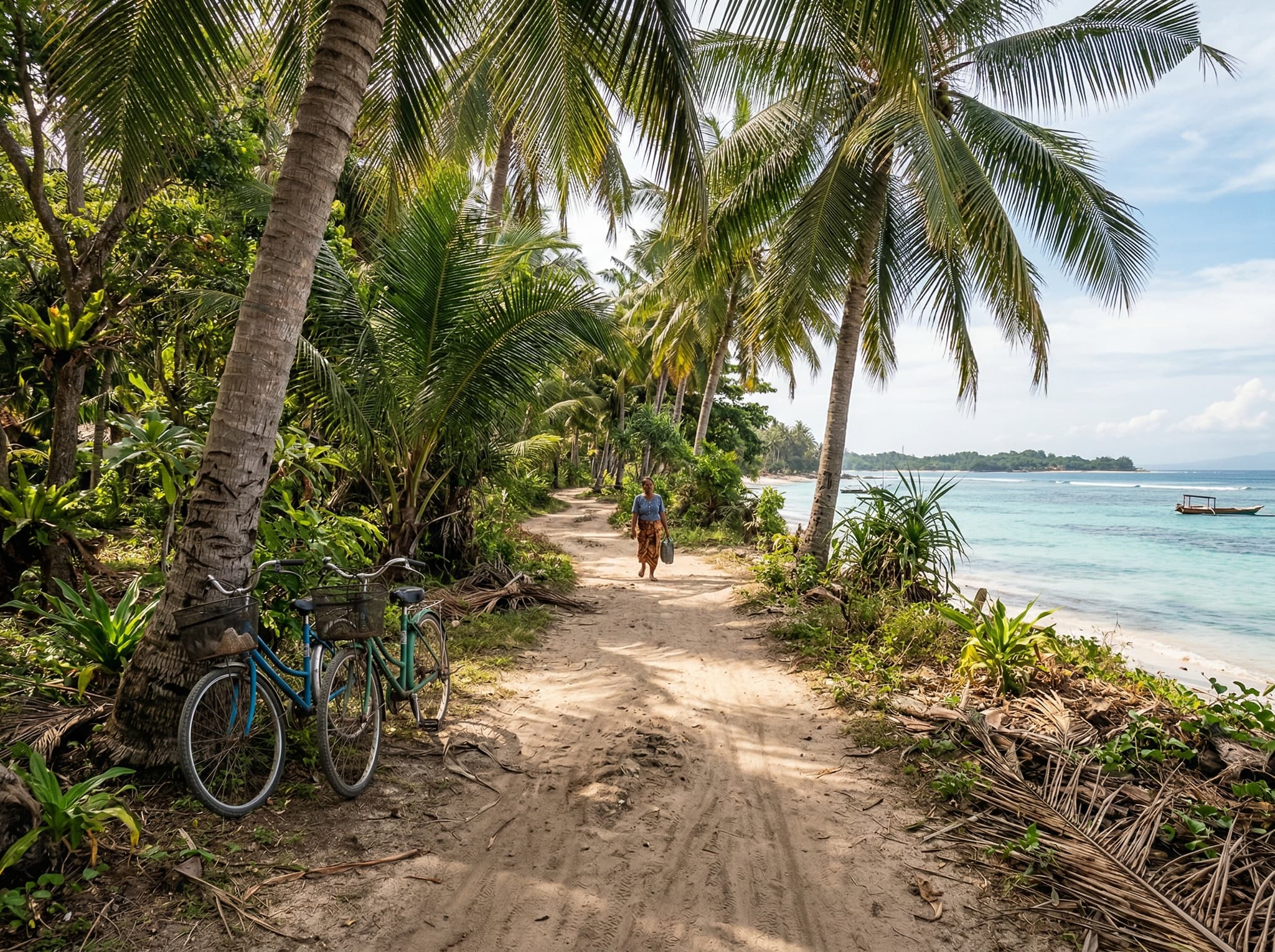
The full circumference is about 4–5 km. Walking it takes 1–2 hours depending on how many times you stop to photograph the water. Bicycles rent for IDR 50,000/day ($3). Cidomos — horse-drawn carts — cost IDR 100,000–200,000 ($6–13) per trip, though on an island this small, walking is almost always the better option.
Where to Stay
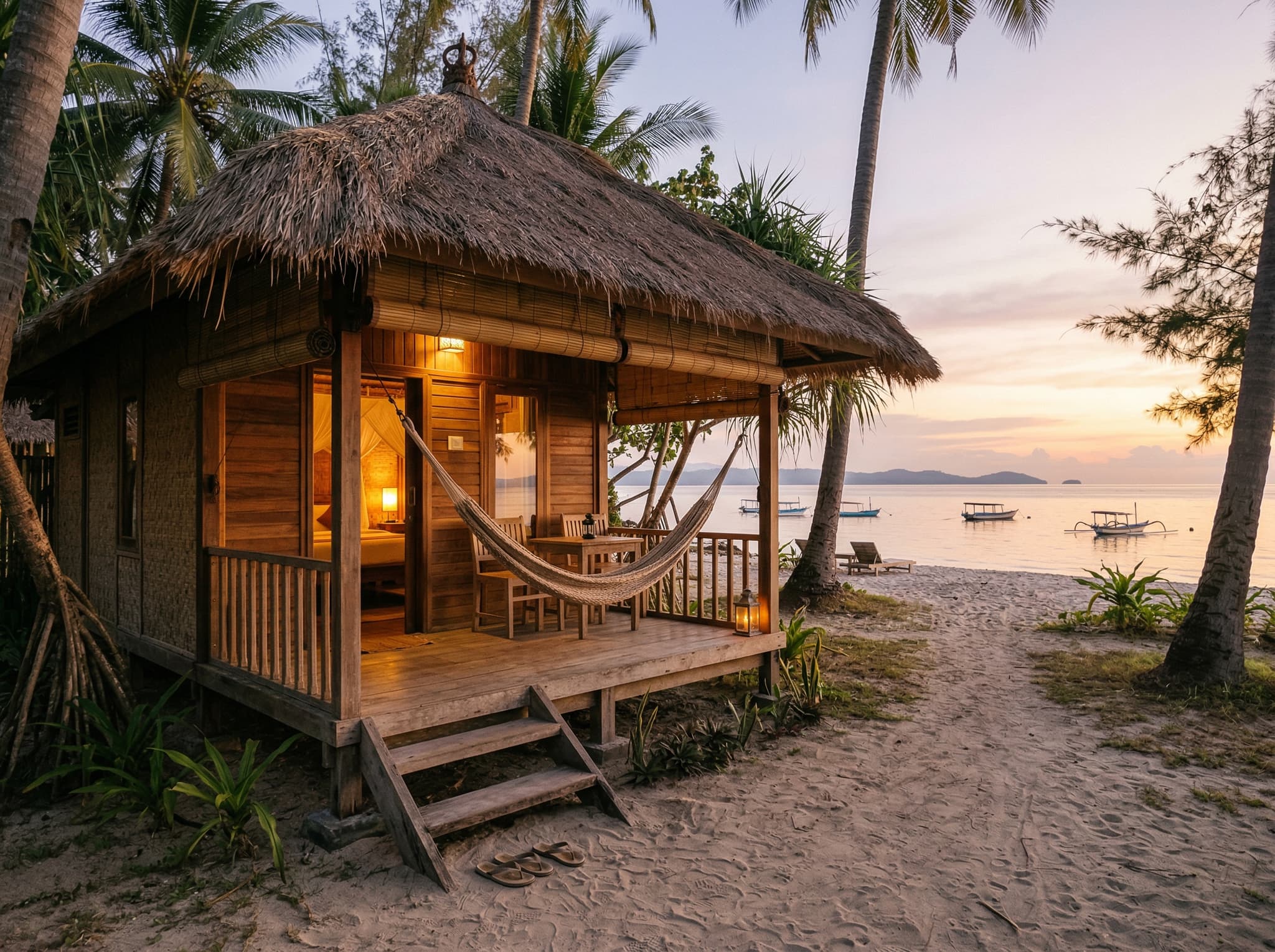
Gili Meno's accommodation ranges from basic to boutique. There's no massive resort infrastructure, which is part of the appeal.
Accommodation by Budget
Budget (from ~$7–25/night)
Fantastic Cottages offers spacious rooms from $25. KAYAK lists basic 3-star properties from $7–10 in low season.
Mid-range ($25–65/night)
Seri Resort: adults-only beachfront bungalows from $45. Adeng-Adeng Bungalows: quiet setting with restaurant, from $40.
Upper mid-range ($90–115/night)
Gili Meno Escape: villa-style rooms with infinity pool, 200m from the Turtle Conservation Center, averaging $98–112.
The east and southeast sides of the island — near Kontiki Cottages — have the best beach access. The southwest side, where Meno Dream Resort sits, is closer to sunset views. Pick your priority.
The Bottom Line
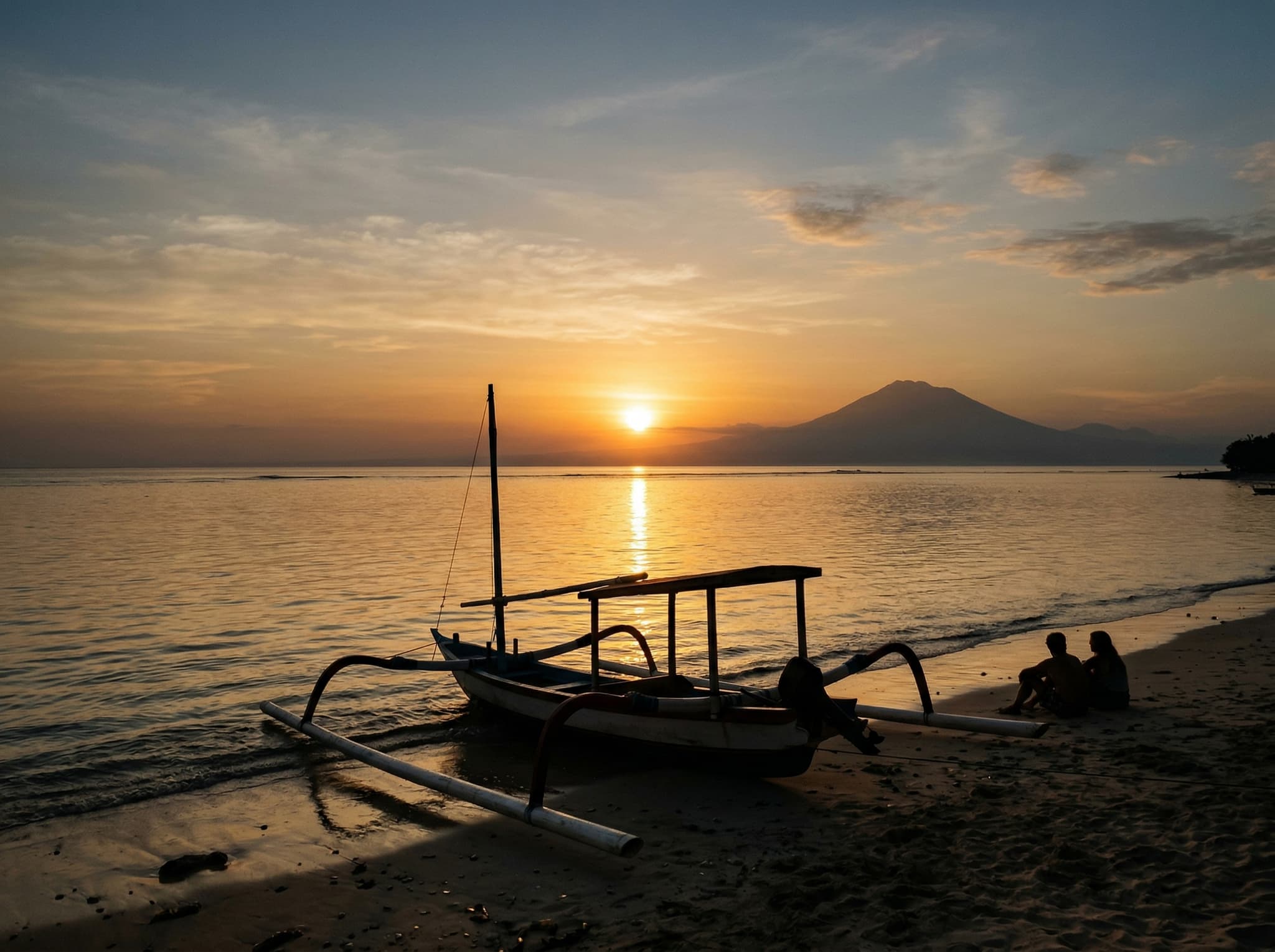
Gili Meno doesn't try to compete with Trawangan's energy or Air's balance. It offers one thing — quiet — and delivers it completely. The snorkeling is the best of the three islands, the beaches are uncrowded, and the pace is genuinely slow. If you need a bar open past 10 PM or a restaurant menu longer than one page, you'll be frustrated. If you want to spend a morning swimming with turtles in 20-meter visibility and an afternoon doing absolutely nothing, Gili Meno is exactly the island you're looking for.