The Bounty wreck off Gili Trawangan packs more marine life per square meter than sites twice its size. Here's what to expect, what it costs, and when to go.
The Bounty wreck is one of those dive sites that gets recommended to everyone — beginners, advanced divers, underwater photographers, people who just got certified yesterday. And for once, the universal recommendation is earned. This isn't a spectacular deep wreck that requires technical training and nerves of steel. It's a small, shallow, heavily colonized cargo pontoon resting on a sandy bottom off Gili Trawangan, and it delivers more life per square meter than sites twice its size.
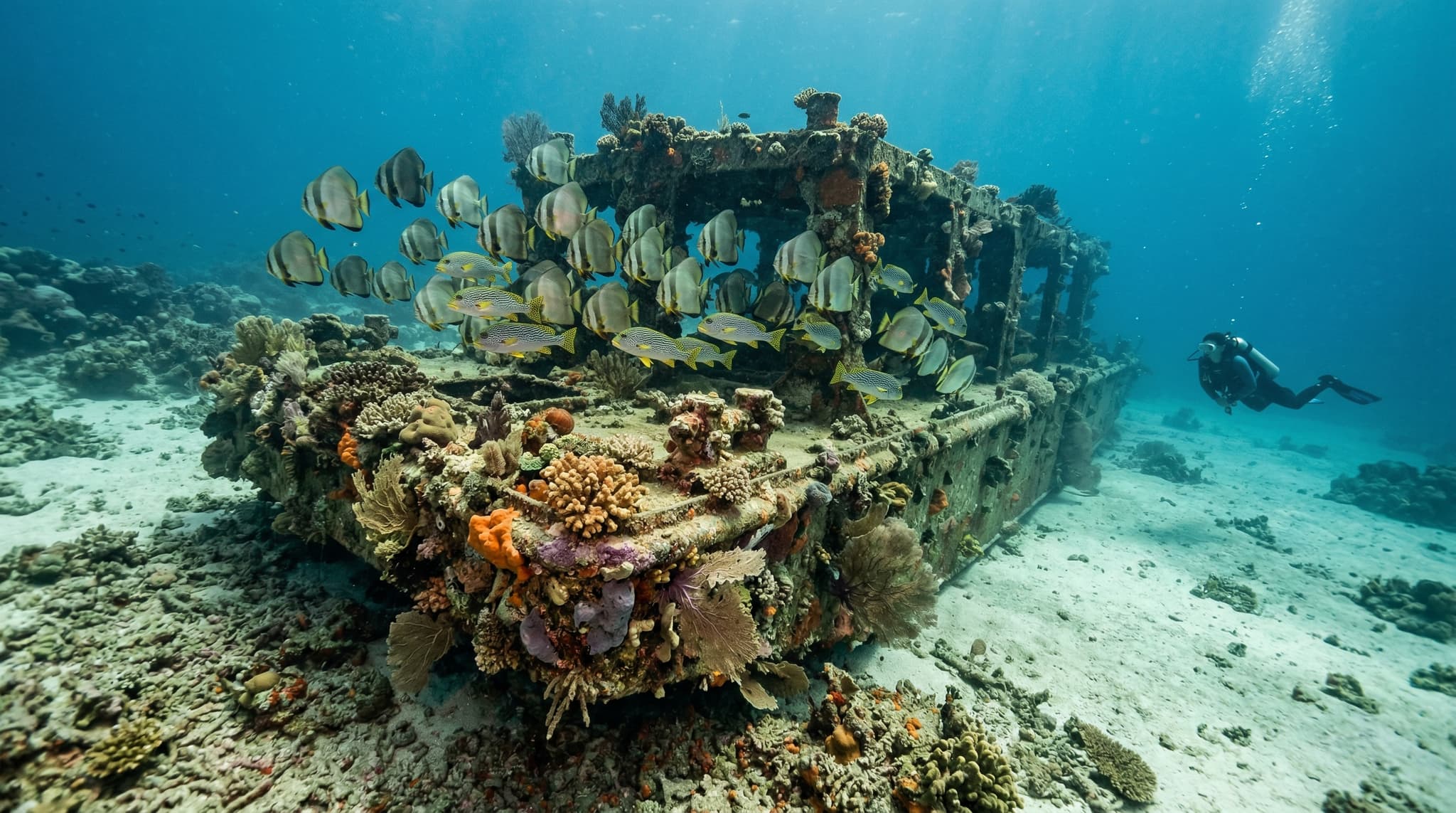
Let me be clear about what this is and isn't. The Bounty wreck is not the SS Thistlegorm. It's not going to make your jaw drop with scale. It's a decommissioned cargo platform — roughly 30 meters long — that was deliberately sunk in the early 2000s to create an artificial reef. The name comes from the Bounty, a catamaran ferry that once operated the Bali-to-Lombok route. The pontoon was associated with that operation, sunk intentionally, and the reef did exactly what it was supposed to do: it exploded with life.
What You'll Actually See Down There
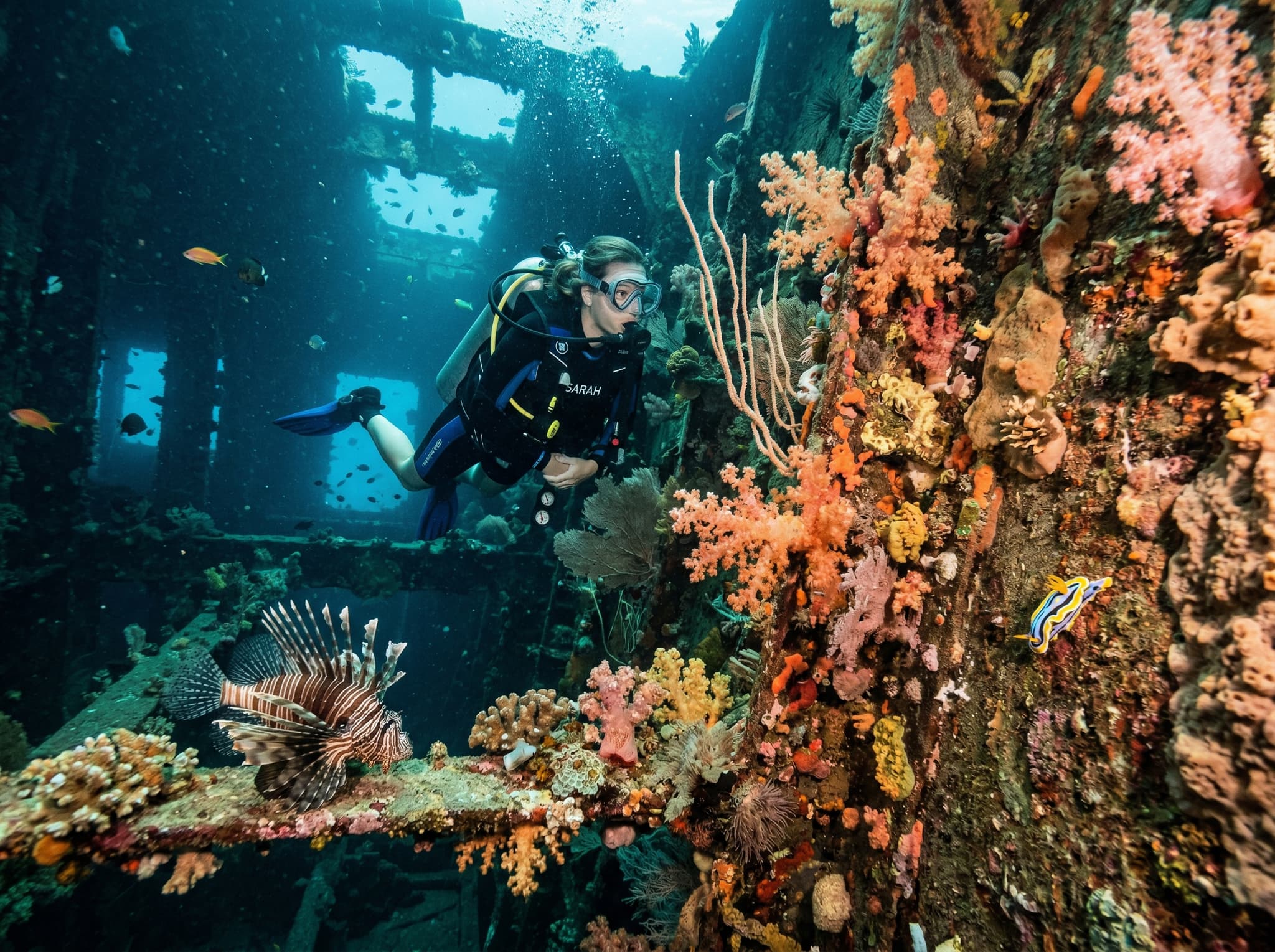
The wreck sits at a maximum depth of around 28 meters at the sandy bottom, with the top of the structure starting at roughly 18 meters. That depth range matters — it puts the entire site within recreational diving limits, and most of the interesting stuff happens between 18 and 24 meters, which means longer bottom times and less nitrogen loading.
The structure itself is open and penetrable in places, though "penetration" here means swimming through wide gaps in corroded metal, not squeezing through engine rooms. Soft corals — fans, whips, sponges — cover nearly every surface. The wreck has become a cleaning station, which means you'll regularly find large sweetlips, groupers, and batfish hovering near the structure waiting for cleaner wrasse to do their work.
Common Marine Life
Residents
Lionfish, scorpionfish, frogfish, nudibranchs
Schooling Fish
Batfish, sweetlips, fusiliers, jacks
Occasional Visitors
Turtles, reef sharks, bumphead parrotfish
Macro Highlights
Ornate ghost pipefish, various nudibranch species
Macro photographers love this site disproportionately. The wreck's nooks and overhangs shelter ornate ghost pipefish, robust ghost pipefish, and a rotating cast of nudibranchs that changes seasonally. If your dive guide knows the wreck well — and most Gili Trawangan guides have logged hundreds of dives here — they'll point out things you'd swim right past.
Turtles are common. Green and hawksbill turtles cruise the area regularly, often resting on or near the wreck. This isn't a "maybe you'll see one" situation. On most dives, you'll encounter at least one.
Who This Dive Is For
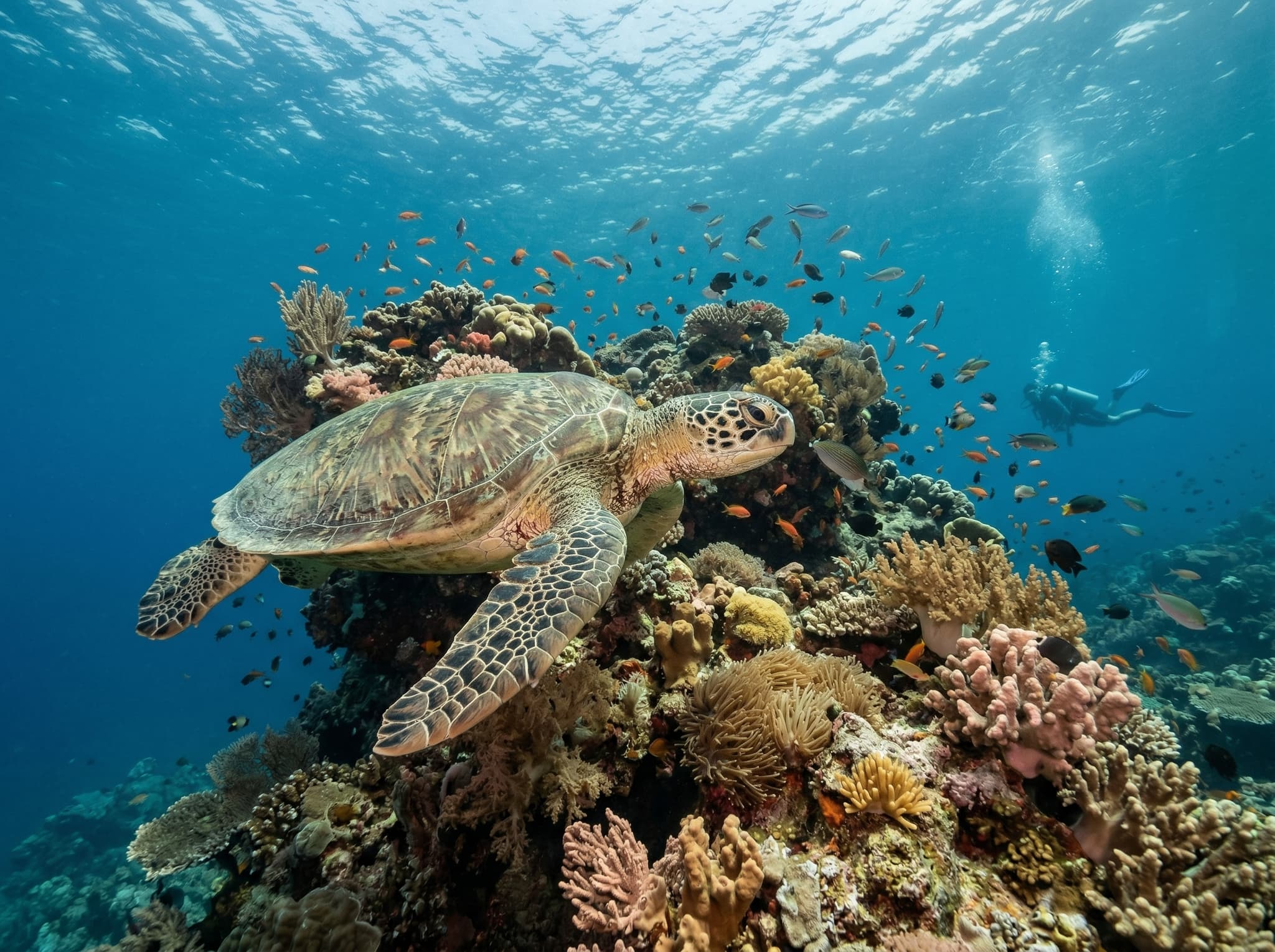
This is where the Bounty wreck earns its reputation as the Gili Islands' most democratic dive site. Open Water certified divers can access the upper portions comfortably. Advanced Open Water divers can explore the full depth range and spend time around the base. Underwater photographers — from compact cameras to full rigs — will find subjects at every level.
That said, conditions aren't always gentle. During the wet season (December–March), visibility can drop to 8–12 meters, and thermoclines occasionally hit the wreck with colder water from deeper channels. Dry season dives typically offer 15–25 meters of visibility, sometimes more.
Logistics: Getting There and Booking
 harbor to the Bounty wreck dive site](/_next/image?url=https%3A%2F%2Fhcsauzofnowpfpbudclf.supabase.co%2Fstorage%2Fv1%2Fobject%2Fpublic%2Farticle-images%2F7057261b-1989-4179-845a-94dcb3a3aedf%2Fplace-3.jpg&w=2048&q=75)
Every dive shop on Gili Trawangan offers the Bounty wreck as a standard site. It's a 5–10 minute boat ride from the harbor — one of the shortest surface intervals you'll spend on any dive trip.
Booking Details
Single Fun Dive
IDR 450,000–650,000 ($28–41)
2-Dive Package
IDR 750,000–1,000,000 ($47–63)
Boat Time
5–10 minutes from [Gili Trawangan](/places/bali/gili-trawangan) harbor
Typical Dive Time
45–55 minutes
Prices vary by shop, and the cheapest option isn't always the best value. What you're paying for is the guide's knowledge of the wreck — someone who knows where the frogfish has been sitting this week versus someone who does a generic loop. Ask how often the divemaster dives this specific site. If the answer is "a few times," book elsewhere.
How It Compares to Other Gili Dive Sites
The Gili Islands have around 20 recognized dive sites. The Bounty wreck competes directly with a few for your limited dive budget:
Shark Point offers better chances of seeing reef sharks and is the site to choose if big marine life is your priority. But it's deeper, more current-exposed, and less interesting for macro.
Turtle Heaven is shallower and, as the name suggests, dense with turtles. Better for snorkelers and new divers who want to stay above 15 meters.
Halik Reef is the best pure coral dive in the Gilis — more colorful reef structure, but no wreck and fewer concentrated fish aggregations.
The Bounty wreck's advantage is density. Everything is concentrated on one relatively small structure, which means you spend less time swimming and more time looking. For a single-dive visit or a photographer with specific subjects in mind, that concentration is hard to beat.
The Honest Assessment
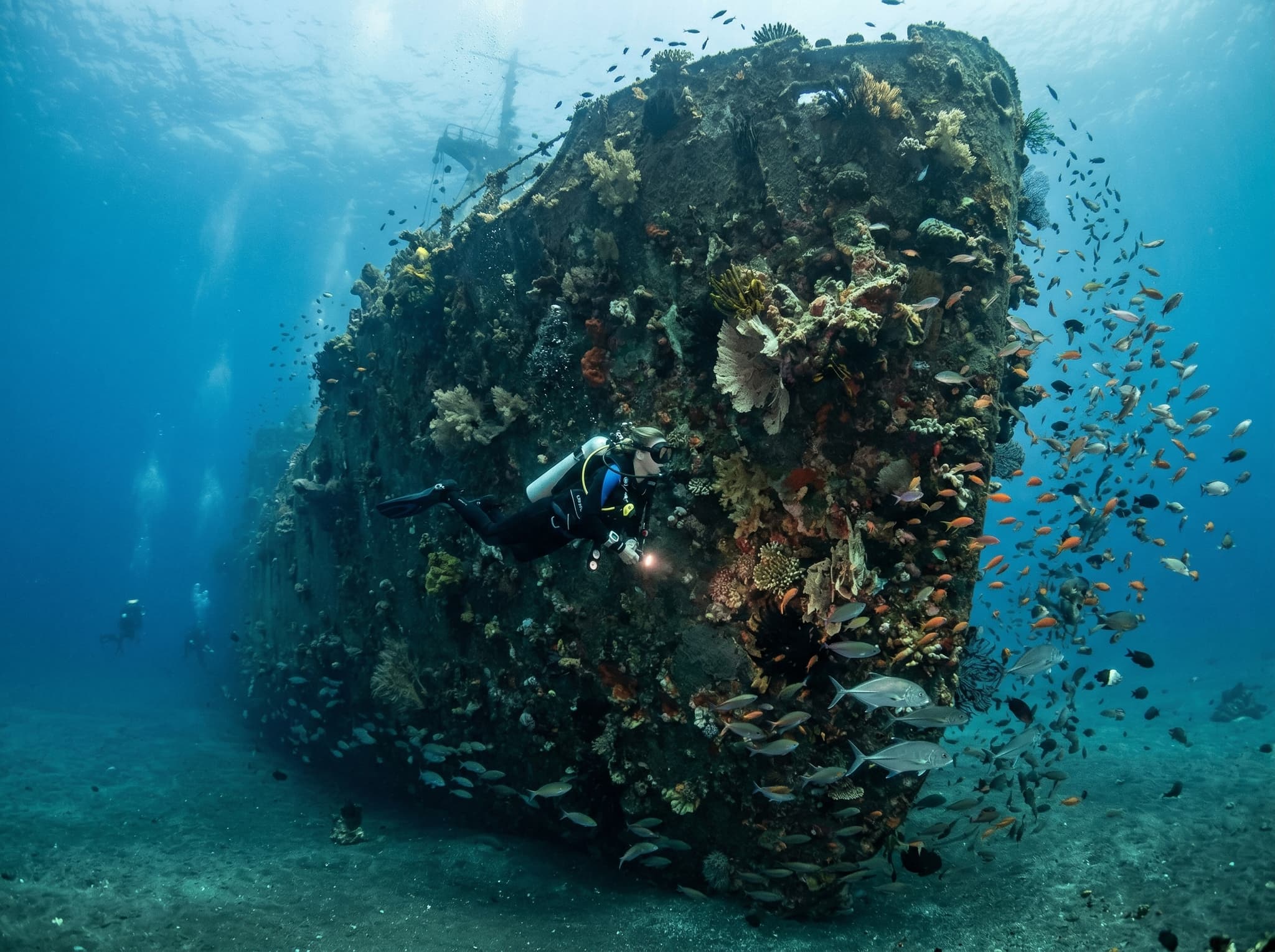
The Bounty wreck is not a world-class wreck dive. If you've dived the Liberty in Tulamben (Bali), the scale difference is significant — the Liberty is a 120-meter cargo ship with decades more coral growth. But the Bounty wreck isn't trying to compete on scale. It works because it's accessible, reliably full of life, and sits in warm, usually clear water a few minutes from one of Indonesia's most popular island destinations.
If you're diving in the Gilis — and if you're visiting, you probably should be — the Bounty wreck belongs on your dive list. Book the early morning slot, bring a camera, and let your guide lead. The wreck does the rest.