Shark Point is the Gili Islands' most requested dive site. Here's what you'll see, depth and current conditions, costs, certification needed, and how it compares to other Gili sites.
Shark Point is the dive site people ask for by name. Walk into any shop on Gili Trawangan — Manta Dive, Blue Marlin, Gangga Divers, Next Level Scuba — and the conversation usually starts the same way: "Can we do Shark Point tomorrow?" It's the Gili Islands' most requested site, and for a straightforward reason. This is where the sharks are.
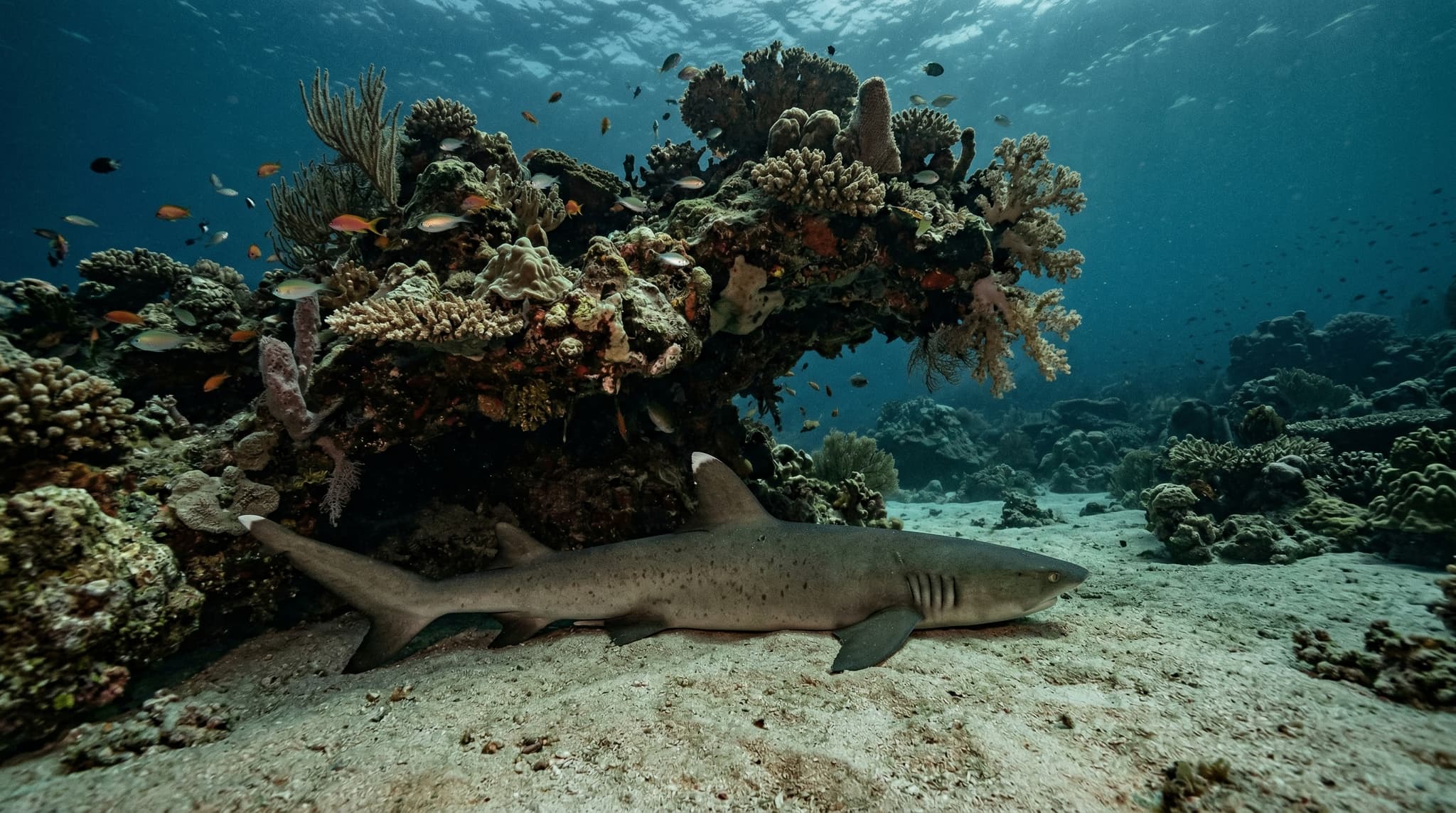
Not big sharks. Not the kind that make you reconsider your life choices. White-tip and black-tip reef sharks, mostly juveniles and mid-sized individuals, resting under coral bommies or cruising the deeper ridges. They're docile, unbothered by divers, and reliably present in a way that few sites in the Gilis can match. The name delivers on its promise — and in diving, that's worth something.
What You're Diving Into

The topography at Shark Point is what makes it interesting beyond the sharks. The site starts as a coral reef plateau at 5–10 meters, then slopes down to around 18 meters before breaking into a landscape of canyons, valleys, and rolling ridges that extend to 30–35 meters and beyond. Sandy bottoms between the ridges are dotted with scattered bommies — and one bommie in particular, in the deeper section, is known for hosting juvenile white-tip reef sharks. Your divemaster will know which one.
Dive Site Profile
Depth range
5m (plateau) to 35m+ (ridges)
Reef type
Sloping reef with hard/soft corals, bommies
Visibility
10–30m (up to 30m+ in peak season)
Current
Medium to strong; drift diving only
Dive style
Drift dive from boat
Recommended level
Intermediate to advanced
The marine life beyond sharks is genuinely varied. Schools of trevally and snapper are common in the mid-water column. Batfish hang around the shallower sections. Turtles — green and hawksbill — are frequent enough that you'd be unlucky not to see at least one. Humphead parrotfish show up, especially around full moon. Eagle rays pass through. Octopus and moray eels occupy the crevices. On a good day with clean water and mild current, you might spot a manta ray, though that's the exception rather than the rule.
There's also a tugboat wreck sitting at around 30 meters — not a destination dive in itself, but a nice bonus if your air consumption and bottom time allow for it on the deeper profiles.
The Current Situation (Literally)

Here's where Shark Point separates itself from the easier Gili sites: the current is real. This is drift diving only. Boats drop you in, you ride the current along the reef, and the boat picks you up wherever you surface. On calm days, the drift is gentle and the dive is relaxed. On days near a new or full moon, the current can be strong enough that maintaining position at a safety stop takes effort.
This matters for certification decisions. Dive shops on Gili Trawangan use Shark Point for PADI Open Water and Advanced courses, but that's under controlled conditions with experienced instructors managing the dive profile. If you're a newly certified diver with 10 logged dives and limited current experience, this isn't the site to push your limits. Talk honestly with your operator about conditions on the day — a good shop will redirect you to a calmer site if the current is running hard.
When to Go

The dry season — May through October — gives you the best combination of visibility, calm seas, and consistent conditions. July through September is peak: visibility regularly hits 25–30 meters, water temperature sits at 28–30°C, and the site is accessible almost daily.
During the wet season (November through April), Shark Point doesn't shut down entirely, but conditions become variable. Visibility can drop to 10 meters, seas get choppier, and the site occasionally closes when waves or currents make boat operations unsafe. Dives rarely get cancelled outright, but you may find yourself redirected to more sheltered sites on the east side of the islands.
A 3mm wetsuit is standard year-round. Water temperature doesn't drop below 27°C even in the cooler months.
How Shark Point Compares to Other Gili Sites

If you have three or four days of diving on the Gilis, you'll hit multiple sites. Here's how Shark Point fits into the lineup:
Shark Point vs. Turtle Heaven: Turtle Heaven, on the southwest side of Gili Meno, is shallower (8–20m), calmer, and better for newer divers. Turtle density is higher there. Shark Point wins on variety — sharks, bigger pelagics, more dramatic topography — but requires more experience.
Shark Point vs. Halik: Halik, on Gili Trawangan's east side, is the better snorkeling site and a more forgiving dive. Shallower reef, less current, good coral. If you're choosing between the two for a single dive day and you're intermediate-level, pick Shark Point. If you're bringing a mixed group with snorkelers, pick Halik.
Shark Point vs. Bounty Wreck: Different experiences entirely. The Bounty Wreck is a penetration dive on a cargo ship at 30–45 meters — advanced divers only. Shark Point offers a broader experience across depth ranges.
Snorkeling: An Honest Assessment

Shark Point appears on multi-stop snorkeling tours departing from Gili Trawangan harbor, and operators will happily sell you a seat. But here's the reality: the plateau sits at 5–10 meters, which means the sharks and the best coral are well below comfortable snorkeling depth. You'll see fish and possibly turtles from the surface, but the site's signature attractions — the reef sharks resting under bommies, the deeper ridges — are invisible from above.
Add medium-to-strong currents that can push surface swimmers off the site, and Shark Point becomes a mediocre snorkeling experience at a location designed for divers. If you're snorkeling the Gilis, Halik and the underwater statues off Gili Meno are better uses of your time.
Snorkel Tour Pricing (from Gili Trawangan)
Shared group tour
$10–$22 per adult
Private tour (2–4 people)
$58–$95 per person
Half-day catamaran cruise
$85–$104 per adult
Typical duration
1.5–5 hours, 3–4 stops
Inclusions
Gear, life jacket, guide, boat
Usually extra
Lunch, GoPro photos, hotel transfers
Shared snorkeling tours typically depart at 9:30 AM, 10:00 AM, 1:00 PM, and 4:00 PM from Gili Trawangan's main harbor. These multi-stop trips combine Shark Point with Turtle Point, coral gardens, and the Gili Meno statues. Book through operators like Green Rinjani or Go Gili Diving, or via TripAdvisor and GetYourGuide. During peak season (July–September), book at least a day ahead — morning slots fill first.
Reef Health: What You Should Know

Shark Point's reef has taken hits. The 2018 Lombok earthquakes damaged coral structures across the Gilis, and a 2019 Gili Shark Conservation report documented over 50% coral cover loss across Gili reefs from the combined effects of dynamite fishing legacies, bleaching events, and earthquake damage. Indicator reef fish populations declined at Shark Point following the earthquakes, though white-tip reef shark nurseries persisted at nearby sites.
Climate projections indicate Gili reefs face annual bleaching starting around 2026 due to warming sea temperatures. This doesn't mean the diving is bad now — the sharks are still there, the fish schools are still present, and coral recovery is ongoing. But if Shark Point is on your list, sooner is better than later.
Getting There

You need to be on Gili Trawangan or Gili Air first. Fast boats from Bali (Padang Bai or Serangan) cost $20–$33 one way and take 1.5–2.5 hours. From Lombok's Bangsal Harbor, public boats cost around 15,000 IDR ($1) but are slow and unreliable; fast boats from Teluk Nare or Senggigi run $15–$25.
Once on Gili Trawangan, every dive shop along the main strip can book you onto Shark Point. Walk-ins work in low season. In July through September, book the day before — this is the most requested site and morning slots go first.