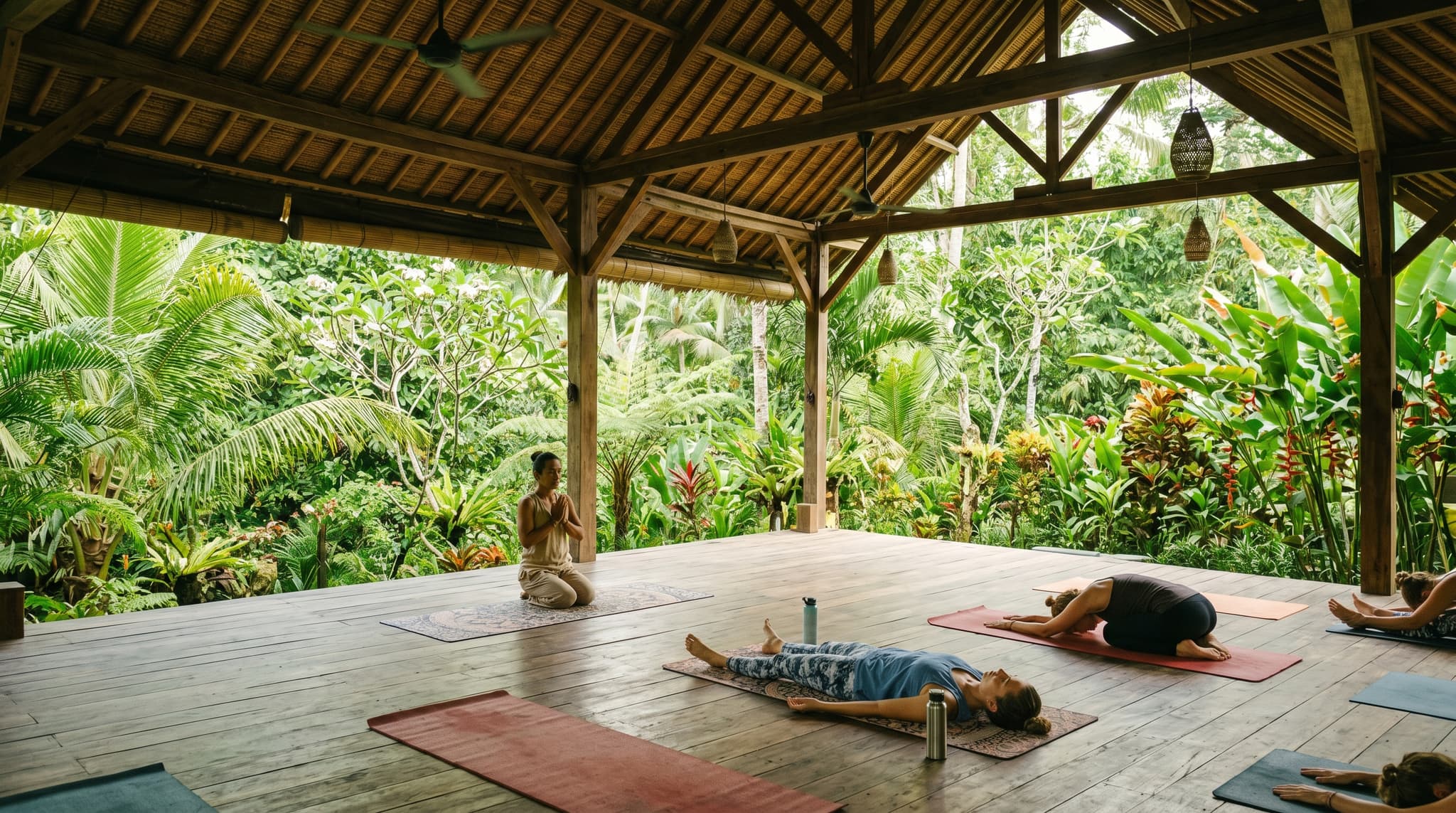
The Yoga Barn is probably the first name you'll encounter when searching for yoga in Bali. It shows up in every Ubud guide, every wellness roundup, every "things to do in Ubud" listicle. The reputation precedes the place by a wide margin — which means most people arrive with expectations shaped by someone else's Instagram story or a blog post from 2019. What follows is what The Yoga Barn actually is, what it costs, who goes there, and whether it's worth your time.
What The Yoga Barn Actually Is

The Yoga Barn is a multi-studio wellness center on Jalan Hanoman in Ubud's Padangtegal neighborhood. It's not a single yoga room above a cafe. It's a compound — a collection of open-air shalas (practice spaces), a garden cafe, a healing center, a guesthouse, and a shop, all connected by garden paths and stairways on a sloping site.
It was founded in 2007, which makes it one of Ubud's longer-running wellness institutions. In the years since, it has grown from a small studio into something closer to a wellness campus. The compound reportedly includes around five practice spaces of varying sizes, though the exact number may shift as the property evolves.
The Basics
Type
Multi-studio wellness center and yoga school
Founded
2007
Practice spaces
Approximately 5 shalas (verify on-site)
Also on-site
Garden cafe, healing center, guesthouse, shop
Address
Jalan Hanoman, Padangtegal, Ubud
The scale matters because it shapes the experience. This is not a place where the same teacher greets you by name every morning. During peak season, The Yoga Barn reportedly draws hundreds of visitors daily. It functions as both a serious practice space and a social institution — a place where Ubud's transient international community gathers, meets, and makes plans. Those two identities coexist, sometimes awkwardly, and understanding that before you walk in is more useful than any class recommendation.
Classes, Schedule, and What's on Offer
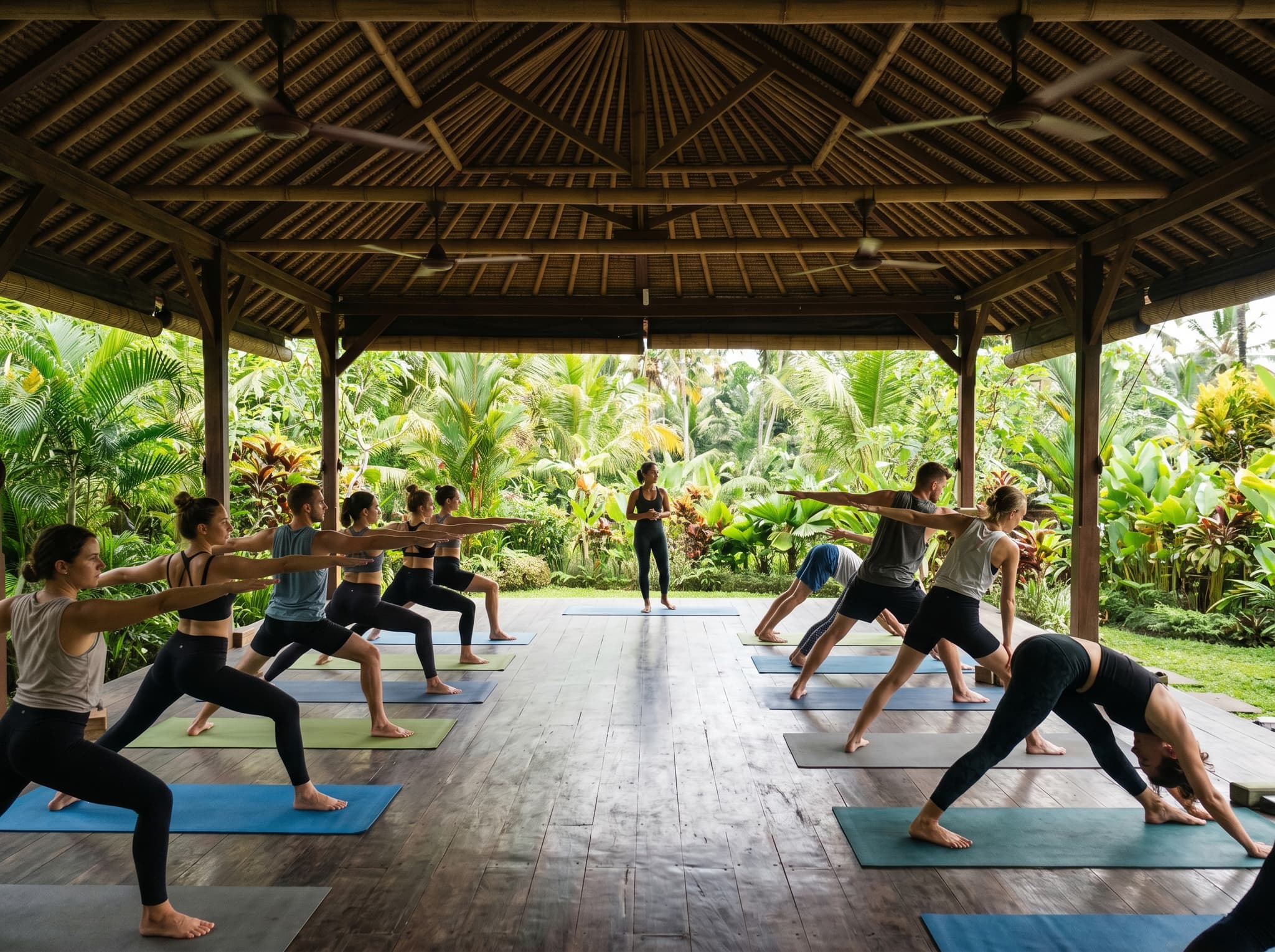
The Yoga Barn schedule is dense. On a typical day, classes begin in the early morning — around 7:00 or 7:30 AM — and run through the evening, often past 7:00 PM. Expect somewhere in the range of 10 to 15 sessions spread across the day, though the exact count varies by season and day of the week.
The range of styles is wide, and it's worth understanding that not everything on the schedule is yoga in the traditional sense. A given day might include:
- Yoga classes: Vinyasa, hatha, yin, restorative, kundalini, ashtanga-influenced flows
- Movement and bodywork: Ecstatic dance, contact improvisation
- Healing and ceremony: Sound healing, breathwork, cacao ceremonies, guided meditation
The distinction matters. If you're coming specifically for a strong vinyasa practice, you'll find it — but you'll also find it sharing the schedule with crystal bowl sound baths and ecstatic dance sessions that have a very different energy. Neither is better or worse, but they attract different crowds and serve different purposes. Know which one you're signing up for.
Class quality varies by instructor, which is true of any studio running this many sessions with a rotating roster of teachers. Some instructors are experienced practitioners who have taught at The Yoga Barn for years. Others are newer. The morning vinyasa and hatha classes tend to draw the most consistent attendance, which may reflect both scheduling convenience and instructor reputation.
Most classes are drop-in friendly. No membership is required, and advance booking isn't necessary for standard classes — though arriving early for popular sessions is. Workshops, multi-day intensives, and teacher training programs operate on a separate booking and pricing structure.
Pricing: Drop-Ins, Packages, and What It Costs
The drop-in price for a single class is approximately IDR 130,000 to 150,000, which works out to roughly $8–10 USD. This is an approximate range and should be verified before visiting — pricing may have changed since this article was written.
Approximate Pricing
Single drop-in class
~IDR 130,000–150,000 ($8–10 USD)
Multi-class packages
Available in 5-class and 10-class tiers (check current rates)
Workshops and retreats
Priced separately, typically higher
Healing sessions
Priced separately, advance booking often required
Multi-class packages bring the per-session cost down. The Yoga Barn has historically offered 5-class and 10-class packages, and there may be weekly or monthly options as well. If you're in Ubud for more than a few days and plan to practice regularly, a package is the more economical choice.
For context: The Yoga Barn sits on the higher end of pricing for Ubud yoga studios. Smaller studios around town charge less per class — sometimes significantly less. But compared to what a drop-in vinyasa class costs in New York, London, or Sydney, even The Yoga Barn's full drop-in rate is a fraction of the price. Whether you consider it expensive depends entirely on your reference point. For a Bali budget traveler counting every rupiah, it adds up. For someone used to paying $25–35 per class at home, it's a bargain.
Healing sessions, private consultations, and multi-day workshops are priced separately and sit at a higher tier. Retreat programs — which may include accommodation in the on-site guesthouse — are a different category entirely. These typically require advance booking and represent a more significant financial commitment.
Who's Actually There

The crowd at The Yoga Barn is part of the experience, for better or worse depending on your tolerance for a certain kind of international wellness scene.
The demographic skews international, skews female, and skews roughly 25 to 45 years old. On any given day, the mix typically includes long-term Ubud expats who practice regularly, digital nomads passing through for a few weeks or months, short-stay tourists fitting a class into a Bali itinerary, yoga teacher training participants, and people on structured retreats.
The social element is not incidental — it's a significant part of why people come. The Yoga Barn functions as a gathering point for Ubud's transient community. The cafe and common areas are where connections happen: conversations, invitations to dinner, recommendations for the next place to go. The atmosphere in the cafe after a morning class has the energy of a common room in a well-run hostel — people are open, available, looking to talk.
This means the vibe can tip, depending on the day and the season, from a genuine practice community into something that feels more like a social scene with yoga as the entry ticket. Both things are real. The person next to you in class might be a dedicated practitioner on a month-long silent meditation schedule. The person on the other side might be two days into their Bali trip and mostly there because their friend said to go. The earnestness is genuine even when it's easy to be cynical about it.
The Space Itself: What It Feels and Sounds Like
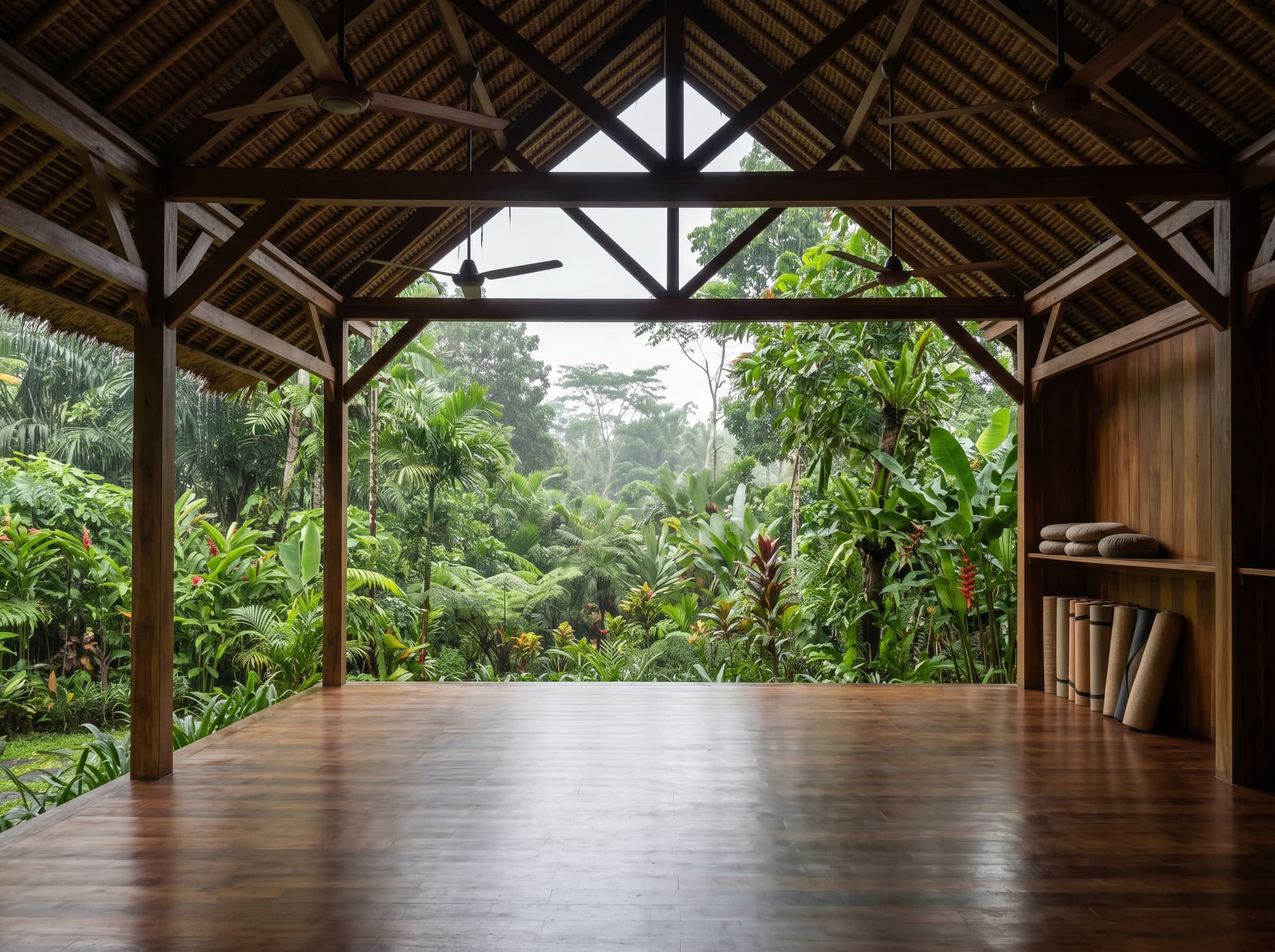
After the practical information, the physical space deserves attention — because it's the thing that separates The Yoga Barn from reading about The Yoga Barn.
The shalas are open-air. This is not a climate-controlled studio with mirrors and a Bluetooth speaker. The walls open to the garden. During practice, the sounds are layered: an instructor's voice, the breathing of the room, birds in the trees above, insects, and — during wet season — rain on the roof, which can be loud enough to drown out everything else and somehow make the practice better for it.
The compound sits on a slope, which means moving between spaces involves garden paths and stairs. The vegetation is dense. Once inside the property, the noise and traffic of Jalan Hanoman drops away faster than you'd expect. The sense of enclosure is deliberate and effective — the garden creates a boundary that feels larger than the actual distance from the street.
The shalas themselves are wood-floored with high ceilings and overhead fans. Natural light comes in from all sides. The larger spaces can hold substantial classes; the smaller ones are more intimate. The quality of the physical infrastructure — the floors, the maintenance, the general upkeep — reflects a place that has been operating for nearly two decades and invests in its facilities.
On-Site Cafe
Menu
Plant-based leaning, health-focused — smoothie bowls, salads, grain bowls, fresh juices
Approximate meal cost
IDR 50,000–90,000 (~$3–6 USD) for a main dish (verify current prices)
Setting
Garden seating within the compound
The cafe menu leans plant-based and health-conscious. Expect smoothie bowls, turmeric lattes, salads, and grain bowls. The food is decent and priced slightly above average for Ubud — you're paying partly for the setting. It's a comfortable place to sit after class, which is by design.
One honest note: during peak season and peak class times, the compound can feel crowded. Mats packed close together, the cafe full, a line at the front desk. The energy shifts from contemplative to busy. If the idea of practicing in a packed room doesn't appeal, the early morning or late afternoon time slots — and the shoulder season months of April, May, October, and November — are significantly quieter.
What to Know Before You Go

Practical details that will make your first visit smoother:
Arrival: Get there 10 to 15 minutes before class starts, especially for popular morning sessions. Mats fill up, and latecomers may not find a good spot — or a spot at all during peak season.
Mats: You can rent a mat on-site. If you're practicing regularly in Ubud, bringing your own is more comfortable and more economical over time.
What to wear: Light, breathable clothing. The shalas are open-air but Ubud is humid, and you will sweat. Cotton gets heavy fast; synthetic or bamboo-blend fabrics are more practical.
Experience level: Most classes are open to all levels. Some sessions — particularly advanced vinyasa, inversions workshops, or specific technique classes — assume a baseline of experience. The schedule usually indicates the level. If you're a complete beginner, hatha, yin, and restorative classes are the most accessible entry points.
Hydration: Ubud's heat plus 90 minutes of yoga in an open-air room is demanding. Drink water before class, not just during.
Healing center and workshops: Unlike regular drop-in classes, these often require advance booking. If there's a specific workshop or healing session you want, check availability ahead of time rather than assuming you can walk in.
Getting there: The Yoga Barn is on Jalan Hanoman, one of Ubud's main north-south streets. From the Ubud Palace area, it's roughly a 10-to-15-minute walk south. If you're staying further out, a scooter gets you there in minutes — scooter parking is available near the entrance. The walk itself is along one of Ubud's more walkable streets, lined with cafes and shops.
Facilities
Changing rooms
Available on-site
Mat rental
Available (check current cost at front desk)
Parking
Scooter parking near the entrance
Walk from Ubud Palace
Approximately 10–15 minutes south along Jalan Hanoman
Is The Yoga Barn Worth It?

Yes — if you know what you're walking into.
The Yoga Barn is not a quiet, intimate studio where you'll develop a personal relationship with a teacher over weeks of practice. It's not a place that feels undiscovered, and it's not trying to be. It's a large, well-run wellness center with a packed schedule, a rotating cast of instructors, and a social ecosystem that extends well beyond the practice rooms.
If you want variety — the ability to do vinyasa in the morning, sound healing in the afternoon, and ecstatic dance in the evening, all in the same compound — it delivers that. If you're a solo traveler looking for a social entry point in Ubud, the cafe and class schedule provide a natural way to meet people. If you're visiting Ubud for a short time and want a reliable, well-organized yoga experience without researching a dozen smaller studios, The Yoga Barn is the obvious starting point.
If you want something smaller, quieter, or more locally rooted, Ubud has dozens of other studios. Some are better for specific styles. Some are significantly cheaper. Some have a more personal feel. The Yoga Barn's size and reputation are features for some visitors and drawbacks for others.
The tension between spiritual practice space and wellness tourism destination is real, and it's not something that resolves neatly. Genuine practitioners teach there. Genuine seekers attend. The fact that it also functions as a social scene and a stop on the Ubud tourist circuit doesn't cancel that out — it just means both things are happening in the same garden compound at the same time.
Frequently Asked Questions
The walk back down Jalan Hanoman after a class is when the street noise comes back — motorbikes, construction, someone's phone playing music from a shop doorway. The shift is abrupt. The Yoga Barn is exactly what it is: a large, established, imperfect, and genuinely useful place that has earned its reputation by being open every day and filling its rooms. Knowing that before you go is the most useful thing anyone can tell you about it.