Ceningan Point is a fast, hollow left-hand reef break below Mahana Point on Nusa Ceningan — uncrowded, intermediate to advanced, and best from May to October.
Ceningan Point sits below the dramatic limestone cliffs near Mahana Point, on Nusa Ceningan's exposed southwestern coastline. Most visitors to this smallest of the three Nusa Islands treat it as a day trip from neighboring Lembongan — scooter across the Yellow Bridge, snap some photos, head back. But for surfers willing to look past the Instagram spots, Ceningan Point is one of the more rewarding reef breaks in the Nusa chain. It is not a beginner-friendly beach break. It is not particularly forgiving. What it is: a fast, hollow left-hander that works best on a mid to high tide with a solid south swell — the kind of wave that rewards good positioning and punishes hesitation.
The Wave

Ceningan Point is a left-hand reef break that peels over a shallow coral and limestone shelf. The takeoff zone is relatively compact, and the wave itself is short but powerful — expect fast, hollow sections that barrel on bigger swells. On a clean day with offshore winds (easterly or southeasterly), the wave walls up nicely and offers a couple of solid turns before closing out on the inside reef.
Wave Conditions
Break Type
Left-hand reef break
Wave Height
3–6 feet (optimal)
Best Swell
South to southwest
Best Wind
East to southeast (offshore)
Best Tide
Mid to high tide
Bottom
Shallow coral reef
The swell window here is south to southwest, which means the dry season — roughly May through October — delivers the most consistent conditions. This is the same swell pattern that lights up Bali's Bukit Peninsula breaks, and when Uluwatu and Padang Padang are firing, there is a good chance Ceningan Point is picking up energy too. The difference is crowd density. On a given day, the lineup here might hold five surfers. At Uluwatu, it might hold fifty.
That said, the reef is shallow and unforgiving. At low tide, the coral shelf is barely submerged in places, and wipeouts carry real consequences — reef cuts, impact injuries, the kind of things that end a trip early. Currents along this stretch of coast can be strong, particularly on larger swells, with lateral drift and rip currents pulling along the reef. Local knowledge of entry and exit channels is valuable and worth seeking out before a first session.
Who Should Surf Here
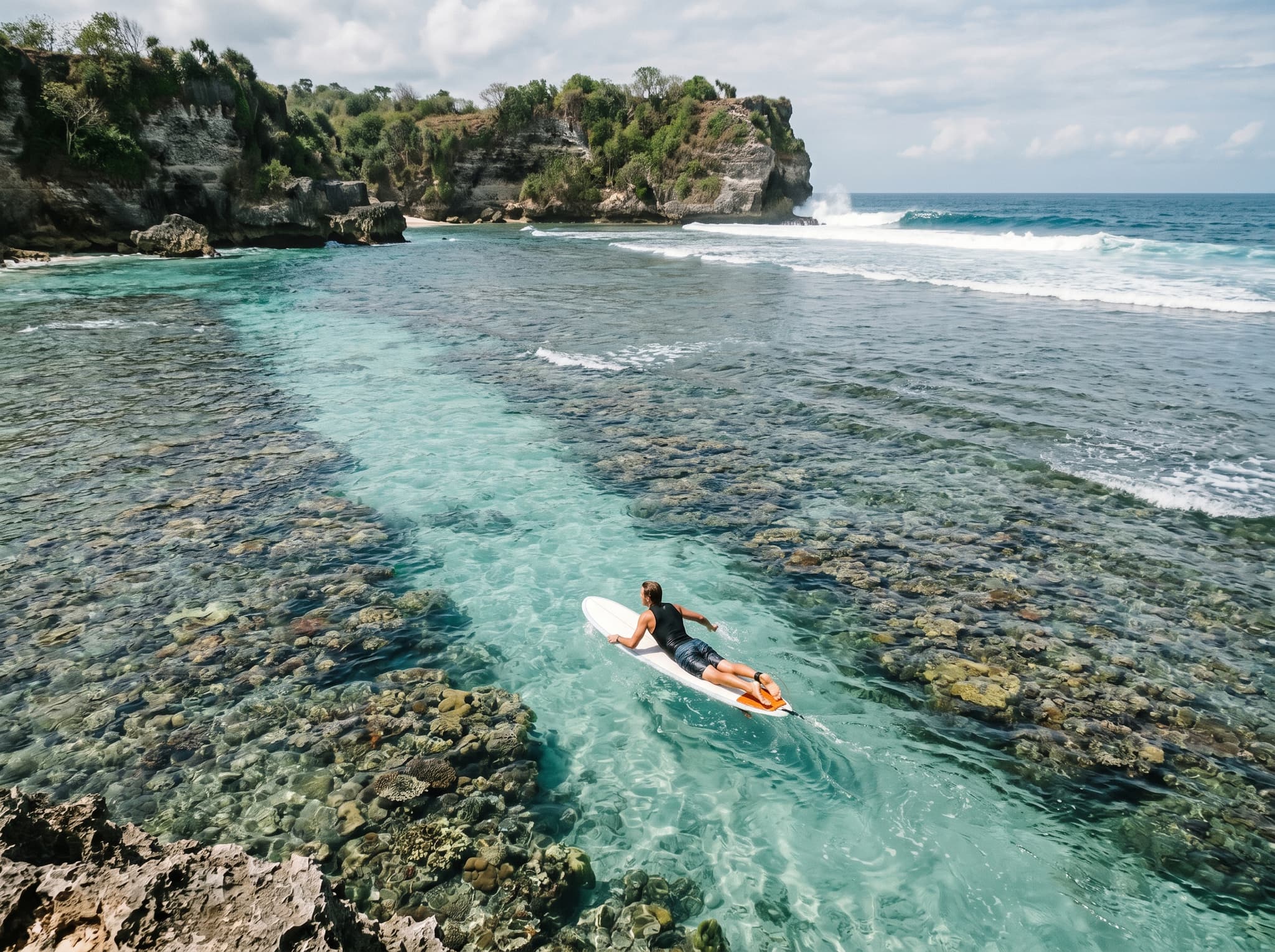
Ceningan Point is an intermediate to advanced wave. The combination of a shallow reef, fast sections, and a compact takeoff zone means surfers need to be comfortable in reef break conditions — reading the lineup, timing entries and exits over coral, and handling hold-downs in shallow water.
Intermediate surfers with experience at other reef breaks — places like Serangan or Nusa Dua's reef passes — will find Ceningan Point a reasonable step up on smaller days (3–4 feet). Surfers still learning to read reef lineups or uncomfortable with shallow bottom conditions should look elsewhere. The beach breaks at Sanur or the whitewater zones at Lembongan offer a much better learning environment.
For advanced surfers, the appeal is straightforward: a quality left with almost no crowd, in a setting that feels genuinely remote even though it is a 30-minute boat ride from Sanur.
Getting There

Most surfers reach Ceningan Point from Nusa Lembongan, which is the logistical hub for the Nusa Islands. Fast boats run daily from Sanur Beach on mainland Bali to Nusa Lembongan, with the crossing taking roughly 30 minutes. Tickets generally run around IDR 150,000–200,000 one way (as of early 2025), depending on the operator.
From Nusa Lembongan, the route crosses the Yellow Bridge to Nusa Ceningan by scooter — the bridge is narrow and one-way alternating, so expect a brief wait. Scooter rental on Lembongan typically costs around IDR 75,000–100,000 per day. Once on Ceningan, the main road heads south toward Mahana Point and the cliff area. The surf break is below the cliffs on the southwestern side.
There is no paddle-out from a sandy beach here. Entry and exit are over the reef shelf, which means timing entry with a set lull and knowing where the deeper channel sits. Experienced surfers typically watch the water for a few minutes before committing. If others are in the lineup, observing where they enter and exit is the simplest way to find the safest route.
What's Around Ceningan Point
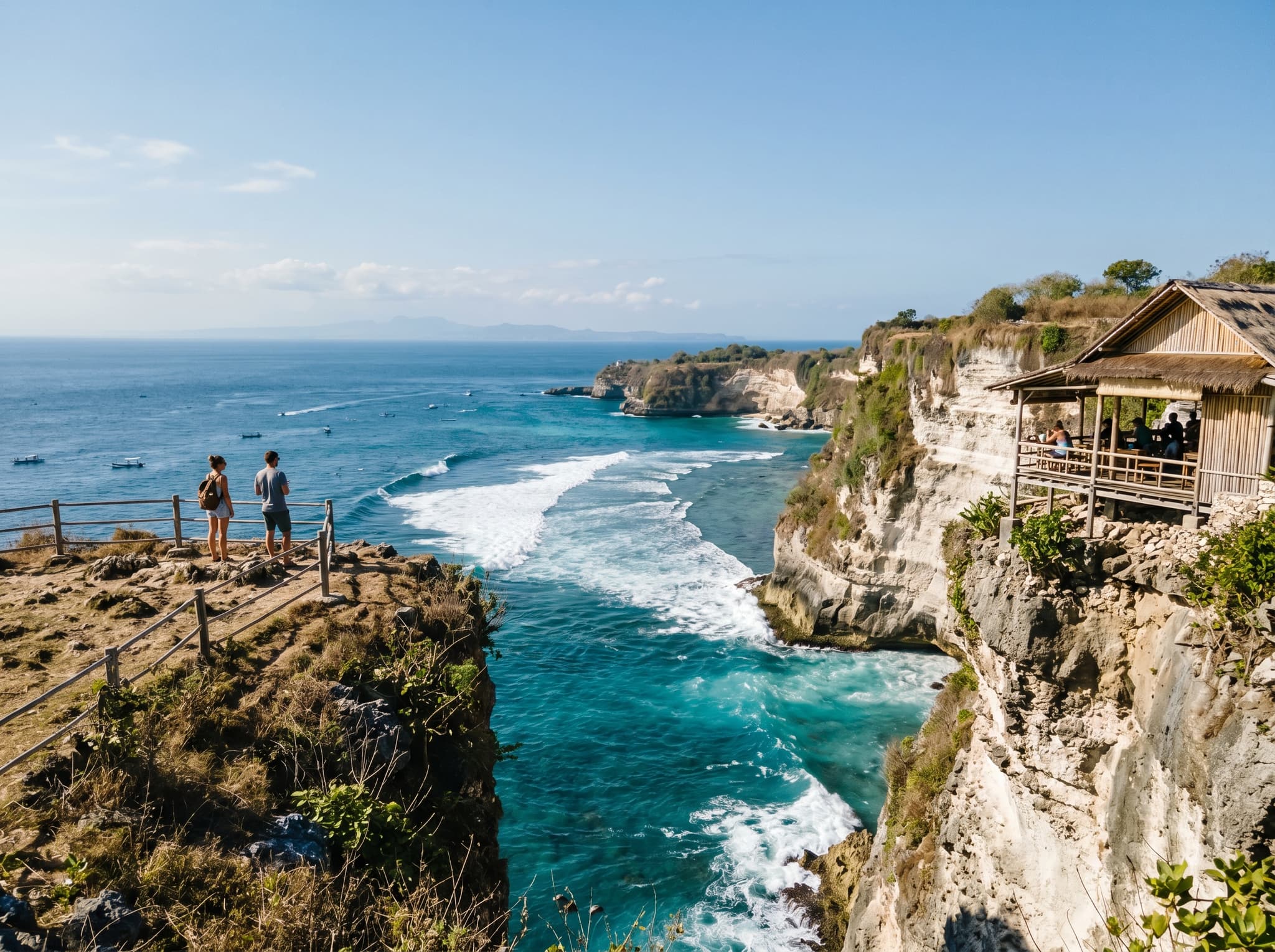
The cliffs above the break are home to Mahana Point, which most visitors know for its cliff jumping platform and the views down to the turquoise water below. Several small warungs and cafes have opened along this stretch, catering to the day-trip crowd. The warungs above serve cold Bintang and nasi goreng — not a bad way to assess conditions before paddling out.
Nearby Spots
Mahana Point
Cliff jumping, views, warungs — directly above
Blue Lagoon (Ceningan)
Small turquoise cove, 5-minute scooter ride
Secret Beach (Ceningan)
Sheltered swimming spot, nearby
Yellow Bridge
Connection to Nusa Lembongan, 10–15 min scooter
Nusa Ceningan itself is small enough to explore in a few hours by scooter. The roads are narrow and hilly — some sections are steep enough that underpowered scooters struggle — but the island has a rougher, less developed feel than Lembongan, which is part of the appeal. Accommodation options on Ceningan are limited compared to Lembongan but growing. A handful of guesthouses and small hotels sit along the main road, with rates generally starting around IDR 300,000–500,000 per night for basic but clean rooms (as of early 2025).
For surfers staying multiple days, Nusa Lembongan offers more variety in both accommodation and dining, and the Yellow Bridge crossing adds only 10–15 minutes to the commute.
The Broader Picture
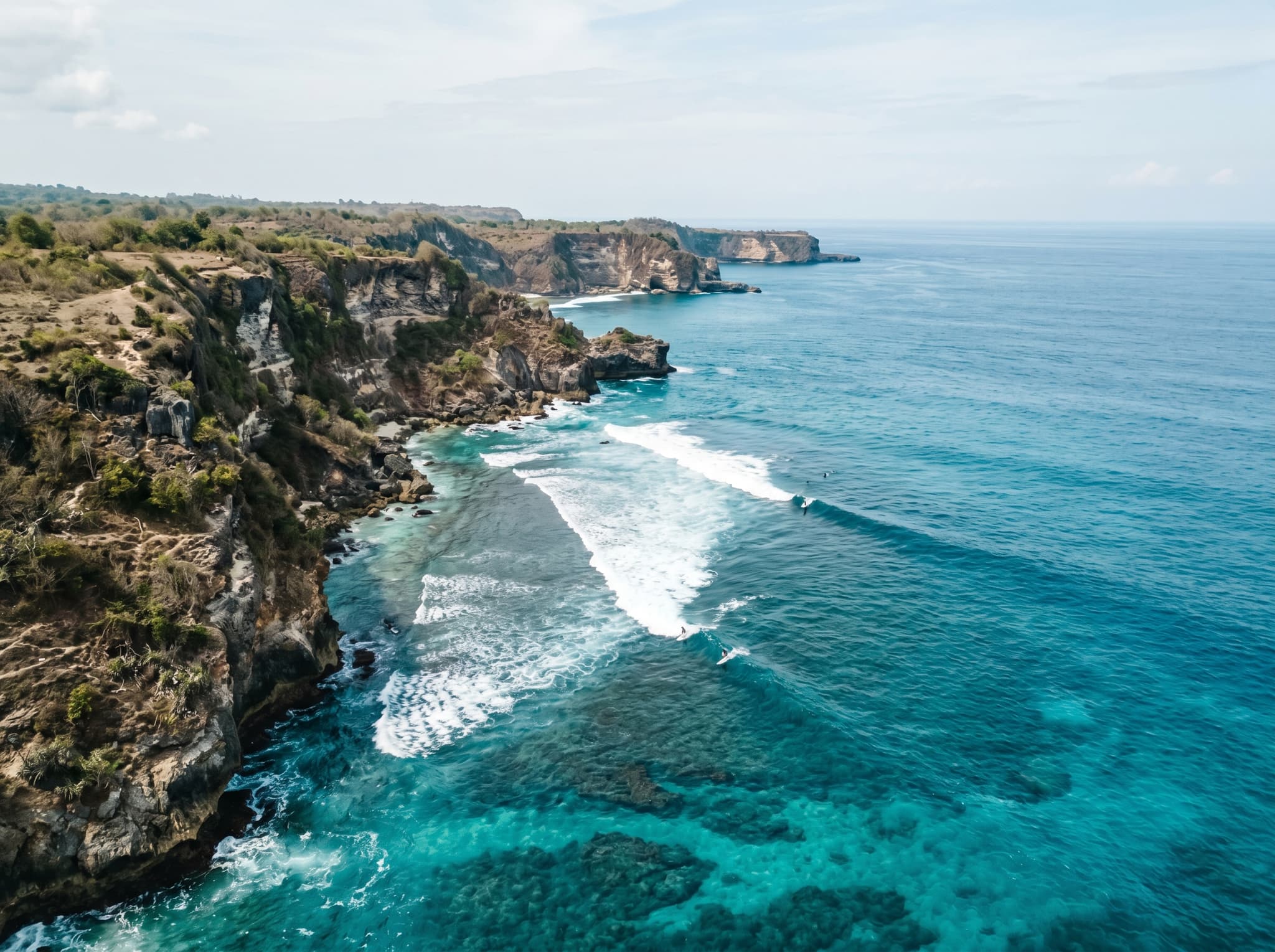
The Nusa Islands collectively offer several surf breaks across varying skill levels — from the playful rights at Playgrounds on Lembongan to the heavier reef setups on Ceningan's south coast. Ceningan Point occupies a specific niche: it is not the most accessible wave, not the longest ride, and not the most famous name. What it offers is quality over quantity — a well-shaped left in a beautiful setting, without the crowds that define so many of Bali's better-known lineups.
For the right surfer — someone comfortable in reef conditions, willing to do a little extra work to get there, and happy to trade wave count for wave quality — it is one of the more satisfying sessions available in the Nusa Islands.