GWK Cultural Park pairs a 121-meter statue of Vishnu with carved limestone corridors on Bali's Bukit Peninsula. Tickets, performances, and what to expect.
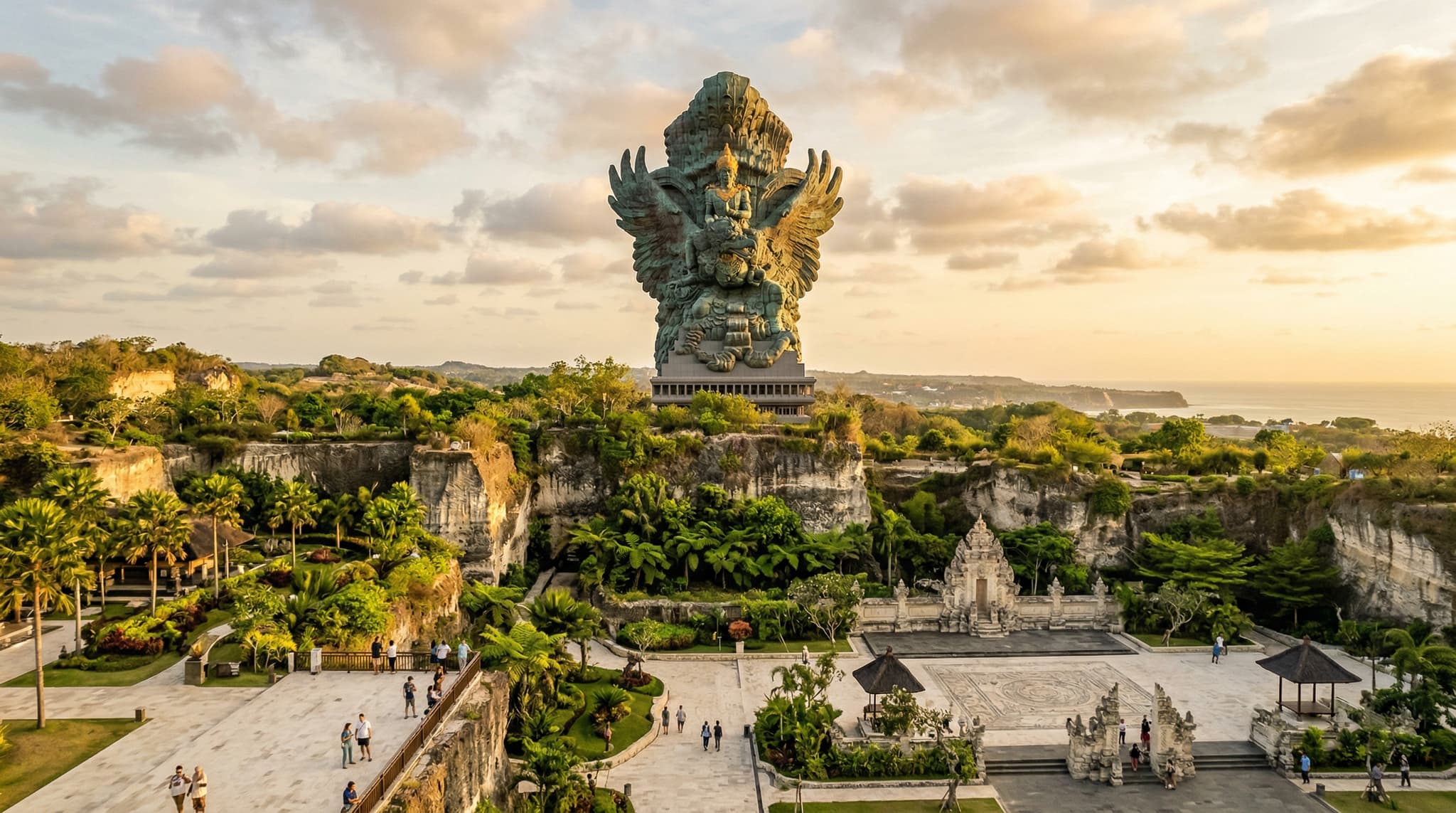
The Garuda Wisnu Kencana statue is 121 meters tall. That number doesn't mean much until you're standing at its base in the Bukit Peninsula's afternoon heat, looking up at the copper-and-brass figure of Vishnu riding Garuda, and your neck runs out of range before your eyes find the crown. GWK Cultural Park was built around this statue — and around the carved-out limestone plateau it sits on — but the statue is the reason most people come, and it's the thing that stays with you after you leave.
The park occupies what used to be a limestone quarry in Ungasan, about 15 minutes south of Jimbaran. The quarrying left behind sheer pale walls, some rising 20 meters or more, and the park's designers kept them. Walking through GWK Cultural Park means moving between these towering limestone corridors — the Wisnu Plaza, the Lotus Pond, the Street Theater — where the rock has been left rough and exposed. It's an unusual backdrop. The scale feels geological, not architectural, and it makes even the large bronze relief panels along the walkways seem human-sized by comparison.
Then you turn a corner and the statue appears above the ridgeline, and the scale resets entirely.
What You'll Actually See
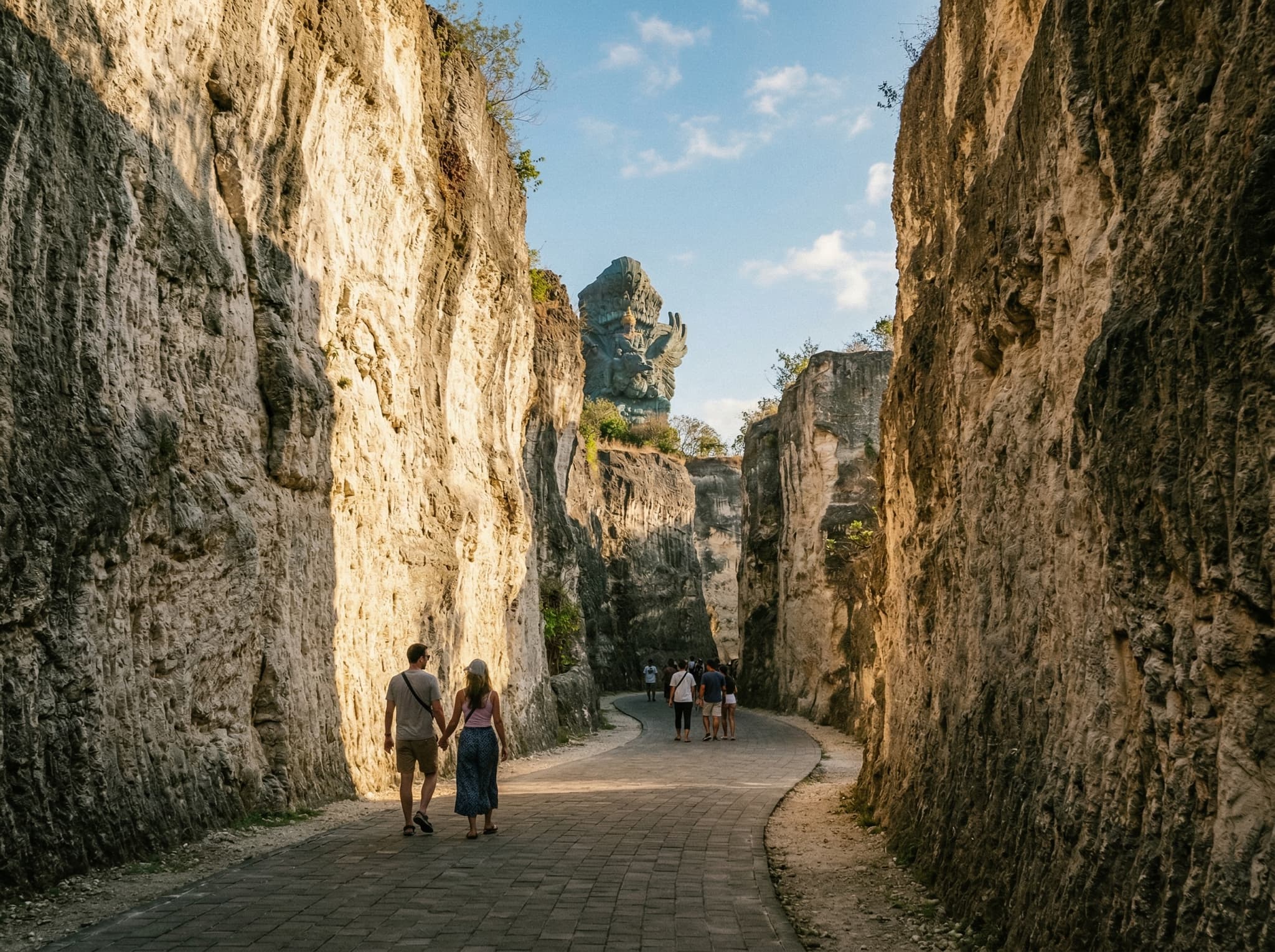
The park is large but not complicated. From the entrance at Plaza Bhagawan (where e-tickets are redeemed), a main path leads through a series of open plazas connected by the limestone corridors. The route is mostly paved and flat, though the sun exposure is significant — there's limited shade until you reach the covered areas near the statue's base.
Ticket Options
Regular Entry
IDR 150,000 (~USD 9.50)
Regular + BarAong Show
IDR 200,000 (~USD 13)
Ultimate Package
IDR 400,000 (~USD 25) — includes Top of Statue Tour to 23rd floor + merchandise
Golf Cart Shuttle
IDR 40,000 add-on
The Top of Statue Tour takes you up to the 23rd floor inside the statue itself. It's included in the Ultimate Package and worth considering if you want the view — on clear days, the southern coastline and the Indian Ocean spread out beneath you. The ASANA Artseum, also inside the park, is an interactive digital art space with immersive light installations and projection rooms — it skews younger and more photo-oriented, but it's a decent way to escape the heat for 30 minutes if you're visiting with kids or just need a break from the sun.
What comes up again and again in visitor accounts isn't the statue — it's the limestone. The corridors create a kind of natural amphitheater effect: sound drops, the wind channels through, and the pale rock catches late-afternoon light in a way that makes the whole place feel quieter than it should, given the tour buses in the parking lot.
The Performances

GWK runs several cultural performances daily, and these are the strongest argument for timing your visit around late afternoon rather than arriving at opening.
Performance Schedule
Sekar Jepun
Daily at 10:00 AM — traditional Balinese welcome dance
Kecak Garuda Wisnu Kencana
Daily at 6:00 PM — ~1 hour, performed in the amphitheater
BarAong
Select evenings — check official site for current days and times
The Sekar Jepun is a short traditional Balinese welcome dance performed each morning near the park entrance. It's pleasant but brief, and not a reason to arrive early on its own — most visitors catch it incidentally on the way in rather than planning around it.

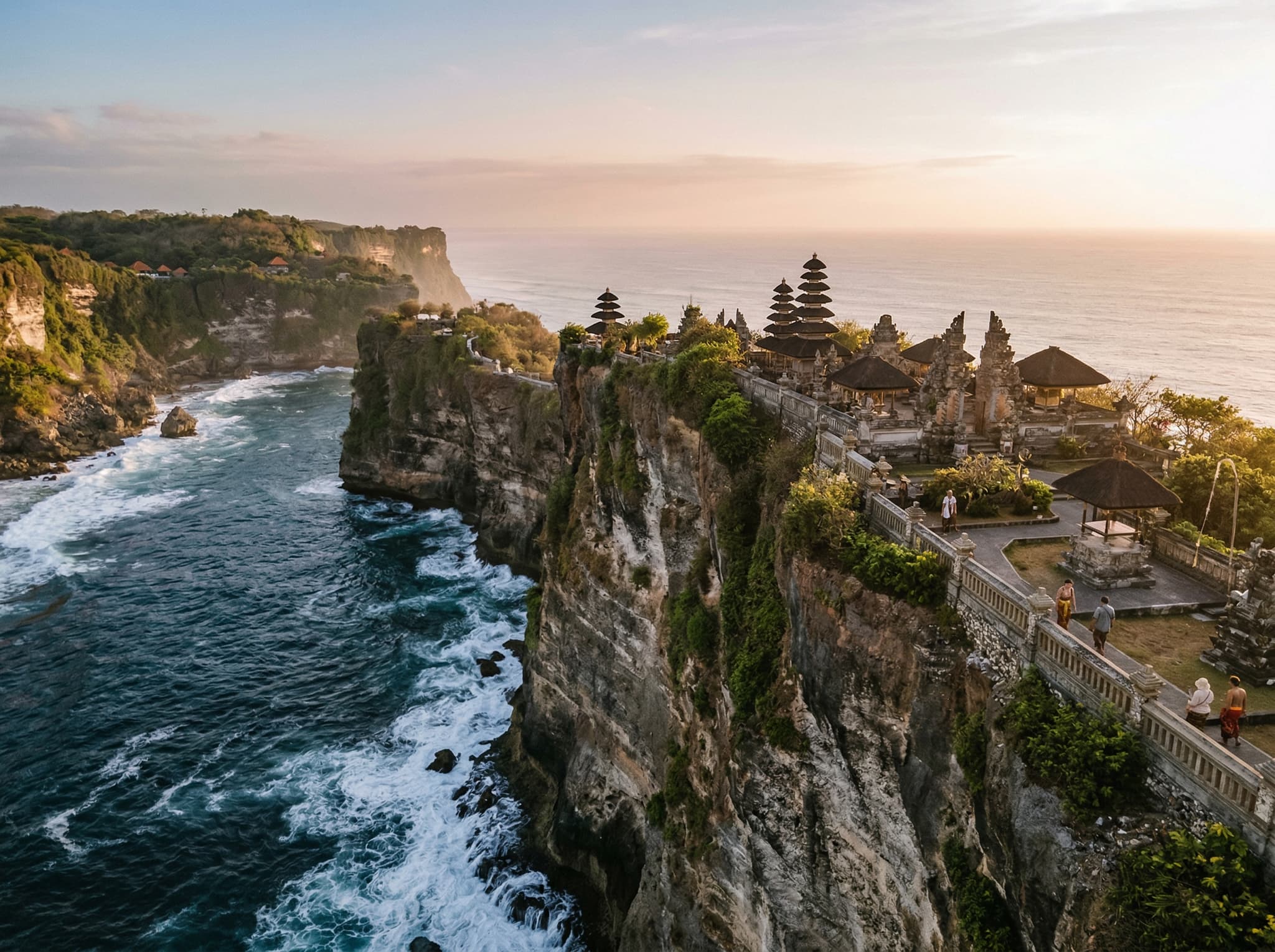
The Kecak performance at GWK is staged against the statue and the limestone walls, which gives it a different atmosphere than the more famous Kecak at Uluwatu Temple. Uluwatu has the cliff-edge drama and the sunset. GWK has the scale — dozens of performers chanting beneath a 121-meter bronze figure as the sky darkens. Neither is objectively better. They're different experiences, and if you're spending several days on the Bukit Peninsula, seeing both is reasonable.
Getting There
GWK Cultural Park sits in Ungasan, on the Bukit Peninsula — near Uluwatu but not at Uluwatu Temple. There's no direct public transport.
Transport from Seminyak
Distance
~18 km
Drive time
20–30 minutes without heavy traffic, longer during peak hours
Taxi cost
IDR 160,000–200,000 one way (~USD 10–13)
Best options
Grab, Gojek, or Blue Bird metered taxi
From Kuta or Jimbaran, the drive is shorter — 15 to 20 minutes in reasonable traffic. If you're combining GWK with Uluwatu Temple, the two are about 10 minutes apart by car, making a late-afternoon pairing practical: GWK first, then Uluwatu for sunset.
What GWK Is and Isn't
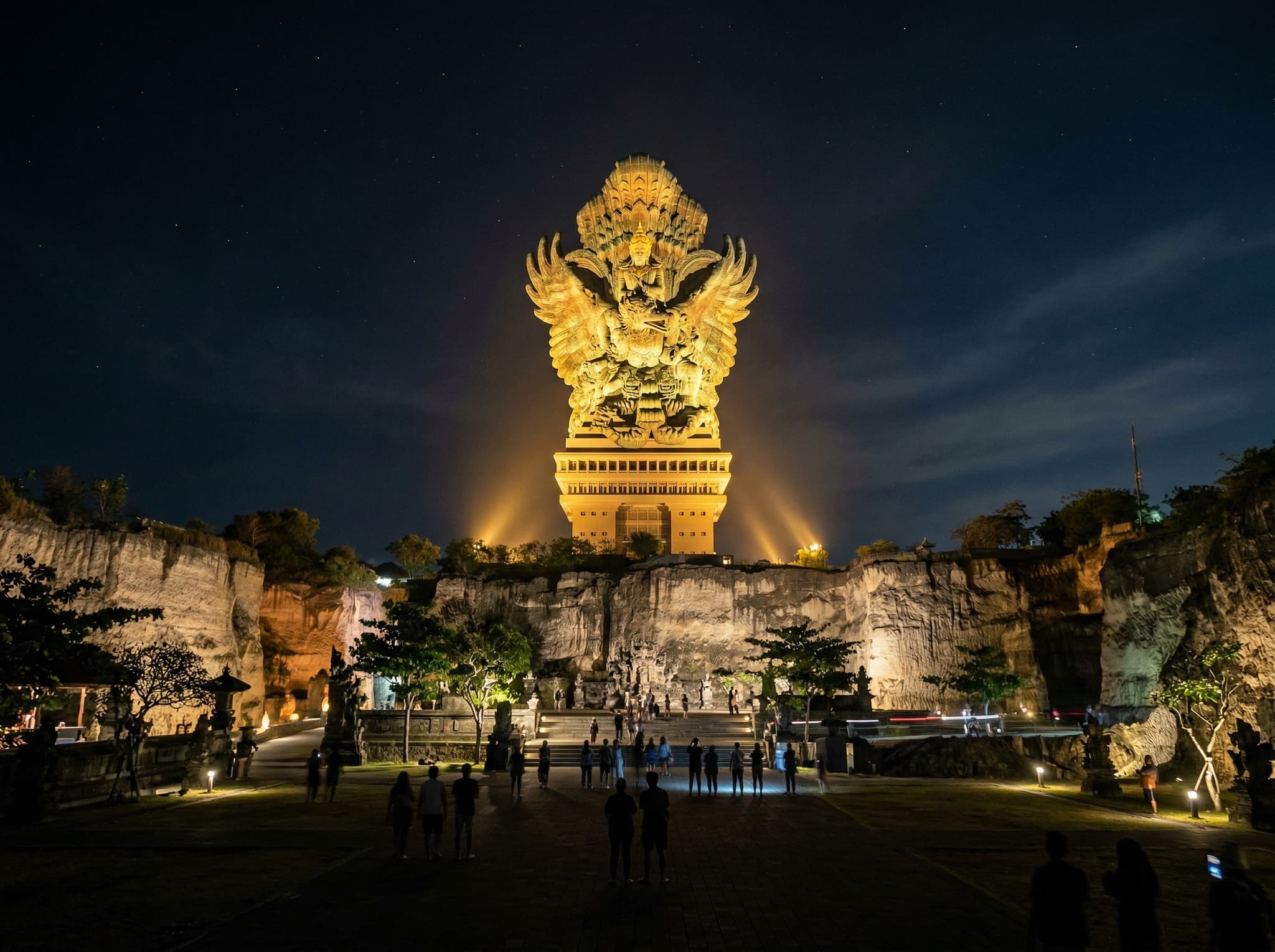
GWK Cultural Park is a constructed cultural attraction, not a temple or a historical site. The statue was completed in 2018 after decades of development. The park is well-maintained, commercially operated, and designed for large visitor volumes. If you're looking for something intimate or undiscovered, this isn't it.
What it is, though, is genuinely striking. The combination of monumental sculpture and exposed limestone creates something that doesn't feel like a theme park, even when the gift shops and food courts remind you it partly is one. The statue alone — the third-tallest in the world — justifies the visit for most people. The cultural performances elevate it beyond a photo stop.
Arrive by 4:00 PM. Walk the limestone corridors while the light is warm and the crowds from the morning buses have thinned. Watch the Kecak or the BarAong as the sky shifts. Leave after dark, when the statue is lit and the limestone glows faintly against the night. That's the version of GWK Cultural Park worth your time.