Kelingking Beach is one of Bali's most photographed spots. Here's what the clifftop view, the steep descent, and the beach below are actually like.
Most people who visit Kelingking Beach never reach the beach.
They arrive by scooter or hired driver along Nusa Penida's cracked interior roads, walk to the cliff edge, photograph the limestone headland that looks like a Tyrannosaurus rex in profile, and leave. The image — turquoise water, white sand, dramatic jaw of rock — is one of the most recognizable in Southeast Asian travel. It circulates constantly. What circulates less is what happens if you actually try to get down there.
The Viewpoint

The clifftop area has been formalized over the past few years. There's a parking area, a handful of warungs selling nasi goreng and cold drinks, and a railed viewing platform that juts out over the drop. The view is genuinely extraordinary — the kind of landscape that makes you stop talking mid-sentence. The headland drops roughly 400 meters to the water, and on clear mornings the color gradient of the ocean shifts from pale jade near shore to deep cobalt further out.
Arrive before 9 a.m. and you'll share the platform with a manageable number of people. By 10:30, it's crowded enough that getting a clean photo requires patience or indifference. Tour groups from Bali's southern beaches tend to arrive in waves between 10 and 2, following a circuit that hits Kelingking, Angel's Billabong, and Broken Beach in a single day.
Viewpoint Essentials
Best light
7–9 a.m. (soft, east-facing light on the cliff)
Crowd peak
10:30 a.m.–2 p.m.
Time needed
20–40 min if staying at the top
Facilities
Warungs, basic toilets, souvenir stalls
The Descent
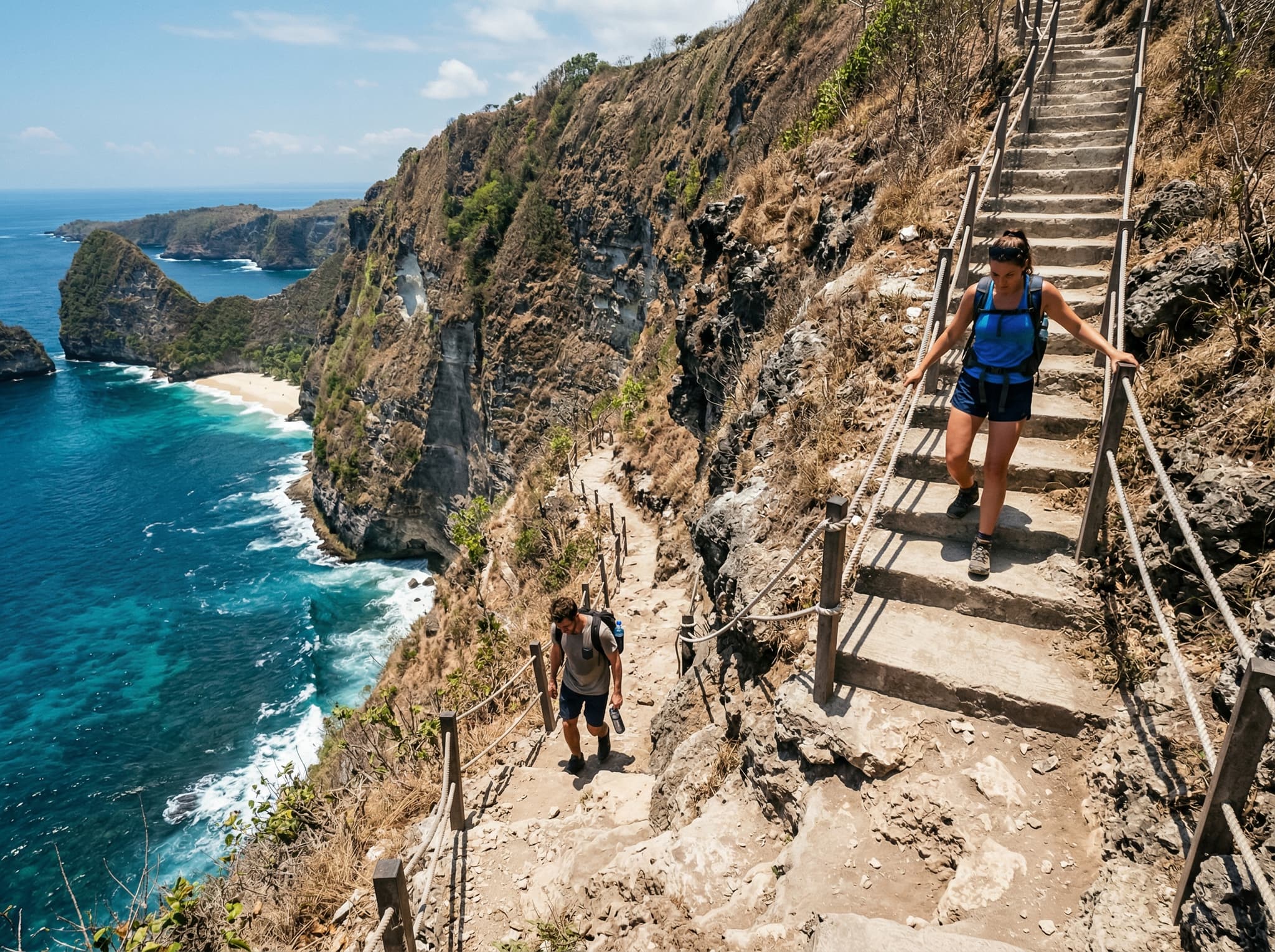
A steep trail drops from the viewpoint down to the beach. It's been improved with concrete steps and rope handrails in the upper sections, but the lower half remains rough — loose dirt, exposed roots, sections where you're essentially scrambling over rock. It's not technical climbing, but it's not a casual walk either. Flip-flops are a bad idea. Proper shoes with grip matter.
The descent takes most people 30 to 45 minutes. The return climb, in full sun, takes longer and feels significantly harder. There is almost no shade on the trail. Bring at least a liter of water per person — two if you plan to spend time on the beach.
The Beach Itself
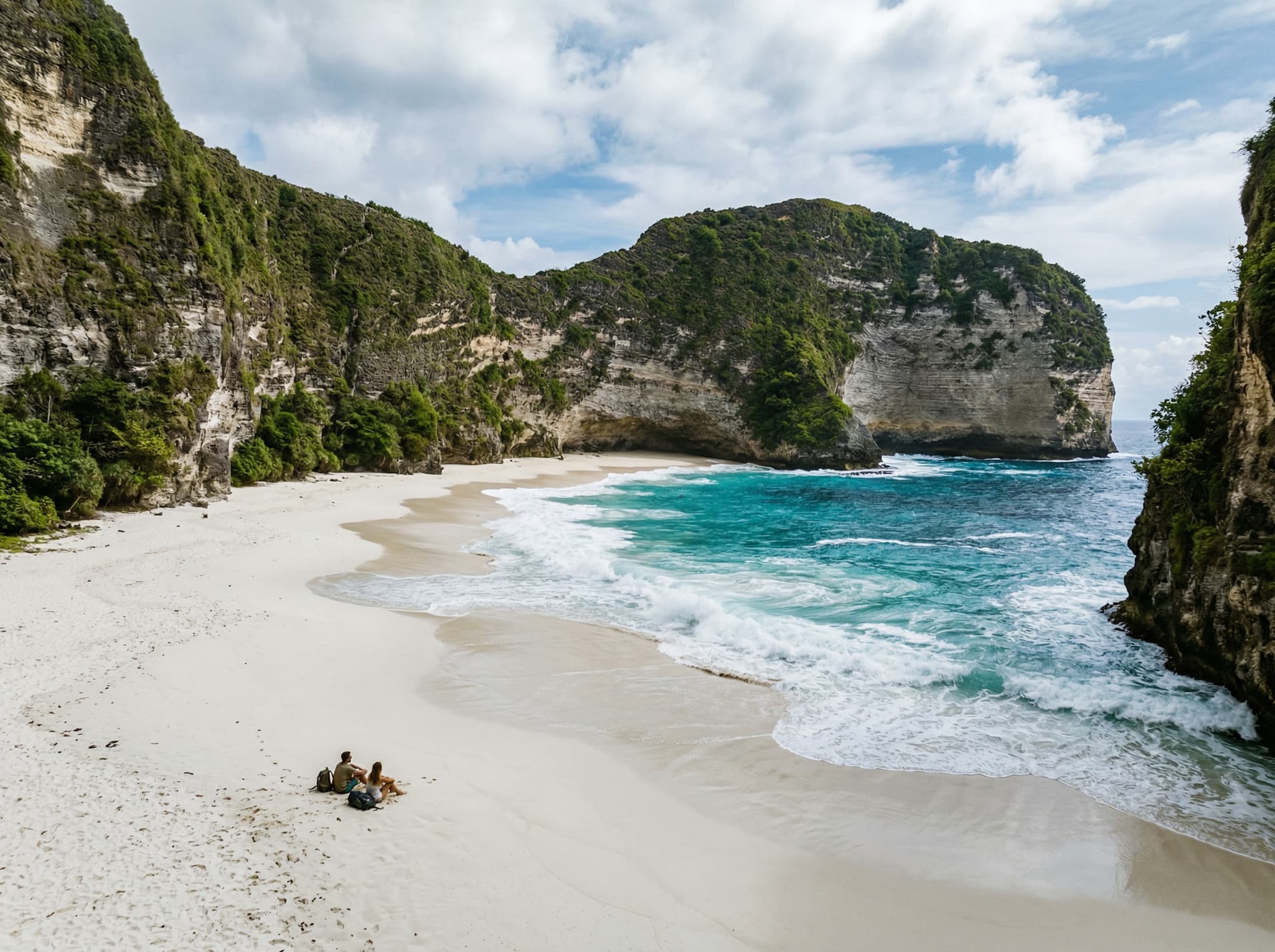
If you do make it down, you'll find a long crescent of white sand backed by towering cliffs. It's beautiful in the way that remote beaches are — no loungers, no vendors, no music. Just sand, water, and the sound of waves hitting rock.
Swimming, however, is a different question. The surf here is powerful and unpredictable, with strong currents even on calm days. During the wet season (November through March), the water can be genuinely dangerous. Even in the dry months, wading in past your knees requires caution. There are no lifeguards. This is a beach for sitting on, not necessarily for swimming in.
On a good day in dry season, with low swell, some visitors do swim in the shallows. But the conditions change quickly, and the beach faces open ocean. Treat it with respect.
Beach Conditions
Swimming
Possible in calm dry-season conditions; dangerous in wet season
Facilities at beach level
None — no food, no water, no shade structures
Crowd level at beach
Light; most visitors stay at the viewpoint
Getting to Kelingking
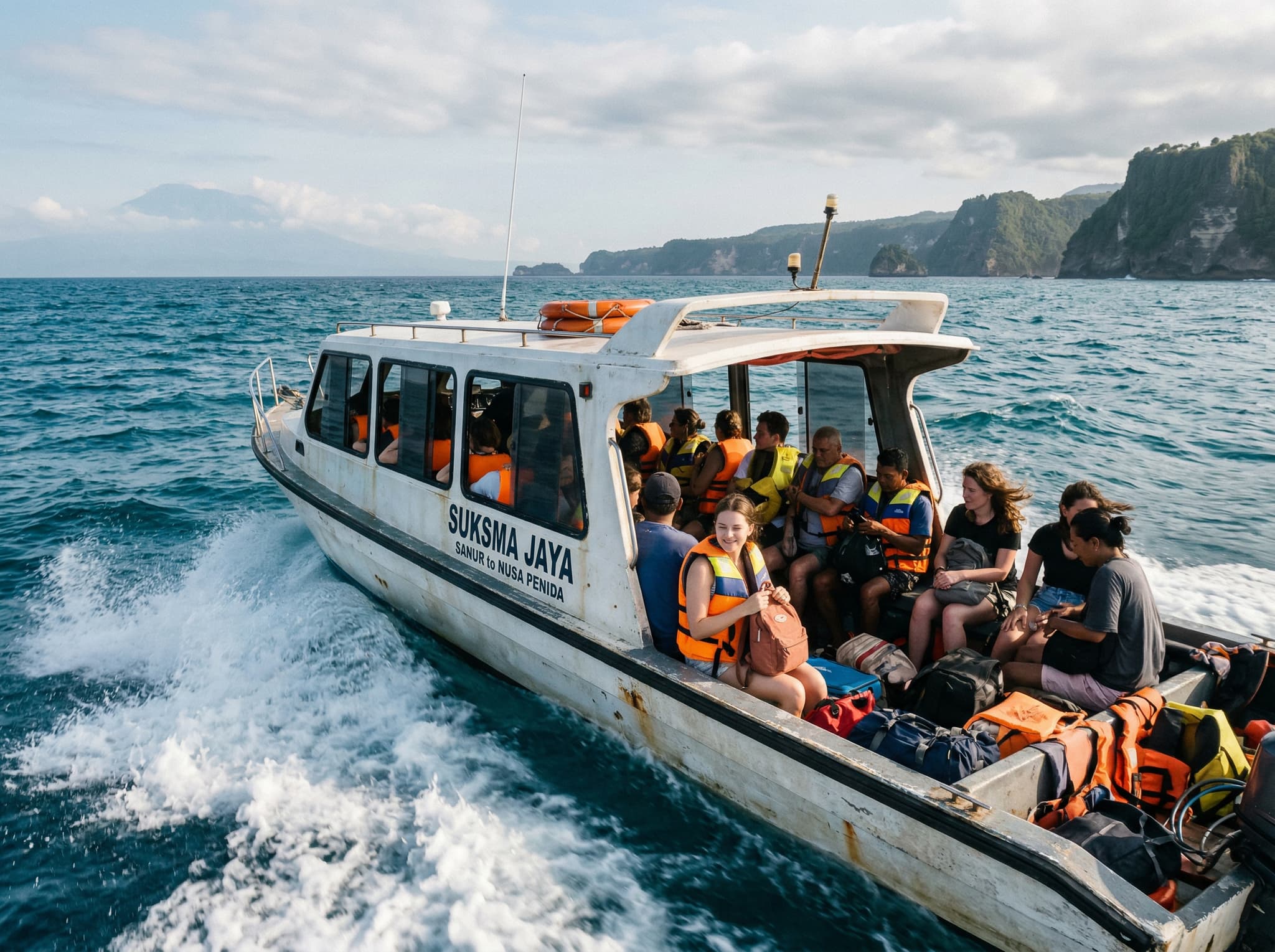
Nusa Penida is reached by speedboat from Sanur harbor on Bali's southeast coast. The crossing takes 35 to 45 minutes and costs IDR 150,000–200,000 (~$10–$13) one way. Boats run from roughly 7 a.m. to 4 p.m., with the most departures in the morning. The sea can be rough, particularly during wet season — motion sickness is common, and cancellations happen.
Once on Nusa Penida, Kelingking is about 40 minutes by scooter from the main port at Toyapakeh, or around an hour from Sampalan. Roads on the island have improved but remain narrow and potholed in sections. If you're not confident on a scooter, hiring a driver for the day is the standard alternative — expect to pay IDR 400,000–600,000 (~$25–$40) for a full-day circuit covering multiple stops.
What You Should Know
Kelingking has become one of Bali's most visited natural attractions, and the infrastructure hasn't fully caught up. The viewpoint area is manageable, but the trail and the beach below remain essentially wild. That's part of what makes it remarkable — and part of what makes it risky.
The cliff is not a metaphor. The drop is real, the trail is steep, the ocean is strong. Come prepared, start early, and decide at the top whether the descent is right for you. The view from the edge is already one of the best things you'll see in Indonesia. Getting to the bottom is a bonus, not a requirement.